
Sony RX100 Review
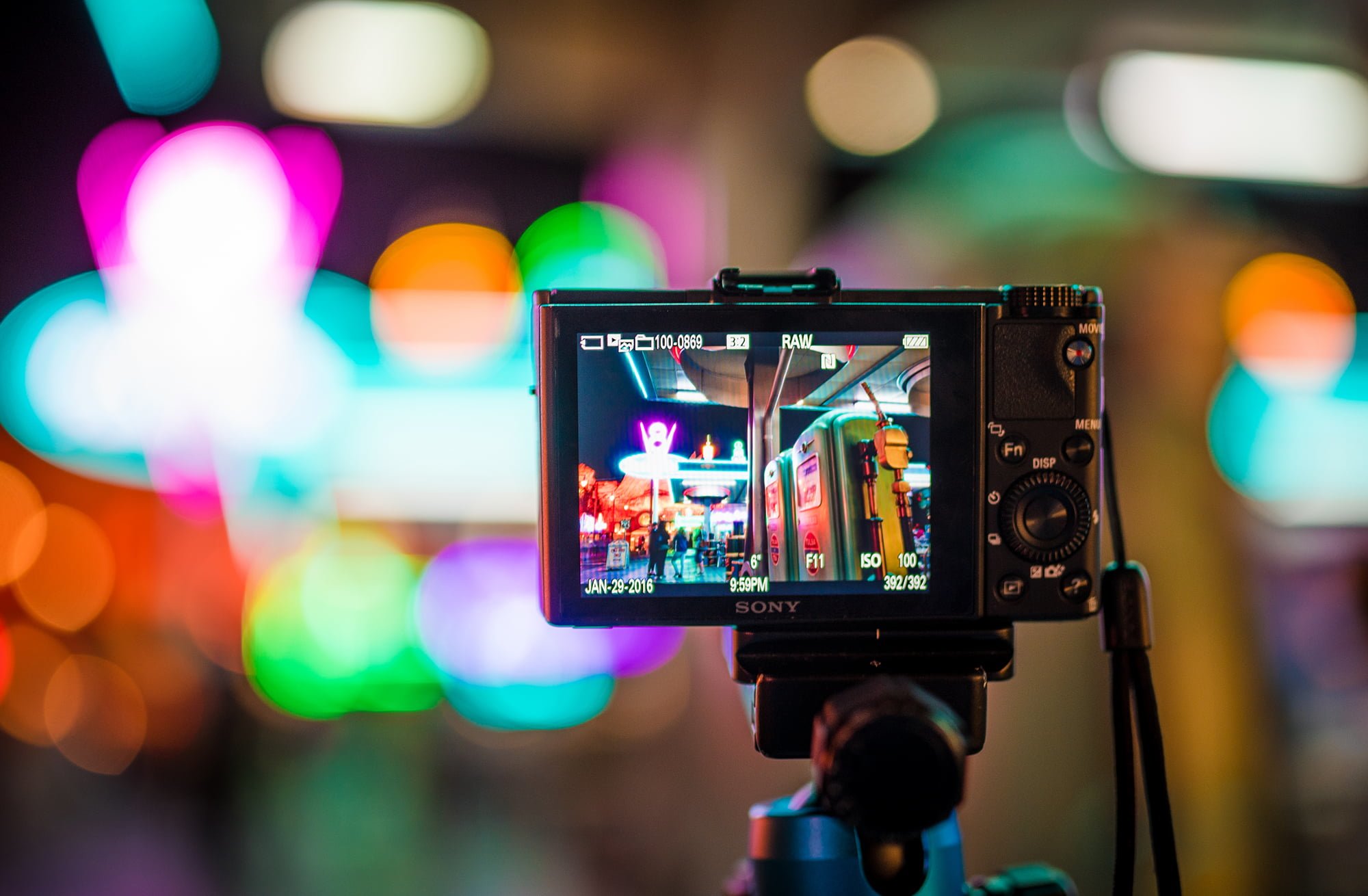
The Sony RX100 is the best point & shoot camera ever. It is a p&s camera so good that it’s better compared to larger sensor cameras. Point and shoot cameras have always been about compromise, and in the past, you always had to compromise one or more of the following: camera size, sensor size, lens speed, zoom range, or feature set when looking for a camera. Those days are over with the Sony RX100, which is the first point and shoot camera to combine pocket size with a large 1″ sensor, a fast f/1.8 lens, 3.6x optical zoom (28-100mm equivalent), great design and build quality, and a robust set of features.
Even years after its release in 2016, the Sony RX100 line still remains the class-leader based on our testing. While the Sony RX100 II and Sony RX100 III both sport some very nice improvements in terms of features, we still rank the original RX100 #1 due to its significantly lower price-point. In terms of image quality, all cameras in the Sony RX100 line perform roughly the same, which is to say very well. The only camera in this line that we have yet to use is the Sony RX100 IV.
For point and shoot users, the two most significant features that are typically mutually exclusive are the 1″ sensor and the compact size. It doesn’t have the largest sensor of any point and shoot camera, but it does have the largest sensor of any truly pocketable point and shoot camera. The significance of this cannot be overstated: you can easily fit the Sony Cyber-shot DSC-RX100 in your pocket and carry it with you anywhere. Buying this camera and reading our How to Take Great Photos with Your Point & Shoot Camera will prepare you to take amazing photos on your Disney vacation without carrying around a bulky camera bag.
All other point and shoot cameras that come close to the RX100’s image quality are gargantuan in size. The Sony RX100 is almost exactly the size of other cameras, yet packs so much more of a punch. That this camera can do everything that it does in such a small size almost defies the laws of science. It’s one amazing camera in one really, really small package. So amazing, in fact, that the Sony RX100 has taken sales away from larger cameras–even DSLRs. It’s crazy that a pocket-sized point & shoot camera could do that. How is it so impressive? Let’s get down to the details…

If you clicked on this review expecting a bunch of lab photos of boring color charts, I’m sorry to disappoint. I’m not a pixel peeper, I’m a photographer who uses cameras in the real world, concerned with how they really perform (go to DxOMark if you want “stats”). In the real world, the Sony RX100 performs so well that I found myself having “pinch me because this is too good to be true” moments.

To start, I always ask myself for whom is this camera made when judging it: amateurs, novices, or experts? The answer here is “everyone.” The Sony RX100 has a lot of different modes for varying skills. Most important of these, to me, are the manual modes, which are absent from a lot of point and shoot cameras. If you’re not ready for advanced modes, fear not, as there are also Intelligent Auto Modes. These worked very well in my testing, and should make the Sony RX100 a great camera for beginners to “grow into” as they learn photography.

This large, 1″ sensor coupled with the f/1.8 aperture of the lens allows for something I’ve never accomplished with any other point and shoot camera: shallow depth of field! The first time I captured a photo with a nice buttery, out of focus background with the Sony RX100, I was a bit flabergasted. It was as if the Sony RX100 was doing its best DSLR impression. It was a pretty good impression. The discerning eye could certainly tell a difference, but to have that look to a photo taken by a point and shoot camera? Wow.

The Carl Zeiss lens is the brightest of many bright spots on the Sony RX100. The optical quality is stunning, with great color, contrast, and sharpness. Point and shoot veterans may balk at the 3.6x zoom on the Sony Cyber-shot DSC-RX100, but this smaller focal range ensures greater optical quality. This is an absolutely necessary compromise, and frankly, I find the focal range perfectly adequate. Especially considering that the 20mp files give you plenty of cropping space.


Since point and shoot cameras often produce soft images, I’m far more concerned with maximizing sharpness than maximizing zoom. The lens also features optical stabilization, which helps keep images sharp when the shutter speed drops lower than is ideal. Another benefit from my perspective is the gorgeous starbursts and minimal lens flare that the Zeiss lens can produce. These are not the type of results you expect from a point and shoot lens. To say I have been floored by this lens would be an understatement.

Thanks to this lens and that large sensor, the images the Sony Cyber-shot DSC-RX100 takes are sweet. They have great color, clarity, contrast, and sharpness. By default, the black levels don’t have quite as much kick as I’d like (this can be adjusted), but no point and shoot camera that I’ve used has ever produced truly dark darks. Overall, image quality is stunning.
Build quality on the lens is impressive, as it is on the camera as a whole. The camera is made in Japan, which is viewed as a sign of quality in the photography world, as that’s where the labs are located that create the technology itself. The quality shows in the build of the Sony RX100, which is rock solid metal alloy solid and has a very sleek design aesthetic.

Another huge benefit to the camera is the ability to shoot raw in addition to JPG. The dynamic range of the raw files is incredible for a point and shoot (albeit not on par with a DSLR), making this a very capable camera for anyone who wants to do serious editing to their photos. Just look at the detail in these night photos above and below.

As far as camera modes, features, and gimmicks, there’s a bit of each here. Although intriguing, the HDR modes seem a bit gimmicky to me (although who can’t do this type of thing in post processing may love them), and there’s also a far less gimmicky self portrait feature, and a great panorama mode. As mentioned above, the range of modes (from Intelligent Auto to full manual) makes this the perfect camera for beginners to pick up as they learn photography and become experts. It’s not a camera that will quickly be outgrown.

Thanks to its lightning fast burst mode (up to 13(!!!) frames per second), the Sony Cyber-shot DSC-RX100 won’t suffer from one of the most common complaints about point and shoot cameras: lag before and between photos. It can beat most DSLRs in terms of burst rate. The pop-up flash is another great feature, and the ability to angle this flash up to bounce it off the ceiling (to diffuse the light) is awesome.

External buttons are sparse on the Sony Cyber-shot DSC-RX100, which definitely takes a “less is more” approach to design that might scare away DSLR users, but thanks to programmable function buttons, this is not a big deal. I love external buttons on my DSLRs, and at first this was a big concern for me, but I have gotten used to it. Having fewer buttons definitely makes the camera more approachable and less intimidating for beginners.
Video is impressive on the Sony RX100, which can shoot in 1080p HD. The video quality seems great for a point and shoot on its own, but when combined with that lens, you have class-leading video quality that will be more than adequate for most users.

For a point and shoot camera, high ISO performance is pretty impressive. I took it up to ISO 800 without noticing much loss in detail or noise, and although noise increases and clarity decreases above that, I will be using images up to ISO 3200. In fact, the image below was shot at ISO 3200, without any noise reduction applied in post processing.
Anything above ISO 3200 is pretty unusable, except for small use on the web or in a serious pinch. Still, usable ISO 3200 from a point and shoot? That’s amazing! Just check out the photos below from Phantom Manor at Disneyland Paris (a dark ride) to see how well it performs at high ISOs.

The Sony RX100 is not without its faults. Namely, the price tag. However, now that the camera has been out for a few years, the price has dropped significantly, and it can now be purchased for under $400, which is a great price considering the quality of the images it produces and the size of the camera.
I would never trade in my DSLRs for this camera, but that’s because I’m very serious about photography. It certainly doesn’t perform as well as my full-frame DSLRs, but for beginners, this is an amazing option that’s well worth the money. Beginners won’t notice the minor loss of quality as compared to a DSLR, and it’s arguably worth the tradeoff in exchange for substantially improved portability. Given the quality it offers, I don’t think the price is a serious con. You get what you pay for, and the Sony RX100 offers very solid value for money.

There are some real cons, though. First, is battery life. I get around 400 photos per full battery charge, which is pretty low. Another criticism is that the highly touted f/1.8 lens isn’t a constant f/1.8. This is pretty common for point and shoot cameras, and perhaps I’m hoping for the impossible, but I wish it were a little faster at the telephoto end.
In practice, though, this hasn’t been a big deal. I shoot mostly wide in low light situations (honestly, who wants a telephoto shot of a sunset?!), and for these “real world” photos, the aperture is just fine. The RX100 III and IV both deliver constant, fast lenses, but at the expense of some zoom range. Personally, I prefer what the original Sony RX100 offers in this regard.

Overall, I highly, highly recommend the Sony RX100. This is a truly revolutionary camera. That I’m comparing its performance to my DSLRs in areas of this review should speak volumes, given that it’s a pocket-sized, point and shoot camera. To be sure, quality is not DSLR quality in most regards, but it can be very close. Close enough that I’m betting the Sony RX100 would be a suitable replacement for a DSLR for a lot of you reading this. A point and shoot that is a suitable replacement for a DSLR for many people and is pocket sized?! I honestly never thought I would see the day. It may seem like a lot of money, but given what this camera can do, it’s really not. In fact, it’s a downright bargain. The Sony RX100 will have other manufacturers playing catch-up for years, and even though its successors are now out, the Sony RX100 still remains my #1 overall point and shoot camera pick because of its robust feature set and lower price than its successors.
If you’re looking for other photography equipment recommendations or photography tips in general check out a few of my top photography blog posts:
Photography Buying Guide: Way More Than You Ever Needed to Know…
Best Books for Improving Your Photography
5 Indispensable Tips for Better Vacation Photos
Neutral Density Filter Buying Guide
Travel Tripod Buying Guide
Your Thoughts…
Do you own the Sony RX100? What do you think of it? Are you considering buying it? Share your thoughts or questions below in the comments!

i have had my first generation rx100 for about three years now and gave my Nikon DSLR and lenses away to a relative last year. i never used the DSLR.
the optical zoom is only 100mm equivalent but the intelligent digital zoom extends this to 200mm and for me that is as much zoom as i normally need. i have even been able to get some half decent bird in flight photos. See bird. take rx100 out of pocket (i really do keep in my pocket). take photo of bird. you cannot do that any DSLR unless you have very, very big pockets.
Hi dear friend,
Thank you for your precious time. We are a professional camera accessories company with a variety of high-quality products. I saw the article you wrote on the website and thought it was very suitable for the promotion of our products. We hope that you can do a paid promotion for our products, I think this is very helpful for your influence. Are you interested in this? If you want to know more details, you can contact me.
Looking forward to the opportunity to cooperate with you, thank you in advance.
Best Regards,
Renee
Great review! Wondering why you didn’t mention the Sony a1000? Great camera and beats the rx100 in every category. I understand it is a little more expensive is that the only reason it’s not mentioned?
Need some help. I am looking at the Sony RX 100 or the Sony RX 100 iii . I am just looking for a camera that takes great pictures and video. I am not camera savvy and I very rarely use a camera. Looking to take it ion a long European vacation. I see that the Sony has very good reviews and people are satisfied with these two cameras. I do not mind paying the extra money for the Sony rx 100 iii But would it be worth it for me in the long run. Are the two cameras very comparable to each other regarding pictures and video or is one better than the other. I just want a camera that I can just point and shoot and it takes great pictures , better than my iPhone ,let the camera do all the work. Any input would be appreciated.
Tom, would you recommend the mark v over the mark vi, now? I know I don’t need the zoom of the newer model, but I would prefer having a touch screen and faster focusing. That being said, I dont know if I want to go from f1.8 to f2.8?
I’ve been shooting the RX100 mk1 for a few years. I am a devout Canon DSLR shooter, but This Sony is awesome. Fast, easy to use, light, pocketable, and amazing images. Just picked up a killer deal on a used mk 4. Even faster focus, 4K video, and super slo mo.
Here are my tips…
– for most people, shoot Superior Auto or Intelligent Auto, and you will very happy with results
– don’t shoot 4K…yes, it’s awesome, but takes time, memory, and batteries. Just shoot 1080p and you’ll love it
– batteries…get 2 extra…all that cool in camera processing eats batteries. They are small, but always carry extra ones.
– I put a small leather half case on it for protection and a better grip
– lastly, it does a LOT, so so slow in learning, get basic shots and video Dow, then explore advanced settings as time or need dictates
–
Great review. I love this camera as i am proud owner. I do have some problems with focus tho. Can you give any tips or suggestions of settings to get the focus down ?
Just purchased this little gem after reading your review. I told my husband it was Tom Bricker approved so of course he told me to buy it! 😉 We do Disney often enough that Im going to leave my big camera bag at HOME and am anxious to see how this little camera performs. Keep up the awesome reviews and amazing photography!