
Disney Park Attendance & Hotel Occupancy Down, But Higher Guest Spending Drives Revenue Record

During its first-ever earnings call under new CEO Josh D’Amaro, the Walt Disney Company reported its second quarter fiscal 2026 results. This covers the good & bad for Walt Disney World & Disneyland, including commentary about the impact of rising gas prices on bookings, international headwinds passing, park attendance, hotel occupancy & more.
Company-wide, Disney reported revenue of $25.2 billion for the quarter versus $24.78 billion expected, up 7% from $23.6 billion in Q2 fiscal 2025. Earnings per share were $1.57 adjusted, versus $1.49 expected. Total segment operating income increased 4% to $4.6 billion from $4.4 billion in Q2 fiscal 2025. In premarket trading, Disney stock was up 5%.
In Disney’s outlook for fiscal year 2026, the company said it’s on track to repurchase $8 billion stock, up from the previous $7 billion. The company also shared that it’s expecting full-year adjusted earnings growth of about 12%, excluding the impact of the 53rd week. In addition, the company expects third-quarter total segment income of roughly $5.3 billion.
Streaming was once again a bright spot in the business as consumers continued to turn away from the pay TV bundle, and the segment turns the corner on what was once a money-losing venture as it spent big seeking to gain market share. Subscription fees increased 14% to $7.8 billion, driven in part by recent streaming price increases. Advertising revenue was also up by 5%, in part due to more views across the streaming services.
As a whole, Disney’s Entertainment segment saw revenue increase 10% to $11.72 billion compared to the same period last year. According to the company, this growth more than offsets the decline in linear revenues. Disney now generates more Entertainment subscription and affiliate fees and advertising revenues from SVOD than linear TV, and expects the shift from linear towards streaming to continue.
Unsurprisingly, the theme parks are once again a bright spot–and the focus on this website–so let’s turn to that segment…

Disney’s Experiences segment (including Parks & Resorts) delivered record revenue and operating income for the quarter with growth of 7% and 5%, respectively, relative to Q2 fiscal 2025.
While the company incurred pre-opening costs related to both the Disney Adventure cruise ship and World of Frozen at Disneyland Paris, weighing on income by roughly 2%, segment operating income growth came in modestly ahead of guidance, thanks to stronger revenue growth.
Disney also noted that the Parks & Resorts have multiple experience expansions underway using a capital-light model, including working with established local operators to bring a new cruise ship to Japan and a theme park resort to Abu Dhabi.
Disney put doubts about Disneyland Abu Dhabi to rest with this: “The strategic logic of our Abu Dhabi plans is unchanged. Major new theme parks are necessarily longterm in nature given the lead time of these projects, and this investment approach has consistently benefited our business.”
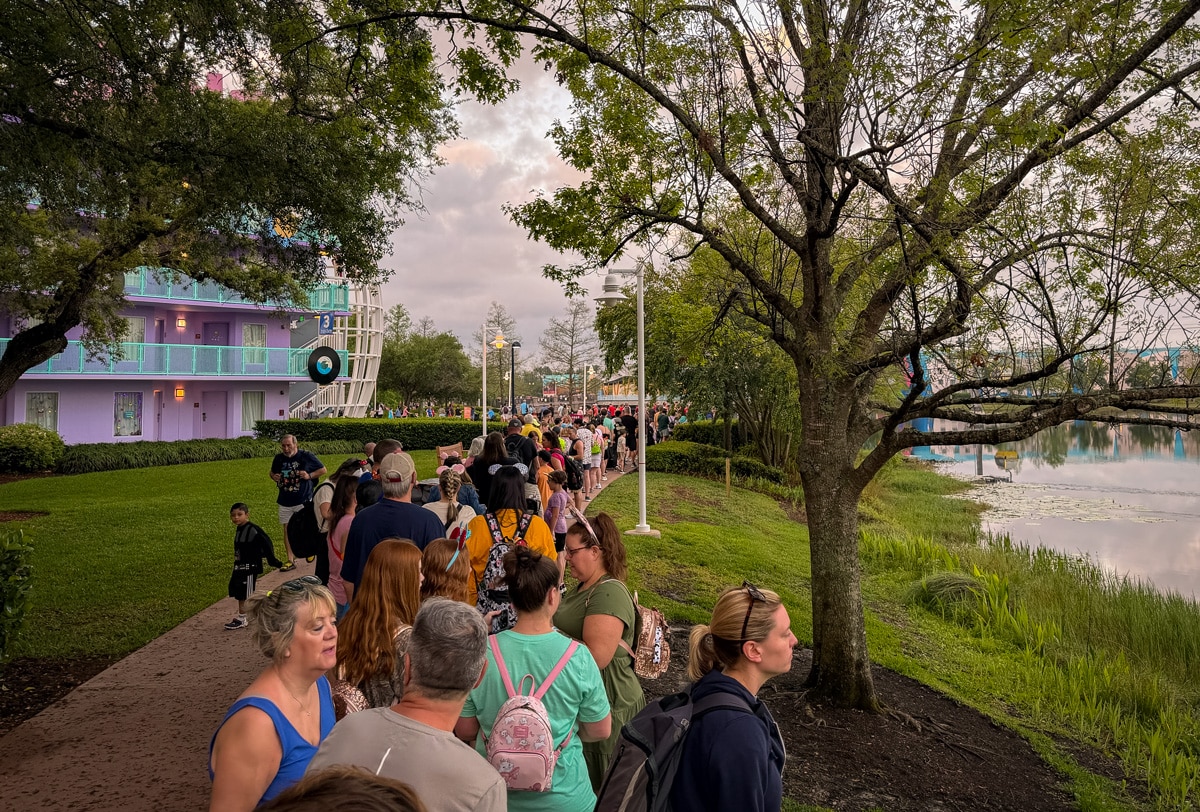
Drilling down a little deeper, Disney’s 10-Q showed that attendance was down 1% year over year in the second quarter at Walt Disney World and Disneyland. In the same quarter last year, attendance was up 2% versus 2024.
Occupancy was also down, from an impressive high of 92% last year to 89% this year. Note that the second quarter encompasses the winter and spring months, which have become increasingly popular in Walt Disney World and Disneyland.
The international parks picked up the slack, with a 4% increase in attendance (versus being down 5% in the same quarter last year) and 1% growth in guest spending, despite a slight decline in occupancy, from 87% to 86%. Ultimately, the guest spending metric is the most meaningful one to investors, but attendance and occupancy also reflect the health of the business–and it’s good to see gains that aren’t just driven by price increases.

Disney provided commentary on this in the earnings report itself, noting that global guests (which aggregates domestic and international parks attendance along with passenger cruise days) grew 2% compared to the prior-year quarter.
The decrease in attendance at the domestic parks reflected continued softness in international visitation. However, Disney is now beginning to lap the attendance headwinds Walt Disney World and Disneyland have faced over the past year.
At the same time, Disney acknowledged the potential impact of heightened global macro uncertainty on consumers, the company is encouraged by current demand and expects year-over-year attendance at Walt Disney World and Disneyland in Q3 to show improvement compared to Q2 results. This suggests that, at least so far, the Iran war and rising gas prices have had no impact on attendance or bookings. This mirrors recent reports we’ve heard from domestic airlines.

The records were driven by per guest spending at Walt Disney World and Disneyland, which was was up 5% in the quarter, driven by growth in admissions, food and beverage, and merchandise. Note that in the same quarter last year, there was growth of 7% over the previous year.
The last full fiscal year had 5% growth, and most quarters have been in the 3% to 6% range. Disney doesn’t specifically say what drove higher per guest spending. Our best guess is higher prices on tickets, food, and pretty much everything else. Lightning Lane prices are also up across the board, and then there’s the new-ish Premier Pass.
Price increases hit at the start of the new fiscal year, with pretty much across-the-board increases by about 3-6%. Although it wouldn’t be reflected in the Q2 report, 2026 Mickey’s Not So Scary Halloween Party tickets were just released, and as discussed in our commentary, those saw 6-8% increases in date-specific pricing on average (once you get past the $119 to $229 range remaining unchanged).
One conspicuous omission that was not mentioned in either the earnings report or call is the timing of Easter. Perhaps that’s because it was in Q3 both years, but the difference is that some Easter week crowds would’ve fallen at the tail-end of Q2 this year, whereas the Spring Break season was longer last year due to Easter being April 20th. Maybe this additional week boost in Q2 of 2026 made no difference, but it’s potentially worth mentioning.

During the Q&A, Johnston was asked about the trajectory of Walt Disney World, and headwinds on international visitation and Epic Universe-related headwinds.
Johnston indicated that he expects both to actually ease going forward as Walt Disney World starts lapping prior quarters last year that were also impacted. Meaning that quarter three of last year already felt whatever impact there was of the international downturn (~1.5% based on earnings calls from last year) and the opening of Epic Universe.
One interesting thing from the call is that there were a couple of vague nods towards Epic Universe, suggesting that the opening of that park was a minor negative for Q2 and maybe Q3. No numbers were given and the way it was mentioned indicates there was never a major impact.
Nevertheless, this is an interesting and perhaps notable shift under the new CEO. The stance last year was that a “rising tide lifts all ships” and that the opening of Epic Universe was not as negative as expected. This could be meaningless and just a difference in phrasing (since no numbers were ever provided, past or present), but it’s also possible that Iger’s desire to frame everything in a positive light is different from D’Amaro’s approach. We shall see.

For its part, International visitation had been addressed on a couple of previous calls last year, at which point Johnston said Walt Disney World and Disneyland had “seen a bit of an impact” of roughly 1% to 1.5% in an international downtrend. By contrast, on the first earnings call this year, Johnston suggested the impact was larger, and that Disney had pivoted marketing efforts away from international to domestic audiences.
Disney also had previously contended that the domestic parks were “more than making up for it with domestic attendance–attendance at the parks has been terrific.” This is now no longer be the case, as park attendance was down for Q2 by 1%, and would’ve been up but for the international decline.
We recently theorized that the slowdown among international attendees might hit Walt Disney World harder in 2026 than last year, due to the lag between booking and traveling. The best international promos are released a full year in advance and were locked-in long before the international tensions emerged, and visitors are less likely to cancel an existing trip that’s on the books than they are to not book a future one.
Based on both Johnston’s comments, it appears this lagged international slowdown thesis was/is correct. At the same time, it now appears that the worst of this is already over and hit hardest in Q2. That, or Disney is trying to paint the forward guidance in the most favorable light, and the actual results for Q3 and Q4 will differ from the forecast.
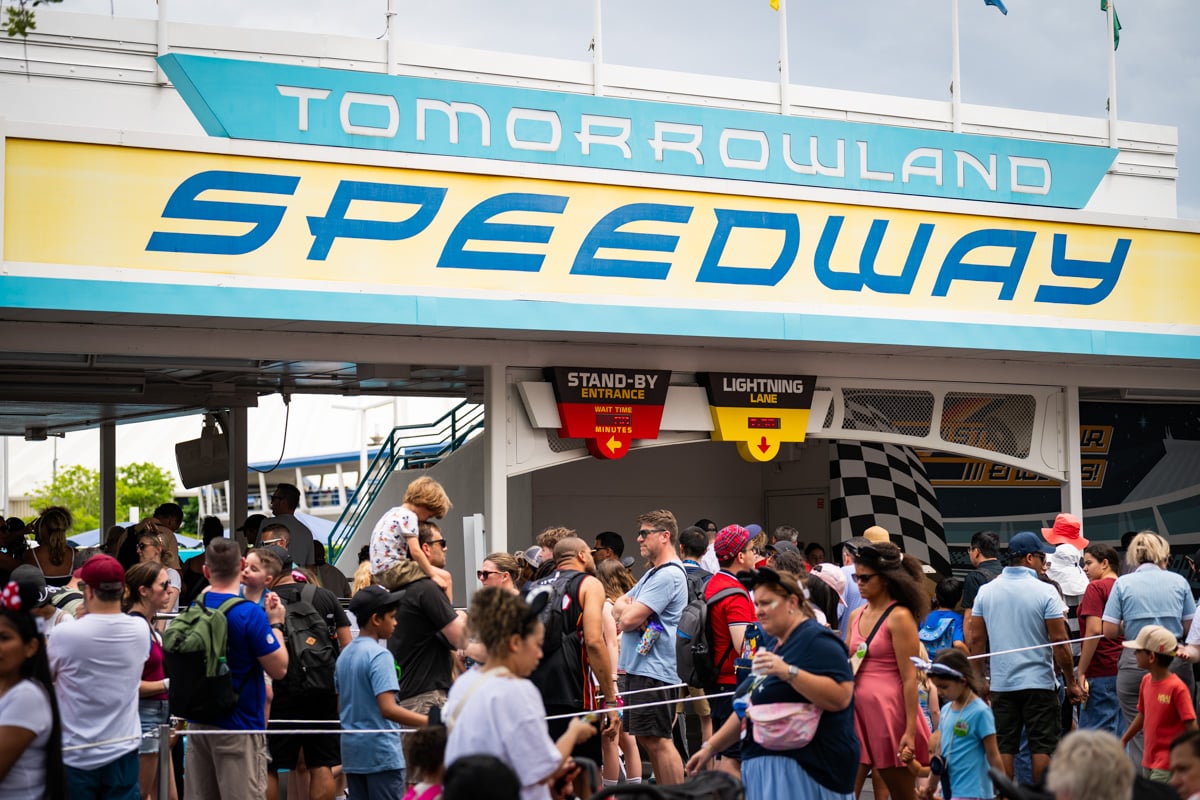
Johnston was also asked about the impact on the Iran war and rising gas prices on Walt Disney World and Disneyland.
He more or less reiterated what was on the earnings report itself. There’s been no impact based on rising gas prices thus far, but that Disney is mindful of macro uncertainty. They are not immune from potential impacts, but they’re not alone in that.
Johnston also conceded that a further rise from current gas prices could change that. However, if that happens, each business unit has “levers” in place that can be pulled to offset higher prices of gas.

Although unstated, this could be something like a return of the ‘Buy 4, Get 2 Free’ deal from earlier this year (Universal just launched a strikingly similar discount, for reference) or even the 4-Park, 4-Day Magic Ticket, but for a time of year when there historically have not been as good of general public deals. Of course, better admission offers for Florida and California residents are also possible. Disneyland has been especially adept at that in the last year.
That’s all theoretical, assuming gas prices increase and demand decreases for the parks. In actuality, Walt Disney World bookings are pacing up strongly for the next two quarters. Johnston also shared that if you look at only domestic guests at Walt Disney World and Disneyland, attendance would’ve grown in Q2 as opposed to decreasing by 1%.
If they couldn’t offset the international decline with domestic guests, this necessarily means that the international visitation drop necessarily must’ve been (much) more than the 1.5% reported in the same period last year.
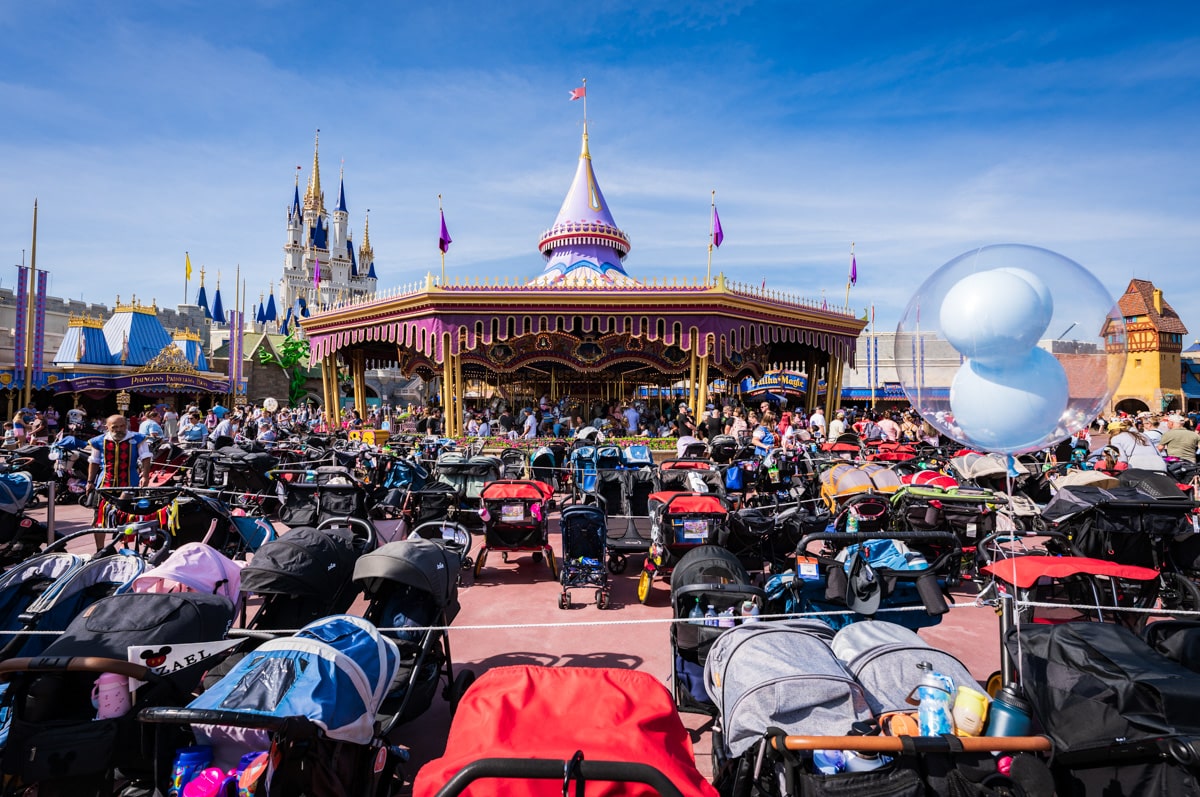
Walt Disney World has already released a flurry of deals through September 2026, including some rather aggressive ones, with more expected in the month or so to come. While some might construe these as a warning sign of a looming slowdown, our view is that Walt Disney World is trying to capture more bookings earlier.
There are likely several reasons for this, from economic uncertainty and consumer confidence to the international headwinds. Regardless, it’s a savvy strategy to lock-in bookings further in advance. And bookings being up year over year is positive news, especially since bookings were also strong at this same point last year; it’s not simply an easy comparison.
We’ve seen that over the last couple of years with the best special offers released far earlier than normal (by historical standards), and often only available for a limited time. Then there have been more attractive discounts that roll out relatively last-minute, with normal deals in between.
It’ll be interesting to see what happens in the next two months. Back in late March, we published Why the Iran War Could Cut Crowds at Walt Disney World & Negatively Impact Your 2026 Travel Plans. Although that’s been dubbed doom and gloom by some, I still believe prolonged conflict and oil at its curtain levels for a sustained amount of time will have an impact.

For the next question about Parks & Resorts, Josh D’Amaro was asked about capital investments in the parks.
D’Amaro shared that the investments are diversifying the company’s portfolio. He pointed specifically to the transformed Disney Adventure World at Disneyland Paris, saying that guest enthusiasm for the reimagined and expanded park was strong, and that there was growth potential for future projects of this nature.
He also reiterated that more projects are under construction around the world than at any time in the company’s history, including several simultaneous expansions at Walt Disney World and Disneyland. In the next decade, most capex is earmarked for investments that will expand capacity. D’Amaro also reiterated that attendance projections show an increase in the coming quarter, even amidst and prior to the ongoing projects.

It’s also worth acknowledging that even though resort hotel occupancy decreased from 92% to 89% year-over-year for the quarter, that’s still very high by historical standards. It’s ahead of the occupancy number for last quarter or last summer, but that’s to be expected given the popularity of winter and spring. We were told last year that this stretch of the year included Walt Disney World’s biggest 10 weeks ever for the resorts.
It’ll be interesting to see what this number looks like for the summer months. As we pointed out above, Walt Disney World continues to offer aggressive–and sometimes unprecedented–discounts for 2026. Just as was possible last summer, you can strategically take advantage of discounts on tickets & resorts to score the lowest prices for Walt Disney World vacations in over 6 years. (Arguably better in 2026 for young families thanks to the Kids Eat Free promo.)
There’s definitely room to improve the summer months; the Cool Kids’ Summer slate looks attractive and opening dates were all announced earlier this year versus last year. That might motivate guests to book trips to a greater degree than last year.
What we really hate to see is the decrease in attendance and occupancy paired with the growth in guest spending. Our view is that the Walt Disney World parks have excess bandwidth most of the year in terms of what’s comfortable crowd-wise, so we’d like to see an increase there with greater affordability. Hopefully that’s precisely the goal with more aggressive ticket deals for 2026.

The Q&A also included the inevitable questions about AI, with most of the answers unrelated to Parks & Resorts.
However, Josh D’Amaro did add that the company sees an opportunity to leverage AI to make Walt Disney World vacations easier to plan and more personalized, with a focus on reducing complexity around booking trips and helping families optimize their time during visits. We’re slightly cynical here, as the Genie itinerary builder still exists, presumably utilizes AI, and is awful. The opportunity already exists, and has been squandered since 2021.
On a more positive note, Johnston added that he believes the Parks & Resorts will benefit from (paraphrasing) being tactile experiences in an increasingly digital or artificial world. I actually do believe this, and rather strongly. If AI ends up realizing its full potential and not just being a bubble or fad, in-person experiences will benefit because people will want something that is real. Ironic since the Disney parks have so long been accused of being artificial by their detractors!
The dynamic could very well look similar to the pent-up demand period coming out of COVID, but longer-lasting. However, that also depends on the economic impact of AI, and whether or not it’s also a driver of increased prosperity and leisure or not. That’s probably a different topic for a different post, though.
Ultimately, it was once again a strong second quarter for the Disney Experiences division, including both the domestic and international parks. Our expectation is that the latter will only continue to improve, especially as Disneyland Paris feels the positive impact of the relaunched Disney Adventure World and Shanghai Disneyland celebrates its 10th Anniversary.
Challenges do lie ahead with softer international visitation numbers and higher gas prices, which explains the aggressive discounting we’ve seen already in 2026, but it appears from forward bookings that those headwinds are being overcome. It’ll be interesting to return to this in three months to see whether the company’s optimism and forecast was accurate or not. At this point, I’m slightly skeptical to put too much weight into their reports of future bookings; we’ve heard a lot about the strength of those in the last year or so, and results often show something different.
Planning a Walt Disney World trip? Learn about hotels on our Walt Disney World Hotels Reviews page. For where to eat, read our Walt Disney World Restaurant Reviews. To save money on tickets or determine which type to buy, read our Tips for Saving Money on Walt Disney World Tickets post. Our What to Pack for Disney Trips post takes a unique look at clever items to take. For what to do and when to do it, our Walt Disney World Ride Guides will help. For comprehensive advice, the best place to start is our Walt Disney World Trip Planning Guide for everything you need to know!
YOUR THOUGHTS
Thoughts on the Walt Disney Company’s second quarter fiscal year 2026 earnings? How would you explain the increases in per guest spending or occupancy growth at WDW and beyond? What about the attendance or occupancy decrease? Thoughts on the international visitation slowdown or headwinds ahead? Do you agree or disagree with our assessment? Any other thoughts or commentary to add? Any questions we can help you answer? Hearing your feedback–even when you disagree with us–is both interesting to us and helpful to other readers, so please share your thoughts below in the comments!






the promotions of more 10% off gift cards (dollar general I think had one per store) and up to 40% off meals for AP’s seems telling. I know there are many levers that they pull but…
The stock buy backs are frustrating. That is a lot of money that could be invested in, hmm, let’s say, cast member wages? Also disappointing to again see record per guest spending while attendance and hotel occupancy is down. It’s not as though guests are actively choosing to spend more money – between price increases on everything and the almost necessity to get lighting lanes (for the average guest), it’s inevitable that they will continue to have records.
member wages are a generally a forever payment – ie a 5% raise in 2026 does not disappear in 2027 a stock buy back can be ended
The good news is you can pay employees more by simply increased tipping
“The records were driven by per guest spending at Walt Disney World and Disneyland, which was was up 5% in the quarter”
The strategy of catering to higher earners is working, and I don’t see it stopping anytime soon. This will disappoint those wishing for lower prices, but it’s hard to argue with these results. Whatever discounts they offer to counter economic uncertainty may be outweighed by the rising cost of everything else. The true cost of a Disney World vacation is unlikely to go anywhere but up.
In light of the recent articles about the cost of a Disney vacation and going into debt and such, a lot of people have decisions to make.
“This is now no longer be the case, as park attendance was down for Q2 by 1%, and would’ve been up but for the international decline.”
In a multivariate world where variables affect each other, I don’t think that’s a given that it would be up. It’s certainly possible that the international decline affects domestic attendance in a positive way. Not to mention all the other things going on, like construction and no real brand new attractions aside from refreshes and refurbs.
I think your first point is directionally accurate, but I would counter that both coasts have gotten “better” with price discrimination and segmentation strategies.
For Californians, it was/is cheaper to visit Disneyland for the first part of this year than at any point since 2016-2018. I would expect the next ticket deal to not be as good, but still be quite attractive. Now, this doesn’t account for add-ons like Lightning Lanes or higher food prices that many view as non-negotiable, but the opportunity does still exist.
At Walt Disney World, there are a number of discounts that are or have been available, and are stackable. The average guest isn’t going to maximize these, but the motivated fan or bargain hunter certainly could. Those bring big ticket costs to 2018-2019 levels. Similar story with it not including LLs, airport transit, etc., though.
All of that is to say that the “true” or median cost of a Disney vacation will continue to go up–you’re absolutely right about that. But informed guests (or those in key demos) will continue to be able to beat that, and potentially to a much greater degree than in the past.
Your final point is a smart one, especially since they specifically said on the last call that they pivoted marketing efforts from international to domestic. That wouldn’t have happened if international bookings weren’t bad. Undoubtedly other ways that one impacts the other.
This is an outstanding summary of the Disney business side with appropriate Disney fan commentary . Unfortunately, most influencer articles I see are just hyperobe such as, “Disney Resorts Empty!”. Financial news outlets tend to look at numbers in a vacuum with no awareness of what’s really going on in the parks. Your articles are very well rounded with multiple, informed perspectives I haven’t seen anywhere else. As a Disney fan and as a stockholder since 2003, this article is very helpful. Thanks!
Also from both a business and fan perspective, I am once again disappointed that Disney has given no indications whatsoever about doing anything with the Tomorrowland areas of Disneyland and Magic Kingdom. This is just inexcusable.
I think the problem with most reporting is that it largely reinforces biases and prior perspectives. There’s not as much of an appetite for nuance–the extremes are more attractive, both for the author and audience.
I’ll admit to being guilty of this, too! For example, despite their assurances, I am not fully convinced that they’re right about Iran and oil. Maybe this is my own priors, but those are informed in part by living through this in the past and seeing the impact of rising gas prices on the parks. Maybe this time is different, maybe it’s not. Guess we’ll see!
Great summary Tom! For folks that don’t know, it may be useful to point out that Disney’s fiscal year runs October to October so when you say Q2 results, for Disney, that means January-March.
Yes–thank you for drawing attention to that.
It also means that Q3 and Q4 encompass shoulder season, summer, and the off-season at Walt Disney World. Those months start out at a lower baseline for both Walt Disney World and Disneyland, and thus are easier to beat in theory–but at the same time, there’s a reason why they’re slower in the first place.