Disney World Fuels Record 2026 for US Parks, Increasing Attendance 3% and Hotel Occupancy 1%

The Walt Disney Company reported its fourth quarter and full fiscal year 2026 results, and it was another record-setting performance for Parks & Resorts as a whole, and Walt Disney World in particular. This breaks down the attendance and resort hotel occupancy numbers, along with commentary about the impact on forward forecasts due to rising gas prices, international headwinds, and Epic Universe.
Company-wide, Disney reported revenue of $25.95 billion for the quarter versus $25.18 billion expected. Disney reported net income for the fiscal fourth quarter of $2.61 billion, compared with $1.31 billion during the same period the year prior. Earnings per share were $1.77, versus $1.67 expected. The company’s revenue for the quarter was 16% higher year over year, with the results once again fueled by a strong performance from the parks.
Streaming was once again a bright spot, and the segment turns the corner on what was once a money-losing venture as it spent big seeking to gain market share. Revenue for the segment increased 19% to $6.1 billion during the quarter. The company’s sports division also saw revenue increase 16% in the fourth quarter, reaching $4.61 billion. Subscription and affiliate fees fueled this growth alongside an increase in advertising revenue. Unsurprisingly, the theme parks were once again a standout–and the focus on this website–so let’s turn to that segment…
The 2026 fiscal year as a whole saw record-setting performances across the board for Disney Experiences. Revenue was up 9% to $39.6 billion, and operating income grew 12% to $11.2 billion for fiscal 2026, both all-time full-year records, even excluding the 53rd week. Disney estimates that the 53rd week contributed approximately 2% to both revenue and operating income growth for the year.
Disney’s Experiences increased revenue by 15% for the fourth quarter to $10.1 billion and operating income up 20% to $2.25 billion, both Q4 records. Disney estimates that the 53rd week in the quarter contributed approximately 7% to revenue growth and 10% to operating income growth in the quarter.
The domestic parks & resorts had an especially strong quarter, with revenue up 19% and operating income up 36%. Although no distinction was made between Walt Disney World and Disneyland in these numbers, it’s our strong suspicion–based on both the focus elsewhere in earnings and our own anecdotal experiences–that Walt Disney World outperformed Disneyland for the quarter. It was a slower conclusion to the summer season in California than in Florida.

Strength at the domestic parks continues to offset weakness at the international parks. In particular, Walt Disney World had a standout performance, Disney Cruise Line and Disneyland Paris also fueling growth. Attendance softness at the Asia parks, Shanghai Disneyland and Hong Kong Disneyland, continues due to macroeconomic woes in both regions, according to Disney.
Global Guests reached an all-time full-year record, increasing by 5% in fiscal 2026 (or up 4% excluding the 53rd week). For the quarter, Global Guests grew by 11% (or a 4% increase excluding the 53rd week), with guest spending rising alongside volume.
For reference, “Global Guest Days” is a newer metric the company is using that combines attendance at the domestic and international parks with passenger cruise days. Disney feels this provides a lens into the increasingly global and diversified Experiences businesses, and aligns more closely with investment initiatives around the world.

Domestic Parks grew both attendance and per caps, despite Universal citing a weaker market in Central Florida and reporting its own decreases recently as a result.
Disney deliberately refocused its commercial strategy to focus on domestic guests as opposed to international attendees, and that approach is paying off, with Walt Disney World growing in a broader Orlando market that has been more mixed. Universal also commented on this recently, noting that the competition (read: Disney) was quicker to pivot, and Universal has lagged a result.
Disney Experiences expects to build on the strength of 2026 heading into the 2027 fiscal year, forecasting high-single-digit operating income growth, excluding the fiscal 2026 53rd week impact. Among other things, this will be fueled by new expansion coming online, which includes Monstropolis, Lakeshore Lodge, and more.
Walt Disney World had a stand-out quarter, which was once again a contrast with Universal Orlando. The company nodded to this in its investor materials by referencing the competition, but Disney CEO Josh D’Amaro was asked directly about this divergence during the Q&A. He declined to take any shots at Universal, but did offer the following explanation.
“Yeah, the business is good. We saw healthy growth in both volume and per capita spending at Walt Disney World this summer…attendance was up 3% excluding the 53rd week,” D’Amaro shared. He explained that fans value the Disney experience, and there isn’t anything like it.
People want real experiences, getting away from screens and connecting in the real world; Disney parks are one of the few places to do that. Finally, he said that targeted deals at Floridians, Annual Passholders, and Disney+ subscribers have helped fuel growth. Growth is about “more than ticket price,” D’Amaro added in explaining how the company has become sophisticated in its targeted special offers.

The same analyst also asked whether Walt Disney World’s strong growth is sustainable. “The way I’d answer that is we feel very good about the current trends. Quarter one forward bookings at Walt Disney World are pacing up compared to the prior year,” answered D’Amaro.
He that “new capacity and experiences start coming online in 2027,” referencing the first phase of Monstropolis, Disney’s Lakeshore Lodge, and Tropical Americas. Bookings for 2027 at Walt Disney World are already robust and the company expects another quarter of global guests growth in fiscal Q4, excluding the 53rd week.
Looking forward even further beyond what was discussed on the call, we have no doubts whatsoever that the first quarter of the 2027 fiscal year will be strong. Just based on special offer and resort room availability–or rather, lack thereof–it’s clear that on-site bookings are very healthy. Obviously, a lot hinges on the off-site numbers, but our firsthand experiences at Walt Disney World in October and thus far in November suggest the parks are doing quite well.
As revealed by Disney’s 10-K, domestic theme park attendance for 2026 was up 3%, as contrasted with a 1% decrease in the prior fiscal year. This was accompanied by per capita guest spending up by 4%, versus a 5% increase last year.
From a guest perspective, it’s good to see per guest spending decelerate; last year’s growth despite an attendance downtick was fueled by higher prices. Those obviously happened to an extent this fiscal year, but as evidence by both attendance and occupancy increases, the 2026 records were fueled primarily by organic growth.
This is impressive when you consider the lack of brand-new attractions that came online at both Walt Disney World and Disneyland. There hasn’t been a major new addition since either Tiana’s Bayou Adventure or TRON Lightcycle, depending on whether you count the former given it was a reimagining, which debuted in 2023 and 2024.

Since then, Walt Disney World in particular has relied on seasonal events like Cool Kids’ Summer, ride reimaginings, attraction refreshes, and new entertainment. We’ve referred to this as Imagineering’s “singles and doubles strategy” (borrowing a line from the Eisner era), and the domestic parks managing to achieve attendance growth really vindicates this approach.
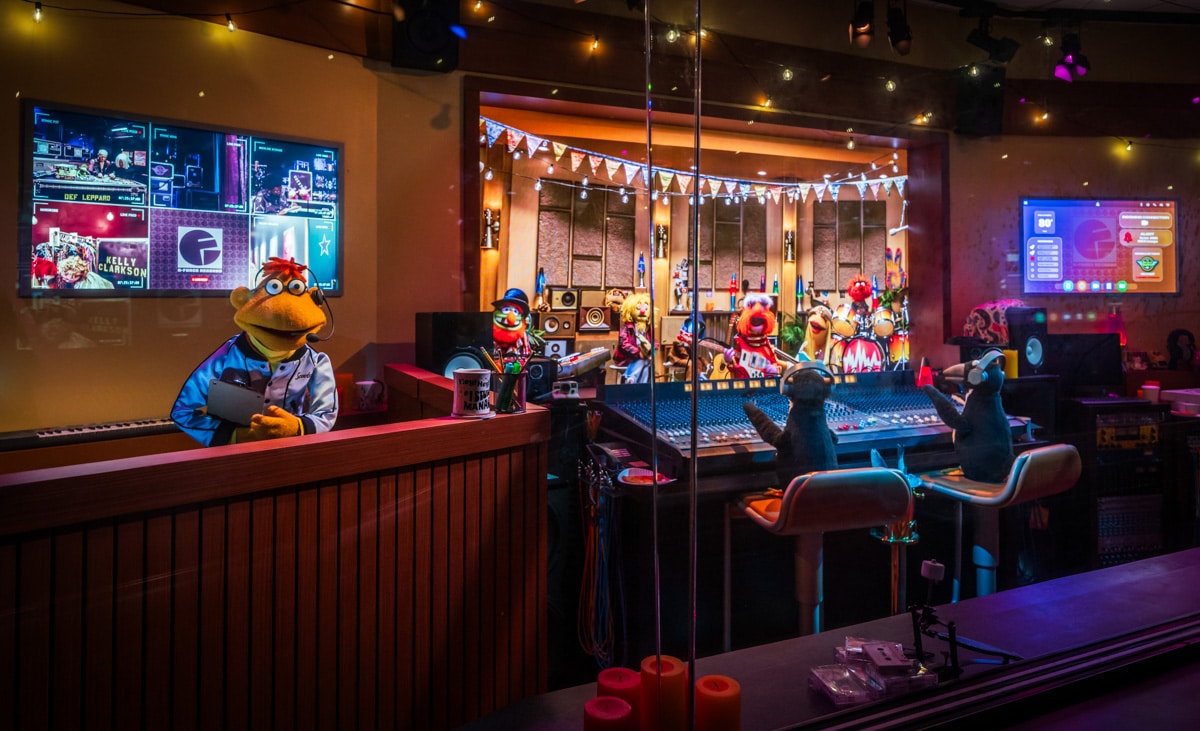
The moral of the story is that adding a Muppets attraction can help grow attendance by 3%. That’s basically the lesson I’ve learned from this, given that Rock ‘n’ Roller Coaster Starring the Muppets saw the biggest wait time gains relative to other reimagined attractions.
If my math is correct, this means Journey Into Imagination with Figment and Dreamfinder will fuel a 1,983% attendance increase at EPCOT. Get in on the ground floor and buy $DIS now, before this rocket to the moon takes off! (Not investment advice.)
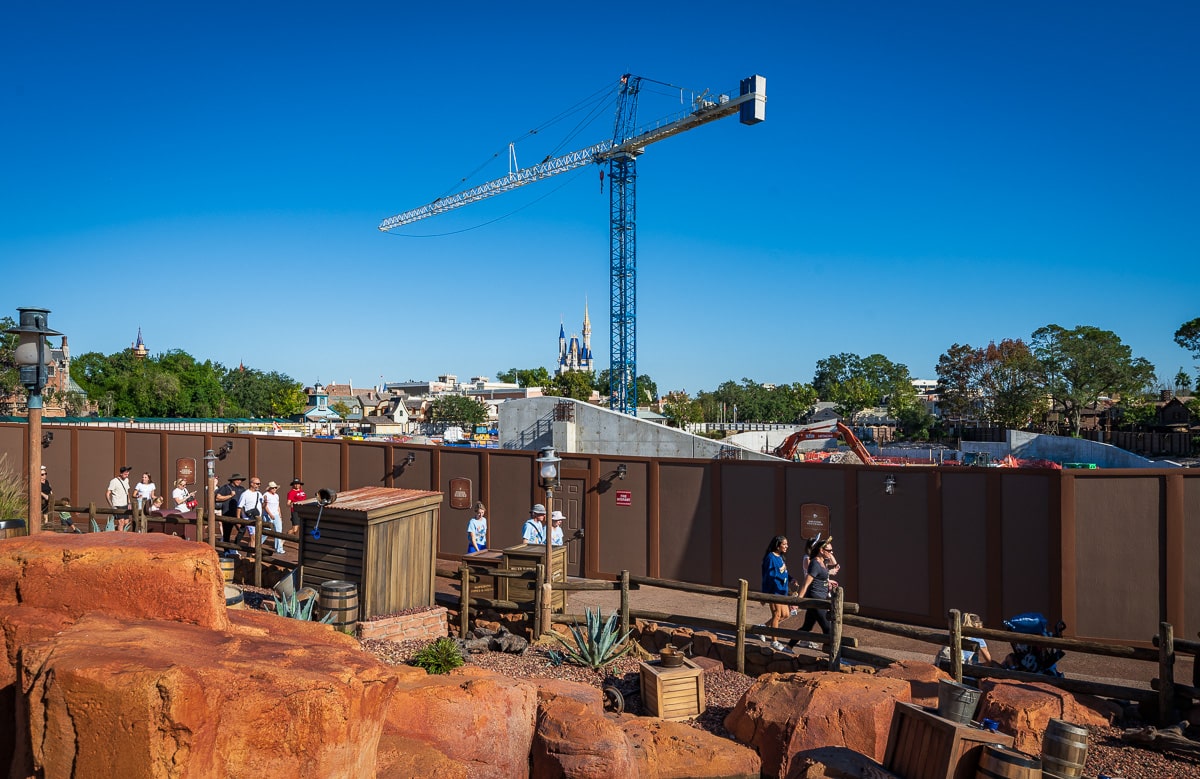
It also rather strongly suggests that Walt Disney World’s years with lower attendance are behind it. If it’s possible to achieve 3% attendance growth in 2026 with several parks closing rides and construction zones by leaning on the singles and doubles strategy, 2027 should be even better.
It’s likely that the actual expansion coming online in fiscal 2027 and 2028 via Monstropolis and Tropical Americas will fuel even more significant attendance growth. Not only that, but there are plenty of singles and doubles along the way that’ll appeal to fans, from Carousel of Progress in late Spring 2027 to the Yeti’s rebirth at Expedition Everest, Journey Into Imagination with Figment and Dreamfinder and Spaceship Earth all on the horizon. It seems like we’re on the precipice of entering a veritable Walt Disney World Decade.
Perhaps we’re getting ahead of ourselves. Universal just opened a brand-new $7 billion theme park with Epic Universe, and its recent results could best be described as dismal. Even so, Universal Orlando’s attendance will almost certainly be up in 2027 and again in 2028. Even with struggles the last two quarters, Universal is likewise poised for long-term success. It’s already pivoting on promotions, improving operations, and expanding Epic Universe, all of which suggest the future is bright for both major players in Central Florida.

Likewise, Disney’s international attendance increased by 3% in 2026, versus only 1% growth in 2025.
This is also impressive considering the macroeconomic climate in China. Not only that, but Disney Adventure World in Paris was not even open for most of the fiscal year, so it wasn’t a contributing factor in the first half of the fiscal year.
Disney Cruise Line also continued to be a driver of growth, maintaining robust demand even thanks to two new ships, the Disney Destiny and Disney Adventure, increasing stateroom capacity by approximately 50% compared to the prior-year.

Drilling down a little deeper, Disney’s 10-K also showed that domestic resort hotel occupancy was up to an impressive high of 88% for 2026, up from 87% in the prior fiscal year. Per room guest spending was up 4% for 2026, versus 3% of growth last year.
These numbers are for all hotel inventory at both Walt Disney World and Disneyland, as well as at DVC properties located at the theme parks and resorts that are not utilized by DVC members (and are thus available for cash bookings).
There are not separate numbers for each coast, but given that Walt Disney World has nearly 10x the room inventory as Disneyland, these are basically numbers for Walt Disney World. (And in any case, we’d expect that occupancy is fairly consistent from coast to coast.)

Occupancy at the international resorts was down from 87% to 86%, which tracks what we’ve seen in quarterly results. Despite this, international per room guest spending was also up 4%, although that decelerated from a 6% increase in 2025.
Based on what’s mentioned elsewhere, it’s our belief that this is being propped up by a strong performance from Disneyland Paris, and dragged down by Shanghai Disneyland and Hong Kong Disneyland. (Tokyo is not included in the international numbers, as it is not owned by Disney; its occupancy numbers are even higher, though.)
With Enchanted Star Hotel opening at Shanghai Disneyland next month despite a weakening environment, international occupancy could decline further in 2027 even as overall revenue improves (since it’s a net addition, any occupancy at all is a revenue boost, even if the hotel has <86% occupancy).

As we’ve pointed out previously, Walt Disney World offered aggressive discounts for 2026. Just as was possible last summer, you could strategically take advantage of discounts on tickets & resorts to score the lowest prices for Walt Disney World vacations in over 6 years. (Arguably better in 2026 for young families thanks to the Kids Eat Free promo.)
Many of these discounts have been released earlier and more thoughtfully than in previous years, which is likely moving the needle. For example, some of last year’s Cool Kids’ Summer discounts and even details were released fairly last-minute–probably too late to entice more prospective visitors (obviously there’s more value in that than there is in existing bookings applying discounts retroactively). Those same special offers arrived earlier in 2026, making them easier to plan around for guests.
The way this played out in this quarter and fiscal year as a whole is a win-win for guests and Disney. Great deals were available (good for guests), occupancy was high as a result (good for Disney), and spending was up as a result of the higher and (presumably) more disproportionate on-site guest balance (meaning a higher number of people were staying on-site than off-site, with the latter obviously spending more).
This same approach probably applies to park attendance, with the 4-Park, 4-Day Magic Ticket likely being a driver of the strong results, too. Our view is that the Walt Disney World parks have excess bandwidth most of the year in terms of what’s comfortable crowd-wise, so we’d like to see an increase there with greater affordability. To each their own on that, though. Speaking of which, a version of that ticket deal is already back for next year, announced earlier this morning: New Disney World 3-Day, 3-Park Ticket Deal for $109 Per Day for 2027!

Ultimately, it was once again a record-setting quarter and fiscal year for the Disney Experiences division, with Walt Disney World helping fuel the grow and strong results. The only real weaknesses noted were Hong Kong Disneyland and Shanghai Disneyland, which further explains why the second gate for the latter was quietly shelved and its team at Imagineering laid off.
It’s downright impressive how both Walt Disney World and Disneyland have managed to overcome softer international visitation numbers and higher gas prices, especially as contrasted with Universal. That’s doubly true once you consider that Epic Universe is still only a year old, and much of Disney’s domestic parks are veritable construction zones, with no major, brand-new original attractions opening in the last couple of years.
Disney has done impressively with reimaginings and refreshes, strategic special offers, and masterful marketing. It’ll be interesting to see just how much growth can be achieved once combining those strategies with actual expansion thanks to Monstropolis, Tropical Americas, and everything else coming online in the next few years. Turbocharged, indeed.
Planning a Walt Disney World trip? Learn about hotels on our Walt Disney World Hotels Reviews page. For where to eat, read our Walt Disney World Restaurant Reviews. To save money on tickets or determine which type to buy, read our Tips for Saving Money on Walt Disney World Tickets post. Our What to Pack for Disney Trips post takes a unique look at clever items to take. For what to do and when to do it, our Walt Disney World Ride Guides will help. For comprehensive advice, the best place to start is our Walt Disney World Trip Planning Guide for everything you need to know!
YOUR THOUGHTS
Thoughts on the Walt Disney Company’s record-setting fourth quarter and full fiscal year 2026 earnings? Surprised that Walt Disney World once again delivered a strong quarter that fueled growth? How would you explain the increases in per guest spending or revenue growth at WDW and beyond? What about the attendance or occupancy gains? Thoughts on the international visitation slowdown or headwinds ahead? Do you agree or disagree with our assessment? Any other thoughts or commentary to add? Any questions we can help you answer? Hearing your feedback–even when you disagree with us–is both interesting to us and helpful to other readers, so please share your thoughts below in the comments!