
Imagineers Revise Heights in Piston Peak & Villains Land, Reveal Dark Avenue Details in Monstropolis & More
Walt Disney World has taken us behind the construction walls in the latest episode of “We Call It Imagineering,” for a look at action on the architecture in Villains Land, Tropical Americas, Monstropolis, and the Piston Peak Cars Land, as well as Lakeshore Lodge and legacy lands around the parks. This post covers some of the biggest takeaways, along with our commentary.
The new episode, titled “Disney Parkitecture,” takes a closer look at one of the most powerful tools in Disney storytelling: architecture. The term “parkitecture” is borrowed from the U.S. National Parks, which defines the rustic look of how NPS lodges and visitor centers borrow from and blend into their natural landscapes.
Like that, architecture at Walt Disney World is designed to its surroundings. Imagineers use environment, culture and history to create places that feel like they belong exactly where they are. This episode explores Imagineering’s approach to parkitecture, with highlights including moving from animated worlds to built ones, as well as how materials, scale and sightlines shape the experience, including what guests are not intended to see, and details many may never consciously notice.
Walt Disney Imagineering President Bruce Vaughn explains: “The story isn’t just waiting for you at the end of the queue. It’s in the scale of a doorway, the curve of a street, the materials under your feet, the view we choose to reveal around the next corner. Details you may never notice, but you’ll definitely feel.”
All of this is presented mostly through the lens of what’s currently taking shape. There are new glimpses at some of the newest lands Imagineers are bringing to life, including Villains Land, Tropical Americas, Monstropolis, and the Piston Peak Cars Land. Let’s take a look at the biggest reveals for each:
Balloons ‘Beyond’ Big Thunder
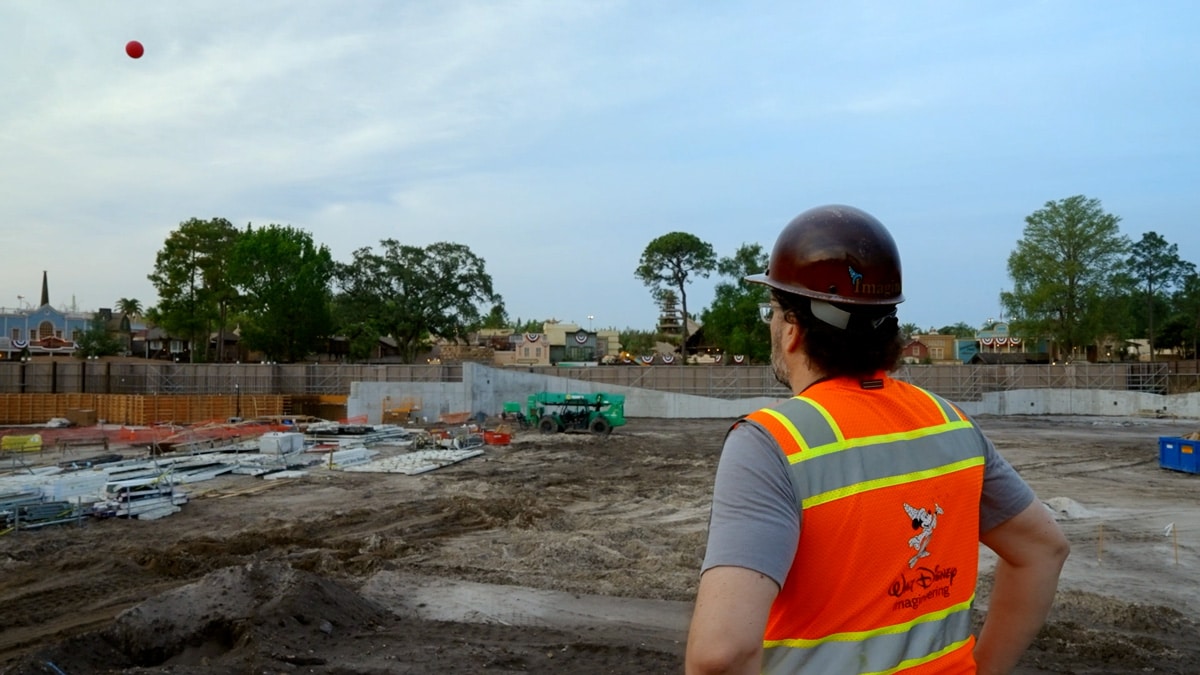
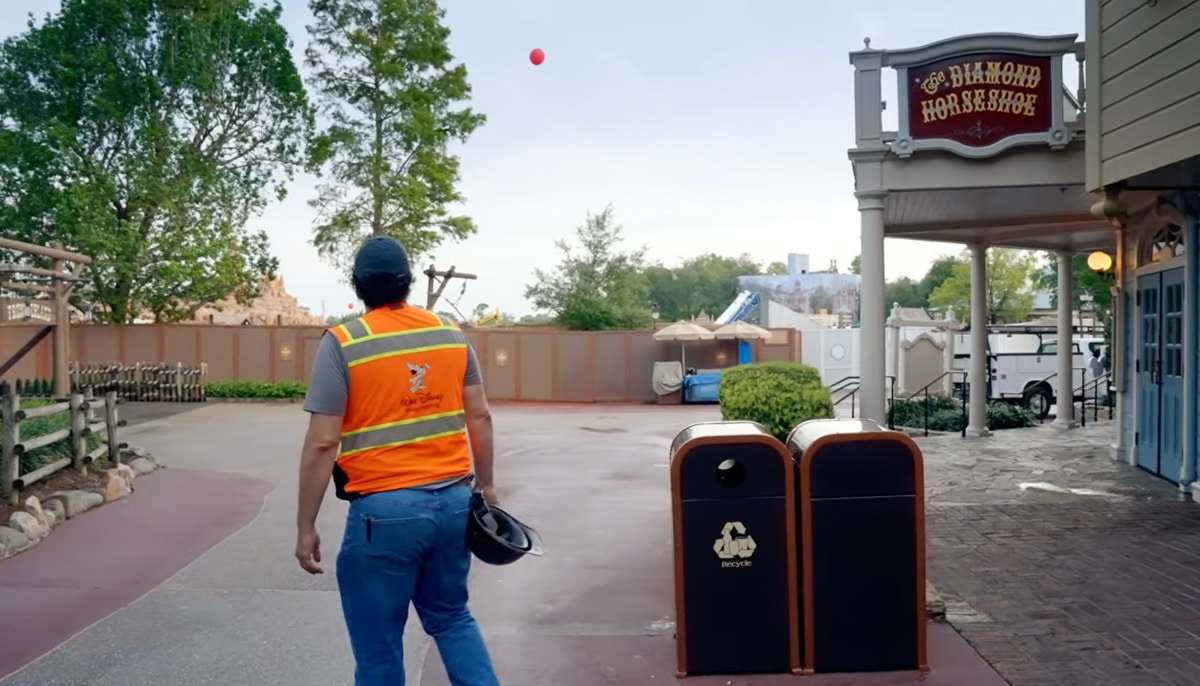
The episode begins in the Giant Magic Kingdom Dirt Pit, where a height test recently took place for Piston Peak National Park, the Cars themed area in Frontierland. Imagineers on the project team raised balloons and then walked all around Magic Kingdom to document their appearance. This is the most interesting and, arguably, illuminating segment.
Balloons are frequently flown to the exact height of proposed structures during the planning stages of projects so that Imagineers can check sightlines from across the park. This allows for teams to assess whether a planned addition presents too much visual blight, will need to be concealed, etc.
Sightlines are somewhat of a sore subject for fans, and something over which Disney itself used to obsess until they seemingly forgot all about them with the Cosmic Rewind gravity building, Harmonious Stargate, Polyday Inn, etc. Suffice to say, it’s good to see that the balloons are back.
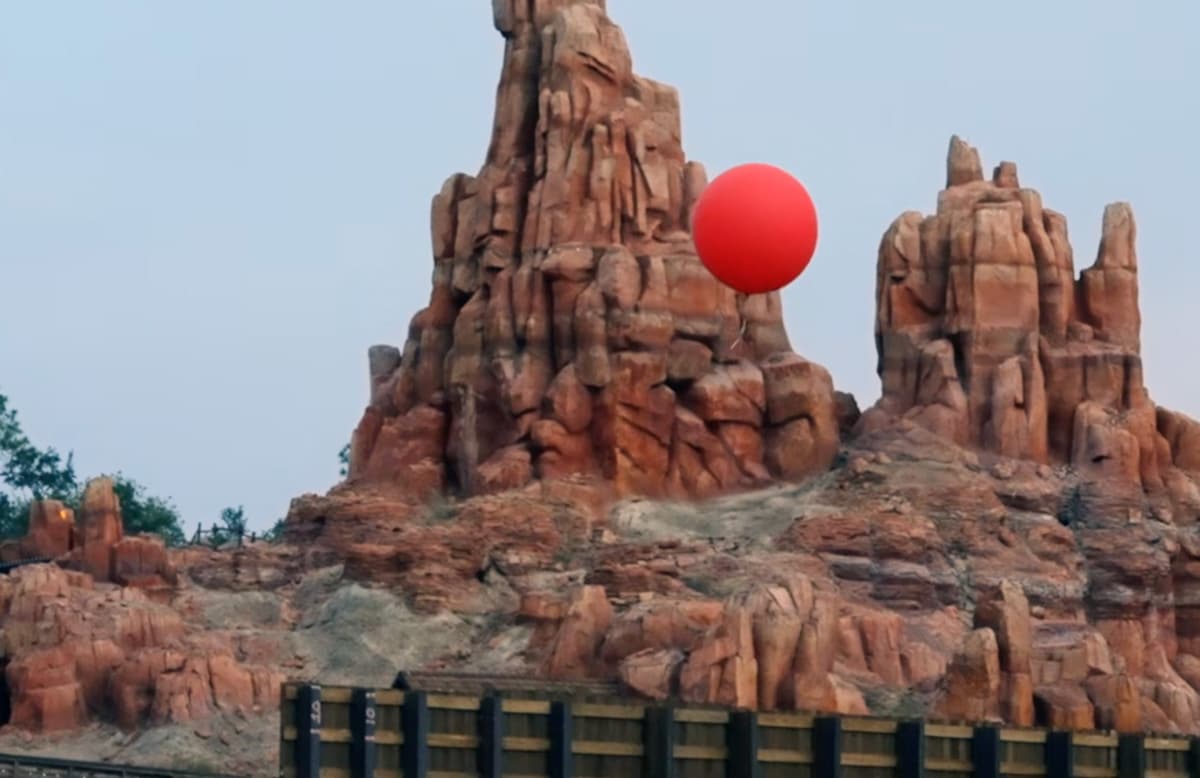
According to the episode, the team ran the same test a year earlier and discovered that some of the highest points in Piston Peak were too tall. After revising the designs, this year’s test showed the heights lining up correctly with adjacent attractions like Haunted Mansion, Tiana’s Bayou Adventure, Big Thunder Mountain Railroad, and beyond.
A couple of things caught my eye here. The first is the timing of the height tests in the first place. The more recent height test presumably took place in June or July 2026, just judging by the visuals in the video (construction progress plus the Haunted Mansion facade scrim still in place). That would put the last test around Summer 2025.
Typically, height tests occur much earlier in the process. Historically, one of the ways fans have found out about projects–even ill-fated ones–is by spotting these balloons. They can often appear years before an announcement even happens, as the viability of a project is assessed.
In this case, I would hazard a guess that height testing had previously occurred before the 2024 D23 Expo announcement, but was challenging while this was still the Rivers of America. In which case, a more comprehensive height test around this time last year after the water had been drained would make sense.
What the revisions to the plans in the year since also underscore to me is how Imagineering keeps iterating on and improving the plans for Piston Peak. In the past, it was often the case that plans got worse over time, as the idealized concept art that was originally released faced the hard realities of cost overruns, budget cuts, and other practical realities of construction.
Piston Peak strikes me as the exact opposite of that. I previously half-joked that I suspected Disney is pulling a “Reverse Toy Story Land” with Villains Land when covering purported changes to the land. That they’re spending lavishly on the land, albeit within the original plan’s parameters. That it’ll have polish and detail on par with Tokyo DisneySea as opposed to a normal Walt Disney World project.
While I still believe that’s probably the case with Villains Land, the better example is probably Piston Peak. We’ve seen a lot more about this Cars area in the last ~2 years, and every update shows upgrades, and the land meshing more with Magic Kingdom and the surrounding landscape. Even those who hate Piston Peak and everything it stands for would probably (hopefully?) concede that this project is looking a lot better today than it did two years ago.
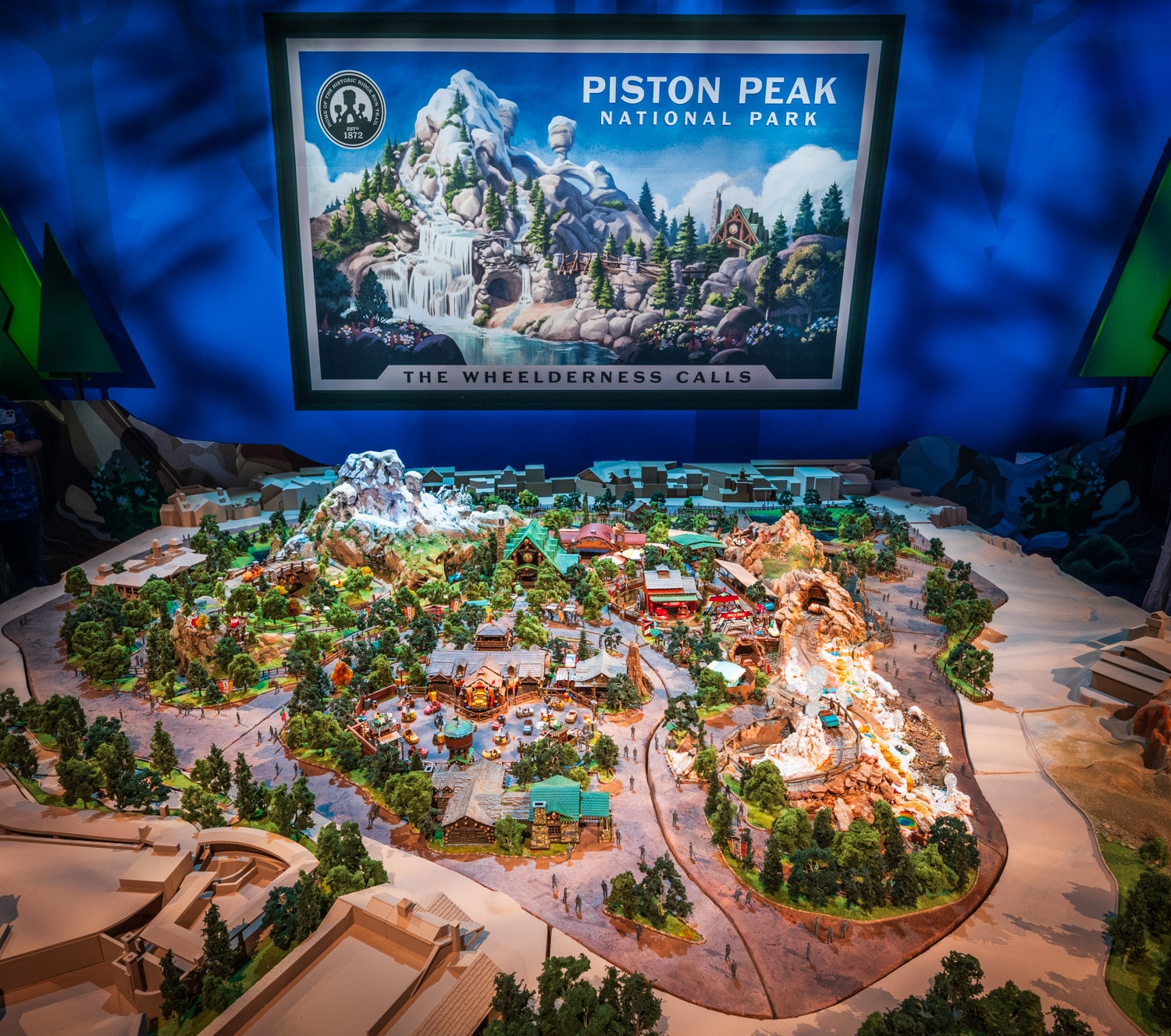
That was really underscored with the massive model of Piston Peak National Park on the show floor of the D23 Expo, which looked fantastic. That model feels like the culmination of Imagineers continuing to iterate on this project even after it was announced, as it looks far better than even last year’s Fun Map–and we repeatedly warned that Fun Maps are caricatures with exaggerated features that could make the area look better than it’ll be, and with more ‘natural’ features.
Speaking of which, I did my own rudimentary sightline testing on that model by ducking down to guest level to see the sightlines for myself, and everything looked mostly good. Assuming they pull it off as built, Liberty Square and Frontierland should not look overtly ‘Carified’ from their main thoroughfares.
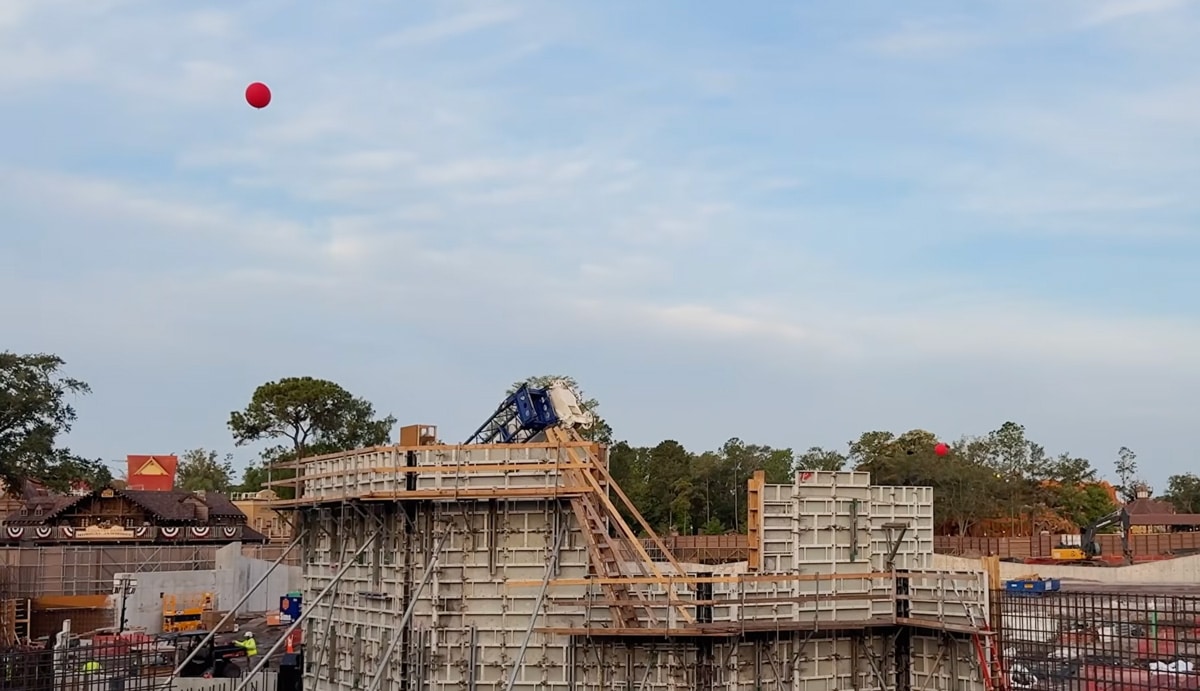
Here are a few more screengrabs of the recent height balloon testing in Magic Kingdom:
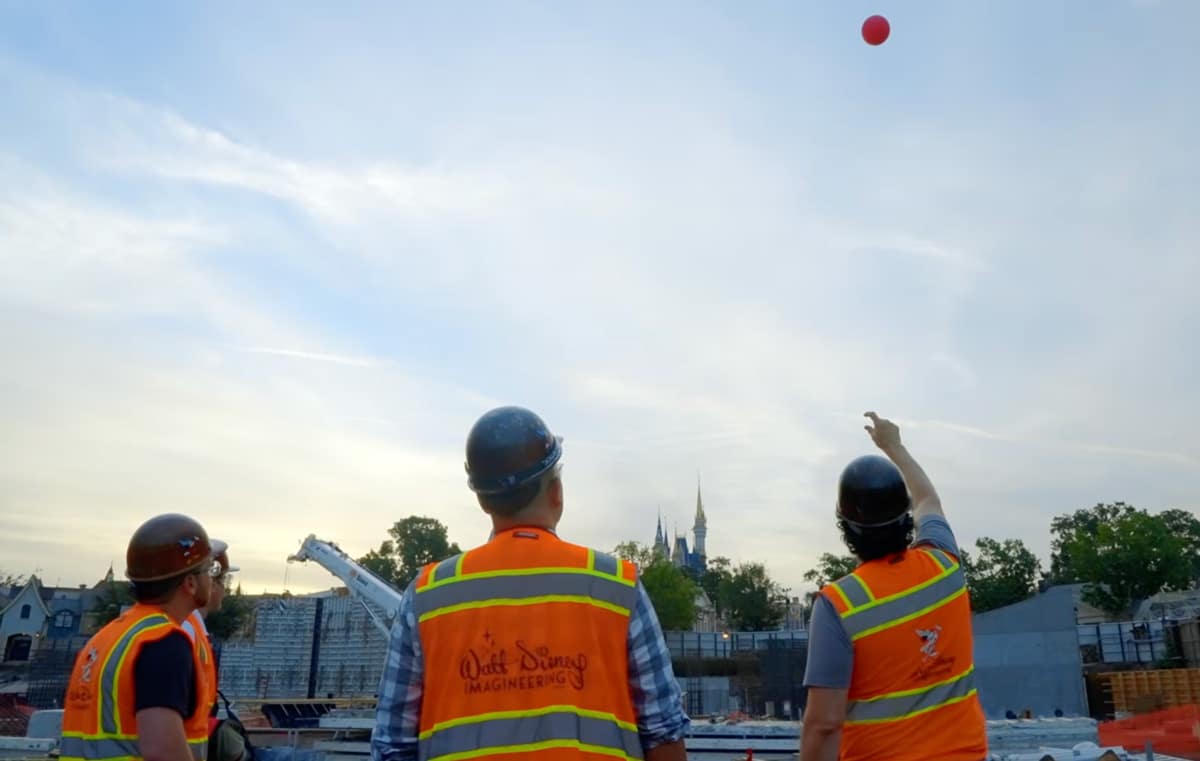
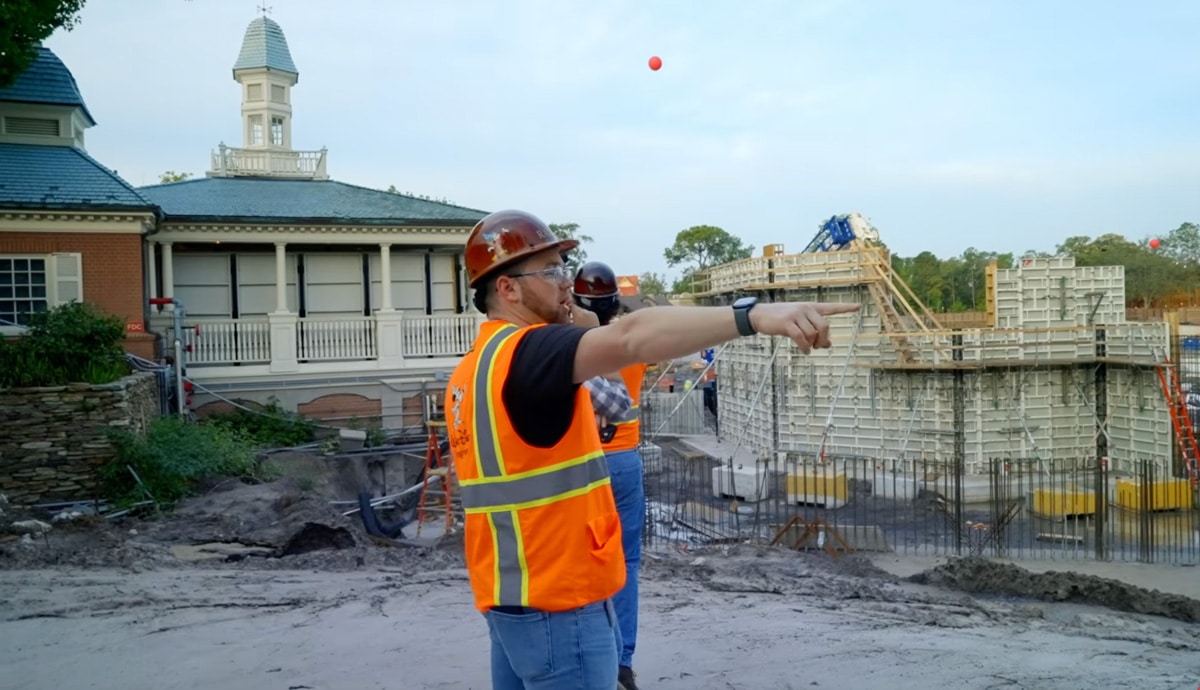
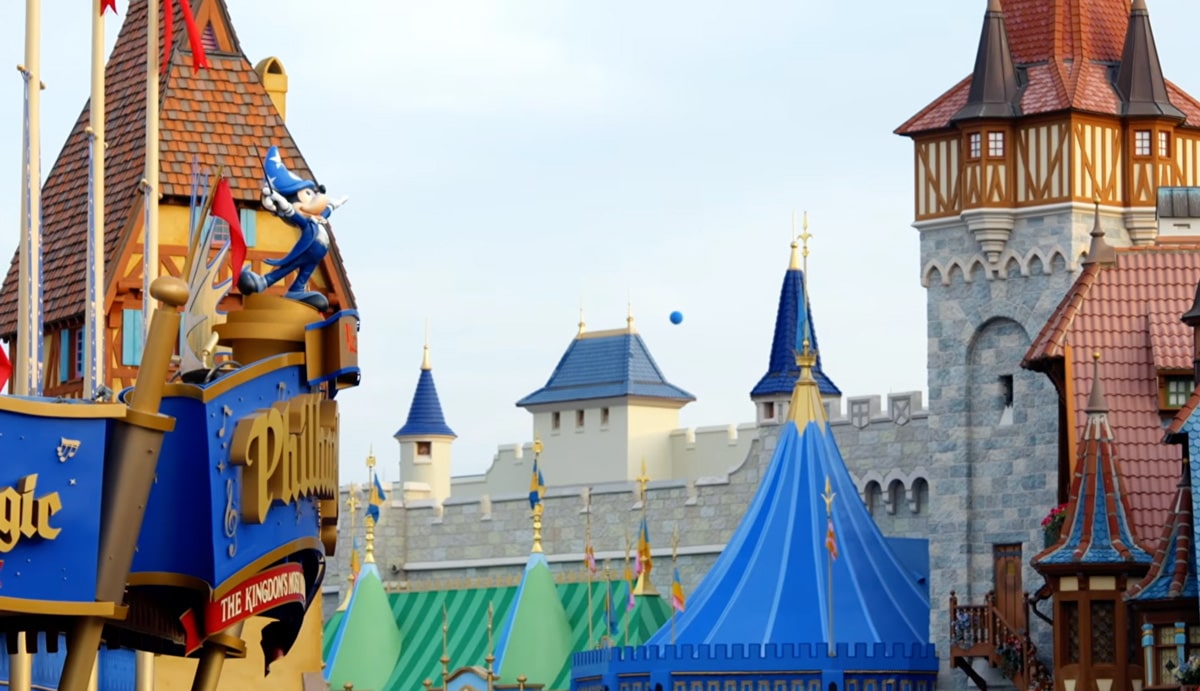
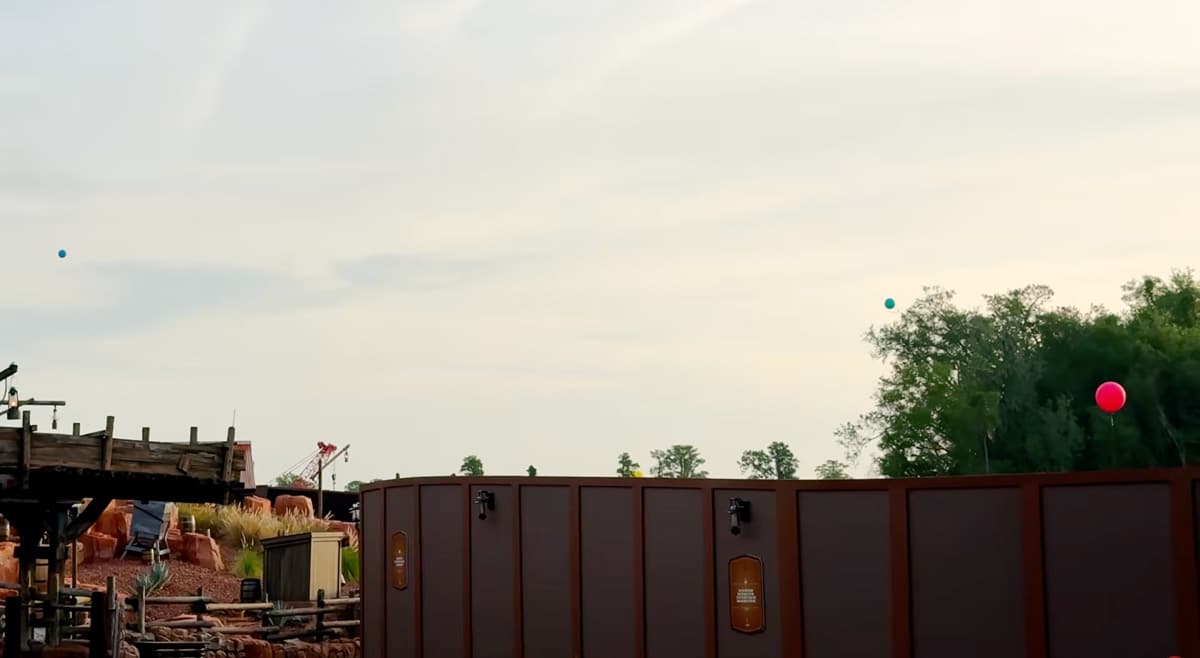
Assuming the two teal and blue balloons seen above are for Villains Land, then the two highest points in that land (presumably Maleficent’s castle and the rockwork concealing the Magic Mirror dark ride show building) are going to rival Cinderella Castle in terms of height.
Given how far back these structures are behind the rest of Magic Kingdom, it’s surprising to see these balloons make appearances around the park. There’s also a bit of perspective distortion at play in the above screenshot, as the camera is incredibly close to the red balloon, making it appear far lower than the ones for Villains Land. I didn’t spot any clips from other lands in Magic Kingdom showing all three.
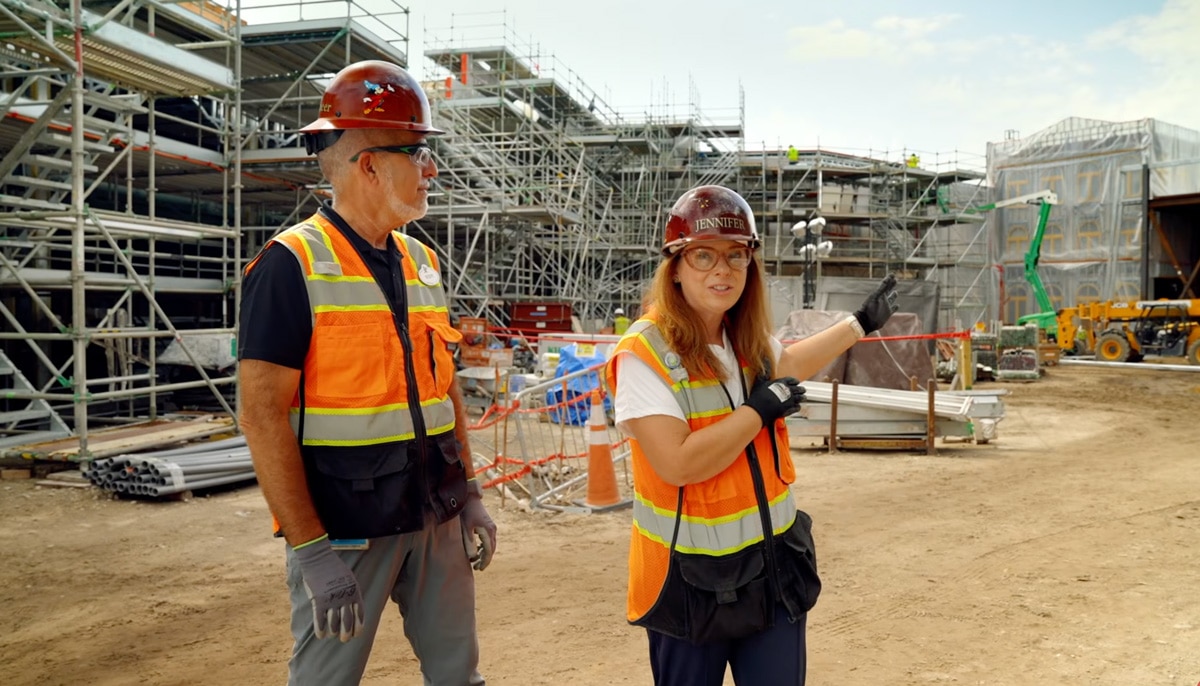
Enter Dark Avenue in Monstropolis
The second-most fascinating segment of this episode took us behind the walls in Monstropolis, where Imagineers welcomed us to Dark Avenue, the main thoroughfare in the Monsters, Inc. miniland. Dark Avenue will lead to the Laugh Factory, which will house the marquee Monstropolis attraction, the suspended door coaster. Dark Avenue will also feature Harryhausen’s Restaurant, Archie’s Scare Pig Pizza, Monsters University Alumni Club, the Scareporium, and more.
Imagineers revealed thematic details that are being built in the land, including pillars, horns, teeth, and more to Monster-ify the land. They explained that they’re not re-creating animated structures from the movies, but rather, places with a real world sensibility that are inspired by the films (or that could have, theoretically, been the real world places that inspired the animators in the first place).
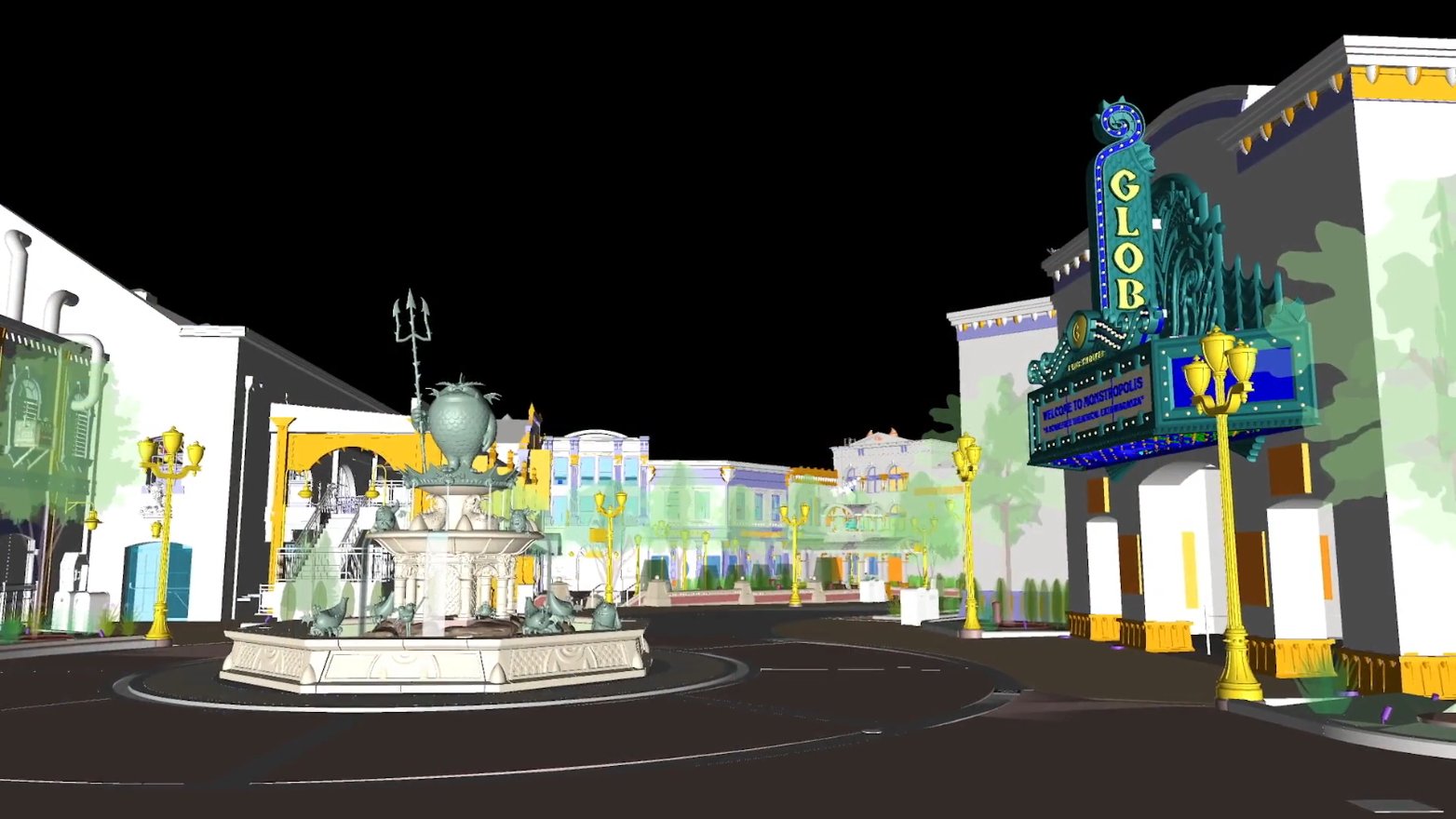
They’re building out a believable background for a real city, which could have been developed organically over time, just like an actual city. The Imagineers discussed the diversity of the Monster world, explaining that it would influence the size of different doorways, structural engineering, and more.
Beyond the architecture that’ll define Monstropolis, they also covered the graphics, smells, and soundscape, right down to the little things like hearing a storm drain echoing the sounds of a night club in the evening. All of this should result in a more lived-in sensibility with personality and gags, that in turn makes guests want to linger in the land.
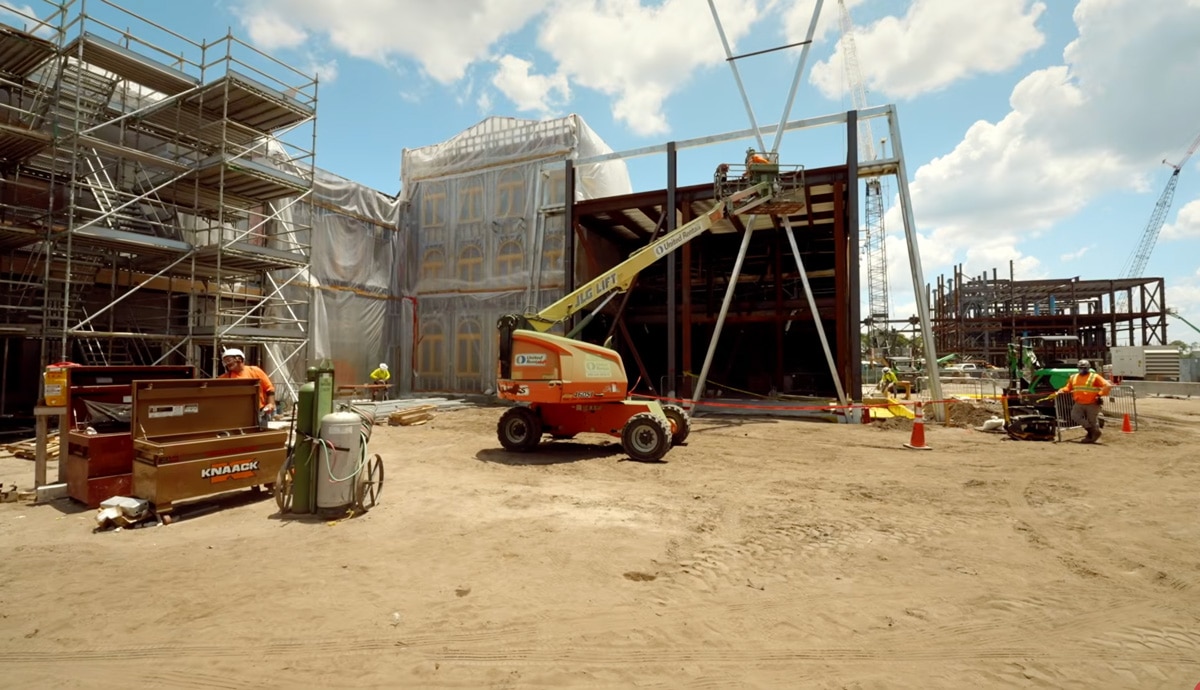
The more I see and hear about the front courtyard of Monstropolis, the more bullish I am on this area. Everyone is excited for the Monsters, Inc. Door Coaster, with expectations being lower for the “reimagined” front half of the land.
Personally, my expectation is that the courtyard overdelivers with a detail-dense environment, a strong mixed-media stage, and two fun restaurants. (Conversely, my concern is that the Door Coaster will be too short. Out of everything being built right now at Walt Disney World, it’s probably the lowest ranking on my hype index.)
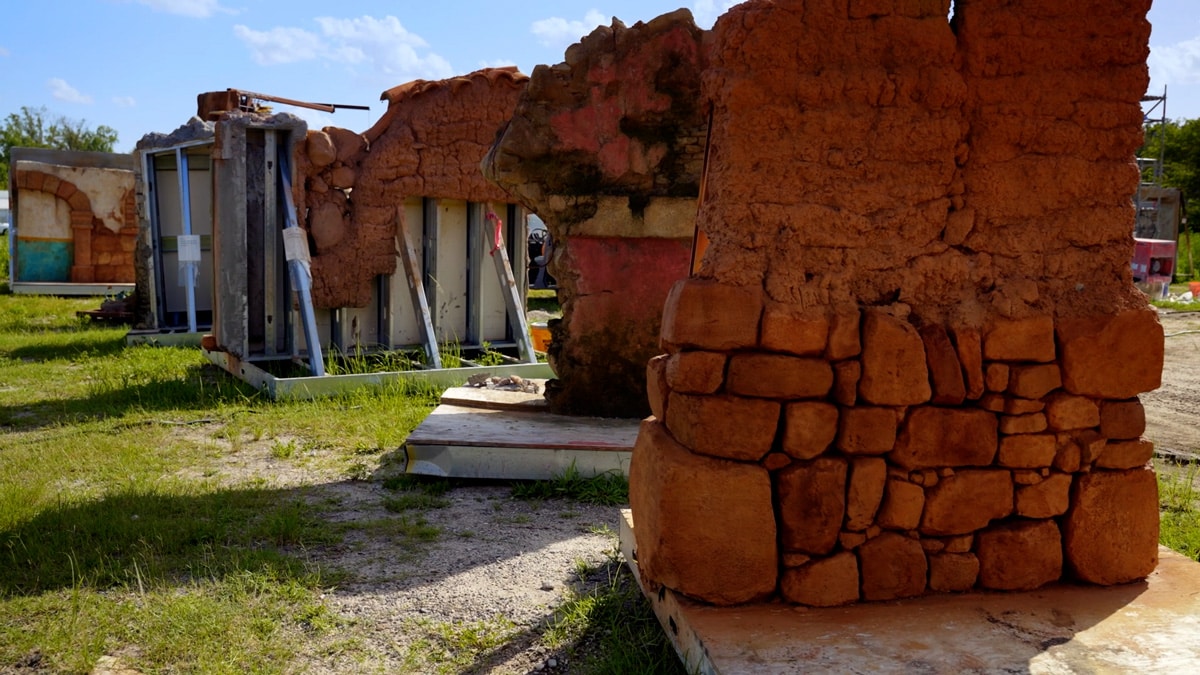
Tropical Americas Sample Yard & Forced Perspective
Over at Animal Kingdom, the episode covers the sample yard for Tropical Americas. Imagineers built the yard nearly two years before construction started so they could test colors, textures, and hardscape combinations from their research trips to experiment before building the land itself.
This type of testing is common to see how materials will withstand the Florida elements and sunshine, and whether they’ll weather in unexpected ways. Since the surfaces are not a movie set that’ll only last a few months, they need to be built to stand the test of time, with purposeful wear and tear that define Disney’s Animal Kingdom, but won’t further degrade over time. They also need to make sure the color is right, surfaces aren’t too rough, and guests won’t perceive changes over time–that the design is fixed in time.
If Imagineers learn they don’t like how something looks, either immediately or over time, they’ll demolish it and start over. For instance, they started with 24 samples in the yard, and they trashed all of them. Then they started over and narrowed it down to six before honing in on a correct style, before arriving on the final look.
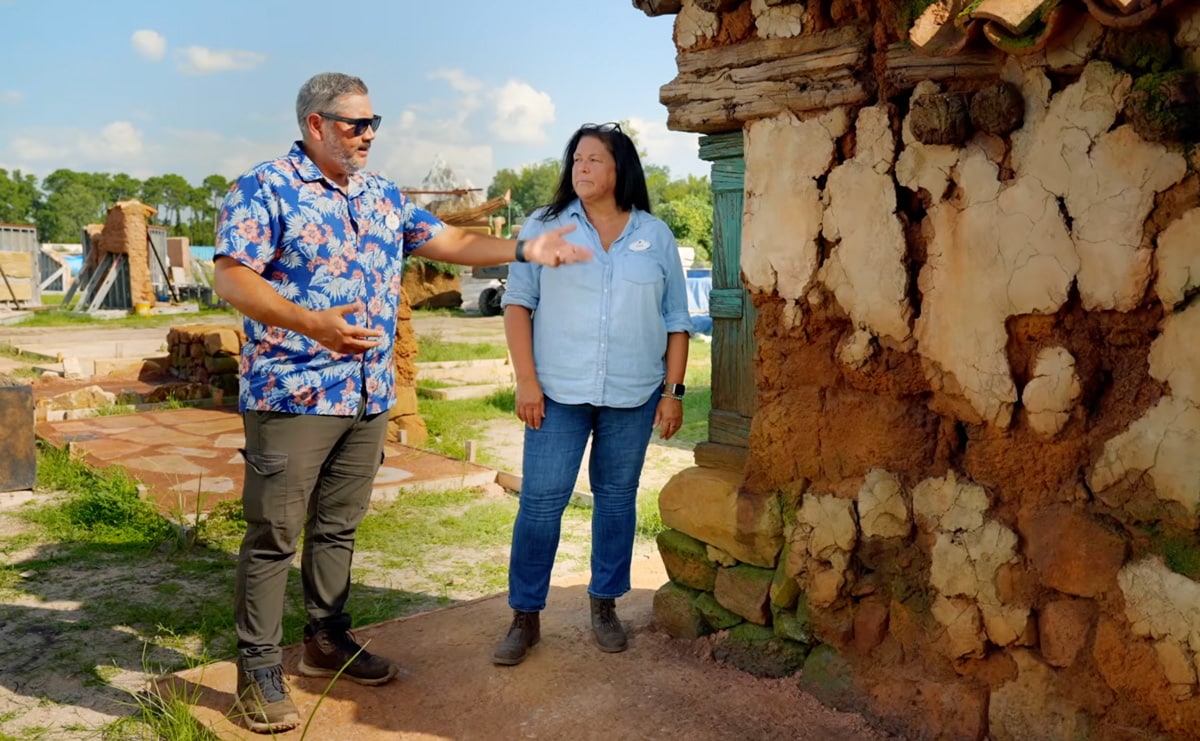
The wall designs for the Madrigal casita, for example, reference an architectural technique from Colombia that also inspired the Encanto movie, right down to horse manure used in the material, that the Imagineers learned about on their research trips. The goal is to make the wall look right at home to someone traveling from the region.
Later in the video during the segment on forced perspective, they circled back to the Encanto Casita. Imagineers revealed that the closest guests will get to the Madrigal family home’s front door is 40 feet. To achieve forced perspective, they’re using a variety of palm tree sizes along with color saturation to play with scale.
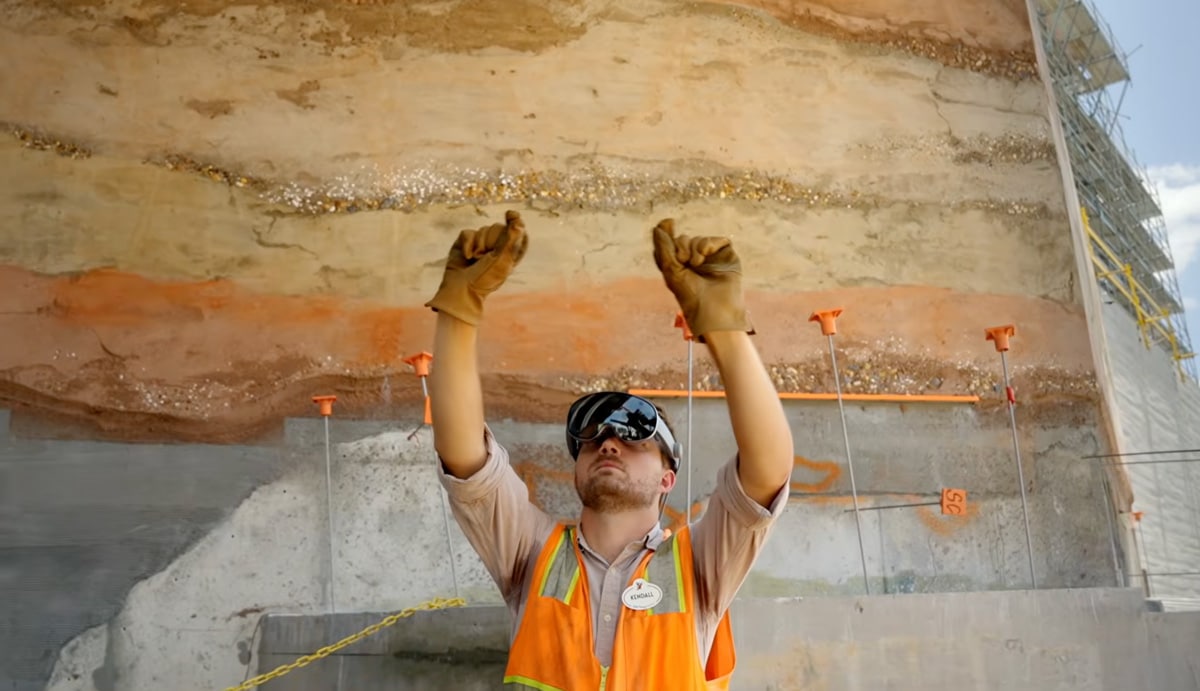
Augmented Reality at Disney’s Lakeshore Lodge
The episode also featured a segment with an Imagineer wearing an Apple Vision Pro while standing in front of a concrete wall outside Disney’s Lakeshore Lodge. He was very excited about this. Someone else, also wearing an Apple Vision Pro started spray painting squiggly lines on the wall. This person was wearing a bandana, but I did not perceive them to be an old timey bandit.
The Imagineer then pivoted to discussing entertainment, which is not architecture. Although I have absolutely no clue what was happening during this segment, but I assume it was the obligatory reminder that Disney is (allegedly) a tech company, which seems like one of the underlying throughlines of “We Call It Imagineering.”
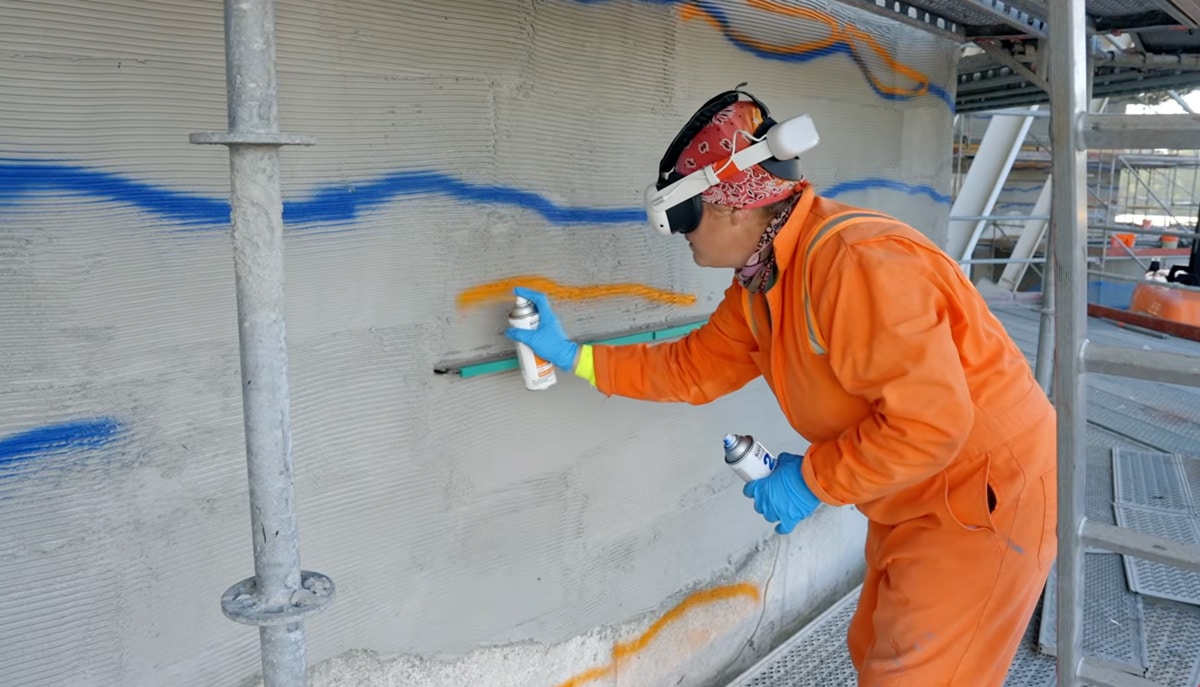
While Imagineering is undeniably innovative and impressive, I’m not so sure a concrete wall outside Disney’s new big box hotel makes the most persuasive case for this. The rest of the episode is pretty cool, though.
Other segments covered the real-world design behind the reimagined Walt Disney Studios Lot at Hollywood Studios, the “go away” color palettes used to hide unwanted elements in design, illusions used to create the floating mountains of Pandora – World of Avatar, and the collaborative nature of Imagineering. It’s a good episode of “We Call It Imagineering,” and one that’s well worth a watch to see the visuals and hear from the Imagineers yourself.
Planning a Walt Disney World trip? Learn about hotels on our Walt Disney World Hotels Reviews page. For where to eat, read our Walt Disney World Restaurant Reviews. To save money on tickets or determine which type to buy, read our Tips for Saving Money on Walt Disney World Tickets post. Our What to Pack for Disney Trips post takes a unique look at clever items to take. For what to do and when to do it, our Walt Disney World Ride Guides will help. For comprehensive advice, the best place to start is our Walt Disney World Trip Planning Guide for everything you need to know!
Your Thoughts
What do you think of the footage or discussion of architecture and the landscape in Monstropolis, Piston Peak, Villains Land, or Tropical Americas? Optimistic about the extent to which Imagineers are doing their homework, taking a methodical approach to the environments? Excited or underwhelmed? Or, are you in wait and see mode with this? Do you agree or disagree with our assessment? Any questions we can help you answer? Hearing your feedback—even when you disagree with us—is both interesting to us and helpful to other readers, so please share your thoughts below in the comments!

Tom, great analysis of the Imagineering piece. I am curious why you feel the Monster’s Door Coaster will be too short? The show building appears to be massive, which has me optimistic. I know some of that building will be for the queue, and the huge load station, but given the height of the show building, I’m hopeful that the actual “coaster” portion will pack a lot of track in the space, that will cross in and out of itself. If it’s even 20 seconds longer than Tron I would consider it a win.
Although probably not accurate, I sensed that Imagineers went to Epic Universe last summer and said, “These sightlines are awful. Let’s not do that.” So, they changed the building heights for Piston Peak.
Struggling to understand why you are so optimistic given the big new news here.
They are lowering heights of the piston peak rockwork and making it less spectacular because of sightlines. How is that a good thing? Sightlines is a problem when we see the ugly ride buildings. Not the scenary.
They are not making monstropolis look like monstropolis but something more realistic that could of inspired montropolis animators? Are they serious? Its just going to look like an ordinary town!
I agree with your statement that it is not a problem to see scenery from different lands or vantage points. I can see Haunted Mansion from Tiana’s. I can see Space Mountain from Fantasyland. I can see the Castle from many places. In my opinion, these are not issues.
The problems are when I can see the big ugly unthemed boxes that house Cosmic Rewind, or Tron. That’s where I have issues with sightlines. There is no excuse for being able to see unthemed show buildings.
I haven’t watched the episode, but one thing people use Vision Pro for is to map out a mural on a real world wall and then “trace” it. Perhaps here they were roughing out the main subjects or shapes of a painted wall by projecting the final image onto it in the headset?
Bruce Vaughn’s comment, “Details you may never notice, but you’ll definitely feel” is spot on.
The Disney parks have always had that attention to detail, and
it’s refreshing to know it still matters.
Thank you, Imagineers.
Exactly. Half the reason I go to WDW so much is for the Parkitecture and horticulture. I study it constantly & use it frequently in my work.