
Bob Iger Warns of Tariffs’ Impact on Disney’s $60 Billion Expansion Plans

After President Donald Trump announced expansive tariffs on the United States’ largest trading partners, CEO Bob Iger warned of the negative impact on the country and Disney’s businesses as a result. This covers what the CEO said, plus our preliminary thoughts on the ramifications for Walt Disney World, Disneyland, Disney Cruise Line, etc.
During a surprise appearance at ABC News’ daily editorial meeting, Walt Disney Company CEO Bob Iger sounded the alarm on the announced “Liberation Day” tariffs. The United States already began collecting the across-the-board unilateral 10% tariff on all imports from many countries on Saturday, with higher levies on goods from 57 larger trading partners due to start on April 9, 2025.
These higher “reciprocal” tariff rates of 11% to 50% are calculated by taking the country’s trade deficit with the United States, divided by its exports, then divided by two. Under this so-called reciprocal formula, European Union imports will face a 20% tariff and Chinese goods will be hit with a new 34% tariff, bringing the total levies on China to 54%.
In response to the higher-than-expected tariffs, Disney CEO Bob Iger expressed concern about the impact an impending trade war may have on not just his company, but the American economy as a whole. Iger emphasized that relocating overseas manufacturing to the United States “speedily” is impossible. Iger also suggested that most people “don’t really understand how tariffs work,” according to Oliver Darcy’s Status newsletter.
Iger said that many major companies rely on specialized workers who would need to be replaced and trained domestically, which couldn’t conceivably happen quickly. The CEO pointed to Apple’s Foxconn plants in China, which employ hundreds of thousands of highly specialized workers, noting that it wouldn’t be possible to simply replicate their skill level overnight domestically. Anonymous staffers who were present at the meeting in New York City told Darcy that Iger’s comments appeared to be his push for ABC News to connect the dots for readers and viewers.
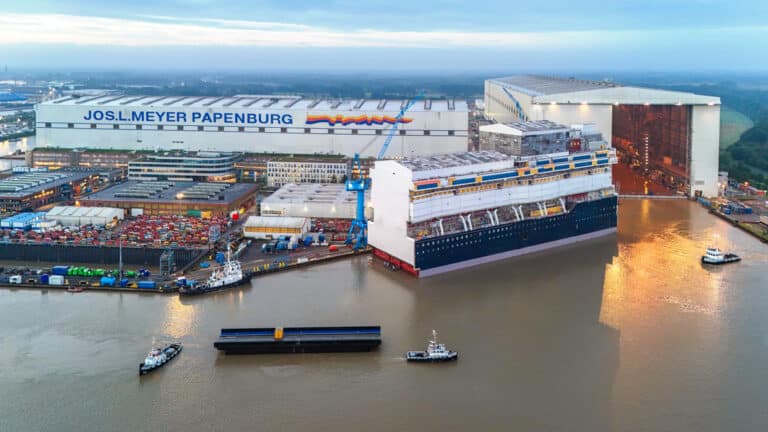
As discussion of the tariffs and the ABC newsroom’s coverage strategy continued, staffers described Iger as continuously jumping into the conversation to share his thoughts and offer more of what Darcy said were “unfiltered views.” He expressed concern for Disney Cruise Line, particularly its new ships that rely on steel for their construction. Iger stated that Disney may have to scale back its investment plans if costs rise too high.
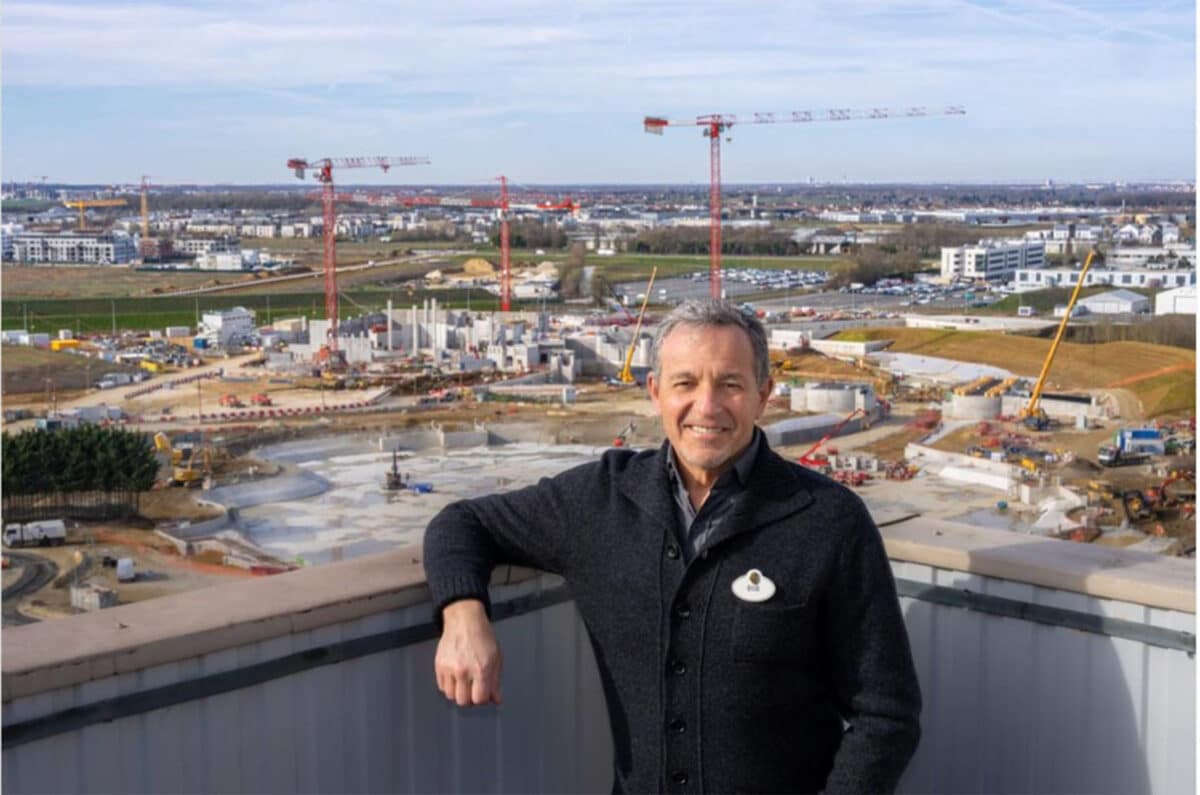
Our Commentary
This is a ‘developing’ story that we’ve been watching for the last several months, and I’ve been waiting to write a new ‘What Does Walt Disney World Do During a Recession?’ article (that’s the old one–from during the Biden administration) until after the entire saga unfolded. Although there are already cracks in consumer confidence and other leading recession indicators, tariffs are unquestionably the elephant in the room.
With regard to tariffs, there’s little certainty. A new version of that article first written in January would’ve been dramatically different than one from March. Even ones written two days apart (pre-announcement versus post) in April would’ve differed radically. At this point, I’m holding off on comprehensive commentary until after the “reciprocal” tariffs are supposed to take effect on April 9.
That’s because there’s still a tremendous amount of uncertainty. In watching the Sunday news shows, this much was immediately apparent. Even those within the administration aren’t in agreement as to the end game and likely outcomes. So it should go without saying that some dude with a Disney blog is even more in the dark. Who lifts the tariffs and when are the biggest outcome-determinative factors. Things are a lot different if it happens via the administration in a couple of days versus two months via Congress versus after the midterm elections.

Like everyone else, I have my own thoughts on the spectrum of short-term and long-term impacts of the tariffs. Both for the country as a whole and Walt Disney World, specifically. No matter how you feel about the tariffs, it should be patently obvious that they will have an array of direct and indirect consequences for both the global economy and the Walt Disney Company, though.
However, we strive to avoid politics here–even with this inherently political topic–so I’ll eventually only be covering this to the extent necessary (if necessary) as it pertains to investments in Walt Disney World, Disneyland, Disney Cruise Line, etc. It nevertheless should be uncontroversial to say that it’ll be a negative for Disney in the short term, at the absolute minimum.
The administration itself has indicated as much in broad strokes about the U.S. economy, calling the tariffs “necessary short-term pain for long-term gain” and saying “sometimes you have to take the medicine to fix something.” So at least the immediate ramifications aren’t really in dispute. Whether those consequences are allowed to come to fruition are. The median voter is most likely to react to what they feel in the short-term (e.g. kitchen-table issues), so the longer-term providence of tariffs seems less material to any of these discussions than the weight it’s being given.

Already, the markets are reacting to the news. The Walt Disney Company’s share price dropped to $80.20 at market open on Monday, April 7, 2025. If it closes at that level, it’d be lower than the COVID lows, worst tumult of the late-stage Chapek regime, or even the proxy fight. Disney’s stock price hasn’t closed below $80 since mid-2014.
Disney is hardly unique in this regard. U.S. stock markets have been battered since the tariffs were announced, with three straight days of massive drops. The S&P 500 lost 4% at open on Monday, bringing its three-day losses to around 13%, a drop not seen in that short of time since 2008 during the Great Financial Crisis. If the benchmark closes at these levels, it will bring its losses from its closing record touched in February to 20%, a bear market in Wall Street terms.
The Dow Jones Industrial average tumbled 1,363 points, or 3.5%, following back-to-back 1,500 point losses for the first time ever Thursday and Friday. The Nasdaq Composite dropped another 4% at open on Monday, further into bear territory, as investors sold their tech winners to raise cash. The Nasdaq is off 26% from its high. The list of new 52-week lows is long.
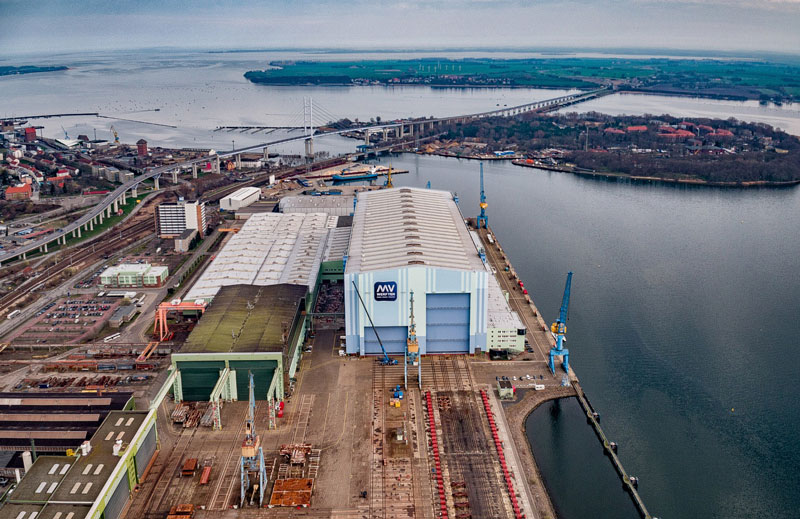
Bob Iger’s comments during the ABC News meeting were interesting, offering “unfiltered” insight into the company’s contemporaneous thinking. His position is unsurprising, and in-line with most executives and business leaders, regardless of their past political affiliations or donations.
What is surprising to me is that Iger would’ve pointed to Disney Cruise Line as an impacted business. Perhaps it’s just an easier and less-abstract illustrative example since a ship is tangible, but I would think Disney Cruise Line is probably the business, at least on the Disney Experiences side, that’s least likely to be impacted by tariffs.
Disney Cruise Line’s new ships are built in Europe. They’re complex and likely involve a flow of components from around the globe, but the principle construction and imports are to the European Union, and not the United States. The end result–the completed ship–is not an import to the U.S., either, as the ships are flagged in the Bahamas.
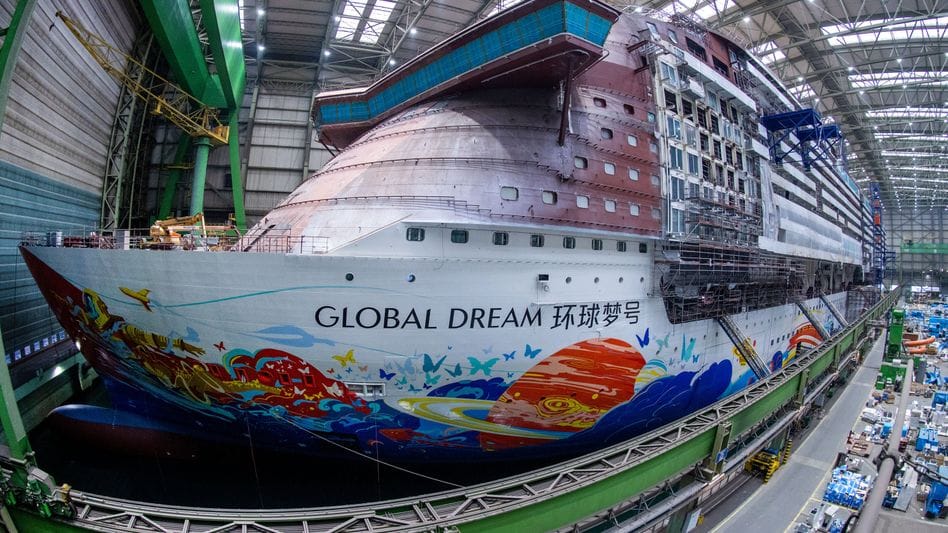
I don’t doubt for a second that costs will increase for DCL to some extent. Such is the nature of our interconnected global economy. But my first thought when reading about the tariffs and their impact on Disney is that it would incentivize the company to put more of its eggs in the Disney Cruise Line basket.
Not just because DCL largely avoids the direct impact of tariffs, but also because there’s the ability to avoid (or at least mitigate) the indirect impacts. Whatever happens to the economy is going to occur on a global level; if the U.S. slips into a recession, we’re pulling other countries down with us. But consequences won’t be commensurate among nations, and Disney Cruise Line is the most nimble business. Ships can be moved around to different ports as demand dictates.
There’s also the matter of the backlogs at the shipyards. Admittedly, I haven’t stayed on top of this lately, but one of the big reasons Disney Cruise Line was full steam ahead during COVID was because pausing their plans could mean forfeiting a spot “in line” at the shipyards. Instead of Disney postponing or cancelling cruise ships during COVID, they doubled-down, buying a partially-completed ship that has since become the Disney Adventure. Even with tariffs, it’s hard to see Disney suddenly becoming less bullish on DCL in the long-term.

Walt Disney World and Disneyland are very different stories.
In addition to importing a variety of raw materials that will be subject to massive tariffs, Walt Disney World and Disneyland will import entire ride systems. To the best of my knowledge, all of the major roller coaster manufacturers are based in Europe. Disney cannot and will not simply ‘pivot’ to an American manufacturer (that does not even exist) or make the ride systems themselves. The cost in time and dollars would be greater than tariffs of an unknown duration.
Instead, if the tariffs remain in place, Disney will pay more for the roller coasters, ride systems, and variety of raw materials. This means that Monstropolis, for example, will get more expensive to construct. It’s unlikely that the plans for the coaster itself change at this stage in the game, as reworking them would also be costly. What’s more likely is that Disney will look to reduce investments elsewhere–or cut corners on the project itself via ‘unnecessary’ details or other elements that are deemed expendable.
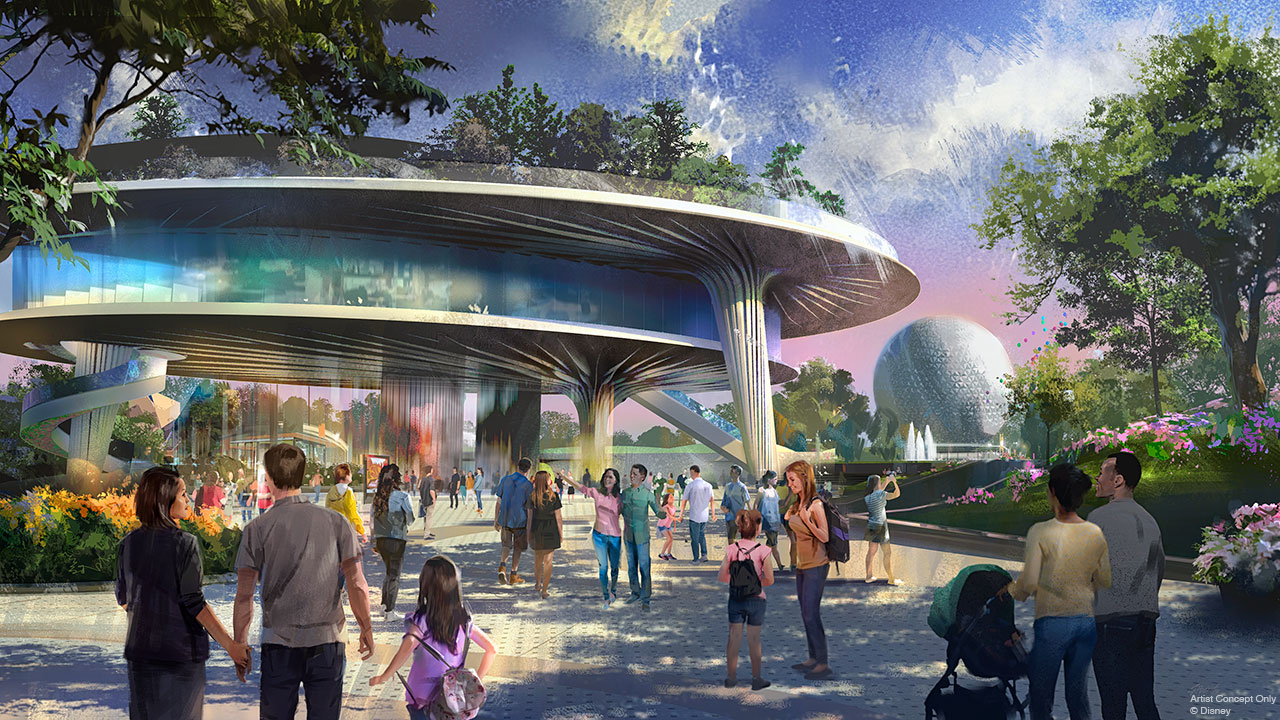
This happened to some extent with projects at Walt Disney World as a result of COVID. World Celebration at EPCOT is the best/worst and biggest example. The center of the park became much less ambitious, trading unique features for trees and benches, and the striking multi-level festival center for CommuniCore Hall.
Another example came via Fantasy Springs at Tokyo DisneySea. While the attractions themselves didn’t lose any of their wow-factor, thankfully, corners were cut with the in-park hotel and seemingly with other details (or the lack thereof) within the land.
Based on early glimpses of Epic Universe thus far, it seems fair to say that the same happened with its in-park hotel and other smaller features. Still incredibly impressive additions that don’t deserve comparison to World Celebration, but you get the idea.

The silver lining was that projects fairly far along in development at Walt Disney World, such as Remy’s Ratatouille Adventure, TRON Lightcycle Run, and Guardians of the Galaxy: Cosmic Rewind, did not appear to have any cuts. Two of those are clones from the international parks, so we know they didn’t. They were all delayed, but none were cancelled or materially scaled back.
Walt Disney World’s bigger move during COVID was to shelve projects entirely: Play Pavilion, Spaceship Earth Reimagining, Mary Poppins Cherry Tree Lane, Reflections Lakeside Lodge, and more.
One of these (the DVC resort) has since been resumed, but others have not. This is to say nothing of the unannounced projects in development that weren’t announced. It’s safe to say Walt Disney World wouldn’t have had a gap in new additions from last year until 2027 but for COVID.

A similar approach is possible here, with actual vertical construction on Cars Land and Villains Land in a holding pattern until the tariffs are lifted. Even so, site work can begin on these projects since it’s not like dirt needs to be imported. Likewise, announcements for the back half of Walt Disney World’s 10-year plan might be postponed or quietly cancelled. (Easy to cancel something that hasn’t been announced.)
Pausing parks projects that have yet to begin, prioritizing DCL, and waiting out the tariffs seems like the most straightforward outcome here for Disney’s $60 billion, 10-year investment plan. Construction that is already underway will likely continue on its current timeline, and the added expenses will be “made up” elsewhere–whether that means corner-cutting on those projects or scaled-back plans as offsets in Villains Land and beyond.
At the risk of stating the obvious, COVID and tariffs are also not the same. The parks were closed for multiple months then, there were projections of a 5-year recovery, and Disney went all-in on streaming. Once the travel & tourism recovery did begin, it was difficult for Disney to pivot due to the streaming losses and the company’s debt load. Today’s circumstances are unique and very different from then.
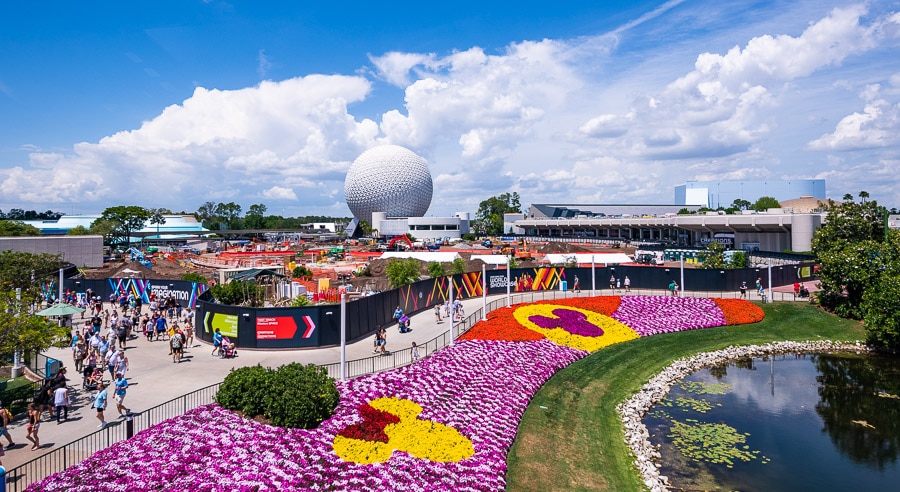
Ultimately, it’ll be interesting to see what happens with investment at Walt Disney World as a result of the tariffs. Again, this is a preliminary assessment based on where things stand right now in this constantly evolving situation. I’m not convinced the current trajectory is the eventual one, which is why we’re not offering more detailed thoughts.
That’s also why this doesn’t touch on the demand side of the equation or operational cost-cuts should Disney’s worst-case scenario play out. And before anyone gets excited about Disney canceling unpopular projects or undoing potential closures, you might want to think twice about that. An easy way to achieve OpEx savings is to mothball venues that are “under construction.” So as much as I might like to see MuppetVision or the Rivers of America saved, the more likely outcome is an empty theater for years and the Giant EPCOT Dirt Pit: Magic Kingdom Edition.
Planning a Walt Disney World trip? Learn about hotels on our Walt Disney World Hotels Reviews page. For where to eat, read our Walt Disney World Restaurant Reviews. To save money on tickets or determine which type to buy, read our Tips for Saving Money on Walt Disney World Tickets post. Our What to Pack for Disney Trips post takes a unique look at clever items to take. For what to do and when to do it, our Walt Disney World Ride Guides will help. For comprehensive advice, the best place to start is our Walt Disney World Trip Planning Guide for everything you need to know!
Your Thoughts
Do you think the impact of tariffs will be on Disney’s $60 billion investment plans for Walt Disney World, Disneyland, and Disney Cruise Line? Are you anticipating cutbacks or shelved plans if the United States enters a recession? Think Disney will do anything else? Do you agree or disagree with our commentary? We realize this is an inherently political topic, but please try to make your comments as apolitical as conceivably possible by addressing the ramifications for Disney as opposed to anything else. We’ll try to keep the comments open as long as possible with free discourse, but as soon as it devolves into personal attacks or gets politically charged, we’ll pull the plug.

I Think Disney is opening a new theme park In Australia
I Think Sherry Lansing should be replaced Bob Iger as Disney’s CEO
I Think Disney is opening a new theme park in United Kingdom
Posts were interesting read. I agree with Mickey 1928. Take a deep breath. I also think this gives Iger the ammunition he needs to make excuses for not keeping up with maintenance issues, upgrades and I am sure he will be raising prices. Where else would Disney purchase poor quality merchandise, selling it in the parks at a premium price.
First, the sky is not falling. Remain calm.
When Tom first wrote this article I wanted to add my thoughts as they related to his questions but I was too busy.
I had things to do and baseball games to go to. Yesterday I froze my butt off at CitiField watching two groups of young millionaires do battle on behalf of two billionaire owners. AND I was enjoying myself NOT worrying about something that others want me to panic over. DO NOT PANIC!
Life is good.
How does the latest news cycle relate to Disney attendance and Eigers future vision.
1) Bob Iger is not a creative person. He’s no Walt Disney. He’s not even Michael Eisner. I mean no disrespect but Mr. Iger is not creative and has no feel for the common man. He will use whatever crisis, real or manufactured, to pursue his own ends. To develop or not to develop. Bob is the question.
Now to attendance.
2) The tariffs are part of a larger plan that includes lowering taxes to regrow the middle class and thus providing opportunities to the poor, allowing them to step out of poverty and into said middle class.
In my profession, I was a road warrior, which enabled me to travel through 46 states, often in-depth.
What I found were many towns and small citites decimated over the last 4 decades by the loss of manufacturing jobs. When a plant closes down, unemployment rises, increasing alcoholism, drug addiction, despair and crime. Clearly if the Tariff/reduced taxes plan works there will be a much larger middle class that will be able to afford vacations at WDW and DL. The Parks will be flooded with middle class Americans.
3) Now to the question, will the triff war and American politics in general keep foreigners from going to WDW and DL?
Let’s think about this.
The Chineese government makes a lot of money from Shanghi DL and DL Hong Kong.
Foreigners (that includes us) are clearly filling the Parks.
China is perscuting Christians and other religions. Do you or would you, if you could, go to DL in China?
China uses actual slave labor. And we enjoy the fruits of that. It’s unfair to single out one person BUT as one tiny example, LeBron James is worth 1.2 billion dollars. You’d think he might make Nike open a plant in Cleveland to make his shoes. BTW he’s super popular in China. And Americans buy the sneakers in droves. Do people visit China DL in the purple Nike LeBron 21’s?
China has Uyghurs and other Muslims in Xinjiang “interment” (can you say concentration?) camps. Ironically they sometimes are brought there in railroad cattle cars. They experiment on the women and kill those who can’t be re-educated. Does that stop you from going to a Chineese DL?
It is not uncommon for people to “disappear” in China. The CCP assures that there are NO human rights. Has that made you cancel your Chineese DL trip?
I think WDW or DL will NOT take that big a hit. I hope I’m not overestimating the common sense of Canadians, South Americans or Europeans.
Will a recession hurt the Parks? Yes if it lasts for a long time. Is one coming? I don’t believe so.
Here’s the tricky thing.
If you look up the definition of what a recession is you’ll realize that anyone who is poor is already experiencing a recession. Will it spread to the other half of us? Again, I don’t believe so, so long as we start to reduce our 37 trillion dollar debt.
If we don’t, the Parks will cease to exist.
“Clearly if the Tariff/reduced taxes plan works there will be a much larger middle class that will be able to afford vacations at WDW and DL. The Parks will be flooded with middle class Americans.”
The idea that outsourcing robbed American factory jobs is a commonly held belief, but one that is not backed up by data. Yes, outsourcing did lose jobs, but only about 20% of the job losses are attributable to it. 80% of the job losses were due to automation, as you can see in Germany. They have a huge trade surplus, even larger than China’s as a percentage of GDP, and they experienced the same loss of manufacturing jobs as the US over the same time period.
Tariffs dramatically increase the chance of a recession, which means fewer jobs, which means fewer people going to Disney.
In fact, the idea that any company, let alone a significant number, will relocate manufacturing to the US is wishful thinking. No company is going to risk their future in a whim, and the 3 stated goals of the White House regarding tariffs are all mutually exclusive, and it’s not clear which approach will win out.
But even if factories did relocate, automated manufacturing lines require a highly skilled workforce that we don’t have. It would take a decade to develop the machinery and workforce to run them, during which time our current manufacturing base, the second largest in the world, would be decimated by other countries raising their tariffs to match ours.
Michael –
Basic economics….to repair a broken economy, a recession is almost guaranteed.
Do I want it? No way. Do I want to see my children struggle? Of course not.
I would rather go through hard times now so that my kids can have a home some day and not live paycheck to paycheck, vs pretending like everything is okay, when it has not been okay for a while and continues to get worse.
@mickey1928
This was a great post. Thank you for sharing your insight.
Sad that these comments turned political. Keep those to yourself.
That sounds like talk from people who want to censor others, unless of course the conversation agrees with their views. I am glad that Tom is not like that and he allows different viewpoints, as long as they are civil. Tom always tries to be objective and is fair in the comments he allows. Kinda crazy to take something that is politically driven and get upset when somebody makes a political comment.
Well, a lot of folks are tired of the constant battering on the news, and then many tend to oversimplify things and blame this guy or that guy, while the reality is that the current trade situation has been decades in the making and cannot be fairly laid on any one individual or group.
Dear Barbara,
No worries. Kathey is not trying to censor you.
No one is trying to censor you.
Tom himself doesn’t want this to turn into an “Orange man good or bad” political debate.
DTB a simple but very thoughtful and important Disney Parks blog,
We refer only to how the news of the world affects Disney Parks without judgemental bias.
We take what is and apply it to the Parks not discuss the political right or wrong.
Mickey,
To tell somebody to keep their thoughts/opinions to themselves is indeed censorship.
“I do not like what you are saying, so do not talk about it”
I do not think the person you replied to is saying she personally feels censored, but was making a general statement for all of us here. Tom’s articles are informative and his comment section beats any Disney forum, which IS full of censorship and favoritism. I am so grateful that I have a place, as a CM, to come and share my thoughts without having to constantly pretend we have the Disney of 15 years ago.
Yeah, all the old forums are long gone. Mostly, anyway. Mousepad was really good but a couple of the mods over there were overbearing with their opinions. Forums and mailing lists have mostly died in favor of FarceBuch groups (yuck) and other social media. These do not foster a search functionality so are no good for technical stuff.
I will say that Tom does a damn fine job of moderating the comments on his blog here and has a feel for which conversations are not going to go well with comments.
Dear Denny,
First, let me thank you for your service as a CM.
Dealing with the public, especially one that foolishly feels entitled by the amount of money they are spending, is not an easy task.
Yet every CM I’ve met always has a big cheerful smile on their face and has helped to make my day magical. So thank you for that.
There is a time and place for everything. That’s all.
This is a Disney Parks blog.
I don’t think you, I or anyone else would enjoy someone coming on here to push personal POLITICAL agendas.
If you’re in math class and the teacher calls you up to the board to solve for x you don’t go up there and give a book report on A Tale of Two Cities.
It’s really that simple.
If someone makes a political statement here that doesn’t speak to the topic or is totally incongruous, even if I agree with the opinions voiced, I will say, “Hey, that doesn’t belong here.”
I know for a fact that Tom is vigilantly monitoring this blog. There are many statements he has had to block that we readers have never seen. In those times, Tom’s actions are not about censorship but appropriateness.
And sometimes, when something gets by him, if someone points it out, he will remove it.
If someone who owes you money passes away unexpectedly, you don’t go to the funeral parlor and demand the widow pay up or else you’ll take her husbands eyes. Just saying.
I only wanted to assuage Barbara’s fears.
Kathey clearly said “turned political.”
Discussing tariffs and taxes and their implications for Disney are exercises in economic conversation and thus NOT political. When they turn political, then we become the widow and the writer an interloper.
In closing, allow me to turn the tables on you and end this by saying, “Have a MAGICAL day.”
Welp, guess we should just keep Muppets then.
and Rivers of America
Haha, I just saw a blurb about Disney getting rid of a “sexist, blagh, blah, blah” Muppets show. Fools!
grabbing popcorn while i read the comments…
iger isn’t wrong.
Bob Iger you are the reason for Disney downfall. You saw yourself as a savior but you without hesitation put commercialization before integrity. You’re downfall is written, don’t be fooled, It is coming for you.
This. 100%
save millions by stopping the bad movies with polarized stars bashing potential customers
These comments were interesting! I’m glad you left them on, it’s interesting seeing different perspectives.
I’m not 100% against tarrifs in general and I think they are a useful tool when wielded the right way – for protection of local agriculture for example. But blanket tariffs are absurd and not helpful.
You may already have, but if you look at the tariffs some countries have on the US, some over 200%, while we historically paid them without getting anything in return, tariffs are fair play. I am not supporting or condoning any political affiliation by saying that….it just does not make sense that we would pay tariffs to every country in the world and not get anything in return and call it fair trade.
As I mentioned I think targeted tariffs to protect local industry make sense particularly to stop market dumping of underpriced foreign government subsidized goods – I feel this way whether it’s the USA doing it or any other country. It’s blanket tariffs that I find absurd. Nobody has a 200% blanket tariff. Not yet anyway but maybe soon the way things are going LOL
Also just a heads up but the USA doesn’t pay other country’s tariffs. The local importers in those countries pay them. That’s why the USA blanket tariffs will affect Disney in the USA, Disney is going to have to pay those tariffs not foreign governments.
That’s why IMO it’s important to wield them carefully – only in places where the pros of protecting that industry (like having local agricultural production) outweigh the cons of more expensive goods. It’s also possible to set import limits before targeted tariffs kick in so you can increase domestic availability while also protecting local production.
“You may already have, but if you look at the tariffs some countries have on the US, some over 200%, while we historically paid them without getting anything in return.”
That would be unfair if it were true. You don’t give specifics, which is understandable given how complex they are. But whenever I’ve actually looked up tariffs on US goods in countries that are being targeted now, they have long since been bargained down to almost nothing. Trump himself negotiated the trade agreement with Canada and Mexico that is effectively zero on 99% of our trade, the EU tariffs on US goods is effectively around 1%, and Australia’s US tariffs are zero.
They should start offsetting costs to their customers first – that will pave the way for more returning customers. Go back to the fast pass no-charge system. They will always be working on something… maybe reconsider the Rivers of America horrible idea… save alot of $ there by not destroying what doesnt need to be.