Brightline’s Bankruptcy Won’t Stop Trains in Florida, But What About Disney World’s Future Station?
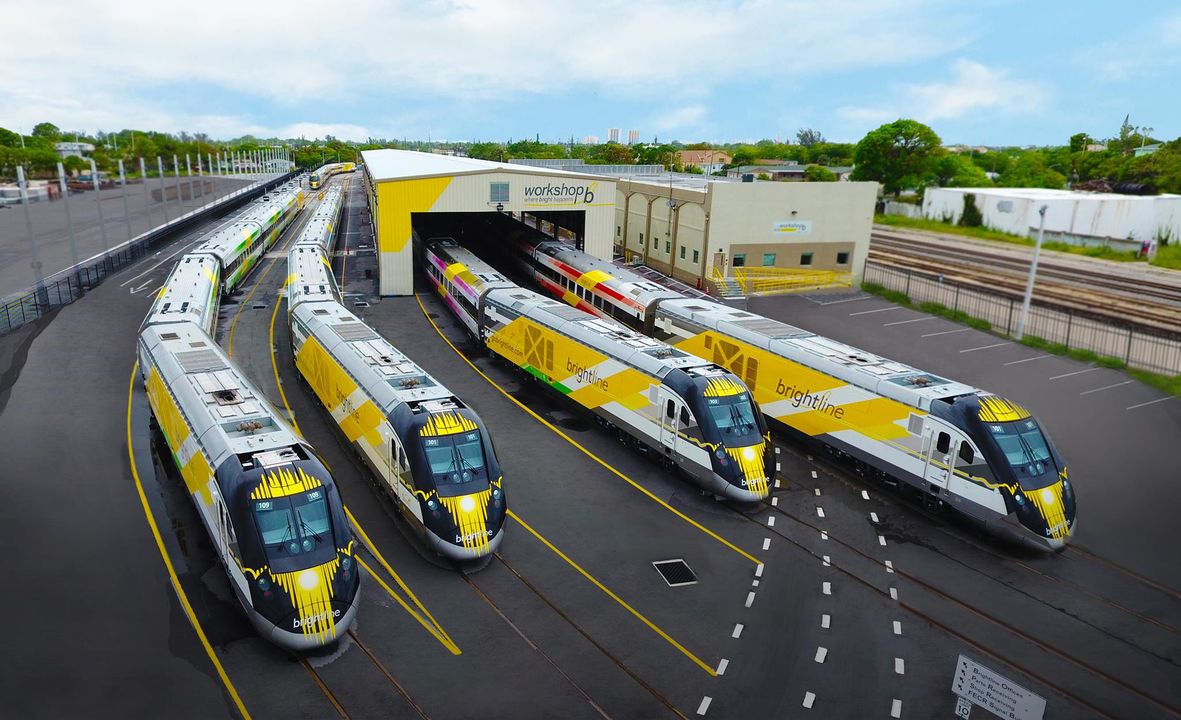
The Brightline high-speed rail that runs between Orlando International Airport and Miami and will eventually connect to Walt Disney World, is reworking its debt in bankruptcy court. Here are full details about the company’s Chapter 11 filing and why that will not impact train service in Florida, plus what’s up with the Sunshine Corridor connecter to Disney Springs.
This bankruptcy comes almost exactly three years after Brightline’s Miami-Orlando route began operations in late September 2023. The company is trying to win over some of the more than 40 million people who make the trip between Miami and Orlando each year, with approximately 90% of them driving. Brightline’s Florida project is the first privately-funded passenger rail built in the United States in over 100 years.
The Brightline high-speed rail network was a nearly $6 billion gamble that eventually 8 million people annually will take the 235-mile trip between Miami and Orlando via train. Brightline’s Miami-Orlando route connects Florida’s two biggest tourist hubs with 32 trains running daily, and is at the heart of the initiative.
Now, three years later, Brightline is announcing that certain entities associated with the company have entered into a restructuring support agreement that will significantly deleverage Brightline’s balance sheet and greatly improve liquidity.
As part of the restructuring, supporting stakeholders have committed to provide $490 million of new long term capital to Brightline Trains Florida LLC. With this new financing, most of the existing bonds will remain outstanding, with no reduction in aggregate principal amounts, throughout the restructuring.
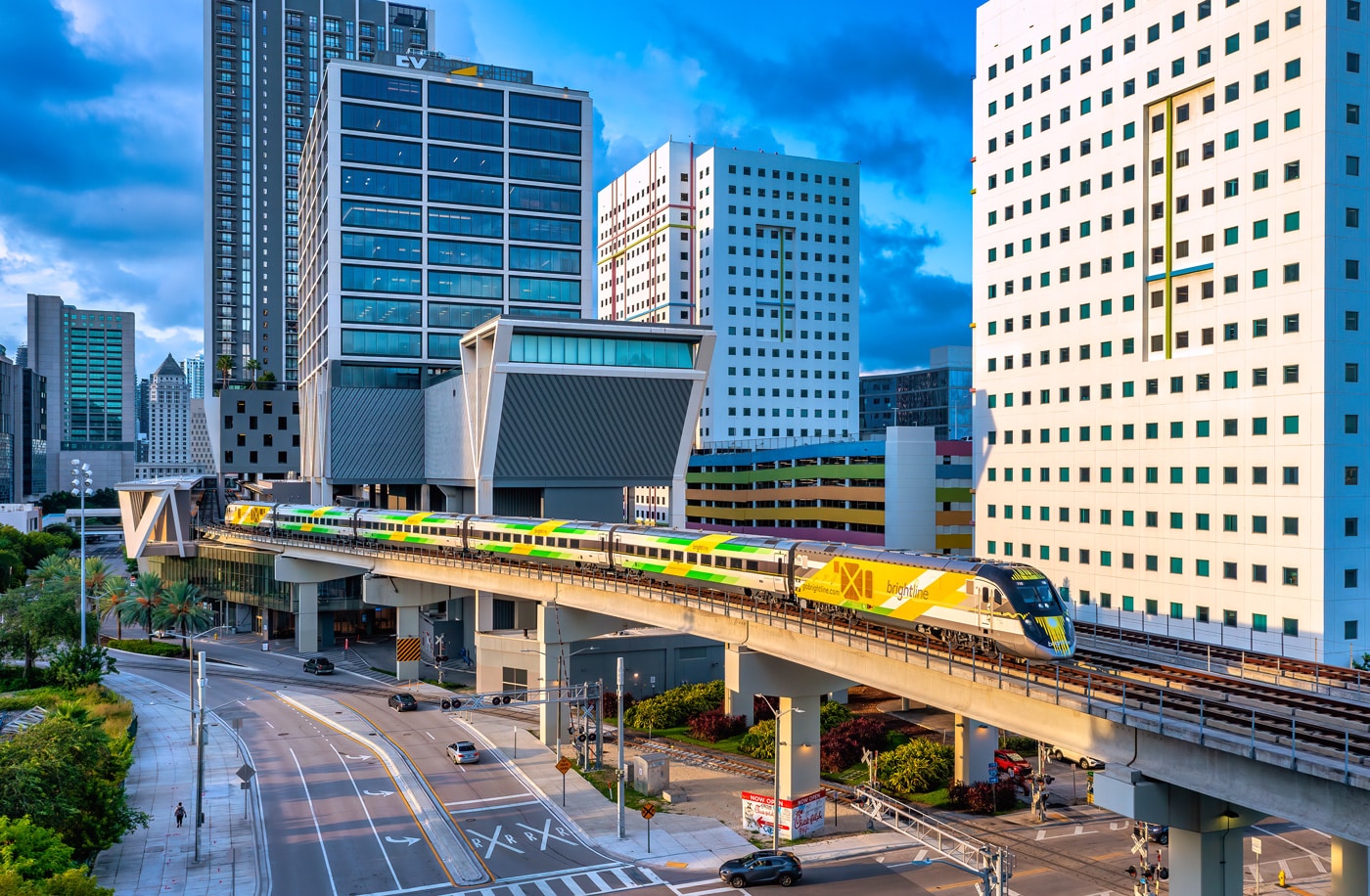
To implement the restructuring, certain Brightline parent entities will file prearranged Chapter 11 bankruptcy proceedings in New Jersey. However, Brightline Trains Florida LLC, which operates the Brightline Miami to Orlando service, will not file for Chapter 11.
Brightline’s Florida train service will continue to operate in the ordinary course of business throughout the proceedings. In short, Brightline’s Miami-to-Orlando high-speed rail operations are not impacted.
Brightline will continue to pursue multiple growth initiatives and the development of additional stations along its corridor, including in Cocoa, the development of commuter access in Miami-Dade, Broward, and Palm Beach Counties, and the expansion of the passenger rail system from the Orlando station to Tampa.
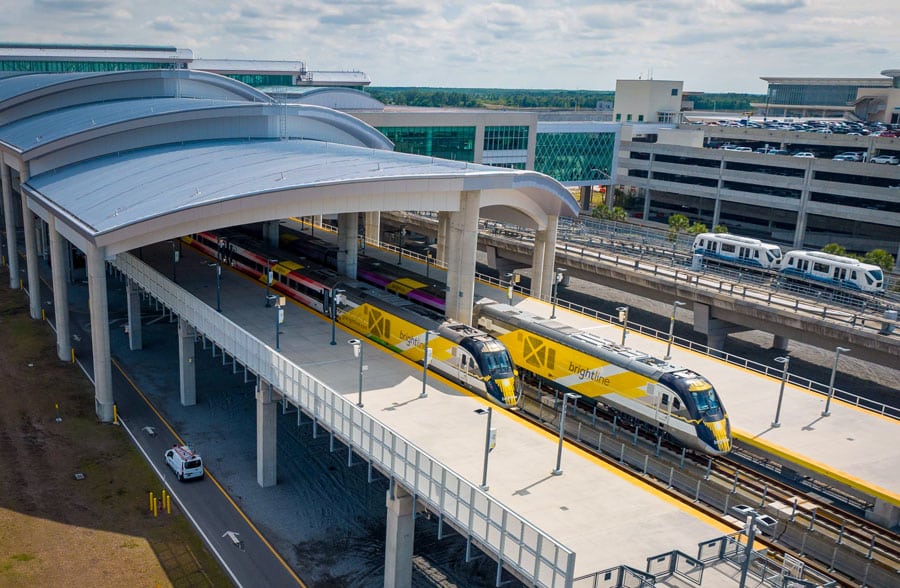
Brightline has demonstrated a 17% year-over-year increase in total revenues through the first eight months of 2026. Ridership is up over the same period by 14%. Brightline reportedly has enough cash flow to cover its ongoing operations, but not pay down its debt. Despite ridership growth over the last few years, overall numbers are still well below initial projections.
“Brightline is a critical part of Florida’s transportation network that has changed the way people move around the state. Today’s agreement brings $490 million in new long-term capital to Brightline from the stakeholders who know this business, and it comes at a time of real momentum,” said Patrick Goddard, Chief Executive Officer of Brightline Florida.
“This transaction will be a catalyst for further growth in ridership and revenue. We are grateful to our creditors, advisors, vendors, teammates, and guests for their confidence throughout this process, and we look forward to the bright future ahead.”
Nicolas Petrovic, Chief Executive Officer of Brightline Train Development LLC, an affiliate of the Company, said, “This is a financial restructuring that is not expected to impact operations. It will give Brightline the balance sheet to match the growth we’re already seeing across the business. Brightline continues to grow and the business is strong.”
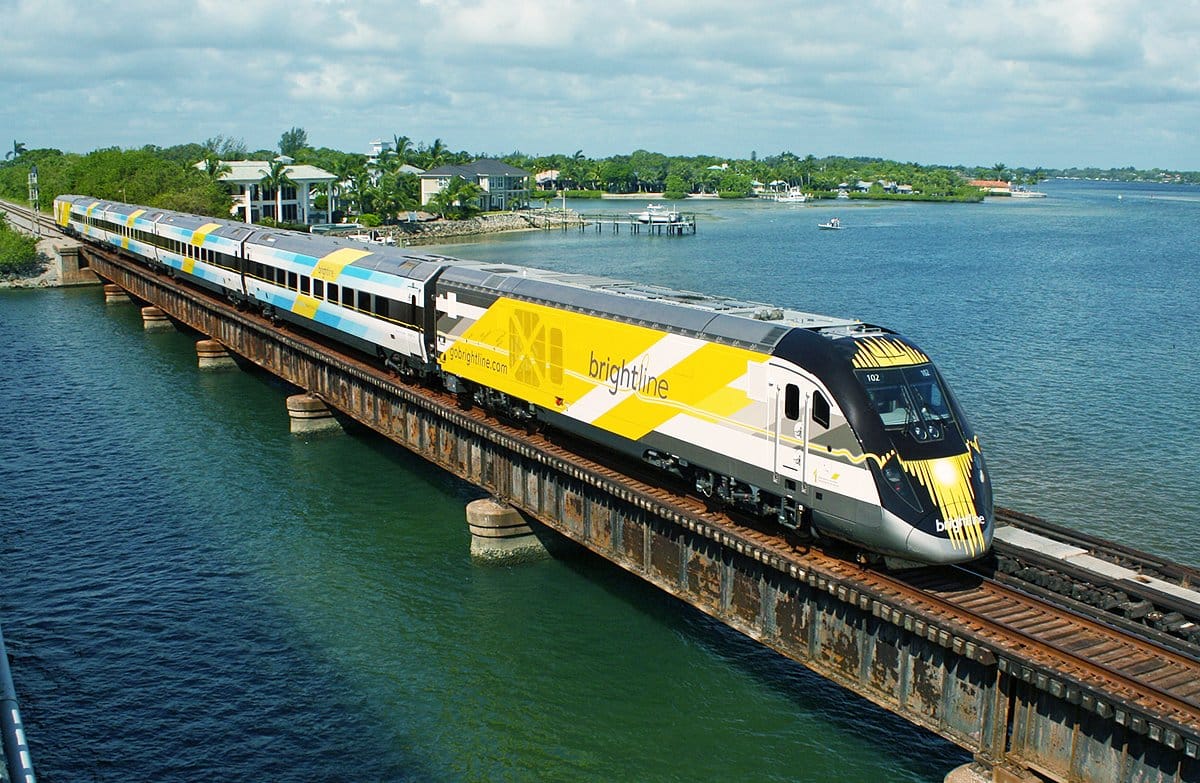
Brightline Bankruptcy Reaction
We won’t pretend to be unbiased here. We’re cheering for Brightline’s success. We really hope that there’s a market for high-speed rail in the United States, and that more privately-funded projects like this prove to be viable.
With that said, we’re also realists who understand that it’s going to be a hard sell with the public. Not only that, but we’ve suspected from the beginning that some of Brightline’s ridership and financial projections are more than a bit overly optimistic.
Honestly, it wouldn’t surprise me if that was known internally at Brightline and bankruptcy or debt restructuring was always the plan. The initial upfront cost was just such an albatross that it seemed unlikely that they’d ever pay it down without the Orlando-Tampa connector.
Consequently, Brightline restructuring its debt and its parent company going through Chapter 11 is the least interesting aspect of this story, even if that’s the headline news. Bankruptcy always felt like a likely outcome, and the specifics here suggest that these proceedings will actually strengthen Brightline’s future prospects and viability. Given all that, I’m more interested in where Brightline goes next.
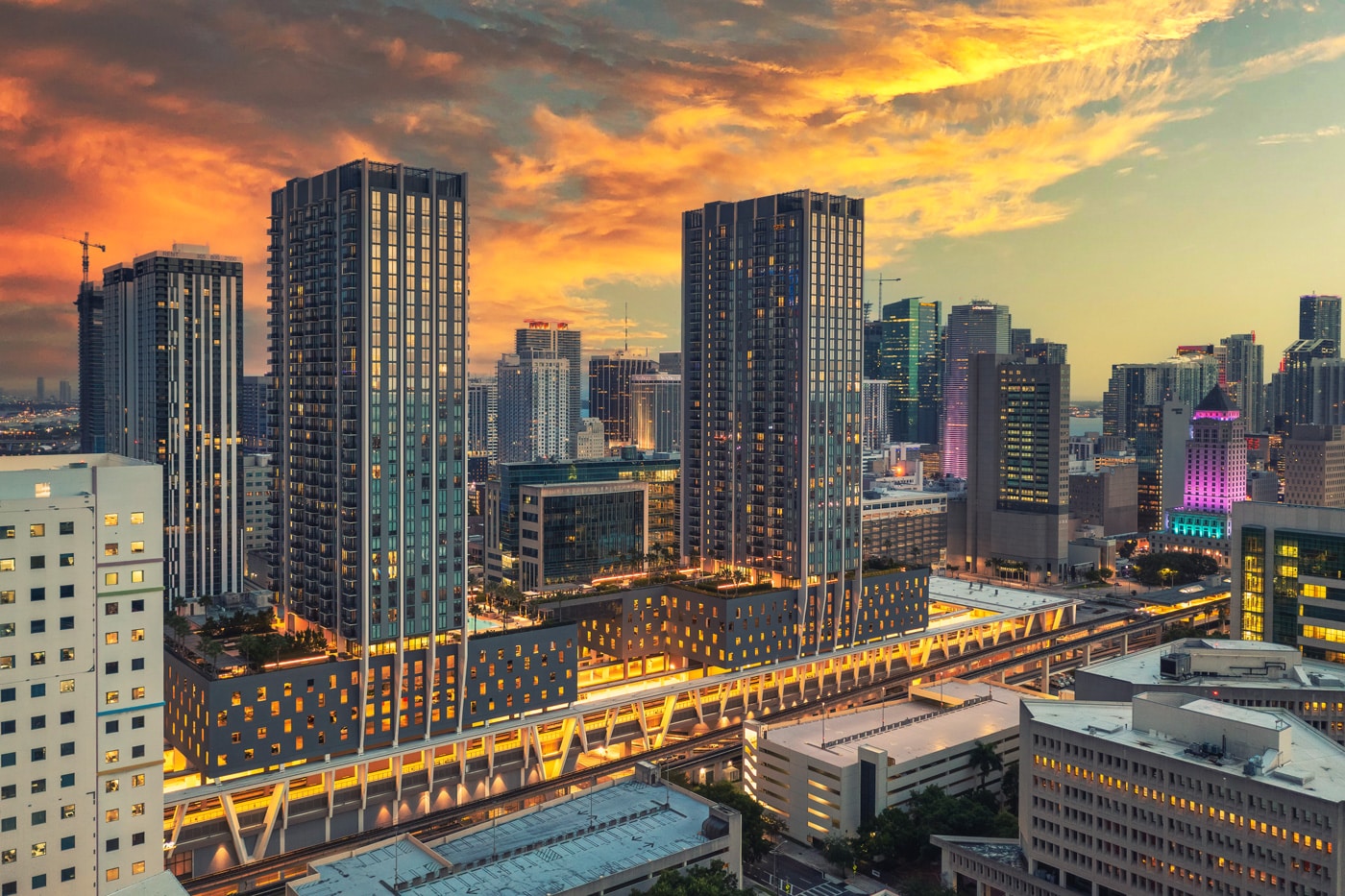
Is Brightline’s Pricing the Problem?
One thing that has drawn a lot of discussion in light of the bankruptcy is Brightline’s pricing, with many complaints about ticket costs being too high. My potentially unpopular opinion is that they are not. With tickets starting at $39, Brightline strikes me as fairly reasonable.
To each their own, but I’m skeptical that lowering fares would increase ridership by a sufficient degree to result in an overall increase in revenue. I doubt volume increases enough, as I don’t think the primary impediment to more people using Brightline is pricing.
The issues strike me as convenience, awareness, perception or something else largely unrelated to cost. Given Brightline’s slow and steady ridership and revenue growth, it would seem that word of mouth is positive, and time as much as anything else will improve Brightline’s prospects. But I’ll also admit to being one of the outliers among mass transportation advocates who does not believe free or low-cost rides are the answer, whereas many others do.
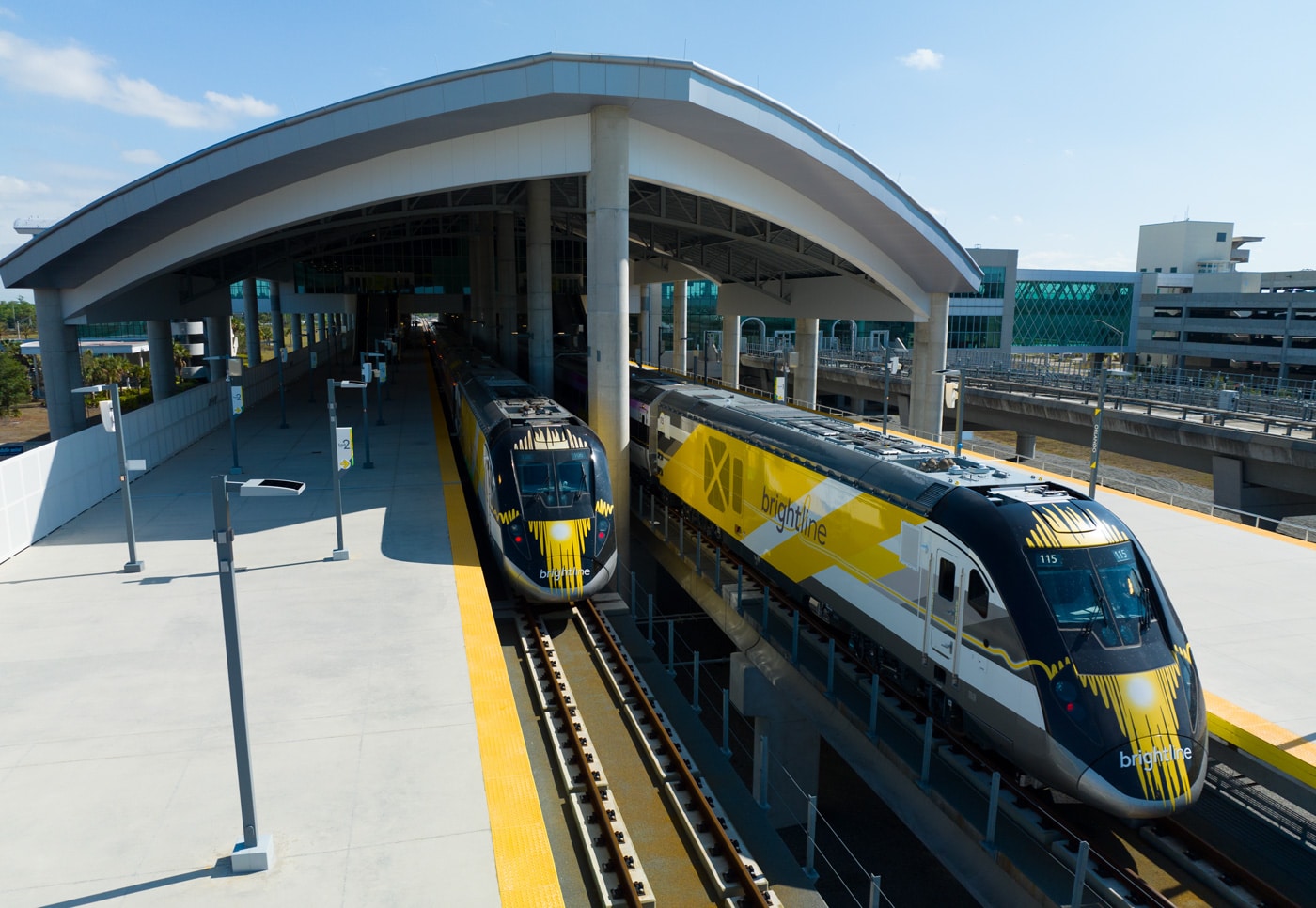
Brightline’s Biggest Strength & Worst Weakness
To that point, we’re big fans of high-speed rail and would love to see Brightline succeed.
Traveling by train is less chaotic and stressful, there’s usually more legroom and just a generally laid back quality, and even though the travel time is typically longer, the total time commitment is usually shorter. It’s difficult to explain and probably even harder to understand if you’ve never used high speed rail, but we far prefer it to flying for trips of this distance and duration. I would also rather take the train as opposed to driving, as it’s just a better overall experience. At least, in a vacuum.
When it comes to Walt Disney World guests, the problem with the existing Orlando-Miami route is that it stops at MCO and offers no connection to Walt Disney World. This is an issue we’ve experienced ourselves, and opted instead to just do a one-way rental from Walt Disney World to Miami.
We would’ve preferred taking the train, but the rental car was more straightforward and convenient than Brightline paired with Mears Connect (our alternative). That’s really what it came down to for us–not cost or travel time, but convenience (or lack thereof). Thankfully, that should change at some point in the 2030s…
Sunshine Corridor Solution
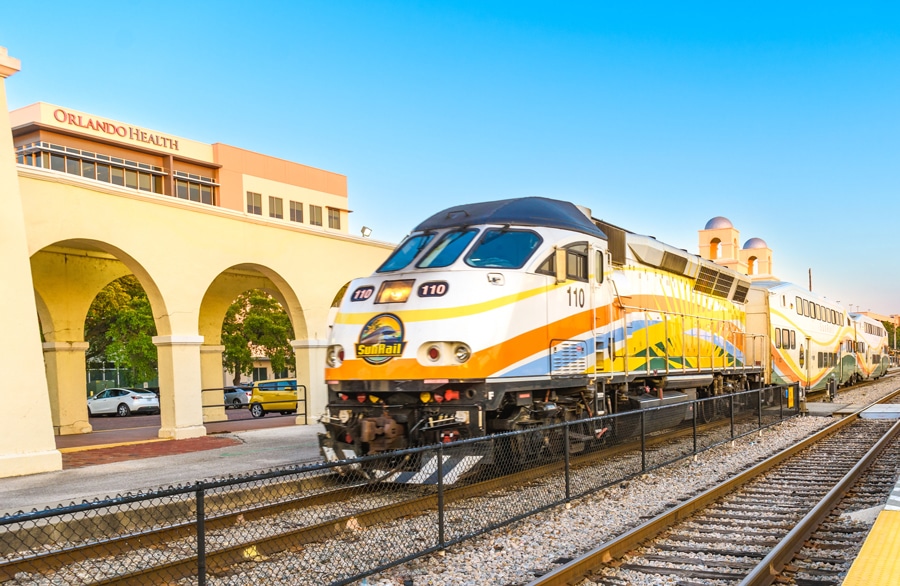
As you might recall, the long-term solution to this is the Sunshine Corridor.
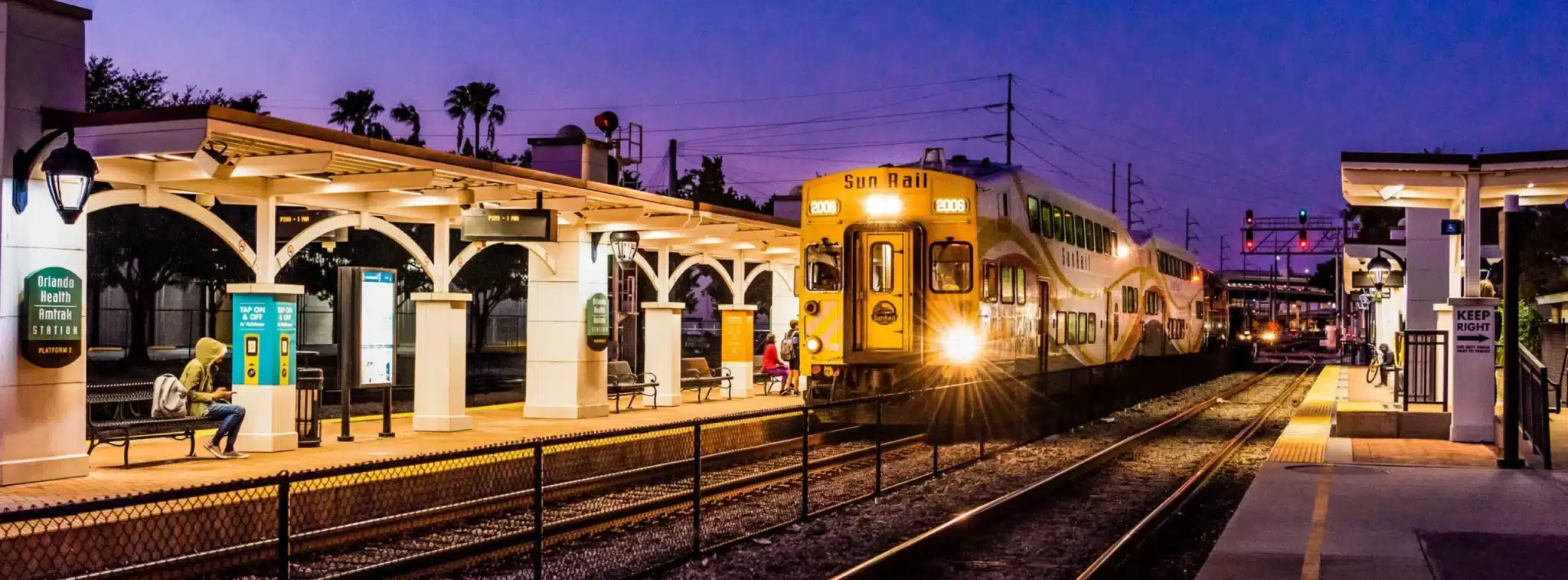
After previously canceling plans for an on-property Brightline high-speed rail station, Walt Disney World revealed back in 2024 that they’re now open to a SunRail train station on-site at Disney Springs. That would be part of a shared Sunshine Corridor between Brightline and the Central Florida commuter rail system. The Sunshine Corridor would also include stops at Orlando International Airport, Orange County Convention Center, and South International Drive.
“We have long been open to discussions around the proposed SunRail expansion to Disney Springs and have been engaged with state and community leaders on the topic,” a Walt Disney World spokesperson wrote in a statement. “This is not to be confused with the agreement we previously had for a Brightline station that Brightline decided not to pursue.”

Expanding SunRail to Orlando’s airport and the region’s tourism corridor would boost ridership at least sixfold in the first year of operation, but come at an eye-popping cost of at least $4 billion. Building the Disney Springs station is projected to cost between $173 million and $247 million, with an additional $200,000 estimated in yearly operating expenses.
Back when the Sunshine Corridor was proposed, a yearlong study found that linking SunRail to the airport and tourist corridor stops would increase ridership from the current 1 million annually to 6 million annually, and that was believed to be an underestimate. The link would reach an estimated 9.4 million riders by 2040.
The problem was upfront funding. Those ~$4 billion in costs would have to come from the taxpayers, with a combination of local, state and federal funding, as well as significant private contributions. That’s the biggest roadblock for the Sunshine Corridor, and without a dedicated source of funding, it’ll be difficult to get the Sunshine Corridor done.
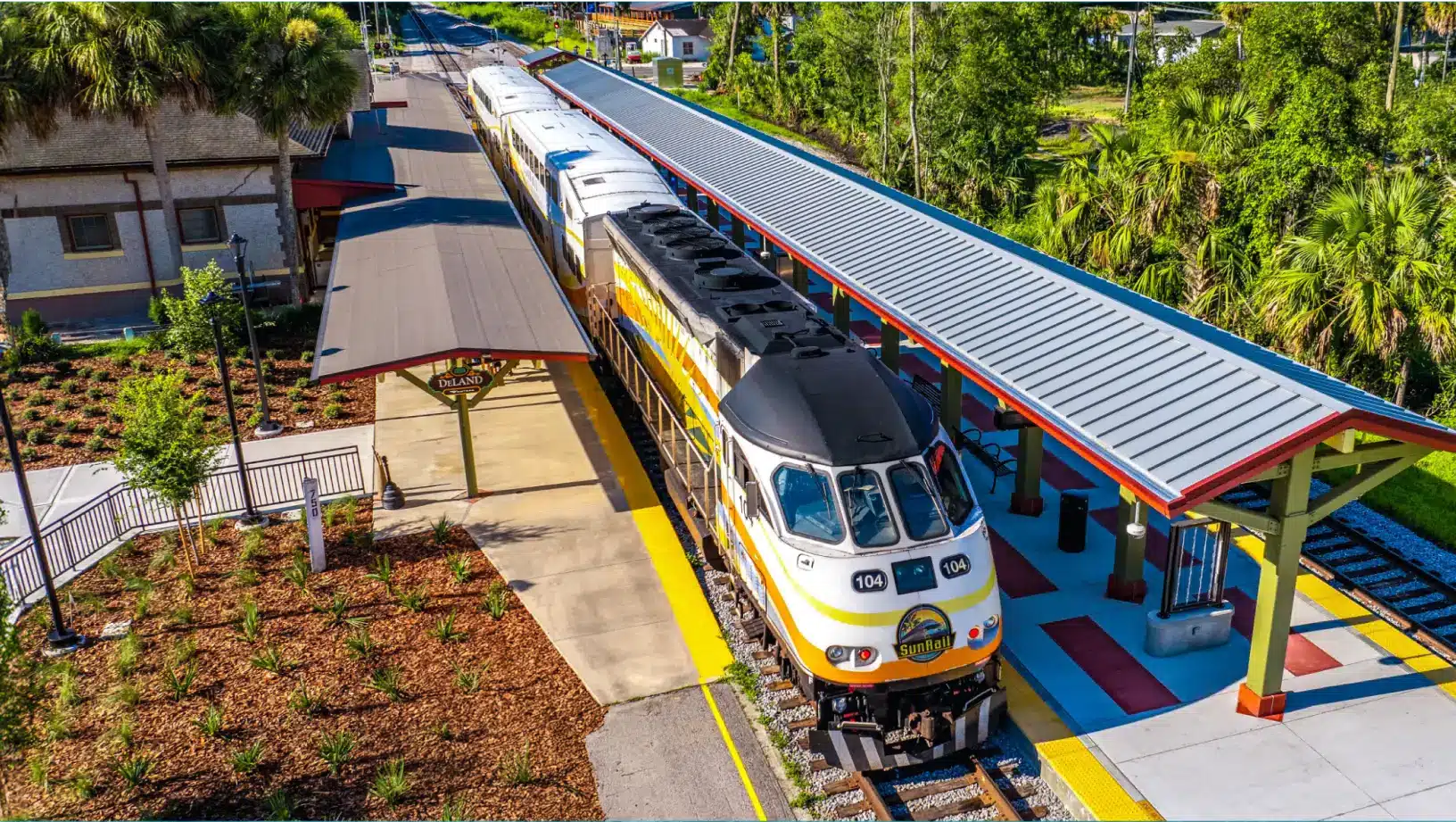
Even if the Sunshine Corridor happens, the Disney Springs station is far from a done deal. As you might recall, Walt Disney World originally “backed out” of participating in the project when the plan changed. The proposed route for Brightline shifted from along State Road 417 to go closer to International Drive.
“As many people who are involved in this project are aware, the new route configuration does not support a Disney Springs station and as a result, we don’t anticipate being part of this project,” said Walt Disney World spokesperson Avery Maehrer at the time. That wasn’t the end of it, though.
Both Brightline and Walt Disney World still want a station near Disney Springs. When unveiling their proposal in 2024, Brightline revealed that there could also be an alternative station placed near the original Disney Springs site, albeit not on land owned by Walt Disney World. Otherwise, the closest station to Disney Springs will be the South I-Drive Station.
It’s unclear what direction that ends up going; having a station “attached” to Walt Disney World would clearly increase the theoretical ridership, and the Sunshine Corridor needs as high of a number as possible to reach viability and secure federal funding.
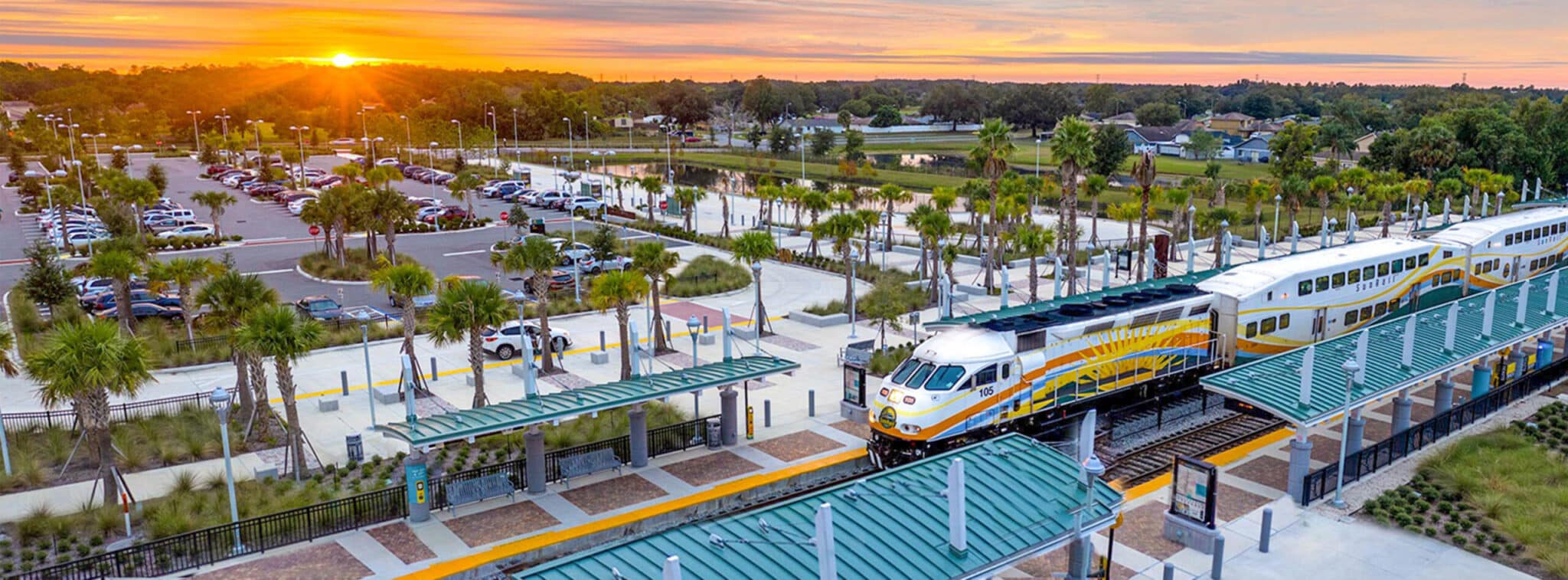
Over two years after the Disney Springs station was revealed as being a potential part of the project, the Sunshine Corridor expansion remains stuck at the station. The last meaningful development came on April 24, 2025, when SunRail’s governing board approved a key study tied to the proposed Sunshine Corridor.
The Central Florida Commuter Rail Commission voted unanimously on April 24, 2025 to advance a $6 million, two-year project development and environmental study for the corridor. That vote was a key step for the project, setting the stage to apply for federal government funding and figuring out logistics, as well as finalizing project costs, construction timelines, and more.
Those details are needed to help the Central Florida Commuter Rail Commission determine whether it wants to dedicate more local dollars to the Sunshine Corridor project. Following that, the City of Orlando set aside $100 million in project funding late last year, should the Sunshine Corridor get the greenlight.

Based on previous comments from Orange County and Orlando leadership, my sense is that there’s a local appetite and willingness to move forward on the Sunshine Corridor (albeit not without dissent, as is the case with any infrastructure project).
Representatives of I-Drive businesses, Universal Orlando, Orange County Convention Center and the City of Orlando have all pushed for the Sunshine Corridor route in order to service more theme parks, hotels, and related businesses in need of rail transportation to the airport. Universal even pledged land and monetary support to make the Sunshine Corridor a reality. Of course, none of this guarantees a Disney Springs station in addition to the South I-Drive one that’s already part of the plan.
At this point, the viability study is the key hurdle, and if that yields positive results and helps secure federal funding, the Sunshine Corridor will get the greenlight at the local level and move forward. That’s where things stand today; we’re basically just waiting until 2027 when the study is finished to figure out whether this connector is happening.
Disney’s Magical Express Replacement?
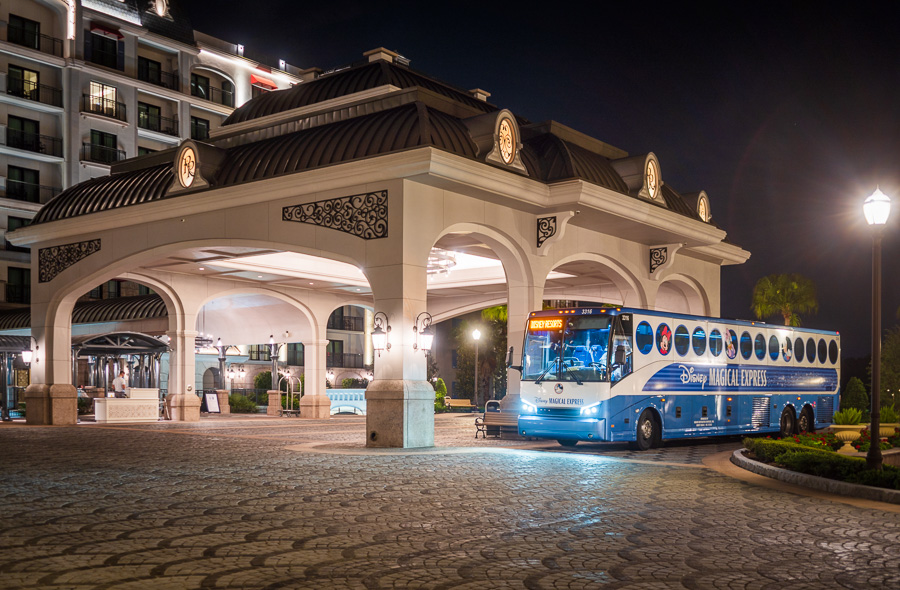
Finally, since it’s been a while since we’ve talked trains and this always came up previously, Brightline and the end of Disney’s Magical Express are unrelated to one another. High-speed rail was never billed as a replacement for DME. Some fans continue to claim that Brightline was the “reason” Disney’s Magical Express ended, but that is demonstrably false.
If the train were replacing the bus, it stands to reason that Disney’s Magical Express would not have ended a decade before the proposed/cancelled/proposed again station at Walt Disney World actually went into service. There were also a range of practical reasons why Brightline was never intended as a DME replacement, from train frequency to transfers from Disney Springs to hotels.
The benefit to businesses in the tourist corridor is connecting Orlando to Florida’s Gold Coast. Guests from South Florida are a growing demographic for Disney, and rail would facilitate easier weekend getaways for them. It would also be beneficial for high-spending convention-goers to travel within the state, and for attracting convention business in the first place over cities like Las Vegas.
This was never about replacing an airport shuttle bus. There were better ways to accomplish that. That doesn’t mean train service between Orlando International Airport and Walt Disney World hotels won’t eventually be a viable option. We truly hope that it will, and Walt Disney World will create a second ‘transportation hub’ at the Disney Springs station.
It just means that the original motivation for ending Disney’s Magical Express had absolutely nothing to do with Brightline or the Sunshine Corridor. It was typical Chapek-era cost-cutting, plain and simple.
Planning a Walt Disney World trip? Learn about hotels on our Walt Disney World Hotels Reviews page. For where to eat, read our Walt Disney World Restaurant Reviews. To save money on tickets or determine which type to buy, read our Tips for Saving Money on Walt Disney World Tickets post. Our What to Pack for Disney Trips post takes a unique look at clever items to take. For what to do and when to do it, our Walt Disney World Ride Guides will help. For comprehensive advice, the best place to start is our Walt Disney World Trip Planning Guide for everything you need to know!
YOUR THOUGHTS
What do you think about Walt Disney World being “open” to having an on-property rail station? Optimistic that Disney will view this as a good thing in the long-term and build a station at Disney Springs? Do you agree or disagree with our assessment? Any questions we can help you answer? Hearing your feedback—even when you disagree with us—is both interesting to us and helpful to other readers, so please share your thoughts below in the comments!