
Changes & DAS Denials at Disney World
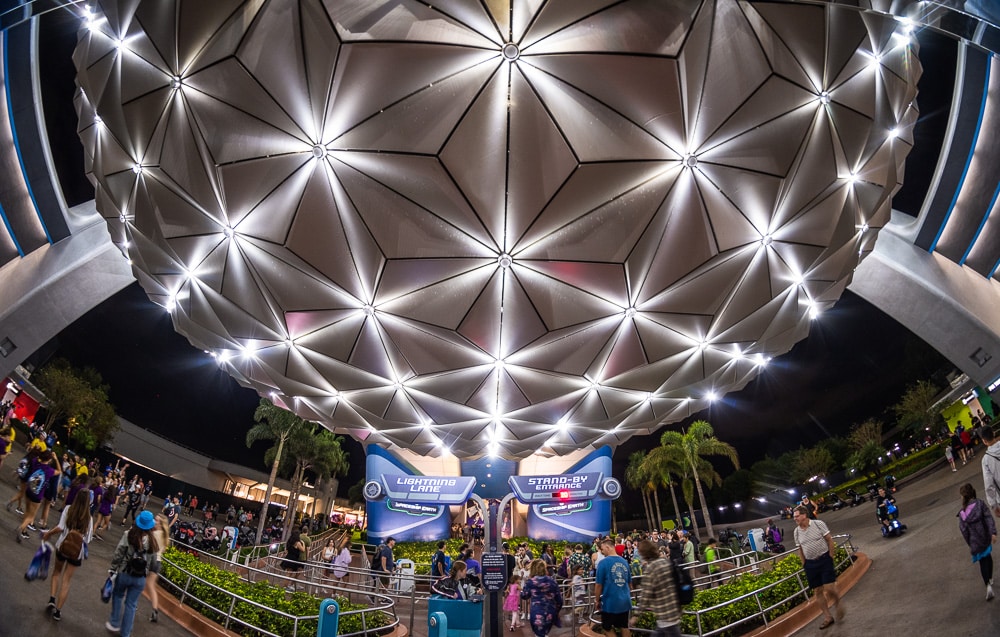
The relaunch of Disability Access Service at Walt Disney World started rolling out last week, bringing with it a more stringent process to qualify for DAS. As a result, there have been widespread reports of guests who previously had the pass being denied and advised to use alternative accommodations, some of which are new (or revised and being advertised more prominently).
We’ve been following this saga closely, receiving reports from readers and reading accounts of other guests applying for accommodations after the overhaul of the Disability Access Service at Walt Disney World. Obviously, it’s a highly sensitive subject that is very, very personal since it is, quite literally, make or break for some guests trying to experience Walt Disney World. (Something we hope you’ll keep in mind before leaving a crass comment.)
If this is the first you’re hearing of the changes and are wondering why Disney is once again redoing DAS at Walt Disney World and Disneyland, it’s due in large part to abuse, misuse, and proliferation of the program’s use. That article covers a lot of ground about the specifics of the new-look Disability Access Service, plus our commentary about winners & losers, as well as collateral damage and more.
According to Walt Disney World, “DAS is intended to accommodate a small percentage of guests who, due to a developmental disability like autism or similar, are unable to wait in a conventional queue for an extended period of time.” This line (or a variation thereof) can be found repeatedly throughout Walt Disney World’s new DAS resources. From that, it is clear that they’re trying to recalibrate expectations about the intended recipients of DAS.
Walt Disney World has publicly stated that DAS usage has tripled since 2019. Independent of that and prior to it, we received credible reports that the majority of Lightning Lane usage is actually not Genie+ guests, but rather, DAS. Just to put that into perspective for people who might be inclined to believe that DAS is still a low number in the grand scheme of things or relative to Lightning Lanes as a whole. It’s not.
Of course, it’s fair to point out that Disney has exacerbated abuse and misuse by eliminating free FastPass+ and replacing it with paid Lightning Lanes. This new system and each subsequent price increase thereof created a perverse incentive for cheating the system. At the same time, it also expanded the audience for social media “hacks” about how to skip the lines for free. This, in turn, created its own vicious cycle. As this DAS abuse content proliferated, it became normalized by virtue of its ubiquity.
This isn’t to excuse anyone for cheating or lying. Everyone is accountable for their own actions, and what’s wrong is wrong. We’re only suggesting that Disney’s hands are far from clean in this whole mess, and where things are today is largely the predictable result of Disney monetizing line-skipping. But I digress.
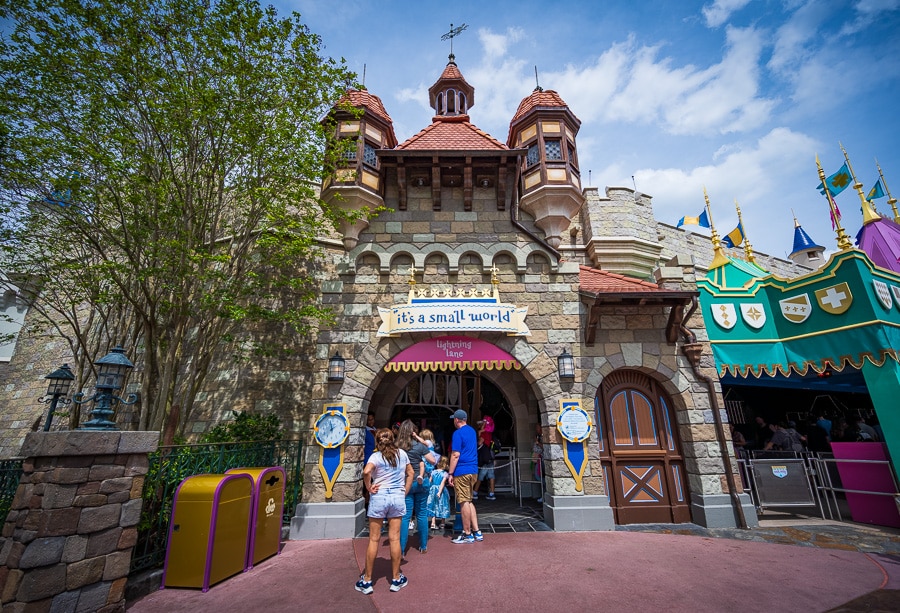
Turning to the changes, the first thing we have is the first official details about the Attraction Queue Re-Entry process. Many guests applying for DAS who don’t qualify have been directed to use this as an alternative. The official Walt Disney World website has been updated with the details on how Attraction Queue Re-Entry will work:
There may be times when a Guest must briefly step out of the standby line and then rejoin their party in the line. Every location has a defined process to support this option based on a person’s disability while the rest of the party remains in line.
How to Use Queue Re-entry
Speak to a Cast member at the location for directions on how to re-enter the queue.
- A Cast Member will provide details about how to exit the queue and how to navigate back to your party.
- While the Guest who must leave the line is briefly away, the rest of the party will remain in line.
- The Guest reunites with their party to ride the attraction.
Note: Guests must meet boarding requirements to ride.
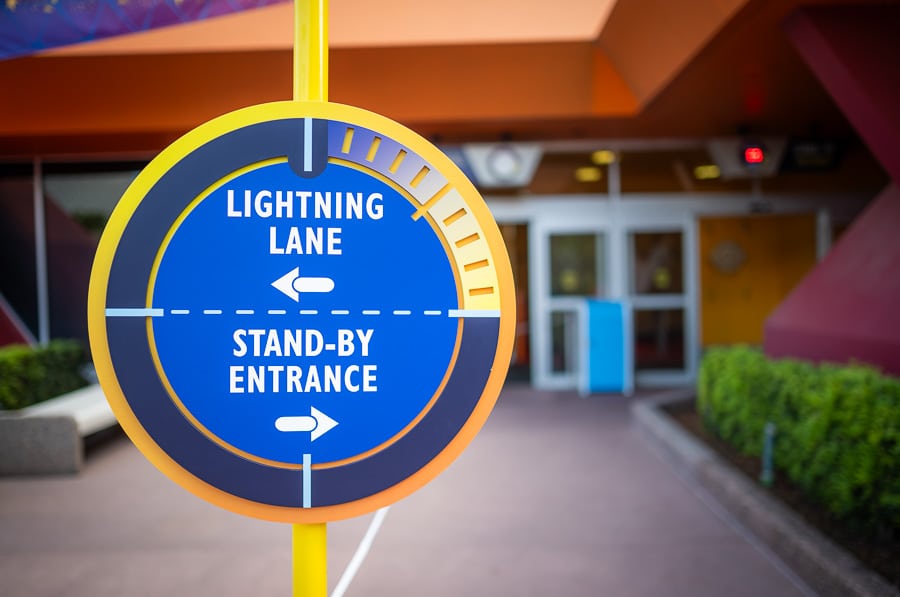
The Attraction Queue Re-Entry feature was one that was anxiously awaited by many Walt Disney World fans, us included. In our DAS at Walt Disney World FAQ, we wrote this about the new offering: “It’s unclear whether this will be a digital system, a physical flip card or something of that sort, involve better Cast Member training and guest communications or what.
It’s possible that Walt Disney World hasn’t even fully figured out the mechanics of how the ‘return to queue’ process will work, or aren’t ready to discuss it for whatever reason. This was the first I had even heard of this being in the pipeline, whereas a DAS overhaul has been in development for a while. I’d be surprised if it’s digital or is anything all that elaborate, but could be wrong.”
Honestly, it seems like Walt Disney World still hasn’t fully figured out what the Attraction Queue Re-Entry feature will be. I’m not sure it should even be called a feature or whether capitalizing it as a term or proper name is even appropriate. It’s my understanding that Disney actually does have a defined process for this and Cast Members have the ability, at least in theory, to implement it at queue entrances and Lightning Lane returns, but I haven’t heard any stories of it working as intended. As it’s presently being conveyed to guests and utilized, Attraction Queue Re-Entry and Return-to-Queue (which I’m told are two separate things) strike me as half-baked.
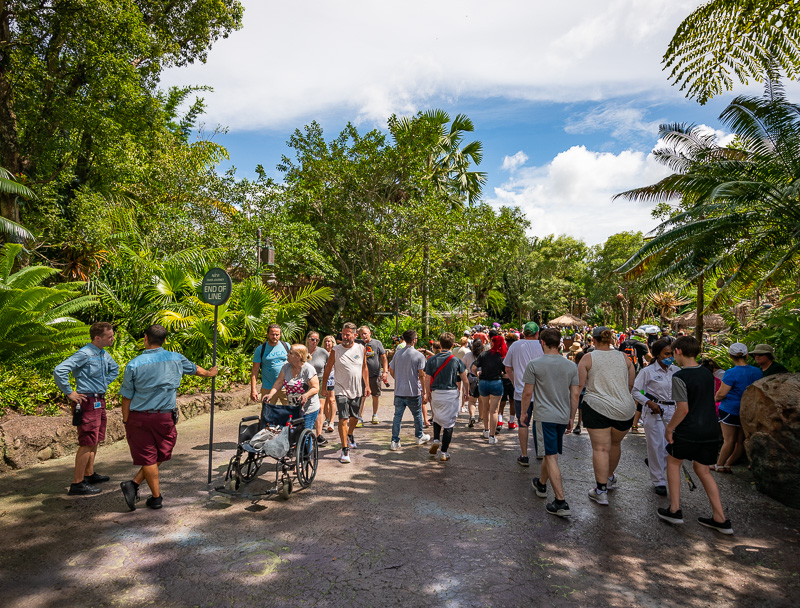
Although a lot of guests are being directed to this return-to-queue option, it doesn’t sound any different in practice than how leaving lines and rejoining them as always worked. From everything I’ve read, it’s still a ‘fend for yourself’ type deal. The defined process part of the equation, to the extent it’s even being implemented, is not being clearly communicated to guests…which is perhaps the biggest part of the problem.
Granted, I’m coming at this from the outside looking in. I can also understand Disney’s basis for being vague about certain policies, as too much specificity could open the door on abuse of those as influencers, social media groups, and other bad actors hashed out how to exploit them. In a matter of months, we’d be right back in the same spot as DAS was with abuse.
However, I’d also assume that a big issue with leaving lines and rejoining them is a matter of ‘guest glares’ (for lack of a better term). Those with invisible disabilities needing to exit and re-enter the queue are at the mercy of other guests being amenable to people passing them–going in the “wrong” direction to leave and then “cutting” them to rejoin the queue.
There’s no perfect solution, only compromises. Nevertheless, it seems like the Attraction Queue Re-Entry process needs to be a clearly-communicated, transparent, and (ideally) visible. As simplistic as it might sound, think of something like a hall pass from your grade school days. I’m not saying that Disney needs to hand out keys tied to obnoxiously oversized rulers…but what’s happening with this alternative accommodation thus far clearly isn’t working.
“Attraction Queue Re-Entry” needs to be something that is consistent across the board, average guests know exists, and they can see being used so they don’t think others are trying to cheat the system or cut in front of them. Look, I’m on record repeatedly saying that we all should err on the side of courtesy and not judge others–that disabled guests would trade places with you in a second and stand in long lines if it meant not being disabled. And I stand by that.
But the thing is, the overwhelming majority are not reading this blog, and the people that most need to read admonishments like that aren’t doing so. In other words, I’m also a realist. If the “Attraction Queue Re-Entry” feature/process/whatever is not done in such a way that other guests know about it and how it works, it’s going to lead to more disdain towards the disabled. One of the big goals of this overhaul, in my opinion, should be to reduce that–not exacerbate it.
With all of that said, it’s still early. I’ve heard some things suggesting that the return-to-queue process could work well as an alternative to issuing DAS. But in practice, what I’ve read from firsthand accounts of guests is that the Attraction Queue Re-Entry feature is being used as a basis for denying DAS and then the process itself in the parks is unclear and has not gone smoothly.
All of this brings us to the reports of DAS denials, which have been fairly widespread in the last week.
Then I’ve read a lot of other reports of denials that, in all honesty, strike me as ordinary given the announcement and other policies and protocol that Walt Disney World has in place. This is fairly unsurprising, as the process for evaluating DAS requests in the past was not very rigorous–it was more or less a rubber stamping once certain words were said.
This was by design, especially in-park where Guest Relations Cast Members were given the unenviable task of evaluating DAS requests. It was better for them to err on the side of asking too little and issuing DAS too often, both as a matter of law and the Four Keys. (They are not medical or legal professionals, so a liberal approval process was the savvy move for Disney to avoid run afoul of public health and administrative law.)
As a result, DAS was issued to legitimately disabled guests in many scenarios where other accommodations were available. These guests were not abusers (we dubbed them “unwitting misusers” in our previous post about DAS) as their requests were genuine, and they were simply following established procedure. If reevaluated once the new policies take effect, many of them would not receive DAS. That was to be expected, with the anticipated outcome being fewer issuances of DAS.
So some of the stories we’ve read are fairly routine. Denials we’d expect flowing from Walt Disney World’s own stated policies. They make sense given that. That’s all I’m going to say about some such denials, following my own advice about being judgmental towards the disabled. Even if Walt Disney World is technically just tightening up its own process, I’m sure that’s of little solace to those disabled guests who “unwittingly misused” DAS and for whom, as a practical matter, it made the parks so much easier to experience. No sense rubbing salt in the wound.

With that said, we’ve also read reports that are heartbreaking.
I don’t purport to be an expert on this, but some of the guests who have been denied strike me as exactly who the system was designed to accommodate. True, “if not them, then who?” scenarios.
Some of these have been heartbreaking–parents with upcoming trips who are scrambling to figure out how to navigate the parks, or if they even can, given their kids’ conditions. Others who bought into Disney Vacation Club specifically because Walt Disney World was the one vacation destination they could do as a family and feel “normal” for a brief time. Reports that humanize the changes, and put a fine point on the “collateral damage” of a system that absolutely needed overhauling.
One problem with the internet is that it’s impossible to assess not only the veracity of the anecdotes, but proportionality. I have no reason to doubt some of the sad stories I read, but I have no clue what percentage of guests are encountering issues. (To be clear, no one should have negative experiences with Walt Disney World–exemplary guest service is kinda of the whole point. But it does happen from time to time, and there’s no sense in pretending otherwise, even if the overwhelming majority of experiences are great.)
While it shouldn’t be happening to anyone, it does make a difference if 82% of ostensibly valid DAS applicants are being denied, versus 2.8%. And if you were simply reading horror stories on social media, you’d be inclined to assume the number is closer to the former as opposed to the latter. I’m not suggesting either number is accurate–my suspicion is that it’s a double-digits number somewhere between the two. Just that it’s worth remembering that there’s more of an incentive and tendency to voice frustrations and complaints than there is to share ordinary or uneventful experiences.
With that in mind and wanting to hear more firsthand reports, we asked members of our Facebook group: Does anyone have firsthand accounts they’d be willing to share of being approved or denied?”
The first bit of good news is that we received 250+ replies. The bad news is that many of these weren’t answering the question at all, but went on random rants about about DAS, abuse, Disney’s greed (the usual suspects–paid FastPass makes an understandable and obvious appearance…plus cameos by the end of Disney’s Magical Express and free MagicBands), or how Universal does things better. The second bit of good news is that the majority of responses shared that their family members or friends were approved.
In fact, most of the replies were so unremarkable that I almost didn’t write this article. From what I could ascertain, the general trend seemed to be that the process was more thorough than before and required more specific explanations of how guests couldn’t wait in a queue, along with why alternative accommodations wouldn’t work.
Several had praise for Cast Members, with one reader saying they were “wonderfully kind, empathetic and helpful.” Others praised the process, calling it “simple” once it was clear to Cast Members that they couldn’t wait in a traditional standby line. Another offered this explanation: “The registration process was very similar to what we did 2 years ago for our Disney vacation. The cast member was courteous and we didn’t have to wait on hold very long (only 10 minutes or so), which was a welcome change to the extremely long wait times on hold for previous trips. We were approved per Disney guidelines.”
Another reported being “approved but advised to utilize the return to line or rider swap if possible before using the DAS.” From what I gathered on social media, this type of ‘conditional approval’ seems to be happening from time to time. Elsewhere, I read reports of solo travelers being approved for DAS as a party of one only, but required to use the “Attraction Queue Re-Entry” feature/process/whatever if visiting with others.
With that said, there were a few readers who did report denials. One with epilepsy who always previously had DAS reported being denied. One shared that her husband was advised that he would have been advised based on one of his health conditions, if that were his only basis for the request (which was not the case previously), but was approved pursuant to the guidelines based on another diagnosis.
Another with GRIN2A-related disorders who had DAS in the past was denied, sharing the following: “I actually teared up on the call not over the outright denial but over what the other ‘accommodations’ are. The CM could not tell me how anything would work, other than that I would have to likely share his disability over and over to cast members at each ride and they might possibly be able to help, again not known. I do not want to talk in front of my child about his disability every time he wants to ride something, that’s not fair to him. We are out of state APs and Disney has always been wonderful about inclusion. We likely will not be able to renew. And yes I did attempt to contact Disability Services for feedback or simply to try to understand the situation better, but I received a standard reply.”

Honestly, I’m not sure what to make of all this. I posed the question on Facebook because of the horror stories I had read, wanting to get responses from what I presume to be a more representative group. I also assumed that actively soliciting feedback would yield more balanced results. Finally, I figured that waiting until several days had passed after the new DAS system launched meant that things would be going smoother than rollout day. All of that might be correct–or it might be incorrect. Admittedly, this was still a really small sample size in the grand scheme of things.
Nevertheless, my take is that the worst outcomes are receiving a disproportionate amount of attention, while the routine approvals are less discussed. That’s perfectly understandable–those being approved don’t have as much reason to post unsolicited feedback online, especially given that it could function as a playbook for scammers. Conversely, there’s (also understandably) a lot of fear among those who depend on DAS. So denials getting the bulk of the attention makes perfect sense.
I don’t want this to be perceived as flippant, suggesting that everything is going swimmingly with the new-look DAS process or downplaying the denials. Even if the early reports are unrepresentative, they’re still concerning. It’s probably of little solace to those who believe they were denied erroneously or felt interrogated by the Inspire health professionals to learn that they were anomalies. (I’m not even saying they are anomalies–it’s impossible to know what the denial rate is now versus pre-changes!) Even as someone who thought a DAS overhaul was necessary to curb abuse, I want to see it accomplished as fairly, consistently and compassionately as possible.
The final note I’ll end this on pertains those who feel they were given an abrupt and unfair denial after a cursory conversation with a Cast Member. I’ve encountered more than a few fans who had this type of exchange early on with the new DAS process, and are reticent to contact Walt Disney World again because they don’t want to be perceived as trying to game the system and have their file flagged, etc. I do think that’s a fair concern, and one I would also have. However, some of those interviews struck me as incomplete and uncharacteristic of Disney.
While I cannot speak to an official “best practice,” I do know that if I were in the shoes of those individuals, I would contact Disney again and be transparent about how the process played out previously. Explain how it was not as thorough as expected, bases for the accommodations request, and provide all pertinent details that can help. Obviously, be polite but explain how the previous interaction left a bad taste in your mouth, so you wanted to reach out again to see if it had gone accordingly to Walt Disney World’s established protocol. You very well may still end up with a denial, but at least you’ll know it was by the books and not just getting unlucky with a specific health professional wanting to get through their caseload as quickly as possible.
Planning a Walt Disney World trip? Learn about hotels on our Walt Disney World Hotels Reviews page. For where to eat, read our Walt Disney World Restaurant Reviews. To save money on tickets or determine which type to buy, read our Tips for Saving Money on Walt Disney World Tickets post. Our What to Pack for Disney Trips post takes a unique look at clever items to take. For what to do and when to do it, our Walt Disney World Ride Guides will help. For comprehensive advice, the best place to start is our Walt Disney World Trip Planning Guide for everything you need to know!
YOUR THOUGHTS
Anyone have firsthand accounts they’d be willing to share of being approved or denied? (Please be light on details if you were approved. I don’t want to inadvertently turn this into a potential playbook for abusers on what ‘magic words’ to say.) Any firsthand experiences being advised to use the Attraction Queue Re-Entry or Return-to-Queue features? Anyone actually use these options yet? Please try to stay on topic–we’ve noticed some of these DAS comments sections get heated and personal. Discuss the policy itself, not others’ use (or lack thereof) of it.






I think that the biggest frustration is that the rules aren’t clear. I’ve used das in the past for what I understood was a “legitimate” condition. Now who knows. Rejoining the que won’t work because I am a solo traveler. As someone who is a tried and true rule follower I wish it was more clear. I have a trip scheduled for September so I’m trying to reseve judgment until then
If it helps, there are two different systems for returning to que – one involves you leaving and meeting back up with your party later. The other involves leaving and them giving you a return time – a LL time, so it’s similar to having a DAS that only come up in the moments you are using it rather than having the DAS for every ride just in case.
Obviously, this thread has struck a lot of nerves. Disney cannot send out opinion polls, but even if they did, responses both for and against changes may be nearly 50/50.
I have not yet tried to renew my DAS, but have been granted one every visit for many years. Only 1 time did I have more than just myself or one companion. I’ve done my best to respect the rules, even those of common sense. I will continue to do so, even if not granted DAS.
My primary issue is dominantly mobility as I’ve had lower back and abdominal surgery, scoliosis, fibromyalgia, sciatica, ulcers, migraines, heat/cold intolerance due to Rhys, breathing challenges (weakened by walking & weather). I am nearly 76 and often visit alone. DAS has allowed me to feel safe and spend shorter time in parks. I generally rest mid day, and return evenings a couple of days.
I pay to rent a scooter and drive it very carefully so as not to hit, or in any way inconvenience others. CMs have always been very kind and helpful. I truly hope I can continue using DAS as I live in Kansas and try to visit 2x a year. Without DAS, I will need a travel companion and limit visits.
We had a wonderful experience with DAS. My teenage daughter is on the Autism Spectrum and suffers from extreme anxiety with crowds and noise. DAS allowed us to enjoy Disney. 100% positive experience.
People say that without DAS they won’t go to Disney, but that’s what they said about the Magic Express too, and now more people than ever goes there. Without DAS, Genie+ will work in better, which will attract more people to go to Disney and more than make up for any missing disabled people, and better for park attendance as a whole.
You can not compare DAS pass to Disney Express, I hope you are never in the need the service.
Wow. Just wowwww …
You know, I do not care for name-calling and judgmental denouncing, like calling anyone who has a different opinion some sort of -ist, but holy moly, dude, that is some top level ableist hate right there. Just go ahead and say you want the disabled to stay at home, out of sight, out of mind, and pray you are never one of them.
@Sherri,
You said that Genie+ doesn’t work like DAS. At first I had no idea what you were talking about. When Genie+ first came out, I got it and it worked OK, though DAS was better. Today, I looked at Genie+ more carefully and was amazed. Around 5 pm (park closed at 10), Haunted Mansion was at 35 minute wait. Not bad, but Genie+ was only available 3 hours later. And the most popular rides such as Space Mountain? Genie+ all ran out. And this is 10 days after the DAS change.
That’s why Disney has to cut down DAS. DAS doesn’t runs out, which means it is totally snuffing out Genie+.
The simple solution to to make DAS passes unavailable like Genie+ when the lines are too long, instead of cutting out physical disabled persons completely, but Disney isn’t doing that. So I predict that Disney will remove DAS completely in a year or so. If the stage 4 cancer guy can wait, so can the autistic. The DAS was created back when fastpass was free. Now that people are paying money for Genie+, it needs to be worth the cost, and the DAS, like the Magic Express, has to go.
We have used the DAS for over 10 years. This has been the one thing that has made Disney work for us. My husband has trouble walking, and his problems are getting worse as he ages. I cannot stand in one place for very long without having fainting spells, especially in the heat. We go to the parks to force us to walk. We will not rent a wheelchair. We will stop going to Disney altogether if it comes to that. We tried using a regular standby lane (which was only a 10-minute wait) for the first time in a long time last weekend. The problem with the queues for the standby lanes is that they require so much more walking. My husband walks so slowly we could hear people behind us swearing at us. We would regularly let people cut in front of us when we used the DAS, but we will not let people cut in front of us if we are forced to use the standby lane. The problem I saw with the DAS in the past was with the number of young, healthy individuals who were allowed to join a DAS group (or often, multiple DAS groups). It’s not a skip-the-line service. Rather it allowed us to sit and wait our turn in comfort rather than in a long, sweaty standby line. Most often, we would purchase food and drinks while we were waiting. Genie+ will not work for us. We can only tolerate Disney for a few hours at a time now, and we are not capable of racing from ride to ride to make Genie+ pay. Disney has become a place only suitable for the young and the healthy. Universal offers us the Express Pass after 4 with our pass, and we have found SeaWorld to be a relaxing and relatively stress-free experience. We downgraded our WDW passes this year, and it may soon be time to say goodbye to Disney altogether.
hi
I suffer from a multiple sclerosis. I ve always used DAS because of the consequences of my disease on my body. do you think I will still be allowed to get it??
thanks a lot
We have been DAS users in the past, though due to age and coping mechanisms, the days we needed it have been coming close to an end. We have chosen to simply not go in the next year and visit other amusement parks where the lines are not as huge of a deal while we continue to build skills (and also do a disney cruise 🙂 )
If this fixes standby lines and makes genie + more usable I’m actually fine with us no longer qualifying. We didn’t used to need it when the majority of the lines were under an hour. We just skipped the headliners or that was our one big line where we broke out all the distraction techniques.
I get that people think that their issues should be accommodated everywhere, but that’s unfortunately just not true. There are lots of places my family doesn’t go to because of needs. Sometimes it sucks having to miss out, but it is what it is. Disney is a want, not a need.
I have a a serious question, and I mean no disrespect at all, my family has also used DAS in the past and I don’t know if we will still be eligible either.
For people with issues like like T1D, seizures, bathroom issues, etc. How do you get through life every day and your activities of daily life?
I personally think that the biggest misconception is that riding rides together as a family is an ADA “reasonable accommodation.” But they only need to give you, the disabled person and an attendant if required equal access to the ride, not equal access to memories. If returning to the line offers that, it IS a reasonable accommodation.
I get people’s concerns that getting out of line with a wheelchair or ecv is not it right now. They said they were reworking the lines and I really think they should’ve delayed the implementation of this until that was done. Otherwise I’m mostly OK with these changes. Even though I know it means my family member could be denied.
How do I get through daily life with seizures? It’s a balancing act. There are things I simply can’t do, and things that are harder for me because of it. I have to try and stay cool, I have to keep stress down as much as possible, I have to have naps because of my medication. I have to make sure I drink enough to counteract side effects of my medication. I avoid anywhere that has lighting that would trigger me. I avoid supermarkets unless it’s a very quick dash in and out visit, because the lighting, the people, and the stress gets too much. I’m usually okay when I can limit the time I spend somewhere and I have autonomy over my exit from those places.
Triggers for seizures are also cumulative. Meaning I may be able to withstand one stressor or one weird lighting pattern, for a short amount of time. But an accumulation of stressors spells disaster for me, and usually it’s way too late to do anything about it once it passes that threshold. So therefore I live as a balancing act, and I play it safe where I can. I don’t get the luxury of considering rope drop to close of park if I wanted to. I have to build in nap breaks and rest time or my holiday will be cut short.
Returning to a queue wouldn’t work because I will have already had the seizure. That’s my day done. Possibly the next day too. I don’t get warnings that I recognise, because usually my consciousness will already be altered when they start. And I sleep for hours after, usually with other physical injuries acquired during the seizure.
Invisible disabilities are also difficult because people can’t see that we ‘look’ disabled and so we are often called liars. But we also face the stigma others with visible disabilities do too, such as automatically being considered intellectually incapable.
Do I think anyone has to accommodate me? No. Do I feel like a piece of crap that is treated differently because I’m now watching others get accommodations for their disabilities, or others going about their lives as people who don’t have disabilities? Yes. And that’s where I think this may fall apart for Disney.
I don’t want favourable treatment. I’d just like to feel that I have a shot at having the same experience as someone who doesn’t have my condition.
Requiring medical documentation would have solved the issues. Instead they will have the same people who faked conditions but just adjusting what they are faking.
Since some of the people returning to line are probably leaving to go to the bathroom, I REALLY hope they don’t use some sort of physical token. That would be, by far, the most unsanitary option they could come up with. And what are single riders supposed to do?
Aside from that, I’ve heard that a lot of people with physical disabilities are being told just to get a wheelchair or scooter (and some rides don’t allow them in the queue, so that’s not helpful at all). I have a disability where I can walk around fine, but standing in place for even a few minutes is excruciating – a wheelchair would be useless to me. I’m a local passholder, so I just won’t ride rides going forward unless the waits are short. That’s not really fair, but it is what it is. But I can’t imagine coming here on vacation, spending a ton of money on tickets, and then not getting what I paid for. Some people with physical disabilities do need DAS and I feel for the people that this system has inevitably screwed over.
The best approach would have been to copy what Universal is doing and having an outside company evaluate DAS requests based on information from guests’ doctors. But this would cost money, so Disney will never do the right thing.
“The best approach would have been to copy what Universal is doing and having an outside company evaluate DAS requests based on information from guests’ doctors. But this would cost money, so Disney will never do the right thing.”
No, Disney IS doing the right thing, and not demanding detailed, PRIVATE, medical information that has no protection from being shared elsewhere. The company that Universal contracted with is NOT bound by HIPAA as they are not healthcare providers, and their web site actually states that individuals’ medical information may be shared or sold for marketing purposes. Further, the ADA clearly states that private companies cannot require medical documentation in order to provide accommodations. Companies can only ask what kind of accommodations are needed.
In the past I have used DAS every visit to Disney
I use an electric wheelchair because of a spinal injury
One of my problems are I cannot regulate my temperature and get attacks of almost fainting or severe headaches which left untreated can be serious.
I usually get my ride (The few that can accommodate a wheelchair) with the DAS and wait somewhere cool, often in the first aid section where I can sit quietly and cool down quickly.
I usually take a medical letter with me when applying for my DAS but have always been told they are not needed.
I am in the UK and here you can for a small fee apply for A NIMBUS ACCESS card which is issued on a case by case basis approved by people who understand what people with a disability really need.
This has symbols that clearly show I need a carer +1, fast toilet access, ramped access and have trouble in long lines.
This is so easy, just show my card and I don’t need to say anything embarrassing to anyone.
I fully understand the need for Disney to crackdown on DAS abuse but also on our last visit we were often passed by over 10 people going to join someone near the front of the line especially in Magic Kingdom so the keep one person in the line while the others enjoy the park is also a problem.
Medical proof has got to be the best option unless you are cheating the system
Yes, it is almost like they don’t want to do what Universal and other parks are doing because they won’t spend them money, and because they refuse to be “copycats”, even if this is the worst idea they every had.
My 15 year old son has a lifelong diagnosis that involves GI issues. I can’t imagine him, when having a flare, having to push his way through a line, talk to a CM about his diagnosis and then finding a bathroom while he is in pain and trying not to have an accident. He doesn’t look sick to the average person and he doesn’t like to share with everyone his diagnosis. And I’m trying to picture other children, adults, and teens with similar diagnoses trying to do the same thing. I’m glad we have no plans to be at Disney in the near future.
If his situation is that precarious, how does he manage in LLs that can get up to 30 minutes, or on rides that can be delayed?
Since I suspect I have a similar diagnosis to the young man described here, I will answer the question below posed by Thomas. I have used DAS in the past, and there were times I had to leave the LL when I had an attack in the middle of a longer one. However, since the LL are shorter and less twisty (for lack of a better word), they are easier to escape outside the line or to find a nearby CM. I grabbed a nearby CM in the LL at Test Track once, and they escorted me to a hidden bathroom near the design terminals. The standby queues will be much more difficult to navigate free or to find a CM for help. And before you ask about how I deal with my day to day life, I will detail that as well. I always know where the closest restroom is. I typically fly or take a train when traveling so I will have a restroom nearby. I only drive if I know the distance between potential stops will be minimal. I carry a change of clothing. At work, they moved my office so it would be next to a restroom. My staff is trained in what to do in case I suddenly leave the room without notice.
The other beneficial thing about DAS with this diagnosis is that once a return time is requested, it is open-ended. So, if I had to leave the LL, I could go back and try again once I was recovered. I’m not sure if that will be possible if I have to rely on Genie+ in the future. I’m planning a trip in October, so I hope the “Return to Queue” option is more defined by then.
In law school, I had a fantastic Civil Procedure Professor — He made Civil Procedure interesting and important.
The whole point of good procedure — is balancing false positives and false negatives. No procedural system can ever be perfect. It’s a matter of what degree of errors, in either direction, you are willing to tolerate.
If the DAS approval system is too soft, then it will be ripe for abuse. There may be very few false negatives — People denied services who should have gotten them. But there would be a ton of false positives — people getting approved, who really have no need.
Make the system too rigid — You’ll eliminate most of the abuse, but there will be more false negatives — people denied services who legitimately needed them.
It seems abuse was so rampant, they had to tighten it up. Inevitably, that is going to lead to more denials of people who had legitimate need. But hopefully, those numbers remain a fairly small percentage. And hopefully, there are enough alternatives in place that it is not vacation-destroying.
American disability law speaks of “reasonable accommodations.” In other words, neither Disney nor any other business needs to ground to a halt to accommodate any possible disability, but they must make “reasonable” steps. I’ve always found that Disney does indeed take significant steps in that direction.
Disney has always not seen mobility issues as a qualifying reason for DAS , Going to be blunt here , but to a degree I agree with them , just because you may be a tad overweight or just to lazy to walk around and feel the need to ride around on a scooter, that’s not a disability,and should not qualify, but a veteran with a service related double leg amputation riding around on a scooter, is a legit disability, but in Disney’s inherent wisdom we do not qualify either, kinda thinking Walt would’ve have a different opinion, if my “cutting the line” would offend you , I’m sorry. I will gladly stand in line with your 2 legs , you can have mine
I would like a follow up article as I’m curious after a few months of this being implemented if the number of medical emergency responses to que lines rise. If any one will share experiences of being stuck in a line that resulted in the need of medical assistance, line stoppage or similar. All I can think is people like myself who have these invisible disabilities collapsing, loosing consciousness, having urine or bowel accidents, and the list goes on. What happens? Does the line just step over them and continue? Imagine being in the far depths of Rise of the Resistance and a parent with child goes into an Epileptic episode, a diabetic episode and all of the countless other disorders that create cognitive impairments. Who responds? What is their response time? Will it take someone dying for this to be reImagined?
If someone’s physical state is so fragile being in a long queue could cause their death, it seems wise to avoid WDW rides completely. Ride breakdowns seem to be quite frequent these days — you never know when you might get stuck and have an extended wait to be evacuated. On that note I’d avoid the Skyliner as well. I’ve had extended stops while riding and help is even further away there than in a ride queue. Also MK fireworks. I was near someone having a medical emergency during the fireworks recently, and it took a good 10+ minutes for first responders to even reach the individual through the crowd. In other words, there are lots of situations at WDW where help might take some time to arrive, regardless of long queues.
Yes I want to know as well. I have a kid with seizures and they don’t stop. It’s a legit medical emergency with nasal versed and 911 calls. No one wants him having a seizure in line!
I recently renewed my DAS. It was a very smooth and easy process. The cast member ask some straight forward questions and I answered as honesty as I could. I was approved in a matter of minutes.
Sorry, maybe this is a silly question, but the article seems to just be talking about Disney World – that’s the Florida park, right? Or does that mean all Disney parks? Is all of this DAS stuff is also happening at Disneyland California as well? I’m new to the Disney game and have a hard time telling when this blog is just talking about a specific park or both US parks.
All of this applies to Disney World, in Florida, right now. The same changes will go into effect at Disneyland, in California, on June 18.
The last time I went to DW (2021) you had to do the process of DAS over the phone but they stopped for some reason and said you had to get one at the park. When I tried to get it I was told DAS was ONLY for those with mental disabilities (if that’s the case they need to call it something else). I was astonished! Luckily, as I took one of the boats to ride around and cool off my anger a Cast Member saw the shape I was in and I was able to get a DAS. I only used it about twice, but it was essential for me.
While reading this write up and going to the DAS site it does seem they have gone directly to mental disabilities only. If I were told to use the re’enter process it doesn’t say how that works if you are a lone traveler. There is no one to ‘HOLD’ my place. And where do you go when you come out? There is no designated place to sit and rest before heading back in.
I’m so confused.
DAS has never been meant to be used by those for who only have mobility issues, and could use a wheelchair or ECV.
My husband was denied They told him he wasnt disabled enough . He is a retired veteran who served this country and has a traumatic brain injury. We tried the return Que. It was dehumanizing to have to explain at every ride what is wrong. We can’t do the where one person stays out of line. I am his care giver and he can’t be left alone. Never have I felt so unwelcome at Disney. The medical professional from inspired health was rude. Told my husband to get a comfort toy and snack or try noise cancelling headphones. He is 100 % disabled by us government. But Disney said you’re not disabled enough. Denied. The magic is truly gone at Disney. When they discriminate against military vets who fought for their country. Shane on Disney
I’m so sad reading your comment. As a wife of a veteran who has a low disability rating, 100% is serious and the hoops and doctors involved in that alone should be the qualification for you to be granted lifetime DAS at the likes of WDW.
Your sacrifices are valued.
I am a parent of a child with special needs as well as working with children with special needs. I am appalled at the a grievous change in your policy. The very core of your change completely ignores the Americans With Disabilities Act and is an abomination. I can only imagine Walt Disney turning over in his grave over this. This modification makes no sense when other facilities like Universal can adapt better. The greatest place on earth is becoming the most despicable.
I was so nervous based on the horror stories as my child has a medical diagnosis that can be hard for people to understand. But the person I spoke with was professional and immediately understood her situation. We received the DAS. It was generally a quick and painless experience.