
Disability Access Service Review Proposal Fails, Only 5% of Disney Shareholders Support

The shareholder proposal made on behalf of DAS Defenders calling on Disney to conduct an independent and public review of its controversial Disability Access Service policy changes has been rejected. Here’s the latest on the public audit proposal, what this rejection means and doesn’t, and why it happened.
This has been quite the saga. To bring you up to speed, Disney overhauled DAS at Walt Disney World and Disneyland back in May 2024. According to the company, the changes were due in large part to abuse, misuse, and proliferation of the program’s use–with issuances of DAS tripling from 2019 to last year. For more about the specifics of the overhauled DAS, see Disability Access Service (DAS) Changes at Walt Disney World FAQ.
Even over 18 months later, the DAS overhaul remains controversial. It’s also a sensitive subject that is personal since it’s make or break for some guests trying to experience Walt Disney World and Disneyland. There have been reports of guests who previously had DAS being denied and advised to use alternative accommodations instead. here have also been a number of small tweaks to DAS over the last year, some of which could be attributed to a pending class action lawsuit.
In addition to that pending class action lawsuit, there was also a shareholder proposal seeking an independent review of the DAS overhaul. The Walt Disney Company first intended to exclude the aforementioned shareholder proposal from the proxy materials for its 2026 annual meeting of shareholders.
This meant that shareholders would not vote on whether to approve the resolution for the independent review. This shareholder proposal first came to light late last year because Disney sought assurance of no enforcement action from the Securities and Exchange Commission (SEC) following the exclusion.

Fast-forward to early 2026, and Disney sent a follow-up letter to the SEC withdrawing its previous no-action request. The company no longer sought such an assurance because they’ve instead opted to include the aforementioned shareholder proposal in their proxy materials for the 2026 annual meeting.
The “why” of that is wonkish, but boils down to the SEC issuing this statement last November, indicating it wouldn’t respond to no-action requests for, and express no views on, companies’ intended reliance on any basis for exclusion of shareholder proposals.
That statement was made 10 days after Disney submitted its no-action letter, so Disney wouldn’t have known of that position when making the request. Without that certainty, many other companies have withdrawn their no-action requests, presumably due to the legal risk.

Only a couple of days after withdrawing its no-action request, Disney filed its proxy statement with the SEC ahead of the Annual Meeting of Shareholders on March 18, 2026. In this, the company elaborates on its stance to the Disability Access Service shareholder proposal seeking independent review of the controversial changes.
Unsurprisingly, Disney’s Board recommended that shareholders vote against outside DAS risk analysis, which is exactly as expected. The Board concluded that the proposal’s request is not in the best interests of the Company and its shareholders as it would not provide meaningful additional information to shareholders to merit the resources it would require. (See below for additional details.)
During the Annual Meeting of Shareholders, there were four shareholder proposals that were presented and voted on. The shareholder proposal at issue here was #7: “Independent Review and Report on Accessibility and Disability Inclusion Practices.”

DAS Review Rejected by Shareholder Vote
During the annual meeting of shareholders of the Walt Disney Company on March 18, 2026, Erik Paul presented his proposal, stating that Walt Disney’s promise of inclusivity should continue to be the guiding light for the company.
He pointed out that disabled guests are a growing demographic, and that accessibility is not charity or politics, but rather responsible and sound risk management. According to Paul, 85% of disabled guests surveyed are unlikely to return to the Disney Parks. Paul argued that an independent review would be good business.
The Walt Disney Company board reiterated its position in response, recommending a vote against the proposal. In support thereof, they referred to their statement in the proxy materials.
Proposal #7, concerning an independent review of DAS, failed with only 5% of shareholders supporting.

Commentary on Shareholder Vote
It’s not the least bit surprising that the DAS proposal failed, or by so decisive of a margin.
One of the reader misconceptions in response to our previous coverage was that this proposal was being driven by investors concerned about the impact of the DAS changes on the company’s financials.
As we explained previously, this DAS review proposal was better viewed as a small subset of shareholders framing an issue that’s personally important to them in such a way to make it appropriate for proxy vote. It was an inventive angle for contesting the DAS changes, as opposed to a legitimate concern among large investors.
Anyone who has listened to the annual meetings knows that there are a lot of politically-charged and niche causes presented. All of them are summarily shot down without much in the way of further discussion.

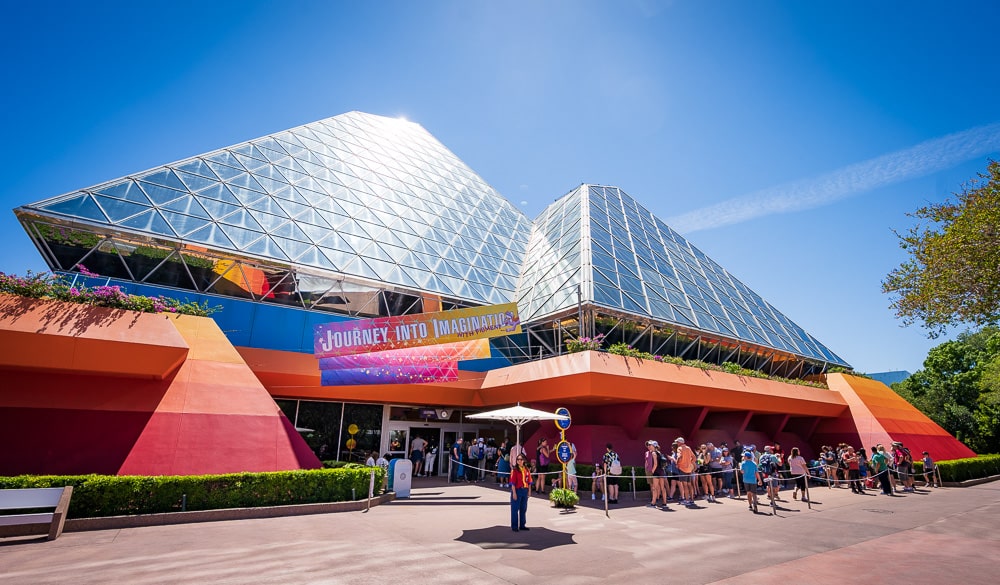
As a Disney shareholder, I could write a proposal about how the company’s refusal to reimagine Journey into Imagination has resulted in financial strain, underperformance, unrealized earnings, social media backlash, and brand damage. I could cite things like popcorn bucket, merchandise sales, and DTB blog posts in support of my position.
Doing this as opposed to someone asking (yet again) during the Q&A would be a more ‘legitimate’ way of raising the issue, but it would be an equally futile effort. Even though I’m right and a Figment announcement would send $DIS rocketing to new heights, those stodgy institutional investors lack my vision and would vote it down.
Now consider what would’ve happened had a shareholder asked about DAS during the Q&A as opposed to going through the formal process for this proposal. Josh D’Amaro might’ve given a diplomatic answer that offered false hope, but that’s about it. The outcome would’ve been the same as this vote, and all those Figment questions over the years. They key difference would’ve been in the headlines leading up to the vote, and the awareness brought to the issue. And that’s not insignificant!
While we strongly believe Disney should do a better job at finding a middle ground and have a more delicate touch in handling DAS, it’s easy to see why this is not something with which shareholders will concern themselves.

When ‘reacting’ to this news, one important thing to keep in mind here is that individual shareholders are not outcome-determine on things like this. Anyone disappointed by this vote shouldn’t be upset at fellow fans. Those who are aware of the DAS controversy and sympathetic to the plight of disabled guests did cast the deciding votes.
It’s the large institutional ones who were make or break. And although Disney’s stock has underperformed for the last several years, that’s definitely not attributable to the theme parks. If anything, the parks are what is carrying the company and preventing that share price from dipping well below $100.
As we’ve covered in earnings call reports and crowds coverage, attendance was down year-over-year (by about 1%), but that was largely attributable to hurricanes ($120 million disclosed losses). Meanwhile, the parks continue to set revenue records and hotel occupancy continues to rise. Right or wrong, that’s what matters to large shareholders.

Simply put, institutional investors like BlackRock, Vanguard, and Fidelity did not concern themselves with this. Their team has not been sifting through the comments on DTB trying to assess whether DAS is good or bad for business.
They almost assuredly deemed it too trivial, and deferred to Disney’s assessment that park operations are ordinary business and not subject to shareholder micromanagement; that they’ve already done their due diligence on the DAS changes,
Honestly, all BlackRock, Vanguard, etc. probably needed to see is this: “The proposal’s request would not enhance shareholder value.” That was the whole ballgame, and what likely led to their casting of the deciding (millions of) votes.
In case you want to know even more, here’s the full background on the shareholder proposal, including the original resolution, Disney’s response, and more. This is essentially just a recap of what led up to this point, so if you’ve been following the saga, there’s nothing new for you in what follows…

Shareholder Statement & Resolution
Disney’s brand and financial stability are under strain from underperforming films, rising park costs, consumer boycotts, and waning trust. According to the resolution, a significant contributor to this strain is the company’s recent overhaul of disability accommodations at its parks due to negative media coverage, social media, guests canceling trips and Annual Passes, as well as legal exposure to a class action lawsuit.
As a result of the controversial DAS changes, Disney exposed itself to legal claims, regulatory scrutiny, and brand damage. Other companies have faced multimillion-dollar settlements under accessibility-related actions. Future liabilities could include costly settlements, operational disruption, and weakened market positioning.
Resolved: Shareholders request that Disney commission an independent review, conducted by a qualified third party, of the company’s accessibility and disability inclusion practices. This review should assess legal, financial, and reputational risks; evaluate Disney’s policies against international accessibility standards and competitors; and identify opportunities for leadership improvement. Shareholders further request that the Board provide a public summary and internal briefing on the findings to ensure accountability and transparency.

The Walt Disney Company’s Proxy Statement Response
The Walt Disney Company prefaced the shareholder proposal with the following:
Given recent regulatory changes, we are including this proposal in the proxy statement, notwithstanding that we believe that it does not meet the requirements of Rule 14a-8, including on grounds that the proposal, read together with its supporting statement, is materially false and misleading in multiple respects (including statements regarding the Company and statements regarding purported research the proponent cites), relates to the Company’s ordinary business operations and has already been substantially implemented by the Company. These bases for exclusion are detailed in the Company’s no-action request submitted to the SEC on November 4, 2025.
Disney’s argument for exclusion in that November 4th no-action request was that any attendance decrease in the last fiscal year was attributable to hurricanes. Moreover, park operations are ordinary business and not subject to shareholder micromanagement; that they’ve already done their due diligence on the DAS changes, and there’s no duty to disclose any nonpublic information.
There’s still more to it than that, but Disney indicated in the proxy statement that the company has limited its response to the most important points and have not attempted to address all the statements with which they disagree. You can read Disney’s full argument here.

The Walt Disney Company Board Recommendation
The Walt Disney Company Board recommended that shareholders vote against this proposal for the following key reasons, as discussed in more detail below:
- The Company is committed to the design and implementation of innovative and effective services that accommodate persons with disabilities and already reviews its practices on an ongoing basis. The Company has been the industry leader in accessibility for over 30 years.
- The Company provides detailed public information, tips and recommendations regarding its accessibility and disability inclusion practices, both online and in person in its theme parks.
- The Company provides strong governance and oversight of its inclusion practices, as well as risk management.
- The proposal’s request would not enhance shareholder value.
Across the Company, we endeavor to provide opportunities to enjoy our products and services. To that end, the Company has made thoughtful investments to incorporate accessibility for people with disabilities throughout our operations as we strive to design, promote and serve as a model for accessibility.
The Company has given the same attention to detail in its development of the Disability Access Service program for its domestic parks, which provides an extraordinary benefit – never having to wait in the regular standby lines for most rides for those who require that option.
The Company also offers a broad range of different accommodations to assist in accessing the rides and other attractions in the parks, accessing our content and programming and experiencing our other products and services. For example, the Company offers a range of tools and accessibility features across our streaming platforms and networks, including tools such as audio descriptions, closed captioning, keyboard navigation and interoperability with popular screen readers.
The Company provides detailed information regarding accessibility and disability inclusion practices on its websites, including the publication of an Accessibility Topic Brief. Each of our theme parks also publicly provides thorough information about its accommodations and assists guests both before and during their visits. For our domestic theme parks, Disneyland Resort and Walt Disney World Resort, this includes pages on the Disability Access Service program with guidance on registration and the process for using the program once in one of the parks.
The Company has strong governance and oversight of both its accessibility efforts and risk management. Our Senior Executive Vice President and Chief People Officer leads Disney’s global people and culture strategy; talent acquisition and development; compensation and benefits; opportunity and inclusion; organizational effectiveness; and employee services and systems. Reporting to our Chief People Officer, our Senior Vice President and Chief Opportunity & Inclusion Officer leads the Company’s Opportunity & Inclusion strategy and partners closely with leaders and teams across all segments to foster a culture rooted in belonging. The Chief Safety Officer leads the Company’s guest safety efforts for Disney Experiences, including those related to guest accessibility, in collaboration with businesses and leaders across the Company. The Board and its committees oversee the Company’s major financial, legal and reputational risks, supporting strong brand stewardship and mitigation of such risks. See section entitled “The Board’s Role in Risk Oversight” in this proxy statement for more details.
The Company already details the support and accommodations it offers to guests and consumers with accessibility needs, as well as risk oversight practices and governance. The Board therefore believes that the proposal’s request is not in the best interests of the Company and its shareholders as it would not provide meaningful additional information to shareholders to merit the resources it would require.
For the reasons set forth above, our Board unanimously recommends voting AGAINST this proposal.

Anyway, just wanted to bring this to your attention since this Disability Access Service shareholder proposal has been an ongoing story, and this brings it to a resolution. To end on a potentially positive note for this who support further DAS review, just getting this on the ballot and in front of investors should be deemed a small victory.
This keeps the conversation about the controversial DAS changes going, and that help might put pressure on Disney for further reform, an informal rule relaxation, or just making the process less dehumanizing.
We’ll conclude by once again reiterating our position that Disney should work towards improving DAS. Just because we believe this shareholder proposal is almost certain to fail doesn’t mean we don’t think Disney should take a second-look at its DAS policies.
The company has an exemplary reputation for guest service. The need for DAS reform was absolutely understandable, as there was rampant abuse exacerbated by social media, entitlement, and Disney creating an incentive for DAS scammers by monetizing line-skipping via Lightning Lanes.
There have been heartbreaking stories of DAS denials, and these have made clear that a more flexible and humane approach offering greater discretion to Cast Members is optimal. It seems that Disney went too far with the DAS overhaul; the pendulum swung from one extreme to another. Here’s hoping a middle ground solution can still be found. We’ll keep you posted.
Planning a Walt Disney World trip? Learn about hotels on our Walt Disney World Hotels Reviews page. For where to eat, read our Walt Disney World Restaurant Reviews. To save money on tickets or determine which type to buy, read our Tips for Saving Money on Walt Disney World Tickets post. Our What to Pack for Disney Trips post takes a unique look at clever items to take. For what to do and when to do it, our Walt Disney World Ride Guides will help. For comprehensive advice, the best place to start is our Walt Disney World Trip Planning Guide for everything you need to know!
YOUR THOUGHTS
Surprised that only 5% of shareholders voted to approve the proposal for an independent review of DAS changes at Walt Disney World and Disneyland? Or did you expect this to be overwhelmingly rejected? Agree or disagree with our assessment of the changes or policy as a whole? Please try to stay on topic–we’ve noticed some of these DAS comments sections get heated and personal. Discuss the policy itself, not others’ use (or lack thereof) of it.



Understanding all opinions I agree there were abuses of the DAS accommodations abd the knee jerk reaction to reject all except those with birth defects, aka congenital.
The pendulum has swung extremely the other way.
The huge profits voted to table any review indefinitely and that they will not revisit the issue due to increase of Fastpass income.
Good bye after 42 years of WDW.
Understanding all opinions I agree there were abuses of the DAS accommodations abd the knee jerk reaction to reject all except those with birth defects, aka congenital.
The pendulum has swung extremely the other way.
The huge profits voted to table any review indefinitely and that they will not revisit the issue due to increase of Fastpass income.
Good bye after 42 years of WDW.
I just completed an interview with the latest rules, and was really surprised at what appeared to be the arbitrariness of Disney’s implementation. My 25-year-old son who loves going to Disney properties is a person with autism. There is no way he could possible stand on line for more that 20 minutes without anxiety issues, which present as shutting down and/or spinning into self harm. In addition, he has no executive function and can barely hold a conversation without help for one minute. He has never had an issue with qualifying for DAS before. He easily qualified for Disneyland Paris DAS, which requires a surprising amount of documentation. And none of this is a problem, since we have mountains of medical documentation to proof my son’s situation.
Amazingly, the Disneyland “medical expert” said my son did not qualify. When I heard the alternatives, I was amazed at Disney missing the point. Option 1: I could stand in line, go on the ride, and then have my son show up and go on the ride without waiting on line. Option 2: I could stand on line and then have my son show and go on the ride with me. Even though there are three of us going, making this seem feasible, it really misunderstands autism in a fundamental way. People with autism have a hard time being in one place waiting around without an activity. They get agitated, especially in environments with many people. If there was an option 3, where I could stand in line to earn my spot and then come later with my son, then that would be fine. But the Disney options did not allow that. And what is the point of spending a fortune and not being able to do the rides together.
So, I asked to speak with the supervisor. Disney calls them “Leaders”. The Leader called the same “medical expert” back. I explained that these alternative options would not work for us, because there was no way of knowing that my son would be mentally available or even physically near the line when I got to the front. What was the point. And how was this supposed to be a together activity if we are apart all the time. So, the “expert” now said we qualified. I get the feeling that explaining a bit more about how he gets agitated may have tipped the scales too. I was completely honest. In addition to the arbitrariness, what type of “medical expert” does not ask the relevant qualifying questions the first time round.
I am glad we qualified. Our only realistic alternative would be to cancel or not go on any rides that have lines longer than 20 minutes. It feels like I need to learn the new exam. Maybe Josh should experience a day with my son in one of the Parks to understand the nuttiness here. I suspect that I am more of an expert on the quiet locations at both Disneyland and Disney World than he is for places to re-regulate.
The most interesting sentence is this very wordy article is Eric Paul saying disabled guests are a growing demographic. I have to ask, rhetorically, Why is this?
“People with autism have a hard time being in one place waiting around without an activity.”
Yet this is exactly what he will be doing with the DAS. And if your answer is “Well, we go and do other stuff while we wait for the DAS return time”, then the same could be said for him waiting with someone outside the line while you get to the front of the standby line.
And no one was telling you that you couldn’t ride together.
While I’m glad that you were able to get the DAS for your son, the reasons you give for the other accommodations not working don’t really hold water, IMO.
Joe,
I have no idea why Eric says that, nor what data he references in making that statement.
WhoAmI,
It is not clear to me from your comments if you have an agenda. What is clear is that you do not have nor been with a person with autism for any extended period of time. Persons with autism who have DAS privileges do not wait in one place waiting around in one place without an activity: that is exactly what they do not do – unless they are sleeping or in a quiet place with a quiet activity. They require constant attention, sometimes moving around, and always avoiding crowded and/or loud areas.
No clue why you would claim that “no one was telling you that you couldn’t ride together”. It was the Disney Cast Member on the DAS interview line who told me exactly that. There were two non DAS options: 1) ride then (after you have ridden) allow the other person (the person with autism and whomever is looking after them – they are not independent) to ride without you. 2) wait, then when you get to the front of the line have the person with autism and whomever is looking after them to magically show up at exactly that point in time (missing the whole point that persons with autism have a hard time waiting around and/or are not available – for a whole variety of reasons)… I probed on this second point. I asked the Disney Cast Member: “once I get to the front of the line, could I then get a return time” and the Cast Member said “no”. He was clear that I could not wait for them at the front of the line either. They had to be readily available at that point time to take the ride together. Maybe this works in FantasyLand, but not in the real world with persons with autism. If I could get a return time after standing in line, then at least this option could be plausible with three people even though it forces these families split up and not enjoy their time at Disney together. I told the Disney Cast Member this, and they said that they did not have any other options. So, the Leader called the so call “medical advisor” back and they approved DAS for us. The implementation of their policy was totally nuts. The whole point of DAS for us was that a person with autism did not have to come back at a specific time. It just had to be sometime after your return time on the same day. If we are wondering around to avoid crowds or my son needs quiet time or my son is at that moment dysregulated and hence not ready for a ride, there is no rush.
WDW stock holders will never reverse their decision due to the huge funds spent for FASTPASS.
It disenfranchised those adults who are truly disabled, mine are physical and the other from serving in Iraq and attempted stabbing in my lower back.
Money talks and compassion walked.
So long, farewell, it’s time NOT to go WDW and canc our Annual Passes.
I am sure you won’t be affected by loosing our 3 to 4 visits to WDW.
“DAS privileges do not wait in one place waiting around in one place without an activity: that is exactly what they do not do – unless they are sleeping or in a quiet place with a quiet activity. ”
You apparently didn’t read all of my comment…if you walk around and do other things while waiting for the DAS return time, then you can walk around and do other things while waiting for your party in the standby line to go to the front of the line when you would return and meet them.
But when someone is intent on not making an accommodation work, well, it won’t work.
Enjoy your trip.
The assumption of all were abusers of the system has some truth.
As for my disabilities, one is paramount after litteraly being stabbed in my lower back by an Iraqi medical Corpsman and telling me I would be working for him. My vest saved my life.
My disabilities are all military related, PTSD, injured shoulders. left knee surgery with difficulties walking, standing and lung damage.
According to WDW I do not qualify for DAS due to the definitions being Congenital.
I understand why they did the changes but disenfranchised those who truly needed it.
So long, farwell, it my time not to go to WDW and will not renew my Annual passes, stay at Shades of Green or other WDW places.
45 years of going to WDW ended and our funds.
I am now battleling Prostrate Cancer and the early stages of Dimentia, but that also does NOT qualify either.
And the WDW board blames it on hurricanes. You better check the weather history before stating a lie.
Aging population at the older end, and a plethora of self-diagnosis of neurodivergence at the younger age end.
B Coffman,
Sorry to hear about your circumstance. And apologies, but apparently there is no reply button to “WhoAmI” who keeps replying to my posts.
WhoAmI,
I was speaking about the options if you do not get “DAS” option with a return time. If you do not, then your party has to have at least three people and split up (ie, not spending time together). And the Disney Cast Member said that you could not wait at the front of the standby line until your other party arrived. So if the other party is not available, the whole experience is a frustrating bust. As I said, concept of a person with autism being readily available (at least a high percentage of the time for long lines) is FantasyLand. I was willing to try to make one of Disneys accommodations work by volunteering not to spend time with my family on this expensive endeavor, if Disney would simply give me a return time at the end of my wait in line, so I could enjoy the ride with my family. Disney said “No” to my willingness to be away from my family and wait in line to get a return time: Disney was unwilling to accommodate. It was at this point, that we pivoted back to DAS. The whole point of DAS for people traveling with persons with autism is you can take your turn (ie, get a return time) but not be stuck with having to return at that exact return time.
If you are not following what I am saying and/or disagree with it, then let it rest. We will agree to disagree. Family’s with family members with autism have a VERY different life experience. If I had a neurotypical family, life would be much different.
Out of curiosity for how far this concept can be pushed, I wondered if Disney Cruises have DAS. The answer is no. Instead, special needs are handled on a case by case basis. https://plandisney.disney.go.com/question/disney-cruises-das-passes-two-kids-special-needs-kids-572558/
Exactly. Which is what Disney is doing now with the DAS in the parks – offering different accommodations on a case by case basis, which is as it should be, IMO.
The change of the DAS program severely impacted the disabled USAR/USAF Iraq veteran.
There were abuses of the system of people hiring disabled people and I understand the backlash. but in the process you kicked me in the teeth fir my disabilities of PTSD back injuries, and now my issues with prostrate cancer that causes incontinence and now diagnosed with Dimentia my limited time to come to WDW before I die. Thanks for screwing me l. Enjoy you profits and spitting on my service and disabilities.
This is very unfortunate.
…and most of us did not. In fact, I only asked for DAS one time despite many visits. I have multiple issues some of which are invisible. It seems that some guests have no idea what it is to have a disability. I did not until I could not walk a long distance (got an ECV), stand in the sun and heat due to several documented disabilities which despite sitting can be excruciating. I am going to try for DAS on our upcoming visit. I live in this body 24/7 and deal with much pain, however I have been coming to WDW many dozens of times since I was a kid. I could get multiple doctor’s notes but they will not consider them. We may be at the end of our many trips, AP’s and DVC as my pain is increasing. This will be a test for us for sure.
There’s no perfect solution that’s going to please or accommodate everyone — disabilities can make the pleasures most folks take for granted so much harder, or even impossible, to enjoy. There are always going to be people, who for one reason or another, aren’t going to be good fits for theme parks (just like not everyone can hike a mountain trail, swim in a pool or the ocean, eat a churro, etc). As an extreme example, if a person was prone to extreme reactions to being in the presence of strangers, a theme park wouldn’t be able to accommodate clearing out an entire attraction of other guests and cast members. So the question is where you draw the line.
I think the hardest thing here is that Disney was extremely accommodating for years, and provided accommodations to folks who probably wouldn’t have expected them otherwise (and also was so permissive as to engender all of the rampant abuse). And now those same people, having seen what the company was capable of doing for them and their loved ones, now feel like the rug has been pulled out.
To me (as someone whose daughter used DAS in the past due to a life-threatening condition), I think the current RULES in place are probably close to where things should ultimately land. What it seems like was flawed was the PROCESS and ADMINISTRATION of those rules. And the main thing lacking was compassion. There was almost an overnight, 180-degree shift from every person treated as worthy of accommodation (though many of them were actually deceitful abusers or “friendly fraudsters” who didn’t realize they shouldn’t apply for DAS), to every person treated as a potential abuser, even those who truly needed and qualified for DAS.
If they can get closer to this being a respectful, compassionate process that honors each family and individual, then I think there will be fewer heartbreaking or maddening stories relayed. Personally I’d like to see some more levers or tools in the toolkit of the DAS administrators, where even if DAS access isn’t granted, there are other “consolation prizes” for folks whose real disabilities make theme park experiences difficult, even though they don’t technically qualify for DAS. Like a few free Lightning Lanes, or a special express lane for security screening (even without a wheelchair), or something like that, that DAS staff have the power to grant in whatever circumstances they see fit.
I have no doubt that there are people that did not abuse the system, and legit needed it. But, if your issues are, you have pain while standing in line or your kids have trouble staying still in lines or you don’t handle heat well, that is going to be very large group of people.
It’s Syndrome’s line from Incredibles: “When everyone is super, no one will be”.
Right, if you included everyone with any kind of disability, diabetes, cancer survivor, medical condition, heat or sun sensitivity, hyperactivity, and add in their family and/or friends, that’s probably more than half the park.
Mentioned tangentially in the post, but did Disney say anything about Figment? (I assume no or there would be an entire post about it already!)
…and there is the other post. Nevermind!
I figured this would be rejected. It seems like the old system was abused too much so it is what it is. The iffy people can buy passes like the rest of us.
Agree 100%. And no matter what Disney does, people will be upset. If they allow 3 people on the DAS, somebody will complain about not having 4, and on and on.
The truth is, no DAS plan will please everyone. And the abuse of DAS was rampant and for every person that needed it, 2 other people were at best stretching it and at worst, faking it.
I absolutely agree with you James, to buy passes just like the rest of us. It is a shame so many people had to abuse the system and still do
.
Totally agree. The key difference being that now you have to pay to skip the lines you can see the level of complaints sky rocketing about the abuse of it. Few people begrudge a real need. That’s the tightrope Disney have to traverse. You can definitely feel the difference in the park queues. They seem shorter and the stand by lines feel like they move quicker.