
Disney Addresses Third Biggest Guest Complaint, Decreasing Downtime for 1.5 Million More Rides!
Disney fans have a lot of complaints and criticism, and in a surprise twist, the company has conceded that this has been a problem and is one they’re actively fixing: attraction maintenance and unexpected ride downtime. This is hugely positive news, and we want to share details and why this is such a big deal to us.
As we’ve covered in Top 10 Guest Complaints About Walt Disney World and other roundups of the biggest annual fan concerns about the parks, we’ve been receiving negative reader feedback at a far historically-high rate over the last 5 years. The #3 entry on our latest version of the biggest complaints list (from December) revolved around ride reliability.
As we pointed out then, it was a complaint we’ve actually been hearing less, dropping from #2 (and almost #1) to #3. Of course, the third-biggest criticism still isn’t great, but the positive trend was nevertheless good to see. Things appeared to be heading in the right direction. Now, we have confirmation from the company that this is the direct result of an internal initiative…
Disney has been making a concerted effort to make existing guests happier, and one of the ways they’re doing that is improving ride reliability and attraction availability. This has already been successful, increasing guest satisfaction by reducing unplanned downtime.
This news comes courtesy of the Disneyland Resort Business Update. We were invited to attend an intimate media gathering with Disneyland President Thomas Mazloum and other leadership from the resort, who shared plans for the future, along with changes they’ve made over the last year to measurably improve the guest experience.
One of the presentations during this event was made by Natalie Katzka, Director of Attractions Engineering Services at the Disneyland Resort. She shared several changes her team has made over the last year-plus, the fruits of which have already been felt in improved guest satisfaction scores.
To increase guest satisfaction, Disneyland Resort is focusing on attraction reliability, focusing effort on an increased uptime at attractions. According to Katzka, Disneyland had 1.5 million more rides or ‘guests carried’ during the last fiscal year due to increased attraction availability.

“We know that being able to enjoy more attractions in a day plays a big role in how guests feel about their visit. Work behind the scenes to care for our attractions is one of the most important ways we can invest in making the guest experience the best it can be,” said Katzka.
Her presentation elaborated on how her team was making it possible for guests to do more during their day at Disneyland. She started by walking us through the nature of attraction closures, explaining that maintenance typically falls into one of three buckets:
- Overnight Safety & Regulatory
- Scheduled Refurbishments
- Unplanned Downtime

We discuss the second and third types of attraction maintenance with regularity. In case you’re unfamiliar with them, #2 is the type of closure covered in our 2026 Disneyland Ride Refurbishment Calendar. As for #3, it’s ride breakdowns; when attractions unexpected close during your visit, and the line has to be dumped and the attraction becomes unavailable for hours.
Overnights involve regulatory safety checks and inspections, along with whatever preventative maintenance can be squeezed in. It’s often the case that Disneyland’s maintenance teams can identify issues before they result in unplanned downtime; the challenge is in accomplishing these fixes during overnights.
An example given was replacing a single Matterhorn pacer, a tire drive that controls (or paces) the speed and performance of roller coaster trains or attraction vehicles, can take 6 hours overnight with 2 technicians. There are dozens of pacers on the attraction, and only so much time each overnight.
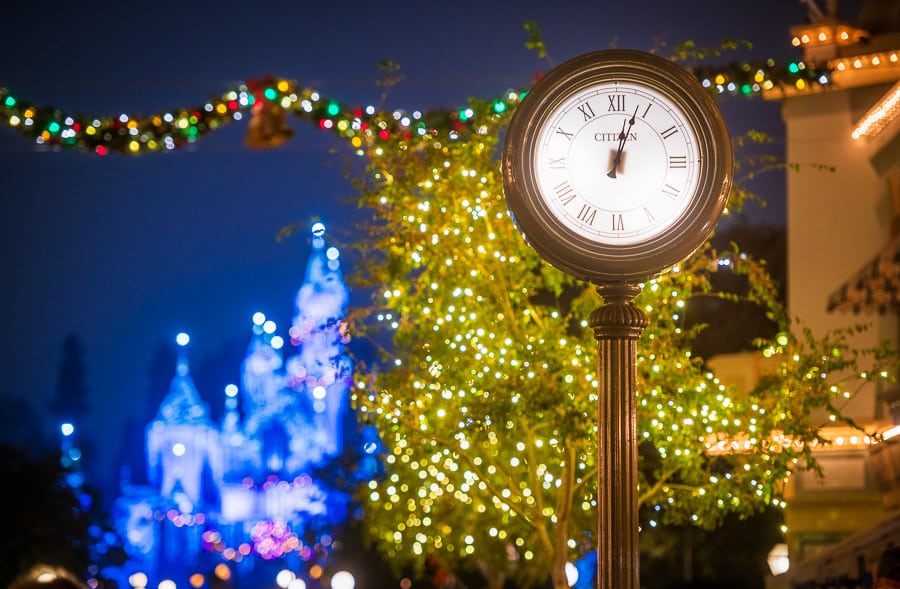
Katzka noted that one of the difficulties with accomplishing both is longer operating hours. Obviously, there’s less time for overnight maintenance when Disneyland hours are 8 am until midnight versus 9 am until 9 pm. She referenced changes to park hours that were aimed at giving maintenance teams more time back.
I found this to be interesting, as I vividly remember when reductions in park hours were made last year. There was a lot of online outrage about this, as fans viewed it as a cost-cutting measure ahead of the new fiscal year. And I don’t doubt for a second that was part of the rationale.
It’s nevertheless fascinating to hear the other perspective on this, which is the upside for overnight maintenance being able to do more overnight work, resulting in better uptime and reducing refurbishment windows. A good reminder that there’s often more than meets the eye when it comes to Disney’s decision-making process, and a push-pull among various stakeholders.
Katzka also shared that parts availability and supply chain disruptions continue to pose problems.
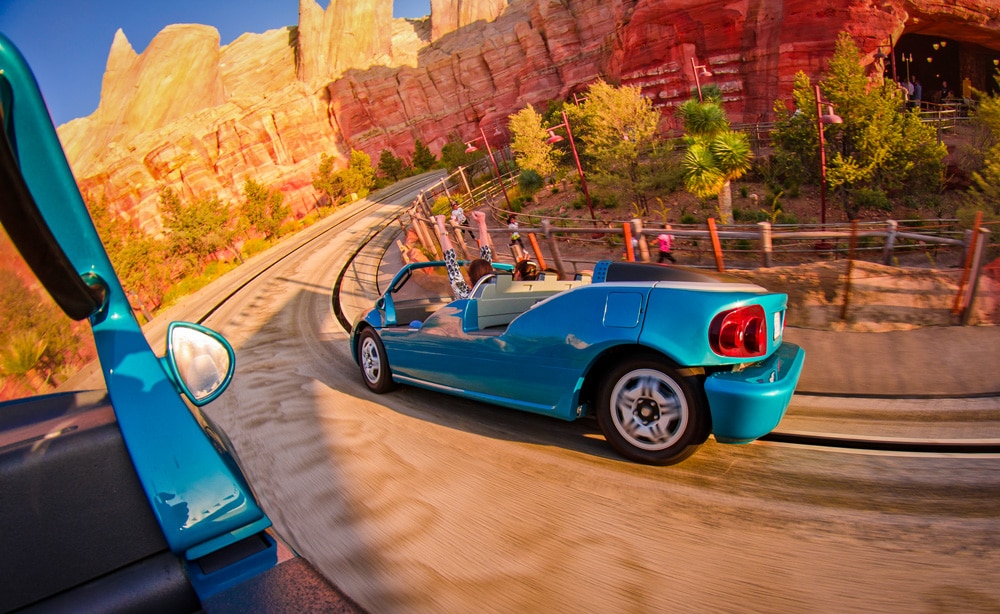
Recognizing that this is the new normal, her team has implemented a new parts management system at Radiator Springs Racers in Disney California Adventure. The attraction now uses a bifurcated approach, with auto ordering of parts based on need, with plenty of lead time to account for delays now built-in.
As a direct result of the new parts inventory management system, Radiator Springs Racers was able to operate with the maximum number of ride vehicles on the track most of the time during December. This meant more guests carried per day (and lower wait times, at least in theory). Another upside Disneyland noted is that it improves Cast Member morale to have the ride operating as efficiently as possible and with fewer breakdowns.

Along these lines, the Disneyland maintenance teams are now working on maximizing the carrying capacity on other attractions.
They’ve tested a new approach to flow through the load and unload stations at Space Mountain, and that’s expected to be implemented on a permanent basis to increase throughput. Next up is Indiana Jones Adventure, where they’ve identified issues with dispatch intervals. That should likewise increase the number of guests carried.
We’ve discussed this elsewhere, but every attraction has theoretical hourly ride capacity (THRC), which is how many guests could be cycled through assuming 100% efficiency. There’s also operational hourly ride capacity (OHRC), which is the “real world” number a ride can expect to achieve thanks to humans being human, and all of that.
The goal is to get the OHRC as close to the THRC number as humanly possible. (This is a big reason why Epic Universe crowds have been so bad–there’s a big gap between OHRC and THRC, which is completely normal with new attractions.)

Katzka went on to share that by reactivating the water tower in New Orleans Square, the Disneyland Railroad was able to reduce time spent in-station, which made it possible to operate a fourth train during the holiday season. Over a ten-day test around the peak week of Christmas, that change allowed the railroad to carry an additional 29,000 guests.
I’m guessing that test didn’t include New Year’s Eve, when we experienced our longest-ever wait for the Disneyland Railroad…only to have the train promptly break down once we finally boarded.
(I know, I know–it’s New Year’s Eve. But it was otherwise a rainy day with only 6/10 crowd levels. It was the least busy NYE I’ve ever experienced at any Disney park!)

By restructuring installation schedules and processes for seasonal overlays at Haunted Mansion and “it’s a small world,” the resort added nine additional operating days during the most recent holiday season; 5 at Haunted Mansion and 4 at “it’s a small world.”
Katzka shared that said those additional days translated into 209,000 more guest carries combined across the two attractions; 135,000 at Haunted Mansion and 74,000 at “it’s a small world.”
These are big wins at two high-capacity attractions, and during high-demand timeframes. Here’s hoping that these lessons can close the gap to such a degree that the notoriously refurbishment-averse Walt Disney World reconsiders its position on seasonal overlays to both attractions. (Wishful thinking, I know.)
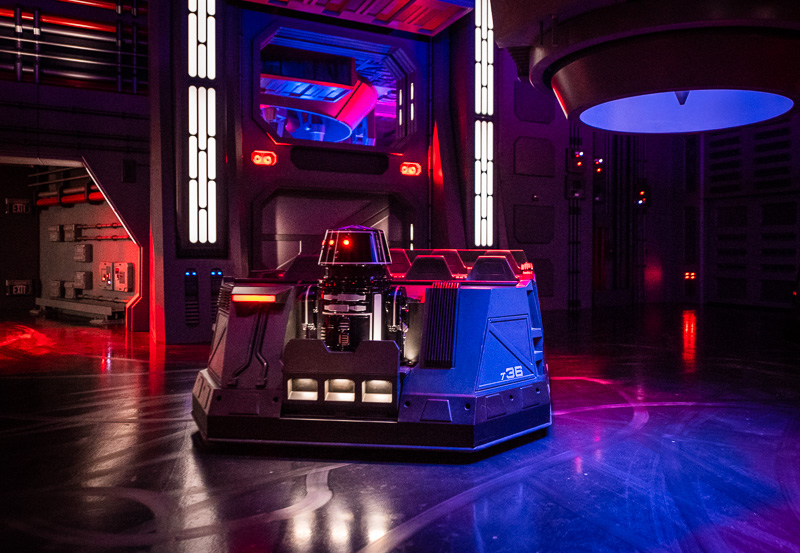
Flooring changes made to Star Wars: Rise of the Resistance were cited as another example of Disneyland’s ongoing effort to address ride faults and improve long-term reliability.
The team had flagged the flooring as a problem that was increasing ride faulting, and was just waiting for the opportunity to get in there and fix it. Even though that’s an invisible change that guests will not notice, it’ll have a positive impact on the guest experience.
Disneyland revealed that Star Wars: Rise of the Resistance already had a multiple percentage point increase in year over year uptime, and that was before the recent refurbishment addressed issues. The attraction’s reliability has improved by leaps and bounds since it opened in 2020.
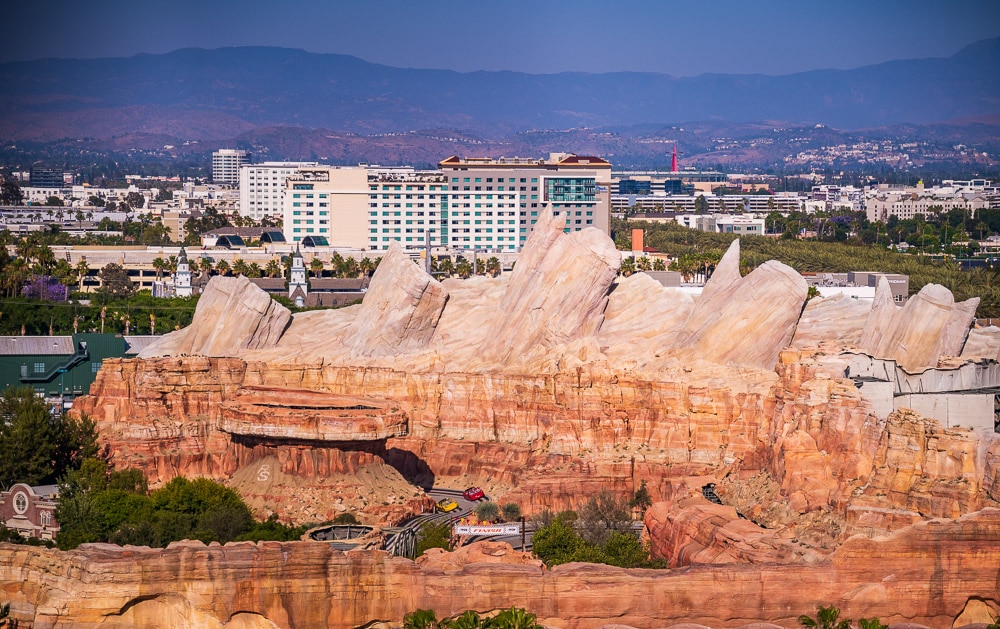
Katzka noted that every refurbishment focuses on addressing downtime drivers, and improving reliability.
She was very cognizant of the fact that her team won’t get many chances for lengthy refurbishments of headliner attractions like Star Wars: Rise of the Resistance or Radiator Springs Racers, so they take full advantage and maximize their time when they have a crack at fixing things.
If you’re a cynic like me, you might be worried that these uptime improvements are partly the result of lower show quality standards (SQS), or what it takes on the show scene side to trigger downtime. After all, we’ve seen some rides looking a bit, ahem, rough in the post-COVID era. To that point, we were reassured that there’s a concerted effort to improve both. So improved uptime is not coming at the expense of reduced SQS, thankfully.
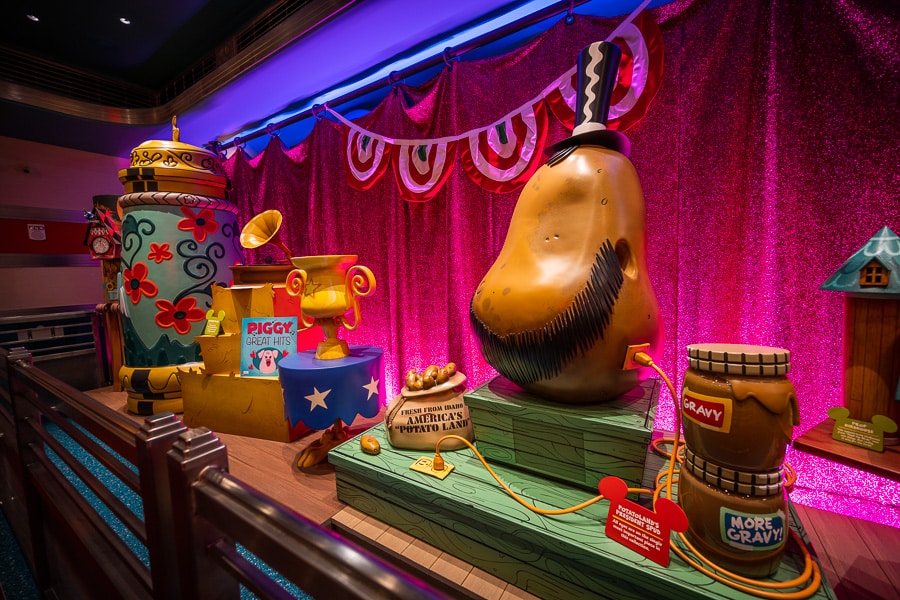
As noted above, ‘humans being human’ is one of the reasons why OHRC is lower than THRC.
Well, part of that is guest behavior. Things like loading and unloading slowly, standing up mid-ride and inexplicably trying to exit. You know, the usual.
According to Disney, 13% of all downtime now is actually caused by guest behavior (the inference was that this was an increase from the historical norm of around 10%; guest behavior getting worse would be hardly stop-the-presses news).
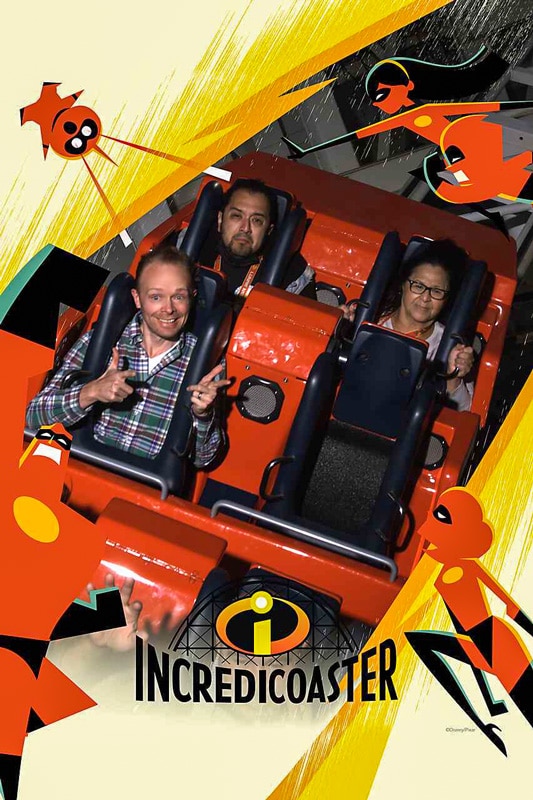
In an effort to combat this, Disneyland has been installing additional signage at some attractions to help guests load faster and safer, and making tweaks to policies. Examples here include Incredicoaster and Mickey and Minnie’s Runaway Railway, where loose phones and water bottles had caused multiple incidents. No word yet on whether this will prove fruitful.
This reminds me of one of my favorite quotes from a Yosemite National Park ranger: “there is considerable overlap between the intelligence of the smartest bears and the dumbest tourists.” This was to explain how the NPS threads the needle on bear-proof trash can design without going too far to raise accessibility concerns for humans.
I’m not completely sure how that’s relevant here, but it’s amusing sentiment. I assume Disney has the same challenges in balancing measures that might reduce guest-induced downtime and efficiency with the reality that the people who need to read such messaging most are functionally illiterate; there’s a point at which it becomes annoying to everyone else who doesn’t need to be told not to stand up mid-ride in the first place. Perhaps Disney should invite some smart bears to visit the parks to reduce that 13% stat.

The final thing that Katzka discussed during the Q&A was lost institutional knowledge. She shared that Disneyland ride maintenance teams had lost a lot of seasoned Cast Members during COVID, and continue to do so.
This is not the least bit surprising to us. We first warned about the loss of institutional knowledge with the furloughs and layoffs back in 2020.
It’s a point we’ve repeatedly reiterated, and I’ve heard from a few people behind the scenes that the issue is even worse (and more widespread) than we realize. This media event was simply the first time we’ve heard anyone from Disney admit this on the record.

Sadly, there’s no easy fix. It’s not simply a matter of properly staffing those departments again. When you lose a bunch of old-timers with decades of experience in legacy systems and proprietary technology, you can’t just hire some fresh-faced kid off the street and expect the same results (my words).
This was always a risk when baby boomers started retiring en masse, but 2020 accelerated and consolidated the issue, and caused a lot of damage all at once. Had these retirements occurred organically over time, they would’ve been more staggered and allowed for more orderly mentorship, documentation, and so forth.
Instead, it was more like flipping a switch. It sounds like recovery from that has been slow-going.
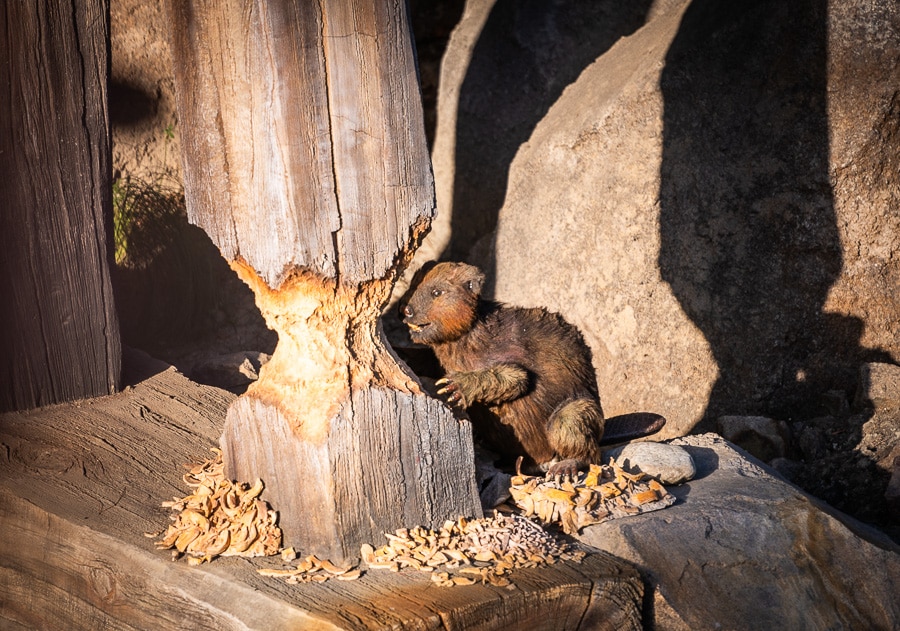
The good news, though, is that progress is being made. Disneyland officials shared that they are doing more to document technical knowledge and are implementing new troubleshooting techniques.
There’s also the practical reality that tribal knowledge is only going to naturally increase over time. The reopening was the low point. Every fresh-faced kid off the street (again, my words) hired back in 2021 now has at least 5 years of experience. They’ve learned on the job, and gotten better.
That’s only going to continue to improve…until ~50 years from now when there’s another demographics blip of everyone hired post-COVID retiring en masse. But that’s a problem we’ll blog about in 2075, not today.

My position on ride refurbishments and routine maintenance is well-documented.
One of my ‘unpopular opinions’ has long been that Disney should be doing more ride refurbishments, not fewer. Ostensibly, many fans agree with this sentiment. At least, in theory. But that changes fast in practice when multiple rides close for refurbishment simultaneously.
There’s a pervasive sense among fans that nothing should be closed during their trip, and the saying “vacation ruined” has attained near-meme status among some fans. Frankly, this is a bit absurd. Fans demand stellar maintenance but also no ride refurbishments during their trip.
Those perspectives are impossible to reconcile. In our view, it’s better to have several scheduled ride refurbishments as opposed to a bunch of random downtime due to deferred maintenance. I would much rather know in advance that something is going to be closed so I can plan accordingly, as opposed to encountering multiple unexpected breakdowns that throw off my day. At least one of those things is predictable and can be accounted for.

Domestic Disney fans often point to Tokyo Disney Resort as the gold standard for maintenance, and they’re right. OLC is old school Disney, and those parks are still held to 1990s standards.
The way that Tokyo Disney Resort accomplishes this is with an aggressive refurbishment calendar. They are not afraid to take a half-dozen high-profile attractions offline across the two parks at any given time. That’s how superlative show standards are achieved.
In our view, this is the right way to do things, and we’d love to see both Disneyland and Walt Disney World not be afraid to do likewise. This is doubly true as even with these strides in the last year, the domestic parks are still playing catch-up and recovering from the brutal blow of deferred maintenance in 2020-2022.
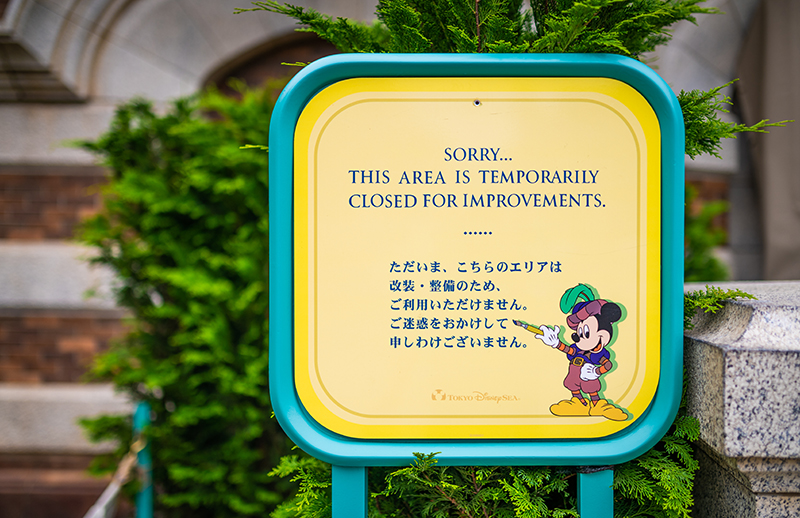
Another thing Tokyo Disney Resort does the right way is announcing ride closures 6+ months in advance in a single batch. Walt Disney World and Disneyland have gotten better about this with longer lead times for major closures, but there’s still room for improvement.
There are still too many last minute refurbishments announced by Walt Disney World or Disneyland that are almost impossible to plan around since guests have already locked in their travel dates–not to mention dining reservations, Lightning Lanes, and so forth. Fortunately, this is also trending in the right direction.
In my view, announcing as many ride refurbishments as possible 6 months out is the best of both worlds. If there is a must-do attraction that’ll have “vacation ruined” status if missed, guests can plan accordingly.
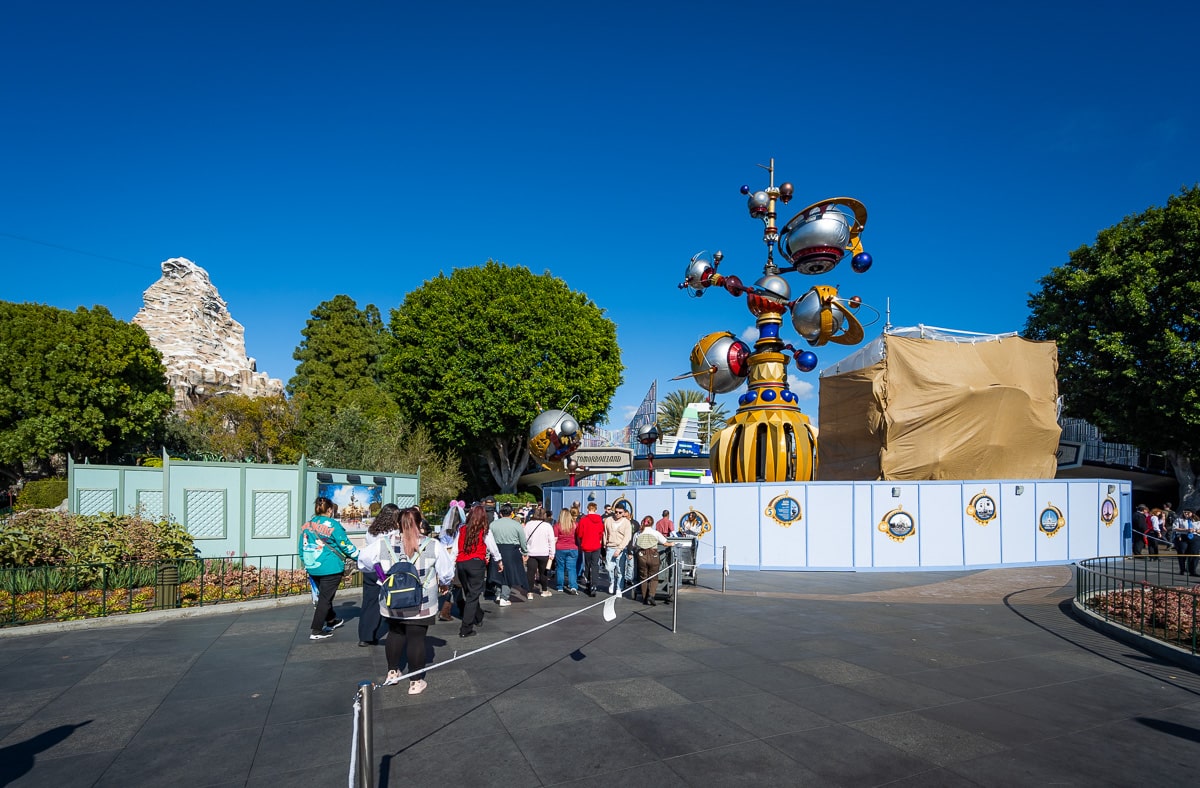
Ultimately, this is the biggest “news” out of the Disneyland Business Update and what I’ve been most excited about sharing with you all. No joke. Katzka was a really impressive, no nonsense speaker (clearly an engineer!) and her presentation was very data-dense and illuminating.
Conversing with the President of Disneyland was obviously enlightening, but it’s not often that we get to hear from someone in Katzka’s position. The transparency she offered was refreshing, and it was cool to learn about all of the invisible improvements that have already had a measurable positive impact on the guest experience.
I hope this underscores some of what we’ve been saying for a while about the significance of maintenance and refurbishments, vindicates those of you who have repeatedly questioned whether downtime has (or had) gotten worse post-COVID (or complained of excessive breakdowns), and reassures everyone that things are finally turning a corner.

We’d also note that this year over year improvement is a step in the right direction, but it’s only a start. Ride reliability and downtime had gotten noticeably worse post-reopening due to the aforementioned supply chain disruptions, layoffs and lost institutional knowledge, and deferred maintenance during the revenge travel period.
A year over year improvement is great news, as it means progress is being made. However, there’s still a long ways to go before Disney returns to ~2019 standards. Anecdotally, we’re still seeing a historically-high number of breakdowns. It’s not as if the headline 1.5 million more rides means everything is fixed and uptime is perfect. It isn’t.
There’s still a good chance you’re going to encounter downtime and delays. Perhaps a frustrating number of them. But things have already improved, and we’re past the 2021-2023 low point. It’s not perfect, but it’s getting better.

Here’s hoping that similar policies are being implemented at Walt Disney World, because they’ve been badly needed over the last few years. All of this may not seem particularly “newsworthy,” but in our view, this invisible improvement is one of the biggest positives that Disney could’ve announced.
It’s not as sexy as a brand-new attraction or more tangible components of the guest experience (I’m sure this won’t garner nearly as much attention as the return of All-Day Park Hopping at Disneyland, despite being much more consequential), but anyone who has endured excessive breakdowns should know that this is actually of paramount importance.
Planning a Southern California vacation? For park admission deals, read Tips for Saving Money on Disneyland Tickets. Learn about on-site and off-site hotels in our Anaheim Hotel Reviews & Rankings. For where to eat, check out our Disneyland Restaurant Reviews. For unique ideas of things that’ll improve your trip, check out What to Pack for Disney. For comprehensive advice, consult our Disneyland Vacation Planning Guide. Finally, for guides beyond Disney, check out our Southern California Itineraries for day trips to Los Angeles, Laguna Beach, and tons of other places!
Your Thoughts
What do you think of Disneyland’s ride reliability & uptime improvements? Would you like to see even more maintenance and improvements? Do you agree or disagree with our assessment? Any questions we can help you answer? Hearing your feedback–even when you disagree with us–is both interesting to us and helpful to other readers, so please share your thoughts below in the comments!

Great article as usual, and really glad to hear from an engineer (or engineering manager at least) about the issues. We are currently at Disneyland (late February) and the ride availability has been horrible. Everything from Haunted Mansion, to Mr. Toads Wild Ride has had issues. There is no excuse to Losing tribal knowledge during Covid. It points to very bad management and complacency. There should never be tribal knowledge in the first place. I am an engineer that worked on many complex aerospace systems such as aircraft avionics to missile guidance systems. Documentation and Training are key elements to keep any complex systems up and running. If Disney relied on the old guard to keep things going, the managers all need to be fired. I had a boss once tell me that if a manager had an employee that was so important to a project that the project would be in trouble if they were hit by a bus, then the manager and the employee should be fired. We need to adopt the Tokyo standards ASAP or things will only get worse I’m afraid.
excellent, informative piece, thank you.
Love this article and the insight it provides into the behind the scenes / operations of the parks! Thank you for sharing.
Good! Bring it to Orlando. To your point, I was at wdw for a week in Sept 24, waited in line and/or scheduled fastpasses for runaway railway 6 times throughout the trip, and rode it 0 times. Would’ve been super dope if they’d had a refurb scheduled a month or 6+ ahead of time so my resources weren’t wasted.
Great article Tom, this is the type of content that is unique to this blog that is really fascinating for parks fans. Let’s hope some of these practices adapted at Disneyland make it to WDW, where the implementation is perhaps even more acutely needed!
a) If some rides need more routine maintenance, then schedule those, and make it clear as part of the calendar. For example “The matterhorn bobselds will have a delayed opening until 11am every Tuesday through September”. People get most upset when their ride isn’t available, and worse if they can’t plan around it. Having some extended maintenance windows that are predictable will help guests plan, and know that it will be possible to ride and when.
b) Trackless vehicles have a problem with any foreign objects on the show floor, for example ears. This is a known problem. Disney should have cameras with AI recognition of what is a ride vehicle and what isn’t. And as soon as something foreign is seen, the ride should be paused, or slowed and have an automed process to retrieve the object. Wall-E answered how to do this with their cleaning bots on the spaceship. The rides need something similar that will go and retrieve the item before it can get stuck in the wheels.
The bots can even be disguised so that they fit with general ride theming, such as mouse droid in RotR and a rodent in ratatoille. If there is a suspicion of malfeasance by guests (dropping things on purpose) then they should be trespassed.
This was such an interesting read. A+ reporting and I’m thrilled to hear about these backend changes!
It’s hard to get excited by Disney promising to try harder to assure their attractions actually work. Failing to maintain the rides, and assure necessary parts and skilled labor is available to keep them running, is inexcusable for a company like Disney. That is the absolute minimum we should expect. We pay a premium (and then some!) for a Disney vacation because it is Disney. For broken down rides we can go to the carnival in the parking lot on the corner. Disney is not promising a fun way to kill time, they are promising THE HAPPIEST PLACE ON EARTH. Not a happy place, the HAPPIEST. Not pretty good attractions when they work, but MAGIC. C’mon! I am not giving a round of applause to a company that charges me twice, once to get in the park, and then again to actually use the attractions (as opposed to standing in line for hours.) Sorry, but I expect the ride to work.
I thought the bear comment was spot on. Imagine getting to the pinnacle of Space Ship Earth and not hearing the recording about remaining seated while the vehicles turn! That would be epic!
This REALLY resonates with my family. We were just there Feb 4 to Feb 6. Our first day we did early entry rope drop at Holleywood and they had delayed open of Rise (2 hours!!!!!) and Slinky (1 hour). As a result Smugglers Run was at 60 minutes at 9am! We rode Runaway Railway and then went over to Holleywood Blvd to find Rock’n was down! We decided to see the Villains show, get in line there, and they announce “You’re welcome to stay in line, but the fist show might have to be cancelled”. Absolutely brutal experience. You could overhear people saying “Is anything open?” We ended up leaving before lunch to check into the Dolphin.
Having bought our annual passes in Nov of ’25 we have visited about 12 days (all onsite) and we have found at least half the time a major ride is down at early open. (We are always left feeling bad for the people who don’t have season passes. They only have a few days to do all the parks and entire trips can be ruined by days like this.)
Anything Disney can do to fix these issues would be greatly appreciated.
Had the same experience at HOL on four separate trips last year. Even when we tried to pivot to another plan that ride was down too. Not a fun way to start the day after getting up early for Early Entry hours.
Great bit of reporting! I always love getting to see “how the sausage gets made” at Disney and other similar parks, and these sort of logistical challenges tend to go under the radar most of the time.
I was just at Disney World and perhaps I was lucky but I rode everything I wanted in every park using multipass/individual LL and didn’t experience a single ride outage where any of my passes became a “multi experience pass”. I can’t think of another trip where that has happened.
“We know that being able to enjoy more attractions in a day plays a big role in how guests feel about their visit. Work behind the scenes to care for our attractions is one of the most important ways we can invest in making the guest experience the best it can be,” said Katzka.
Wow, Katzka had better be careful. This philosophy is in direct opposition to what corporate executives and stockholders believe. That is, it’s best to save money on ride maintenance and create downtime because it forces guests to buy more food and merch. Win-win!
Katzka my have a tough time finding employment outside Disney.
Downtime reduces guest satisfaction, which reduces key metrics like intent to revisit or recommend. It does not drive anything positive. You really think people are going to eat more, let alone buy more merchandise, because a ride broke down? That’s not what frustrating people accomplishes.
The win-win is in improving guest satisfaction. This is one scenario where the interests of Wall Street and guests are aligned.
I guess I’m just too cynical, Tom. What you say is true, but I don’t think the corporate execs would agree.
will this happen at Disney World as well?
The panel we attended only concerned Disneyland, but it stands to reason that Walt Disney World would be seeing similar improvements simply by virtue of the maintenance teams gaining more experience.
I’m trying to figure out whether there’s a concerted initiative like this at WDW, though.
Not sure if this is related, but the past couple of times I’ve been at Disneyland I’ve noticed them doing something I have not seen since the 90s, which is that they are filling up every possible seat on the Fantasyland dark rides. For many years, if you were riding solo or with just one other person, they’d leave the remaining seats empty. Now they fill up those empty seats with more riders. Seems to align with this article.
This is great. Now Disneyland should fix the security situation so every morning doesn’t start off on the wrong foot.
Stay tuned for more on that. That was the specific question/complaint I had for Mazloum.
I noticed a dramatic improvement in uptime between my trip in Dec. of 2023 and Aug. of 2024. Especially for flagship attractions like Rise of the Resistance and Radiator Springs Racers. If things have continued to improve, I’m happy to hear it and it might be worth the trade-off in park hours. (At least in the off-season. Closing earlier during the holidays still seems like a mistake)
This is genuinely exciting news for Disney fans. Ride reliability is one of those things that can make or break a theme park visit, and reducing unplanned downtime by that much is a huge operational acheivement. It’s encouraging to see leadership sharing specifics through events like the Business Update rather than keeping everything behind closed doors. Natalie Katzka’s presentation sounds like a fascinating look behind the curtain. Tom, your coverage of this kind of insider detail is always top-notch!