
Disney Overhauls DAS to Reduce Abuse & Misuse

Walt Disney World and Disneyland have revealed that they’ll be overhauling Disability Access Service (DAS), and launching tools for guests to plan their visit–including a new method of accommodation for guests who are unable to wait in a regular standby line for extended periods of time. This details DAS changes and how they should cut down on Lightning Lane abuse and misuse.
For starters, Walt Disney World and Disneyland have both updated their Accessibility Services websites, which outline the many options for guests with disabilities visiting the Florida and California parks, respectively. There’s considerable overlap between the coasts, with similar info on planning, parking and transportation, mobility devices, accessing attractions, hotel services, and more.
Disney’s site updates better showcase the variety of accessibility options available at the parks. The goal is to provide greater clarity so each service is used only by the guests who require them–since no single accommodation can serve every unique need. Along with this, Walt Disney World and Disneyland are once again updating DAS policies to support guests who, due to a developmental disability such as autism, are unable to wait in a standby line for an extended period of time.
Disney is working with health professionals to help better assist guests with accessing attraction queues, among other things. To accomplish this, Walt Disney World and Disneyland will be taking several steps over the course of the coming months. In theory at least, these should minimize issues and allay anxieties about the uncertainties that accompany any sweeping systemic changes at Walt Disney World and Disneyland.
The parks will be adding more Cast Members and investing in specialized training to assist guests, in order to better identify and understand the best tools and options, based on their unique needs. The parks will be adding more options for guests needing assistance with lines, including a defined “return to queue” process for guests who need to exit the standby line and re-enter.
Walt Disney World and Disneyland are partnering with Inspire Health Alliance’s trained medical professionals to assist Cast Members as needed in determining eligibility for appropriate accommodations and ensuring that these accommodations are provided only for the guests for whom they are intended and not misused.
To meet these goals, Walt Disney World and Disneyland are also extending Disability Access Service enrollment for eligible guests from 60 days to 120 days and adjusting DAS party size to include immediate family members only, but otherwise no more than 4 people. Meaning that if you’re a DAS guest visiting with 5 immediate family members, all will be able to accompany you in line. But if you’re heading to the park with 5 friends, only you and 3 others would be able to join the line together via DAS.
The changes identified in this post take effect on May 20, 2024 at Walt Disney World, and on June 18, 2024 at Disneyland Resort. If you’ll be visiting on or after those dates and believe you might need Disability Access Service, it’s a good idea to review the official DAS page for Walt Disney World and official DAS page for Disneyland to familiarize yourself with the various guest services and needs for each.

After that, you can initiate a connection with the team of Cast Members via the official websites if you believe Disability Access Service might be necessary and appropriate for your circumstances. From there, it’ll be a case-by-case conversation that’ll vary a little between the coasts.
At Disneyland Resort, guests can use the virtual video chat system to have a conversation with the Accessibility Services team about their unique needs and the services they might require.
While it’s recommended that guests include this as part of their pre-arrival planning process, the option to have this conversation in person will still be available, and those conversations will move from Guest Relations inside Disneyland and Disney California Adventure to a new designated location in the Esplanade between the two parks.
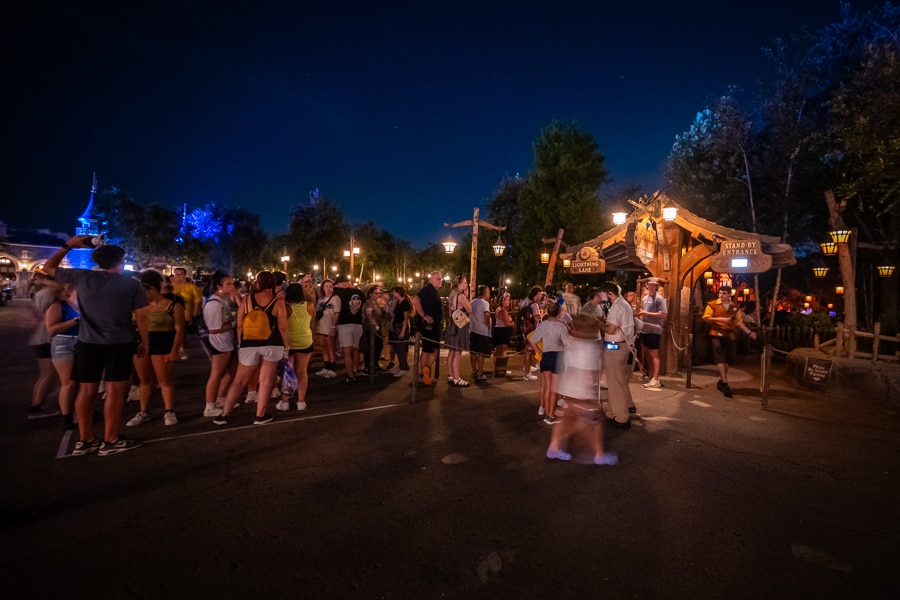
Over in Florida, guests of Walt Disney World will have a virtual video chat with the Accessibility Services team before their visit, which will include conversations about the guest’s unique needs and the services they might require. Just like in California.
The key difference for Walt Disney World is that the process upon arrival is not in-person. You will not speak with a live Cast Member at Guest Relations. Instead, guests seeking accommodations on the day of their visit will be directed to a location to use an iPad and have a virtual chat. Basically, same process as pre-arrival, except you’re wasting time while in the park (instead of when at home).
Given that alone–and the possibility of this taking extra time based on demand–we highly recommend going the pre-arrival route at Walt Disney World. Nothing is going to change, outcome-wise, with getting or not getting DAS. It’s just where you take the time to go through the process.
Cast Members at both Walt Disney World and Disneyland will work with a team of specially trained health professionals from Inspire Health Alliance in conversations needed to determine a guest’s eligibility for DAS. The expertise of Inspire Health Alliance will help make sure that DAS is provided only to the small percentage of guests for whom it is intended and who require it.
The outcome of these personalized conversations may mean registering a guest for DAS. Alternatively, guests may need to be reminded of the other types of services available, such as a line-return option for guests who may need to visit the restroom with greater frequency, ASL interpreting services at select experiences, service animal relief areas, or wheelchair access and location return times for those using a mobility device.
Again, there is no one-size-fits-all accommodation, and Disability Access Service is not simply a free FastPass for disabled guests. It is, and always has been, a service provided to support guests who, because of a disability, are unable to wait in a regular standby line for extended periods of time.

“Disney is dedicated to providing a great experience for all Guests, including those with disabilities, which is why we are so committed to delivering a wide range of innovative support services aimed at helping our Guests with disabilities have a wonderful time when visiting our theme parks,” said a spokesperson for Walt Disney World Resort.
While who qualifies for accommodations does not appear to be changing, the process for evaluating DAS requests sounds as if it will become more rigorous and less of a rubber stamping process with the new-look DAS aimed at accommodating guests with a “developmental disability like autism or similar.” The anticipated outcome is reducing the frequency with which DAS is issued.
There are a number of reasons for this, with the biggest being an explosion in DAS at Walt Disney World and Disneyland. Use of the service has more than tripled in the last 5 years; these changes will recalibrate the program and reduce misuse. That will improve the DAS experience for guests who truly need the accommodation.
It will also have second-order effects for both Lightning Lane and standby guests. As we’ve said many times before, queueing is a zero-sum game. Attraction capacity is finite, so if someone is winning, that means someone else is losing. But we’re getting ahead of ourselves–more on all of this in the commentary.
Here’s the process of how the new-look Disability Access Service will work at Walt Disney World, pulled from the official website…

Disney Parks have an unwavering commitment to providing a welcoming, inclusive environment and accessible experiences for our Guests. DAS is one of the programs offered at the Walt Disney World Resort theme parks intended to accommodate only those Guests who, due to a developmental disability like autism or similar, are unable to wait in a conventional queue for an extended period of time.
For Guests visiting from April 9 through May 19, 2024, please note:
- Pre-arrival conversations to determine eligibility for DAS are available 2-30 days prior to your park visit.
- In-person conversations to determine eligibility for DAS will continue to be at Guest Relations locations.
- You can book up to 2 one-hour return windows for select experiences using our DAS Advance planning option.
- DAS is valid for up to 30 days from the start of the registration. Once the service has elapsed, Guests will need to re-register.
What to Know About DAS
- DAS is intended to accommodate a small percentage of Guests who, due to a developmental disability like autism or similar, are unable to wait in a conventional queue for an extended period of time.
- DAS doesn’t provide immediate access to experiences, but rather allows Guests to request a return time for a specific experience that is comparable to the current standby wait.
- The Guest who is requesting to use DAS must be present during registration and experience the attraction when redeeming a DAS return time at Walt Disney World theme parks.
Speak with a Cast Member
Guests can meet virtually with a Cast Member using live video chat to determine what services may be appropriate to support their visit to the theme parks, including DAS. You may have a pre-arrival conversation as soon as 30 days in advance of a park visit.
Please note: Guests visiting now through May 19 may visit a theme park Guest Relations location to speak with a Cast Member. In-person registration will no longer be available at Walt Disney World theme park Guest Relations locations starting May 20, 2024.
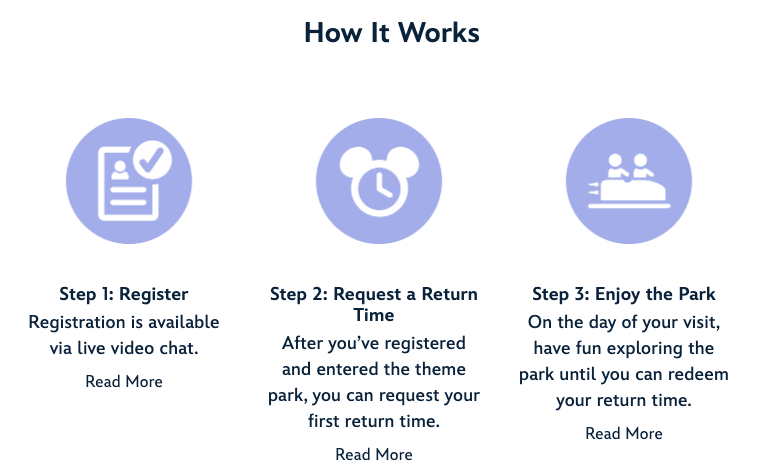
Same-Day DAS Return Time Self-Selection
Guests registered in the DAS program can make return time selections in the My Disney Experience mobile app on the day of their park visit.
Any member of a DAS party can obtain a return time for the whole party, but the Guest registered for DAS must be present and experience the attraction when the DAS return time is redeemed.
DAS return times are valid until the park closes or an attraction closes for the day. A party can only hold one DAS return time at once. Guests without a mobile device can also visit Guest Relations or a Guest Experience Team location to receive return times.
How to Access the DAS Return Time Self-Selection Tool
After entering a park, open the My Disney Experience mobile app and log in to your account. Tap on the menu ( ≡ ) at the bottom of the screen. Then, tap the DAS button to select the attraction to make your return time. The tool can also be accessed from attraction detail screens.

Turning to commentary, regular readers probably knew this was coming as it was a big focus of Walt Disney World Cracks Down on DAS Abuse. The catalyst for that article was Walt Disney World trespassing third-party tour guides from the parks due to the sale of unauthorized services, including in-park offerings like Genie+ line-skipping services and access to the Disability Access Service. In an emailed statement at the time, Walt Disney World indicated that that they are taking additional steps to enforce their rules that prohibit commercial activities because of a “significant increase in these rule violations.”
“When this activity happens, it impacts the experience of other guests following the rules — including our guests with disabilities — and impedes our theme park operations,” a Walt Disney World spokesperson wrote. “Just like Starbucks would not permit a third party to come into their stores to sell coffee to their customers, Disney does not permit unauthorized commercial activities in its theme parks.”
While the news was about a crackdown on third party tour guides, our commentary revolved around a crackdown on DAS abuse–as we had heard even then that one was on the horizon. In other posts about pre-arrival Lightning Lane selections, we’ve predicted that DAS reform was a necessary prerequisite to other changes with paid ride reservations. So that another change is happening is wholly unsurprising to us–it’s been in motion for a long time. It’s the specifics that are interesting.

With regard to those specifics, the biggest surprise to me is that Walt Disney World is not using the International Board of Credentialing and Continuing Education Standards (IBCCES) Attractions Assistance Pass that has become somewhat of an industry standard. Most notably for Florida theme park fans, Universal Orlando made the switch to that last year.
With IBCCES, guests must sign up before their visit and upload documentation for review. Upon qualifying via IBCCES for the Attractions Assistance Pass, the theme park operators then contact them about accommodations they may need. However, there’s already been litigation in California involving IBCCES, with one lawsuit focusing on the pre-planning requirement.
That likely explains why the changes to Disability Access Service have been delayed, as Disney opted to partner with Inspire Health Alliance as opposed to IBCCES. It’s also probably why DAS will still offer options upon arrival on both coasts (a more robust day-of system in Disneyland could be due to that litigation, California laws, or Disneyland’s disproportionately local demographics–or a combination of all three).
It sounds to us like the DAS system with Inspire Health Alliance will stop short of introducing the rigor of IBCCES, but that’s just an initial reaction based upon the new DAS literature that’s been shared thus far. It’ll really come down to implementation and execution–both of which are unknowns until the system fully launches in May and June 2024.
Continuing along, I’ll share the same simple statement in previous commentary: two things can be true at the same time. First, that reasonable disability accommodations are very necessary for many Walt Disney World guests to have an enjoyable experience, including those with invisible disabilities. Second, DAS abuse or misuse is widespread and needs addressing.
Above all else, I would implore you to err on the side of courtesy–both in life and in the sure to be contentious issue of DAS reform. There are myriad invisible disabilities from which other guests could suffer, and the rude words or judgmental gaze of guests ‘scanning’ a person using DAS to ‘make sure’ they really have a disability are awful.
We’ve heard from countless readers over the years who are lifelong fans of Disney because the parks made a disabled family member feel like a VIP or at least normal for a little while, and accommodated them like nowhere else on earth. These stories tug at the heartstrings. We’ve also heard from countless individuals who have a serious disability and couldn’t experience the parks like everyone else but for DAS, and other guests made them feel ostracized. Those stories are heartbreaking.
Hearing all of these stories, I will happily wait in line an extra 5 minutes or whatever if it means those guests are able to have positive experiences at the parks. A nice bit of extra time to reflect, count my blessings and all that. Because the bottom line is that anyone using DAS out of necessity would trade places with you in a second and stand in long lines if it meant not being disabled.
To the second point that DAS abuse is widespread and needs addressing, we’ve been hearing ‘rumors’ of this for a while. Not really so much rumors–more unsubstantiated reports from those within the company. This has been an open secret, and a long time coming. Lightning Lane breakdowns of DAS vs. paid Genie+ guests are downright shocking to me. Now Walt Disney World is tacitly admitting that there’s an issue and that it needs to be fixed.
Intuitively, it makes complete sense. Those of you who visited during the phased reopening after FastPass+ had been suspended but before Genie+ rolled out likely saw usage of the FastPass queues. We certainly did! It started out occurring fairly infrequently, and increased (not so coincidentally) as crowds and wait times went up. By and large, this was driven by DAS.
Use of the FastPass lines started slow and got progressively busier during the phased reopening. This makes sense, as there’s a greater incentive to use a line-skipping service when there’s a longer line. If a posted wait time is 15 minutes, even those with the ability or privilege to skip might simply opt for standby. If that same attraction has a 60 minute posted wait time, it’s a very different story.
It doesn’t require a vivid imagination to game out how much worse that might become if a paid line-skipping service is introduced. Replacing what was once free with a paid system causes standby lines to come to a crawl as guests are pulled disproportionately from the Lightning Lane.
Not only is there be more of an incentive to (properly) use the Lightning Lane, but there’d be more of an incentive to abuse it. This occurred even when there was a free FastPass+ option; DAS was a way to skip the lines more often and not be so constrained by “only” having 3 selections.
However, misuse and abuse–or even appropriate use of DAS–were almost certainly less common then. Plenty of people viewed (free) FastPass+ as a satisfactory alternative to DAS, and that includes those who otherwise would’ve (and still would!) qualify for the accommodation.
Now, regular line-skipping costs money but there’s an alternative that’s still free. It doesn’t require much imagination to envision a scenario where some guests justifying abusing the system to themselves. “I’m just taking what Walt Disney World used to offer for free and still should.” “Everyone does it, I’m just leveling the playing field.” “I spend a lot of money and have always been loyal to Disney, it’s the least they can do.” And so on, and so on.
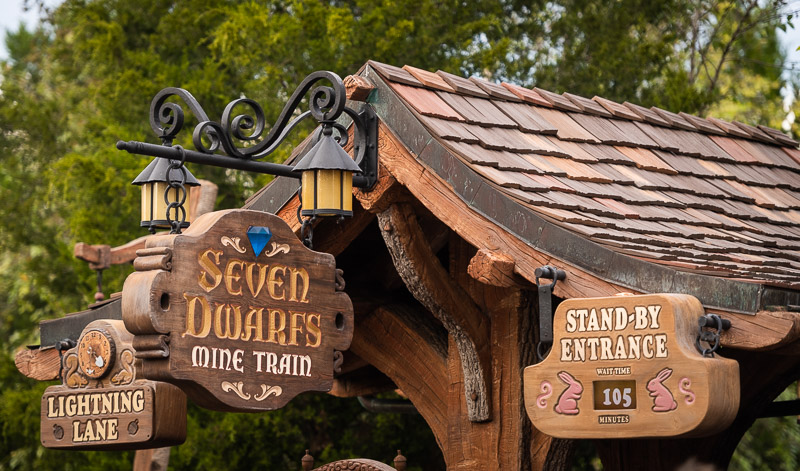
During a DAS lawsuit a few years ago, Disney revealed in testimony and discovery that users of its disability passes experience several more attractions over the course of a day on average as compared to non-users. No surprise there–this is how virtual queues work (that’s what DAS is, in essence), allowing guests to effectively be in two places at once.
The company argued that any expansion of the current system would cause wait times to explode, with Seven Dwarfs Mine Train (for example) increasing by 39 minutes from an average wait time of 69 minutes to 108 minutes. Disney has prevailed in several such lawsuits.
The latest changes to DAS will almost certainly give rise to more litigation–it always does, that’s the cost of doing business. And Disney will once again almost certainly prevail because you can be sure Disney Legal had an extensive roll in crafting the new DAS policy to be ADA-complaint.
To be abundantly clear, I’m not suggesting that the increase in DAS usage is entirely those misusing or abusing the system. That definitely is not the case.
What we do now know, though, is that usage of DAS has at least tripled since the FastPass+ era. As discussed before, there are likely multiple explanations for this. A unique form of pent-up demand would make sense, especially among more vulnerable populations. An increase in disability diagnoses for the population as a whole would be another.
These are undoubtedly contributing factors. But you can likely draw a straight line between Genie+ (and then higher prices for Genie+) and a rise in DAS as the free alternative to paying for Lightning Lanes. Anyone who has spent any amount of time on social media is probably aware of the groups and planning resources that essentially coach people on what to say in order to get this “free” form of FastPass.
All of that brings us to Walt Disney World’s solutions of cracking down on third party tour guides last year and now overhauling the DAS process again in Summer 2024 to reduce abuse and misuse. Of course, even with these changes, Walt Disney World still has a system that’s going to be difficult to police without running afoul of the Americans with Disabilities Act. There’s really only so much they can do, but introducing a bit of friction to the process and clarifying who actually needs the accommodation of DAS should accomplish a lot.
With that said, changing Disability Access Service is also its own powder keg, and a lightning rod for controversy. There are a lot of people with a vested interest in DAS, including both the legit users and the abusers. You might be inclined to think that legitimate users would want to see DAS crackdowns occur.
Most of them probably do. But it’s not quite so simple. For one thing, any change brings with it uncertainty until it has been implemented, and many of the families who need DAS most also crave consistency and stability. Better the devil you know than the devil you don’t, as they say. Many rightful DAS users might prefer keeping the stable but imperfect product rather than rolling the dice on a replacement. I can certainly empathize with that perspective.
Then there are also the unwitting DAS misusers, for lack of a better term. These are guests who have been granted DAS in the past because Walt Disney World was quite liberal with issuing the service, even if it wasn’t the accommodation that was strictly necessary for that person’s circumstances. These are the people who had no intention of doing anything improper–and were told by Walt Disney World that DAS was meant for them–even if other accommodations might’ve existed that served their needs.
Obviously, this change has just been announced and has not yet taken effect, but this is the guest for whom I feel sympathy. They benefited from DAS and I don’t think any reasonable person would’ve taken issue with them receiving DAS. Yet, some of these people will likely be ‘left behind,’ for lack of a better term, under the updated policies of the service the narrows the scope of DAS to guests with developmental disabilities. (Perhaps I’m biased here, as my dad is probably one of these people.)
The problem is that one bad apple spoils the whole bunch. Which is to say that in order to close the loopholes that have been exploited by the malicious DAS abusers, there is undoubtedly going to be some number of unwitting DAS misusers who are negatively impacted. At least, that’s my interpretation of the new policies–it’ll ultimately come down to execution and Cast Member discretion.

Which brings us to the malicious DAS abusers who will complain in bad faith. This group is the biggest loser, in more ways than one. The closing of loopholes will take away their advantage and level the playing field with other guests. In a nutshell, the abusers are the biggest losers and those who don’t use DAS at all are the biggest winners with these changes.
Knowing that their loophole will soon be closed, these individuals have a strong incentive to voice outrage and complain about these DAS changes, even if it’s baseless. They’ll make these changes seem more controversial than they actually are–as we’ve heard regularly and repeatedly, the majority of legitimate DAS users actively welcome more stringent policies.
Bad faith outrage around DAS might sound shocking…if you haven’t lived through the last several years of social media, in which case, it would be more surprising if this didn’t happen. Either way, it complicates matters and makes an explosive issue even more fraught for Walt Disney World.
It probably goes without saying, but I have zero sympathy for the nefarious DAS abusers. I hold them in lower esteem as eBay pirates, which is not high. Not only are they cheating the system to create an advantage for themselves, but they’re also disadvantaging everyone else (since, again, capacity is finite).
That includes legitimate DAS users, paid Lightning Lane users and even those in the standby line–literally everyone except themselves. These abusers also necessitated closure of the loophole in the first place, which will theoretically have negative ramifications for the sympathetic unwitting DAS misusers demo.
The problem is that, unlike eBay pirates who are buying a dozen-plus identical ugly popcorn buckets or bedazzled Spirit Jerseys, it’s impossible to distinguish the unwitting misusers from the malicious abusers. Which is precisely why we started by imploring you to err on the side of courtesy in this contentious issue.
Ultimately, all of this is why I’m glad to Disability Access Service reform finally happen, but am reticent to cheer too loudly about this change. The problem is that there’s no perfect DAS system, and reform cannot be narrowly tailored in such a way that it only hurts the abusers. While I think it was a long time coming and the current approach was becoming increasingly unsustainable, I also know there are going to be legitimate mixed feelings about this.
My sincere hope is that Walt Disney World and Disneyland implement these DAS changes with a deft touch that minimizes collateral damage of actual disabled people, significantly reduces abuse, and makes lines shorter for all rule-abiding guests. I’m pretty optimistic those will be the outcomes on balance (not to mention no longer forcing frontline Cast Members at Guest Relations to deal with this–alone a huge win), and these will be largely positive changes to Disability Access Service.
Planning a Walt Disney World trip? Learn about hotels on our Walt Disney World Hotels Reviews page. For where to eat, read our Walt Disney World Restaurant Reviews. To save money on tickets or determine which type to buy, read our Tips for Saving Money on Walt Disney World Tickets post. Our What to Pack for Disney Trips post takes a unique look at clever items to take. For what to do and when to do it, our Walt Disney World Ride Guides will help. For comprehensive advice, the best place to start is our Walt Disney World Trip Planning Guide for everything you need to know!
YOUR THOUGHTS
Thoughts on Walt Disney World overhauling Disability Access Service to reduce abuse and misuse? Do you think the new partnership with Inspire Health Alliance and other changes will better ensure DAS is only going to those who truly need it? If you’ve used Disability Access Service at Walt Disney World, what do you think of the experience? Have you noticed high Lightning Lane usage at times when Genie+ was not being offered? Please feel free to share your personal anecdotes about DAS and other thoughts in the comments below! Just be sure to err on the side of kindness and empathy and don’t engage in personal attacks, antagonism, or trolling. Comments that cross any lines will be deleted.





It is appalling to me that anyone would take advantage of DAS. My husband and I bring our 36 yr old special needs daughter every September to Disneyworld. Without DAS we would not be able to bring her in the parks. We literally can go on 3 rides 4 if we’re really lucky in the 2-3 hrs she can tolerate being in the park. We also have 10 night stays so we can visit a park more often due to her limitations. It’s sad any typical person would abuse a system meant for someone who has far from a “ typical “ life. Interviewing her wouldn’t take a rocket scientist to see her delays. I’m glad the cast members are being educated better. Shame on anyone abusing this system.
My husband and I just returned from a 12 day trip to WDW, and we benefited from using the DAS system. My husband has Parkinson’s, and his threshold for all things Disney is about 4 hours per day. We don’t just rely on DAS to make our trip possible. We also purchase AfterHours tickets whenever available in lieu of using a park day, and book a stay on property for much longer than the average person in order to experience the attractions in small doses.
Having said that, I determined that this trip will probably be our last. As the winter crowds have increased, it’s nearly impossible to find a window where a trip for us is possible. The summer months are out, because he’s unable to tolerate the heat. While we can mitigate our circumstances to some extent, and do whenever there’s an opportunity, We also can’t spend weeks at a time in a hotel. We have enjoyed Disney for several years, but sadly, it’s probably the end of the road for us.
I can’t imagine how a trip for us would ever have been possible without the advantage of DAS. It’s sad that some have ruined it for others, and I hope that those who truly need DAS will be able to continue to use the system. I have many fond memories of our time at Disney and appreciate all of the accommodations that were made to make our trips magical!
I go to Disney world every December and, get a DAS.I have Multiple Sclerosis and suffer from Anxiety. They are not a developmental disability but, standing in line for a long time will trigger an exacerbation of my MS and Anxiety! I am in tears right now, I already have my Disney vacation set up for this year and, even was able to get a Bounce Back. I should cancel, I cannot go knowing I won’t be able to obtain a Das.
Lourdes, please do not cancel. Please do as Tom has said and pre-register, especially if you have your medical diagnosis and medical records. Now, that actual medical personnel are involved in this screening process, your type of disability may be eligible pursuant to DAS guidelines. Again, pre-register virtually. Best wishes!
I want to cancel too…
Apologies. You are correct, my reply was a little hasty. My frustration is the number of people who just grab a DAS for any disability- it is intended for people who have difficulty waiting in line, not just have any disability.
Jess, meant to add this to your message, sorry it went on out of context!
I gotcha! I agree with the frustration about bad actors and I’m fine with increasing the screening requirements and making sure DAS etc are being used by people who really need it. I just hope they make space for people with all kinds of legitimate disabilities that need accommodation to be able to enjoy the parks safely and happily rather than limiting it to only developmental conditions.
You keep commenting on people’s posts that “DAS was never for this” and then saying we are “the only ones who are “handwringing”…. but…clearly DAS *was* for “this” because one look at us and we were always granted one, without having to lie or cheat or beg or say much of anything at all. Do you know for a fact DAS was never for us…? Because every cast member through the years felt otherwise and I don’t think it’s “handwringing” to share our experience and point that out. I’ve already said that if we are no longer eligible then so be it. But navigating Disney lines as a totally blind person with a small child is perhaps not as easy as you may think it is, and you are welcome to test that out for yourself if you would like.
With the old system we didn’t need DAS b/c a FP or two and a bunch of short lines meant we could still do a lot and then take a break midday before the evening entertainment. But Genie+ made it so there’s almost no short lines. Which means every single ride is a struggle. The short lines used to help decompress everyone so we could keep having fun.
We’ve always had issues, but the new system made those issues much more obvious and harder to manage. Last trip was the first time we used DAS, but after meltdowns in 3 different lines by the end of day 1, there was no way we could continue without something changing.
It’s sad that it has come to this. We actually were denied DAS for my son’s autism, which I find crazy that Disney says this is what it was intended for. We have actually used it now due to my husbands disability. I have often wished that there was a way to show your disability papers so that there wasn’t a question of whether it’s true or not. We would gladly show it if we had to, but I know not everyone wants to or thinks they should.
Oh goodness – seriously? That seems…counter-productive to the whole purpose of the system. We received our son’s diagnosis last year, and while soul-crushing and heartbreaking, DAS has truly helped us navigate our favorite place in the world. That makes me so sad.
I ripped open the bursa in my right knee (the sack that holds the fluid preventing bone on bone) several years ago and as a result I can’t stand for more than two or three minutes at a time. I would wait in line in my ecv but there are some lines that don’t permit it. I do not have a das at this time but am considering it as my knee pain has gotten worse. As an AP I go to the parks three to five times a month and stay on property five times a year. In the last month I have not gone on a single ride but would like to get on some soon. I still have not been on the three most recent rides and don’t know how I can without a das. It is the uncertainty of the new system that gives me pause. At the time I feel limited to the live entertainment and festivals. Even with a das I would probably only use it sparingly , maybe once every three or four visits.
with your mobility device, the “location return time” tom mentions in the article would actually be the perfect solution! any queue that doesn’t accommodate your ecv will offer this and provide a return time to you to board via an alternate entrance/the exit. i’ve had family members use this to great success (:
Mobility disabilities haven’t qualified for DAS in a long time. Rather talk to the CM at the entrance and they bring you down an alternative line
We are traveling June9-13, our first family trip. My son has autism and finding out about DAS made this trip a possibility. I was planning on pre registering May 10 ( 30 days before). Does this change my plan at all? Will I be unable to register until the system is overhauled completely?
It’s about time! The abuse is insane. I am in DAS FB groups and people come looking for “what to say” to qualify. I am also glad they are limiting the pass to 4 people (except immediate family members). People ask and they have been allowed to add 10+ be on a disability pass for a single qualified pass user. As a parent of a child with severe autism is is incredibly frustrating to see the abuse DAS has had. Unfortunately, now people will lie and say they or there child has autism to get DAS. I hope they take it a step further and require documentation from a professional of a developmental disability like universal does using IBCCES.
I couldn’t agree more. I have been waiting for this day for years. I will hand over my son’s autism diagnosis from CHOP in a heartbeat. The only people this will enrage are the people who have been abusing the system. Applauding Disney for the families who actually need it. ♥️
Mom of a little boy on the autism spectrum here. We were able to get our little buddy a DAS pass when he was about 2 years old because I was able to describe his symptoms and show our “caseworker” my son over video, and she understood that we wouldn’t be able to make it through a morning in the parks without the DAS pass. But he didn’t have a formal diagnosis for autism yet — kids with autism who have lower support needs often go undiagnosed until age 4 or later, and many doctors are extremely wary of diagnosing ADHD at all before a child is school-age (6 or 7). The wait for a formal diagnosis from a neuropsychologist takes months, as well — the need is overwhelming. We were able to show that he had an IEP and was enrolled in Early Intervention, which seemed to be enough.
Bottom line, there are a lot of little kids walking around without a diagnosis who need the DAS service, and a lot of parents who frankly need support, too. I hope Disney recognizes this nuance and allows for small children who don’t have a formal diagnosis to obtain the support they need. The plus side, of course, is that granting exceptions to families with small children is less likely to resort in “DAS Abuse” since little ones aren’t tall enough to use their ride privileges on the most popular rides, and tend to take more breaks, anyway. In addition to the DAS pass, we bought Genie+ passes and used Rider Switch when we wanted to go on a ride he was too small for or couldn’t tolerate.
First person except me I’ve seen make this point. Can take years to get a formal diagnosis and may never get one but the symptoms persist. So narrow a view to suggest everyone affected has a card to wave about to ‘prove’ it and that is a catch all solution.
I was referred to the DAS program by a CM and it has allowed me experiences I wouldn’t otherwise have been able to enjoy. However, I don’t see myself in the revised language on the DAS page and am worried I may no longer be able to take part in our family’s WDW vacations the way I once was able to. I feel like there has to be additional pieces they just haven’t announced yet. Narrowing DAS to “developmental disability” excludes so many conditions that truly need assistance in order to experience the parks.
I completely agree. I have several conditions that have developed since I went to Disney when I was healthy. Had a melt down last year because of a bad flare up and a CM said to get the DAS pass for the rest of the trip as she believed it would help and it did. Doesn’t look like I qualify anymore unless they’d consider my one disability that is greatly effected by my invisible ones. But I doubt it.
Well, three things come to mind immediately.
1) As I thought in your last blog on this Tom, many people are ignorant of the actual purpose of DAS. It is not for physical disabilities in almost all cases. Yet most of the hand-wringing comes from this group. There are other accommodations for these groups, and/ or wheelchair use does not prevent you waiting in line. The point of DAS is to avoid the constraints of a physical queue, not the waiting time.
2) Glad they have avoided IBCCES. That would have been cack-handed and isolated many of the affected groups. Don’t know the realities of the US healthcare system but in the UK, the diagnostic journey to something like ASD or ADHD takes YEARS, if you ever arrive and even then you don’t get issued a ‘certificate’ or letter as a matter of course. Again, the user comments on the last thread displayed a worrying lack of empathy and understanding for the realities of these groups in favour of what-aboutery. eg. IBS or gammy legs have nothing to do with the intent of DAS.
3) On the basis of this article, it seems very little has actually changed. A cheater can still easily manipulate the system based on knowing the right thing to say and a genuine user runs the risk of rejection. This is the one wrinkle to not having formal medical diagnosis paperwork. One positive change is shrinking the family/ travelling groups. Hopefully this clamps down on casual opportunists.
Thank you for this info, Tom, and for your thorough breakdown and commentary. My family has been using DAS since we first started visiting Disney a dozen years ago and we have always been so grateful for it and believed we would not have been able to experience the parks as fully or as enjoyably without it. We have rolled with a lot of changes to the system over the years and were just getting comfortable with this most recent iteration — very much appreciating how, once we were granted approval, everything could be handled through the My Disney Experience app….but now I am wondering if we have been among the “unwitting mis-users” all along. If so, it will be interesting to see how we fare without DAS on our upcoming trip this summer and if we decide we can do without it going forward. We do have the IBCCES card and that has worked really well for us at Universal; if we have a tough time at Disney without DAS we probably won’t visit as often as we currently do, but that’s ok. I think by now we are proficient enough with Genie Plus and ILLs and just generally knowing our way around the parks that it should be ok, but like I said it will be an interesting experiment. As my husband does not have a developmental disability I assume we no longer qualify. He is totally blind, which does present mobility challenges as we navigate the world and crowded parks and lines can be tricky for us. Other people rarely notice his white cane and we do tend to get pushed and shoved quite a bit, as we tend to move rather more slowly and gingerly than the average family. However even if we no longer qualify this new change does seem like it’s for the better overall, as cracking down on abuse of the system will benefit nearly everyone to some extent, especially those who need DAS the most.
DAS was never for this.
…and I should add that we are happy to show documentation, as we have to do it in other circumstances and it’s easy for us to do, so we were hoping that this new system would at least consider if not outright require some sort of concrete “proof” of disability.
I fear the abuse will still continue as parents will claim their child is on the spectrum, even if they aren’t. The abusers will be less, but they will still be there. And sadly, those with medical issues have now been completely excluded. Anyone who has an actual disability, of any kind, would have no problem showing documentation to request DAS. I still feel that’s the best way to crackdown on the abusers while including all who need it.
DAS was never intended as a catch all for physical disabilities.
Jess – exactly – there are physical ailments that fall outside of being in a wheelchair. I don’t know what the answer is to help those who need it and deter the cheaters. It seems like someone is going to lose no matter what and sadly the cheaters will still find a way to get around it.
James – While I can appreciate that was not the original intent of the program, I believe it was good to evolve to recognize more than those on the Autism spectrum may have a use for some sort of program. As I said in my reply above (that was actually meant for a comment from Jess) I don’t know what the answer is but there has to be a middle ground between the difficult system in CA and the let everybody in that was happening in FL. And sadly the cheaters will still find a way around. There’s always someone who does. 🙁
Wow. I am a big proponent of overhauling this system but very nervous. We have used DAS a few times over the years. Not much but it was the difference between our yearly trip being cancelled a few times. For example-a scheduled trip to DL that was booked around a college graduation. I ended up in a boot and couldn’t do stairs. I walked up to Indie ride and showed my pass and they gave me an old fashioned paper FP return ticket. (I know now you just go up and they add electronically to your FP’s on app). I only used on a few rides but it made all the difference. Or the time we arrived in WDW for a trip and had horrible air quality due to fires. My daughter’s asthma acted up (the normal heat/humidity never upset her) and a DAS pass was only way she could go. These don’t seem big but it’s not like Disney was refunding me. There was no way to anticipate them when we bought everything. I just don’t see how this works without a few more tweeks for physical disabilities whether constant or new/temporary.
You’re always so articulate Tom! I appreciate this post and how you made sure to include all aspects of this tricky business. Hopefully the revamping will be beneficial for all without inadvertently upsetting those who need and deserve DAS. I’m guilty of making my own judgey assumptions while waiting in a terribly long standby lane, but hopefully the unethical folks are weeded out and those requiring accomodations still receive them!
I support a more robust screening process but I’m really upset DAS is now *exclusively* for developmental disabilities. My Dad has severe back issues where he’s fine if he can move but sitting or standing in place for too long can put him in severe pain for hours or days. To me it sounds like they’re disregarding anyone with a physical disability where a wheelchair or scooter won’t alleviate issues. (In my Dad’s case it would actively make things worse.)
A return to line pass isn’t helpful either because we’re trying to avoid getting him to the point where he’s actively in pain. Not sure what families like ours are supposed to do.
Never was for physical disabilities of this nature.
James: That is false. Accommodations were decided on a case by case basis. My Dad has used DAS for years and was accepted because of his back issues.
And what exactly do you propose for people with physical disabilities where a mobility device or return to line pass is not appropriate?
Jess – exactly – there are physical ailments that fall outside of being in a wheelchair. I don’t know what the answer is to help those who need it and deter the cheaters. It seems like someone is going to lose no matter what and sadly the cheaters will still find a way to get around it
I think Disney would probably point you in the direction of Genie. You can use genie to book rides and plan your day around your dad’s ups and downs. While not trying to over simplify things, DAS seems to be intended for people who can’t do the parks otherwise, not for people who it would make their day better/easier. One could argue a family with a screaming toddler throwing a temper tantrum in a 60 minute stand by line could benefit from DAS, along making the experience better for all the other patrons who would also have to be in line listening to and witnessing the tantrum, but again, that’s not the intention of DAS. We went to parks years ago with a nephew who is mentally disabled, he is an adult. He saw a character and wanted to walk right up to it and hug it. There was a waiting line. He did not and could not understand, due to his disability, that we needed to wait and or come back. No amount of explaining would ever have made him understand. He saw something that made him excited and he wanted a hug. Luckily there was a cast member who understood what was happening and brought him to the front of the line. For me, these are the people, the families, the DAS pass is intended for. Just my 2 cents.
Hi. We often purchase Genie+ as well and used Fastpass+ when that was available. Please don’t make assumptions. Also, Genie+ can sell out or not have availability for certain rides even if purchased. This is especially true at Disneyland, where many rides are not in the Genie+/LL system at all. (And FYI Genie is simply the digital planning tool. Genie+ is the paid Fastpass+ replacement).
Our family’s issue is, if my father is in the same physical position for too long (whether sitting or standing) that will cause him intense pain, possibly for several hours. Comparing that to an upset toddler is incredibly offensive.
And frankly, deciding who ‘needs’ accommodation or not is not your job. Or any parkgoer’s. Unless the next time you go to the parks, you want people rolling their eyes at your nephew and saying he’s probably faking? Or saying he doesn’t ‘deserve’ DAS because he’s capable of physically standing in the line, he’s just upset about it? Because that’s the kind of atmosphere you’re encouraging. Lets be compassionate and not assume anyone else’s needs.
Also: whatever Disney’s criteria going forward is, in the past DAS was never exclusive to “developmental disabilities.” Stating that as fact is false information. They absolutely would redirect people to other options if they thought that was more appropriate, but it was never a hard rule. Case in point: We used the program with my father several times, explaining his specific needs, and why we thought DAS might be appropriate. We never had a problem.
Whatever decisions Disney makes, we’ll abide by, of course. But it will 100% impact how we navigate the parks with my father and how often we choose to vacation there.
We have always used DAS for our adult daughter. Her disability is obvious to those around her. My question is how does anyone know a person with an Invisable disability is even using DAS? Also for that matter how do others know any visually disabled person haven’t purchased that LL? Why is there so much judgement in this world. Any disabled person would rather be able to just enjoy life without obstacles. That isn’t reality though. Everyone should be able to enjoy Disney not just able bodied persons. I will say it again. DAS is not a LL it is just the entrance .
Stephanie, There are disability laws that need to be adhered to. Comparing a disabled person to a screaming toddler is really inappropriate . My adult daughter does things like you described in your neohew. But I am not offended if we have to leave the park or constantly redirect her. We expect those things with her. 99.9 percent of the time cast members go above and beyond. But I realize the world doesn’t revolve around her and we have to leave the parks when it’s necessary
My mom and I are legitimate users of DAS as it is in its current iteration. My mom has several invisible medical conditions that cause her to be in a wheelchair and I have IBS and anxiety with panic attacks. I’m afraid that this is going to make it impossible for both of us to get DAS now. We’re DVC and out of state APers. As much as I love Disney…I think we might have to say goodbye to the parks after this year and just go cruising on DCL.
I had to get a DAS pass at Universal some years ago. I had dislocated my knee. They didn’t allow scooters in line. I could not stand for long periods of time. It was a huge help. That is my only experience with this. I have to have faith that Disney will do right by those who have legitimate reasons for a DAS. It should be(and hopefully will be) the people abusing the system that get cut out of this. The people who need to use the DAS system will do what’s necessary to obtain it. Even if it is a longer, harder process. You do it. There is always going to be the one off’s. As long as you speak to a Cast Member if they can, they will accommodate you. They have to weed out the abuser somehow. This seems like a step in the right direction.
I appreciate this thoughtful analysis. As a mom to an autistic child, we have visited Disney parks way more than we would without DAS. My son’s world is always going to be harder to navigate than mine, so to be somewhere where they are so accommodating and so kind — where they’re willing to smooth the road a little bit for a few days — feels like a relief to all of us.
I do feel for the people who have been using the service and now may not be covered anymore, that is going to be a tough adjustment. But the people who purposefully abused it — that is reprehensible behavior.