
Disney Wants to ‘Break Spell’ of Guests Glued to Phones in Parks

Walt Disney World fans have a lot of complaints and criticism for the company, and in a rare turn of events, the head of Imagineering agrees with them about one of the biggest problem points with the guest experience in the parks. Unfortunately, one of his proposed solutions isn’t going to be well received, but the first step is acknowledging there’s an issue.
Frankly, we’re thankful to hear this. As we’ve covered in Top 10 Guest Complaints About Walt Disney World and other roundups of the biggest annual fan concerns about WDW, we’ve been receiving negative reader feedback at a far historically-high rate over the last 5 years. Essentially, since the honeymoon phase of the post-COVID reopening wore off and fans started realizing temporary changes were going to become permanent.
The #4 entry on last year’s version of the biggest complaints list was “too much screen time.” Refreshing for better Lightning Lanes. Mobile Order for counter service restaurants and Merchandise Mobile Checkout to buy stuff. Checking Walk-up Waitlist for new table service availability. Looking at wait times and showtimes. And so on and so forth.
It’s been our position that this is both an obvious issue and an overblown one. So many entries on the above list are entirely optional. You can opt-out of Lightning Lanes completely, there are cash registers for counter service restaurants and merchandise, ADRs can be made pre-trip, and wait times boards are throughout the park (if you even need them in the first place).
On the other hand, optional might need air quotes around it. Ignore all of those app features to your own detriment, as they can help simplify and streamline your day. Not only that, but FOMO makes it difficult to opt-out of Lightning Lanes or anything else. The compulsion to check the My Disney Experience app is a direct result of the deliberate choices that Walt Disney World has made.

For years, we’ve said that Walt Disney World leans too heavily on technology (ironic, since Disney is objectively awful at it) and not enough on tactile experiences. To paraphrase my favorite Walt Disney quote, “it’s people that make the dream a reality.” The best memories are formed as a result of interpersonal moments, and so much emotional resonance is derived from guests connecting with others.
Even if people can’t put their finger on it, so much of what differentiates and defines the appeal of Walt Disney World is the ‘little things’ that bring them together with each other and shared spaces. Big new rides get people to take the trip, but it’s the myriad little things and those connections that convince them to return.
Then, of course, there are the themed environments that Imagineering worked so hard to create. By having their faces buried in their phones while in line or strolling through the park, guests are missing so much of the defining features of Walt Disney World.

It’s not just about racing from ride to ride and accomplishing those, checklist-style, with the shortest wait times possible. It’s the spaces in between–the breathing room and richly themed environments–that make Disney, Disney. If guests are overlooking that, they’re missing a lot of what separates Walt Disney World from regional parks.
Walt Disney World now nudges guests towards spending way too much time with their faces buried in their phones. These new app features are great in isolation, and benefit the company by improving efficiency and cutting costs. However, the totality of all of this amounts to Walt Disney World effectively leaning into its biggest weaknesses (technology and isolation) and away from its strengths (richly themed environments and togetherness).
It might look good in the quarterly financials, but all of this technology does come with a long-term cost. And now, it would seem that someone high-up in the company actually agrees with the spirit of this sentiment…
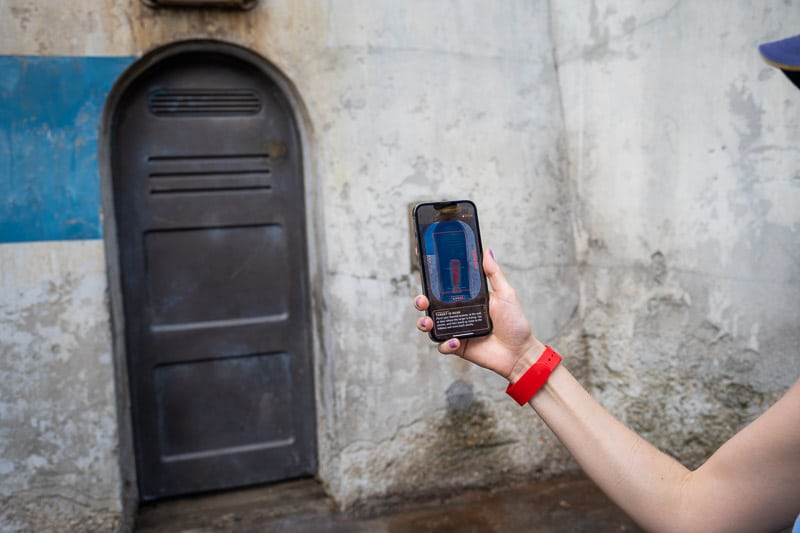
Walt Disney Imagineering President Bruce Vaughn commented on exactly this issue, and how phones inhibit the guest experience in the parks. Here’s what he said:
Extended reality is gonna reinforce the shared experience. A big differentiator for us is that you’re there together with friends and family and people that you care about, and every time you look have to look down at a device or a phone, it breaks that spell. If you can use extended reality, I never stop looking at the environment I’m in or at the people I’m with, it’s gonna be less disruptive.
Asa Kalama, Executive Creative Director at Walt Disney Imagineering, spoke about the possibilities of the new partnership with Disney, Meta and Ray-Ban.
We have a really wonderful partnership with Meta to leverage their Ray-Ban smart glasses for both guest-facing applications and also behind the scenes design applications as well. What’s great about these glasses is they’ve got cameras in them, microphones, and speakers. For guests, it allows us to put a virtual theme park guide in their ear.
The glasses can enhance the ways we tell stories for our guests, unlocking a world of information about the land that they’re in. Just by looking around, I can ask questions about some of the architectural details, and I get the answer right in my ear.
Maybe I wanna learn a little bit more about a merchandise item for my child. All I have to do is look at it, ask, “tell me more information about it.” Then, right in my ear, I get all of the product information.
Kalama later added: “if we’re doing our jobs properly, all of the technology goes away and our guests get immersed in the story we’re trying to tell.” Another Imagineer was quick to say that Disney “is not just using technology for technology’s sake.” Instead, Disney is using technology “in service of story” they’re trying to tell.
This is great sentiment, and I absolutely agree with it. The only problem is that I’ve been a Disney Adult for two decades now, and I’ve seen countless examples of the technological tail wagging the dog in the parks. Things like the entire NextGen initiative to Made with Magic/Glow with the Show to Genie and more. There are countless examples of abandoned technology that the company invested big bucks into, seemingly failing to take into account whether it was something guests would actually embrace.
Vaughn and Kalama were just two of the Imagineers who covered this and adjacent topics as part of the new ‘Inside Imagineering Research & Development’ episode of the “We Call it Imagineering” YouTube series. During that, Disney shared an inside look at its once-secret internal R&D arm, while also highlighting prolific partnerships with tech companies including Nvidia, Google, and Meta.
Our Commentary
I want to start by saying that I’ve enjoyed every episode of “We Call It Imagineering,” but the ‘Inside Imagineering Research & Development’ episode is the first one that really felt like it was aimed at two distinct audiences. There’s the fans, obviously, and we no doubt ate up this behind-the-scenes look at what Disney is doing with robotics.
At the same time, a lot of this seemed to be aimed squarely at investors, as a part of Disney’s years-long quest to be viewed (and valued) as a technology company. Heck, they even got Nvidia CEO Jensen Huang to say, “at the core, Disney is a technology company.” Wall Street’s favorite CEO said the thing! That’s gotta be worth at least a 2% boost to Disney’s share price!!!
In all seriousness, I can’t imagine there are many (any?) diehard Disney fans who were on the edges of their seats waiting to hear Jensen Huang’s take on Imagineering. If you gave me 10,000 guesses as to who would be featured in this episode, I wouldn’t have picked him. And yet, from Disney’s perspective–since it’s serving multiple audiences with content like this–that was probably the most consequential portion of the episode.
(One of my favorite writers, Matt Levine of Bloomberg, routinely writes about the circularity of AI deals. Those sometimes involve partnerships with Nvidia and the promise to purchase their chips. That’s not the nature of the Disney-Nvidia relationship, but it’s close enough that this video reminded me of it. Point being, AI is definitely not a bubble. Nothing to see here, folks, just some totally normal pumping of stock prices.)
The Meta x Ray-Ban smart glasses feel similarly. That this has been deemed a marquee corporate alliance for the Walt Disney Company (because Meta is a big deal), so they’re supposed to throw resources at it and tout it whenever possible.
Honestly, I wouldn’t be the least bit surprised if Meta is underwriting all of the research & development that Disney is doing, and whatever the consumer product ends up being. There’s a tremendous amount of value to Meta in having trusted brands lend their goodwill to this product and normalize it, as Meta isn’t exactly a beloved American institution and this product isn’t something anyone asked for. So it’s going to take time and effort to reach a critical mass.
If this is sounding familiar already, it’s because there’s overlap between the Meta x Ray-Ban smart glasses and Apple Vision Pro, which we discussed a couple of years ago when Disney announced a creative partnership for that product. I expressed skepticism at the time, just as I had done previously with Disney’s forays into the metaverse, Cinderella Castle Mural of Memories NFT, Prime-Style Membership Program, AI Task Force, and so on and so forth.
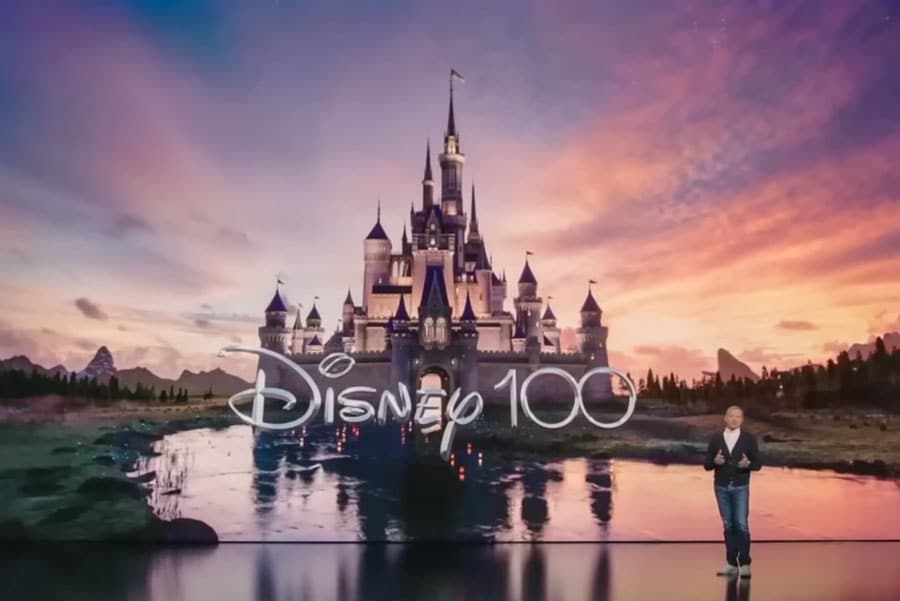
What I wrote about Apple Vision Pro more or less applies to the Meta x Ray-Ban smart glasses. And I’ll be honest, I am openly hoping for both to fail so spectacularly that tech companies don’t try this nonsense again for another decade or two.
For all of its promise and potential to bring us together, technology has done as much or more to isolate us. We walk around all day with our faces buried in screens; rather than chatting with strangers in face-to-face settings, we pick up our phones the moment there’s a brief lull in conversation.
Our fixation with the virtual world has stressed the social fabric, and we are collectively worse for it–even as some aspects of our lives have unquestionably improved thanks to technology.
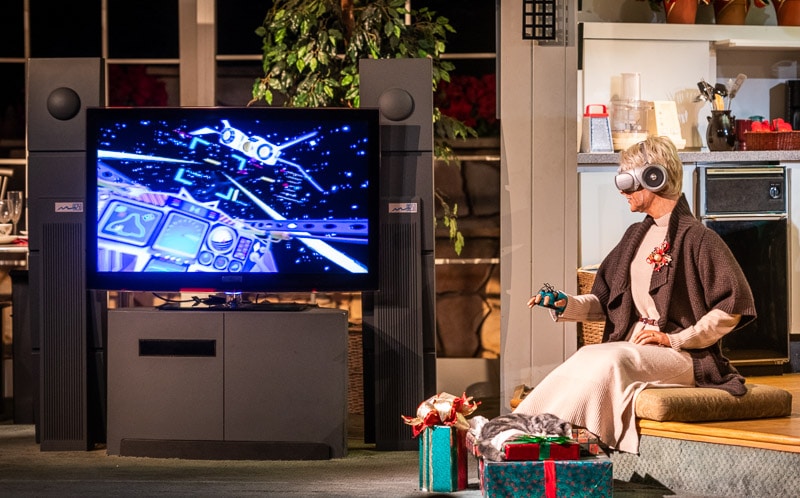
Smart glasses obviously are less obtrusive than clunky Apple Vision Pro headsets. They nevertheless will isolate people from one another in public spaces if widely adopted and used in day-to-day life.
If products like this become socially acceptable to wear and interact with in public, we will lose more of the small but meaningful interactions that make us human. That might sound hyperbolic, but the concerns are well-founded. This is precisely what the documentary “Her” was talking about.
Disney and Meta can pretend that the future is a world where we’re freed from our screens and talking to an AI copilot as we interact with our family and friends, all while quickly learning about the world around us. Maybe they’re right! Perhaps that’s how it’ll happen.
In my view, the more likely outcome is that this isolates people even further. That instead of talking to one another, striking up a conversation with fellow guests or asking questions of Cast Members, everyone retreats to their AI assistants to interact with. That we become less social with actual humans, siloing ourselves off because our agreeable AI companions are easier to talk to.
Again, this might sound like doom and gloom. But does anyone actually think that social media made us more sociable? Or that any emerging technology in the last couple of decades has made us less, not more, addicted to devices? Do you truly believe that Meta wants you to spend less time using its products and more time immersed in reality?
These trend lines are only going in one direction–at least, if the companies behind them have their ways. They can say otherwise, but they don’t exactly have strong track records with the truth.
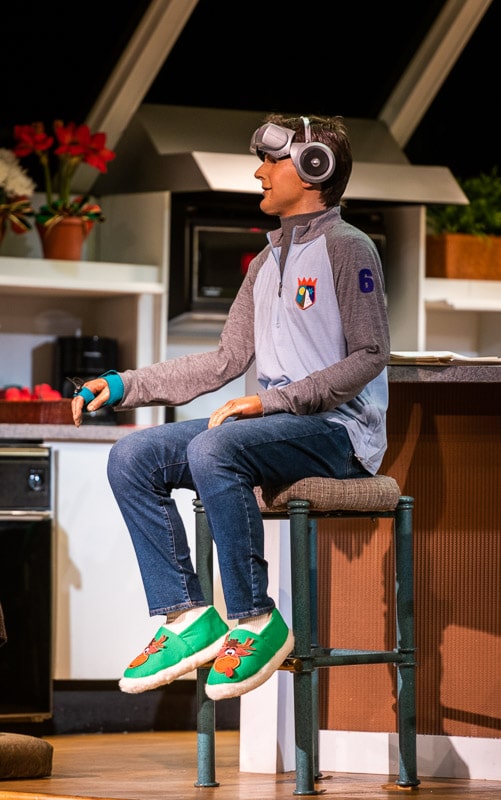
However, that comes with a very big “if.” Smart glasses are more likely to become socially acceptable to wear in public spaces than Apple Vision Pro (at least with its currently form factor). There’s no doubt about that. But that’s only because most people don’t realize you’re wearing them.
I would imagine that it’d be a different story entirely if you got into a crowded queue and started asking questions to your sunglasses. As other guests start looking at you like you’re a crazy person, go ahead and try explaining that you’re talking to your “smart” sunglasses. See how well that goes over.
Obviously, I don’t speak for the park-going public, but if I had such an interaction, I would move away from the person in question. Mostly because I don’t want to be in their field of view being watched over by Mark Zuckerberg. But partly because I have certain preconceived notions about someone who would carry on a conversation with their sunglasses. Maybe I’m alone in this, but I doubt it. If you already have these sunglasses and love them, more power to you. Perhaps you’re seeing the world in a new way; it’s worth acknowledging that the reverse might also be true.
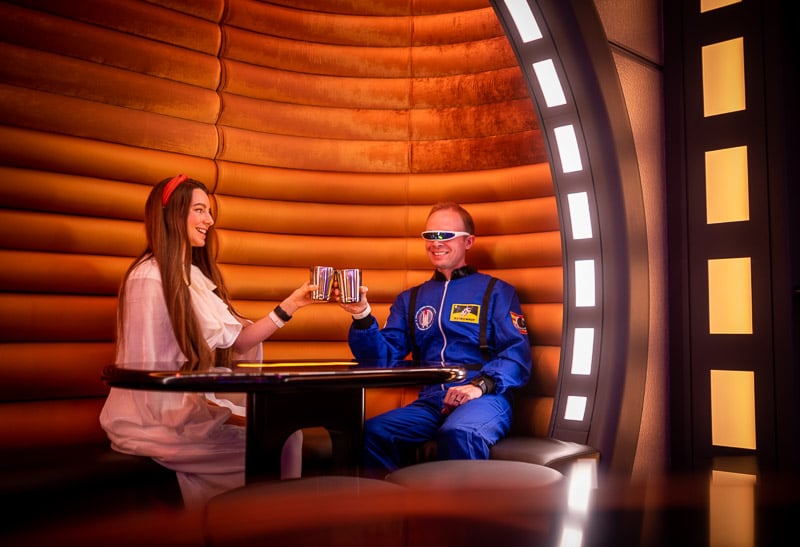
A decade ago, Google Glass learned precisely that lesson–that this kind of wearable was simply a bridge too far for average Americans. Google Glass was a spectacular failure, and the people who wore that nascent version of this tech were viewed as creeps and weirdos. But Meta and Ray-Ban are more mainstream, and perhaps partners like Disney will further normalize this type of wearable.
Or maybe tech evangelists in Silicon Valley are truly disconnected from the rest of human civilization, unable to see beyond their own bubbles where products like this capture the imagination and are deemed the future of humanity.
The majority of average Americans are weirded out by this type of thing, do not view it as the logical evolution of the smart device, and will never adopt it.
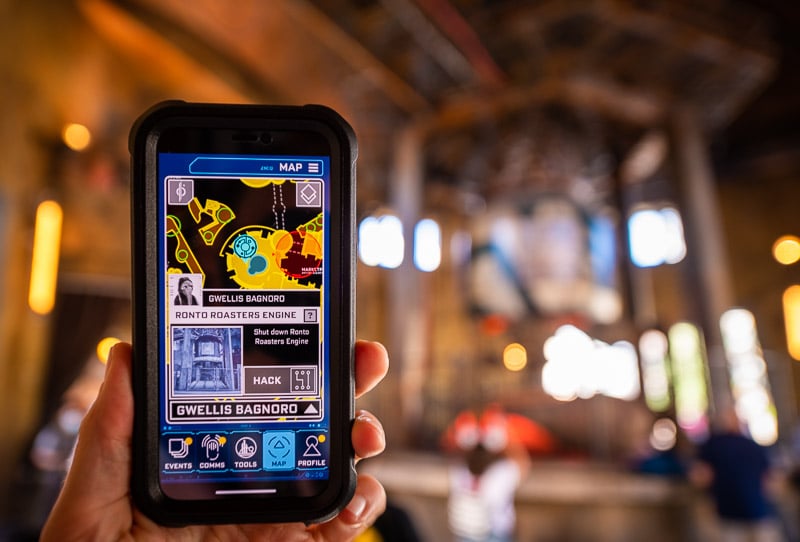
While I don’t think there’s any putting the genie back in the bottle when it comes to the ubiquitousness of technology in society–nor should there be, as there are tangible benefits–I do think that people are becoming, and will continue to become, more cognizant of the dangers of living online and benefits of disconnecting.
This is already happening. The first generation of kids exposed to social media and phones at young ages are now parents ourselves, and we’ve seen this firsthand. Phone-free schools are already increasingly common, but there’s a growing push to make schools screen-free entirely. And at least in our circle, most parents significantly limit screen time, or don’t allow it at all.
This may seem beside the point, or to reinforce the desire for something like smart glasses, but it’s really not. The underlying sentiment is a skepticism about these tech companies and the addictiveness of their products. If you have any doubt about this, consider researching how tech executives restrict their own children’s use of these devices–or common policies around Silicon Valley school districts.
It’s not just Millennial parents, the same trends are happening among younger people. Gen Z is more technologically literate than older generations, and they have a clearer view of these products and companies like Meta.
And there’s certainly no reason to believe that older generations will be the early adopters of things like smart glasses, giving them the necessary market penetration. So who, exactly, is this for? What’s the path to it becoming as popular as the iPod or iPhone?
It’s my fairly strong belief that there isn’t one. That the Meta x Ray-Ban smart glasses will be the best-selling version of this product, but that it won’t have even 1% of the market penetration as the smart phone. And from that perspective alone, this is DOA as being the future of the theme park experience.
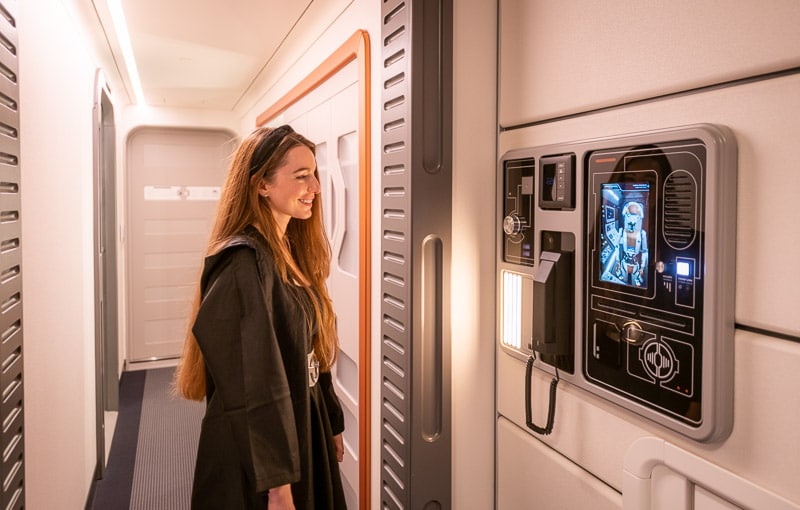
This cannot be what ‘breaks the spell’ (I realize I’m using this differently than Vaughn, but I found his turn of phrase apt–albeit in a different direction) of guests being glued to their phones, as not enough guests will use it for it to make a meaningful difference. It’s like the notion that Star Wars Galactic Starcruiser, Star Wars: Galaxy’s Edge Datapad, Play Disney Parks, or any other past efforts at creating virtual worlds within the physical confines of Walt Disney World were the future of theme parks.
An impossibility based on scale alone. Even with more charitable assumptions than I’m willing to make, it’s highly unlikely that there will ever be enough uptake for something like this to be what resolves the problem of excessive screen time.
Perhaps Disney has been paid enough ZuckBucks and such a Walt Disney World application for the Meta x Ray-Ban smart glasses will come to fruition, but it’ll only work for fewer than 5% of guests. And probably the ones least inclined to be on their phones less.

Ultimately, I’m heartened that Imagineering President Bruce Vaughn recognizes that excessive screen time is a problem with the guest experience, and something that actively undercuts what his division creates. At the same time, I’m also unconvinced that he has any realistic solutions to address this, or that the powers that be view this as a bug as opposed to a feature. Given that, the most likely outcome is more technology as opposed to less, and the hope that some of that will somehow be a net positive for the parks…and humanity. I don’t like our odds.
Planning a Walt Disney World trip? Learn about hotels on our Walt Disney World Hotels Reviews page. For where to eat, read our Walt Disney World Restaurant Reviews. To save money on tickets or determine which type to buy, read our Tips for Saving Money on Walt Disney World Tickets post. Our What to Pack for Disney Trips post takes a unique look at clever items to take. For what to do and when to do it, our Walt Disney World Ride Guides will help. For comprehensive advice, the best place to start is our Walt Disney World Trip Planning Guide for everything you need to know!
YOUR THOUGHTS
Thoughts on Disney partnering on Meta on the Ray-Ban smart glasses? Are you a fan of this idea as a way to reduce screen time, or do you think it’ll only create more isolation? Are you a big fan of “extended reality” or is it not your cup of tea? Any Walt Disney World or Disneyland use cases that would make smart glasses appealing to you? Do you agree or disagree with our assessment? Any questions we can help you answer? Hearing your feedback–even when you disagree with us–is both interesting to us and helpful to other readers, so please share your thoughts below in the comments!




Maybe they’re thinking if the glasses work really well, I’ll still pay them and not have to go to Florida at all. I wish I was only kidding…
Spent a day at Epcot with friends and their 9 year old, and the Play Disney app’s Ducktails World Showcase Adventure consumed most of our time. It was a blast! It’s an interesting example of how screens can enhance our experiences in the real world when what you do on the screen is actually a catalyst for meaningful interactions in the real.
The game prompts you to explore deep into the world showcase countries, and rewards you with real, delightful, physical interactions that are some of the greatest pixie dust moments you could hope for. The bier stein display in Germany, Louie zip lining in France or the water window in the UK evoke surprise and joy from child and adult alike. (Highly recommend the game! We skipped past most of the story prompts as they keep your head buried in your screen for too long, but the elements the come to life around you are worth it!)
As a 50+ year old Disney Adult, I appreciate the “get off my lawn!” reaction to technology in the parks, but like all things design it’s not an all-or-none issue. Experiences like the Ducktails Adventure show that your screen can enhance your lived experience when done thoughtfully.
(Loved the article. My version of “get off my lawn” is with how publicly facing videos like that make corporate partnerships. I understand they’re always there, but Disney, please keep them in the background. If I’m being sold something, I don’t want to burn any calories being conscious of it happening. That’s another issue that has to ride a fine line I guess.)
This is like a Nascar driver saying “I think all of us drivers are spending too much time in our cars”.
It’s bad enough tolerating people speaking on speaker phone, their phone held horizontally. This is annoying to listen to, but asking questions loudly to glasses, same as Siri or similar, is also annoying- it’s enhancing maybe for that one person, but ruining the experiences of many other people nearby.
OMG yes Nancy- I made a blanket statement of how these are generally worse but this immediately came to mind. Its also disturbing how the CEO’s take is “ disguise the fact you are ignoring your friends and family with these cool glasses” like what? Also guaranteed they are filled with advertising and “games” so you ignore the 75 minute line lol
It bears repeating that excessive screen time is still a choice. I don’t use my phone at Disney any more than I would in daily life. Maybe more than I should, but I’m happy with that. Times we live in IMO. If someone spends all day looking for better LLs, than that’s a choice. No judgement. I just don’t get the wining about choices made at a pure leisure venue.
Anyway, the glasses “solution” made me laugh. How is strapping screens in front of your eyes better than a phone screen? I guess it’s hands-free, so that’s something. Even more funny is that they couldn’t introduce the idea for 5 minutes before hinting at commercial uses. I’m sure that’s not at all going to dominate the end product. Spending, what, $800 on glasses (or, perhaps $3,000 with limited edition Disney branding), so companies can flash advertisements straight into my brain for 8 hours seems very appealing. Sold!
And to the creepy part. I hear some of these glasses are popular in certain nefarious circles. Does Disney, with their wholesome family product, really want to be associated with something like this? One case involving Disney-glasses goes public (which it sure will), and the damage will be catastrophic. Horrible idea, no matter what upside they may have.
What about people who require corrective lenses ? Will they be in prescription strength as well?
This is getting ridiculous if you ask me. What’s happening to the old fashioned Disney Magic?
Yes, you can get them with prescription lenses!
Started visiting Disneyland with small kids in early 1990s. When it was only Disneyland. Now visiting WDW and Disneyland with grandkids. What’s lost? For me, it’s twofold and it’s not about “technology” in general but about immersion. Younger kids need parents off of phones and helping to manage the immediacy of the experience — and enjoying it. When we’re on our phones, we’re not social. The same may be true for eyeglasses and even earbuds. After all, immersion and social bonding takes up all our senses. The second has to do with crowd size. When it was only Disneyland, the gates closed when the crowd hit a certain number. It got busy, but never oppressively so for small kids. Now tech may help us navigate these masses and may help Disney pack us in ever closer, but it’s hard to immerse when we’re part of a mob, and the stress of having to make it all work in a mob with long wait times (if we’re not going frequently and “native” that way) complicates with both the social bonding that Walt said motivated him on that park bench and the direct experience itself. Crowd size has direct effect on stress according to social science research. Now cut down the shade that Disney parks once provided and the quiet areas, add global warming, and it’s hard to just have fun. Tech promises are shiny fantasies that fade fast. So, I think Disney has to ask the fundamental question that Walt asked on that park bench, then let the answer guide how they use technology and shape the social and embodied experience of guests. They can sell that to investors, and even sell that to corporations seeking to shape their own customer experiences.
We just came back from a 10 day vacation to Disney and Universal (my daughter got married in France/Epcot). She and her friends are 25-28 years old. I overheard at least 3 of them say some variation of “Schedule your day in the morning then PUT YOUR PHONES AWAY or you’ll miss the best parts.” And these were part of the phone generation. They didn’t want to use their phones to interact with the “Most magical place on Earth”. They wanted to interact with each other AND Disney. But still it was almost impossible to put away the phones. Scheduling & managing the fast passes took hours of screen time. Disney may talk about the personal but in actions, they are promoting the same face-to-phone craziness.
I agree that a Universal system of ‘one pass for the whole day’ is the way to go if you’re going to do that. Maybe keep the initial, less expensive 3-fast passes a day plan for budget minded (like us sometimes). But a less expensive fast pass for everything plan makes sense, and it can be offered as a perk for the mid-range and higher cost hotels like at Universal. Now I’m not a coaster fan so I may not pay Universal’s full day fast pass as a rule. But when the fast pass is included in the room cost of their higher end hotels, and you have 4 people to a room, it makes it affordable even for a budget minded family. This does require some pre-trip calculations. We are definitely not a rich family and every trip takes 2-3 years of saving up and planning.
Or do it like we tried to do – plan your three passes within close proximity to each other, or space them apart to see and do all you can in one section of the park before moving to another. The one thing we refuse to do is run past a whole section to get to the next fast pass.
To me, the smart glass technology is not frictionless and requires you to be a prompt engineer. A better solution would allow technology to integrate your theme park priorities in advance; allow it to make lightning lane reservations on your behalf; then automatically add another lightning lane reservation once you have exhausted one of your rolling three. It would optimize the soonest available based on your priorities. It would let you know what nearby attractions, shows and dining have no wait. It would automatically add a coveted ADR to your group if another party cancels. It would do this for everyone who has a ticket and has told the system which theme park they intend to visit on specific day. Everyone would receive at least one E-Ticket ride. It sounds like a smarter version of Genie. I can think of a lot more features that would be very useful.
Existing technology is granular enough to make that a reality. Just look at the targeted advertising that bombards you on any smart device for proof.
I do have one nit: “Gen Z is more technologically literate than older generations, and they have a clearer view of these products and companies like Meta.” This is anecdotal, but I don’t find this to be true (at least not in my experience). Perhaps people are informed by a cost/benefit analysis and are choosing to take a break from non-beneficial technologies when they can. I think I have a pretty good idea of what Meta does and spend very little time using its products. Not because I’m a luddite but because it isn’t worth it to me. I also have misgivings about Meta practices that Frances Haugen disclosed (and others that were publicized over the years). I have no trust in Meta’s motives. I begrudgingly use some technology because you can’t function well in a society that is so reliant on them (like the creepy location services that you have to enable on your smart phone for it to function correctly).
Of course, expanded capacity would be even better.
Ugh. And I don’t think Bruce Vaughn thinks this is any kind of solution – he’s just talking up the Disney partnership with Meta. Whatever Jony Ive comes up with will likely make Meta’s product obsolete, right after a boatload of money is spent on its development. I hope as you suggested this will be on Meta’s and not Disney’s dime.
I love the idea of less screen time in the parks! I hate having to drag out my phone (no, it is not always in my hand as it is with some people) and mess with it. And I really hate when other people do – too often, they are trying to use their phones while walking, in a crowd; sometimes they suddenly stop! Then people run into them. There are also people who are on their phones during a ride, attraction, parade, etc. Hey people, you are completely forgetting what you are here for. If you just want to be on your phone all the time, you can stay home and save a lot of money. I could rant about phones all day. The families where every member is on their phone all through a dining experience….
Wow. Just wow. Tbh I would have thought theme parks would ban meta glasses!! They are always saying no recording and stuff. What about cameras in bathrooms? I don’t want a world where people are all wearing cameras to stalk ppl and record them without their knowledge. You go up to all someone a question and it turns out they are recording you or live streaming you without your knowledge. I already feel nervous in crowds like cities and tourist attractions where so many ppl are recording at any one time. What’s going to make life more fun is getting away from all of that and feeling safe in a fun environment. It honestly makes me nervous to even go out in public the more ppl are wearing these things. Bc they aren’t really even paying attention to you they’re interacting with their overlay. I feel like none of our CEOs and top ppl today must have read very many sci fi books. This stuff never works out. 🙁 For years I’ve thought I would pay for a fireworks zone where you aren’t allowed to use your phones! I think ppl overall want to go to less technology not subtler more intrusive technology.
I agree with your sentiments! I think a big problem is that a lot of the CEOs/leaders are overly idealistic and have a God complex (particularly in tech – all tech is good and moves humanity forward, and they, with all their vision and wisdom, would never make mistakes or fail to imagine adverse consequences) and/or obsessed with profit regardless of the effects.
I will acknowledge that the reality is we’re being recorded a huge amount of time out in public, and while it makes me a little uneasy when I think about it, at least most of that is done for safety. (Of course, arguments can and have been had about what amount of privacy is worth sacrificing for that purpose.) Putting a camera in the glasses of a bunch of individuals is on a different level and makes me so uncomfortable. If someone was recording video on a phone in a bathroom, they’d get punched. With the glasses, no one would even know.
It also bothers me to no end when people aren’t enjoying the things in front of their faces and recording fireworks (or whatever). The screens are actively distracting to the people around them. When we were riding The Haunted Mansion, someone was recording Madame Leota across the way from us. The light from their phone was shining toward our faces, and it was so irritating when I was trying to watch my favorite scene of the ride.
Seems like we are getting closer and closer to having a real-life version of the OASIS. And I don’t think that is a good thing.
Exactly what I was thinking.
Wow. Tom, you are usually spot-on with your assessment in this kind of thing, but you hit the nail on the head with this one. It is so disheartening to know that Disney executives are thinking like this.
As a very observant person who has spent a lot of time at Disney, both with family (growing up) and by myself (disillusioned, practical, money conscious, engineer husband) I can 100% attest that the “magic” is in the human interaction. Talking to cast members, enjoying live performances, connecting with the friends and family you came with, even conversing with other guests through shared and relatable experiences.
On one hand, it is good to hear that they “get it” that technology use is negatively impacting the Disney World experience…but if they think that this is the solution then unfortunately they don’t “get it” at all.
I can forgive a lot of missteps in a lot of areas, and I have. I keep holding out, waiting for them to turn the ship, but it’s just getting worse. It’s becoming increasingly hard to justify the direction they are taking, and it has been incredibly heartbreaking to see the company turn itself into what it is today. Decision after decision is showing that their priority has shifted from improving guest satisfaction to increasing profits. I feel like I am slowly breaking up with a lifelong relationship and it is absolutely crushing me.
First they get rid of tom sawyers island , a place where you could unwind with your kids and run and have fun, and how this ? No way . Heartbreaking if this becomes “reality “ This is not my Disney
My teenager is sad over the loss of the Boneyard at Dinoland in Animal Kingdom. She has a lot of fun memories there. I think the overall experience suffers from loss of these ancillary products.
I know Gen Z people and they do NOT like the idea of the smart glasses at all. I’ve heard, “they’re creepy”.
People are always looking at wait times. Why don’t they just put up bulletin boards so to speak at different spots in each park with wait times and whether a ride is open or closed/down. that by itself would eliminate a lot of phone surfing.
I’m in complete agreement with you.
I’m helping a coworker plan her first family trip with her husband and 5 year old, and she’s repeatedly said how overwhelming (or expensive) it is for a family who wants a simple day at Magic Kingdom, especially with the requirement to rely on tech so much when the goal is to escape from routine. It’s harder to escape if you’re forced to be on your phone constantly. Unless, of course, you want to fork out the dough for the primo pass.
I think the problem isn’t really the technology but how poorly it works.
A couple examples from our October trip:
1. I bought the MNSSHP ornament. There was a huge checkout line but signs urging me to check out online. I did so. Very easy, with one item. Display receipt at door. I head to the door. I’m told by a CM there that I have to go to one specific door. Okay, I find my way through the crowd (dragging my child along) to the right door. There’s a line. At the front is a CM who is trying to use a cumbersome scanner and explain mobile checkout to person after person. My child, of course, needs to pee. If I were in a checkout line I could abandon my stuff and take her to the bathroom, but no, I’ve already bought it…I just can’t leave. It was a nightmare.
2. Mobile order. Sounds so great! Frankly, at Six Flags I’ve used mobile order, gotten a return time, and walked up at that time to a separate in-the-wall opening where my food was waiting. On time. At Six Flags! But here, you order it. Then you tell them you’re here. Then they actually make it, while you wait. Then you wait in a line to pick it up. Dude, this food is not any better than Six Flags (sorry!), I do not need it to be freshly made instead of finished two minutes before I walk up.
3. They have made improvements to the Lightning Lanes and you have documented their foolishness well here, but I just want to note that creating a system that forced people to run back and forth across the park was DUMB. Of course people were unhappy. Now you can adjust it, which I guess is good. I have not tried the new system. But the whole thing just seemed like an exercise in idiocy. The same week we went to MNSSHP, we also went to Universal for three days. Their express pass is more expensive, but it makes SENSE. You just walk up and use the fast lane. No planning or checking or anything. I did not buy it because I am not troubled by 45-minute lines and I do have a budget, but I met people who were using the express passes and they were happy. Relaxed. Enjoying their day. Whereas when I went to Disney for 5 days with Lightning Lanes, I was stressed, had to set alarms to get up early to choose rides, had to quickly get to the ride to tap in to get my next ride…it was the opposite of fun. I suppose Disney would say I’d chosen to do that. I could just wait in line. Fair enough, but there was an example of a better way just down the road…
4. Announcements in the app. I have never seen such a stupid idea. If a parade is delayed or a show must be canceled or whatever, it can be clearly announced in the park. Signs, overhead announcements, CM announcements. Don’t just put it in the app and then look surprised that people are gathering to see the show. This did not happen to me at MNSSHP but it happened to others the day before – they waited an hour with lots of other people for a parade that couldn’t happen because of the weather.
Truly, sometimes it seems like Disney hires amazing visionaries and then locks them in a room without any technology for the rest of their lives.
You are 100% correct about Disney and their uses of technology. I don’t know why they keep messing up. There are so many tech ideas that would be beneficial and helpful if done right but they always find a way to make it to the worst possible version of it. Its as if they don’t test these things, or they don’t have someone with common sense discussing the best ways of implementing everything.
How anyone could see those glasses not being a hundred times worse than a smartphone with taking you away from family and reality is beyond me. What a horrible idea
James, you are absolutely correct.
Funny, because they created this.
A classic tale of an arsonist turned firefighter. Now just wait until they try to sell you a solution to the issue (they kind of already do with Lightning Lane Premier Pass).
Joking aside, there is no monolithic “they” in this case. Every Imagineer with whom I’ve ever spoken dislikes Genie/Lightning Lanes. Many also disliked FastPass for the way it commoditized the park experience, raised stakes, and bypassed themed queues.
Here’s a crazy idea. Expand capacity.