
Disneyland Abu Dhabi Announced, Disney’s 7th Theme Park Resort & First in Middle East

Disney Experiences has officially announced plans for Disneyland Abu Dhabi, the company’s first-ever theme park & resort complex in the Middle East, located on Yas Island in the capital city of the United Arab Emirates. The project has been revealed via new concept art and details via CEO Bob Iger and state partners in Dubai.
The Walt Disney Company and Miral, Abu Dhabi’s leading creator of immersive destinations and experiences, announced an agreement to create a landmark Disney theme park resort in Abu Dhabi, United Arab Emirates. The waterfront resort complex will be located on Yas Island, a world-class destination for entertainment and leisure, connecting travelers from the Middle East and Africa, India, Asia, Europe, and beyond.
Disneyland Abu Dhabi will be the seventh Disney theme park resort will combine the company’s 100-plus year tradition of iconic stories, characters and attractions with Abu Dhabi’s vibrant culture, stunning shorelines, and breathtaking architecture. This 7th Disney Parks Destination will extend the company’s global reach and captivate a new audience in a thriving and dynamic hub.
“Abu Dhabi is a place where heritage meets innovation, where we preserve our past while designing the future,” His Excellency Mohamed Khalifa Al Mubarak, Chairman at Miral, said. “The collaboration between Abu Dhabi and Disney demonstrates the remarkable results of combining visionary leadership and creative excellence.”
“What we are creating with Disney in Abu Dhabi is a whole new world of imagination — an experience that will inspire generations across the region and the world, creating magical moments and memories that families will treasure forever. Through the development of unique attractions and experiences, Abu Dhabi continues to be a destination of choice for the world,” Al Mubarak added.
The new resort will be fully developed and built by Miral. Disney and its legendary Imagineers will lead creative design and operational oversight to provide a world-class experience. Miral, which has developed a number of family entertainment destinations on Yas Island, Abu Dhabi in collaboration with American and European brands, will run the resort.

“This is a thrilling moment for our company as we announce plans to build an exciting Disney theme park resort in Abu Dhabi, whose culture is rich with an appreciation of the arts and creativity,” said Robert A. Iger, Chief Executive Officer, The Walt Disney Company.
“As our seventh theme park destination, it will rise from this land in spectacular fashion, blending contemporary architecture with cutting edge technology to offer guests deeply immersive entertainment experiences in unique and modern ways. Disneyland Abu Dhabi will be authentically Disney and distinctly Emirati – an oasis of extraordinary Disney entertainment at this crossroads of the world that will bring to life our timeless characters and stories in many new ways and will become a source of joy and inspiration for the people of this vast region to enjoy for generations to come.”
The UAE is located within a four-hour flight of one-third of the world’s population, making it a significant gateway for tourism. The UAE is home to the largest global airline hub in the world, with 120 million passengers traveling through Abu Dhabi and Dubai each year.
“This groundbreaking resort destination represents a new frontier in theme park development,” said Josh D’Amaro, Chairman, Disney Experiences. “Our resort in Abu Dhabi will be the most advanced and interactive destination in our portfolio. The location of our park is incredibly unique – anchored by a beautiful waterfront – which will allow us to tell our stories in completely new ways. This project will reach guests in a whole new part of the world, welcoming more families to experience Disney than ever before. Ultimately, it will be a celebration of what’s possible when creativity and progress come together.”
“Bringing a Disney theme park resort to Yas Island marks a historic milestone in our journey to further advance the island’s position as a global destination for exceptional entertainment and leisure,” said Mohamed Abdalla Al Zaabi, Group CEO, Miral. “Together, we are creating a place of boundless innovation, where the vision of our leadership continues to inspire the world.” The development of unique experiences will support sustained economic growth in Abu Dhabi and beyond.
Upon completion, the new Disneyland Abu Dhabi theme park resort will offer signature Disney entertainment, themed accommodations, unique dining and retail experiences, and storytelling in a way that celebrates both the heritage of Disney and the futuristic and cultural essence of Abu Dhabi.
Further details will be announced as the Disneyland Abu Dhabi project progresses. Please refer to the company’s 10-Q filing later today for additional details regarding the financial agreement. Here’s early concept art of Disneyland Abu Dhabi:

Our Commentary & Background Deep Dive
Since addressing this rumor in Disney Parks in New Countries “Inevitable”, I’ve had the chance to mull over the potentiality of Disneyland Abu Dhabi and do a bit more digging. In so doing, I’ve gone from dubious that Disney would move forward with a project in the UAE to viewing Disneyland Abu Dhabi as an, in Iger’s words, inevitability. Of course, that’s easy to write now that we have an official announcement–but I’m not pretending I saw this coming prior to this week.
As it turns out, CEO Bob Iger has been leaving a trail of breadcrumbs and laying the groundwork for this announcement since 2018. It was then that Iger first made comments suggesting new theme parks beyond China during a February 2018 earnings call. He revealed that Disney is “constantly engaging in conversations with people from different markets who would love us to put Disneyland in their market.”
“I’d say that there’s an inevitability to us building parks in other countries, but it doesn’t necessarily mean that we’re going to build something anytime very soon,” Iger added. “But we’re going to look.” As we’ve discussed previously, this makes sense. The world’s demographics are changing, with younger and growing middle class populations in countries where Disney has no presence.
According to Disney’s internal research that was first revealed as part of its $60 billion plan to “turbocharge” theme park investment, there is an addressable market of more than 700 million people with high Disney affinity it has yet to reach with its parks. In fact, for every one guest who visits a Disney Park, there are more than ten people with Disney affinity who do not visit the parks. Disneyland Abu Dhabi addresses this for 500 million of that 700 million.
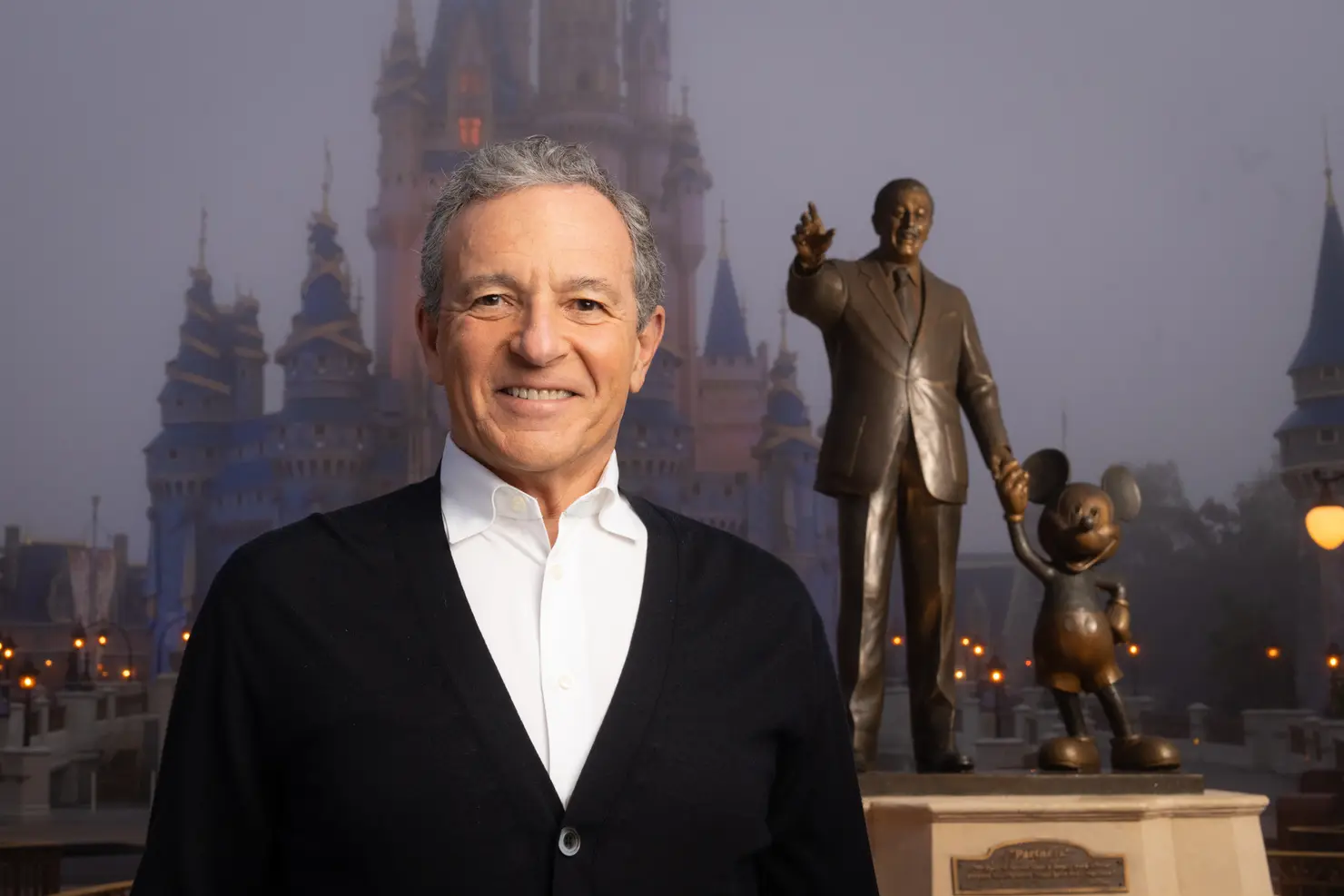
This was clearly top of mind for Iger before he departed as CEO, COVID upended the world, and the company’s focus shifted to streaming. During an April 2018 interview with the Council on Foreign Relations, Iger shared that Saudi Arabia’s Crown Prince Mohammed bin Salman had “made an impassioned plea to me to consider building Disneyland in Saudi Arabia.”
Iger explained that he “listened with curiosity and somewhat of an open mind. And I explained that when we make decisions like this, we consider cultural issues, economic issues, and political issues…it may seem simple, but it’s far more complex. And he tried to make the decision easier from an economic perspective.”
“I was very—I actually was very frank with him about it. And I’m not going to get into those details either,” Iger continued. “And I ended up saying that I would visit and see for myself, but that that in no way should be interpreted to mean we’re developing a park, but that I would listen…I often say to the senior executives of Disney, if you don’t go you can’t grow.”
“And so I’ll go. Whether we grow or not there, I don’t know. But I’ll go. There’s a lot of people who live in that part of the world. We have, over time, been asked by many from that region to consider putting a park in that region. And so far, it hasn’t—it hasn’t been at the top of our list in terms of markets that we would open up in, but we’ll take a look.”
To date, the company’s riskiest venture has been its foray into mainland China with Shanghai Disneyland, a joint venture with the state-owned Shanghai Shendi Group. The parks in Paris, Tokyo, and Hong Kong (at the time it was built) didn’t present even remotely comparable concerns.
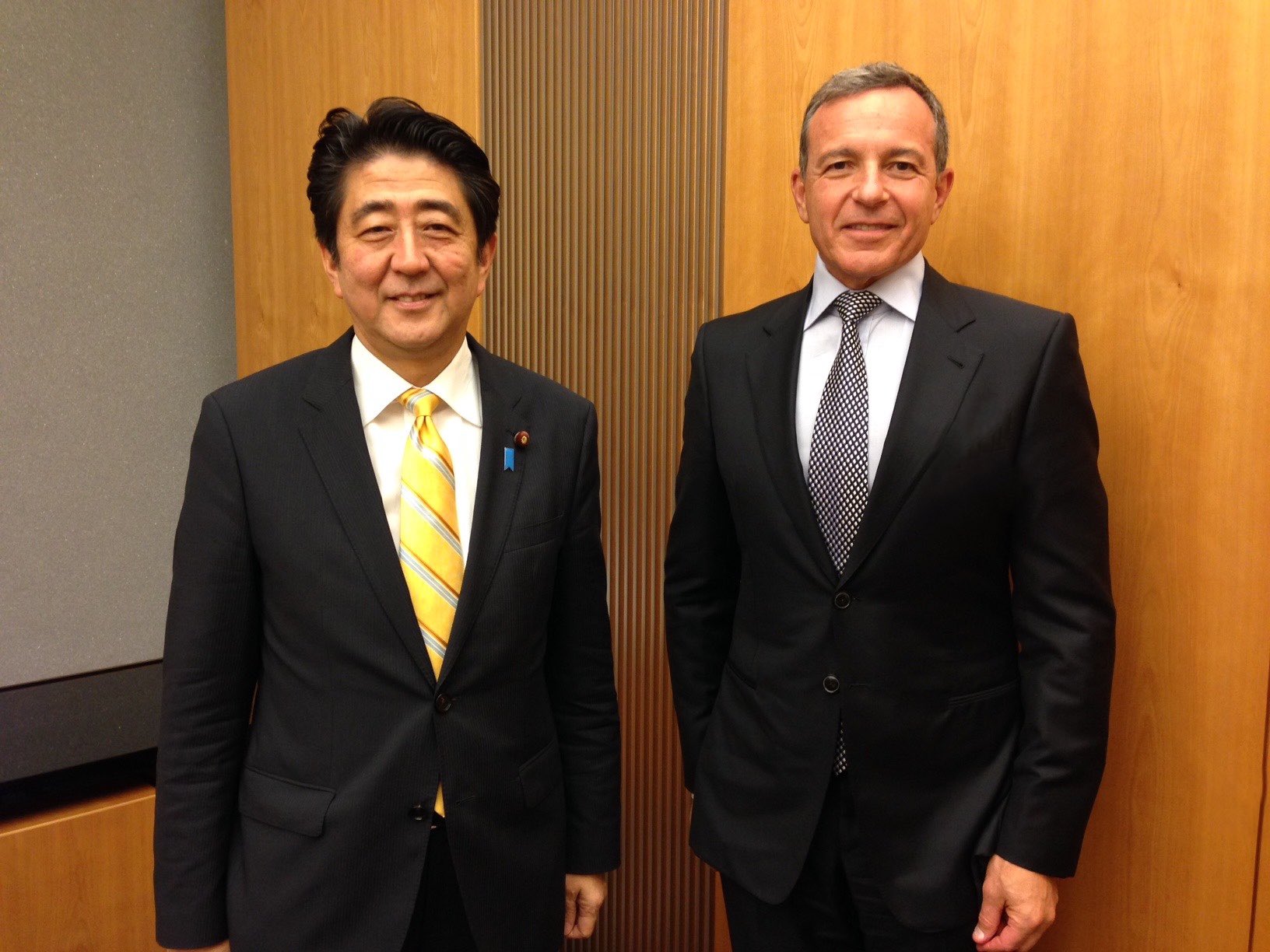
Reading between the lines, what Iger seems to be saying is that the building a Disney park in the Middle East would’ve been easy as a business decision that would’ve improved the company’s bottom line. But as of 2018, it was nevertheless not politically palatable and too much of a brand risk, especially in Saudi Arabia.
“History doesn’t repeat itself but it often rhymes.” That’s the Mark Twain quote I’m reminded of by this news. CEO Bob Iger said this during an earnings call in February 2019: “I don’t see The Walt Disney Company, certainly in the near term, getting involved in the business of gambling, in effect, by facilitating gambling in any way.” That came in response to an analyst citing Deadpool, and asking whether sports betting could also “coexist within the family-friendly Disney brand?”
Fast-forward only a couple years, and gambling ads were ubiquitous in ESPN coverage. You couldn’t turn on sports coverage without hearing about odds, fantasy stats, or seeing ads for Caesars, MGM, and so forth. Almost overnight, betting went from being viewed as immoral and a stain on sports to actively embraced and an engrained aspect of the fan experience. Two years ago, ESPN partnered with Penn Entertainment to launch ESPN Bet, its own sportsbook.
We covered this in Disney’s Getting Into Gambling from the angle of the impact to Disney’s family-friendly brand. Almost no one cared. As it turned out, by simply waiting out public sentiment, Disney entered the market at a time when sports betting was completely normalized. If anything, the company waited too long. I never would’ve predicted how public perceptions of gambling would’ve “evolved” from 2018 to today.

This feels like a similar story with Disneyland Abu Dhabi. Had Disney announced a partnership with Saudi Arabia back in October 2018, it undoubtedly would’ve been controversial. Saudi Arabia had been making inroads with Hollywood at that time, but as Vanity Fair reported, those relationships all went up in smoke that month.
Fast-forward 7 years and with a different and less controversial country in the Middle East, and the news is likely to be met with a different reaction. LIV Golf has softened stances among Americans even towards Saudi Arabia; while incredibly controversial at first, its acceptance over time has probably desensitized people. Future American entities that bet big on Saudi Arabia won’t be met with nearly the same scrutiny, as the dam already broke. This isn’t the first time sports has had that effect; the same could be said about the 2008 Beijing Summer Olympics and Shanghai Disneyland.
As for the United Arab Emirates, its public perception is different from Saudi Arabia in the first place, and has further improved in the last several years among younger generations thanks to social media influencers, of all things. The UAE is now viewed as a playground for the affluent with cutting edge technology and posh developments; it’s an aspirational destination. It also helps that countless western business have planted roots in the UAE, so Disneyland Abu Dhabi is hardly setting any precedent.
The list of western companies in the UAE is incredibly long, including Microsoft, Bank of America, Uber, Nvidia, Boeing, General Motors, FedEx, Amazon, Google and Mastercard. There are also countless American chains with prominent presences in the UAE, including Bloomingdale’s, Bath & Body Works, Payless, Pottery Barn, Williams Sonoma, Applebee’s, Buffalo Wild Wings, Chuck E. Cheese, Tony Roma’s, Starbucks, and McDonald’s. Any luxury retailer or major American restaurant chain you can name probably has outposts in the UAE.

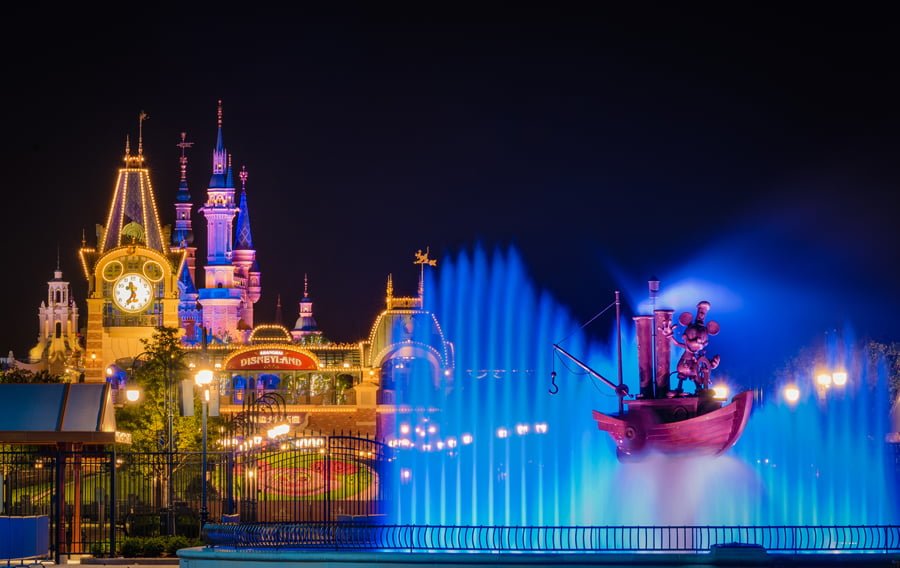
For its part, Disney just opened the first standalone Disney Store at Dubai Mall back in March (photo above of flagship Disney Store in Shanghai, not Dubai). Brought to the UAE by the Alshaya Group, another Disney store will also open in Yas Mall in Abu Dhabi. All of this is likely owing to the high expat population in the United Arab Emirates, and there’s a strong affinity for western brands.
Further suggesting there will be minimal controversy surrounding this–or at least less than would’ve existed a decade ago–is that the Trump Organization also announced this month its intentions to create a new luxury golfing destination in nearby Doha. That project spans approximately 790,000m² and, among other things, it will include a resort complex and theme park. So say goodbye to the Disney vs. Universal rivalry and hello to Disneyland Abu Dhabi vs. Trumpland Middle East! Those fan debates about which is superior should be “fun.”
None of this is to assert that this decision by Disney is wholly uncontroversial or morally right. There obviously will be some degree of backlash. It’s more to suggest that timing is everything, and Bob Iger’s moves on both gambling and the Middle East are less an about-face and more a recognition of shifting sentiment and public perceptions.
Crucially, waiting also gave Iger and Disney time to observe, watching the early announcements take shape to confirm that they weren’t just vaporware. The list of theme parks officially announced for the Middle East is far longer than those that have been built. Of course, there’s no guarantee that Disneyland Abu Dhabi won’t end up suffering the same fate for whatever reason, but it certainly appears that things are different with Yas Island and Miral, and reason to believe this park actually will come to fruition.

According to the UAE’s Central Bank, the country’s growth is being driven by growth momentum in the country’s non-oil sectors as the Arab world’s second-largest economy continues to push for diversification. Non-oil segments grew by 4.6% last year and is expected to surpass 5% this year, UAE Central Bank data indicated.
The UAE has been focusing heavily on diversifying its economy from oil by developing sectors such as technology, manufacturing, tourism, trade and innovation. The country has introduced several reforms including longer-stay residence visas as well making a push to attract top talent from abroad.
Abu Dhabi’s Economic Vision 2030 is leading the drive towards diversification. This is part of the UAE’s strategy to reinvest its oil fortunes for the inevitable decline of the fossil fuel industry and its reserves. Kind of like how Philip Morris has invested heavily in other industries in preparation for a smoke-free future.

Abu Dhabi’s Tourism Strategy 2030 outlines its plan for how the city will achieve such growth. The 2030 plan seeks to boost visitor numbers from nearly 24 million last year to 39.3 million by 2030 (overnight and same-day), with a 7% year-on-year growth. Moreover, it plans to significantly elevate the tourism and travel sector’s contribution to the UAE’s GDP, raising it from approximately AED 49 billion in 2023 to AED 90 billion annually by 2030.
The Strategy will generate an estimated 178,000 new jobs by 2030 as the entire tourism infrastructure develops to meet this demand. It intends to almost double international overnight visitors from 3.8 million in 2023 approximately to 7.2 million in 2030, expand hotel room availability from 34,000 in 2023 to 52,000 by 2030, and further diversify accommodation options.
The UAE Tourism Strategy 2031 likewise sets ambitious targets for the sector, aiming to increase its contribution to the GDP to AED 450 billion and attract 40 million hotel guests annually by 2031. To achieve this, Abu Dhabi intends to invest $10 billion on tourism infrastructure strategy. That number was announced before Disneyland Abu Dhabi; it’s unclear whether this project is part of that $10 billion or in addition to it.
Theme parks, retails offerings and new hotel chains are a lynchpin to this plan, as is expanding its international reach from 11 to 26 markets. It will also establish strategic global partnerships with well-known brands for high-profile collaborations and expanded media reach. And what better brand for that than Disney?!

The UAE is quickly becoming a major global theme park destination, with the aim of positioning itself as the Middle East rival to Orlando for the crown of the world’s theme park capital. From investing in world-class parks to attracting global brands, the UAE is drawing international visitors. Central to this are Yas Island and Saadiyat Island in Abu Dhabi. The Disneyland Abu Dhabi project should serve to strengthen those comparisons.
Located on the golden shores of Abu Dhabi, Yas Island offers a diverse mix of leisure and entertainment experiences. From award-winning theme parks such as Ferrari World Abu Dhabi, Yas Waterworld, Warner Bros. World Abu Dhabi, and SeaWorld Abu Dhabi to incredible entertainment options all within the 25 sq. km island. With these 4 theme parks and other attractions, Yas Island is aiming to solidify its international reputation as a premier destination.
Yas Island boasts world-class shopping at Abu Dhabi’s largest mall, Yas Mall, superb dining at Yas Bay Waterfront, and award-winning golf at Yas Links golf course. The island offers a year-round line-up of events and houses ten hotels, including W Abu Dhabi – Yas Island, Hilton Abu Dhabi Yas Island, and The WB Abu Dhabi, the world’s first Warner Bros. themed hotel. With more than 165 dining experiences, the destination also features indoor and outdoor concert venues including WHITE Abu Dhabi and Etihad Arena.

Yas Island recorded over 38 million visits in 2024, a notable 10% increase compared to 2023. Achieving their highest performance since 2019, Yas Island hotels’ occupancy reached 82% peaking up to 90% in August 2024; an annual 9% growth in hotel occupancy alongside a 17% increase in the average daily rate (ADR) compared to 2023.
This growth is attributed to the UAE government’s efforts in nurturing the nascent industry, and fostering an environment for the theme park industry to develop and mature. The majority of theme parks in the UAE are government-owned and operated, with the state’s vast resources backstopping their current losses and fueling expansion until the investment bears fruit.
Central to this development in Abu Dhabi is Miral, the group responsible for developing and operating the man-made Yas Island’s collection of theme parks (and much more). As you likely saw, the announcement of Disneyland Abu Dhabi was a joint press release between the Walt Disney Company and Miral, with the latter fully developing and building Disneyland Abu Dhabi. So let’s dig deeper into Miral and what it has accomplished thus far in 15 years of Yas Island…

Miral Group handles the creation and management of leisure, entertainment and cultural destinations and experiences in Abu Dhabi. The group is also creating communities with year-round leisure and entertainment amenities on Yas Island and across the Emirates, sort of like a Storyliving by Disney type of deal.
Miral’s first foray into theme parks was Ferrari World Abu Dhabi. This original indoor park is home to rides such as Formula Rossa, the world’s fastest coaster, and Flying Aces, a dynamic coaster with one of the tallest loops in the world. More recently, the park opened Mission Ferrari, which is said to be part roller coaster, part dark ride.
Next to open was the 37-acre Yas Waterworld, which offers more than 40 rides, waterslides, and other experiences. It’s also the only outdoor park at Yas Island. Designed to celebrate the UAE’s pearl-diving past, the park features the world’s largest surfable sheet wave, and the region’s first and only 5D water adventure.

Warner Bros. World Abu Dhabi opened in 2018, and is now home to nearly 30 thrill rides, family-friendly attractions, and live entertainment across 1.65 million square feet and six immersive lands. Warner Bros. World is the largest indoor theme park in the world, according to Guinness World Records. Miral is now developing a new Harry Potter-themed land for Warner Bros. World Abu Dhabi.
SeaWorld Abu Dhabi, the region’s first marine life theme park, is the most recent theme park to open on Yas Island. Developed by Miral in partnership with SeaWorld, the park covers five indoor levels and more than 183,000 square metres. It offers eight realms with family-friendly experiences including animal encounters and presentations, entertainment, more than 15 attractions, plus two dozen-plus shopping and dining options.
Yas Island has “spared no expense” John Hammond vibes, and not just because it’s an island like Jurassic Park (thankfully with animals other than dinosaurs…for now). The man-made island reportedly cost $40 billion to bring to life, along with estimated costs of over $1 billion for each of the parks. Miral is said to have a portfolio of projects under construction worth more than $3.4 billion on Yas Island and across Abu Dhabi. That was before the announcement of Disneyland Abu Dhabi. Surely that number will at least double in the decade to come.

This is thanks to Mohamed Abdalla Al Zaabi, the leader and the Group Chief Executive Officer of Miral Group. Al Zaabi has been the driving force in transforming the company into a powerhouse within the theme parks industry since joining Miral in 2015.
Under his leadership, Miral’s portfolio on Yas Island has thrived as the group has built, operated and managed immersive destinations and experiences that attract visitors from around the world, accelerating the goal of the Emirate’s economic diversification. Miral has invested in multiple mega projects on Yas Island and Abu Dhabi, successfully forging key business partnerships with Ferrari, SeaWorld, and Warner Brothers.
During a fascinating interview, Al Zaabi shared that his favorite theme parks in the world were actually not his own, but Walt Disney World in Florida. In particular, he said that Pandora – World of Avatar is his #1 theme park area. He was also asked about negotiations to build a Disney Park on Yas Island, which he brushed off with a “next, please” plus a laugh and fist bump with the interviewer.

He was also asked about the end game for Yas Island, and whether profitability was the main goal, if breaking even was possible, or if the development is “an investment in the national prestige of Abu Dhabi?” Al Zaabi indicated that theme parks are part of a “long term vision for Abu Dhabi and Yas Island” with financial and non-financial goals.
He further elaborated that there are indirect financial benefits, such as increasing occupancy and length of stay on the island and in Abu Dhabi. He said the company is “very happy, extremely happy, with the results we’ve achieved the last ten years.”
When pressed on Emirates demographics and the long-term financial viability of the parks (or lack thereof), Al Zaabi explained that the goal is to become the destination theme park & leisure capital in the middle of roughly half of the earth’s population. He pointed out that massive populations in India and beyond are all with 2-3 hour flights. Beyond that, residents are routinely offered discounts to fill the parks.
The whole interview is interesting, and suggests that Al Zaabi is someone who actually cares about theme parks. In doing a bit of digging into Al Zaabi’s (surprisingly vast) online footprint, he vaguely reminds me of Matt Ouimet (that’s praise, for those who are unfamiliar with that name). For those with concerns about Miral leading the development of Disneyland Abu Dhabi, that might put your mind a little at ease.
From our perspective, this background is both fascinating on its own and relevant to understanding just what Disney is doing with Disneyland Abu Dhabi. One of the top reactions whenever we share news from the international parks is that Disney should be investing domestically on Walt Disney World and Disneyland, instead of spending on foreign parks.
There’s a perspective that Walt Disney World is the ‘golden goose’ and that the international gates are money-losers subsidized by the U.S. parks. The fact check on this is ‘mostly false/misleading.’ It is true that capital expenditures in building parks in Paris, Hong Kong, and Shanghai have had short-term negative impacts on those in Florida and California.
The Euro Disney boondoggle was an albatross for over a decade, with ramifications for the ‘Disney Decade’ at Walt Disney World and Disneyland, as well as a ripple effect that resulted in subsequent under-investments on new gates in the late 1990s and early aughts. Disney has now spent the better part of the last 15 years undoing that as it’s gone back and fixed DCA, HKDL, and now WDSP. Euro Disney has cast a long shadow. Even much more recently, “Thanks, Shanghai” became a catchphrase to blame cost-cutting measures in 2014-2016 on the new park in China.
All of those parks are now profitable and contribute to Disney’s bottom line; none are subsidized by Walt Disney World or Disneyland.
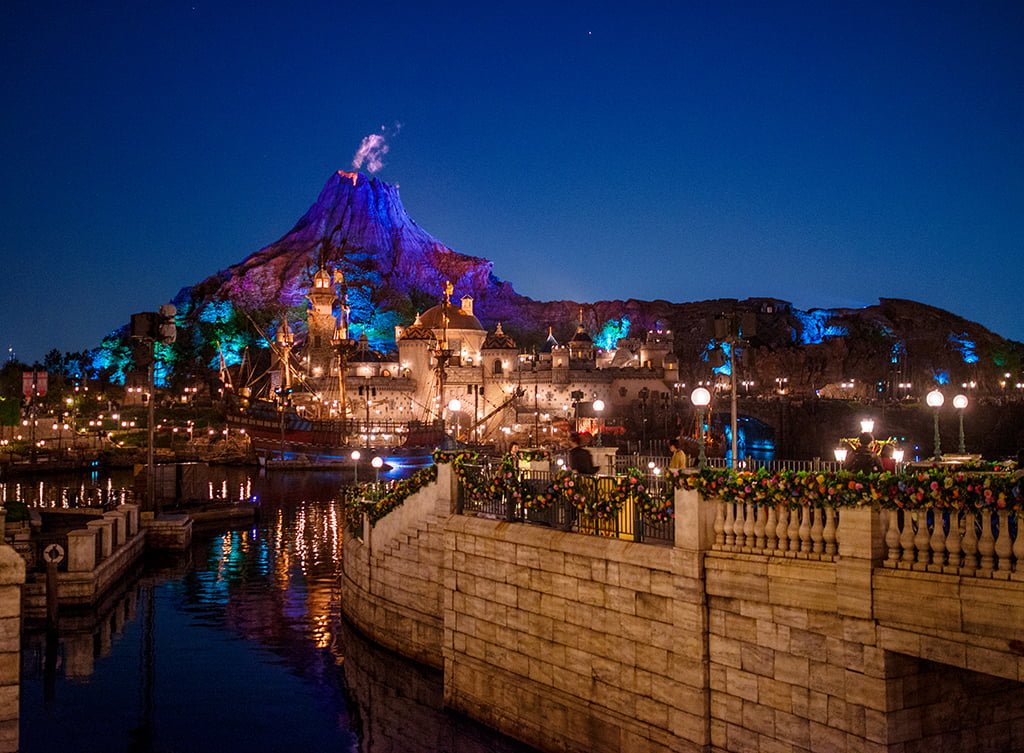
We hear complaints like this even when it comes to Tokyo Disney Resort, which is wholly owned and operated by Oriental Land Company. From a guest-facing perspective, the Tokyo parks are pure Disney magic–arguably the purest form of it.
Imagineering is the exclusive contractor for design work, with the firm being paid for the lands, attractions, hotels, and all other Disney creative at Tokyo Disney Resort. This is a big part of why Disney is always trying to sell OLC on recently-completed projects in the domestic parks–it spreads out R&D costs.
Disney also earns royalties on all revenue generated at Tokyo Disney Resort. The precise agreement and amount of the royalties are not publicly disclosed in earnings reports by OLC or Disney, but are believed to be 10% of ticket sales and 5% of in-park purchases. Whatever they are, Michael Eisner came to view the licensure model as a mistake and went a different direction (arguably the wrong one) with the park in Paris.
Of course, hindsight is 20/20. When Disney struck its deal with OLC, the company that is not the behemoth that it is today. Disney did not have the resources for the herculean undertakings of both EPCOT Center and international park expansion, simultaneously. Nor did they have the expertise to do business in Japan.
The partnership with OLC gave Disney a revenue stream to endure the early years of EPCOT Center, fund future expansion, and ultimately propelled the company into becoming the behemoth it is today. So looking back today, it’s easy to say Disney should’ve built Tokyo Disneyland on their own, but the contemporaneous circumstances and risks were very different.
While Disney’s 10-Q filing has not yet been released, it’s our understanding that Disneyland Abu Dhabi will follow the Tokyo Disney Resort model. Which is to say that the project is being fully-funded by Miral and state partners, and that Disney will receiving licensing, royalty, and development fees.
Disney is not providing any capital for the creation of Disneyland Abu Dhabi. This does not impact the development of any existing projects at Walt Disney World, Disneyland, or Disney Cruise Line that have been previously announced as part of the $60 billion ‘turbocharged’ investment over the next decade.
As with its Japan counterpart, Disneyland Abu Dhabi will be a distinctly Disney resort in the sense that it is Imagineers leading creative design and the Walt Disney Company having operational oversight. And of course, there will be Disney intellectual property throughout the resort. The open question, at this point, is the degree to which Miral will have a role in design and development, and whether that will be greater than OLC at Tokyo Disney Resort.

Time will tell whether what the Walt Disney Company is doing with Disneyland Abu Dhabi in the Middle East is the right or wrong approach from a business perspective.
Even though he won’t be around when the park opens to the public, current CEO Bob Iger undoubtedly views it as one last legacy project. Not only will it expand the company’s footprint into an entirely new and major market, just as he did with Shanghai Disneyland, but it will also inject cash into the company’s coffers and provide a future revenue stream that the company might need in the future is the media landscape continues to change.
The Mouse House that Bob Iger built is largely predicated on huge IP acquisitions. His first major move as CEO was acquiring Pixar for $7.4 billion in 2006. He followed that up with the masterful moves of acquiring Marvel for $4 billion in 2009 and Lucasfilm for $4 billion in 2012. Then there was perhaps Iger’s most dubious decision–aside from naming Chapek his successor–in acquiring 21st Century Fox for $71.3 billion in 2019. Disney still hasn’t properly “digested” that last deal, and its after-effects have been significant.
Rather than Iger’s last legacy project being about the park itself, it’s probably more about Iger putting Disney back on the right course, financially. Helping pay down the debt load incurred as a result of the Fox acquisition, buying Hulu outright from Comcast, scale-up costs of streaming, and offsetting what’s been lost from other revenue streams that have slowed to a trickle. Bringing this full-circle, that was also the impetus behind the ESPN Bet move that might’ve left a similarly bitter taste in the mouths of some fans and moved Disney away from its family-friendly roots.
But perhaps the longest-lasting legacy of CEO Bob Iger that Disneyland Abu Dhabi further cements is Disney’s shift from a media company to a theme parks & resorts business, first and foremost. Last year, Disney Experiences generated $34.15 billion of the company’s $91.4 billion in revenue, but $9.27 billion of its $15.6 billion operating income. Parks & Resorts already accounts for ~60% of Disney’s profits, dwarfing any other division. This deal will only widen that gap, which really calls into question whether a “Hollywood person” should be the next CEO of Disney, or if it should be a “Parks person.”
Ultimately, there’s a lot more ground to cover with this project and we’ll undoubtedly touch upon countless topics in the months and years between now and the opening of Disneyland Abu Dhabi. This just scratches the surface, and offers basic background into what we can expect from a new Disney theme park & resort complex in the Middle East.
It’s funny, because after experiencing Universal’s Epic Universe for the first time, I was starting to write a post titled “Why We Will Never See Another Tokyo DisneySea.” It’s a good thing I never hit publish on that, because it may not end up being true.
With state partners that are motivated less by immediate profits and as much or more by prestige, Disneyland Abu Dhabi could end up being the Tokyo DisneySea of the Middle East. Not just from the “spare no expense” perspective of its partners, but in that the climate of Abu Dhabi will back Imagineers into a creative corner in designing this largely indoors park. It’s way too soon to make any sweeping statements there, but Disneyland Abu Dhabi has tremendous potential.
Need Disney trip planning tips and comprehensive advice? Make sure to read Disney Parks Vacation Planning Guides, where you can find comprehensive guides to Walt Disney World, Disneyland, and beyond! For Disney updates, discount information, free downloads of our eBooks and wallpapers, and much more, sign up for our FREE email newsletter!
Your Thoughts
What do you think of Disney’s decision to create Disneyland Abu Dhabi? Will this be the last legacy project of CEO Bob Iger? Should it cement Disney as a theme parks business, first and foremost, as opposed to a media company? Do you think we’ll see a new castle park in our lifetimes? Where is your dream location for a Disney theme park–either close to home or your favorite travel destination? Any other speculation, commentary, or questions? Hearing from you is half the fun, so please share your take below!



Terrible idea!!! They have a bad history on human rights and especially women’s rights!! F1 racing has been going to these Middle Eastern countries and there has been a push to stop it. Disney is just taking oil money at this point. So will all of the Disney Princesses have to wear Burkas now???
When I first heard the news I looked up the dress code. It’s mostly: cover your shoulders and midriff, wear shorts and skirts that go beyond the knees, loose clothing is preferred, no t-shirts with offensive statements, and don’t wear bathing suits if you’re not at the pool or the beach. So Moana and Jasmine are probably the most problematic.
And don’t be gay.
Ugh. Of all the places…I can’t say I think that this is it. Isn’t there a country law that if you don’t have male or female designated on your passport, you can’t visit? As woke as Disney is, this seems contradictory.
Back in the 80’s there were rumors of a Midwest Disney, anyone remember that? Branson, Missouri area. Not the best for winter season, but why but a Disney in Texas, maybe Dallas area? We have the coasts covered, seems logical to put one in the middle of the US?
Maybe you’re thinking of Disney’s America? https://www.smithsonianmag.com/history/inside-disneys-controversial-plan-to-open-a-theme-park-inspired-by-american-history-180985150/
I would not expect any new locations in the United States unless they are a regional park concept a la Universal’s Kids Resort–and I don’t expect that, either.
Thanks for sending that link; very interesting read! But, no, it was definitely a standard Disney and it was the early to mid-80’s timeline. I lived in Missouri at the time when Branson was still a baby. My dad was buying property in that area and Disney officials were scouting land in Branson and also in the St. Louis/Hannibal area for a Midwest Disney. It was to have a huge dome to accommodate for the winter weather. We were soooo excited, but, alas, it never materialized. Can’t say I disagree, given the weather. Still think Texas makes good sense, though:)
Over all I think this is a good thing, both for Disney and that part of the world. The UAE has made massive strides over the last few decades to be more accepting of other cultures and religions. I’m not saying that there is not a lot more work to do done, but they are trying.
My biggest question is where will this park actually be located on Yas Island??? Looking at aerial images and maps, much of the island has already been developed. I feel like as soon as this park opens, they will be in the same situation that Walt’s original Disneyland has had for much of its existence prior to DisneyForward: locked in a small area with no room to grow. Am I missing something Tom?
My guess is the northwest plot, but it could also replace the golf course.
I assume there’s also the potential for reclaimed land.
Super excited for this. Sounds like this has a chance to be another TDR where they basically have a blank check and don’t spare any expense on any ride or land. It’s go big or go home in the UAE with a have and have not society. The Haves definitely are gonna have some high expectations, and Miral will have to make sure to match that. This can be absolutely incredible with some rides on a scale we’ve never before seen much like TDR. With oil money backing this, This definitely has potential for some top end attractions and experiences combined with some plussed up oldies but goodies. Definitely excited to visit when it opens up and complete the collection once again.
I totally Agree Ramon! Think of all the R&D that Disney will get over the next decade on someone else’s dime. In my mind, this will only be a good thing for the domestic parks by freeing up CapEx typically needed by Imagineers to create Disney’s amazing innovations. In theory, these new rides could make it to WWD and DL!
Just one note: Doha is the capital of Qatar, which is and independent nation and not part of the UAE.
I’m reserving judgement until we see the park built.
The UAE is probably the most “open” of the Arab countries.
They even have a space program!
Ridiculous! South America should come first to relieve congestion in Orlando!
1) As soon as somewhere in South America with oil money backs up a Brinks truck to Disney, I’m sure they’ll be all ears! 😉
2) Disney does not want to relieve congestion anywhere. New parks will only be built in locations that don’t cannibalize attendance from the existing gates. (Well, absent the first point repeating itself again.)
my one note is that for all the talk of UAE being this huge destination with all of these big fancy parks, in practice most of them are empty and likely unprofitable. I’m not sure the Disney name alone can overcome that.
The Tokyo style deal is almost certainly being taken as insurance for the company for that very reason, so from that perspective the deal appears smart. All of the benefits with none of the downsides from Disney’s perspective.
“UAE being this huge destination with all of these big fancy parks, in practice most of them are empty and likely unprofitable.”
Yeah, that’s what the interview with Miral’s CEO hits on, and why I included all the economic data.
It seems like this is a mixture of future-proofing the UAE economy and prestige project to elevate their reputation on the global stage.
There’s no way Disney would’ve done this with even a Shanghai-style partnership. The reason for this location is pretty simple–they were made an offer they couldn’t refuse.
I’m interested what the long term plan is. What are the financial guarantees that the park will be built, what is the financial backing 10-20 years after the park is built and potentially not making revenue, and how are they going to safeguard from changes in leadership and direction in the government? Today the government is willing to funnel oil money into these projects, but as 2008 financial crisis showed, the UAE will quickly withdraw funds and let projects die. Hopefully the government is putting aside a ridicules wealth fund ($10 billion+) to support the park going forward.
Boy does this bring mixed emotions.
But think of the jokes! Too easy.
Hey ChatGPT what’s a place that’s hotter than Orlando?
Expect the park to be largely indoors. Unlike the others on Yas Island, it will have an outdoor component, but I’d expect that to be just enough to create a few photogenic landscapes.
Ugh, something else to take attention away from the domestic parks. Is Bob ever going to leave?
The argument could easily be made that this provides the cash injection to ensure those domestic parks projects stay on track.
In case you missed this paragraph:
“Disney is not providing any capital for the creation of Disneyland Abu Dhabi. This does not impact the development of any existing projects at Walt Disney World, Disneyland, or Disney Cruise Line that have been previously announced as part of the $60 billion ‘turbocharged’ investment over the next decade.”
“The man-made island reportedly cost $40 to bring to life…”
Wow, that’s quite a deal 🙂
“I mean, it’s one island, Michael. What could it possibly cost, $40?” 😉
I bet this will be a stunning park.
As a single, ace/queer woman, I don’t think I’ll ever get to see it.
I think this is so great that all those kids and families will have the opportunity experience disneyland! I saw that Abu Dhabi is considered very safe but there is a high risk of terrorism, specifically on tourist areas….how can they protect against that? I’ve actually wondered about this for even disney world and all the disney parks…what if someone flys over in a plane and drops a bomb on the park? Of course none of these thoughts will ever stop me from going to disney because i looooove it i want to visit all the parks before i have kids that’s my goal 🙂
Also I do not know how you have time to write these articles Tom but you do such a great job!!
Abby,
Disney World in Florida is a “No Fly Zone.” (Though Disney has special permits to operate their drones.)
It is a no fly zone but It’s impossible to stop a small plane from flying over.
It’s been done.
Oh that makes sense! I guess I could’ve googled it, but that’s very cool
Thanks for the very detailed reporting. Interesting news, for sure. As you touched on, this sounds like Miral will be the OLC of the UAE. Based on their track record, this sounds like a good thing. And the middle east has not been shy about spending $$ to improve their international image (your article about LIV gold was part of a greater effort of “sportswashing”. Soccer has been an even bigger part of that than golf). Instead of sports in Saudi Arabia, EUA seems to be focusing on tourism. By all accounts, the theme parks and resorts they have built as as good or better than any in the world, so I imaging they will do a good job with this.
UAE also does sports as part of its reputational initiative. NBA Abu Dhabi Games is a huge thing.
Impressive that Disney managed to find a country to do business with worse than China. Real kudos to Bob there.
Finally a smart financial decision from Disney. That’s a great place for an additional park, and their partners will want extravagant things so it should turn out incredibly nice.
I’m curious if its going to be a indoor themepark like the most of the themeparks in UAE. It’s very hot with temperatures to 45-50 degrees celsius in summer.
Officially a mixture of indoors and outdoors; unofficially, I’d expect 80% or more indoors.
Sad but not surprising at all to see this happen in a place with such a god-awful human rights record.
Interesting, I honestly don’t know what to make of it yet. 🙂