
11 Surprises Revealed About Walt Disney Imagineering’s Comeback, After Cutbacks & Costly Mistakes
Three years ago, we wrote that it would be the year of Cleaning Up Chapek’s Costly Catastrophes and gave several specific examples of things that needed fixing from in-park at Walt Disney World to guest satisfaction to Imagineering morale. Oh, how naive we were.
Getting the Parks & Resorts (or Experiences) division back on the right track would take much longer, and remains a work-in-progress as of 2026. Things are very clearly trending in the right direction, though. We’ve learned as much during conversations over the last year-plus, and witnessed it along with everyone else during public presentations, what’s changed, and been announced since.
From the outside, the shift became visible less than a year after Chapek’s ouster with announcement that the company planned to invest $60 billion in “turbocharging” Parks & Resorts over the next 10 years, and was cemented by the blockbuster D23 Expo that followed. Turbocharged growth quickly became a punchline with fans, especially over a year later as zero (0) shovels had still yet to hit soil. Fast-forward to early 2026 with earth moving on multiple major projects on both coasts, and the joke isn’t as funny.
Based on everything I’ve seen and heard, I’ve had a post in my drafts since late last summer questioning whether Walt Disney Imagineering is entering a new golden age. The simple reason that I’ve yet to publish (or even write more than 300 words and a rough outline) is because it feels premature.
As much as I am convinced that Imagineering is heading in the right direction, or at least a better direction than it was under Chapek, there’s still the reality that the recent output has been mixed. That Imagineering lost a lot of institutional knowledge, and that’s something money cannot buy. That’s there’s still a lot, ahem, “confidence” in end-results that are only-okay. That the average age of Imagineers has dropped sharply since 2019.

Some of many positives are that Bruce Vaughn has returned, and is rebuilding morale. That Imagineering has its largest-ever presence at Walt Disney World, and that this happened mostly organically. That the site-level leadership at both Walt Disney World and Disneyland (Anaheim, not Glendale) is well-pedigreed and up to the task.
That the project teams helming some of the more, ahem, controversial projects likewise is right for deftly helming those additions. That Walt Disney World is finally willing to budget for some ‘singles & doubles.’ That money isn’t just being spent freely, but smartly. That there’s still plenty of talent within the halls of WDI.
We’ve touched upon some of these things in a variety of posts, without elaborating much. Well, an interesting new piece just dropped in the Wall Street Journal, which explores some of these same topics. That article is well worth a reading in full, but I wanted to share some of the most interesting takeaways, surprises and disappointments–along with my perspective on each…

Multiple Major Marvel Rides Killed
According to the article, senior parks executives didn’t trust WDI could deliver projects on time and on budget after Shanghai Disneyland. As a result of that, plans for several major Marvel attractions were killed, people familiar with the matter told WSJ.
I’m skeptical of this claim, at least as presented. For one thing, the claim that the mistakes made with Shanghai Disneyland caused senior parks executives to be distrustful of Imagineering lacks nuance. Shanghai Disneyland did suffer cost overruns and delays (covered here) and Bruce Vaughn was probably the fall guy for that (covered here) but all of that largely revolved around the moon shot challenges of building a theme park in mainland China for the first time ever.
Parks leadership isn’t stupid. They realize there are obvious differences between building in China and Florida. Although Shanghai Disneyland did result in austerity measures in the domestic parks and short-term pullback in spending, that wasn’t about a lack of trust. At least, not exclusively. The problems in China were unique to the locality, and if they weren’t, the big spending on Shanghai Disneyland was long ago vindicated. Epic Universe owes a debt to Shanghai Disneyland, and I’m not even kidding.
As for the specific claims about Marvel attractions being killed, at least two of those are a matter of public record. When it comes to those, my understanding is that factors other than budgetary “trust” were at play. There’s also the reality that Cosmic Rewind, which had an absolutely blockbuster budget, came after Shanghai Disneyland and instead of more modest alternatives. Given the totality of the circumstances (unrelated to trust), I’m honestly surprised that so many Marvel projects have progressed through the pipeline.

Disney Adventure Way Over Budget
The article opens with the story of the Disney Adventure, which was the partially-budget Global Dream cruise ship that Chapek acquired for pennies on the dollar–a total cost of just $40 million. Disney allegedly estimated that it would cost about $1 billion to complete, or less than half what the company typically spends to build a new ship.
However, Imagineers discovered it was harder than expected to turn a ship made for gambling into a family-friendly entertainment vessel. “It was like trying to turn a Honda into a Hummer,” Justin Newton, a former Imagineer who oversaw the retrofit told WSJ.
The final cost of the Disney Adventure is about $1.8 billion. Its launch in Singapore was delayed at the last minute from December to March 2026 to complete the finishing touches, forcing the company to refund and reschedule thousands of reservations.
This is mostly just disappointing. We had previously considered the acquisition of the Global Dream as a “Rare Chapek W.” And it still might be, as Vaughn does mention that the retrofit saved Disney time, even if it ended up costing more money.
In the last couple of years, more and more has come out suggesting the retrofit is a mild boondoggle. Not covered in the article–but interesting to me–is the potential market for these Singapore sailings, and how/when/if Disney can pivot. The company has been optimistic about the Adventure on earnings calls, perhaps overly so. I fear the Adventure’s problems are just getting started. In hindsight, this purchase might end up being a “Common Chapek Mistake.”
93% of Projects Under Budget
The article spends considerable attention on budgets, with the present-day status being heightened pressure on Imagineering to deliver projects on time and on budget after years of failing to do so. A Disney spokeswoman said 93% of Imagineering’s work in the past four years has come in under-budget.
I have two almost conflicting thoughts on this. The first is that 93% likely depends upon the reference point. For example, is CommuniCore Hall being compared to the original multi-level festival center or the scaled-back plans a few years later? A lot of plans were scaled-back post-COVID, which makes that 93% more attainable.
Absent that, the last 4 years have been a period of ballooning labor and materials costs. On that basis alone–and through no fault of Imagineering–I have a tough time believing that 93% stat. This number would also mean that 37 out of 40 projects came in under-budget, which is a large number of projects. It probably counts things like hotel room reimaginings, restaurant refreshes, lightbulb changing, and other low-hanging fruit that’s easier for containing costs.
The second thought is that I’ve heard repeatedly that Imagineering has been laser-focused on spending its budgets more effectively and stretching dollars as far as possible. That not only has this been a goal, but also an outcome. And it’s part of the reason why smaller projects, especially at Walt Disney World, keep getting greenlit.
Imagineering Used “Progressive Seduction”
According to the article:
Some Imagineers saw executives as an obstacle that needed to be overcome. They sometimes used a process known internally as “progressive seduction” to get approval for projects at a smaller scale and then suggest one seemingly small improvement at a time until it was as big as they actually wanted it to be, a person with knowledge of the matter said.
This claim has been so contentious that legendary Imagineer Joe Rohde has weighed in. Here’s Rohde’s rebuttal:
There is a paragraph in the Wall Street Journal article about Imagineering that is pretty much a fantasy. It mentions the concept of progressive seduction. This refers to the notion that a team presents a project with a reasonable budget but fully intends to escalate this budget by adding scope and by misrepresenting the true cost of original scope.
I saw this happen once in 40 years. Once. Decades ago. I was a very junior member of a team and the producer attempted to grow the scope and budget by about 30%. I was standing there in the meeting by the project model when we were told to cut the entire third of the project model off, chuck it and everything it represented, and build what was left. I will not say whether that project went on to completion… but I will say that it is psychotic to believe that a person would keep their job after deliberately deceiving the key executives of a major company to the tune of 100s of million dollars, and strangely naïve for a business journal to report it as if it could be true.
I have been in charge of projects that have gone over budget, been on budget, and come in below budget. In all cases, the general progression is a reduction in scope from the initial concept. Projects run over budget because of a combination of market forces, required changes in program after capitalization, and the unpredictability of technical innovation. Because there is already a cultural predisposition to imagine artists as irresponsible, it is exceedingly unproductive for designers to behave as such, and the result is not some tricky triumph, but the complete loss of authority over the project.
I would not want any young designer to think that progressive seduction was a legitimate form of design behavior recognized by anyone. Nor would I want a young business manager to suspect that this was the case, because it would lead to unproductive relationships within a team structure. I have no idea who the interview source was for this information, but it is described in a rather journalistically evasive way as “a person with knowledge of this matter.” I would contend that this is unlikely.
Even before Rohde’s response, that line struck me as a caricature of the creative process that leaned into tired tropes about executives and Imagineers. Almost like weird fan-fiction that Disney diehards would write on forums.

I can’t say it better or with more credibility than Rohde, but what I will add is that this erroneously assumes that the Imagineering teams responsible for these pitches are artists exclusively. That they are putting their creative craft above all else and colluding to deceive management, to the detriment of their own future career prospects.
Like any conspiracy, it falls apart under any degree of scrutiny when you consider how many people would have to maintain a lie to make it work. People with families, who need to put food on the table and probably can’t afford to lose their jobs for the “noble” goal of over-delivering on a pet project to make fans happy.
For whatever it’s worth, the version of this story that I’ve heard is essentially the opposite of this. Purposefully including bloat in budgets and superfluous elements for the sake of having something to cut when the inevitable happens. While I don’t believe this practice is widespread for the same reasons identified above, it strikes me as more directionally accurate knowing Disney’s process in the project pipeline.

Multiple Millennium Falcon Missions Axed
Millennium Falcon: Smugglers Run in Star Wars: Galaxy’s Edge was allegedly designed with five different missions, but opened with only one due to budget and time constraints.
I’m skeptical of this one as it’s presented. While I don’t doubt for a second that there was an early pitch or blue sky proposal for Smugglers Run to be more Star Tours style with multiple missions or scenarios, I don’t believe for a second that there are 4 other missions sitting on a shelf somewhere, in various states of completion.
Imagineering would’ve had a reasonable idea of costs for creating each mission pretty early-on in development. If there were concrete plans for multiple missions, a cut would’ve likely reduced that from 5 to 3, not 5 to 1. Moreover, we would’ve seen one (or more) dusted off in lieu of the upcoming Mandalorian & Baby Yoda mission. Disney knows that the gameplay in Smugglers Run isn’t a runaway hit; if other missions exist, they would’ve been used by now.
Chapek Focused on Cost-Cutting
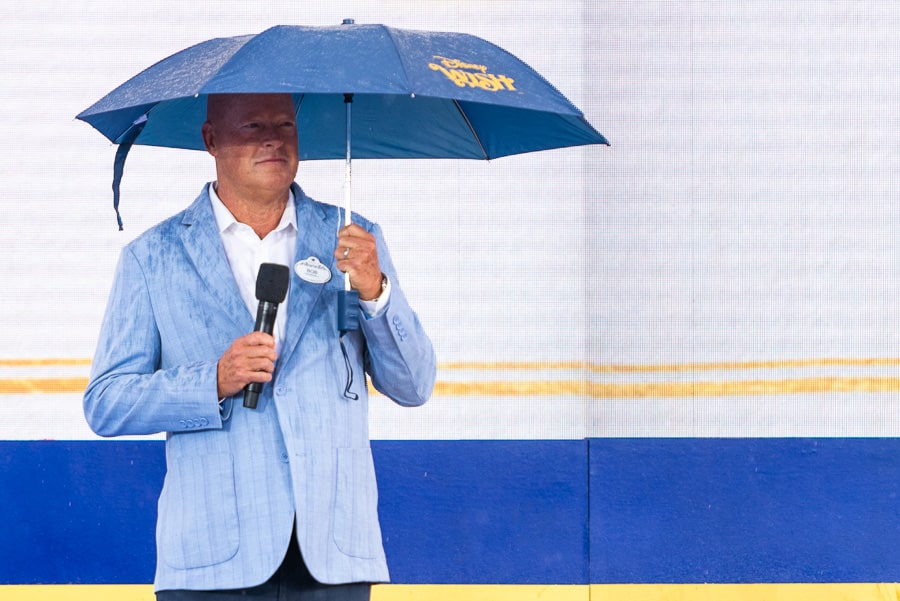
Bob Chapek was focused on keeping Imagineers on-time and on-budget. He “believed WDI had been allowed to operate without the same discipline required of the rest of the company.” This was supposedly an unwelcome culture shock for many Imagineers.
Among many other things, Chapek replaced co-heads of Imagineering, Bruce Vaughn and Craig Russell, with another veteran Imagineer, Bob Weis, and brought in new people to manage costs. “Senior financial executives were visiting WDI daily, sitting down to approve or disapprove budget items, even tiny ones, line by line,” Weis wrote in his memoir Dream Chasing.
The article shares that Shanghai Disneyland cost nearly $2 billion more than originally estimated and opened a year later than scheduled. Pandora – The World of Avatar cost $1.2 billion compared with an original budget of $850 million.
Later in the piece, Vaughn offers an indirect defense: “We’re very disciplined and we manage the budget and schedule, I think, excellently.” He explained that the challenge is, “There’s not a science to this. We don’t ever build the same thing.”
Chapek being a cost-cutter is hardly breaking news. It’s such common knowledge that I almost dismissed this entire WSJ article as another Chapek smear piece. Fun and accurate as those are, we’ve been down that path countless times. This time, the Chapek complaints seem more incidental. (My guess is that the article’s author heard a lot of ranting about Chapek when interviewing current and former Imagineers. There’s no love lost there.)
If anything, one of the aims of the article, at least from Imagineering’s perspective, is to demonstrate that it’s a more efficient and fiscally-responsible organization and less mistake-prone. That they are still dreaming big and pushing the envelope, but are also capable of restraint and deploying budgets effectively.
Based on conversations I’ve had, I believe all of the things above to be true. But the jury is still out on whether this goal translates to real results. It’s one thing to deliver Beak & Barrel or Test Track 3.0 on time and budget. It’s another entirely to do the same with Piston Peak or Pandora 2.
Imagineering is sincere in this goal, but I’ll still believe it when I see it. I can’t imagine it’s easy with these complex projects–it’s not as if WDI in the past has mindlessly spent money and is just now getting its head out of the clouds. There are valid reasons projects like these routinely go way over budget, and have for years.
Tomorrowland Reimagining Rejected
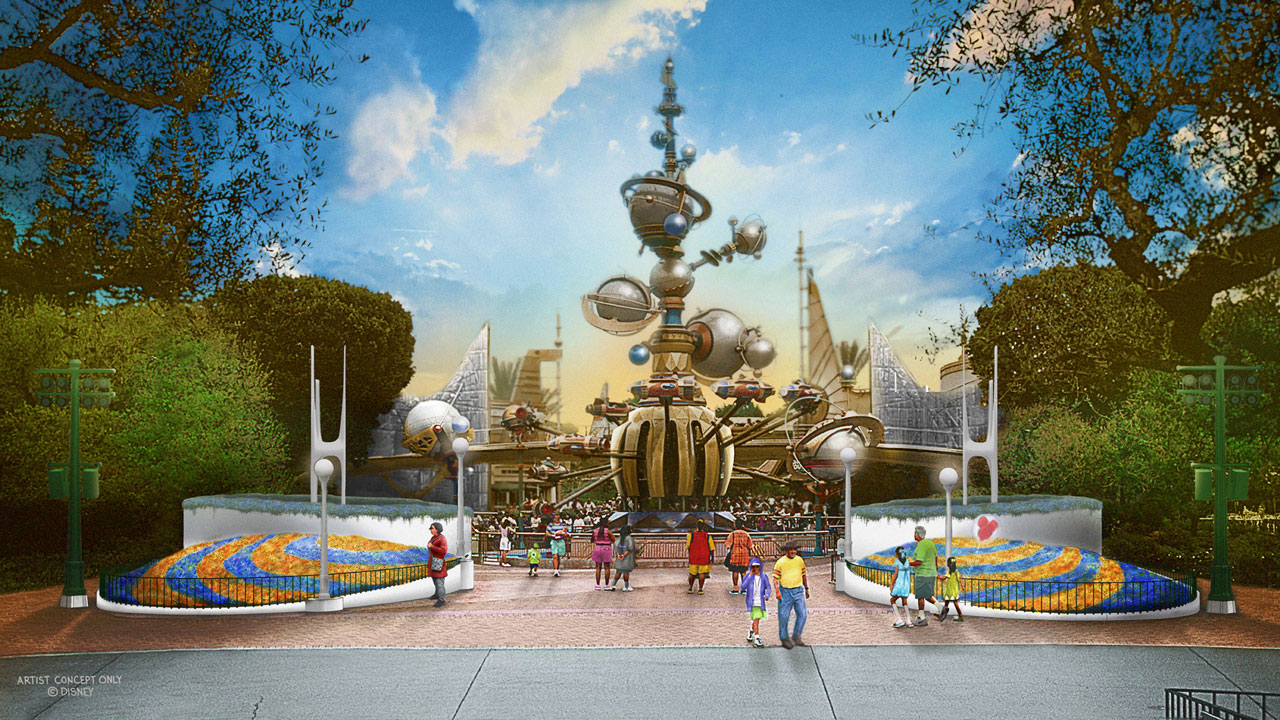
According to the article: “proposals by Imagineers to refurbish Disneyland’s aging Tomorrowland were also turned down, as executives calculated it wouldn’t do enough to increase attendance.”
Back in November 2019, Disney announced “A Great, Big, Beautiful Tomorrowland Entrance Coming Soon to Disneyland.” That entrance still has not come to fruition. The concept art had become so faded that they recently replaced–but didn’t remove–it. Despite persistent rumors, there have been no other announcements for Tomorrowland.
This one passes the smell test for me. Both that there have been pitches for Tomorrowland (probably several, given the credible rumors) and that executives have rejected them because they wouldn’t move the needle relative to cost and construction impacts. The sad reality is that Tomorrowland at Disneyland is insanely popular despite its big-time dead mall vibes.
I’ve lost hope in a wholesale reimagining of Tomorrowland. But I feel like the recent ‘singles & doubles’ projects underway in Tomorrowland and Animation Courtyard at Walt Disney World could serve as the template for a “make it less embarrassing and worthy of the Disney brand” caliber project out at Disneyland. The real mistake here would be letting Tomorrowland further rot in plain sight for another decade.

Imagineers Want to Build Original Attractions
It’s no secret that Disney CEO Bob Iger has an IP mandate for major theme park expansion, to focus on key franchises, whether from the company’s vaults or Pixar, Marvel and Lucasfilm. For evidence, see every domestic addition at Walt Disney World or Disneyland in the last decade, or Iger’s own comments.
Also unsurprising is this quote from the article: “At every all-hands meeting, I would be asked if we’d get to create new Imagineering original stories again,” said Barbara Bouza, who was president of WDI from 2020 to 2024 and is now an executive at architecture firm CannonDesign.
By and large, Imagineers love Disney history and theme parks. Ask their favorite attractions, and you’re going to hear a lot of instances of Haunted Mansion, Pirates of the Caribbean, “it’s a small world,” Jungle Cruise, Big Thunder, and disproportionately other classics. Maybe even a few instances of Mystic Manor, Sindbad’s Storybook Voyage, and other deep cuts from OG EPCOT Center and Tokyo DisneySea.
The ‘problem’ is that attractions and lands based on intellectual property are lower risk and higher reward. They’re easier to market. They have colossal pre-existing audiences. Easier for the merchandising machine. They are very clearly what the general public wants.
Many fans point to Mystic Point and Grizzly Gulch (Disney’s last original lands) as success stories, but that’s a misconception. It’s been Toy Story Land and World of Frozen that are most popular at HKDL. (Duffy honestly might be the better example there.) For more, see our commentary: Is Anyone Surprised Disney’s $60 Billion Park Investments Will Be ‘Almost All’ IP?

Imagineers Most Excited for Villains Land
From the article:
Some Imagineers say what they’re most excited about is Villains Land, an expansion of Orlando’s Magic Kingdom currently under construction. Though it will feature characters from “Snow White,” “Peter Pan” and “Aladdin,” it’s not based on a specific film. That makes it the closest thing to an original land in Disney’s U.S. parks in 25 years.
Concepts for this type of land have floated around for decades, and it’s probably a dream come true for many Imagineers to work on Villains Land. It’s much more open-ended, and has a lot of potential for creative freedom. It also presumably has a massive budget, so there’s that.
One thing I’d note here is that, by this same logic, Star Wars: Galaxy’s Edge is pretty close to an original land. When that land launched, we referred to it as Space Morocco. I don’t think we were the only ones who viewed it as more of a blank slate, with Imagineers having a ton of autonomy. (We now view that a little less positively–see Star Wars Land Needs to Break the Rules.)
Local-Level Delegation
From the article:
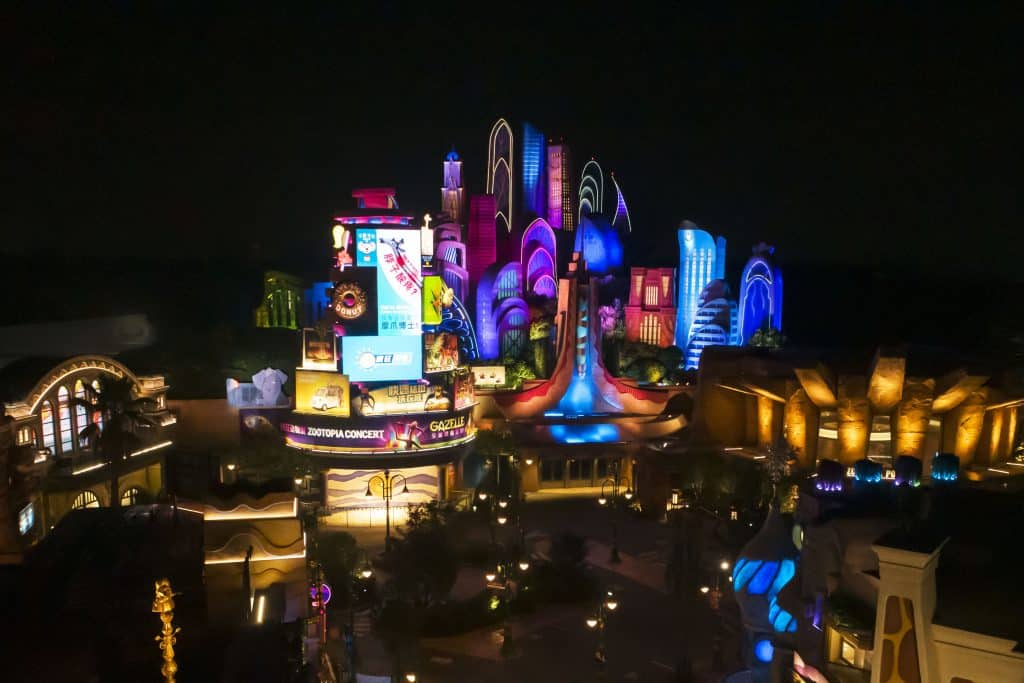
Vaughn has delegated power and resources to Imagineers who work at the company’s resorts in Orlando and overseas so they can handle more work themselves, from designing models to fixing quality issues. He said the move was inspired by Imagineers in Shanghai designing a new Zootopia land largely on their own when bosses in California couldn’t travel during the pandemic.
He’s also including colleagues from park operations, marketing and pricing earlier in planning so they’re aligned from the outset.
While there are a lot of interesting tidbits in the WSJ piece, the last two points are what prompted this article.

This delegation is absolutely happening, and it may seem like a little thing, but I suspect this is going to be hugely fruitful in the long-term. It arguably already has been for Walt Disney World in a lot of little ways.
Delegating this authority is a smart move because it empowers the site-level portfolio executives to get stuff done without the involvement of Glendale. Among other things, it means that Imagineers who are actually in Orlando can develop a rapport with Walt Disney World leadership.
Fans have this inflated opinion of both Imagineering’s stature and authority, presuming that park leadership hold the creatives in the same high esteem as fans do. Even if the article isn’t accurate as to every individual point, it should disabuse us of this misconception. There is no mythologizing or adulating WDI within TDO.
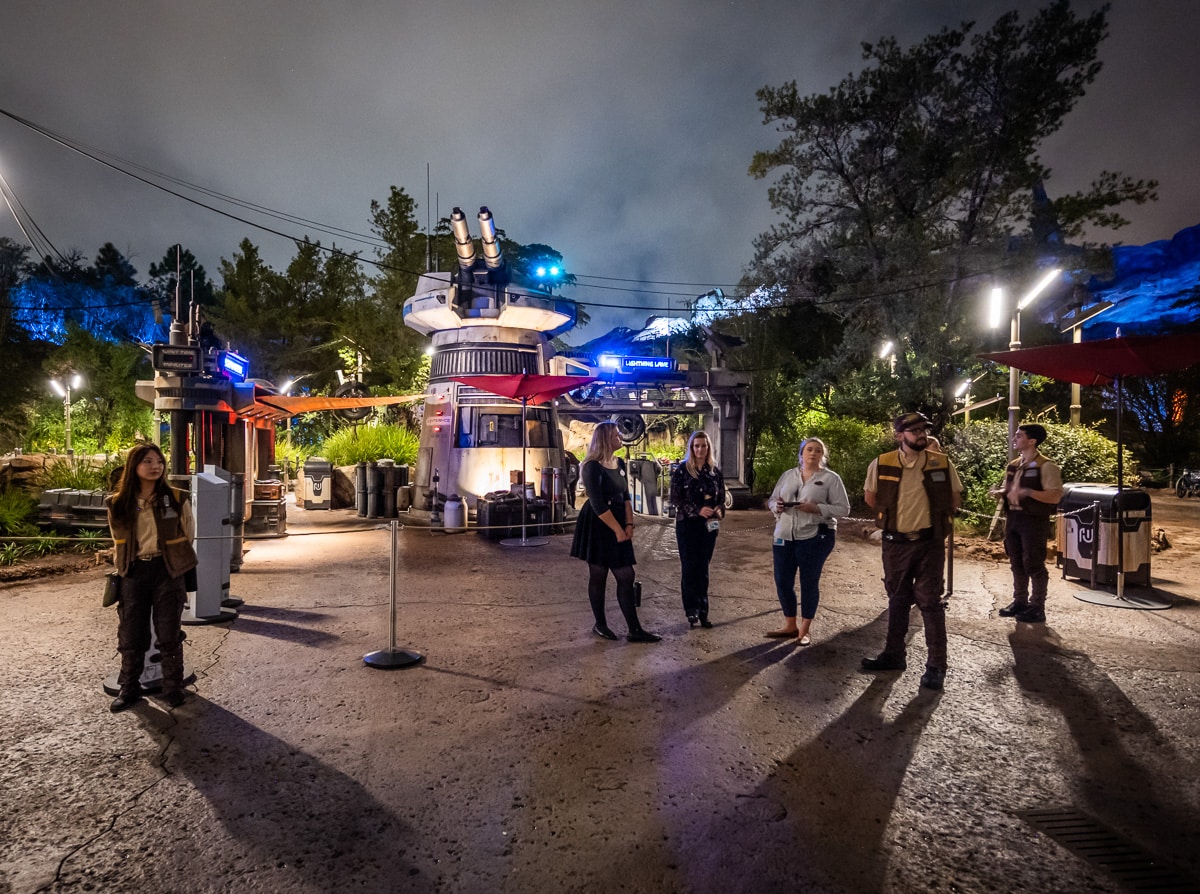
To the contrary, it’s not hard to imagine a (purely hypothetical) scenario where animosity might exist. Where the Walt Disney World team might grow weary of the hotshots from Glendale flying in with their expensive and operationally-unrealistic proposals. Projects that they won’t even be around to deal with after the hand-off happens, leaving future fallout and problems (along with the cost of fixing them) to the parks themselves. This is to say nothing of culture clashes, ego, etc. of the California and Florida teams.
Now contrast that with an empowered local-level portfolio team that lives in the community, and has a vested interest in the local parks where they take their kids. This team focuses exclusively on Walt Disney World, understands the unique needs and circumstances of this operational environment, and is able to foster relationships with those leaders. There’s probably still some conflict and unaligned incentives, but it’s nevertheless a recipe to reduce friction and facilitate collaboration.
I have no clue what’s happening behind closed doors in Florida. But I do know that the type of ‘singles & doubles’ projects that used to happen almost exclusively at Disneyland are now happening at Walt Disney World (and with greater frequency). The type of projects that used to be rumored as pitched, but shot down. While the big new lands and rides are fantastic, it’s actually this smaller stuff that has my attention, as it suggests there’s greater trust (or something) between Imagineering and Walt Disney World.
Mentorship is Back
Another detail from the article is that Vaughn has brought back retired Imagineers, such as Craig Russell, the former Chief Design & Project Delivery Executive, as consultants to mentor younger staffers.
This is something that’s been hinted at elsewhere, with Joe Rohde’s return as well as that of other high-profile ex-Imagineers returning as consultants or to assist with projects. We’ve heard that there’s a lot of this happening, beyond just the most prolific instances.
We’ve also heard that one of the biggest impediments to gearing back up for big projects–and multiple of them around the globe–is that Imagineering didn’t have enough people with the requisite experience. That so much institutional knowledge had been lost, along with the people capable of helming those projects. That WDI needed to staff up, and fast, with a lot of on-the-job training.

We’ve repeatedly discussed this (potential future) problem since the parks closed and furloughs began. From November 2020:
Most of the old guard with strong connections to Walt Disney Imagineering’s historic legacy are gone. Some of the new public faces–including those in high positions–don’t have many projects on their resumes. To be sure, there are no doubt many highly talented individuals still working in Glendale and Imagineering’s other offices. It’s also not the worst thing for fresh faces with new ideas and ways of doing things to be given a chance at innovating.
As with Walt Disney World, it’s just a little disconcerting how much institutional knowledge Walt Disney Imagineering has lost in the last several months (even the last several years). It also doesn’t exactly bode well for the development cycle and what’s on the horizon in the decade to come. We already knew that not many new projects would be started at Walt Disney World or Disneyland anytime soon, but the downsizing at Imagineering only further reinforces that.
Similar sentiment was expressed in countless other articles, including the mistake of forced relocation to Lake Nona. The negative ramifications of losing seasoned employees have been evident at Walt Disney World and Disneyland over the last ~6 years. The loss of institutional knowledge has resulted in perplexing decisions, from the use of non-durable materials in designs to maintenance woes.

This is not just an Imagineering issue–it has also resulted in maintenance and other woes as those teams were decimated. Instead of the old timers who had honed their craft in the field over the course of decades retiring in an orderly fashion and mentoring the younger generation on-the-job over time, several years’ worth of retirements were accelerated into a multi-month window that was abrupt.
Following the furloughs and botched Lake Nona move, it’ll take years to rebuild certain departments, Imagineering included. There will be growing pains along the way. The upside is that, a decade from now, there is going to be a generation of seasoned Imagineers who are still young and just entering the prime of their careers with a ton of experience under their belts. If that talent is properly cultivated, the 2040s and beyond could be like the run previous generations had building Disneyland ’66, Walt Disney World and Magic Kingdom, EPCOT Center, and Tokyo Disneyland.
Planning a Walt Disney World trip? Learn about hotels on our Walt Disney World Hotels Reviews page. For where to eat, read our Walt Disney World Restaurant Reviews. To save money on tickets or determine which type to buy, read our Tips for Saving Money on Walt Disney World Tickets post. Our What to Pack for Disney Trips post takes a unique look at clever items to take. For what to do and when to do it, our Walt Disney World Ride Guides will help. For comprehensive advice, the best place to start is our Walt Disney World Trip Planning Guide for everything you need to know!
YOUR THOUGHTS
What do you think about these Imagineering ‘revelations’? Is what we’ve learned from this WSJ article mostly positive or negative–or a mixture of both–for the future of Imagineering and Disney fans? Or is it all a bunch of fan-fic from spurious sources? Do you agree or disagree with our assessment? Hearing your feedback–even when you disagree with us–is interesting to us and can bring a fresh perspective to the table, so please share your thoughts below in the comments!


Good analysis and well written! What are singles and doubles?
Baseball analogy. A “single” or “double” is a small, low-cost improvement. A “homerun” would be a major new attraction or land.
I appreciate the emphasis on the human elements inherent in team management and executive leadership, particularly when navigating complex projects. While interpersonal friction and discomfort are inevitable, competent and confident leadership is essential for rebuilding trust and easing organizational anxiety during periods of transition.
This type of analysis is what differentiates this blog and what I come here for. (Also beyond my expertise to weigh in on the future of WDI.) I just wanted to make a point about budgeting, wich is the single PTSD inducing memory from my conglomerate days. In large organizations, budgets are probably most correlated with placating executive preferences and talking points, rather than uniform application. But be as it may, once numbers were finalized, I have never in my many years witnessed a situation where significant stakeholders felt that it was overly generous and achievable year over year. That just wouldn’t make sense when rolling everything up and then driving operational implementations.
Public portrayal may be a different story, as budgets are fairly meaningless without context. Non-insiders can’t judge what was the original intent and what is measured against it. So from my experience, consistent outperformance points to a load of crap.
The “IP mandate” continues to make me depressed – for us and for the current imagineers. I’m not against IP incorporation into the parks…I don’t think anybody can say they are, as it’s obviously been around since Disneyland opened. I get the business side and synergy, I get that people want to be immersed in their favorite movies. (I would actually LOVE for Tokyo’s Beauty and the Beast ride to find a home at Magic Kingdom…without destroying something else!) But I wish the current approach was more balanced, like 50% IP and 50% original stories, and that more thought was put into where, how, and what IP is inserted.
As a total outsider, I wonder if WDI currently has the chops to create new things that are of the same caliber as Haunted Mansion or Pirates. I don’t know how often people like Walt and his original imagineers come along, and maybe that’s part of the issue at play. But for Disney leadership to essentially eliminate new original storytelling from the parks and not fully trust its own creatives seems so wrong and harmful. Business metrics and profit shouldn’t be the ONLY motivations…the people running the company should always have legacy, creativity, and long-term growth in mind as well. They have a responsibility to protect, maintain, and expand upon what makes the company and its parks exceptional. I fear for Disney (and the future of our country, world…everything, really) when all that matters to anyone with actual power is short-term/personal gain instead of doing things for the sake of being right, good, beautiful, enriching (not monetarily)… I’m not trying to be pessimistic or vulgar here, but I can’t think of a better term than “ensh*ttification” to describe so much of what we’re experiencing right now, both related and unrelated to Disney.
I figured that Imagineers have to go through the same … processes that engineers have to do elsewhere to design and construct complicated projects, but it’s nice to see it made public. (To be fair, there might be some jealous Entertainment executives throwing Experiences under the bus in that article, and not just standard “management vs project team” pressures.)
Also, Tom’s caveats about baselines, whether inflation is included, scope, etc. is important, but just walking around the public areas of Pandora made me assume that it was a significant project, not only in size, but also in complexity. A cost growth of about 40% seems the opposite of excessive – I’m very impressed! Did a lot get cut from the original design, or was it designed with a simpler level of technology than it appears?
Not sure to make of the article in general, although one overarching theme seems to be that the parks are finally being treated as the golden geese that they are, and not a curious anomaly to be squeezed in order to fund streaming.
Another great article and analysis Tom. While I’d like to think they’re on the path to correcting prior mistakes, I’m skeptical given past performance. And with a very long view of Disney (I was born the year Walt Disney first appeared on TV), I’ve been increasingly disappointed that new projects have been limited to existing IP. Part of the magic for me has been the original attractions – I’m less enamored of Star Wars, Marvel (although I love the Marvel universe), Encanto, and many of the newer properties. I went to Disneyland this year for the first time in over ten years (two days was enough), and just spent 7 days at Disneyworld including attending both parties. I have to say I found both parks less magical than I used to, and the value proposition wasn’t there either. So from that perspective I’m sorry to read about the future development plans. Of course, at my age, I won’t be around to see most of the future development but in the near term, I have no plans to return to Disney any time soon. That’s contrasted with three years when I lived in San Diego between 2007 and 2010 and had an AP. I never tired of going to the park. This year, the six days I was in the WDW parks was almost too much – and it’s very disappointing. The new attractions, the rising costs, the nickel and dimeing, loss of perks that used to be standard all contribute and I don’t see those things changing. Mostly it just makes me sad but then I’m hardly the target demographic either.
Hi Tom! Could you please elaborate on how Shanghai Disneyland was so critical for Epic Universe? Curious to hear more on this. Thanks for all you do!
I will do my best, though I haven’t been to either park (I used AI a bit to help research):
1. Shanghai Disneyland was the first park built with the massive scale of 21st-century logistics in mind, costing ~$5.5 billion. That may have seemed like a crazy high amount on a somewhat risky venture, but the success of Shanghai proved to Universal that it could be “worth it” to build a brand new mega-resort from scratch.
2. The “immersive hub” model that Epic uses was pioneered on a grand scale by Shanghai Disneyland. Essentially, Gardens of Imagination = Celestial Park. There are also new technologies and design practices from Shanghai that inspired elements/attractions at Epic.
I think #1 was probably Tom’s main point here, but I know he’s spoken to point #2 above, as well.
I was thinking the exact same question!
Another great article, Tom!
One of my best friends was recently at a conference where an Imagineer (based out of CA) who is working on the Dubai project spoke. During the speech, she mentioned that one of their biggest challenges was planning a park around the weather in Dubai and how they were going to manage the heat. Afterwards, my friend was able to speak with her, at length, and asked, “When you figure out how to handle Dubai, can you please transfer that knowledge to Florida? Dubai may be the surface of the sun, but Florida is the molten center of the Earth and the Californian Imagineers don’t seem to know anything about shade.”
Let’s hope that moving some of these Imagineering decisions to the onsite teams helps in that area, too, lol.
I think there is a typo in this sentence (word in all caps/added for emphasis)
“The article opens with the story of the Disney Adventure, which was the partially-BUDGET Global Dream cruise ship that Chapek acquired for pennies on the dollar–a total cost of just $40 million.”
is it meant to be “partially-built”?
One other note relating to lost institutional knowledge/experience — I agree that this certainly has been a big blow to WDI operations and output. But as Tom has mentioned here and elsewhere, the state of imagineering across the globe is so different today than in the 50s and 60s when the first imagineers basically “invented the game”, and then into the 70s and 80s when WDI was the main player. Now there are all types of career paths for imagineers and a lot of the “lost” talent is either still working somewhere in that capacity (Universal, etc.) or available to return in a consultative capacity (e.g., Joe Rohde). If Disney is willing to pay and make any necessary amends, they can get back a lot of what they’ve lost.
But what’s really different now than a generation or two ago is that there are now dedicated college “imagineering training” programs. I was absolutely FLOORED last year on my first visit to the Savannah College of Art and Design (SCAD, learning about their Themed Entertainment Design degree program, which counts WDI alumni among the faculty. Their “SCAD Story” intro program is itself a Disney-level 4D immersive experience that is highly imagineered to convey the school’s history and mission (a MUST DO if you’re in Savannah, and totally free). And of course I know other colleges have similar programs, but SCAD seemed pretty awesome and it gave me a lot of hope for the current/next generation of imagineers who are entering their professional careers with an educational foundation that the OG crew at WDI could never have dreamed of. (Not saying that you need a degree in the subject to be an incredible imagineer, just that there is a “feeder system” that is churning out some impressive “entry level” WDI candidates!)
I think they need to bring back the Disney College Program to Disneyland but make it for students who want to become Imagineers. That way they could learn the operational side of a theme park which would help to make better experiences in the future. Make it a small, niche program that is very competitive to get into so that you have students who are very passionate about becoming an Imagineer.
Thanks for this great detailed write-up. I work in tech and see a lot of parallels between the world of Imagineering and the world of software development. At tech companies you’ve often got executive and sales teams pushing for new products and enhancements they can market and sell, and product managers, developers, and user experience (UX) specialists who “live in the product” and are often closely in touch with the end users.
At a typical software company, what the exec teams want (whether it’s the right strategy or the wrong one) is often totally misaligned with with what the dev teams think is best, and the cool new features and improvements their creative minds might be thinking up. Those deeply invested in the product want it to shine, while leadership needs to grow the business and attract new customers.
This can create a lot of tension! There’s a concept called Minimum Viable Product (MVP) that steers planning discussions but creative and quality-driven people can have a hard time stomaching their aspirations being stripped down into something that’s “minimally viable.” I’ve literally witnessed a team of user experience experts get fired en masse because their continued harping on doing things the “right” way was “slowing us down and distracting everyone from our common organizational goals”.
So while I don’t know what went down with Bruce Vaughn, it wouldn’t surprise me if the Chapeks of the company were saying things like “it’s just China, why can’t we just use cardboard cutouts, cheap materials, projections, etc.” in Shanghai — and Bruce’s team held firm on delivering more than just an MVP — they wanted the park to reflect the best Disney (and themselves, and their legacies/portfolios) could offer. But in the vast majority of organizations, the money side wins. Things only work well when there’s compromise, mutual respect, and leadership understands that quality, ambition, and attention to detail actually do resonate with customers and drive retention, brand reputation, and sustained economic success.
The first three paragraphs mirror things I’ve heard previously, including with literal software development (original Genie was rushed to market).
I don’t think that’s what happened with Shanghai. It was an Iger legacy project, and they had already learned lessons from HKDL and DCA 1.0. It was also a statement project for the Chinese government, which provided (roughly) half of the funding. The park had a healthier budget as a result of all of this. Despite that, it still went over-budget and fell behind schedule. I don’t know the *full* story of what went down, but my superficial understanding is that someone had to be held responsible for that, and it was Vaughn.
My understanding is that Vaughn, Iger, and D’Amaro all have a great relationship, so I doubt there was much animosity in the previous parting. Or if there was, it was aimed exclusively at Chapek (as head of Parks, not CEO).
My understanding original cost estimate for Shanghai was based on the “opening day half-day park” model. While I’m sure there was the same cost growth experienced on complicated engineering development and construction projects, a lot of growth occurred because of the executive decision to change direction in the middle of things and have a bigger and better park on Day 1. (Blaming Imagineering for management decision making because the latter keep pushing off things that have to be done is also apparent elsewhere in the article; executives decided they wanted to have more “singles and doubles” rather than fewer “grand slams,” not imaginary mind-controlling engineers who enjoy repeatedly having to beg for more money.)
Pete, the idea of MVP as a metaphor is a brilliant one that I wish I’d considered. I’d love to hear your take on the original DCA design that wasn’t done by Imagineers!
Great article with reasonable conclusions. This new Disney Decade is extremely ambitious
considering the current staffing/experience level challenges. So we end up with (what
looks like) gloriously old-school design for Villains’ Land and a perfunctory, off-the-shelf
looking new Spiderman coaster in Shanghai. So it’s going to be a mixed bag for the next 5 years or so.
Optimistic about the mentoring and more “independence” for WDW. Fingers crossed.
I would hazard a guess that there’s a reason why they dusted off the plans for the Monsters, Inc. Door Coaster and are revisiting Indiana Jones Adventure.
It’s not like WDI lost everyone in 2020-2021, either. The Villains and Piston Peak teams have plenty of experience and talent–they “get it” too. The core team that did Fantasy Springs at Tokyo DisneySea is now overseeing Disneyland. The Marvel stuff also has veterans on it. I can’t speak to most other projects, but that alone is all positive.
Encanto and Coco are going to be really interesting as nearer-term projects, but honestly, what (little) I’ve heard about both has me reasonably optimistic.
I think all we can really hope for is they are genuinely trying to “ right “ the mistakes and villians land, piston peak and the like will be amazing- oh and be built before we are dead lol