
Disney World Record Guest Spending, Genie+ Popularity, Food Portion Cuts

Disney reported its fourth quarter earnings for July through September 2021 on an investor call held by CEO Bob Chapek. This post covers the good, bad & ugly of these results, including a sharp spike in per guest spending at Walt Disney World, uptake of the paid Genie+ service, possibility of reducing food portions to save money, and more.
Let’s start with the numbers. The fourth quarter of the Walt Disney Company’s fiscal year (or the third quarter of the calendar year) is another quarter of positive results, especially as the previous year offers an abysmal comparison due to ongoing closures and soft attendance last year.
Despite that, the Walt Disney Company missed Wall Street estimates across the board during the quarter, sending the stock down more than 4% in after-hours trading. Forecasts called for revenue of $18.79 billion, but the actual total was just $18.53 billion. Earnings per share for the quarter were 37 cents versus 51 cents expected in a survey of analysts. However, the biggest culprit for Wall Street’s disappointment wasn’t simply the numbers–it was the slowdown of Disney+.
Disney announced added 2.1 million subscribers, which is down from 12.6 million added the previous quarter. The number was well short of Wall Street expectations, with average forecasts estimating 10 million new subscribers. Analysts on average expected Disney Plus to reach 126.2 million subscribers for the quarter. Instead, Disney+ had 118.1 million paid subscribers worldwide.
Slowing growth was also the story of earnings calls for most other legacy media companies. During their recently-concluded quarters, AT&T’s WarnerMedia (HBO Max), ViacomCBS (Paramount+), and NBCUniversal (Peacock) all added fewer new subscribers than anticipated. Only Netflix bounced back this quarter, reporting 4.4 million new subscribers as compared to just 1 million in its previous quarter.
Content and competition are the stories there, as is the reality that people are no longer stuck at home. While Netflix has a non-stop pipeline of original content, the legacy companies all scrambled to launch streaming services powered by their massive libraries and have struggled to add new content at an acceptable pace for consumers. Chapek acknowledged this during the call, and also offered reassurance that the massive slate of original programming announced last year will soon start to pay off with regular releases from Marvel, Star Wars, and more.
Of particular interest to us is Parks, Experiences and Products (or Parks & Resorts). Revenues for the quarter increased to $5.5 billion compared to $2.7 billion in the prior-year quarter. Segment operating results increased $1.6 billion to income of $640 million.
However, that $640 million profit isn’t all Parks & Resorts–it’s also consumer products. For some reason, the stuff sold at Target is lumped together with theme parks. And that stuff sells like hotcakes, accounting for $618 million of that income. Domestic theme parks “only” made $244 million, whereas the international parks lost $222 million. Still, that’s significantly better than the $1.5 billion the parks lost in the same quarter last year.

The earnings document also revealed that capital expenditures decreased from $2.9 billion to $2.3 billion year-over-year, driven by the temporary suspension of certain capital projects. Capex decreased for Walt Disney World and Disneyland year-over-year by $548 million, and for all of the international parks combined by $84 million.
While this is a year-over-year downturn, spending has increased in the last couple of quarters as projects have started to resume and kick into higher gear. Work has resumed at Epcot and on Tron Lightcycle Run. For the international parks, the Zootopia expansion at Shanghai Disneyland, Arendelle: World of Frozen at Hong Kong Disneyland, and the expansion of Walt Disney Studios Park at Disneyland Paris are all underway again.

While discussing the theme parks business and its “yield management strategy,” Chapek spoke a bit about Walt Disney World’s newly-launched Genie service.
“The response to the [Genie] service in just its first month has been extremely positive. The majority of Genie and Genie+ users said it improved their overall park experience with nearly one-third of park guests upgrading to Genie Plus, making it possible for them to spend less time waiting in line and more time enjoying attractions, entertainment, dining, and retail opportunities. We’re very encouraged by what we’re seeing. We look forward to launching Disney Genie at Disneyland very soon.”

During the Q&A, Chapek again emphasized the utilization of Genie+ thus far at Walt Disney World: “I’m not sure if everyone appropriates the gravity of this to the Genie+ success. One third of the guests at Walt Disney World are buying the Genie+ upgrade. That’s $15 per guest, per day. That’s a marginal increase in per cap and margin.”
The company is no doubt pleased with the rollout thus far of Genie+, as it’s essentially new revenue from nothing. Utilization of MaxPass at Disneyland was actually higher than this, and we’d expect the number to increase over time–especially during busier times of year and once there’s a yearly Annual Passholder add-on available for purchase. The sweet spot is probably around 50% of Walt Disney World guests–anything higher starts negatively impacting the usefulness of the service, and thus, guest satisfaction.
Disney CFO Christine McCarthy stated that at Walt Disney World, guest spending per capita again was “very, very strong” in addition to improved yield management. This has been a familiar story of reopening, with her repeatedly calling guest-spending gains “exceptional” and saying the results have far surpassed expectations a number of times.
During this call, Disney quantified the increase in per guest spending, with Chapek stating that “we’re seeing an incredible 30% increase in per caps” versus 2019. Keep in mind that this was for the fiscal fourth quarter, which is before Genie+ launched.
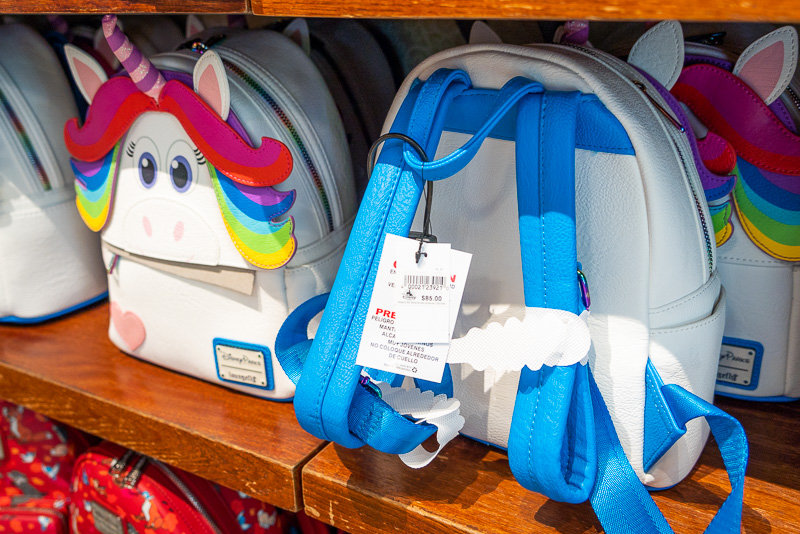
The increase in per guest spending should be unsurprising–you don’t even need to follow earnings calls to observe it. Despite discounts being virtually nonexistent, resorts are booking up for most nights through the end of the year. The effective prices of everything else–from tickets to food to souvenirs–is all up. On top of that, merchandise is flying off of the shelves and Advance Dining Reservation availability is minimal for most table service restaurants.
This isn’t unique to Walt Disney World. Hospitality companies around the country are reporting similar spikes to per guest spending or average daily rate (ADR), with numbers that are off the charts as compared to 2019. There is a ton of pent-up demand working its way through the industry. Most of the target demographic for these destinations spent less and saved more while being stuck at home, while also receiving stimulus money. Obviously, this isn’t true for everyone across the board, but it is statistically accurate for the bulk of Walt Disney World’s middle to upper-middle class visitor profile.

During the Q&A, McCarthy was essentially asked whether this was sustainable. In response to that, she noted that Walt Disney World and Disneyland are still operating under “capacity constraints.” This is something we knew to be true, but it’s not something Disney has discussed in several months.
At this point, neither California nor Florida have caps on attendance or hotel occupancy. This is almost certainly driven entirely by staffing. As has been noted countless times, there are still many key positions the company is having trouble filling on both costs, which are a limiting factor on overall bookings.
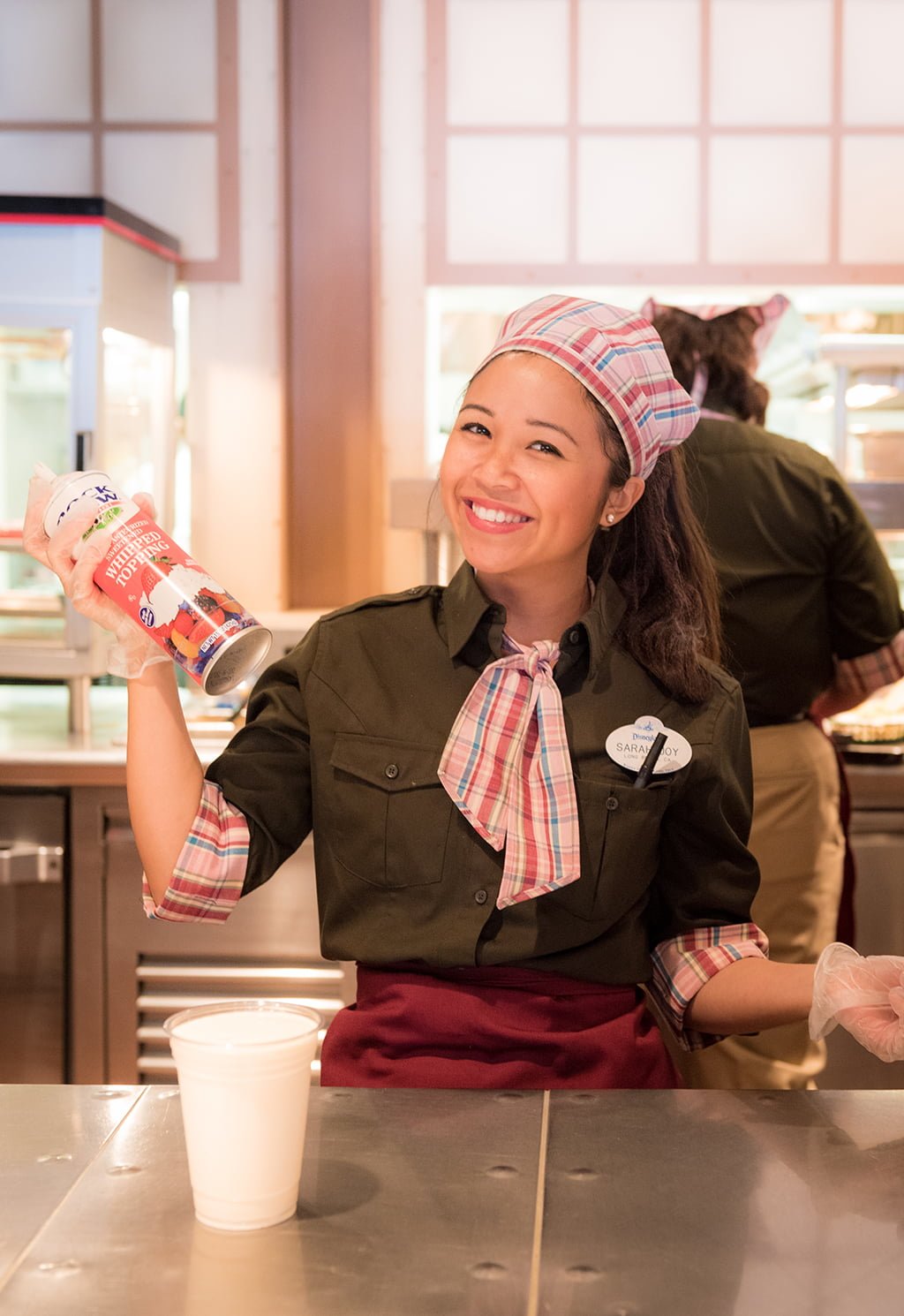
Unsurprisingly, this is undesired by Disney, which is doing job fairs and offering huge hiring bonuses for these positions in an attempt to get things back to 100%. Once that happens, it’ll be interesting to see what happens with discounting and per guest spending.
More ‘supply’ coupled with pent-up demand burning off could put a damper on those numbers. That’s my commentary, not anything from Chapek or McCarthy. The company expects per caps to continue running hot thanks to Genie+ and yield management strategies.

McCarthy also fielded a question about operating expenses and margins, stating that the company has done a lot of work on fundamentally changing some of the ways it does business on both the revenue side and the cost side to optimize margins. She noted that for the fourth quarter, the overall margin is just under 12%, which is well below 2019 levels.
McCarthy went on to say the company believes it will not only get back to past margin levels, but also have “a high probability” of exceeding those previous margin levels in the parks because of the some of the things that they’ve done.
She mentioned date-based ticket pricing, strategically managing attendance, mobile food ordering, contact-less check-ins at the hotels, and virtual queues in support of this. She also said Disney is looking at “physical park improvements that allow for better guest movements throughout the park.”

As a quick aside, it’s worth emphasizing that margins are “well below” historic levels despite the aforementioned significant increase in per guest spending and cost-cutting measures. That right there should put to rest all of the specious claims that Disney actually wants to reduce attendance and cater to higher-income guests.
It’s undeniable that Walt Disney World wants people to spend more money, but they also need volume. They can’t target the rich because that doesn’t scale; Walt Disney World is decidedly a destination for the middle class, and the company is dependent upon those consumers. The “reduce attendance” talking point is just that–and what the company uses to justify price increases. If Disney could sustainably double ticket prices and attendance, they absolutely would.
McCarthy was also asked about the impact of inflation on Walt Disney World and Disneyland. She started by saying this was a question that’s on the minds of every CFO and senior management team running companies in the United States, noting that Disney is watching inflationary pressures and trying to manage them.
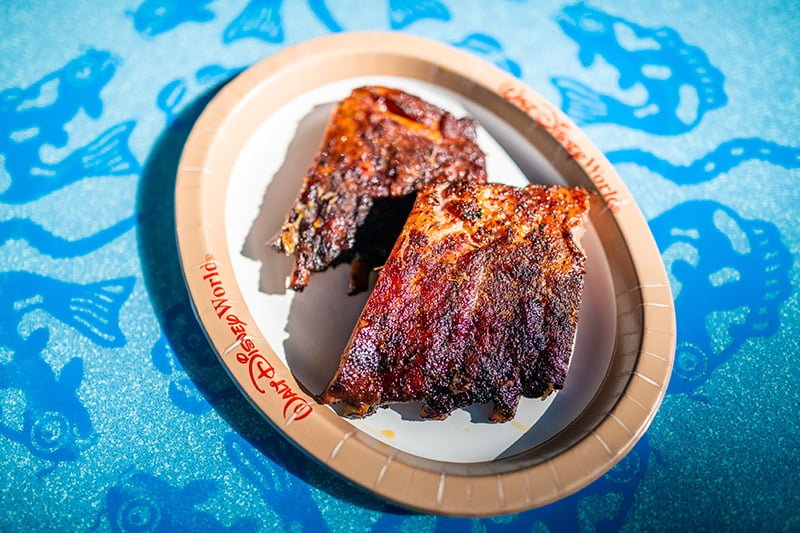
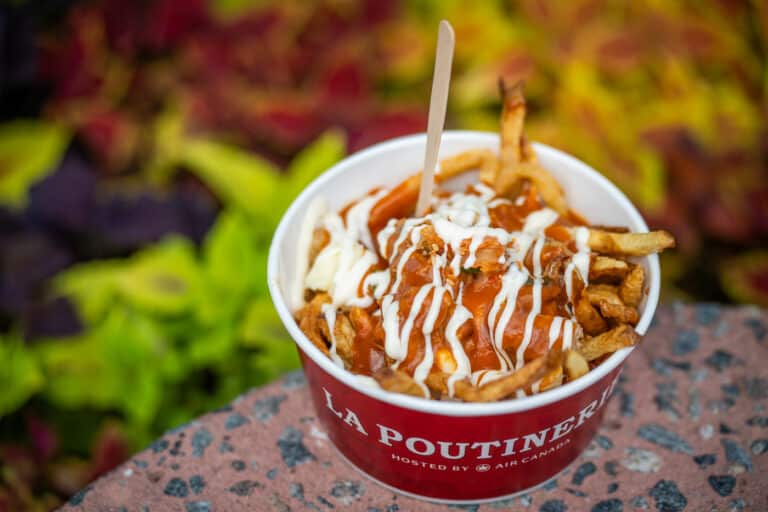
As for how Disney could cut costs, here’s what she said the Parks & Resorts senior leadership team had discussed: “We can adjust suppliers. We can substitute products. We can cut portion sizes, which is probably good for some people’s waistlines. We can look at pricing where necessary. We aren’t going to go just straight across and increase prices. We’re going to try to get the algorithm right to cut where we can and not necessarily do things the same way. We’re producing technology to produce some of the operating cost. That gives us to absorb some inflation. We’re trying to use our heads here to come up with a way to kind of mitigate some of the challenges that we have.”
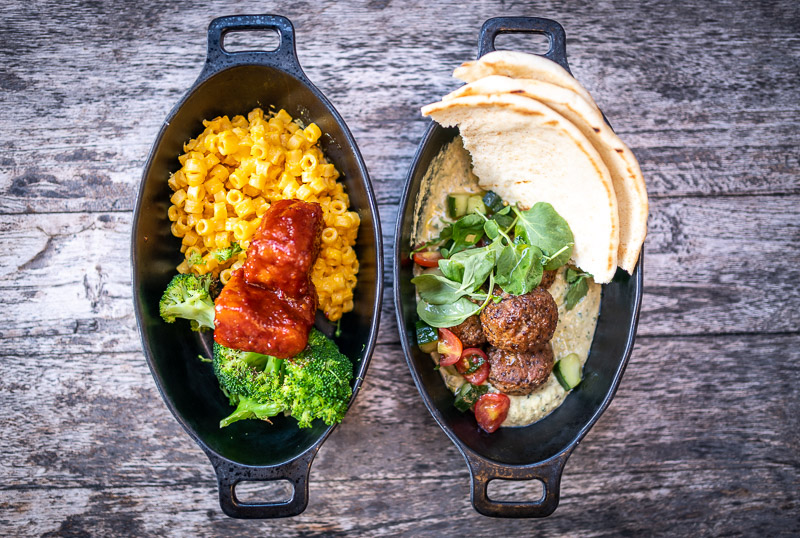
Some of this has definitely already happened, and has been over the course of several years. Portion sizes have become noticeably smaller post-reopening, with quality cuts along with them. Personally, I wouldn’t take much issue with this if there were a corresponding decrease in prices. Food waste is definitely a problem (we cringe a little when dining at WDW’s family style restaurants) and portion sizes in the United States are, across the board, larger than those in international markets.
But that’s not what this is about and we all know it, so let’s not pretend otherwise. Heck, even Disney acknowledged as much with the framing of this in terms of cost-cutting and minimizing the impact of inflation on margins. There’s certainly a conversation to be had about heath and wellness initiatives as well as food waste, but this isn’t it. This is all about saving the company money.

Ultimately, it’s always interesting to listen to these earnings calls to get an idea of the company’s results and expectations for the future. While there was no bombshell news during this one, it was particularly illuminating on the topics of per guest spending, cost-cutting, and margins.
Of course, the company always puts the most positive spin on the results–that’s the nature of the beast in attempting to assuage investors. It’ll be interesting to see whether per guest spending actually can maintain or exceed the incredible 30% growth over 2019 levels, even as Walt Disney World and Disneyland return to full operational capacity.
Personally, I’m skeptical. It already seems pretty clear that pent-up demand and inflation are both going to continue playing out into early 2022, but for how long beyond that is up in the air. At some point, the money people saved while spending a portion of last year stuck at home is going to run out, consumers will return to being more cost-conscious and price sensitive, and things will largely normalize. Even with the return of international guests providing a second spike, my guess is that improved capacity in tandem with pent-up demand fizzling out will knock that 30% down to a more reasonable number, even taking into account Genie+ and whatever upcharges the company cooks up between now and 2022.
Planning a Walt Disney World trip? Learn about hotels on our Walt Disney World Hotels Reviews page. For where to eat, read our Walt Disney World Restaurant Reviews. To save money on tickets or determine which type to buy, read our Tips for Saving Money on Walt Disney World Tickets post. Our What to Pack for Disney Trips post takes a unique look at clever items to take. For what to do and when to do it, our Walt Disney World Ride Guides will help. For comprehensive advice, the best place to start is our Walt Disney World Trip Planning Guide for everything you need to know!
YOUR THOUGHTS
What do you think of Walt Disney Company’s fourth quarter earnings and future forecast? Thoughts on the company’s claim that ~33% of Walt Disney World guests are upgrading to the Genie+ service? What about the sharp spike in per guest spending? The plan to reduce portion sizes? Are you worried about the future of Walt Disney World, Disneyland, or the company in general? Think things will improve in 2022? Do you agree or disagree with our assessment? Any questions we can help you answer? Hearing your feedback–even when you disagree with us–is both interesting to us and helpful to other readers, so please share your thoughts below in the comments!



It will definitely be interesting to watch this play out over the next couple of years. They may be enjoying a nice increase right now, but as you said, a lot is due to COVID cabin fever combined with stimulus money & a year of saving money. The constant nickel and diming everything is starting to get a lot of people very irate from comments I’m seeing across a lot of blogs and vlogs. I know, for us, this will be our last year going to Disney, and that’s sad because we’ve gone almost every year since 2013.
Disney finally renewed its military discount for 2022 & the ticket prices went up about 33%. That’s a hefty price increase. And with no more complimentary Magical Express & FastPasses, it’s just too much. We’ll probably spend more this year than we usually have, but it’s because we know we won’t be going back to Disney, so we’ll get it all in now.
But I’m definitely going to be watching how Disney’s numbers compare to Universal’s in a year or two. Universal seems to be what most people have said they’re going to start going to. And right now, Disney isn’t even close to touching their military discounts.
These earnings calls are always fascinating to me, but make me feel a little dirty afterwards. These are the things people point to when they say Disney sees us as dollar signs and not guests.
Thanks for breaking it down for us. I’m most interested to see where the G+ usage settles, especially in busier times. The holidays should be enlightening for that.
Disney CEO, Chapek , could care less about guest Genie advantages. He is only concerned with maximum advantage to his shareholders. The rip off cost of the Merriest and the plan to cut meal portions is disgraceful! This attitude will be successful in the short term, but is alienating many loyal guests, myself included.
Any insight into why wdw not taking reservations in 2023 yet?
Sorry to leave a second comment! I was just going to say I am fine with some of the portion sizes being reduced, buy my over 6′ teens and husband would be upset! I honestly have to toss half my food at most places when I’m not splitting with someone, but I’m small and probably that’s not typical. I hate food waste as well. Many times i just eat a kids meal for lunch, if it isn’t just chicken fingers. When my teen and I go to Chick Fil A it now costs us $25 to eat lunch for the 2 of us. I’m anticipating fry box sizes getting smaller any day! It’s got to be tough to run food service when the margins are so small already.
Our trip in a few weeks is to use the tickets we bought in May 2020. When we changed dates, the cost was the same for the tickets, so we didn’t pay extra. I had purchased those tickets third party, so I saved several hundred dollars. We are using the Disney Visa rewards that have been saved up since our last trip in May 2018 and Landry’s gift cards we got from another credit card reward program for a good bit of our food budget. My kids are using their gift cards from holidays to do the droid depot and I don’t really plan on getting a whole lot of souvenirs otherwise. We may buy a couple of days of Genie+, but that is being taken out of the extra we put aside for the Christmas party we are now not going to due to the cost. The only thing that did go up, because we lost our discount from May 2020, was the Disney hotel. We are staying at a value resort, so it wasn’t the worst. Disney really isn’t making that much more on us than they would have in 2020. And I’m still cost conscientious with a family of 5.
This is our last trip for a long time and I probably wouldn’t have taken it if it wouldn’t have been for non-refundable tickets.
Food costs are just insane. They have to pass that along. Inflation is really nothing but a massive tax on the lower and middle class. It’s honestly going to get much worse if we continue down the path we are on. Prices on food in my area (which is the south – not that expensive normally) have basically reached what I call “Disney prices”. When my local BBQ joint costs $17 for lunch, which is what i call “Disney lunch price” you know that something at Disney has to give. I think they know that they can’t yet go up to $25 for a hamburger fries and a drink, so they are doing what everyone else is which is cut the portion sizes. Kraft just announced a 20% increase in all pricing for 2022. It’s not a Disney problem, it’s US problem and it just hurts more at Disney because it was already a splurge. Great article and great recap. I find the 30% using Genie plus number very interesting and agree it will continue to go up.
Shrinkflation & skimpflation come to Disney. McCarthy’s comment about waistline could have been left out- most likely an attempt at humor but…. Somehow that doesn’t jive with the Disney keys for me. We’ll be back at Disneyland in a couple of weeks so we’ll see.
There’s been a lot of online outrage over her comment, but the audio sounded to me like an off the cuff joke and nothing malicious. It’s a call for investors and she’s a numbers person, not who they’d send out if attempting to share a marketing message. In general, these calls are not nearly as polished as when Iger was running the show. But that shouldn’t surprise anyone.
(Still a bit cringey, but I don’t think it was intended in a mean or disparaging way.)
You already see the portion sizes being smaller for the same price. Nothing new there. I also tend to think that there will be belt-tightening by families as things get back to normal. They can only spend so much before they realize(hopefully) they can’t sustain that spending in the long run. Right now, I’ll spend more because it’s a catch-up vacation for me. Then it’s back to saving like before and using the discounts and everything available to maximize my dollars.
I think you hit the nail on the head, and your behavior likely describes that of many households. It feels like this Christmas season could be a last hurrah, with a return to frugality/budgeting in 2022. (But due to the lag between booking and traveling, it could take another ~6 months before we see that play out at Walt Disney World in 2022.)
@Robert,
It’s called inflation. Gone grocery shopping lately?
Ok, I’m old. But I remember Hershey bars over twice the size of the current ‘small’ size for five cents. My Mom thought they were horribly over priced. And a pound can of coffee actually weighing a pound. When the weight went down the price went up. Everyone screamed. Not seen in 30 years. This will probably be our last vacation.Learned then complaining doesn’t help.
At least my husband & I grew up knowing vacations were not a given. Learning that is not fun.
They are doing what many other companies have done before. If you do much grocery shopping, you’ll note that sugar was once sold in 5 lb bags but now it is in 4 lb bags, but no cost cuts for the consumer. Same with cereal, chips, etc. We continue to receive slightly less but pay the same price. Not saying that I condone this method, but this isn’t something Disney just invented.
Exactly.
There’s a ton of market research and pricing psychology, and Disney has leveraged this for years. Even at the grocery store where it’s easy to comparison shop thanks to per unit pricing on the shelves, the vast of consumers aren’t doing that–they look at the bottom line, dollar price of various packages.
Thank you for the measured response. Some Disney fan sites are reporting yesterday’s results as if it were the death of the company. With a pre-Genie+ 30% increase in per guest spend, Disney Parks are doing more than fine.
Even last year when things were at their worst, Disney was navigating the environment savvily.
We don’t like to hear a lot of this as end consumers of what has become a reduced product, but the business approach has been impressive.
Can we add McCarthy to the Fire Bob Chapek petition on change.org?
My waistline is not part of her budget and NONE of her business!
People are welcome to sign whatever petitions they so desire, but it’s not going to have any impact here. Whatever damage being done will be felt over the long-term, by that point both of them might be (voluntarily) long gone.
The bigger threat to TWDC at this point is Disney+ slowing down and not being as lucrative as initially envisioned. There’s not room in the market for all of these streaming services to succeed, and at least a couple of companies are going to learn that the hard way. I would NOT betting on Disney being one of them, though. Disney+ should be just fine, albeit with slower growth.
I appreciate these updates and the commentary – it saves a lot of time vs/ listening personally! It also saves the angst of hearing WDW leadership talk about price-gouging for a lesser experience as a good thing. (I realize this is how Wall Street works, but that doesn’t stop it form sickening me. Just once I would like to hear the CEO of any company say something like: “we are trying to provide the best possible experience for our customer at a reasonable price” instead of “we are trying to maximize shareholder returns”. These CEO’s truly see investors as their customers, not the people who buy their goods and services.)
“Walt Disney World is decidedly a destination for the middle class.” Have you priced a Disney World vacation lately? It’s fast becoming unattainable for anyone but the extreme upper middle-class to rich.
I have, and it’s ridiculous.
That doesn’t change the reality that Disney is trying to squeeze the middle class, not exclude them. Regardless of what anyone might think, the rich are not booking motel-style rooms at the Value or Moderate Resorts, let alone the many nearby off-site budget hotels. Rite of passage vacations among the affluent are certainly a thing, but not nearly enough to sustain Walt Disney World.
Disney is screwing their customers as much as they will take it come on Disney charges a ton of money for the food and it is already small portions I won’t eat on the property no more as a matter of fact going to stop going there period no more deals or family here it’s make ceos rich
“…We can substitute products…”
This is the line that really sends shivers down my spine. I wouldn’t put it past management to try something like replacing lamb chops with pork chops and keep the same price. Or have the “fish of the day” be tilapia. Every day.
“Or have the “fish of the day” be tilapia. Every day.”
I feel like ‘fish of the day’ is already code for the cheapest fish we could source at most restaurants.
Interesting post, Tom! I think increasing inflation levels will cause Disney to start offering “discounts” again to compensate. One report stated that Americans were already back down to their pre-pandemic savings levels, suggesting that the funds for revenge travel will dry up after the current round of reservations is complete. (Although I suspect that a number of people will increase their pre-pandemic travel budgets in a “seize the day” kind mentality.) On the food portion front, you have to wonder if the number crunchers aren’t looking at the success of the Epcot food festivals: smaller portions, higher prices. If that variety/quality was duplicated outside the food festivals, I’m not sure I would object.
I’ve seen those reports, too. Not particularly surprising with how hard Americans went this summer and in the lead-up to this holiday season. It’ll be interesting to see whether travel budgets remain elevated and people simply take on more debt.
I think the recent headlines about inflation will cause more price consciousness when it comes to discretionary spending. That coupled with shortages working themselves out could ease things up. That, or it’s all wishful thinking on my part!
If a 1/3 of guests are buying genie +, as apposed to the 100% of guests who would have had access to free fast passes each day prior to the introduction of paid fast pass, does this mean that the standby queues are actually moving faster ?. We are travelling from the u.k next year, and to keep costs down ( McCarthy might find spending gains “exceptional “ but I’m not sharing her enthusiasm ) we are trying to work out if genie + is worth it for us, your articles of course are causing much debate in our household.
“…does this mean that the standby queues are actually moving faster?”
Yes, if you’re comparing to the FastPass+ era. If you’re comparing to the standby-only lines of last July through this September, no.
Standby is not bad at all right now, but that could change if/when crowds increase–which also could push more people towards Genie+. My utilization threshold for Genie+ still being “good” in Magic Kingdom or DHS is around 50% of guests.
It’s really too early to say if you’re planning for 2022. We will keep you posted.
Let me get this straight reduce portions of food but charge the same astronomical prices that makes sense what’s going on with them.