
New DAS Class Action Lawsuit Filed Against Disney Parks

A proposed class action lawsuit has been filed against Walt Disney Parks & Resorts and Inspire Health Alliance for changes made to the Disability Access Service system last year at Walt Disney World and Disneyland. This covers details of the DAS complaint, plus an extensive look at past precedent in the last legal challenge to line-skipping accommodations in the parks.
Disney overhauled DAS at Walt Disney World and Disneyland prior to the start of last summer. According to the company, the changes were due in large part to abuse, misuse, and proliferation of the program’s use–with issuances of DAS tripling from 2019 to last year. For more about the specifics of the new-look Disability Access Service, plus our commentary about winners & losers, collateral damage and more, see Disability Access Service (DAS) Changes at Walt Disney World FAQ.
We’ve been following this controversy closely for the last several months, receiving reports from readers and reading accounts of other guests applying for accommodations after the overhaul of DAS at Walt Disney World and Disneyland. Obviously, it’s a highly sensitive subject that is very, very personal since it is, quite literally, make or break for some guests trying to experience the parks. There have been widespread reports of guests who previously had DAS being denied and advised to use alternative accommodations, some of which are new–or are revised and highlighted more prominently.
Suffice to say, it’s been a contentious ~9 months between the company and the disabled community. Many fans have hoped that Walt Disney World and Disneyland would relax the policy or overhaul it once again, and there’s been a grassroots campaign to accomplish exactly that.
There have been a couple of recent tweaks to the program, the most notable of which is DAS verbiage removing “only” from the eligibility criteria. As we previously pointed out, that likely involved involvement from an army of attorneys, and even then, its motivations and outcomes are open to interpretation and debate. Our view is that it’s fairly consequential in the quantity of DAS issued despite being only a single word.
We thought we’d never know for sure what prompted the “only” change or what result it’ll have on the ratio of approvals to denials, but as it turns out, this lawsuit may be the answer. The complaint relies heavily on the presence of only, and a demand letter from last December that preceded the lawsuit.

The proposed class action suit Malone vs. Walt Disney Parks & Resorts, Inspire Health Alliance, et al., was filed in the Superior Court of Orange County, California on February 10, 2025. You can read the complaint for yourself here.
Plaintiff Trisha Malone alleges that she applied for DAS based on a physical disability. Her DAS accommodation was denied on the grounds that she did not meet Disney’s newly imposed eligibility criteria, which now restricts DAS accommodations to guests who, due to a developmental disability such as autism or a similar condition, are unable to wait in a conventional queue for an extended period.
The plaintiff alleges that new eligibility criteria imposed by Disney screens out individuals with physical disabilities, thus denying them the accommodation required to enjoy full access to Defendant’s facilities. Malone also alleges that Disney’s alternative accommodations—such as Attraction Queue Re-Entry, Meet-Up, Rider Switch, or Location Return Times—fail to provide equitable access and imposed undue burdens, logistical challenges, emotional distress, and safety risks.

Malone contents that the new DAS policies and practices systematically discriminate individuals with physical disabilities in violation of the Americans with Disabilities Act (ADA) and the California Unruh Civil Rights Act.
The new DAS violates her rights to equal access, privacy, and dignity under those acts and also infringes upon Health Insurance Portability and Accountability Act (HIPAA) guidelines, state privacy rights under the California Confidentiality of Medical Information Act (CMIA), and contains deceptive terms and conditions that contravenes the Consumer Legal Remedies Act (CLRA), as well as California Business and Professions Code § 17200.
There are seven causes of action in total, all of which are California state law claims. (California’s Unruh Civil Rights Act incorporates the Americans with Disabilities Act by reference, which is how that’s looped into the lawsuit.)

From our perspective, the crux of this case is in whether the new-look DAS imposed eligibility criteria that “screen out or tend to screen out an individual with a disability or any class of individuals with disabilities from fully and equally enjoying any goods, services, facilities, privileges, advantages, or accommodations, unless such criteria can be shown to be necessary.”
(I mentioned this before in analysis of the “only” change: By limiting the accommodation to only guests with developmental disabilities, it’s possible Disney is pre-screening out a class of disabled individuals that might run afoul of the ADA. If so, that’s still true with a straightforward reading of the statement of intent, since “only” simply reinforces the “due to” (just like previous iterations included “small percentage” of guests language).)
The core legal question is whether, by limiting DAS accommodations to guests with developmental disabilities who are “unable to wait in a conventional queue for an extended period of time,” Disney is unlawfully screening out individuals with physical or non-developmental disabilities.
Can Disney demonstrate that limiting DAS accommodations to only those individuals with developmental disabilities is necessary for the provision of its services? Basically, that should boil down to whether the pre-screening lawful in light of the alternative accommodations offered?
There’s obviously a lot more to the complaint than that, but we’re primarily concerned with the ADA. That’s what will be outcome-determinative for the future of DAS. The California claims are important for this particular plaintiff (and keeping the case in state court), but this is eventually going to be decided in federal court.

In life and law, the best predictor of future outcomes is past precedent. To that point, there’s the case of A.L. v. Walt Disney Parks and Resorts US, Inc. from a few years ago that was filed in response to the change from the Guest Assistance Card (“GAC”) to DAS. In that, the Eleventh Circuit Court of Appeals addressed whether Disney’s accommodations for guests with disabilities complied with the Americans with Disabilities Act (ADA).
You can read the full appellate decision here, but I’m going to go through some of the key facts, legal issues, and the court’s findings below. As you read, I think you’ll spot a number of parallels between the past and current controversies and cases.
In that case, A.L. is an adult male diagnosed with autism who visits Walt Disney World with his mother. A.L. is in his late twenties, but his developmental age is 5 to 7 years old. Due to his condition, A.L. has extremely limited communication skills and requires a structured routine, disruption of which leads to meltdowns.
Until October 2013, the GAC system provided a disabled guest and his group with unlimited, repeated, and on-demand access to rides and attractions. A.L. used this to experience, in order, a list of 19 attractions he enjoyed at Magic Kingdom. However, Disney determined that the GAC system was unsustainable due widespread abuse and fraud. It became an unlimited front-of-the-line pass for anyone requesting it because Disney could not ask a visitor for proof of disability. The GAC system became a media sensation for all of the wrong reasons, with mainstream stories about guests hiring disabled tour guides. (Sound familiar?)
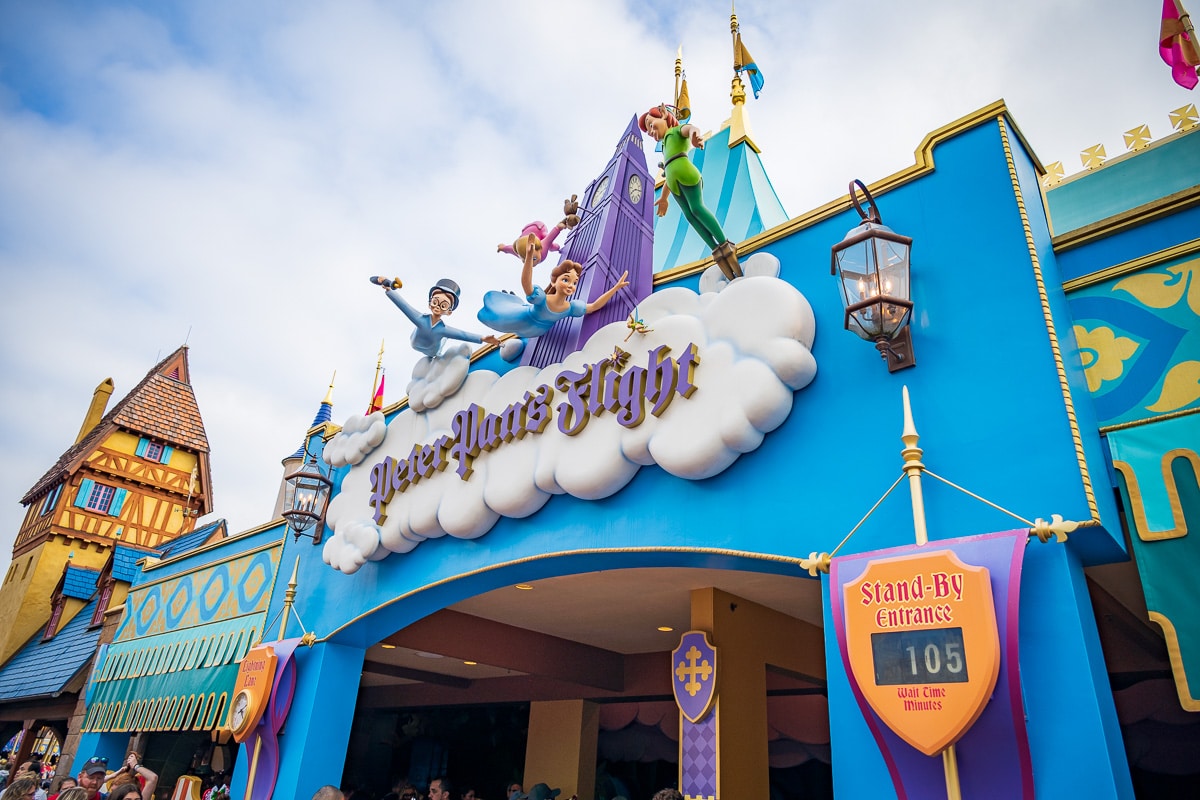
During that case, Disney’s Industrial Engineering team presented the results of its studies on attraction impact resulting from GAC, which was significant. The study concluded that the GAC system was unintentionally providing a small minority of visitors multiple opportunities to experience a given ride while denying regular guests the chance to experience a given ride even once. This study prompted Disney to implement changes to the GAC system in the interest of balancing guests’ needs.
In October 2013, Disney replaced the GAC system with the DAS program. You’re probably familiar with this, as the mechanics of DAS are fairly unchanged then versus now (it’s the approvals and denials that are at issue here). Basically, A.L.’s family determined that the return time system used by DAS required too long of a wait for A.L., and since it would not be possible to visit all of A.L.’s regular rides in order without some waiting, and that they would need to leave the park.
The DAS program proved to be unpopular among some of Disney’s fans with disabilities. By early 2014, plaintiffs began filing lawsuits—forty-four in total—challenging the DAS program on the basis that it violated Title III of the ADA because it did not allow visitors with disabilities to go on rides without waiting and in the order they wanted. The plaintiffs filed their cases in either the Central District of California or the Middle District of Florida; the cases filed in California eventually were transferred to the Middle District of Florida.
A.L. sought a permanent injunction requiring that he be permitted unlimited access to Walt Disney World’s attractions via the FastPass lines or similar relief through at least ten Re-admission Passes (“Re-Ads”). The central question of the consolidated case was whether Disney’s existing disability accommodations were sufficient under the ADA or if the requested modifications were necessary and reasonable.

The district court found that A.L.’s requested modification of unlimited access to Disney’s theme park attractions—via Disney’s expedited FastPass lines or through at least ten readmission passes for each person in his party—was neither necessary nor a reasonable accommodation. As to whether the proposed modification was necessary, the district court found that access for A.L. using the DAS Card and FastPass, without further modification, was a “like experience” to that of non-disabled guests.
The district court explained that, because the DAS system allowed disabled guests to access the most popular attractions in the park with less wait time than the standby line, those guests could experience more attractions than a non-DAS guest could experience because some of their time spent waiting in physical lines throughout the day had been eliminated.
The district court noted that Disney’s evidence showed A.L. could have experienced “a significantly higher number of rides than a typical nondisabled guest experiences in a day.” Thus, the district court found that the DAS card provided A.L. with a “‘like,’ if not better, experience and equal enjoyment than nondisabled guests experience.”

As to reasonableness, the district court explained the accommodation would “lengthen the wait times for all other riders, severely impacting the remaining non-DAS users,” and “potentially lead to the same fraud and overuse that existed with the GAC system, which required a complete overhaul.”
The district court also noted that “word spreading on social media that one disabled individual received an accommodation of ten readmission passes will increase the demand to be treated similarly by every disabled individual once they find out, as well as those willing to misrepresent they are disabled,” leading to the same issues plaguing the GAC system.
Even if the requested modification were necessary and reasonable, the district court determined that Disney was not required to accommodate A.L. with the request because, based on Disney’s uncontroverted industrial engineering studies and its expert’s opinion, it would fundamentally alter Disney’s services to its other visitors, by increasing wait times for most other guests without DAS, which in turn would dramatically reduce guest satisfaction levels.

In assessing whether A.L.’s requested modification to the DAS program was necessary under Title III of the ADA, the court held that Disney must afford A.L. “the opportunity to have something akin to or similar to the experience” of non-disabled guests but Disney “was not required to make the preferred accommodation of A.L.’s choice.”
Because places of public accommodations must “provide disabled patrons an experience comparable to that of able-bodied patrons,” whether an accommodation sought by a disabled person is “necessary” as a matter of law is determined by considering first “how [the business’s] facilities are used by nondisabled guests.”
The analysis then turns to whether the business has taken reasonable steps to provide disabled guests with a ‘like experience’ to that of non-disabled guests. “[F]acilities are not required to make the preferred accommodation of plaintiffs’ choice. Facilities need make only reasonable accommodations that are ‘necessary.’” As a matter of law, it is not enough to show that the accommodation Disney offers does not eliminate all discomfort or difficulty.
Due to the legal issues raised in this case that are distinct from A.L., I suspect the above reasoning will be key to the ultimate outcome of this case.

The Eleventh Circuit affirmed the district court’s judgment in A.L., agreeing that the requested modifications were not necessary and would fundamentally alter Disney’s operations. The court emphasized that the ADA does not require businesses to make accommodations that would fundamentally change their services or operations.
It’s worth noting that the Eleventh Circuit cited several other ADA cases involving Disney Parks & Resorts in its decision. I checked each of these decisions and they were likewise decided in Disney’s favor with similar reasoning. (Which tracks, as a court typically would cite precedent that support its conclusions.) Perhaps further research would reveal decisions where the plaintiff prevailed, but I could find no such cases. There’s a first time for everything, but I do not believe the Malone case will be that time. It will be an uphill battle for the plaintiff here, or in any future cases challenging the new-look DAS, to prevail.
Nevertheless, it’ll be interesting to see what happens. As we’ve mentioned previously, it was inevitable for the DAS changes to end up in court. Disney likely viewed a lawsuit as the cost of doing business, and had its legal team meticulously prepare the new DAS policies in a manner that would make them litigation-proof. There were 24 lawsuits last time, with the first filed only a few months after GAC was retired in favor of DAS. If anything, it’s surprising there haven’t been more complaints filed this go-round, and sooner. It’ll be an interesting saga to watch, and if this does proceed to trial, it’s likely that more will be revealed about abuse and misuse numbers either via discovery or testimony of Disney’s Industrial Engineers.
Planning a Walt Disney World trip? Learn about hotels on our Walt Disney World Hotels Reviews page. For where to eat, read our Walt Disney World Restaurant Reviews. To save money on tickets or determine which type to buy, read our Tips for Saving Money on Walt Disney World Tickets post. Our What to Pack for Disney Trips post takes a unique look at clever items to take. For what to do and when to do it, our Walt Disney World Ride Guides will help. For comprehensive advice, the best place to start is our Walt Disney World Trip Planning Guide for everything you need to know!
YOUR THOUGHTS
Thoughts on the lawsuit in California over DAS policies at Walt Disney World and Disneyland? Think this litigation will result in changes or another total overhaul to Disability Access Services? Hopeful that this will prompt increased approvals for those who truly need DAS while keeping abuse low? Agree or disagree with our assessment? Please try to stay on topic–we’ve noticed some of these DAS comments sections get heated and personal. Discuss the policy itself, not others’ use (or lack thereof) of it.



My mother was entitled to a das for probably 15 trips. During our most recent trip her health had deteriorated to the point she not only had severe copd being on oxygen continuously, riding a scooter because of not being able to walk two feet without oxygen dropping, Incontinence, and now dementia…. This 88 year old woman was denied DAS. I will tell you this made our trip one of the most stressful, worst trip of all our days. In the end, after pouring year after year of thousands of dollars into Disney including annual passes and DVC memberships, my poor mother had to be denied the smallest joy left for her at the end of her life. This wound up to be her last trip. She passed away this past October from the breathing/heart issues which have plagued her and eventually did her in. Of all the years and all the trips, our last memories with her will be the difficulties she faced during this last trip. What an absolute shame.
I think it was clear that the DAS service was abused. However, you can’t offer a service to a specific disability. I don’t know how I feel about my own situation. I never even asked for it. A CM saw me and took me to Guest Services and told them that I needed it. Then my conditioned worsened and I’m on a ventilator frequently throughout the day to breathe and am in palliative care. I try to go alone or with a care-giver when I can. Navigating these queues with my ECV and my vent tubes and wires not to mention device overheating among other things. The brief time I had DAS was a game changer for me. Now I wish I never would have known it existed.
I get that Disney doesn’t do these things without a lot of lawyers checking that they’re eeking through the eye of the compliance needle, but I’m still not convinced that having no accommodations at all for people with physical disabilities that impact their ability to wait in long lines without health impacts (like blood sugar) is going to get the same result described here. There’s an entire class of disability (people with serious physical ailments other than mobility) that appears to be completely unaccommodated at WDW. DAS is a bad system for a whole host of reasons, so I’m completely open to the idea that giving those people access to DAS might not be the correct solution. But for, for example, severe diabetics, or people undergoing chemotherapy, Disney’s current answer of “too bad; your options are to get yourself a premier LL pass, suffer, or stay home” doesn’t strike me as ADA compliant in any respect.
They have other accommodations…people can wait outside the line and meet up with their party when they’re near the front.
Not everyone with a disability needs to use the LL…doing so, as it was before, clogs up the LL to where it not only isn’t worth the money to pay for it, the LLs actually became too long for some disabled people with DAS to use them.
Good for Disney.
My husband Just had a transplant 6 months ago. He cannot be around large crowds for extended amount of time. He takes meds that make it so he cannot be in the sun. This is for the rest of his life. He My husband underwent a life-changing transplant just six months ago. As a result, he has to avoid large crowds for extended periods, and the medications he takes require him to stay out of the sun for life. He is also permanently disabled and relies on disability benefits.
To protect him, we utilize Disney’s Disability Access Service (DAS), which allows us to navigate the park more safely. However, the solution Disney offers often divides our family. One of us must stand in line while the others remain with him until it’s time to board the ride. This means that if we want to enjoy six attractions in a single day—each with a wait time of about an hour—our family may end up spending an entire six hours apart in what is meant to be a joyful, family-friendly environment.
We go to great lengths to ensure his safety, often walking far from crowded areas and choosing to dine in quieter spots within the park to safeguard his compromised immune system. What should be a magical experience spent together becomes a challenge, as we balance his needs with the desire to enjoy the park as a family.is also permanently disabled and on disability. We use the DAS to keep him safe and away from crowd till it is time to get on the ride. The solution from Disney is to separate the family while one group stands in line and then join at the time of riding. So, if we ride 6 rides that day and the wait is roughly an hour. Our what was supposed to be a family vacation is now two people away from the family because he needs help and cannot be by himself and then the other two in line. So, our family will not see each other for 6 hours at a “family friendly theme park”. We walk as far away from crowds while there and eat away from the people at the park, because his immune system is compromised forever.
My suggestion is to get rid of the Lightening Lane altogether. If you remember the Disney of years ago. The lines were quick, and you did not have long extended waits. The lines flowed quickly. You were quickly through the line and if you need assistance, you were able to enter a different line so you could get help with the ride. Disney created the lines to make it fun. He created the lines to flow quickly. Now it is all about making you pay more for the ride you already paid to ride.
We went to WDW with my nephew that has cp in 2017. We did use the DAS some. It honestly was a pain to go to the ride and check in and then come back at your window. That causes more walking and waiting in the vicinity of you ride you are choosing to do.
I do believe that the old system kind of worked like a free fast pass selection just unlimited for the disabled. I think Disney should just let the ones who are approved choose the rides before they get there as FP preselections would have done.
I do think that narrowing it to strictly autistic and developmental issues is a bad idea. We have a cousin whose child is type 1 diabetic and his sugar can crater over the excitement, heat, or nerves. It is more likely he needs the DAS or a way to be assured he can keep his sugar in check. Carrying snacks and emergency supplies can’t possibly be good to use multiple times in a day.
It is an unfortunate situation for many to have to choose if they can possibly do Disney because of health concerns, and the price to go(but that is another story!)
I am a DVC Member. I am 75 years old with 2 grandsons (one of which is Autistic and has ADHD). When we go it is with the grandsons, daughter, son-in-law and me. % of us. The younger one (Autistic) qualifies for DAS. So until now, the 5 of us qualified for DAS. Now because of the restrictions, only 4 can go. So, me, the Member, who also has Parkinson’s Disease (which does not qualify), cannot go with my family under DAS. How is that ok?
I called and had a chat with someone from the DAS team two days ago. While I have mobility issues and was able to previously get a pass, I also have anxiety and claustrophobia issues. I explained these to the Disney representative. I specifically said I cannot wait in a line for a long period of time because of fears of being in a crowded place. I stated that I have taken medication in the past for anxiety and claustrophobia.
Questioning centered on how I went shopping and other such items. I explained that I did those in off hours only, and if there was a crowd, I would not go in to a store.
Despite the above explanation, she stated I did not fit the Disney profile and stated that the various other ways, such as having someone hold my place in a line, etc., was sufficient.
I obviously disagree with this. I understand the issue with abuse in the past, but for someone with mobility issues and anxiety issues, it is hard to figure out how to meet their profile unless one is expressly autistic. This is not sufficiently inclusive.
I am very, very, very curious as to why Disney doesn’t simply get rid of DAS. I am not being flippant or sarcastic. Legally, do they have to provide something like DAS? I don’t think DAS was around when I was young. Then I went through a long drought, maybe 20-25 years of never visiting Disney due to health and finances. When I finally returned I heard and saw everyone talking about “we have DAS.” Took me months and months to finally figure out what DAS meant. Legally, due to the Americans with Disabilities Act, I am pretty sure Disney covers the requirement without DAS. So, why not get rid of it? Everyone is angry with them all the time anyway and it sounds like a huge legal headache. I’d like to read an in depth article about that: Should they get rid of the DAS program? Could they legally get rid of it? What are they required to provide according to the ADA?
No, they are not required. It is a perk that people got used to and now they are upset because we live in the country of entitlement. I am not saying I do not have sympathy or care about those who struggle. I do. I have struggles myself. However, there is a difference between having required accommodations met and high expectations. Disney is required to follow the ADA, which they do. Everything else is gravy. Disney did this to themselves by allowing so much for so long and now that so many (real and self-diagnosed) needs special accommodations, they cannot meet the demands without ticking somebody off.
As a disabled veteran and DVC member, I don’t feel that WDW has to cater to every single person in the park. If I have PTSD and have panic attacks when waiting in a line of a dark ride, then I just can’t go. I am not a person who sits there and screams about how unfair it is. Limiting the number of guests allowed, I would see as WDW’s discretion. I’m just not going to join a class action law suit just because I have a problem that stops me from waiting in line, and then claim that the provider (WDW) HAS to do something so I can ride it. Please. I just don’t understand the entitled mindset you would have to have to force a company to cater to you when it’s something you probably shouldn’t be doing anyway. Based on your disability. WDW has done a great job making rides with oversized carts, seats and what not for disabled people to use.
How old are you? A lot of abled people don’t realize that the ADA wasn’t passed until 19-freaking-90.
It seems Disney already has the IT infrastructure to handle this. If you are a DAS guest reserve your ride through MDE. Once you use that reservation you must wait x number of hours to use the front of line feature again or get in Standby like everyone else.
I used DAS when I was going through chemotherapy treatments. I had difficulty standing in line for extended period of time due to my neuropathy in my legs and hands as well as nausea. I wouldn’t have made it through the day if I didn’t have the DAS pass. I am thankful that I don’t have to use it anymore but was glad it was there for me. I wanted my kids to have good memories with me just in case something happened I didn’t want them remembering me dying. I do see it can be misused. I have a friend who uses it for her daughter who really doesn’t have any real medical issues. I think there should be a limit on how many people case go with the person who has the DAS pass. Maybe 5 people including the DAS pass holder. I would hope that most people who use the system don’t abuse it. I never did or would because that isn’t fair to everyone else.
My 8 year old autistic son who cannot wait in lines was denied DAS yesterday. At the doctor and dentist he has 8am appts and waits in the car until its his time because waiting in a contained area is too hard on him. He goes to a small school of 8 kids that allows him to go in and outside as needed. We avoid restaurants and other places that involve a lot of standing around and waiting. He has used DAS in the past and DAS equivalents at all kinds of other theme parks and although there is a small bit of waiting, the minimizing is just enough to keep his “cup from overflowing” and allowing him to get through the day. Once he reaches his limit there is no coming back, and alternatives such as line re-entry are not adequate for him.
There are many issues with the new DAS pass, but it does state it is for autistic people who cannot wait in lines, but apparently it depends on which cast member you get, which I believe is a whole different problem.
What will you be doing with your son in the park? I ask because I will be going in May with my 4 year old autistic son and he cannot wait in lines. With the wording from Disney I figured he would definitely be eligible, but after hearing similar people get denied, I am concerned and not sure what we will do about the waits.
Just get rid of the thing. You don’t have to go to Disney, maybe some will decide not to go and that will be better for the majority having fewer people in the parks. However, if that doesn’t happen, just allow one adult with the DAS person and they can go through the fast way and then wait till the rest of their family at the end of the ride or wait for their family to meet up with them by making them use the regular line.
“… unlimited, repeated, and on-demand access to rides and attractions.”
Unfortunately, I think some people really got used to this situation and now will not be satisfied with anything else.
So, I know this is a reductionist solution and anecdotal. Why not bring back free fast pass? I know many people who do/did qualify for DAS and the older pass BUT didn’t bother to get it because they used free fast pass instead. You could plan ahead. Get more rides later. Even reride if available. Also, I know it doesn’t really count as DAS but not having enough entertainment for all guest has an effect on the length of lines. Therefore, people will try to find ways to “cheat” the system because lines are long. On top of this, Disney would win back some very much needed goodwill. Yes, they lose some money. But how much money vs lawsuit, diminished goodwill, repeat visitors. I can’t help but think this would also mean guest spends more money in park( not buying line skipping service means more money for sit down meals and souvenirs). Happy guests means guests spends money. I feel this would be a start to getting DAS back in good standing.
Because they are making lots of money selling Lightning Lane access, and it’s pure profit.
“not having enough entertainment for all guest”
That’s problem number one: in the words of Tom Bricker, Build More Attractions. Increasing the demand for FP/LL without increasing the supply of attractions will probably push the system to the limits again. Ironically, it would make lines longer, thus encouraging people to hack the system again. (Cue the vlogger video montage!) The only thing to do in the short run of free LL would be to limit the number of attractions per day that people can reserve. but given that people don’t care for Tiers, they would hate only being able to carty 1-2 reservations at a time daily.
In the long run, with these many guests WDW needs to Build More Attractions, especially at the non-castle parks that needed Tiers before 2020. On a non-DAS note, making more queues accessible like they did over at Peter Pan’s Flight a few years back will remove hacks.
I would ask, what laws are being broken that would result in Disney needing to payout? How much money would Disney lose in that area? If they have followed the ADA, they have followed the law. There is no law in place which requires special access/privilege/accommodations to those with ADHD, ASD, PTSD, etc.
In regards to repeat guests, let me tell you, having 23 years with the company, they do not feel one ounce of fear or threat when somebody says they “will not return” or they are selling their DVC. There is always somebody to fill that room, assume that contract, purchase that food, buy that souvenir, etc. While any company appreciates loyalty, Disney Corporation is not concerned if you (generally speaking) get upset and never come back.
I am sure the lawsuit will not change anything but here are my thoughts:
Provide training for cast members dealing with the return to queue, etc. guests. Seems that there is no standardization or consistency in message. A clear standard operating procedure seems to be something that is missing and needed for training.
Allow for refunds for tickets for those who will not be able to experience the same type of day (or whatever language was used lol) as someone not requiring DAS. I know this gets messy, but paying hundreds to thousands of dollars to only be able to experience a ride or two due to things going sideways (e.g. sensory meltdown…which can be unpredictable) is just terrible to think about.
Teach the Inspire medical staff to treat people with dignity. The Golden Rule just seems like a standard rule to operate for someone working under/with Disney. The stories I am hearing about experiences with the call is just abysmal.
People who do not need to consider DAS for themselves or a loved one- show some grace. Things are not easy, even if you think they look easy. DAS was a broken system because Disney let it get that way and other people preyed upon a system with issues. The collateral damage is someone who many not even understand.
I know not everyone agrees, but Universal using IBCCES is ideal for us. Sure, you need to disclose some medical info, but that is what Disney is asking now, in a less dignified manner.
https://www.disneytouristblog.com/universal-orlando-stops-requiring-controversial-disability-access-card/
I’m not familiar with all the IBCCES policies, so this article may not pertain to what you are referencing.
I am all for developmentally disabled persons acquiring DAS for accommodations. I am not for those who are not and feel that they should receive identical treatment for physical disabilities that don’t preclude them from waiting in the standby lines or purchasing the paid LL out of sheer inconvenience. I have mobility issues from medical conditions and often require a scooter to enjoy the parks for extended hours (more than 6-7). I’ve not had an issue navigating any queues in it, nor returning within a given return window through the exit lane (BTTMRR) to enjoy the attractions. I’ve never, and I mean never, experienced any negative feedback, verbal or non-verbal, from other guests when using these.
I understand that not all situations are identical and there are some instances where a medical disability (thinking Fibromyalgia as an example) should qualify for DAS, however DAS should be the exception and not the rule IMO.