
Here’s Why Standby Lines & Lightning Lanes Are Moving Faster at Disney World

Walt Disney World has made major changes to queueing over the last 6 months. This post combines wait times data for standby lines and stats for Lightning Lane availability with our own anecdotal experiences with both plus ‘feels like’ crowds every single month since June to paint a picture of how things have changed in the second half of 2024.
Let’s start with crowd levels as measured by wait times data. Suffice to say, it’s been a down year for Walt Disney World with a gradual decrease in monthly crowd levels between February and October. In a normal year, there would be a noticeable spike for spring break and Easter, followed by a shoulder season slowdown and then a summer uptrend.
Instead, this year saw a slow and steady decrease. It’s especially rare for May to be busier than July, which is something that never happens–but did in 2024! It was a slow summer at Orlando’s theme parks, as we discussed at length in Summer (Still) Is NOT High Crowds Season at Walt Disney World.
Unsurprisingly, August continued that trend and September accelerated it. That much is to be expected–those two months being the slowest of the year happens every year. In this case, there was an 8-week stretch in there that was the slowest since 2021, though. So even quieter than normal.
In a normal year, October would buck that trend in a big way. Not the entire month, but fall breaks and the second half of the month would have a sufficient impact to make October the busiest month since spring break season. This year, October did see an uptrend–breaking the multi-month downtrend–but barely. A big part of that can be chalked up to hurricanes, though, and Disney itself indicated the storms cost them $130 million in cancellations.
November was up as compared to October, which is also typical–but it saw a bigger bounce, likely due to the aforementioned hurricanes depressing attendance in October. However, November still fell short of what’s normal for the month. And although December just began, the smart money would be on it being the busiest month of 2024. Not because of the next couple of weeks, but because the final two will be so high above the rest of the year that they’ll lift all of December.

It’s worth noting that all of this is wait time trends within 2024.
We usually do year-over-year comparisons, meaning we’d evaluate November 2024 vs. November 2023 (etc.) because it’s the more meaningful comparison that accounts for the seasonality of attendance trends. When doing that, every month except February and March were down year-over-year, and those two were within 1 minute of the prior-year. All other months have been down, some considerably so.
Also worth noting is that 2023 was mostly down as compared to 2022, which was the height of pent-up demand. This has been acknowledged by the company itself during earnings calls, so it’s not really in dispute. In fact, Disney CEO Bob Iger has more of less said as much and warned investors of attendance softness and demand moderation through 2025.
Previously, the company cautioned of a slowdown at Walt Disney World last year, too, attributing this to the end of revenge travel, lapping the 50th Anniversary, and poor weather. With that said, the company isn’t saying there’s been a massive drop in attendance. To the contrary, the most recent quarter saw “comparable” visitor numbers, suggesting attendance was flat or only down slightly. The wait times show a steeper drop.

The wait times data is what it is, and I don’t really think it’s up for debate. Contrary to some anecdotal reports, you are almost certain to encounter lower wait times this year versus 2023, not to mention as contrasted with 2022.
But as we often point out, crowd levels as determined by wait times (an imperfect measure, but the only worthwhile one) are not the same as ‘feels like’ crowds or congestion, which are more comparable to attendance (still imperfect, but closer). In a lot of cases, wait times don’t tell the full story. That’s true every year. We think that’s more so the case in late 2024 than ever.
What if the changes to queueing policies have caused lower wait times that are disproportionate with the decrease in attendance? That crowds have only dropped dramatically year-over-year if using wait times as their measure?

My theory is that exactly this has happened.
This would be perfectly consistent with Disney’s quarterly reports, which have (sometimes) mentioned declines in attendance and hotel occupancy, but not nearly to the degree of wait times.
The company’s financial reports are, as expected, about metrics such as income and per guest spending–not wait times. If attendance were down in comparable measure with wait times, we’d expect close to double-digit drops. That most certainly has not happened.

This means that there has almost necessarily been a divergence between posted wait times and feels like crowds. Attendance cannot have dropped by as much as wait times suggest. If it had, the Domestic Parks & Experiences would likely reflect that in its revenue and operating income.
Instead, Disney Experiences just posted record revenue and operating income for the full year–meaning it outperformed even the banner year of pent-up demand (at least financially).
This more or less comports with my anecdotal observations about Walt Disney World crowds. I’ve spent about 5-7 days each month in the parks since June, which obviously means I’m not seeing every day at every park. Even if I were, it’s impossible to be everywhere at once, and congestion can be highly variable.

Nevertheless, my perspective (and again, this is a sweeping generalization) is that the parks are not as busy as they were in 2022 and mostly down as compared to last year, but not nearly as slow as the wait times suggest. If I had to estimate crowd levels based purely on what I saw and felt–and didn’t look at a single posted wait time–I would pretty consistently be overshooting by 2-4 crowd levels.
Honestly, I can’t think of a single day I’ve visited in the second half of the year that I perceived as less busy than the crowd levels as dictated by wait times. It’s almost always been the exact opposite. There have been a lot of 1/10 to 3/10 dates that I would’ve guessed were closer to 5/10 based on simply strolling around the parks. But wait times told a very different story.
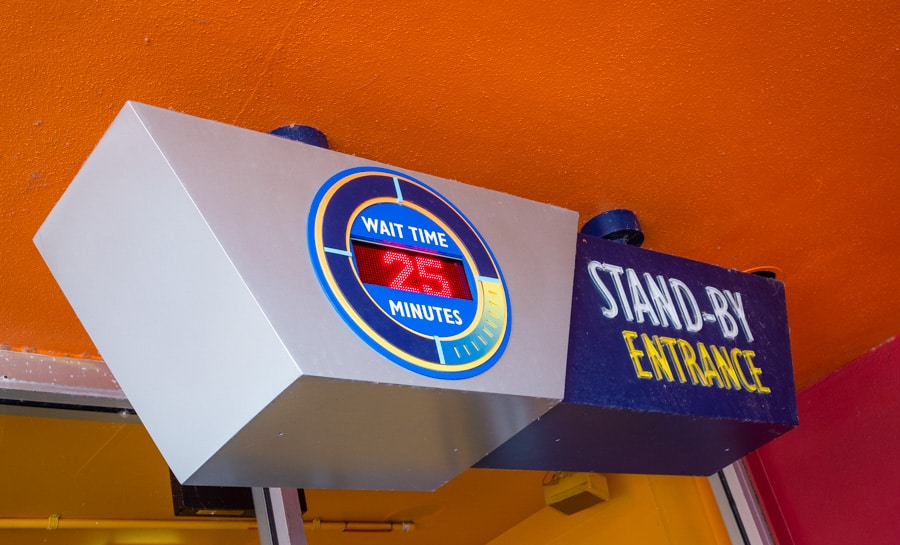
To that point, my experience with standby lines since June has been a breeze. Posted wait times have been manageable, they’re usually inflated, and the lines are constantly-moving. Of course, I’m mostly not doing rides at peak hours when waits are the worst, but I did do TRON Lightcycle Run ride testing at all hours over a holiday weekend and didn’t once wait even 60 minutes for it. (Posted wait times ranged from 35 to 120 minutes.)
In fact, my longest waits of the entire year have been for…Tiana’s Bayou Adventure. A ride that has a virtual queue. But that’s due to it breaking down repeatedly, and my knack for somehow managing to queue up just before that happens. That’s really beyond the scope of this post, but I nevertheless find it amusing that I’ve waited in line the most for an attraction that…isn’t supposed to have a line.
One thing to keep in mind here is that low crowds does not mean that every attraction is a walk-on. People sometimes hear 1/10 or 2/10 crowd levels and assume that’ll be the case. Instead, it means you might encounter a 65-75 minute average wait time for the most popular rides, as opposed to 90-120 minute wait times. Since those numbers are averages, it also means higher peaks and lower lows.

So what’s causing these disproportionately lower wait times?
My strong belief is that the key is a lower utilization rate of the Lightning Lanes. This means that fewer guests are skipping the line, and are instead in the regular line (or doing something else entirely). This would explain why the standby lines are moving more fluidly and why wait times are lower–because fewer guests are in the Lightning Lanes and processing that backlog isn’t causing standby to come to a standstill.
Previously, standard operating procedure called for a roughly 4:1 or 80:20 ratio of Lightning Lane to standby guests at the the attraction’s merge point. Meaning that for every one person admitted into the load area (or wherever merge occurs) through the regular queue, 4 people are pulled from the Lightning Lane line. This was the baseline–the ratio only gets less favorable for the standby line!

Anecdotally, my experience while in the standby lines is definitely not that 4 people are being pulled from the Lightning Lane for every one guest from the standby line. I’m not out there counting the people passing, but I wouldn’t be the least bit surprised if the numbers skewed slightly in favor of standby. It’s certainly nothing like the 10:1 ratio in favor of Lightning Lanes that can happen during peak times.
Since I’m doing strategy field testing as part of solo research trips, I’m usually standing in line by myself. And because I apparently like to torture myself, I’ve developed a habit of watching the Lightning Lane guest flow to get an idea of how and when the standby line will move. In the past, this has been needlessly anxiety inducing. Definitely not recommended, as it’s no fun to see a steady stream of people passing as you stand still.
That hasn’t been the case in the last 6 months. I’ve noticed it on several different attractions, but where it was most pronounced was, again, during my TRON Lightcycle Run testing. I was honestly surprised that, despite Lightning Lane Single Pass being totally sold out, the standby line was manageable and moving. I had experienced much, much worse when TRON was using a virtual queue last year.
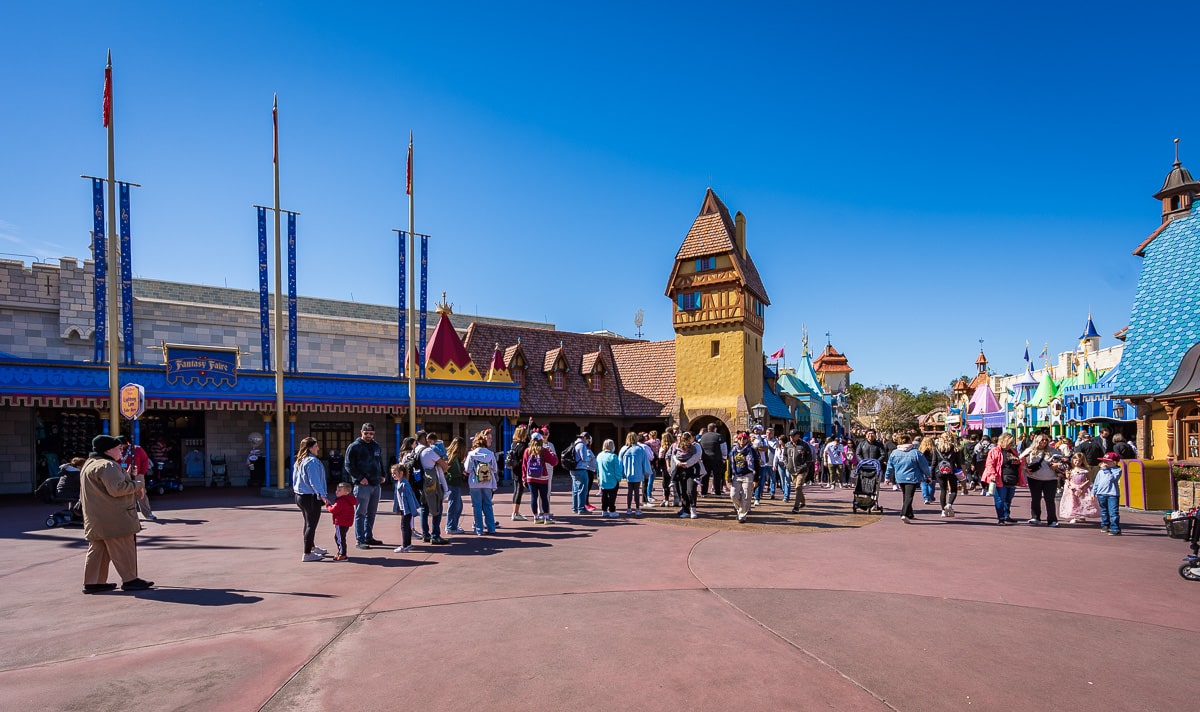
It’s not just TRON, either. There are several other attractions that used to regularly use overflow queues for the Lightning Lanes. There were times when Peter Pan’s Flight would back up past PhilharMagic, Seven Dwarfs Mine Train would have multiple switchbacks (via tape on the ground), Space Mountain had a line out to the TTA track, etc.
This can still happen from time-to-time, especially on peak days or after rides return from excessive downtime. But it was previously occurring with regularity, even on off-season days last September or moderate days this winter. I haven’t seen Lightning Lanes that consistently backed up in the last 6 months.
(Note that this only applies to Walt Disney World. This problem still occurs at Disneyland with some degree of regularity. I don’t think it’s quite as bad as before, but it’s nothing like the night-and-day difference at Walt Disney World.)

To that point, the explanation for this is not Lightning Lane Multi-Pass or Single Pass being significantly less popular than their predecessors. To the contrary, Lightning Lane Single Pass is selling out much more often than Individual Lightning Lanes did, even in low to moderate crowd levels.
The likely reasons for this are beyond the scope of this post, but it’s something we address at length in Lightning Lane Single Pass is Selling Out FAST! The circumstances haven’t really changed since that post was published. The title there really says it all, but suffice to say, several of these LLSPs are now fully booked up in advance or have limited same-day availability.
We’ve seen something similar with higher demand and more limited inventory for Lightning Lane Multi-Pass. That was covered in What’s Up with Lightning Lane Multi Pass Availability at Walt Disney World? The circumstances have changed since that post was published, as LLMPs have gotten easier to book–but still more competitive than Genie+ Lightning Lanes.

Our initial explanation for this in the days that followed the launch of Lightning Lane Multi-Pass and Single Pass was throttled availability. That made sense initially, as the new system was brand new and Disney was unsure of what to expect, so they likely wanted to slowly open the valve on Lightning Lane inventory.
In the months that have followed, this seems to have changed. While it remains true that there can be limited availability–especially for Single Pass–it’s not as bad as before. Moreover, our experiences in testing Lightning Lane Multi-Pass have demonstrated that same-day availability (or ride reservation refills) is fairly robust.
At this point, it seems like demand is fairly strong for Lightning Lanes, but also that Walt Disney World is doing a fairly good job of meeting this. As for why demand would remain robust, our best explanation is heightened FOMO and FUD–two of my favorite “facronyms.”
Since guests are no longer buying Lightning Lanes same-day, it’s more difficult to assess the need for them and adjust accordingly during your vacation. As such, there’s likely a tendency to “over-purchase” Lightning Lanes as compared to under the old system. (Another subject that’s beyond the scope of this post, but it’s worth reading our recent post: When You Should Skip Lightning Lane Multi-Pass.)

As we’ve also noted, Lightning Lane Premier Pass also hasn’t really moved the needle on utilization.
This was to be expected, as the target audience for LLPP is exceedingly limited. It’s my understanding that fewer than 1% of guests have been purchasing Lightning Lane Premier Pass on the vast majority of days. That’ll be higher around Christmas and New Year’s Eve when crowds are higher, especially at Magic Kingdom and Disney’s Hollywood Studios, but it’s still unlikely to eclipse 2% of all guests.
This is precisely why Walt Disney World expanded eligibility for Lightning Lane Premier Pass. Not only is it being used by a very low percentage of guests, but they have the excess bandwidth in the Lightning Lanes to open it up to more guests without the system even coming close to its breaking point. The bottom line is that Walt Disney World has expanded its paid line-skipping systems and they’re still performing far better than before. How do we make sense of that?
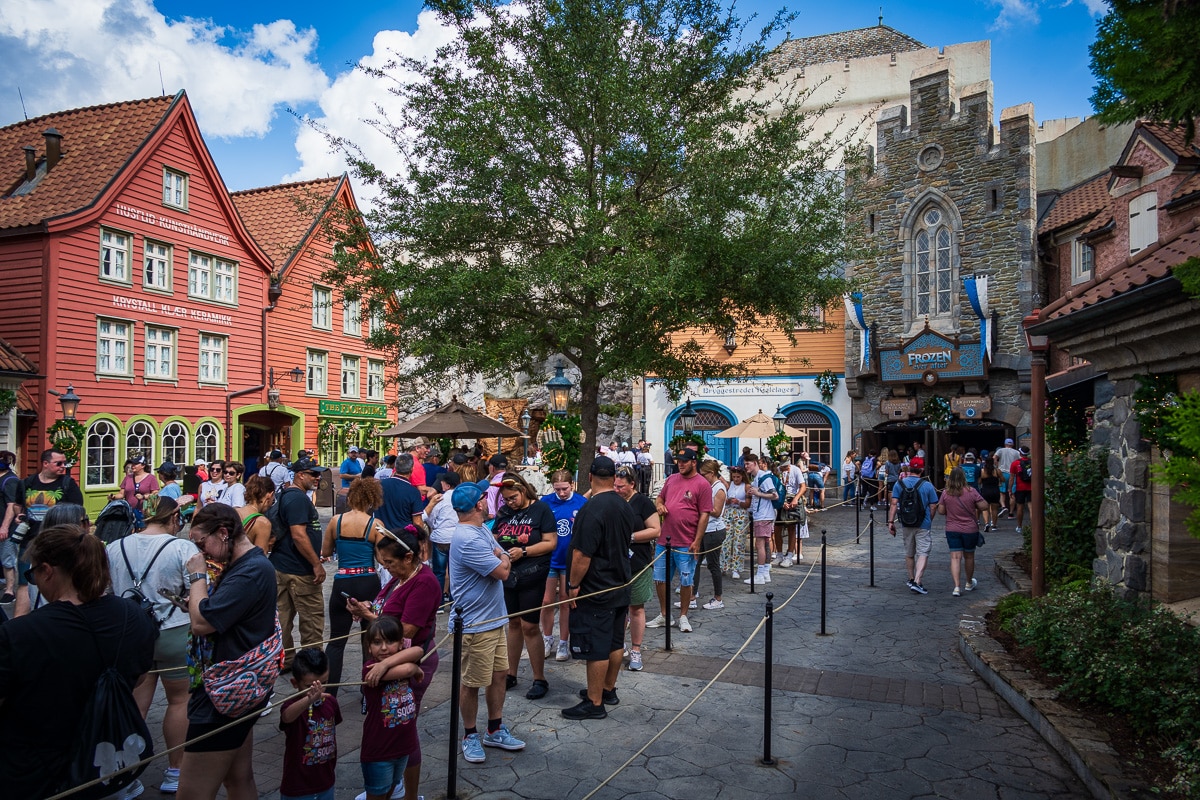
The elephant in the room is that the overhaul of Disability Access Service to reduce abuse and misuse is what’s having the biggest impact on both wait times and decreased utilization of Lightning Lanes. I hesitate to even broach this topic since it has real human consequences and has been heartbreaking to read the stories of DAS denials.
However, it’s all but certain that the DAS overhaul isn’t just a contributing factor, but is the primary reason for shorter standby lines and less Lightning Lane usage. This was one of the driving forces behind the crackdown, so it makes complete sense. Everything we had heard even prior to the overhaul announcement suggested DAS usage had exploded and was the primary cause of usage of Lightning Lanes, not paid sales.
As we’ve said repeatedly in other contexts, queueing is a zero-sum game. This isn’t even theoretical–Disney has been sued over accommodations for disabled guests in the past, and these stats have come out during discovery and testimony (see A.L. vs. Walt Disney Parks & Resorts, US). A test study during that revealed that DAS users experienced, on average, 45% more attractions than those without DAS.
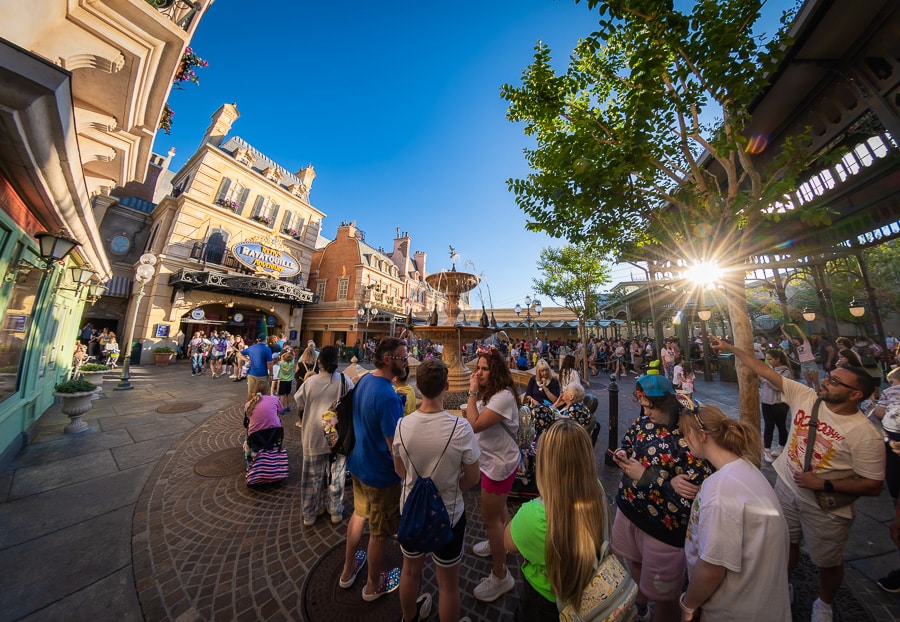
Keep in mind that this study would’ve been conducted several years ago, under the old free FastPass+ system and prior to the explosion of TikTok and Facebook groups that encouraged and facilitated abuse. It stands to reason that guests who are actually disabled and need DAS are able to experience fewer (probably far fewer) attractions than fraudsters who game the system to essentially create a free FastPass exploit.
Of course, this also comes at the expense of disabled guests who need DAS in order to enjoy Walt Disney World and are being unfairly denied as part of the crackdown. While it’s good to see the abusers being denied, there is also collateral damage to this. Many guests who are actually disabled have been swept up in the crackdown–it’s unfortunate there’s no way to narrowly target the abusers. I won’t pretend to know what the “perfect” solution is–but I do know that the status quo is devastating, and that Disney can and should do better.
However, that’s also beyond the scope of this post. This is about shorter standby lines and less Lightning Lane usage despite demand staying strong. And given all of the above, I do not know how to reconcile all of that without attributing it to the DAS overhaul. There are undoubtedly other contributing factors (shifting demographics, parks continuing to restore lost capacity, etc), but the primary driver is undoubtedly DAS.

Ultimately, that’s our theory as to why standby lines are shorter and faster moving at the same time that Lightning Lane usage has decreased, even with demand for Multi-Pass and Single Pass appearing fairly strong and ride reservation inventory being healthy. This strikes us as the only plausible conclusion based Disney’s quarterly results, wait times data, and our extensive anecdotal experiences.
As we’ve mentioned before, there was an internal desire within Walt Disney World to better balance the interests of guests using standby lines and Lightning Lanes, and that appears to have been accomplished. But again, we’d be remiss if we didn’t acknowledge that this occurred with disabled guests as the collateral damage. It’s saddening that this has happened, and we still believe Walt Disney World could narrowly tailor the system in a way that targets abusers (who were a significant number of users).
Planning a Walt Disney World trip? Learn about hotels on our Walt Disney World Hotels Reviews page. For where to eat, read our Walt Disney World Restaurant Reviews. To save money on tickets or determine which type to buy, read our Tips for Saving Money on Walt Disney World Tickets post. Our What to Pack for Disney Trips post takes a unique look at clever items to take. For what to do and when to do it, our Walt Disney World Ride Guides will help. For comprehensive advice, the best place to start is our Walt Disney World Trip Planning Guide for everything you need to know!
YOUR THOUGHTS
If you’ve visited Walt Disney World in the last 6 months, what’s been your experience with standby lines, Lightning Lanes, and the flow of traffic in both versus previous visits? How about as compared with in-park congestion? Have you noticed any discernible differences? Would you recommend LLMP or just advise sticking to standby given these trends? Do you agree or disagree with my assessment? Any questions we can help you answer? Hearing your feedback–even when you disagree with us–is both interesting to us and helpful to other readers, so please share your thoughts below in the comments!


We visited Magic Kingdom for Extended Evening Hours on 4/16, went straight to Tron, watched the fireworks from the entrance, and went up into the line while they were still going, and we still ended up waiting about 90 minutes. I wonder whether there was some other event making attendance after 9pm much higher. It did seem that they weren’t scanning any MagicBands or cards at the line to ensure only eligible EEH guests were entering the line after 9pm, which is a different experience than I had at EPCOT the prior Monday, where I got in and out of GoG in about half an hour at the end of Luminous.
My wife and I were there the week of Veterans Day and Jersey Week. We both noticed that the standby lanes moved which was a stark contrast to our previous trips. It’s mind boggling how many people must have been abusing the DAS – sad. On another note, we relearned a lesson NOT to go to the Magic Kingdom on the only non-party night of the week and one in which Hollywood closed early for there’s. WOW. We walked in at 6:45pm, saw the huge crowds, got her coveted Starbucks MK mug and enjoyed a resort night. We as we walked from the TTC to the Poly that the monorail line to Epcot was a mile long too.
Great analysis, as usual! This makes sense to me as the most obvious explanation (DAS). I’m still a little shocked that it makes such a difference, or really that it’s enforced to such a degree.
I’m wondering, though, if attendance is really not as strong as portrayed? I doubt it’s significantly off from how it is presented, as that would be too blatant. But perhaps it’s weakening more than an outsider might expect and Disney is getting so good at squeezing more money from fewer guests to result in overall good Financials. Less likely based on scale, so the DAS impact cannot be ignored, either way. Just a thought, I guess.
We visited all four parks yesterday (12/2) and all of them felt very crowded. The rides we did manage to ride had exact wait times. None of them were inflated. I did notice less people were using the LL which kept the standby lanes moving constantly. I’m not sure what was going on in the parks, but there were a lot of rides down across the board, especially Guardians.
We were in the parks today (12/2 ) with LL Multipass purchased 7 days ago for HS. I was first amazed about the availability of 3 early passes including TOT, SDD and Midway Mania all available before 10;05. I was even more surprised when we moved through those LL lines so quickly. We have never experienced such a short wait in the LL queues. Our last visit was in July and all waits were definitely longer. We were disappointed with the number of rides that broke down across the parks today including Rise and RNR as well as the mess in MK.
Thanks for the analysis of the end result of recent changes to DAS. It would be nice if there were more data available, but Disney is under no obligation to make internal numbers public for obvious reasons.
As the parent of an adult child on the psychosis spectrum, we’ve never bothered with DAS since there are no accommodations that any theme park could make that would allow her to enjoy herself. Its sad, but there are many things that she is not able to enjoy and theme parks are just one of them.
We have, however, appreciated how most of the rides are accessible for our family members with mobility issues. It’s also nice how cheap the wheelchairs are to rent, as the oldest among us find themselves tiring out more easily and this allows them to keep up with the pack.
But I appreciate this type of Disney analysis, and this is the only source of this depth of information, so keep up the good work.
We are in the park right now and the crowds are huge. We were here in MK earlier and actual wait times were an hour for the most popular. Frontierland closed because of a water break and the 2pm parade was cancelled. I was here the day WDW opened and have made over 40 trips since. Today was my last
Yet another sewage leak in Magic Kingdom definitely stinks, but I’m currently looking at live wait times and the only attraction in all of WDW with a wait time over an hour is TRON Lightcycle Run at 80 minutes. I’m sorry you had a negative experience, but it’s not particularly busy based on wait times.
The wait times are low now because a million people are waiting for the fireworks
I park hopped all four parks yesterday (12/2) and all of them were experiencing down rides, which was crazy because it seemed to be all of the major rides. I’m not sure if Guardians ever went back up.
I am glad you made note of the elephant in the room, Tom. We have always qualified for DAS for our son with Autism and honestly it is the only way we could functionally visit the parks. It is heartbreaking to see the pendulum swing so hard away from the inflated passes given before the change to the horror stories I am reading about people being denied and being told that “they don’t look like they have Autism” by the newly hired “medical professionals”, which just leaves me speechless. Those who hustled the system should have been stopped, but it is just unjust to make those that the system was built for suffer. Disney should have gotten a grip on the abuse long ago and not at the expense of those who need it, creating more anxiety than most already experienced in daily lives of those with a disability. Tom: thank you for expressing empathy. Disney: do better.
You’re welcome.
At the end of the day, the scammers are bad people who should have been stopped (and more). At the same time, an increase in fraudulent requests was the direct and predictable outcome of Disney monetizing its line-skipping system. So not only is this a problem of Disney’s own creation, but it’s one that they’ve handled pretty poorly (and inhumanely, by many accounts) with the new system.
My take at the end of the day is that DAS reform was necessary. At the same time, there also has to be a better way than the route they went. As you point out, the pendulum swung from one extreme to another. There’s gotta be a happy middle ground.
I don’t think it was just abuse. A growing % of people are considered disabled, to varying degrees. I think even valid users of DAS were getting to be too many. Add the abuse to that and you’ve got a huge mess. They were forced to consider alternatives to DAS, and reserve DAS for all but the most severe cases. I do agree though, there are those that really do need DAS that have gotten caught up in the changes and are struggling. I’ve heard decent results of the other accomodations offered (at least, from those giving them an honest attempt), but there will always be some where they simply don’t work. Overall, I think the DAS changes are for the better, because both standby and LL were becoming nightmares. I just wish there was some magical way to determine valid use.
I agree with everything stated here, I wish Disney would allow for a more liberal DAS system with medical proof. As Tom pointed out there were many on social media telling people to ask for DAS because in reality I doubt anyone at Disney was pushing back. Providing medical documentation would eliminate almost all people fraudulently asking for it and prevent what is happening which is having the pendulum swing too far in the other direction hurting some of those people who need it to be able to enjoy or even take their trip.
Your analysis is spot on to what I have experienced. Revenue is up, attendance is down. It’s assumed that we will be entering a waning period at Disney until another economic turn, or they wrap up their big expansions. I expect they are prepared to find a way to keep the revenue stable by increasing satisfaction with the lower crowds.
It is clear the revamp of the DAS system is the largest contributor to declining wait times. It was an opaque system but it’s hard to overstate how big of an impact it had on queue times. The next logical question to ask is, has the new DAS system impacted attendance? I am guessing you would say it has had a negligible effect on attendance since we have only seen a predictably light reduction in crowds attributed to the end of the revenge travel, inflation etc.
This was a very refreshing article to read. Thank you.
“The next logical question to ask is, has the new DAS system impacted attendance? I am guessing you would say it has had a negligible effect on attendance since we have only seen a predictably light reduction in crowds attributed to the end of the revenge travel, inflation etc.”
Your guess would be correct. I saw something recently suggesting that a high percentage of disabled guests were canceling trips or would be avoiding Walt Disney World in the future. I believe this.
However, I also believe that this is a very small percentage of all guests and will be more than offset over time by improved guest satisfaction, intent to revisit, and recommend metrics among everyone else. Consequently, over a longer time horizon, I’d expect it to be a net positive on attendance even if there’s a small short term hit.
I know there’s a lot of sensitivity around DAS for understandable reasons. So just to be abundantly clear, I’m not making a value judgment–that’s not what net positive means. All I will say is that Disney understands this even better than I ever could, and there’s a reason they opted to make the tradeoff.
Interesting and compelling analysis. I would have to agree that the DAS-abuse crackdown is a big part of the explanation for the wait-time data. It allowed people to effectively be in two places at once, doubling their footprint in the park. However, I think the other big factor necessary for the explanation is decreased attendance. I don’t think there has been as much of a disparity between lower wait times and lower “feels like” crowds. After experiencing the crowds first hand on a variety of types of days, the people are just not as thick-on-the-ground. For many years, choke points like Main Street in MK, the main walkthrough of the World Showcase, and Sunset Blvd in HS would feel like a sea of people at certain times of day. I don’t see that nearly as much anymore. You also see this reflected in dining reservation availability. I think the decreased attendance has not hit Disney’s revenue/profitability numbers as hard simply because of their price inflation outstripping the inflation of their costs. Disney is catering to the upper class more than the middle class these days. I bet we continue seeing declining attendance/wait times until some of the new lands/rides come online starting 2027.
I would’ve expected that attendance is down by a decent amount (5-7% vs. over 10% for wait times), but Disney indicated on a recent earnings call that attendance was “comparable” to the prior quarter. I don’t think a drop of 5% is comparable, but I guess that’s open to interpretation.
As for ADRs, another one of my strong working theories is that guests are reallocating spending from table service meals and merchandise to Lightning Lanes. Now that pent-up demand is exhausted and prices keep going up, consumers are making tough choices–sacrificing souvenirs and nicer meals.
Otherwise agree with what you’re saying. Especially that this will be the trajectory until 2027. I do not think Epic Universe alters that one way or the other, even if it is somehow a net positive for Disney. I still think next year’s numbers will be down, overall. And there’s only so long raising prices can work, especially since WDW’s core demo is not the upper class.
I absolutely think guests are reallocating vacation dollars away from table service meals and towards other parts of the vacation as costs have gone up. I don’t know if Disney has hit a price ceiling with the individual components, but I am starting to wonder if they are approaching guests’ ceiling for overall vacation costs. In other words, guests may still be willing to pay more for something like a park ticket, but will fund it by cutting some other part of their vacation budget (number of days, souvenirs, snacks, etc.).
I’m planning a family trip during Christmas week and am very nervous about the crowds. Can someone please provide tips and tricks for which rides a lightning pass is necessary and which rides are motion simulators?
Hi Tom, we just returned from a Thanksgiving week trip to Disney World, having only previously visited for years, the weekend and week after Thanksgiving. I echo your observations, Tom. We were expecting the worst for a Thanksgiving week visit, but we were so surprised that stand-by waits were very reasonable, as were the “feels like” crowds. I regret not listening to your guidance to skip purchasing a Lightning Lane Multi Pass for Magic Kingdom on a party night. It was absolutely not necessary. We visited MK on a party night and arrived for Early Entry, and we rode every ride we wanted to experience, some of them twice (including TRON). There was no value-add to purchasing the MK LLMP; ride options were almost non-existent by 10am-ish, which I thought was odd given that I felt like stand-by waits were pretty low. Am I missing a connection? I assumed with lower crowds there would be more LLMP inventory?
The LLMP was a little more useful at Hollywood Studios, mainly to prioritize Slinky. We attempted to ride Rise of the Resistance during Early Entry, but the ride was down until the afternoon, at which point the stand-by wait skyrocketed.
Perhaps this Thanksgiving week trip was an anomaly, and one we shouldn’t expect going forward?
“There was no value-add to purchasing the MK LLMP; ride options were almost non-existent by 10am-ish, which I thought was odd given that I felt like stand-by waits were pretty low. Am I missing a connection? I assumed with lower crowds there would be more LLMP inventory?”
I can’t speak to what they were doing over Thanksgiving, but when I did testing over Veterans Day, I found worthwhile availability was generally gone by around noon, and everything after that required timing a ride reservation refill. Meaning playing the refresh game, which I did (since I was testing). Were you diligently refreshing the app, or just being casual? (Wouldn’t blame you for being casual–I also found LLMP unnecessary and my testing was pretty pointless as a result!)
I’d also agree that LLMP is more useful at DHS. If my next round of testing reflects this, I’ll probably move it ahead of MK as my #1 priority park for LLMP.
I would not necessarily consider this year an anomaly. It all depends on what happens with Epic Universe, and also the adjustments WDW makes to line-skipping. Beyond that, there’s the reality that Walt Disney World doesn’t have any new, marketable rides opening until 2027. We might be in for a few years of lighter crowds (relatively speaking).
In your opinion tom will there by a stand by lane or single rider lane for Guardians of the Galaxy next January/February do you think? I can cope with the waits for other rides but GOG seems to be stuck with Virtual Queue that is a lottery for times.
If you would’ve asked me this same question TWO years ago (so Dec. 2022), I would’ve said with a fair degree of certainty that Cosmic Rewind would probably drop its VQ in mid-January ’23.
I could keep giving that answer and eventually be correct (broken clock and all that), but the fact of the matter is that I don’t know. It makes very little sense to me that Cosmic Rewind hasn’t started using standby yet. They even installed overflow switchbacks for it–and a long time ago!
Totally agree with your assessment. And it’s the same at universal Orlando as well actually.
By that, do you mean Universal’s changes with accessibility/IBCCES have resulted in shorter/smoother lines for everyone else?
Or do you mean that, generally speaking, wait times are lower?
I ask because I’ve noticed the latter but am not 100% sure about the former because we honestly don’t visit Universal as much. And for its part, Comcast has reported a much steeper attendance drop at Universal Orlando this year–so it could be the latter without the former there. That makes sense at this point, because Universal fans are likely more inclined to postpone visits until Epic Universe opens.
Very interesting