
Universal Orlando Attendance Drops as Disney World Rises Despite Mixed Results
In the latest of what you can expect will be a long line of Walt Disney World vs. Universal Orlando news for the next few years, last year’s attendance statistics have been released by the Themed Entertainment Association. This looks at the winners and losers in the first normal year since 2019, with commentary about changes and trends for both Central Florida theme park heavyweights and beyond.
For starters, the 2023 Global Attractions Attendance Report is a collaboration of the Themed Entertainment Association (TEA) and the economics practice at AECOM. Top worldwide theme parks, amusement parks, water parks, museums, and theme park operators are named, ranked by attendance, and industry trends are identified. The Global Attractions Attendance Report is considered the gold standard within the theme park industry, and TEA is highly credible.
Nevertheless, this report does come with asterisks. Universal Orlando and Walt Disney World do not release attendance statistics as part of their earnings or annual reporting. There’s a whole ‘methodology’ section starting on page 83 of the report, which states that numbers are obtained “through a variety of sources, including statistics furnished directly by the operators, historical numbers, financial reports, the investment banking community, local tourism organizations, and professional estimates where necessary.”
The report goes on to explain why most theme park operators voluntarily provide statistics to TEA, and addresses skepticism about inflating or otherwise manipulating statistics. There has long been fan cynicism about both Universal Orlando and Walt Disney World doing precisely this over the years.
However, we doubt that’s happening here for numerous reasons (also explained starting on page 83). The report points out that misreporting or over-reporting creates problems for the operators in both the long and short term. “In the near term, if attendance is up but revenues or profitability are not, it raises questions. In the longer term, eventually, they’ll hit a point where the numbers are too far off to be credible.”
This is completely accurate. Anyone who listens to Disney earnings calls knows that the key metric with which the company is outright obsessed is per capita or guesting spending. That matters much more to Wall Street than attendance, hence Disney’s past infamous statement about an “unfavorable attendance mix.” You know what decreases per capita spending? Lying about higher attendance!
For that and a number of other reasons, we believe that numbers for both Walt Disney World and Universal Orlando are accurate. They were correct last year when the results were better for Universal, and right this year when more favorable for Disney. If you only believe the results when they tell you what you want to hear, that says more about you than the report.
Again, the Themed Entertainment Association is the gold standard. Both Disney and Universal are top-tier sponsors of TEA and publicly celebrate annual accolades they receive from the organization. There’s a near-certainty that both Disney and Universal provide TEA with accurate annual attendance statistics. But if you still disagree with the accuracy of this list for whatever reason, perhaps this post isn’t for you!
With that preface out of the way, here’s a look at the Top 25 Theme Parks Worldwide:

It might be pointing out the obvious, but the regional percentage changes are largely driven by the environment in 2022. The largest jumps in year-over-year figures came out of parks in Asia, which had the most restrictive operating environments prior to 2023. That’s why the percentage increases are so high for Shanghai Disneyland, Hong Kong Disneyland, Universal Studios Beijing–and to a lesser extent, the Disney and Universal theme parks in Japan.
Where the respective parks were in the cycle of pent-up demand matters a lot–were they still riding the wave, or had it receded? This is a big part of why the Central Florida theme parks are mostly underperforming relative to the rest of the world. They reopened earlier and saw the bulk of their ‘revenge travel’ in 2022.
That created an unfavorable comparison, and made overperformance in 2023 difficult, even with Walt Disney World and other operators pulling various “levers” to entice guests to return. Nevertheless, initiatives like better discounting, return of Annual Passes, special events, and the opening of new attractions are all examples of ways some of the Orlando parks managed to eek out gains.
To that point, let’s narrow those numbers to North America, here’s the Top 20:

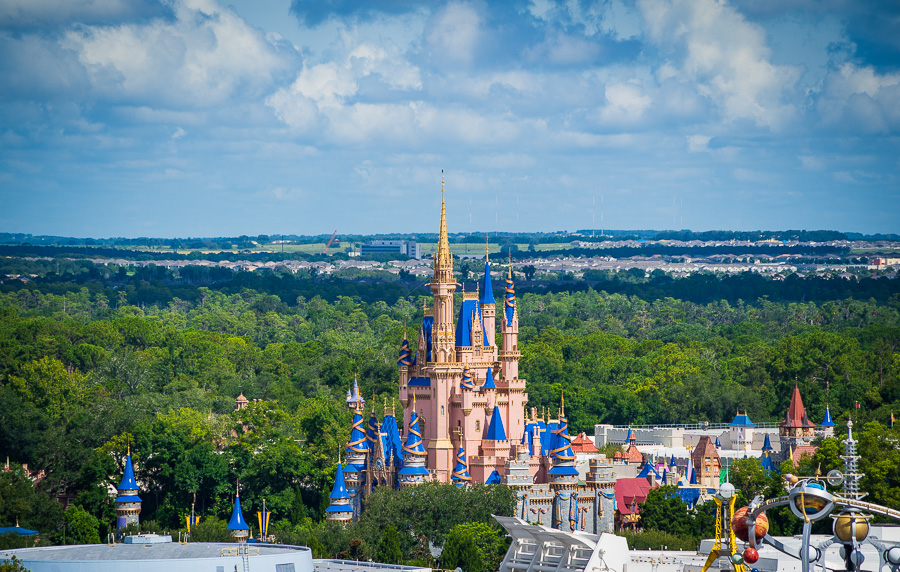
Magic Kingdom remained top dog of theme parks—not just #1 at Walt Disney World, but in the entire world. However, it’s still down as compared to 2019, when the park reached a staggering 20.96 million guests. That remains the high water mark for attendance, and it probably won’t be reached again until Cars land opens in 2029.
EPCOT is leapfrogged Hollywood Studios to reclaim the #2 spot of Walt Disney World parks, with a sizable 19.8% attendance increase. That was likely fueled by the first full year of Guardians of the Galaxy: Cosmic Rewind, along with partial years of other additions, construction winding down, and a longer festival season.
With construction now fully finished, it’ll be interesting to see whether EPCOT sees a year-over-year increase in 2024. I’d bet against it. My strong suspicion is that Walt Disney World massively miscalculated by not offering a summer festival, and the opening of CommuniCore did nothing to drive visitation. Still, even mostly flat attendance should keep EPCOT in the #2 spot. And that right there explains why the park only got one D23 Expo announcement–a new lounge.

Meanwhile, Disney’s Hollywood Studios dropped by 5.5% and Animal Kingdom was down by 2.8%. It’s no coincidence that these are the two parks furthest removed from major additions—DHS in particular saw bigger bumps the last two years, meaning tougher comparisons.
Animal Kingdom is just flailing. After peaking at nearly 14 million guests in 2019, the park has been dropping since, and there’s a not-insignificant chance it’ll fall to half that number in the first full year (2026) that Epic Universe is open. That means we won’t see the full fruits or consequences of Epic Universe (depending upon your perspective) until this time in 2027, when the 2026 report is released.
I’m honestly surprised that Disney isn’t acting with a greater sense of urgency. Keep in mind that these numbers are not “news” to Walt Disney World–they would’ve seen these trends emerge over 12 months ago. As we’ve been saying for a while, Animal Kingdom is in urgent need of help and its expansion should’ve opened by now.
Instead, construction will finally get started in 2025. Frankly, I don’t know how DAK can get away with nothing to drive attendance between now and then. Zootopia: Better Zoogether isn’t going to do the trick–they need a drone show. Probably more.

As noted above, attendance is down pretty much across the board as compared to the 2019 report. EPCOT and Disney’s Hollywood Studios are the two parks that come the closest, but it does not seem like either will surpass those high water marks anytime soon. Especially not with no additions this year and Epic Universe on the horizon next.
It seems like Walt Disney World is okay with this. At least, for the most part. As we noted above, per guest spending is the company’s key metric and they’ve achieved enviable results there. But they’ve also offered more discounts over the last 18 months. Some of those, like Free Dining, actually do increase per guest spending. Others, like the current ticket deals, do not.
Our position for a while has been that Disney Doesn’t Want Lower Crowds. The title of the post should give away our conclusion, but there’s really more nuance to it than that. In reality, the company wants to have its cake and eat it too: the intersection of higher guest spending and higher attendance. Meaning that if per guest spending stats could be maximized at the same time as Magic Kingdom breaking the 20 million barrier, Disney would absolutely take both. That isn’t quite possible, so they aim to thread the needle and balance those desires.
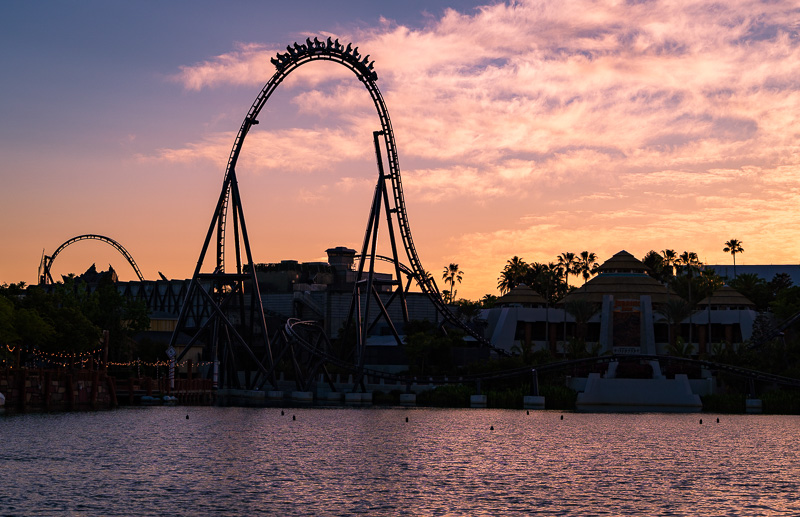
Then there’s Universal Orlando. Islands of Adventure was down 9.3% to 10 million guests while Universal Studios Florida also fell 9.3% to 9.75 million guests.
Universal apologists are likely to hand wave this away, saying that fans were postponing trips until Epic Universe. We are skeptical of that. While it is absolutely true that people postpone trips for new offerings, this usually occurs in the months leading up to openings, not the years. It’s very difficult to imagine the average guest in January 2023 opting to put off a visit for another 2+ years. That just was not happening at any meaningful scale. It isn’t how the general public operates.
And in fact, Comcast has not even made that claim on recent earnings calls to excuse worsening results. To the contrary, they have attributed their (documented) slowdown on pent-up demand for other travel options including cruises and international tourism, the strength of the dollar, and normalization post-pent-up demand.
Universal executives also conceded their lower attendance to a lull in new attraction offerings: “We haven’t launched a major new attraction in Orlando since VelociCoaster in 2021, in anticipation of Epic Universe,” explained Jason Armstrong, Comcast’s CFO during a recent earnings call.

For its part, the report attributes a “large part” of Orlando’s underperformance (relative to global numbers) to international travel that has still not returned to pre-pandemic levels. They also point to the relative strength of the U.S. dollar, which makes inbound international travel much less attractive. According to the report, Orlando operators also cited a decrease in group travel as a key reason for lower numbers.
Even though performance elsewhere in the U.S. was stable or up, the weight Florida has on the whole North American market pulled average numbers down, resulting in very little net growth for the entire North American region. Nevertheless, Orlando remains a strong primary hub of the industry.
There may be a lull, but the party is far from over, according to the Themed Entertainment Association. They point out that Disney has pledged $60 billion for global investment over the next decade, looking to “turbocharge” Disney Experiences. SeaWorld Orlando is also continuing the multi-year investments in its property, including new roller coasters, water slides and more. Finally, Universal’s big investment in Epic Universe, scheduled to open in 2025, will create major buzz for the market.

Turning to commentary, we’ll attempt to answer the obvious question: what do these numbers mean?
“There are three kinds of lies: lies, damned lies, and statistics.” That is very much apt here, and underscores the point that you could draw a variety of conclusions from these numbers depending upon where your theme park allegiances lie. Some Disney diehards might highlight the overall performance relative to its crosstown competitor, whereas Universal acolytes will undoubtedly point to Epic Universe.
Honestly, I think both are fair, albeit not for the reasons fans think. Walt Disney World has opened much more since 2021 than Universal Orlando. Fans seem to think it’s not enough for whatever reason, but in the eyes of the general public, there’s been a lot–and it has performed well.

Not only that, but Universal overperformed prior to this, having already gone all out to attract Annual Passholders and entice other visitors. That resulted in a blockbuster 2022 for Universal, with those parks returning to reality last year. By contrast, Walt Disney World was just finally starting to “pull levers” (in Disney parlance) to lure back locals and fans last year.
So for Walt Disney World to only record these results in a year when it had more new offerings and was undertaking initiatives to boost attendance…that’s not great. Especially when you account for the fact that Disney had no major attraction openings after this, and won’t until 2027.
Walt Disney World will be reliant on celebrations, promotions, and entertainment to drive attendance in the next few years. That could work! The new Disney Starlight nighttime parade will be a major draw for fans in 2025, but it’ll likely take more than that to incentivize the general public (at scale) to book vacations. It’ll be interesting to see what else Disney has up its sleeve for the next couple of years, and whether that’s enough to prevent erosion of market share to Universal.

Conversely, Universal is down because of Epic Universe–but not by virtue of guests delaying trips. It’s because that has been the primary focus of investment for Comcast, so there has been nothing major since 2021 when VelociCoaster opened. (That means they, themselves are not counting the Minions and DreamWorks stuff.)
The downside of this is that 2024 is probably going to be another rough year with more decreases for Universal Orlando. The upside is that Comcast is probably perfectly fine with this, and it creates a juicy comparison that’ll be easy to blow out of the water once Epic Universe opens.
It’ll be interesting to see how attendance fares at Universal Studios Florida and Islands of Adventure once Epic Universe opens. Historically, new gates have come at the short term expense of existing ones–but Universal is seemingly intent on bundling Epic Universe access into multi-day packages that “force” guests to visit the legacy parks. It’s a bold strategy–we’ll see if it pays off for them.

In short, success for Central Florida theme parks is pretty simple: if you build it, they will come.
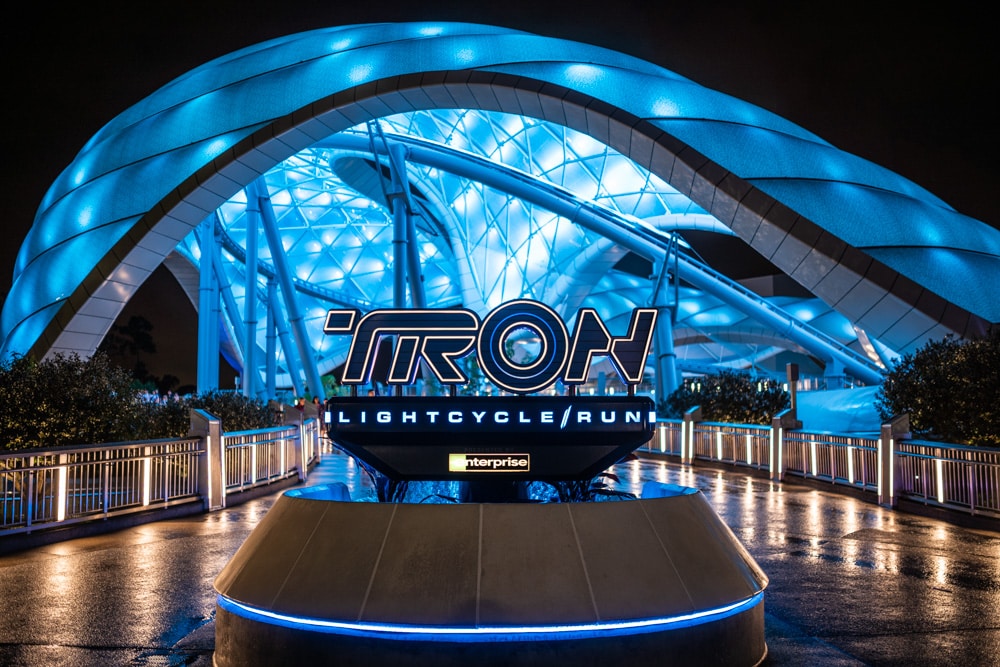
Time and time again, the TEA numbers have borne this out. Animal Kingdom saw a similar explosion post-Pandora, while Star Wars: Galaxy’s Edge and Toy Story Land were big for Disney’s Hollywood Studios. Last year’s numbers for EPCOT tell a similar story, with the park finally benefitting from Cosmic Rewind and the additions that came before it. Meanwhile, Magic Kingdom saw a modest boost from TRON Lightcycle Run.
Equally as important, the TEA report shows the opposite: when parks go too long between opening new attractions, their attendance suffers. If you want one “narrative” to take away from these attendance statistics, that should be it! For one thing, it’s true. For another, it’s the narrative that benefits us all and puts us all on the same “side” rather than the endless Universal vs. Disney discourse that makes us all sound like weird cultists. Most importantly, it’s the perspective that encourages theme parks to invest more money into expansion and opening new attractions.
Obviously, there are macroeconomic and other externalities that impact attendance. With that said, the biggest ‘lesson’ to be learned is that building cool new stuff increases attendance. It’s crazy that this is even a lesson, as it seems patently obvious. But Disney and other operators have played games over the years, trying to extract higher spending or optimize without adding anything new.
Thankfully, it appears that era is over–as evidenced by the blockbuster D23 Expo. Or at least, it’s over until they “forget” this lesson and opt to invest billions in the next NextGen folly. In the meantime, it should be a fantastic decade to be a Central Florida theme park fan as both Universal and Disney invest billions upon billions of dollars to attract new visitors. Regardless of which side “wins” or “loses” in the near term, we as fans all win in the long term!
Planning a Walt Disney World trip? Learn about hotels on our Walt Disney World Hotels Reviews page. For where to eat, read our Walt Disney World Restaurant Reviews. To save money on tickets or determine which type to buy, read our Tips for Saving Money on Walt Disney World Tickets post. Our What to Pack for Disney Trips post takes a unique look at clever items to take. For what to do and when to do it, our Walt Disney World Ride Guides will help. For comprehensive advice, the best place to start is our Walt Disney World Trip Planning Guide for everything you need to know!
Your Thoughts
What do you think of the TEA Global Attractions Attendance Report? Thoughts on the results for Universal Orlando or Walt Disney World? Any color commentary of your own to add? Do you agree or disagree with our assessments and forward-looking predictions? Any questions we can help you answer? Hearing your feedback—even when you disagree with us—is both interesting to us and helpful to other readers, so please share your thoughts below in the comments!




The biggest draw for Universal has been the Harry Potter areas. JK Rowling has gotten more and more political over the last few years, and that seems to have turned off a lot of Gen Zers who used to be her biggest fans.
Harry Potter book and movie sales are down, I wouldn’t be surprised if Rowling’s politics have led to a decrease in interest for Universal as well
Great to see Efteling on this list. We did Amsterdam, tulip fields, windmills and then a few days in Efteling. It was an amazing trip and less expensive than WDW even with flights from the east coast USA.
I am surprised to see that Six Flags Great America ranked 19th for North America attendance. The park was only open for 6 months and there were no new rides added to the lineup. It is decent for a regional park and fortunately is not that far for me.
Tom, with all due respect, I think yourself AND Universal are understating the amount of people putting off vacations until EPIC. With the cost of Orlando trips skyrocketing over the last few years, myself and many others are saving our precious dollars for EPIC as we can no longer afford yearly trips.
We did Universal this summer, took my grandkids and my daughter in law who Loves Harry Potter and had wanted to go for ages. I picked this summer, in hopes that attendance would be down with people anticipating Epic. if you are saving for a big trip that wont happen again for some time,and that is available next year, it would make sense to wait for that. We stayed on site and had unlimited express included, never waited more than 15 min for a ride. We were hot, but everyone had a good time, and crowds weren’t bad
The rate of increase at Shanghai Disneyland is incredible. I’m sure some of it is Covid-rebound but it also speaks to the popularity of that park. Could it eventually be #1 on this list?
I don’t know enough about the Chinese market to speak credibly on that. I do know that demographics are not on their side, but the local population within train distance most definitely is. I wouldn’t expect that in the near term, though, as China is now experiencing a slowdown on the backside of pent-up demand and could enter a recession.
Even with unfavorable demographics, the Shanghai and Tokyo parks surpassing the domestic ones at some point does strike me as plausible.
I am really surprised to see that there are seven parks in China on the top 25 list. Also, Universal Beijing is behind not only Shanghai Disneyland, but also another Chinese theme park that I know nothing about. I am curious if it means that there is a large theme-park going audience in China that Disney and Universal could expand into.
My main take on it is how big the expansion of numbers in the foreign parks is with the increases in China and in Japan for Disney. I am guessing this is probably a reflection of China’s reopening being slower but also how big the market is hence the continued focus on it even if I would prefer disney to not be operating a park there and Shanghai (and possibly Hong Kong nowL is the only one I point blank would refuse to go to under current conditions.
Japan is probably obvious with its slow covid opening too even if it’s OLC profits but that’s not bad for disney in the ride development costs being covered.
As for the US parks it feels like everyone but Epic Universe could be in for a bumpy time as I don’t think a recession is on its way but there’s definitely signs of slow down and people spending less. possibly with with lack of other new attractions causing it but I also definately felt inflation had hit even bigger in the parks then usual the last time.
You are correct that DAK needs some help. Although this is one of our favorite parks, this park closes too early now for us to have any interest in visiting. We never park hop, and it’s simply too hot for us to visit any of the Disney parks before 4 pm during the summer. I hope Disney extends DAK’s hours and brings back a night show in the future.
Relatively off subject, but CONGRATULATIONS on the CNN interview (again!) When I saw you quoted, I said “Hey, I know that guy!” which is ridiculous, because obviously we don’t know you, but I think I speak for most of us when I say it’s pretty rad to see you being used as a subject matter expert on Disney stuff. I’m glad CNN is figuring out what DTB readers already know: if you don’t know, ask Tom. If Tom doesn’t know, you may need to reconsider the question. 🙂
Keep up the good work!
(Since Tom isn’t one to pound his own chest, here’s a link to the story I’m referencing: https://www.cnn.com/2024/08/16/business/disney-world-park-prices/index.html )
Thanks for pointing this out to us! Great article and a well deserved honor for Tom.
Looks like the California parks had a fantastic 2023 all around! Of course you have D100 for DLR and Nintendo for Universal, and a new coaster for SeaWorld. Going forward in the short term you have a new coaster at USH, Tiana’s at DLR, and the new Camp Snoopy at Knott’s, and then DLR’s 70th anniversary. Then…..there’s everything announced at D23. By the end of the decade, DCA could be in the top 5 parks in the US easily for attendance.
Good points, Tom. One (of many) takeaways for me is that I come away with a stronger sense of what Universal Creative will be doing a year from now, if not already. They will sit back and monitor Epic while at the same time planning an overhaul of their Studios park. Universal Studios Florida is tired, and not very attractive. One segment at a time will be considered for dramatic overhauls to make better use of the available land. This will be a higher priority than Islands of Adventure – also in need of updates to Marvel and Seuss areas just to get started.
Also — EuropaPark is a grand park and I’m very surprised it does not rank higher. They do close for the winter, and the chart is based on attendance, so it would be interesting to level the field as if all parks were open 12 months and then see how the parks rank. I can’t speak highly enough of EuropaPark. Reasonably priced and always a stress-free experience for me.
Really good write up, Tom. Agree on all your points.
FWIW – As you hinted at in your post, while there are similarities in how Disney and Universal approach the market, Disney is trying to get max immediate profits up by focusing on per capita revenue in the short term, while Universal is looking for growth. As data points – Len Testa said on the Disney Dish podcast a couple weeks ago that the Universal planned to price Dockside/Surfside below profitability for 7 years to grow their base (And their Epic Universe strategy supports it). Meanwhile, Disney delayed rolling out Tron just to goose their loyal customers at a precise time.
That’s an interesting comment from Len–I believe it.
I’ve said for a while that Universal built out its hotel inventory in anticipation of Epic Universe, which meant that they “overbuilt” for the parks they currently have…which is why prices have been below-market. This is usually as a ‘warning’ to planners who think Epic Universe is going to open and Universal will continue being the excellent value that it currently is.
Universal and Disney are no different from one another. At the end of the day, both will do very similar things to improve their results (earnings). The means might differ slightly, with better or worse outcomes under different leadership, but the goals are the same.
FWIW, we just received a promotion from Universal Orlando for receiving up to a 1k dining promo card for staying onsite (5 nights at a premier resort to max out the benefit). Imagine it won’t be the last promo as they try and attract guests before Epic Universe opens.
Yeah, I saw that! I’ll be doing a full write-up this weekend.
My first thought is that it means we can eliminate any date before April 10, 2025 as when Epic Universe will open.