
What Disney World’s Most Expensive Luxury Resort Selling for $1 Billion Reveals About Hotel Occupancy

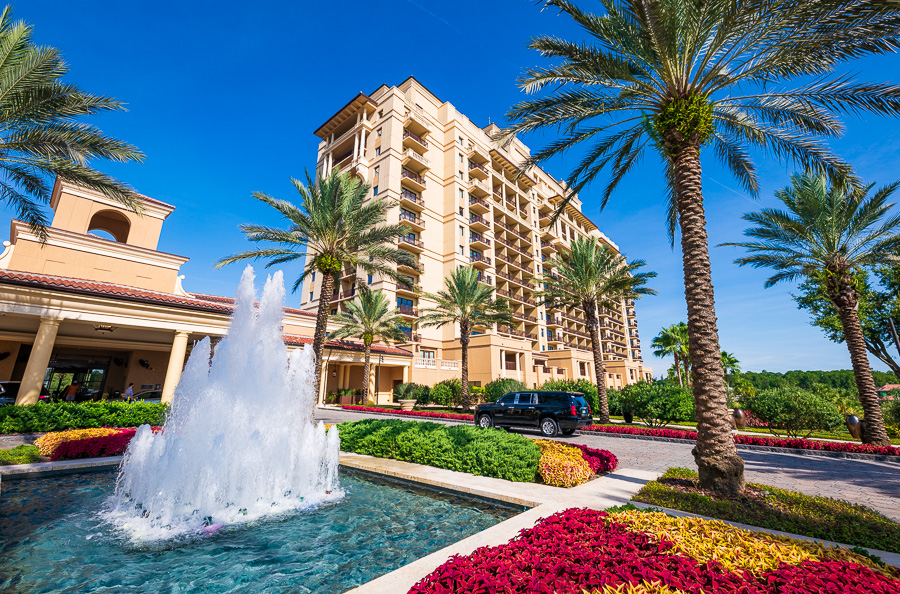
As part of a blockbuster real estate transaction, the Four Seasons Orlando at Walt Disney World Resort sold as part of a $1.1 billion deal. This news caught my attention–it’s a big number! What I really found fascinating was the occupancy rate, given its location a stone’s throw from Magic Kingdom and status as the most luxurious on-site hotel and one of the priciest properties per night.
That led me to do some digging, looking into SEC filings from 2019 through present and the original acquisition deck prepared by the parent company when they first acquired. Then I did further research into average occupancy rates for luxury hotels, and continued down that rabbit hole.
Rather than letting that hour-plus go to waste, I thought it might be worth sharing some of the “fruits” of that effort. Before we get into the actual point of this article, let’s start with a (summarized/paraphrased) version of the press release from Host Hotels & Resorts in announcing their sale of the Four Seasons Orlando.
As basic background, Host Hotels & Resorts, Inc. is an S&P 500 company, the largest lodging real estate investment trust and one of the largest owners of luxury and upper-upscale hotels. Host Hotels & Resorts currently owns 71 properties in the United States and five properties internationally totaling approximately 41,700 rooms.
Host Hotels & Resorts has sold the 444-room Four Seasons Resort Orlando at Walt Disney World Resort in Orlando, Florida and the 125-room Four Seasons Resort and Residences Jackson Hole in Teton Village, Wyoming for a sale price of $1.1 billion.

Host Hotels & Resorts purchased the two Four Seasons hotels in 2021 (Orlando) and 2022 (Jackson Hole), for a total of $925 million with no significant capital expenditures required over its ownership period. The company bought the Four Seasons Orlando for $610 million in 2021 from Four Seasons Hotels & Resort, Dune Real Estate Partners, and Silverstein Properties Inc. It purchased the Jackson Hole property for $315 million.
James F. Risoleo, President and Chief Executive Officer, said: “The sale of these two iconic properties represents another important step in advancing our capital allocation strategy. The $1.1 billion sale price for these resorts represents an 11.0% unlevered IRR over our ownership period and an EBITDA multiple that is significantly higher than our Company’s recent trading multiple.”
“We are pleased with our ability to monetize two recently acquired hotels at an attractive profit and an accretive multiple, and we will continue to use our competitive advantages to create value for our shareholders.”

Mr. Risoleo continued, “The proceeds will further solidify Host’s fortress balance sheet, which will continue to be an important competitive advantage for the Company. Our significant financial flexibility provides optionality to pursue the highest return opportunities and simultaneously return capital to shareholders through dividends and share repurchases, reinvest in our geographically diverse portfolio, and take advantage of dispositions while prudently pursuing accretive acquisitions. We will continue to be opportunistic in our capital allocation strategy while positioning Host to outperform over the long term.”
The sale excludes the ongoing condo development at the Four Seasons Resort Orlando at Walt Disney World Resort. Based on a separate SEC filing, the company has sold 16 condominium units in this development.
Twelve additional units have been sold or are under contract to-date in 2026, including eight villas that are scheduled to complete construction in the first half of 2026, bringing the total contracted to 28 of 40 units.

Four Seasons Orlando Occupancy
More interesting to us is the “revelation” that the Four Seasons Orlando’s occupancy in the last fiscal year was 63%. This isn’t really a revelation. Host Hotels is publicly traded and these stats have been available in SEC filings for years; we just never thought to look them up. Sort of like when we “discovered” the glorious fried chicken at Olivia’s Cafe, even though it’s probably been on the menu since the 1990s.
The 63% number struck me as surprisingly low. Luxury hotels typically have lower occupancy rates and a lower break-even point than other chained-brand hotels; global data suggests an average occupancy rate of around 60%, which is a number that’s viewed as perfectly healthy. Major domestic markets are typically higher, ranging from 70% to above 90% in high-demand, low-inventory locations. Regardless, we’re not suggesting that the Four Seasons Orlando had major problems or there’s more to the story here that was the impetus for the sale. Just adding context based on research.
For reference, the Four Seasons Orlando Resort at Walt Disney World had an occupancy rate of 74.5% in 2019 per the Host Hotels report prepared as part of its acquisition of the property back in 2021. The average occupancy rate at the time of the sale was only 58%, but that was also during COVID. The report discussed pent-up demand and Walt Disney World’s then-upcoming 50th Anniversary, indicating the hotel should see occupancy returning or exceeding to 2019 levels.
That never happened. Per the company’s SEC filings, its Orlando occupancy has been on steady decline since 2023, peaking at under 70% and dropping in each of the last two years. I would argue that this is notable, and clearly under the company’s own projections (as well as the competition in Central Florida).
It’s also a divergence from all of Host Hotels’ domestic properties, which have held steady at right around 70% occupancy for each of the last three fiscal years (70.7% in 2023 and 2024, 70.1% in 2025).
It’s far from the worst market, a distinction that goes to San Antonio, but also far below the 87% occupancy boasted by the company’s three NYC properties.

It’s not as if the Central Florida market is oversaturated with luxury accommodations. Per that same 2021 acquisition report, one of the things that was most attractive about the property was that only 4% of the total room inventory was luxury; considered a very low supply.
By contrast, New York, San Francisco and Miami were all at 10%. (That percentage has likely increased with the opening of the Conrad Orlando and build-out of Evermore Resort, so perhaps this is a story of increased competition in the luxury sphere?)
Now we’ll take a look at how this compares and contrasts with Walt Disney World occupancy and the broader Central Florida market. Let’s start by discussing Walt Disney World occupancy statistics. If you dig through the Walt Disney Company’s financials, this is something you can actually find buried in the documents on their Investor Relations page.

Walt Disney World Resort Occupancy By Year
- 2013: 79%
- 2014: 83%
- 2015: 87%
- 2016: 89%
- 2017: 88%
- 2018: 88%
- 2019: 90%
- 2020: 43%
- 2021: 42%
- 2022: 82%
- 2023: 85%
- 2024: 85%
- 2025: 87%
A couple of things are worth noting here. The first is that 2020-2021 are obvious outliers due to the COVID closure and phased reopening. I would be really curious to see occupancy for January and February 2020, because my gut is that Walt Disney World set a record then. The last few months of 2019 into early 2020 were the busiest we’ve ever seen Walt Disney World.
Second, these numbers are domestic occupancy as a whole, which includes Disneyland Resort. However, Disneyland has under 3,000 hotel rooms whereas Walt Disney World has ten times that number. So for all intents and purposes, those numbers reflect Walt Disney World.

Third, all of these numbers are higher than the Orlando market as a whole. Occupancy was 71.6% in 2024 according to VisitOrlando, which was down 1.1% from 2023, but still historically high and considered an industry win. Orlando occupancy was 66.1% in 2019.
There were 130,464 hotel rooms in Orlando as of 2024; that number almost certainly increased in 2025 due to new openings (and given record tax collections). Last year’s occupancy data has not yet been reported; it was up year-over-year through the first half.
Central Florida slightly outperforms the nationwide average, which is notable given the competitive market at the lower end. This is probably why, in our experience, you can get much more bang for your buck in Orlando than random areas of the country. This might be an unpopular opinion, but given the location near major tourist attractions, but Central Florida hotels as a whole are very reasonably priced relative to their counterparts elsewhere.

This is not the case with the Four Seasons Orlando. Per the above-referenced filings, the average nightly room rate for the hotel was $1,241.70 last year. The resort achieved a total revenue per available room of $1,300, ranking it #3 out of the top 40 hotels owned by Host Hotels & Resorts.
That eye-popping number is also why there’s probably no cause for alarm with the low occupancy rate. Although Host likely would’ve preferred that nightly room rate and higher occupancy, it was clearly a concerted decision to sacrifice occupancy for the sake of rates.
Those per room revenues aren’t a huge shock, either. We once visited a suite that rents out for $20,000 per night and offers butler service. The ‘bespoke’ customizability for the discerning guest is off the charts at Four Seasons, and certain high-profile clients are known to rent out entire floors just for themselves.
Although Walt Disney World doesn’t release this type of property-by-property breakdown and we’re not aware of it for any other third parties, we strongly suspect this makes the Four Seasons Orlando the objectively most-expensive resort at Walt Disney World. Given the <$600/night discounted rates we’ve spotted at the Grand Floridian, it’s unlikely even the rack rate rooms and suites are enough to drive up the average sufficiently.

From our perspective, it’s fascinating to see the divergent approaches between the Four Seasons Orlando and Walt Disney World. Despite being completely different, both are successful and work well for the spheres in which each exist.
As we’ve pointed out repeatedly, it was possible to pay the lowest prices for Walt Disney World vacations in over 6 years by stacking available summer deals last year. (See How to Get the Cheapest Walt Disney World Trip Since 2019.) This was precisely how Walt Disney World increased occupancy despite a decrease in attendance.
This was a rare ‘everyone wins’ scenario for Walt Disney World. Hotel rooms are a perishable good, so pushing up occupancy meant fewer rooms went unfilled (win for Disney), even if they sold at lower rates (win for consumers). That still boosted overall per guest spending since hotels are one of the biggest line-item expenses for vacations, because off-site stays shifted to on-site.

This is essentially the opposite of what the Four Seasons Orlando has been doing, achieving impressive per room revenue despite a lower occupancy number.
The obvious difference between Walt Disney World as a whole and the Four Seasons Orlando is that the former targets middle to upper middle class Americans, whereas the latter is a luxury brand. The Four Seasons would rather have rooms sit empty than offer drastic discounts because luxury brands trade on exclusivity and perceptions.
Drastic price cuts can devalue the brand, signaling a drop in quality or catering to an, ahem, different clientele. There are also concerns about price anchoring; if the Four Seasons were to offer deep discounts during the August and September off-season to fill unsold rooms, consumers might balk at paying double or triple those rates in the future…leading to unsold rooms down the road.
Suffice to say, it’s not quite the same for the Grand Floridian to sell a room for $543 one night (a real rate available May 12, 2026) and then turn around and sell it for $1,200+ a couple of months later. Although it’s Walt Disney World’s flagship resort and closest thing to a Walt Disney World-owned luxury resort, it’s trading on location and Disney branding (etc) as opposed to luxury or exclusivity.
Ultimately, I’m not sure what you’re supposed to do with all of this information. I found it fascinating and also a bit surprising to contrast the divergent business strategies of the Four Seasons Orlando and Walt Disney World as a whole.
My takeaway was a sense of relief. I get why the Four Seasons Orlando and other luxury brands price their products as they do, as perceptions and exclusivity are everything. That doesn’t mean I have to like it. I don’t. It’s bad for consumers, as it inflates pricing.
Walt Disney World could easily attempt the same with its Deluxe Resorts. (I’m not sure it would be a viable strategy since the products are fundamentally different, but thankfully, we haven’t found out.) Instead, they have elected to do the opposite and get more aggressive with discounts to increase occupancy to a well above-market level.
That’s good for consumers, as it (obviously) decreases rates. So as much as we all complain about Walt Disney World’s runaway pricing, the reality is that it could be worse. Sometimes a bit of added context can be helpful for anchoring expectations and opinions, I suppose.
Planning a Walt Disney World trip? Learn about hotels on our Walt Disney World Hotels Reviews page. For where to eat, read our Walt Disney World Restaurant Reviews. To save money on tickets or determine which type to buy, read our Tips for Saving Money on Walt Disney World Tickets post. Our What to Pack for Disney Trips post takes a unique look at clever items to take. For what to do and when to do it, our Walt Disney World Ride Guides will help. For comprehensive advice, the best place to start is our Walt Disney World Trip Planning Guide for everything you need to know!
YOUR THOUGHTS
Any thoughts on the occupancy rates and pricing strategies of the Four Seasons Orlando vs. Walt Disney World resort hotels? Surprised to see the Four Seasons having such a low occupancy rate, or does that make sense given the higher nightly room rates and revenue results? Do you agree or disagree with our commentary? Any questions we can help you answer? Hearing your feedback–even when you disagree with us–is both interesting to us and helpful to other readers, so please share your thoughts below in the comments!






Interesting! The first time I ever booked a WDW trip was for March of 2018. I looked into prices at the Four Seasons and they were either the same price or cheaper than the Grand Floridian! “Why wouldn’t we just stay at the Four Seasons?” I asked. “Location, location, location!” I was told. Fast forward to now and the prices are 100%-200% more than the GF, AND the GF is a whole lot nicer than it was in 2018. Pile on the incredible convenience of the GF and the value prop just isn’t there for the Four Seasons – even if you have the budget for it (we don’t). For a big splurge, I would love to spend the last night of a WDW vacation at the Four Seasons, but would skip the park tickets and just enjoy the pools.
Interesting article as always Tom. I agree with your point about all the competition in Orlando creating some of the lowest hotel prices. I live in Canada and for a hotel in Ottawa on a random Tuesday, it’s often more than a value resort at WDW or Universal, even with the exchange factored in. I can’t tell you how often my husband and I have looked a single night at a hotel here and said “That’s more than a night at Disney!” On the flip side, the hotel prices when we are actually planning a trip to Florida seem more palatable given what we pay here, so it doesn’t hurt as much 🙂
Excellent, interesting article. It’s very useful for your blog to cover comparisons in various areas with others operating in those areas, since it provides important context to assess why Disney makes certain decisions and its differing strategy. We have stayed at Four Seasons on vacations, most recently at the Sultanahmet Istanbul; they are wonderful properties (the Istanbul hotel had three times as many staff as guests), and service (based on evaluations by friends who are senior executives at Marriott) is unsurpassed in the industry. Our rates were in the range you mentioned in your article. But the Four Seasons properties we have stayed at were all in outstanding locations relevant to tourist attractions. The Disney location, based on going to see it, is not, with awkward transportation to every park. While we are long-time DVC members and no longer stay in the hotels, we would very much still pick the Grand Floridian where we stayed for many years — the ambience was warmer, more themed to make you feel you were in Disney, and more convenient, as well as luxurious enough. Thanks for the article.
As I understand it, such acquisitions are executed solely on what’s in a spreadsheet. Likely the people who decided to buy the Four Seasons Orlando at Walt Disney World have never been there and know nothing about its particular amenities or Disney park perks. They bought it because of corporate factors like growing their business, increasing revenue, tax write-offs, share price, etc. Sometimes a company simply has a lot of cash lying around and are looking for something to do with it. This happened at 20th Century Fox after they released the original “Star Wars”. That movie brought in so much money they purchased Vail Resorts in Colorado simply as a way to do something with all that cash.
When it comes to being a corporate executive or a high end guest at the Four Seasons Orlando, I’m recalling a line from F. Scott Fitzgerald’s short story, “The Rich Boy”:
“Let me tell you about the very rich. They are different from you and me”.
I love the information and agree with your conclusion about Disney putting occupancy over pricing. Discounts and even free dining are great incentives for budget minded vacationers.
We’ve stayed at 4 Seasons the last few years in the summer. They have offered some really cheap / discounted rates for conferences. The last two years were at $349 and $369 per night with add-ons for 2 additional weeks. Beautiful hotel and pool area for family. The bus system though is terrible so you need to plan on the Minnie Mouse Vans to get around.
If Four Seasons wanted to get more families that were visiting Disney as the reason for their stay here, and pump the occupancy, then i think they would need to have more family friendly room layouts & disney perks. The 2 double bed layout is not attractive unless you can spring for 2 connected rooms. However there aren’t enough “Disney” perks for that price compared to what you can get at a 1-2br Deluxe Villa at Disney for families in that price range that are going for a parks vacation. You have to be loyal to the brand, 5* hotels, or truly averse to staying at Disney to choose four seasons over a disney property for a “Disney vacation”. However like you said, they aren’t going to be chasing occupancy at this property, which is understandable. I think it serves a purpose for what it is. My guess is people who want a luxury family friendly hotel in the Orlando area might deign to stay in the Disney bubble and hit the parks for a day or two on an off-day while doing other things; working, dining and enjoying the resort. Just my thoughts.. I’m sure its a business deal and not much to do w/ how well or not the hotel is doing. Just a guess.
I couldn’t agree more. As a former TA, I had clients looking for luxury stays for the WDW vacation, but the Four Season’s room layouts never appealed. This resort needed dedicated 2 bedrooms.
The Four Seasons is not and never has been a Walt Disney World Resort. Therefore their occupancy numbers have nothing to do with the numbers at the Walt Disney World Resorts.
You’re right, most people staying there are staying for reasons totally unrelated to it being within the Walt Disney World Resort.
WDW obviously knows it’s not that easy to keep their occupancy up so high:
They haven’t actually ADDED room in years. Most recent construction has involved conversion of resort space into DVC space. Lakeside Lodge is the first significant true addition since Art of Animation 14 years ago.
So WDW seems to be far more interested in maximizing occupancy of existing space than adding more.
Of course, this goes hand in hand with attendance. Certainly, they could sell far more hotel rooms around Christmas and Easter — But then they would be left with excess occupancy in February and October. They seem to want to avoid a situation where they “can’t give room away” during slower seasons.
I’m not in a position to look this up right now, but I’m pretty sure last year saw the first somewhat meaningful increase to the available nights numbers (on the regulatory filings) in at least a decade. Prior to that, it had been on a slow but steady decline for a while.
Your point is still directionally accurate, but I nevertheless thought it was interesting.
No real thoughts, but I found the data interesting. It makes me wonder that the numbers 1 and 2 hotels in their portfolio for price are. Perhaps NYC and maybe the Jackson Hole hotel.
I wonder if the sale of The Four Seasons at Disney World is less of a trailing indicator of profitability and more of a forecast into future overall vacation trends at Disney World. Did the owners decide that the economy is showing signs of stress that predict trouble ahead for the theme parks? If so, that could be the motivation to sell now while they can make bank. Disney World, on the other hand, can’t just unload its properties since they are inextricably tied to theme park operations.
I don’t pretend to understand that world beyond the rabbit hole I went down for this article, but my impression is that these hoteliers are doing constant mergers & acquisitions, for reasons that probably make sense to their portfolio, but would be far less interesting to us.
If I had to guess as to any ‘on the ground’ reason, it’d be because they either see more competition in the space (e.g. Conrad and maybe even from Disney directly via GF) or not as much of a luxury market for Disney. Even those explanations strike me as unlikely.