
Why Facial Recognition Won’t Replace MagicBands at Disney World
New rumors are swirling that Walt Disney World plans to install new facial recognition entrances and replace hotel room key readers to support digital keys, further phasing out MagicBands. This takes a look at the changes that could be made at WDW, the likelihood of Disneyland’s system coming to Florida, and the critical difference that could minimize MagicBands further, but prevents the wearables from dying out at WDW.
The foundation for this rumor is, essentially, the successful test of facial recognition entrances at Disneyland. Earlier this year, Disney widely rolled out facial recognition technology at entrances to Disneyland and Disney California Adventure after months of limited testing.
Disney’s stated goal is to make reentry easier and to prevent fraud, and the system is certainly more streamlined and efficient than the process before. Unlike Walt Disney World, the California parks did not get tapstiles over a decade ago when MagicBands first rolled out, as the wearable didn’t come to DLR until the plus version a few years ago.
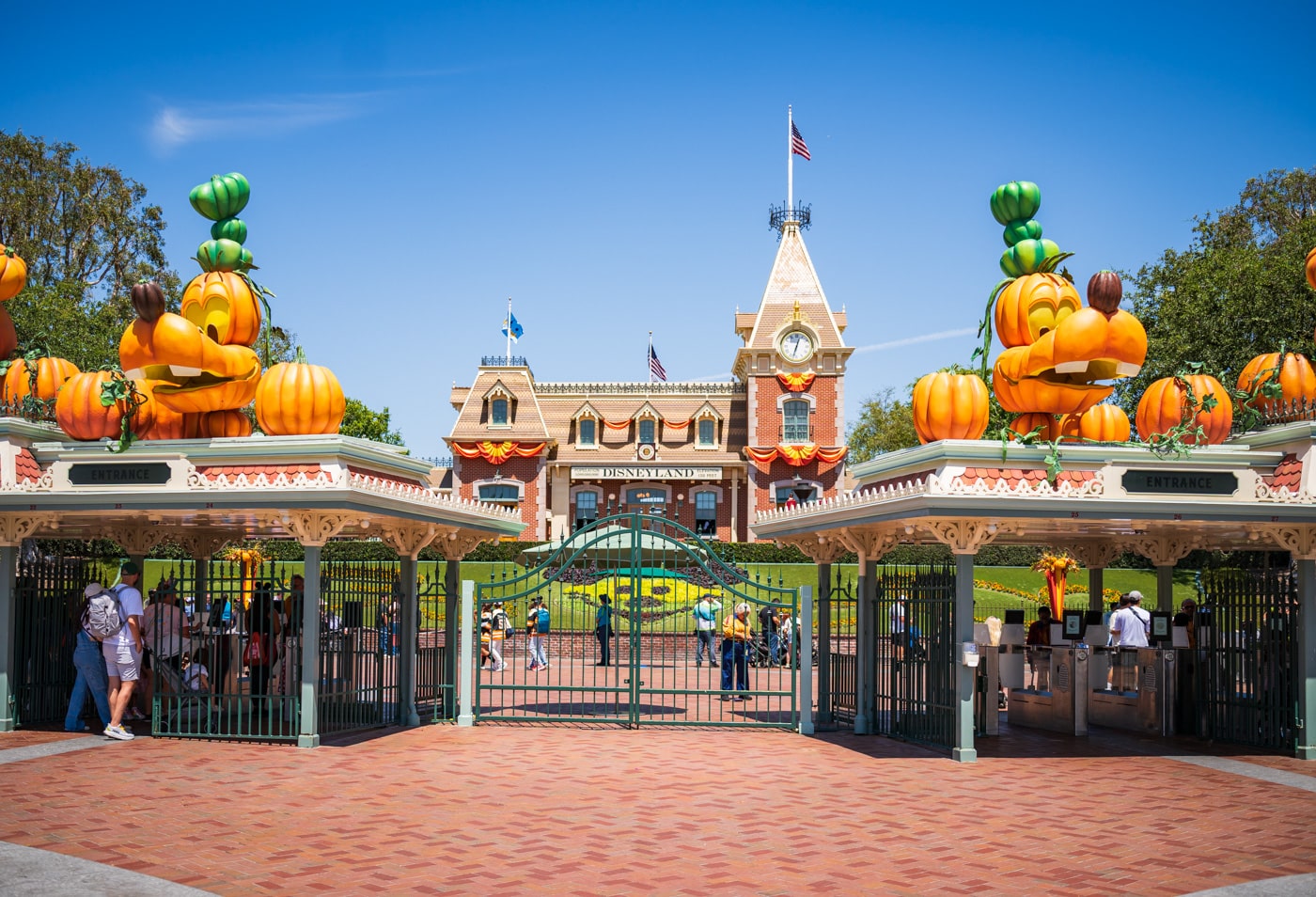
The Disneyland Resort gates have guests scan their tickets or MagicBands, then take a photo with the screen and built-in camera. The photo is attached to their ticket and the gates swing open. All these gates are accessible for wheelchairs, ECVs, and strollers.
This system is similar to the photo validation system Universal Orlando Resort introduced in 2023. It’s also similar to the system that Walt Disney World tested via temporary infrastructure back in 2021. Obviously, technology has moved fast since, and a lot has changed in the last 5 years. But the basic contours of the systems are all more or less the same.
So too are the concerns. Less than a month after the full rollout of facial recognition entrances, a class action lawsuit was filed against Disneyland. The complaint accuses the company of violating visitors’ privacy rights and consumer protection laws.

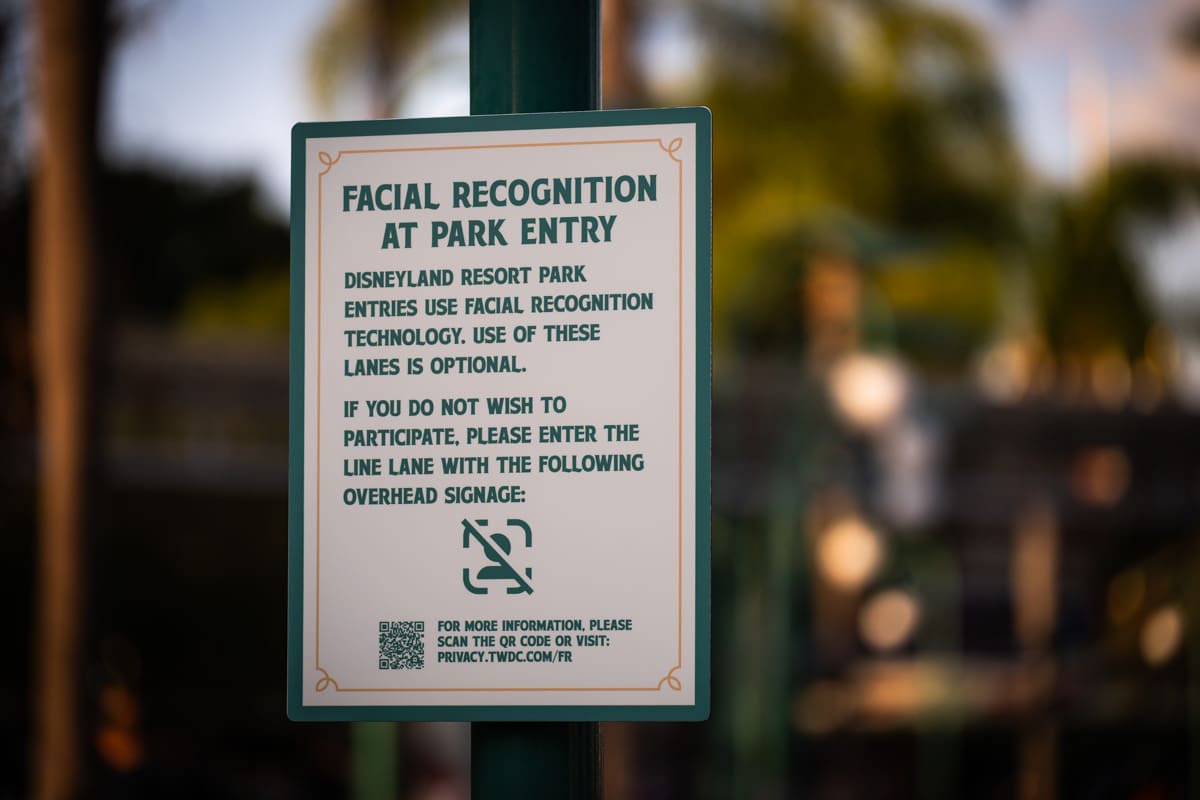
Disney says the system is optional. As before, guests who do not want to use it can enter through a limited number of regular entrances, where a cast member manually validates their ticket.
According to Disney’s privacy notice, the facial recognition system compares a camera image taken at the entrance with the image saved when a guest first used a ticket or pass, converting the images into unique numerical values to verify a match. Disney says it deletes the numbers within 30 days, and kids under 18 can use the system only with a parent’s consent.
The facial recognition test was likewise controversial at Walt Disney World back in 2021. Despite the lack of litigation, we’d say that backlash was more intense, but again, a lot has changed in 5 years. There are bigger privacy concerns these days, and controversies surrounding facial recognition seem almost quaint by comparison, especially with the growing ubiquity of such systems.
Setting aside the lawsuit, the majority of Disneyland fans welcomed the facial recognition entrances with open arms (us included), especially given their dramatically improved efficiency versus the antiquated turnstiles they replaced.

MagicBands Rumored to Be Discontinued in Near Future
That brings us to the two essentially overlapping rumors. The first comes from theme park analyst and consultant Bill Zanetti, who first posted on social media that MagicBands “will be discontinued in the near future.”
Zanetti went on to share more fascinating background on the development of the MyMagic+ project over a decade ago. A lot of this was already known, but there were some specifics that were new-to-me information. After detailing the costly and troubled rollout of the NextGen initiative and MagicBands, he pointed to hotel room doors as the one remaining holdout that hasn’t supported newer technology, and instead use Bluetooth.
Zanetti indicated that will soon change, as the technology has finally caught up to Disney’s needs and the day has come for full support for giant resort hotel properties to finally migrate away from Bluetooth. This is not hugely surprising.

Digital Keys for WDW Hotel Rooms
A few months ago, Walt Disney World announced upgrades via the ‘enhanced keys’ feature in iOS 27. With this, guests will be able to see key details of their Walt Disney World itinerary, like park reservations (as applicable), upcoming special event tickets (like Mickey’s Not So Scary Halloween Party admission), important visit details (like upcoming Advance Dining Reservations or Lightning Lane redemptions), and upcoming trips all in Apple Wallet.
One of Apple’s big pushes with the enhanced keys feature is the ability to seamlessly unlock resort room doors and hotel amenities using the iPhone or Apple Watch. Unfortunately, in order to take advantage of this, it’s our understanding that Walt Disney World would have to re-key its 30,000 hotel rooms in order to support the Near Field Communication (NFC) standard used by Apple.
Even with the infrastructure cost, it has seemed inevitable for a while that Disney would go in this direction. Between the technology becoming more ubiquitous, uptake increasing, and compatibility with legacy systems, it seems logical. Not only that, but the “Unlock Door” feature in My Disney Experience is clunky, unintuitive, and prone to problems. If Disney truly is moving away from MagicBands and doesn’t want to fully revert to Key to the World cards, they need a reliable and widespread alternative. The digital keys supported by Apple and Android offer exactly that.

Zanetti also indicated in a follow-up that he anticipates sales of new MagicBands stopping by October 2027 (start of the next fiscal year, which is when we’ve seen past phase-outs happen), with support continuing for a couple years after. However, he expects MagicBands to be dead by October of 2030.
Most of what Zanetti covered is familiar to us, and we’ve speculated openly about all of this, most notably back in The Writing is On the Wall for MagicBands at Disney. And in fact, Zanetti pointed to that post in another follow-up, saying he agreed with most of it.
The one point with which he doesn’t agree is our contention that MagicBands will continue to be supported by new attractions. “If the support is there just because the same tech is used for Apple Wallet, fine. But they won’t be going out of their way to support MagicBands after 2030,” he said.

Facial Recognition Entrances at WDW
A few days later, reputable insider the Visionary Soul shared something similar on wdwmagic. While much of what that poster discussed reinforced Zanetti’s claims, he also added that Walt Disney World will reportedly replace its current tapstiles with similar facial recognition entrances used by Disneyland.
The long-term goal with new Walt Disney World facial recognition entrances would be to recognize an entire group all at once, so everyone walks through together instead of one at a time. This is not how the system works at Disneyland currently. It’s one at a time, even if one person can scan all of the admission media from their phone.
Between this and moving to digital wallets for room keys, which the poster corroborated is also on the horizon, Walt Disney World could phase out plastic tickets and Key to the World hotel room cards.

This would all be part of the Walt Disney Company’s 2030 Environmental Goals Strategic Framework, which includes zero waste-to-landfill and a reduction in single-use plastics. In this context, that could mean replacing plastic room keys with ones made of bamboo, which several hotel chains already do.
The Visionary Soul was uncertain as to whether this meant that MagicBands would be retired, but indicated that it’s likely they should still be supported (minus some models). Moreover, they indicated that MagicBands were unlikely to be sold beyond 2030 given Disney is trying to eliminate all unnecessary single-use plastics.
While most of what the Visionary Soul shared passes the smell test and seems like the natural evolution of technology, from facial recognition entrances to digital hotel room keys, I’m skeptical that any of this is being built around that 2030 environmental plan.

I would expect Disney’s environmental goals to mostly align with its business interests. Which is to say that as long as things like popcorn buckets sell like hotcakes, Disney will continue to produce them. On the other hand, plastic bags cost money, and reusable ones can be sold, so there’s a check in favor of environmentality. And so on and so forth.
When it comes to MagicBands, my gut is that their production will eventually be ‘phased out’ in concert with their sales. Meaning that if or when it no longer makes sense for them to take up valuable shelf space due to fewer guests purchasing them, they won’t be sold or will shift to online-only sales.
At some point, production of new models will probably cease to make sense, period. But as long as it does, Disney will continue to make them. (It seems fairly easy to sidestep the environmental goals, anyway, by just saying that MagicBands are not single-use since they can be reused.) I would also note that Key to the World cards don’t go away in this scenario; they change materials.

Disneyland Ends MagicBand Sales
Earlier this year, Disneyland clearanced out remaining MagicBand+ inventory. We haven’t seen anything on shelves in months, and Disneyland confirmed that the resort has ended on-property sales of MagicBand+ devices, but not support for them.
As you might recall, the MagicBand+ launched at Disneyland Resort in October 2022 to great excitement among a subset of Disney fans who had been asking when the California parks would finally get MagicBands for years. It sold very poorly from the jump, to the point that Disneyland had so much unsold inventory that they literally gave away MagicBands with any purchase in September 2023.
Whereas a good percentage of guests still wear MagicBands at Walt Disney World even with the device no longer being distributed to on-site guests for free, they’re more rare at Disneyland. We see more guests wearing Monsters University hats than MagicBands in the California parks.
Between its limited uses at Disneyland and the reality that most guests are locals, it’s not a huge surprise that MagicBand+ hasn’t really caught on in the California parks. We expected it wouldn’t be a huge hit, but even we were caught off-guard by just how quickly it was forgotten and how few fans wear them out west.

Disneyland vs. Walt Disney World Guest Demographics
Earlier this spring, I attended a media roundtable with Thomas Mazloum, who was Disneyland President at the time but has since been promoted to Disney Experiences Chair. One of the questions asked was about the future of MagicBands at Disneyland, and whether further features would be rolled out.
Mazloum didn’t sugarcoat the future of the device in his response. He explained that, from his previous role overseeing Walt Disney World resort hotels, he knew that a majority of guests using MagicBands in Florida were staying in the resorts. He also explained that Walt Disney World has a ton of hotel inventory, giving the MagicBand actual utility.
This wasn’t really news to me. In discussing the sustainability (or lack thereof) of Early Entry at Disneyland vs. Walt Disney World, we pointed to hotel inventory. There are under 3,000 on-site resort rooms at Disneyland Resort (hotel inventory plus DVC), whereas there’s over 10 times that number at Walt Disney World.
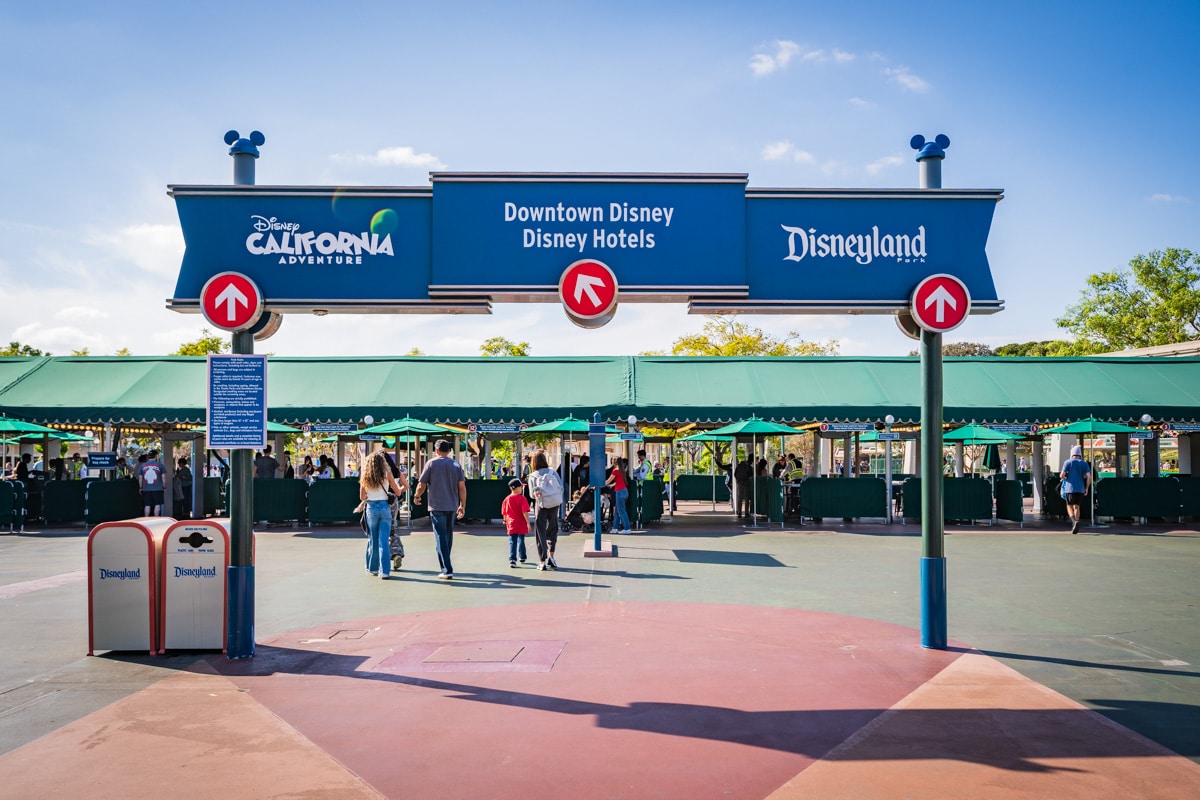
Mazloum then discussed demographics, covering Annual Passholders vs. tourists, off-site vs. on-site stays, and more ways that Disneyland and Walt Disney World differ. Or rather, how Walt Disney World is the outlier when it comes to the parks, and everywhere else is more like the California parks.
He explained that the theoretical audience for MagicBand+ at Disneyland is 7% of guests, whereas it was closer to 50% at Walt Disney World. He questioned the wisdom of spending on something that has a ceiling of 7% of guests, as opposed to investments that’ll benefit all park guests.
Note that this is the theoretical market for MagicBands. It doesn’t mean that 7% or 50% are the actual adoption rates. Now that neither coast is seeding the devices for free, that number is likely lower on both coasts. It’s definitely been on a gradual decline at Walt Disney World since the MagicBand+ launched, but so many legacy devices are already in circulation that it probably hasn’t dropped too much.
Divergent guest demographics is also why facial recognition, successful as it might be at Disneyland, is not necessarily the right answer for Walt Disney World. Or at least, not the only answer.
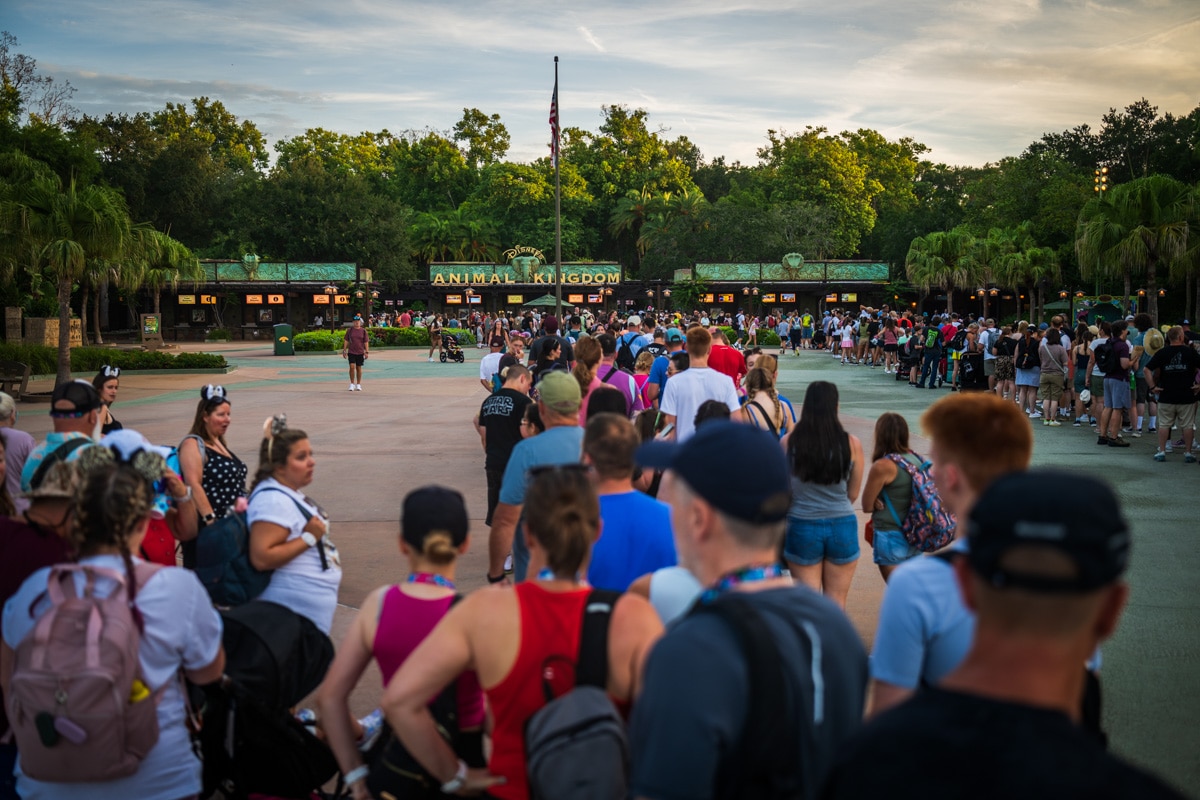
Visit Disneyland on an evening or weekend over the next few months, and you’ll conclude that facial recognition is the future. It’s a breeze, with less friction and fewer issues than you’d encounter at the entrances at Walt Disney World, where it seems like there’s always a blinking blue Mickey head and a Cast Member calling for assistance at the entrance.
Go back to Disneyland in early January 2027, right after the next California resident ticket deal rolls out. It will be a dramatically different dynamic, with the process moving much slower. This all comes down to guest demographics. The people visiting Disneyland right now are disproportionately locals and Annual Passholders who frequent the parks. It’s not just facial recognition that’s more efficient. It’s them.
As a power user on both coasts, I can assure you that the amount of time it takes me to enter the parks is using facial recognition or MagicMobile is about the same. Maybe there’s a slight difference, but it’s fairly negligible. If Disney were just doing an efficiency study of guests like me, there would be no basis for switching from the status quo at Walt Disney World, as it would yield no cost-savings or efficiency gains.
This isn’t to brag about my mad skills at entering a theme park. It’s to point out that efficiency is as much about demographics and user error as it is the underlying systems. If Disneyland had Walt Disney World’s touchpoint system, it would be more efficient because Annual Passholders and locals are more efficient.
Conversely, if Walt Disney World had Disneyland’s facial recognition system, it would be less efficient because first-time tourists and other infrequent visitors are less efficient. None of this is a value judgment; I’m not saying Disneyland guests are “better” or anything of the sort. They’re simply more likely to be repeat visitors with greater experience and admission media that is already set up for facial recognition.
Differing demographics are also why we’ve previously predicted that even after sales of MagicBand+ end at Walt Disney World, the devices would continue to be supported for many years to come. This is one thing that I strongly suspect the rumors have wrong.
I don’t doubt that there’s an internal push to move on from MagicBands. The wearables have always been polarizing within the company, so it comes as little surprise that some might want to see the device sunset by 2030. However, a desire to end support for the MagicBand among certain leaders and teams isn’t the same as a concrete plan to do so. A lot of things are fiercely debated internally, with rumors colored by the biases of what certain people within the company want to see happen, not necessarily what will.
Although MagicBand usage is undeniably on the decline, there is still a massive base for the wearables thanks to Walt Disney World giving them away for the better part of a decade, offering low-cost options for a few more years, and collectible MagicBands to this day. The number of active MagicBand users likely numbers in the millions.

Just as it doesn’t make sense to support such a low number of MagicBands at Disneyland, it doesn’t make sense to stop supporting such a massive MagicBand user base at Walt Disney World. Not only is it a high number of guests, but it’s a high number using a low-friction device who already know how it works.
It would be one thing if Walt Disney World were going to invest in new infrastructure that couldn’t support MagicBands in addition to other technology. But as demonstrated at Disneyland, it’s capable of doing both. Given that and everything else, it would be very odd to support them when the switchover is made, but stop at some arbitrary date in the future.
We’ve made this point previously, using Pal Mickey as an illustrative example. That plush flopped two decades ago, but still works! Given that the MagicBand user base is far larger than that of Pal Mickey, I wouldn’t be surprised by ongoing maintenance and support for the wearables for a long time to come.
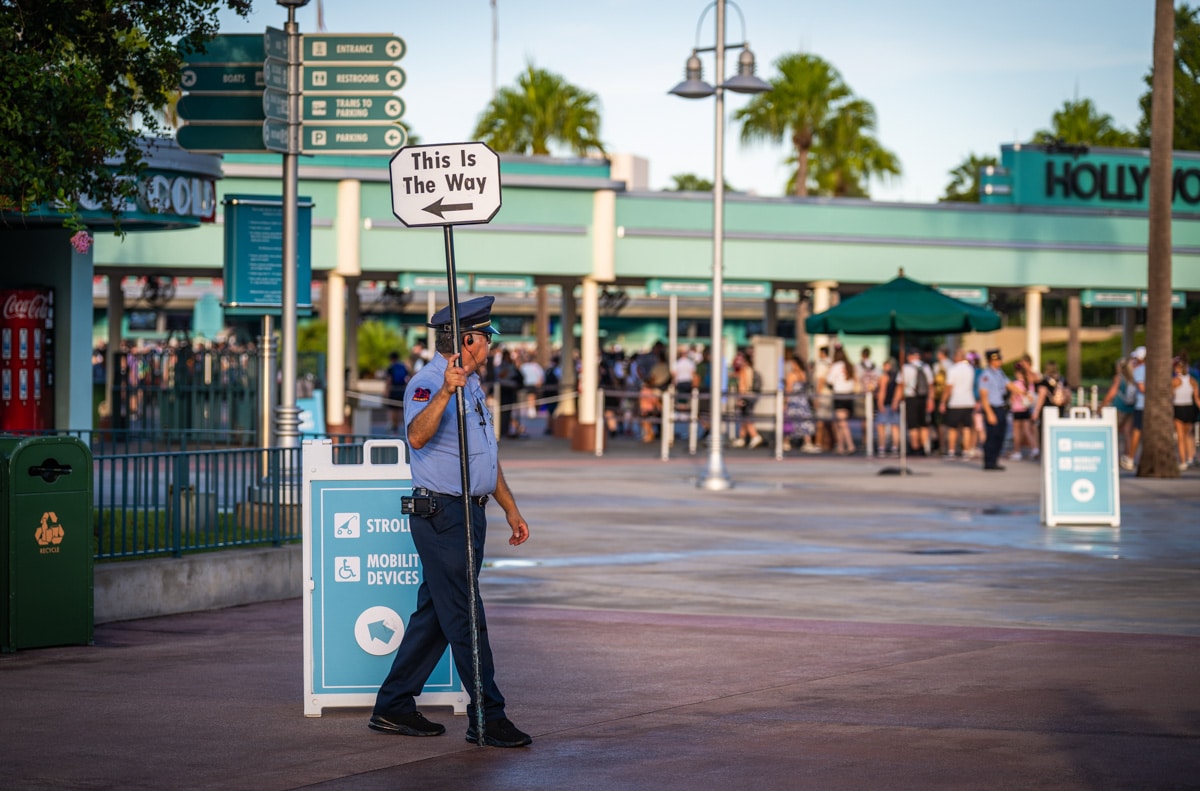
Ultimately, no other park has as diverse of guest demographics as Walt Disney World. There’s a mix of first-timers and infrequent tourists from around the country and the globe, along with locals, Annual Passholders, Disney Vacation Club members, and more.
Each of these groups might prefer or be more adept at using a particular system, which will likely result in a patchwork of technology being supported. Walt Disney World has recognized this in the past, which is why we currently have digital wallets, Key to the World cards, and MagicBands.
They’ll recognize it again whenever the new facial recognition and other technology inevitably roll out, without replacing MagicBands and everything else that’s currently available. Supporting a variety of options is the right answer for Walt Disney World, and it’s the route they’ll go when continuing to modernize their systems.

My expectation is that MagicBands will continue to work so long as major changes aren’t made to legacy systems, but I wouldn’t expect future features to roll out, entertainment enhancements, mini-games, or that sort of thing. Basically, to the extent that Disney doesn’t have to invest significantly more money into MagicBands, they’ll work.
The bottom line is that MagicBand touchpoints are likely at Lightning Lanes in Villains Land in Magic Kingdom and Journey Into Imagination with Figment and Dreamfinder, even if the devices are technically ‘dead’ by that time. And honestly, I don’t think they will be dead that soon. I wouldn’t be the least bit surprised if there’s a limited edition wearable for Walt Disney World’s 60th Anniversary, and fully expect that fans will be able to use existing MagicBands deep into the 2030s, and possibly the 2040s.
Planning a Walt Disney World trip? Learn about hotels on our Walt Disney World Hotels Reviews page. For where to eat, read our Walt Disney World Restaurant Reviews. To save money on tickets or determine which type to buy, read our Tips for Saving Money on Walt Disney World Tickets post. Our What to Pack for Disney Trips post takes a unique look at clever items to take. For what to do and when to do it, our Walt Disney World Ride Guides will help. For comprehensive advice, the best place to start is our Walt Disney World Trip Planning Guide for everything you need to know!
Your Thoughts
What do you think of MagicBands being replaced by facial recognition entrances and digital hotel room keys? Even if you think that new technology is coming soon to Walt Disney World, do you think that means MagicBand sales end in 2027 and support winds down by 2030? Do you agree or disagree with our assessment? Any questions we can help you answer? Hearing your feedback–even when you disagree with us–is both interesting to us and helpful to other readers, so please share your thoughts below in the comments!




My favourite park entry fraud prevention system (which is what this really is, despite the friendly presentation) is that used by Tokyo. It uses no recognition at all, instead they simply scan guests out of the park. It has the key advantage that the first entry, likely to be when queues are longest, is as quick as possible as compared with registering a face / fingerprint. (The only mystery is why, 3 years on, they still haven’t automated the process of scanning back in!)
Of course, this doesn’t work at any park with multi-day tickets that have discounts for multiple days. (Which also makes me think those aren’t returning to Tokyo anytime soon).
How long will Magic Bands work? I have many of the pre-MB+ version (maybe it’s called Magic Band 2.0?)?
I hope they are also considering the child demographic who don’t have cell phones. The Magicband is still super useful on Disney Cruise line when you don’t want to have your phone or wallet with you out at the pool or around the ship and when children are often much farther away from you than they are at the parks.
Just a simple statement, I do not like facial recognition: with AI the damage it could do is enormous. No matter how “secure” it is, someone (or thing) can/will soon hack the system.
Also, one thing you said pertaining to shopping bags, “On the other hand, plastic bags cost money, and reusable ones can be sold, so there’s a check in favor of environmentality.” The key point from your statement that I caught was “can be sold”! Is it really just the environment or is it for the money?
“Is it really just the environment or is it for the money?”
That was my point–maybe I just worded it clumsily.
Disney is all about the environment when it saves them money; less so when it costs them money.
My biggest problems with transitioning to a system where everything is on your phone are really spotty Wi-Fi and Cellular coverage in the parks and especially inside the attractions while you are waiting in line. The other is cellphone battery life. The app can be very power hungry which means that guests will need to carry high capacity power banks or the park will need to set up more charging stations or fuel rod exchange stations. In my opinion the Magic Band is still the way to go, the basic functions still work if you let the battery run down.
I don’t understand the dynamics of the privacy issues. Clearly they are already using facial recognition to track guests when they tap magic bands at entry, thus umbrella has to be down. I assume consent is buried in some TOC somewhere. Any difference in procedure seems negligible.