
Bob Iger Warns of Tariffs’ Impact on Disney’s $60 Billion Expansion Plans

After President Donald Trump announced expansive tariffs on the United States’ largest trading partners, CEO Bob Iger warned of the negative impact on the country and Disney’s businesses as a result. This covers what the CEO said, plus our preliminary thoughts on the ramifications for Walt Disney World, Disneyland, Disney Cruise Line, etc.
During a surprise appearance at ABC News’ daily editorial meeting, Walt Disney Company CEO Bob Iger sounded the alarm on the announced “Liberation Day” tariffs. The United States already began collecting the across-the-board unilateral 10% tariff on all imports from many countries on Saturday, with higher levies on goods from 57 larger trading partners due to start on April 9, 2025.
These higher “reciprocal” tariff rates of 11% to 50% are calculated by taking the country’s trade deficit with the United States, divided by its exports, then divided by two. Under this so-called reciprocal formula, European Union imports will face a 20% tariff and Chinese goods will be hit with a new 34% tariff, bringing the total levies on China to 54%.
In response to the higher-than-expected tariffs, Disney CEO Bob Iger expressed concern about the impact an impending trade war may have on not just his company, but the American economy as a whole. Iger emphasized that relocating overseas manufacturing to the United States “speedily” is impossible. Iger also suggested that most people “don’t really understand how tariffs work,” according to Oliver Darcy’s Status newsletter.
Iger said that many major companies rely on specialized workers who would need to be replaced and trained domestically, which couldn’t conceivably happen quickly. The CEO pointed to Apple’s Foxconn plants in China, which employ hundreds of thousands of highly specialized workers, noting that it wouldn’t be possible to simply replicate their skill level overnight domestically. Anonymous staffers who were present at the meeting in New York City told Darcy that Iger’s comments appeared to be his push for ABC News to connect the dots for readers and viewers.
As discussion of the tariffs and the ABC newsroom’s coverage strategy continued, staffers described Iger as continuously jumping into the conversation to share his thoughts and offer more of what Darcy said were “unfiltered views.” He expressed concern for Disney Cruise Line, particularly its new ships that rely on steel for their construction. Iger stated that Disney may have to scale back its investment plans if costs rise too high.
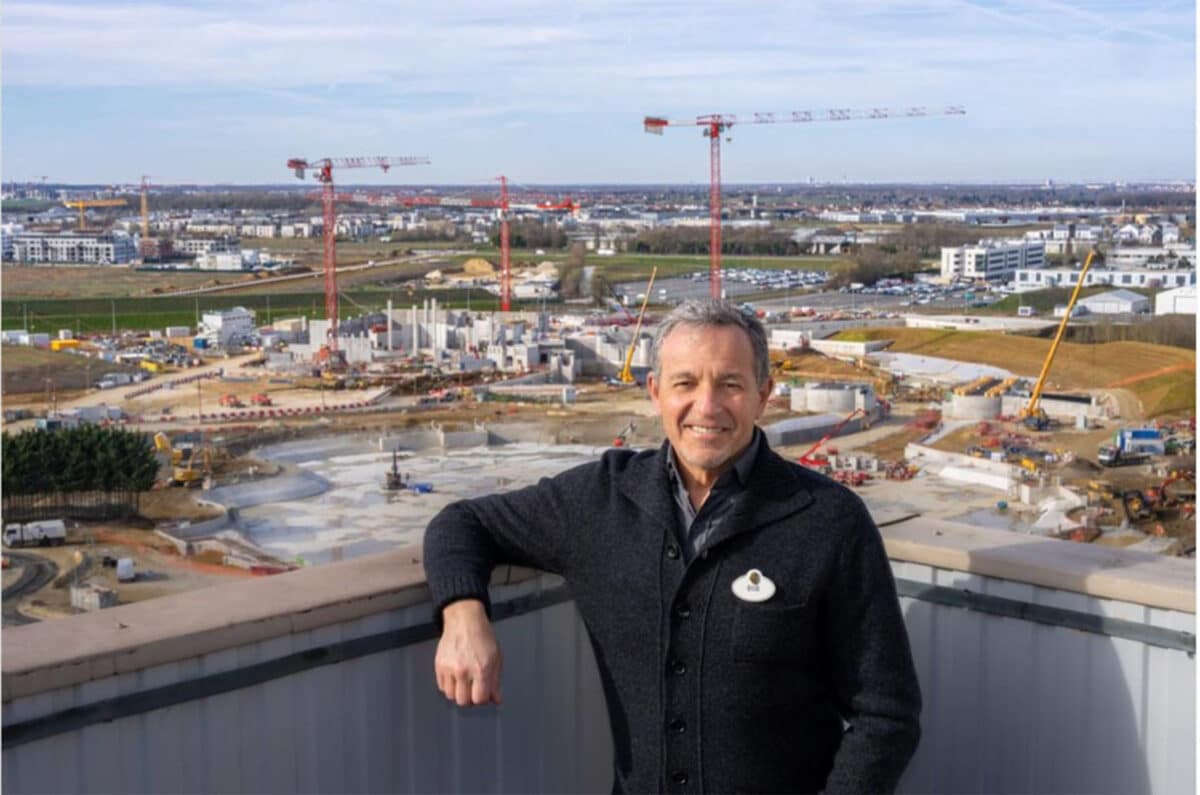
Our Commentary
This is a ‘developing’ story that we’ve been watching for the last several months, and I’ve been waiting to write a new ‘What Does Walt Disney World Do During a Recession?’ article (that’s the old one–from during the Biden administration) until after the entire saga unfolded. Although there are already cracks in consumer confidence and other leading recession indicators, tariffs are unquestionably the elephant in the room.
With regard to tariffs, there’s little certainty. A new version of that article first written in January would’ve been dramatically different than one from March. Even ones written two days apart (pre-announcement versus post) in April would’ve differed radically. At this point, I’m holding off on comprehensive commentary until after the “reciprocal” tariffs are supposed to take effect on April 9.
That’s because there’s still a tremendous amount of uncertainty. In watching the Sunday news shows, this much was immediately apparent. Even those within the administration aren’t in agreement as to the end game and likely outcomes. So it should go without saying that some dude with a Disney blog is even more in the dark. Who lifts the tariffs and when are the biggest outcome-determinative factors. Things are a lot different if it happens via the administration in a couple of days versus two months via Congress versus after the midterm elections.

Like everyone else, I have my own thoughts on the spectrum of short-term and long-term impacts of the tariffs. Both for the country as a whole and Walt Disney World, specifically. No matter how you feel about the tariffs, it should be patently obvious that they will have an array of direct and indirect consequences for both the global economy and the Walt Disney Company, though.
However, we strive to avoid politics here–even with this inherently political topic–so I’ll eventually only be covering this to the extent necessary (if necessary) as it pertains to investments in Walt Disney World, Disneyland, Disney Cruise Line, etc. It nevertheless should be uncontroversial to say that it’ll be a negative for Disney in the short term, at the absolute minimum.
The administration itself has indicated as much in broad strokes about the U.S. economy, calling the tariffs “necessary short-term pain for long-term gain” and saying “sometimes you have to take the medicine to fix something.” So at least the immediate ramifications aren’t really in dispute. Whether those consequences are allowed to come to fruition are. The median voter is most likely to react to what they feel in the short-term (e.g. kitchen-table issues), so the longer-term providence of tariffs seems less material to any of these discussions than the weight it’s being given.

Already, the markets are reacting to the news. The Walt Disney Company’s share price dropped to $80.20 at market open on Monday, April 7, 2025. If it closes at that level, it’d be lower than the COVID lows, worst tumult of the late-stage Chapek regime, or even the proxy fight. Disney’s stock price hasn’t closed below $80 since mid-2014.
Disney is hardly unique in this regard. U.S. stock markets have been battered since the tariffs were announced, with three straight days of massive drops. The S&P 500 lost 4% at open on Monday, bringing its three-day losses to around 13%, a drop not seen in that short of time since 2008 during the Great Financial Crisis. If the benchmark closes at these levels, it will bring its losses from its closing record touched in February to 20%, a bear market in Wall Street terms.
The Dow Jones Industrial average tumbled 1,363 points, or 3.5%, following back-to-back 1,500 point losses for the first time ever Thursday and Friday. The Nasdaq Composite dropped another 4% at open on Monday, further into bear territory, as investors sold their tech winners to raise cash. The Nasdaq is off 26% from its high. The list of new 52-week lows is long.
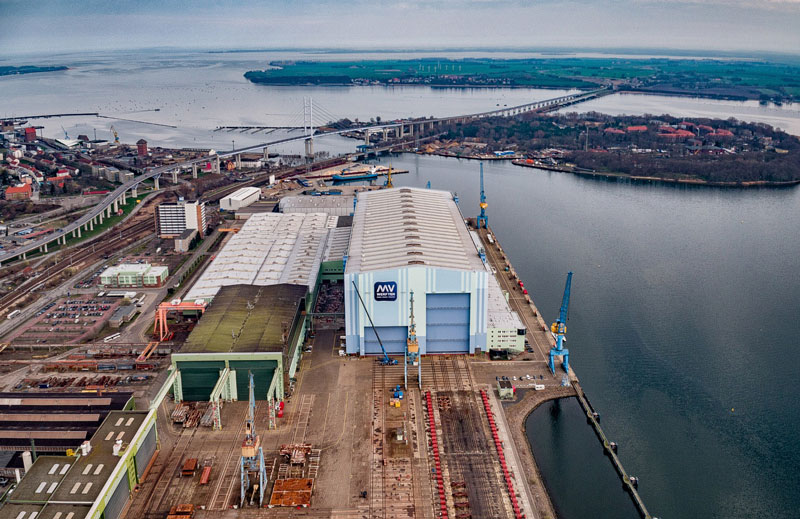
Bob Iger’s comments during the ABC News meeting were interesting, offering “unfiltered” insight into the company’s contemporaneous thinking. His position is unsurprising, and in-line with most executives and business leaders, regardless of their past political affiliations or donations.
What is surprising to me is that Iger would’ve pointed to Disney Cruise Line as an impacted business. Perhaps it’s just an easier and less-abstract illustrative example since a ship is tangible, but I would think Disney Cruise Line is probably the business, at least on the Disney Experiences side, that’s least likely to be impacted by tariffs.
Disney Cruise Line’s new ships are built in Europe. They’re complex and likely involve a flow of components from around the globe, but the principle construction and imports are to the European Union, and not the United States. The end result–the completed ship–is not an import to the U.S., either, as the ships are flagged in the Bahamas.
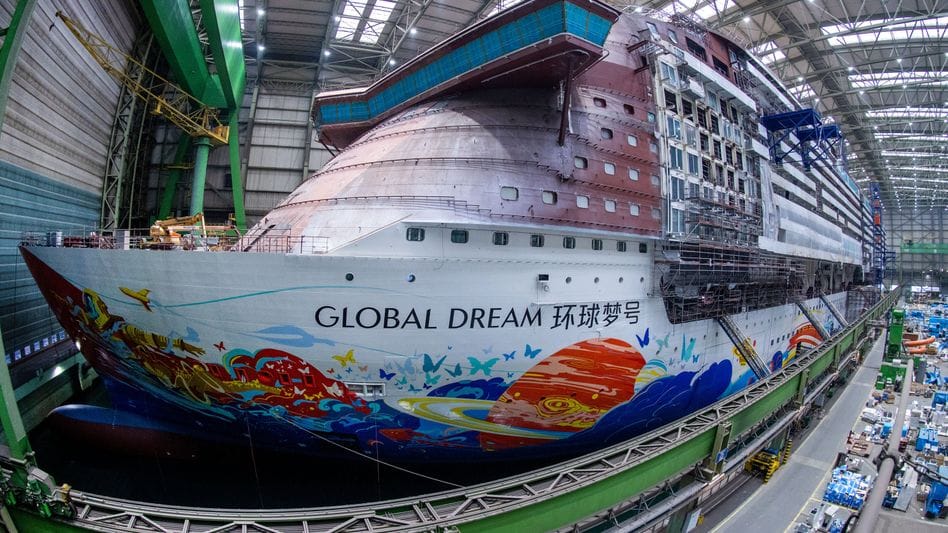
I don’t doubt for a second that costs will increase for DCL to some extent. Such is the nature of our interconnected global economy. But my first thought when reading about the tariffs and their impact on Disney is that it would incentivize the company to put more of its eggs in the Disney Cruise Line basket.
Not just because DCL largely avoids the direct impact of tariffs, but also because there’s the ability to avoid (or at least mitigate) the indirect impacts. Whatever happens to the economy is going to occur on a global level; if the U.S. slips into a recession, we’re pulling other countries down with us. But consequences won’t be commensurate among nations, and Disney Cruise Line is the most nimble business. Ships can be moved around to different ports as demand dictates.
There’s also the matter of the backlogs at the shipyards. Admittedly, I haven’t stayed on top of this lately, but one of the big reasons Disney Cruise Line was full steam ahead during COVID was because pausing their plans could mean forfeiting a spot “in line” at the shipyards. Instead of Disney postponing or cancelling cruise ships during COVID, they doubled-down, buying a partially-completed ship that has since become the Disney Adventure. Even with tariffs, it’s hard to see Disney suddenly becoming less bullish on DCL in the long-term.

Walt Disney World and Disneyland are very different stories.
In addition to importing a variety of raw materials that will be subject to massive tariffs, Walt Disney World and Disneyland will import entire ride systems. To the best of my knowledge, all of the major roller coaster manufacturers are based in Europe. Disney cannot and will not simply ‘pivot’ to an American manufacturer (that does not even exist) or make the ride systems themselves. The cost in time and dollars would be greater than tariffs of an unknown duration.
Instead, if the tariffs remain in place, Disney will pay more for the roller coasters, ride systems, and variety of raw materials. This means that Monstropolis, for example, will get more expensive to construct. It’s unlikely that the plans for the coaster itself change at this stage in the game, as reworking them would also be costly. What’s more likely is that Disney will look to reduce investments elsewhere–or cut corners on the project itself via ‘unnecessary’ details or other elements that are deemed expendable.
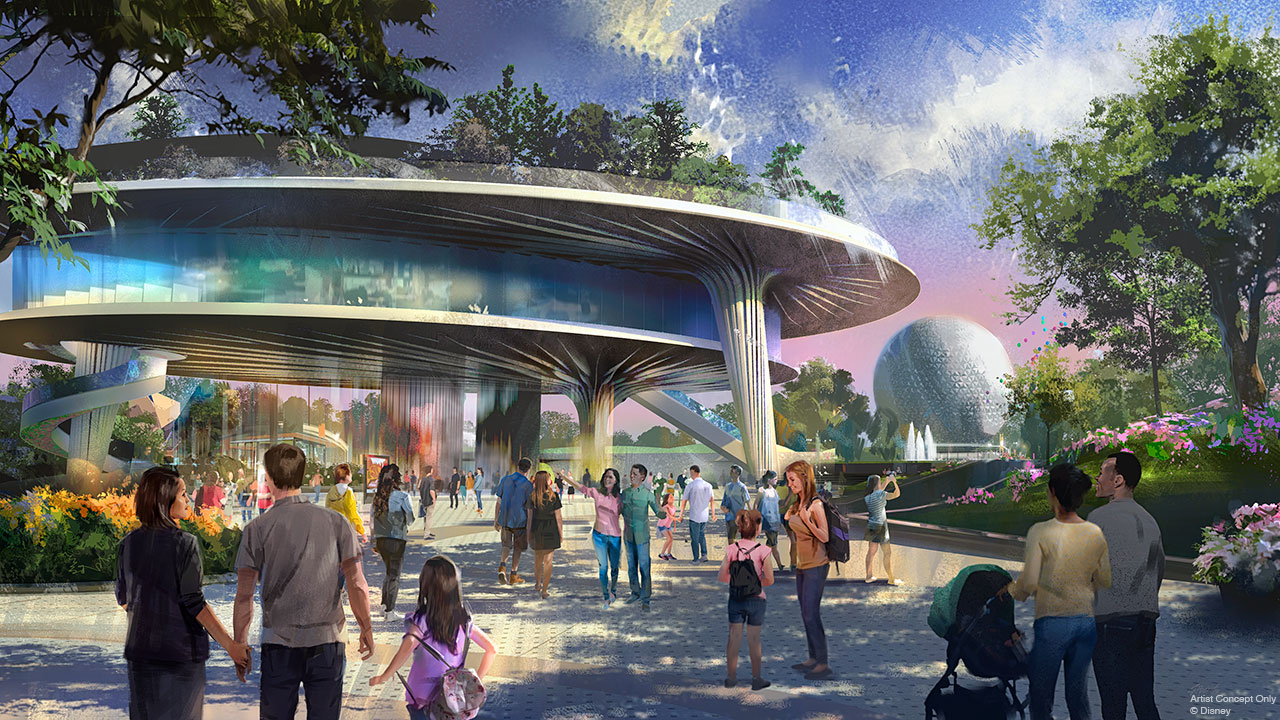
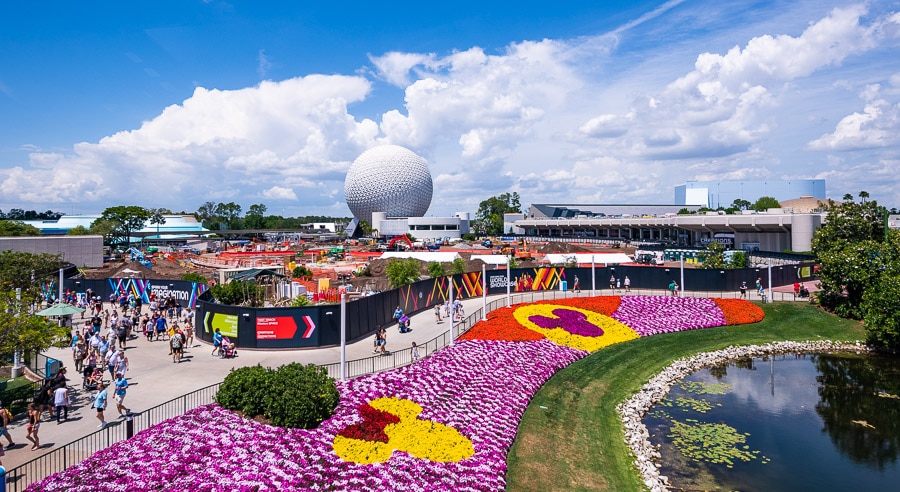
This happened to some extent with projects at Walt Disney World as a result of COVID. World Celebration at EPCOT is the best/worst and biggest example. The center of the park became much less ambitious, trading unique features for trees and benches, and the striking multi-level festival center for CommuniCore Hall.
Another example came via Fantasy Springs at Tokyo DisneySea. While the attractions themselves didn’t lose any of their wow-factor, thankfully, corners were cut with the in-park hotel and seemingly with other details (or the lack thereof) within the land.
Based on early glimpses of Epic Universe thus far, it seems fair to say that the same happened with its in-park hotel and other smaller features. Still incredibly impressive additions that don’t deserve comparison to World Celebration, but you get the idea.

The silver lining was that projects fairly far along in development at Walt Disney World, such as Remy’s Ratatouille Adventure, TRON Lightcycle Run, and Guardians of the Galaxy: Cosmic Rewind, did not appear to have any cuts. Two of those are clones from the international parks, so we know they didn’t. They were all delayed, but none were cancelled or materially scaled back.
Walt Disney World’s bigger move during COVID was to shelve projects entirely: Play Pavilion, Spaceship Earth Reimagining, Mary Poppins Cherry Tree Lane, Reflections Lakeside Lodge, and more.
One of these (the DVC resort) has since been resumed, but others have not. This is to say nothing of the unannounced projects in development that weren’t announced. It’s safe to say Walt Disney World wouldn’t have had a gap in new additions from last year until 2027 but for COVID.

A similar approach is possible here, with actual vertical construction on Cars Land and Villains Land in a holding pattern until the tariffs are lifted. Even so, site work can begin on these projects since it’s not like dirt needs to be imported. Likewise, announcements for the back half of Walt Disney World’s 10-year plan might be postponed or quietly cancelled. (Easy to cancel something that hasn’t been announced.)
Pausing parks projects that have yet to begin, prioritizing DCL, and waiting out the tariffs seems like the most straightforward outcome here for Disney’s $60 billion, 10-year investment plan. Construction that is already underway will likely continue on its current timeline, and the added expenses will be “made up” elsewhere–whether that means corner-cutting on those projects or scaled-back plans as offsets in Villains Land and beyond.
At the risk of stating the obvious, COVID and tariffs are also not the same. The parks were closed for multiple months then, there were projections of a 5-year recovery, and Disney went all-in on streaming. Once the travel & tourism recovery did begin, it was difficult for Disney to pivot due to the streaming losses and the company’s debt load. Today’s circumstances are unique and very different from then.
Ultimately, it’ll be interesting to see what happens with investment at Walt Disney World as a result of the tariffs. Again, this is a preliminary assessment based on where things stand right now in this constantly evolving situation. I’m not convinced the current trajectory is the eventual one, which is why we’re not offering more detailed thoughts.
That’s also why this doesn’t touch on the demand side of the equation or operational cost-cuts should Disney’s worst-case scenario play out. And before anyone gets excited about Disney canceling unpopular projects or undoing potential closures, you might want to think twice about that. An easy way to achieve OpEx savings is to mothball venues that are “under construction.” So as much as I might like to see MuppetVision or the Rivers of America saved, the more likely outcome is an empty theater for years and the Giant EPCOT Dirt Pit: Magic Kingdom Edition.
Planning a Walt Disney World trip? Learn about hotels on our Walt Disney World Hotels Reviews page. For where to eat, read our Walt Disney World Restaurant Reviews. To save money on tickets or determine which type to buy, read our Tips for Saving Money on Walt Disney World Tickets post. Our What to Pack for Disney Trips post takes a unique look at clever items to take. For what to do and when to do it, our Walt Disney World Ride Guides will help. For comprehensive advice, the best place to start is our Walt Disney World Trip Planning Guide for everything you need to know!
Your Thoughts
Do you think the impact of tariffs will be on Disney’s $60 billion investment plans for Walt Disney World, Disneyland, and Disney Cruise Line? Are you anticipating cutbacks or shelved plans if the United States enters a recession? Think Disney will do anything else? Do you agree or disagree with our commentary? We realize this is an inherently political topic, but please try to make your comments as apolitical as conceivably possible by addressing the ramifications for Disney as opposed to anything else. We’ll try to keep the comments open as long as possible with free discourse, but as soon as it devolves into personal attacks or gets politically charged, we’ll pull the plug.

Disney finding a reason to back out of announced improvements? I’m shocked. It’s really the only thing you can count on other than death and taxes.
Yep. They do this after every big D23 announcement. It was convenient this year for him to use politics.
Anybody could see things going to hell with the outcome of the 2024 election. No surprises with any of this.
We are a Canadian family who booked our September Disney vacation last year and are planning on not cancelling. We don’t want to punish Disney for ridiculous policies from the Whitehouse. We’ll just go from the airport straight to Disney and straight home.
I’m curious if you would book another trip vs keep one you already have planned
Yaaaaaaaaaaawwwwnnnnnnnn… Seriously, let’s talk about WDW and the real world for a bit instead of the absurd news cycle, eh?
Iger maybe should have spoken out about all of the federal lay offs and gutting the federal government as well. Almost every single person in may family (siblings, kids) is impacted and could lose their job tomorrow. So everyone is canceling trips and cutting back. And we are the solidly middle income type who do WDW regulalry. Coupled with the Canadian boycott of the US and many countries issuing travel warnings, Disney and every other tourist spot is going to be hurt for the forseeable future. I think Iger spoke up about tariffs because it was the one thing he could speak up about without drawing the eye of Sauron again.
You do mean cutting out the waste and fraud permeating the bloated bureaucracy, right? Trimming the fat takes some time, but I am sure your relatives will be fine.
I am looking at this as potentially fewer international visitors to the parks but not catastrophic levels. Most people are not going to cancel a trip unless they lose their income stream. Others are just ranting about a boycott while nothing actually happens.
Just because a government program helps a group of people you don’t like doesn’t make it “fraud.”
Yeah, that’s not what we’re talking about here. Most of the bad stuff helps no one but those profiting from getting checks to operate an office that does nothing. Even if only ten percent of what has been reported on turns out to be truly fraudulent or wasteful, that part needs to be removed permanently.
I can see the tariffs having a huge impact on attendance from people from other countries. Our Canadian family of 16 recently canceled our trip — which was going to be a week long stay at a club level of a deluxe resort — because we’re not comfortable traveling in the U.S. right now. (Hoping this isn’t what you mean by too political a comment — feel free to delete if it is — but it’s how the tariffs/trade war/annexing threats are impacting how Canadians are spending our money these days.)
Tom, one of my first thoughts related to Disney when the tariffs were announced was, “Merch is gonna get even more expensive”. Disney stuff is already wildly overpriced on the whole, so I usually wait for the Twice Upon a Year sale and the random 25-30% flash sales throughout the year. I wait even if it means missing out on certain Loungeflys, which are all made overseas. I’ll be looking at retail prices for ears and Loungefly mini backpacks to get a concrete range of percentage increases when prices change.
As for my “kitchen table” concern that will also affect EPCOT and DCA festivals, and on (and off) property Joffrey’s and Starbucks locations: olive oil and coffee. California doesn’t have the capacity to grow enough olives to replace all the oil imported from Greece, Italy, and Spain. Plus, olive trees take time to mature to fruiting. As for coffee, Hawaii can’t grow enough coffee to replace all the coffee imported from Brazil, Colombia, Kenya, and all the other big coffee importers.
With both of those items, climate + environment is a huge part of where those crops can be grown. Very few places have a Mediterranean climate for olives or the conditions needed for coffee (and tea, too, I think). If there are any farmers or agricultural or horticultural folks here, I’d love to hear your thoughts on olive oil and coffee production and if any places here in the US can be expanded or fostered to grow these crops.
I’m actually skeptical that merchandise costs will increase much, if at all.
Merchandise is high-margin, with prices largely based on what consumers will pay as opposed to input costs. I’d bet that Disney and other companies will mostly eat the tariffs on merchandise and other discretionary purchases with healthy margins. (Maybe not entirely.)
Food is a different story entirely.
America, and the rest of the world, has been hurting since 2020. Japan is in a recession. Other countries are teetering on it. Italy is the only country doing well. Through all of this, Disney has been struggling. They are in the news every few months for either their stock dropping, their movie being a flop and losing money, their number of subscribers dropped, etc. This is not a new financial woe for them.
The real situation is that America is now pushing back on what they have been giving to other countries for goods. I implore people to do the research and see what we, America, pay in tariffs to other countries and read what the White House has announced, vs what any main stream media source is claiming. This is not a political statement for a particular party. This is about seeing that what we are being told on the TV is not reality. Many countries have agreed to the tariff plans and it is off the table. So we are left with this question…..are the tariffs really hurting Disney or is this the scapegoat to scrap projects? Did Iger and his team bite off more than they can chew with the announcements and because of their political stance they decided to use this as their reasoning? Do we really want a coaster made with parts from Temu? LOL
“I implore people to do the research and see what we, America, pay in tariffs to other countries and read what the White House has announced, vs what any main stream media source is claiming. ”
The White House itself says its new tariffs are based on the amount of the trade imbalance, not foreign tariffs on US goods, as you can see in the formula they released.
If you want specifics, look up the tariffs the EU places on US imports. Tariffs are complicated to calculate since they are a web of different amounts for different goods under differing conditions. But if you take the weighted average of tariffs that the EU places on US goods, including the 1/3 that are duty-free, the weighted average is about 1%. They just got hit with a 20% tariff on EU goods imported to the US; the EU will match the US tariffs, thus increasing the tariff on US goods imported to the EU by 20x.
While my family’s personal financial situation is pretty secure and I was already in sketching out a two week combo Disney/Univeral trip with a five figure price tag for next summer, it is the unknown and unease that all of this is causing that is making it difficult for me to nonchalantly hit that “book” button (well and the fact that I am waiting for both to drop package bookings for next year). On a plus for Disney, for number of reasons I am not overly keen on international travel for the next year so Disney won over Costa Rica for next years destination.
But I do have to wonder how much the international illwill we are garnering between tariffs and other policies are going to hit Disney World. I don’t know what percentage of visitors our international friends at Disney make but I have to wonder how hard that is going to hit Disney. Particularly because if I had to guess international visitors stay longer and spend more.
This speaks to what you’re wondering, at least in part: https://www.disneytouristblog.com/canada-boycott-disney-world-deals-crowds-candian-cancellations/
That was written over a month ago; it’s fair to say we’ve garnered more international illwill since then.
Christine – We visited Cota Rica last year (really fun trip), but I read that this year they are expecting tourism to decline ~25%. So you are not alone in picking other destinations. I hope the tourism-centered business there survive this. And the coffee/chocolate businesses as well. We took a coffee plantation tour and the guide was telling us that most of the coffee drunk in Costa Rica is not very good because they export the good stuff (though less than half teh coffee exports are to the US).
I think it’s a CEO who is making millions just playing the game. Make it sound as if it’s impossible for Disney to make a profit and to keep any perks for its customers. We will have to make cuts or raise prices to survive, which is horse poop.
Revenues increased 5% for Q1 to $24.7 billion from $23.5 billion in Q1 fiscal 2024. Income before income taxes increased 27% for Q1 to $3.7 billion from $2.9 billion in Q1 fiscal 2024. Diluted earnings per share (EPS) increased 35% for Q1 to $1.40 from $1.04 in Q1 fiscal 2024.
Disney’s theme park division posted record revenue and profit in fiscal 2024, and that growth is expected to continue next year.
He’s just making an excuse to raise prices.
“He’s just making an excuse to raise prices.”
If this plays out as is widely expected by economists, the more likely result will be Disney lowering prices.
If you want to say this is an excuse for anything, it’s reducing the $60 billion investment or getting less bang for that buck. Whether there’s a valid justification or it’s just an excuse is in the eye of the beholder, I suppose.
That’s in the eye of the BEER holder, Tom!
This is an emotional response. How are tariffs hurting Disney when they are in the early stages? Many of these nut jobs on the news are saying the tariffs have made their grocery prices increase…and the tariffs have not even kicked in yet.
Disney is hurting because they raise the prices every time somebody gets an idea and the average American does not want to pay that for a vacation with so many cutbacks.
He’s not saying the tariffs are hurting Disney, present tense.
He’s projecting that they will negatively impact Disney’s investments, future tense. It’s precisely because they are still in the early stages that it does potentially matter if tariffs continue forward. If it costs more to import steel, ride systems–or whatever–Disney won’t be able to stretch its budget as far.
Universal got “lucky” with Epic Universe in this regard, as their big expansion won’t feel the direct impacts of tariffs. Indirect, on the other hand…
Some experts are predicting a recession, in part by the uncertainty caused by the tariff situation.
Will people be reluctant to spend money on buying DVC? If so, prices on resale contracts could drop a lot…therefore creating an opportunity for those willing to spend. If resale prices crater, I’ll be buying…
I would not expect resale prices to “crater.” Maybe they’ll go down a bit, but a huge drop is unlikely.
During COVID, we (wrongly!) expected a major drop in prices. That did not happen–even with the parks closed, AP sales suspended, tons of unpopular changes in the parks, and the U.S. briefly entering a recession.
When DVC resale prices actually did drop, it was after pent-up demand started and consumer spending was hot…but DVC basically stopped exercising ROFR.
Regardless of the reason, and this is a totally emotional response…but I feel like whatever is hyped and in particular, announced at D23, has great odds to not come to fruition. Seeing SWGE announced at D23 has such a kinetic energy! And to see the shell it kind of resulted in was a disappointment. And it was a disappointment that I feel like continues with other D23 announcements (not limited to “Blue Sky”). So even with the “shovels to dirt” announcements this year, I still felt apprehension. Especially in consideration how quickly Epic Universe was opened in compared to Disney rides lately…and that is an entire park! I think Disney just needs to stop getting the cart ahead of the horse because it continually results in the announcements being diluted with “Sure, Jan” sentiment from me.
Just curious…what did Epic Universe cut with its in-park hotel?
I do not know what, if anything, got cut. It just strikes me as very ‘value-engineered’ for what should be UOR’s flagship hotel.
This isn’t necessarily criticism. Universal powered forward on a theme park at an uncertain time and as input costs skyrocketed. Epic Universe is probably billions of dollars over its 2019 budget, so cuts had to happen somewhere. Better that they occur on the hotel than the substance of the park that all guests will experience.
I feel the exact same way about Fantasy Springs and its (supposed) flagship hotel.
Not related to the main post, but we just got back from TDR and everyone in group commented on how the Fantasy Springs hotel looks like they just kind of stopped decorating halfway through. When compared to MiraCosta at the front of the park it’s a real “one of these things is not like the other” contrast.
Having lived through a few periods of economic trouble since the 1980s, uncertainty is hitting all companies right now. This means cutting back on hiring and stopping future projects, creating a vicious cycle: customers hold off on buying, companies hold off on hiring or lay off employees, and the economy grinds to a halt. Vacations are the first thing to go on a tightening budget, and we have definitely canceled plans for our honeymoon for later this year.
This is not a political blog, but Iger is right about factories being a long-term investment. I can’t imagine any company spending billions and years of effort to relocate manufacturing without assurances of long-term stability. As it stands now, tariffs could be lifted tomorrow, so there’s no incentive to overreact. And even if there were long-term assurances of a stable economic environment, if the tariffs remain, it would actually encourage US companies currently in the US to move overseas.
Currently the US is the second largest exporter of manufactured goods in the world. As other countries replace the zero or very low tariffs on US exports to match the 10-40% tariffs that were placed last week, US factories can no longer export to other countries. This forces US manufacturers to move production for the export markets to Europe or Asia to avoid import tariffs on US exports, and give them access to near-zero tariffs when buying the parts and raw materials.
There are two outcomes regarding tariffs: If they remain, prices will have to rise substantially to pay for them, causing severe inflation and a recession. If the tariffs are lifted, then this whole exercise is for nothing since we already HAD near-zero tariffs on 95% of our export goods. Only a handful of countries had excessive tariffs outside of GAAT norms on US goods, and their markets are tiny, like Vietnam. Lifting tariffs on US goods in those countries will have a minuscule effect on US exports.
Thanks Tom, for the in-depth analysis in context with Disney. Keeping the topic away from toxic political arguments is a tough job.
Companies moving overseas to save money with cheap materials and labor are the ones we should be putting high tariffs and taxes on.
Don’t pull the plug too quickly Tom.., we can judge ignore listen without commentary implicating your blog.., I would like to hear what your readers think..,
It’s not simply for my own sake/sanity–although that’s a big part of it!
There are many regular readers and commenters here who regularly engage in healthy discourse. Knowing too much about one another’s politics can irreparably change that dynamic for some people. Just look at how many families have members no longer on speaking terms due to political affiliations.
Haha Tom, whenever a company promises to treat you like family.,, I think ‘please don’t!!’
On a lighter note now boarding water launch to fort wilderness cabins golf cart waiting!! Thanks for your recommendation!
Speaking of FW cabins, did anyone else see they sold the old ones off and some were recently available to purchase? I saw prices starting from like $60K on Farcebuch. If one had the cash and a place to put one, would be very cool. A few folks bought some and turned them into B&Bs even.
What I take from the mention of DCL vs. other more straightforward properties is that the impacts of these tariffs are (or could be) far more reaching than many expect. If it is or is expected to impact DCL, those are less obvious than, say, impacts to the domestic parks, and so it makes sense to me that they are being highlighted vs. park assets.
I also wonder if, to the average international consumer, the cruise ships read as international in a way the other Disney park outposts do not, simply because being on a cruise ship inherently involves moving from location to location, and if tariffs affect different countries differently, that could become exponentially complicated and more difficult to predict.
This sounds like a reasonable way to explain Iger’s point of view. He’s probably thinking that the end result of this and whatever else ends up happening is a moderate-to-severe worldwide recession. I don’t know if there’s a large and noticeable core group for DCL who is going cruising no matter what and can paper over the bad times there, like MK/AP/DVC owners do to a certain degree at DL and WDW. (Is there?) Throw in the fact that they’re on the hook for several new ships *before* the first ones finally age out of service, and what looked like a reasonable bet to see if there’s more interest in DCL will hemorrhage money over the “Wall Street long term” of 3-5 years if upper class people stop cruising during a worldwide recession.
(To be fair, I still think it was a reasonable bet to buy more ships, since there was the opportunity to decrease the fleet once the first ones retire. It just looks like the bet is going to lose.)
The biggest direct impact of the tariffs on DCL and the cruise industry will be the on going operations of their current fleet. That’s essentially fuel costs and food costs. Fuel cost will probably be stable or lower, while food costs are going to go up but if I had to guess a lot of the food cruise lines buy is not an import to the US. So good costs aren’t likely to go up substantially.
The biggest impact would be indirect. The indirect will be if the tariffs cause a recession. Travel and tourism is the first to get hit when a recession occurs. Bookings will soften and they will have to cut rates to fill rooms. That said bookings for travel including cruises appear to already be softening heading into the second half of the year and beginning of next.
Recessions suck but for those they can afford it traveling during a recessions is great.
I’m waiting for nuclear-powered cruise and cargo ships…you know, like we were all promised in the 70s! Modern reactor designs are almost failsafe to operate and fuel, being fully contained inside a module is not easily stolen for nefarious uses. And talk about environmentally friendly, zero-emissions power! People just need to get over that irrational fear, I guess.
I know this is a tough needle to thread given the topic, but please keep your comments as apolitical as possible. Discuss the impact of tariffs (or lack thereof) on Walt Disney World, DLR, DCL, etc–don’t debate the merits of the tariffs themselves. The two comments below are good examples of this.
Plenty of places to argue about the underlying politics, but this isn’t one of them.
Tom a well thought out summary as usual – your tempered and apolitical comments are appreciated. And rare!
I’ll second that!
I wondered if the DCL example was to prepare minds to “no new ships”.
I feel DCL might have exhausted its market as we started to see more offers and fewer destinations.
Cruise ship building is alot different then theme park building.
Three of the ships are a new class. They are likely well to deep into the process to scrape a new class or ship without taking massive losses on the project. The second and third might get delayed but all will be built. There’s also the matter there’s only a few shipyards that can build these ships. If you cancel multiple ships, at worst you are going to be looking for a new partner for new builds. At the least you are going to wait a long time to get slotted back in for a future build.
Right now Disney is also taking their playbook from Royal Caribbean. If you build it they will come. Royal doubled down on new builds during covid/after covid while no one else did. They are launching a new ship a year for the foreseeable future, all at $2billion+ a pop. It’s worked out well for them and their share price and bookings are an envy to the industry. It will workout well for Disney too.
It also has me wondering about travel forecasts and consumer confidence and their connections to the tariff announcements. My guess is a lot of people who have already paid for trips this summer are going, but I know my family (and many others in our orbit) have seriously scaled back vacation plans for the near future, and are opting to stay closer to home and try to save money. Since we don’t know what the economy is up to, spending more money on a Disney trip seems unwise when prices on everyday goods are likely to rise as companies pass on the costs of the tariffs to consumers. We were getting everything lined up to go to DLP this summer, in connection with a conference, when all of this started happening earlier in the year and decided not spending on a trip like that was the more prudent choice.
All of which is to say that folks scaling back travel plans would, I imagine, also cause a drop in revenue which will contribute to a drop in investment, etc etc. Now, who knows if that will actually happen, but when the administration is telling everyone to prepare for prices to go up in the interest of long term gains, I would think that the travel industry shudders.
Good thoughts, and it would seem market sentiment is in alignment as (last I saw), $DIS had dropped to a disproportionate degree. I can’t imagine that’s on the basis of streaming–it’s more in-line with other travel & leisure stocks.
Along with people scaling back vacation plans in a possible recession, travel warnings issued by countries that are a major source of international guests also raise concerns. Supposedly plane ticket sales from Canada to the US are down 70%, so Disney will have to plan for a significant reduction in international guests.
The administration also already said “it’s very difficult for prices to come down once they’re up” so the argument that higher prices are only temporary isn’t holding up for me…
The first thought I had is that I hope this kills off the Cars Land (a.k.a. RoA destruction) idea. Dies early = no dirt pit.
The second thought is whether one effect of this will be prioritising the development of the international parks (DLP?) – especially as the international parks are somewhat seen as Disney IP showcases. If such parks can import (or already produce) physical goods like ride systems directly, that makes it comparatively cheaper for them. Whereas the funds moving in the other direction (IP / imagineer time / licensing fees) are non-tangible and not subject to the same tariffs.
Maybe you’re right about the first point, but I’m skeptical. Disney has already endured the backlash over RoA, and although you could argue this gives them an easy “out,” I don’t think that’s the company’s PoV. Removing the river is a long-term goal, regardless, and the cost over the next couple of years is mostly in moving earth. If anything, more readily available (cheaper?) labor might make it easier while they wait it out.
Good point about the international parks. I’d probably point to the parks in Asia as being “safer” spots for investment than DLP, but honestly, who knows. If we’re in a fully-fledged trade war with China, that might have impacts on Disney’s business there!
Cars Land in MK will certainly require a ton of earthwork, including importing some decent engineered fill. While I am not a geotechnical engineer, I am a civil/structural one with experience in FL and much of the US. Since there is no rock in FL, structural support is generally from either long piles driven deep into the sand or large spread footings, or a combination of both. They already said part of the reason for ditching RoA is the need for major repairs due to massive structural issues (which I sincerely doubt as it’s holding a few feet of water, in a swamp). While I was working on the I-4 widening in Tampa in 2004, I remember a span of the nearby Selmon Expressway was destroyed when a pier sank overnight, luckily with no injuries as the road was still under construction and it was a weekend. For each of the bridges we built, we drove numerous concrete piles in to support the abutments (at the ends of the beams/girders).