
Disney’s Into AI Now, Apparently.
In what could be considered a reversal to its prior approach of lawsuits and cease & desist letters to artificial intelligence companies, the Walt Disney Company and OpenAI have reached a landmark 3-year licensing agreement to bring beloved Disney, Marvel, Pixar and Star Wars characters to Sora. A selection of these short-form user-generated videos will also come to the Disney+ streaming service. Here’s the official announcement followed by our commentary.
As part of this deal, Disney becomes the first major content licensing partner on Sora, OpenAI’s short-form generative AI video platform. According to the company, the agreement brings these “leaders in creativity and innovation together to unlock new possibilities in imaginative storytelling.” (That’s a direct quote. Although I am curious as to what, exactly, OpenAI has created.)
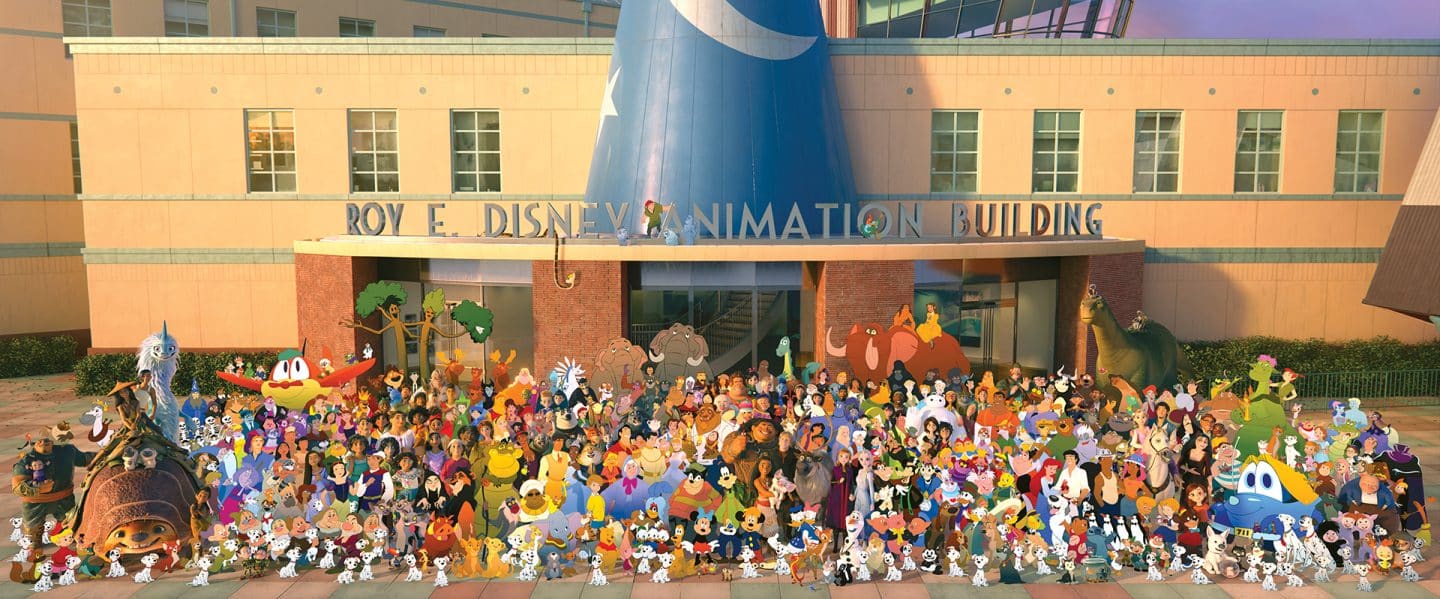
Sora will be able to generate short, user-prompted social videos that can be viewed and shared by fans, drawing from a set of more than 200 animated, masked and creature characters from Disney, Marvel, Pixar and Star Wars, including costumes, props, vehicles, and iconic environments.
In addition, ChatGPT Images will be able to turn a few words by the user into fully generated images, drawing from the same Disney IP. The agreement does not include any talent likenesses or voices (presumably because Disney does not have blanket rights to actor likenesses, as evidenced by Indiana Jones Adventure).
Alongside the licensing agreement, Disney will become a major customer of OpenAI, using its APIs to build new products, tools, and experiences, including for Disney+, and deploying ChatGPT for its employees. Also as part of the agreement, Disney is making a $1 billion equity investment in OpenAI, and receiving warrants to purchase additional equity.
Disney and OpenAI have expressed a shared commitment to the responsible use of AI that protects user safety and the rights of creators. Together, the companies claim they will advance human-centered AI that respects the creative industries and expands what is possible for storytelling.

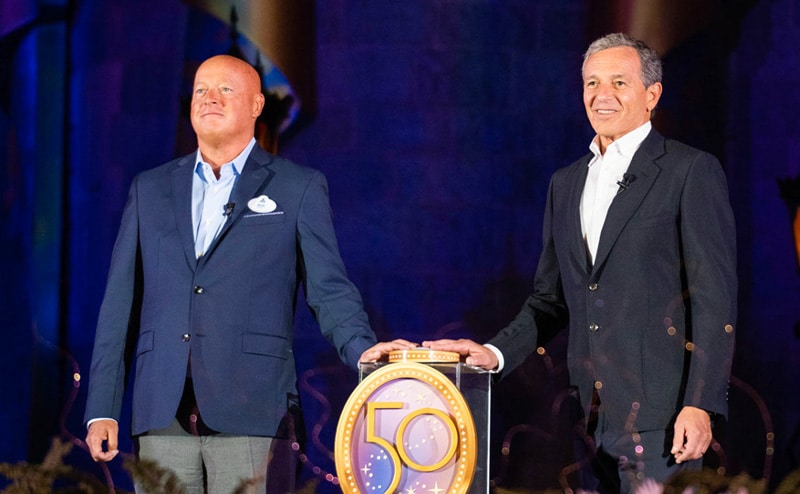
“Technological innovation has continually shaped the evolution of entertainment, bringing with it new ways to create and share great stories with the world,” said Robert A. Iger, CEO, The Walt Disney Company.
“The rapid advancement of artificial intelligence marks an important moment for our industry, and through this collaboration with OpenAI we will thoughtfully and responsibly extend the reach of our storytelling through generative AI, while respecting and protecting creators and their works. Bringing together Disney’s iconic stories and characters with OpenAI’s groundbreaking technology puts imagination and creativity directly into the hands of Disney fans in ways we’ve never seen before, giving them richer and more personal ways to connect with the Disney characters and stories they love.”
“Disney is the global gold standard for storytelling, and we’re excited to partner to allow Sora and ChatGPT Images to expand the way people create and experience great content,” said Sam Altman, co-founder and CEO of OpenAI. “This agreement shows how AI companies and creative leaders can work together responsibly to promote innovation that benefits society, respect the importance of creativity, and help works reach vast new audiences.”

People will be able to watch curated selections of Sora-generated videos on Disney+, and OpenAI and Disney will collaborate to utilize OpenAI’s models to power new experiences for Disney+ subscribers, allegedly “furthering innovative and creative ways to connect with Disney’s stories and characters.” Sora and ChatGPT Images are expected to start generating fan-inspired videos with Disney’s multi-brand licensed characters in early 2026.
Among the characters fans will be able to use in their creations are Mickey Mouse, Minnie Mouse, Lilo, Stitch, Ariel, Belle, Beast, Cinderella, Baymax, Simba, Mufasa, as well as characters from the worlds of Encanto, Frozen, Inside Out, Moana, Monsters Inc., Toy Story, Up, Zootopia, and many more; plus animated or illustrated versions of Marvel and Lucasfilm characters like Black Panther, Captain America, Deadpool, Groot, Iron Man, Loki, Thor, Thanos, Darth Vader, Han Solo, Luke Skywalker, Leia, the Mandalorian, Stormtroopers, Yoda and more.
As part of the agreement, OpenAI has committed to continuing its industry leadership in implementing responsible measures to further address trust and safety, including age-appropriate policies and other reasonable controls across the service. In addition, OpenAI and Disney have affirmed a shared commitment to maintaining robust controls to prevent the generation of illegal or harmful content, to respect the rights of content owners in relation to the outputs of models, and to respect the rights of individuals to appropriately control the use of their voice and likeness.

Our Commentary
It feels like only a week or so ago, we were writing about how Disney is not a tech company in Disney Wants to ‘Break Spell’ of Guests Glued to Phones in Parks. In that, we commented about the curious decision to feature Nvidia CEO Jensen Huang in “We Call It Imagineering,” which was likely for the specific purpose of getting Wall Street’s favorite CEO to say “at the core, Disney is a technology company.”
No one was concerned with that angle in the comments, but it seems even more apropos today. In any case, we’ll start with yet another reminder: Disney is not a tech company. As a consumer that does business with Disney, you probably need not be reminded of this. Your personal experiences with Disney are proof positive of this.
We’re nevertheless emphasizing this because Disney really, really wants to be viewed (and valued by Wall Street) as a tech company. That’s a relevant reminder every time Disney does something like this because that’s precisely why they’re doing it. That was true with Disney’s forays into the metaverse, Cinderella Castle Mural of Memories NFT, Prime-Style Membership Program, AI Task Force, and so on and so forth.
Even more narrowly than that, it seems that Disney now wants to be viewed as an artificial intelligence company. Or at least, AI-adjacent. There’s a lot of AI frothiness on Wall Street, and investors want every company to be an AI company. Hence the circularity of AI investments and eagerness of CEOs to leap at the “opportunity” to be associated with OpenAI. (A risk-free move that definitely will never, ever backfire.)
At the risk of stating the obvious, I am vehemently anti-AI. I do not use it as a consumer or writer, which might be hard to believe given the “quality” of some of the output here, but I assure you that’s the result of being a sleep-deprived parent (or getting a bit too liberal with copying & pasting press releases).
Part of my anti-AI posture is, admittedly, self-interest. Artificial intelligence has already had a measurable negative impact on websites like this one and the internet as a whole. It strikes me as one of those crutches that gets embraced without proper consideration of long-term consequences because it’s easy and efficient, but that ends up making us lazier, dumber and just generally worse off over time.
Then there’s what it does to us creatively. I worry about a future where human artists are marginalized even further than they already are, in favor of entering prompts into a machine. One problem (of many) with that, is that ChatGPT and these models aren’t making anything new. It’s all derivative. The models need to be trained on actual art, which needs to be created by a person. But how much less new art will be made when the incentive structure deteriorates thanks to AI?
AI “art” is also lacking in humanity. The sparks of personality, charm and character that define art created by actual people. That list of ~200 Disney characters would not exist in a world of pervasive AI “art.” There would be no Mickey Mouse, no Cinderella, no Stitch, and no Darth Vader in exactly the world we’re careening towards where art is a photocopy of a photocopy.
Disney can claim that this is being done to “advance human-centered AI that respects the creative industries and expands what is possible for storytelling.” But c’mon, does anyone really believe that?! Even the least-cynical reading of this deal that I can muster involves the creation of free user-generated content for Disney+, reducing the need for actual human-created programming.
This is not to say I’m a technophobe who is unequivocally opposed to AI. It’s a tool. And like any tool, there are both good and bad ways to use it. If Kaiser Permanente told me they were using AI as a diagnostic tool to reduce the burden on doctors, help relieve staffing shortages and waits, I’d probably be in favor.
There are a lot of industries where AI could be an asset, helping humans or addressing shortcomings, our aging population, etc. There’s also been a lot of fear-mongering about past about automation and other tools of progress, and most of it has been misplaced or overblown. Disruption always breeds distrust, often for good reason.
My narrow concern here is a creative company embracing something that is corrosive to creativity and the arts. Whatever the broader positive applications for AI, those are not relevant to Disney’s intellectual property. What is relevant is its tacit endorsement of a slop machine. This is at odds with the Walt Disney Company’s legacy.
Look, I understand Disney’s position in doing a deal like this with OpenAI. (Or at least, I think I do?) There’s a recognition that AI is here to stay, and those that don’t get on board are going to be left behind.
That partnering with OpenAI is good for business, and the stock price. That lawsuits are only forestalling the inevitable. Maybe this is even puts some guardrails on AI, providing a ‘compromise’ path forward.
I am somewhat sympathetic to this “if you can’t beat ’em (or stop ’em), join ’em” perspective. Even so, it seems like Disney is giving up a lot here while not gaining all that much. It’s not just the money, either.

For one thing, there’s downside risk that this all goes off the rails and ends badly for Disney. (Risk that is not shared by OpenAI. They have no brand, no history, no nothing to protect.)
OpenAI has not demonstrated a deep commitment to user safety, IP rights, or anything except its own self-interest. They bear no reputational risk if or when users are able to exploit its models and create unsavory content with Disney characters.
To the contrary, this deal is all upside for OpenAI. Disney is the first legacy media company to strike a deal like this with OpenAI, meaning that Disney is also lending its storied 100-year-old brand to legitimize OpenAI. (As for the monetary component, I’d direct you to this piece: OpenAI Is Good at Deals.)
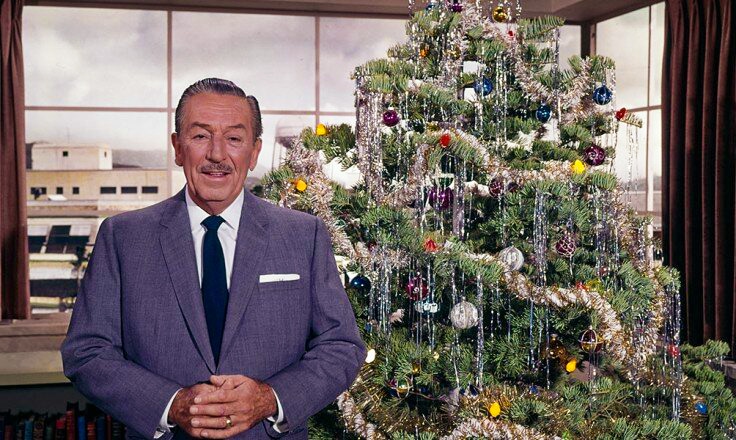
I firmly believe that the best way for current corporate leaders to be stewards of Walt Disney’s creative enterprise is to not jump into bed with AI companies. That this is one scenario where it’s not just okay to be behind the curve (whatever that even means) as a business, but that it is the ethically “correct” position to take as a creative company. That they should be fighting this encroachments on human creativity, as they have with the lawsuits and C&D letters.
Instead, the Walt Disney Company is entering a “landmark” deal to be the first major content licensing partner with OpenAI. An entity that is anathema to art and human creativity. Between the foundational nature of the Walt Disney Company and already-souring sentiment towards AI, this just strikes me as a misstep. But hey, at least it’ll be good for a 1% boost to the stock price for a day!
Need Disney trip planning tips and comprehensive advice? Make sure to read Disney Parks Vacation Planning Guides, where you can find comprehensive guides to Walt Disney World, Disneyland, and beyond! For Disney updates, discount information, free downloads of our eBooks and wallpapers, and much more, sign up for our FREE email newsletter!
YOUR THOUGHTS
What do you think of TWDC partnering with OpenAI? Is this something that Walt Disney’s company or any creative enterprise should be doing? Are you impressed, underwhelmed, or terrified by AI? Do you agree or disagree with our assessments? Any questions we can help you answer? Hearing your feedback–even when you disagree with us–is both interesting to us and helpful to other readers, so please share your thoughts below in the comments!



Bob Iger’s middle name is Alan.
Coincidence?
What a terrible idea this is! I’m really starting to think that Bob Iger needs to go. I think he is starting to have the same problem Chapek had, in that he doesn’t “get” the company he is running and what makes it special. No one would still be watching Snow White nearly 100 years later if it was AI generated garbage, instead of a piece of art made with care, heart, skill and hard work by human beings.
I share your anti-AI feeling. It really feels like this embrace of it has not been thought through.
I want the AI that helps doctors spot minuscule new abnormalities on mammograms, not the AI that puts the creatives out of work.
I know Disney thinks they’re going to put guardrails on the prompts to prevent any inappropriate content from being produced. But humans are better at sideways thinking than computers are, so it won’t take long for clever minds to figure out ways to get around those guardrails. Let Elsagate 2.0 begin.
Tom, do you read Ed Zitron (wheresyoured.at)? You might appreciate his perspectives on the smoke-and-mirrors world of genAI, especially as we seem to be moving into a time period where this information is relevant to being a Disney fan. I loved reading your few paragraphs about your position on genAI, and I couldn’t agree more. Reading Ed’s stuff might give you some extra arguments to keep in your back pocket for the future. GenAI doesn’t just produce bad art and make its users stupider and lazier; it’s also functionally not very impressive, user growth is stagnant in the industry, and it’s wasting billions of dollars from investors and partners every angle. Yesterday’s news was incredibly disappointing; it was sad to see Bob Iger happily throw yet another billion dollars onto the genAI pyre, in yet another lame brand-tarnishing stab at looking young, hip, and relevant.
I don’t know that I’ve read Ed, specifically, but I’ve read plenty along those lines. I’ll check out his site–thanks!
I’ve now gone through various applications in my professional life where AI is supposed to revolutionize laborious tasks. I started out optimistic but it’s been nothing but big promises and processes that take more work to find issues and fix after the fact. Quality checks by humans are missing, which could have identified and addressed problems early. Turns out, life doesn’t fit neatly into generalized/consensus driven trash coming out of AI.
One thing that keeps getting glossed over by proponents is that AI does not create original content. It’s pure plagiarism. Not so much a problem where users feed content voluntarily. But in most cases, it’s just stealing creative works. (Good luck with that drivel, btw, once original creators are wiped out in the process.) Disney handing over content to be considered a technology company is so pathetic and dumb that I’m just out of words.
Thank you for posting this!
The fact all these companies are going all-in on GENERATIVE AI is what will burst the AI bubble. Generative AI is just absolute soulless junk, there’s some real use cases for other LLMs to go over data and help you understand or find what you’re looking for, and I think that’s where this will all land as it comes to usefulness and I think it will mostly be in the Enterprise sector.
AI was the final nail in the coffin for photographers like me working with local bands. Smaller profile bands were already often broke and reluctant to pay for proper press and live photos. Now that they can just put in a prompt and get a photo and digital flyer in seconds what work I was getting has dried up. Part of that was already happening due to the collapse of small venue live music revenues, but has been accelerated by the ease and encouragement of society to quickly adopt Gen AI. I’m sure people would call this sour grapes, but AI will never replace a human being with a personal and physical connection to the subject. And if it does, that would be the greatest tragedy of them all.
Meh. The only thing more boring than AI generated slop is corporate approved AI-generated slop. Why should I bother to watch something a person couldn’t be bothered to work on?
Also, if anybody can add Disney characters into their photos with just a couple prompts, that’s one less reason to buy Photopass…
Thank you for taking a stand on this! Your opinion matters in this community, and you clearly have better ethics than the clown farts involved with this infuriating decision. I’m a professor of literature and creative writing, and I don’t think there is any valid application of genAI; the entire technology is designed to eradicate all human thought. Art requires vision and deliberate choices, and pushing a button to get a plate of microwaved leftovers stolen from real human creators is lazy to the point of negligence, an abdication of the responsibility of being a person.
Hear hear, Laura and hear hear Tom!!
This announcement made me physically nauseous.
Hear hear!
Ok, a warning that I am rolling in here with an opinion that is contrary to what many commenters think. (I’ve found prefacing with a warning can be kinda helpful in online communication, so that people have a moment to reset expectations.)
I’m a fan of AI, I’m happy about this deal and (warning – most controversial statement incoming) I really think we’re in the midst of a technopanic at the moment.
Personally I have found AI to be incredibly useful in my work. Materials and illustrations that would have been expensive, time consuming to plan out, and “not quite what I needed but close enough I guess” are something I can now get in about five seconds with a single prompt.
Not to mention, the complaints made about AI could be made about almost any new technology. Technology, in the form of computers and machines, has been taking over aspects of human generated work and art for centuries now. Thus far the pattern has always been increased productivity, new businesses and art forms that never would have been possible before, and increased leisure time in which people can pursue various new avenues. I don’t see anything about AI to suggest it doesn’t fit this general mold. If anything the shift to AI seems far less jarring than say, the shift to automobiles and early heavy equipment must have been.
To be balanced here, I will say that I realize shifts in technology can impact employment in the short term, and I think as a society we should take steps to ensure jobs for everyone who wants to work. I do think jobs are eventually replaced, but in the short term I’m in favor of government intervention to ease that transition. I am also not going to preemptively praise Disney for invoking the word AI, before seeing what they do with this and how they use it. I am not a tech person so I have no idea how this varies from the technology they’re already using with CGI and such. But I’ll judge the end result based on whatever output they produce.
Thanks for offering a different perspective–a diversity of opinions is part of what makes the comments here enjoyable.
There has definitely been panic about various forms of automation in the past, and the jobs that it would kill. Now, some of those same industries have staffing shortages. It’s entirely possible you’ll be correct in the longer-run.
I agree. I’ve just scratched the surface of AI so far but I see it as a massive improvement in productivity for creators that can take advantage of it.
I remember some of the negative press and comments about CG animation and even computer assisted hand drawn animation when that started being used.
I think the ballroom scene in Beauty and the Beast was done with CG animation and was said to have been much more difficult and time consuming/expensive to have been hand drawn.
Slop has always been slop whether it was AI or human created (Slasher public domain Winnie the Pooh anyone?)
I think there is a solid place for AI to be used as a tool, but there needs to be guardrails and regulations in place. I don’t think ‘AI is going to make us dumb’ is a foregone conclusion. I personally used Chat GPT to help me with my foreign language learning, and the things I’ve asked has lead to some deep dives of things I might not have learned otherwise (and when I ask for sources, I get them). The conversational style that Chat GPT has has made this sort of learning easier and fun for me.
The key is I’m not using AI to do my work for me- I’m using it to help me do the work myself. There is definitely a conversation to be hand about the environmental impact of current implementation and generative AI that creates art is a whole other kettle of fish, but to completely dismiss AI as a tool for learning and personal growth is to risk getting left behind.
That’s completely fair. There are a ton of great use cases for AI; it’s a tool like any other, and can have good applications along with the bad.
My criticism would be similar to the one I have for social media. That it likewise is a tool that has positive use cases, but it’s nevertheless a net-negative for society based on the prevailing ways in which it is, or will be, used.
Honestly, this reminds me a lot of the part of Disney War when Eisner goes full throttle on the internet bubble of the late 90s to disastrous effects. The AI bubble is still growing, but it’s gonna pop. At the end of the day, it cannot justify the energy cost (and I’m not even talking about the climate aspect, but oh boy that….)
I did see someone saying that AI inevitability is just AI people trying to sell us on it (akin to NFTs). And yeah, it’s only inevitable because enough of us aren’t saying no. Personally, when there was first news of this earlier, we didn’t renew Disney+ in response.
I dunno, I feel like Disney probably really regrets not being an early adopter of weird monkey jpegs! 😉
So refreshing to see others sharing the same sentiment towards AI that I do. What is the point? It’s like no one wants to create any more. People forget that creating art, music, poetry, writing, dance, etc. is part of the beauty of being human – a soul with stories to tell and things to share with the world. (Not to mention the huge ecological harm that AI is causing to our environment). All day, every day, people are so eager to use AI to avoid the hard work of actually creating … This is really sad. Disney could have announced that it would be spending $1bn investing in its original artists, celebrating their creativity, and would have received probably excellent press that would have also enhanced its stock prices, while also improving morale within the company greatly.
I am ready for Disney to exit its “Acting like its going out of business” phase. They don’t have to make these choices.
I’m a college professor, and I’m not as anti-AI as you, for a couple of reasons that I won’t bore you with here. I’m completely against AI slop, but I have had some moments in which GenAI helped me to become a better teacher to non-native-speakers of English.
That being said, my jaw dropped when I saw this announcement. This seems fraught from nearly every angle. It undercuts the value of the creativity of the animators, the storytellers, and the imagineers. Isn’t the great thing about Disney is that they collect the talent to provide experiences that no one else can create? But they are giving away the milk for that 1% stock bump. Further, do they really believe they can contain the AI to prevent user-generated content of Mickey Mouse from doing unsavory things that work against the reputation of the company?
It’s like my favorite band sold out.
Just dumb decisions by Disney every day. I don’t know what to even say about this development. I think the only hope for humanity is for citizens to organize or be part of “anti-AI” organizations and create whatever pressure/counter balance possible, something our government and business leaders have zero inclination to do.
Tom, I knew this was coming because you warned us around the last quarterly earnings report… but it still stinks.
The clear technology entertainment play should be video games, but if Disney can’t think of anything better to do, investing in a server farm/getting into cloud computing might actually be useful for Disney IT needs. (Also, it’s been a while since I’ve seen a good series of “insourcing” articles, so maybe it will be economical soon.)
I hate absolutely every single thing about this
I got a NY Times breaking news email about this and couldn’t believe it. I am also very very anti-AI and can’t believe it has so much support. It freaks me out and gives me an “icky” feeling. We’re headed more and more toward being a completely brainless society. It’s had enough we can ask Alexa any question before we stop to think of the answer ourselves (THAT I am guilty of…I’m not proud!) This is so disappointing. Are fully AI movies from Disney on the horizon? Ugggghhh.
*it’s bad enough
The Sora videos are particularly emblematic of the low-effort “slop” content that makes many parts of the internet deeply “icky”, as Jess put it.
I definitely foresee AI-generated content for toddlers. Think of the old “direct to video” sequels that Disney produced in years past as a sort of junior varsity for training animators. They’ve reappeared on Disney+, as many of you have likely noticed. The quality level of many of those are ROUGH but at least they were still created by people. It can get far worse, and it probably will.
“ because it’s easy and efficient, but that ends up making us lazier, dumber and just generally worse off over time.”
100%. I feel like there is such an obsession with everything being easy and fast that there has been a total loss for respecting that part of the process of doing work is what makes you a more critical thinker over time.