
Disney Reverses Exclusion of Shareholder Proposal to Review Controversial Disability Access Pass Changes

Last month, we reported on a new proposal made on behalf of DAS Defenders calling on the Walt Disney Company to conduct an independent and public review of its controversial Disability Access Service policy changes. This resolution was originally excluded from shareholder consideration, but now Disney is reversing course and including it in its proxy materials for a vote. Here’s the latest on that, what it means and doesn’t, and why this is happening.
As quick background, Disney overhauled DAS at Walt Disney World and Disneyland back in May 2024. According to the company, the changes were due in large part to abuse, misuse, and proliferation of the program’s use–with issuances of DAS tripling from 2019 to last year. For more about the specifics of the overhauled DAS, see Disability Access Service (DAS) Changes at Walt Disney World FAQ.
The new system has now been in place for well over a year, and there have been direct impacts for disabled guests as well as indirect ones for all guests. To the latter point, we’ve written a lot about the impact of the DAS changes on wait times at Walt Disney World. Most recently, in Is Lightning Lane Multi Pass Still “Worth It” at Disney World? Suffice to say, standby lines are shorter and faster moving, with wait times being lower year-over-year as a result of the DAS crackdown.
Even over 18 months later, the DAS overhaul remains controversial. It’s also a sensitive subject that is personal since it’s make or break for some guests trying to experience Walt Disney World and Disneyland. There have been reports of guests who previously had DAS being denied and advised to use alternative accommodations instead. here have also been a number of small tweaks to DAS over the last year, some of which could be attributed to a pending class action lawsuit.
With that background out of the way, let’s turn to the shareholder proposal. Our previous coverage of this confused some readers, and the latest wrinkle is only going to compound that confusion (just look at that headline–quite the mouthful). Accordingly, we’re going to try to simplify and condense this to the greatest extent possible. Here goes nothing…

Shareholder Resolution
Disney’s brand and financial stability are under strain from underperforming films, rising park costs, consumer boycotts, and waning trust. According to the resolution, a significant contributor to this strain is the company’s recent overhaul of disability accommodations at its parks due to negative media coverage, social media, guests canceling trips and Annual Passes, as well as legal exposure to a class action lawsuit.
As a result of the controversial DAS changes, Disney exposed itself to legal claims, regulatory scrutiny, and brand damage. Other companies have faced multimillion-dollar settlements under accessibility-related actions. Future liabilities could include costly settlements, operational disruption, and weakened market positioning.
Accordingly, shareholder resolution requests that Disney commission an independent review of DAS, conducted by a qualified third party. This review should assess legal, financial, and reputational risks; evaluate Disney’s policies against competitors; and identify opportunities for improvement. The resolution further requests a public summary on the findings for accountability and transparency.

Disney’s Response(s)
In its original response letter from late last year, the Walt Disney Company wrote that it intended to exclude the aforementioned shareholder proposal from the proxy materials for its 2026 annual meeting of shareholders. This meant that shareholders would not vote on whether to approve the resolution for the independent review. Disney also sought assurance of no enforcement action from the SEC following the exclusion.
Disney’s argument for exclusion was that any attendance decrease in the last fiscal year was attributable to hurricanes. Moreover, park operations are ordinary business and not subject to shareholder micromanagement; that they’ve already done their due diligence on the DAS changes, and there’s no duty to disclose any nonpublic information. You can read Disney’s full argument here.
Fast forward to January 2026, and Disney has sent a new letter to the SEC withdrawing its no-action request, meaning that they no longer are seeking any assurances from the SEC. The reason they’re doing this is simple: because they’ve reversed course and decided to include the aforementioned shareholder proposal in their proxy materials for the 2026 annual meeting.
If you’re confused, you’re probably not alone. Here’s what this does and doesn’t mean, along with some quick commentary…

Our Commentary
For starters, this does NOT mean that the Walt Disney Company has suddenly had a change of heart and is agreeing with the shareholder proposal in any way, shape, or form. It does not mean they have agreed to the independent audit being sought.
If that were the case, this would be a different letter entirely; probably a joint statement from Disney and the shareholder (or the advocacy group behind him) indicating that the parties are moving forward with collaborative and constructive efforts on reviewing the DAS changes and current policies. That sort of thing.
Instead, what Disney is saying is that they’re going to let shareholders vote on whether to conduct such a review.

This shareholder proposal will almost certainly be voted down.
One of the reader misconceptions in response to our previous coverage was that this proposal was being driven by investors concerned about the impact of the DAS changes on the company’s financials. It’s probably better viewed as a subset of shareholders framing an issue that’s personally important to them in such a way to make it appropriate for proxy vote; a different angle for contesting the DAS changes, aside from litigation.
Anyone who has listened to the annual meetings knows that there are a lot of politically-charged and niche causes presented. All of them are summarily shot down without much in the way of further discussion.
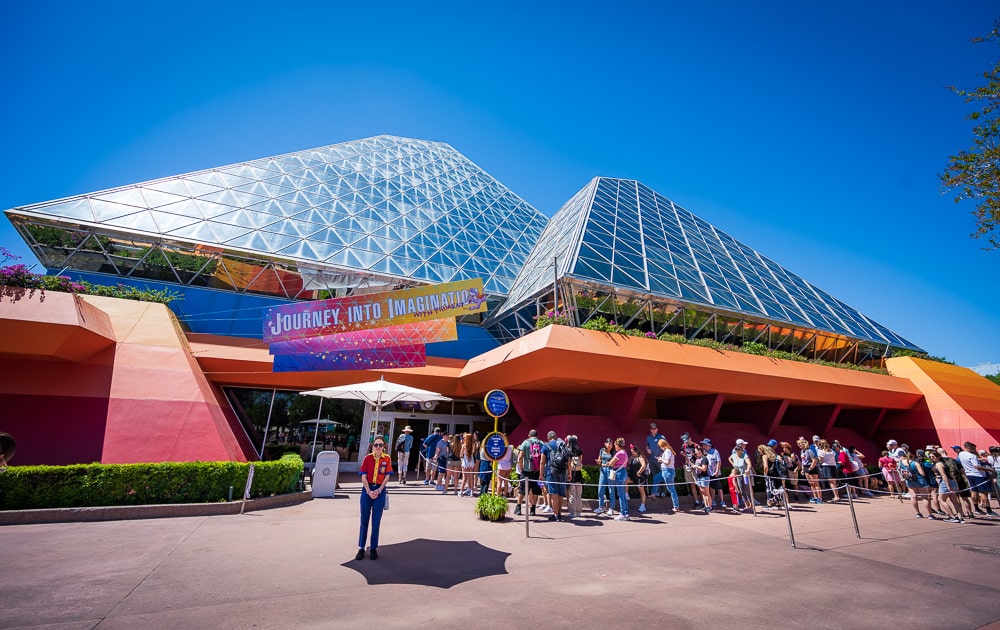
As a Disney shareholder, I could write a proposal about how the company’s refusal to reimagine Journey into Imagination has resulted in financial strain, underperformance, unrealized earnings, social media backlash, and brand damage. I could cite things like popcorn bucket, merchandise sales, and DTB blog posts in support of my position. It would be a more ‘legitimate’ way of raising the issue (as opposed to during the Q&A), but it would be an equally futile effort.
There’s no reason to believe the fate of this DAS proposal will be any different. While we strongly believe Disney should do a better job at finding a middle ground and have a more delicate touch in handling DAS, it’s hard to see this as something with which shareholders will concern themselves.
One important thing to keep in mind here is that it’s not the individual shareholders who are outcome-determine on things like this. It won’t be plugged-in fans who are sympathetic to the plight of disabled guests casting the deciding votes.
It’s the large institutional ones who are make or break. And although Disney’s stock has underperformed for the last several years, that’s definitely not attributable to the theme parks. If anything, the parks are what is carrying the company and preventing that share price from dipping well below $100.
As we’ve covered in earnings call reports and crowds coverage, attendance was down year-over-year (by about 1%), but that was largely attributable to hurricanes ($120 million disclosed losses). Meanwhile, the parks continue to set revenue records and hotel occupancy continues to rise. Right or wrong, that’s what matters to shareholders.
Simply put, institutional investors like BlackRock, Vanguard, and Fidelity are not going to concern themselves with this. It will be deemed too trivial, and they will accept Disney’s arguments that were laid out above. The shareholder proposal will fail, and it won’t even be a close vote.

Given that, the more curious question from my perspective is why Disney even bothered to exclude the shareholder proposal in the first place? One particularly astute commenter, Jack, offered this explanation in response on the previous post:
First, they’ll have to draft a response in their proxy statement as to why shareholders should vote no on the campaign. This opens up its own can of worms – if they make a material misstatement, they could be liable for false/misleading proxy materials. The legal due diligence to prevent such an error probably isn’t cheap either.
Second, letting the proposal come to vote is far more “public” than asking the SEC to issue a no-action letter. Most Disney tourists and media outlets aren’t going to search through EDGAR to see Disney’s request for non-enforcement from the SEC on this proposal (you are the exception that proves the rule, of course). But I could certainly see far more media attention on this issue if it came up during the annual shareholder meeting. Moreover, they’d be “on the record” as well. Disney can’t just point to Wall Street and say that businessmen voted against the proposal: Disney is the one *telling Wall Street* to vote against it!
Finally, allowing the proposal to move forward would draw more attention to the DAS Defenders and activists proposals in general. As it stands, Disney is taking the position that this proposal isn’t even worth voting on – it’s shareholder micromanagement, substantially overlapping with current plans to review DAS access, etc. If Disney actually responded to the proposal in the proxy statement, it almost legitimizes the opposition. Disney, with its history of hostile activist campaigns since the ’80s and especially recently with Trian, likely doesn’t want to give even one inch here lest other shareholder activists get any ideas about taking a mile.
I found this explanation to be persuasive at the time (and largely still do). Although the no-action request drew some media attention (including from the mainstream), more eyeballs will certainly be on the annual shareholder meeting.
At the same time, there are always a lot of shareholder proposals that are quickly shot down and I seldom (if ever?) see coverage of those. It’s easy to zone out during that section of the call, as anyone who has ever listened can likely tell you. The signal to noise ratio is not so hot during that portion of the meeting.
Regardless, it’s odd for Disney to reverse course at this point. Attention has now been drawn to an (likely doomed) shareholder proposal twice, and theoretically will again once the annual meeting rolls around. It makes me wonder what change happened in the background over the course of the last month.
UPDATE: As KenMH pointed out in the comments to this post, the SEC issued a Statement Regarding the Division of Corporation Finance’s Role in the Exchange Act Rule 14a-8 Process for the Current Proxy Season on November 17, 2025. With this, the SEC has determined to not respond to no-action requests for, and express no views on, companies’ intended reliance on any basis for exclusion of shareholder proposals. That statement was made 10 days after Disney submitted its no-action letter, so Disney wouldn’t have known of that position when making the request.
Basically, this means that the Walt Disney Company is not going to get a response from the SEC with regard to its no-action letter. On this same basis, many other companies have withdrawn their no-action requests, presumably due to the legal uncertainty of them (just look at all of the “withdrawn” parentheticals here).
That’s the simplest and most straightforward for this reversal; that Disney is taking the certainty of the proposal being shot down by shareholders over the risk of an enforcement action resulting from excluding it without the backing of the SEC.
My guess is that Disney’s proxy response will say as little as possible (for the reasons Jack laid out), likely just reiterating the ground covered in their original letter to the SEC. That’s probably all the convincing it’ll take for BlackRock, Vanguard, etc.

Ultimately, we do not anticipate any major changes to DAS at Walt Disney World or Disneyland. Nor do we view there being any likelihood of success with the shareholder proposal. There is not going to be another overhaul to Disability Access Service, absent the aforementioned class action lawsuit or other litigation prevailing.
That happening is also doubtful. Disney has been sued over every single iteration of its disability accommodations, and I’ve yet to find any record of them losing on any count. I can’t see anything different about this lawsuit; if anything, Disney might be able to better argue that lines and crowds are inherent to the theme park experience.
The company has already endured a lengthy PR hit over these changes, there’s no chance they’ll voluntarily endure that again with another overhaul. What, if anything, does happen will be a slow trickle of rule relaxations. But with no major changes in the last several months, even that is now looking increasingly unlikely.

We’ll conclude by once again reiterating our position that Disney should work towards improving DAS. Just because we believe this shareholder proposal is almost certain to fail doesn’t mean we don’t think Disney should take a second-look at its DAS policies. They should.
The company has an exemplary reputation for guest service. The need for DAS reform was absolutely understandable, as there was rampant abuse exacerbated by social media, entitlement, and Disney creating an incentive for DAS scammers by monetizing line-skipping via Lightning Lanes.
There have been heartbreaking stories of DAS denials, and these have made clear that a more flexible and humane approach offering greater discretion to Cast Members is optimal. It seems that Disney went too far with the DAS overhaul; the pendulum swung from one extreme to another.

There has been a lot of collateral damage among disabled guests who needed DAS and have been denied under the overly-stringent system. The DAS changes haven’t just eradicated the scammers, they have hurt guests who are actually disabled. It’s time to recalibrate from the extremes to the center.
The most obvious change we’d like to see is a “humanizing” of the interview, not just expanded rules and policies for the mechanics of that process. We’ve heard from many readers who have been denied, and there’s a word that has been used repeatedly to describe the process: interrogation.
While we can appreciate how stressful this process is for Cast Members and the verbal abuse they take for disgruntled guests, there’s a better way of handling the process that feels less adversarial. Even if the letter of the DAS policies isn’t going to change, the company still should live up to its reputation by finding a gentler way to handle the process.
Planning a Walt Disney World trip? Learn about hotels on our Walt Disney World Hotels Reviews page. For where to eat, read our Walt Disney World Restaurant Reviews. To save money on tickets or determine which type to buy, read our Tips for Saving Money on Walt Disney World Tickets post. Our What to Pack for Disney Trips post takes a unique look at clever items to take. For what to do and when to do it, our Walt Disney World Ride Guides will help. For comprehensive advice, the best place to start is our Walt Disney World Trip Planning Guide for everything you need to know!
YOUR THOUGHTS
Thoughts on the shareholder proposal for an independent review of DAS changes at Walt Disney World and Disneyland? Hopeful that further changes will be made that result in increased approvals for those who truly need DAS while keeping abuse low? Agree or disagree with our assessment of the changes or policy as a whole? Please try to stay on topic–we’ve noticed some of these DAS comments sections get heated and personal. Discuss the policy itself, not others’ use (or lack thereof) of it.






This is essentially segregation and discriminatory. They are allowing a very narrow group of individuals with disabilities excluding a wide group of people with disabilities. If the issue is abuse, forcing one group of individuals with disabilities to pay for lightning lanes while allowing a small group to have DAS is what makes it discriminatory. Why should one group pay while the other group does not? Just eliminate the DAS program all together and make everyone pay. As someone with a disability myself, I can’t even plan a trip to Disney anymore because of these changes. I can’t guarantee I will be able to have the accommodations I need until days leading up to the trip. What if I am not approved and I already booked my flights? Disney should allow the interview process to begin prior to booking the trip so individuals with disabilities can plan accordingly.
I’ve said this before. The DAS we’ve been using for our adult disabled daughter really isn’t anything positive anymore. For the people who think it’s line skipping I hope you realize that you’re only signed up for one attraction at a time . You would never be able to abuse DAS and go in other rides or shop. We purchased the multi pass in addition to DAS and still inly could go on 3 -4 attractions at best and often even less. The very popular extreme attractions arent even suitable for most disabled people. So going on one of these attractions five times using DAS as someone mentioned is really comical.
Has anyone considered a 3rd option for guests who sit through the interview and are deemed ineligible for the traditional DAS service (due the nature of their disability), but who might be granted a DAS-style pass for a fee? This would be a paid FP option but with DAS rules, rather than the extremely restrictive current 3-use (at best) FP that anyone can purchase. The qualification for purchasing it would require a verified disability, but they could be more lenient in regard to what conditions qualify for the paid DAS Pass. This would solve the issue of people being entirely excluded and keep Disney’s profits up. Win-Win!
Forcing people with disability to purchase is a violation of ADA. It’s capitalizing on someone’s condition- unethical and inequitable to able-bodied individuals. We should be punishing those who lie, not the victims in this!
I’m thinking most of the park doesn’t actually use DAS. My daughter is 38 and has always had DAS. Her disability is such that we literally can’t be in a park for more than 2-3 hrs tops. With DAS we get about 2 rides. We also purchase the specialized pass as well. All in all we get 3-4 rides between the two. The point of DAS is not to fly through the line , it’s to come back when your wait time is up.
I would love if there was a way to get people to think of it that way “not to fly through the line… to come back when your wait time is up” There are some, but people get competitive and it was being encouraged in social media groups to use it to get their kids the “most magical” experience. I think it was you who said it, so I will also add that they do make exceptions on that 4 person limit, especially for families with kids. But no, they aren’t letting people bring the entire extended family anymore because that had also become a thing.
The complaints people have to the limitations on who gets it can be really telling. I saw a woman complain that they barely managed to get every ride in the park in one day with the pass due to high crowds so definitely couldn’t ever tour without it. When you’re using it to barely get on 2-4 rides, that is a different use case than the family who is going rope drop to park close and barely fitting it all in simply because there is so much getting done. I for sure don’t have the answer, I just have kids with issues so I have read WAY too many stories from people who qualified but were completely abusing the system, and now are having a temper tantrum that they need their pass back. I’ve also witnessed firsthand how easy it would have been to overuse. I mean we could get in line for something across the park while boarding a ride… for the bulk of the disability community that is not equal access, but a massive advantage.
This one will take a lot of “thinking out of the box” ideas. In my work place, whenever a particularly sticky problem comes up, the boss assembles a team of folks impacted by the problem and everyone is encouraged to throw out ideas including any that seem DOA. In these brainstorming sessions all ideas are treated equally, recorded and no one is allowed to make fun of any ideas put forth regardless of what you may personally think of them. But frequently, one of those DOA ideas puts a “spark of imagination” into the situation and helps lead to the best answer. So, with that in mind, I’ll start with this one:
How about designated day(s) on certain weeks or months that ONLY those that qualify for DAS and their families can attend X park? I certainly could plan my trip around those if known well in advance. And those that qualify for DAS are still welcomed into the other parks on that day but not afforded most of these accommodations?
What else can you come up with. Let’s give the Disney folks something to mull over.
Nah, people with disabilities shouldn’t be pigeon-holed to specific days- that’s a terrible idea. Once you get sick- which anyone can at any time- how would you feel? Think about it. There’s a reason ADA is so important. We need to hold the liars accountable without harming people with disabilities. Period. Shame on Disney.
Honestly in my opinion I feel Disney went overboard with the DAS changes. My philosophy has always been you don’t make radical changes in a policy because people are following it . You should be figuring out who exactly is t following the rules. There are significant changes that affect the actual disabled person negatively . The cap being only four people can be on the DAS ticket is silly . There are plenty of families where mom and dad bring the kids and there are more than two. That’s just wrong. Also there’s no setting up rides in advance anymore you have to be in the park to make inly one choice of a ride. Then waiting ten minutes after you swipe in for your ride to get another one. Generally you are in line or on the ride and it’s impossible to get on your phone and try to prepare your next ride. Most of this doesn’t affect us as our daughter is an adult and we only bring her. However, it does make it difficult to enjoy any more than two to three rides. She cannot tolerate being in the park long so it’s very difficult . The changes made to DAS were supposed to identify abusers but it also is penalizing disabled people .
While I understand that the DAS changes don’t apply to you and your family, the things you’re complaining about them changing are the very things that made abuse so attractive.
There should be a limit on how many can benefit from the accommodation, and families with minor children are permitted more than four total.
Can’t make DAS reservations ahead of time? Why should anyone be able to, since DAS is supposed to provide the same access as standby, and no one can select their standby waits in advance.
Have to wait 10 minutes after scanning to get another selection? Well sure, because someone who is waiting in standby can’t start their wait while they’re still riding another attraction. I would actually go further, and not allow a new DAS time until they’re in the vicinity of the ride they want to use the DAS for.
I would also not allow anyone with an active DAS return time utilize standby for any other ride while they’re waiting.
I think your reply went in the wrong spot, but I wouldn’t overthink it – you can’t really reply to responses on this page.
I sincerely do encourage you to do the best you can not to take it personally when people have complaints that differ from your needs, as it does sound like you are in a smaller subset who have a vastly different use than the DAS qualifiers who end up using it like an unfair golden ticket to make up for more frustrating days at home.
It’s just different, the people really aren’t complaining about your couple of hours. They are really worried about (and upset by) the full day families speedrunning half the park.
Precisely! I’m disabled and had to cancel my Incredipass because of the discrimination and inability to enjoy the park. I’m sick with CRPS and Hemidystonia- severely sick and have to do infusions in order to walk and talk. Walking a park can put me in the hospital without proper accommodation. I simply just refuse to give the house of mouse my money- and my friends and family have stood in solidarity. It’s not fun being excluded, and especially not fun being punished due to able-bodied people abusing it and lying. Shame on Disney AND those who abused it- real disabled people are being harmed and the ADA law is being violated.
I have to agree with the comment that many accommodations were thought up in a different time- when you didn’t see half the attendees at the park qualifying with a disability and bringing their entire family in tow. Even if we ignore that gen z 53% stat – you can just add up general population percentages for some major diagnoses (autism, ADHD, anaphylaxis allergies, IBD, etc) and without much trouble you’re right up in the 30-40% range before looking at things like PTSD and anxiety.
I would love the idea of a sensory waiting area – but that gets back to a combination of things people don’t want to say and things that they are already complaining about- the drama at the moment with the current situation is that people are saying it’s only autism that qualifies, so if you made the accommodation something that only addressed the needs of a specific stereotype of autism, we haven’t made progress. People want the freedom to do whatever with that wait time. (need and want, but it’s VERY individual) Penning them into a dark quiet room with half the park with the same pass is no better than leaving them in line. It begs the question of what about those of us who NEED that time for the bathroom? NEED to eat on a schedule, NEED to be away from the smells, the foods, etc. The people who see it as fair use and a need to go nap and return for their ride? It would be a massive endeavor significantly altering the business model (the amount of space would be mindboggling) and still nobody would be happy with it. You would now have a dark, sensory room crammed to the gills with screaming children waiting with their sibling who create the exact environment people in the room were escaping in the first place.
There obviously isn’t an easy answer, but the reality that there IS significant data that giving a “do whatever with your time without waiting in the physical line” pass to everyone with a disability is an unreasonable tax on park operations and is unsustainable for not only everyone without the pass, but also for those who had the strongest need for it. It must be acknowledged that can be both unfair that people who are uncomfortable with a line are stuck in a line, and also unfair that the alternative asks others to wait in a line that takes 4x as long so that others don’t have to wait in the line.
It might become more equitable if they could work out a system that considered usage – because when someone with a DAS can ride multiple times what a non-DAS user can in the same time, that is not equal. Then you get into it not being fair to limit the disabled group when others aren’t “limited” but the reality is the non-DAS group is in every practical way limited BY those using the DAS due to their lowered capability to accomplish the same tasks.
Actually DAS does apply to me. My husband and bring our 38 yr old daughter to Disney 1-2 times per year. We purchase multi pass as well. This allows us maybe 3 rides per day at magic kingdom. All in all we are at the parks for a couple hours as that’s all she can tolerate. But thanks for your insight.
Thankyou for your insight . Definetly in the beginning DAS was a very appreciated thing for us. Since all the abuse of it gradually kicked in it’s definetly become something not conducive for Disney or any park goers. It’s a shame people take advantage of such a thing. We’re just lucky we’re not looking for DAS to be more than it is like for people who spend a lot of time in the parks. We enjoy our couple of hours and then go back to our resort and enjoy club level. We also do some character meals which she appreciates immensely
People with disabilities need to step away and take medicine. I’m one of those people, and we shouldn’t be analyzing what disabled people are doing while needing an accommodation. Instead, focus on the liars and scammers.
We need DAS to return. The return time is important but especially with DAS Pass. The best part of DAS is that I receive a return time but I do not have to return at that particular time. I can come back anytime up until park closes. Yes, I can not get another pass until this one is used but it allows me to go on mine train when I feel I can without any issues. (Epileptic) I continue to go to WDW several times a year for the love of Walt Disney himself. My last trip a week ago was not able to get on anything. I have another trip planed in March at the BC and I know I will not get on anything again. Yes, I still have the shows. It is my hope that the powers to be will come up with something even if it is one ride per day.
George MC
My autistic son just got denied to get the DAS since the third party Health representative at the guest services decided that she can not give it to him unless he goes into the que inside Disneyland and if he gets a panic attack then she might consider. We have all the reports of his neurological assessment and a proof that he has autism, epilepsy, and severe anxiety, in addition to social disorder, still, she said that she can Not see his medical record and Does not want to read them.:” he doesn’t qualify for DAS. “He gets panic attacks around people especially in crowds and ques, yet he loves Disneyland. We always had the privilege to get him a DAS at Disney where he gets the best time of his life.
After spending 3-7 pm ( 4 hrs) today asking for different managers, at the guest services, they all said that she is the one who decides on whether he qualifies or not. I am really heart-broken, we have booked the annual non-refundable magic passes, only to go back home with a mental and emotional breakdown. Thank you truly for writing that article, it is meant to be for me today. Disneyland is Not the Happiest Place On Earth Anymore. It is discriminatory, where families of special needs kids feel left out and never ever would make the same mistake of purchasing tickets again.
It’s the countless stories like yours that keeps our family away. Especially since they will not refund tickets if denied. Our family has a member who should qualify as the policy is currently written and we have the medical proof, however I have a real fear they would still be denied, and we would be stuck with the “most magical place on earth” becoming a nightmare or just eating the cost of tickets and not go.
“Disney’s argument for exclusion was that any attendance decrease in the last fiscal year was attributable to hurricanes.” This is BS. The drop is people who should qualify, who have a real and valid fear they would still be dinied, so they just stay away or go to competitiors parks (universal etc.)
Yep! Love this honest article as well, Disney will not get a single dime from me while they continue this obvious cash-grab to get disabled people to buy lighting passes. Busch Gardens was sued for this exact thing.
Some thoughts:
1. KenMH is on the money, definitely missed that as well in the first news cycle. I think that there are some plausible explanations for the delay between asking for SEC staff comment on excluding the proposal and then the about-face here. There are the holidays, filing requirements for 10-Qs/10-Ks, and weighing the uncertain litigation risk from DAS Defenders if they were to exclude the proposal without SEC approval.
The last factor is likely the most important. My guess is that after the SEC’s updated guidance, Disney Legal took their time mulling over the costs and decided that letting it come to a vote was worth it for a few reasons. First, shareholder litigation takes place in a specialized court in Delaware. Whereas in-house counsel probably deals with hundreds of tort cases in FL courts every year for slip-and-falls and the like, they’d have to hire (expensive!) outside counsel to deal with a shareholder suit. After a cost-benefit analysis of potential litigation vs. drafting a proxy statement, the latter was presumably cheaper.
Second, Disney would be facing sophisticated counsel. Disney has dealt with shareholder litigation that is well-financed by outside parties as recently as 2023. See Simeone v. The Walt Disney Company (Del. Ch. June 27, 2023) (finding that a shareholder’s books-and-records request was pretextual, as they had been solicited to make the request by the Thomas More Society, a “public interest law firm championing Life, Family, and Freedom.”). While Disney Legal isn’t afraid of some heads-up baseball, so to speak, the off-chance that a shareholder suit is successful could have significant implications for how domestic park operations are managed. Why take the risk?
Finally, Disney has already faced enough bad PR in recent times with regard to public litigation. The 2024 public’s reaction to Disney’s attempt to use mandatory arbitration under a Disney+ T&C clause was less than favorable. I don’t think they’re eager to take a stand in a court of law that would put then put them back in the court of public opinion for supposedly discriminating against disabled folks.
2. The next question is what will actually be in the proxy statement and if it even matters. Like you’ve pointed out, the institutional giants are probably going to vote No against the proposal no matter what. Thus, Disney is incentivized to minimize their exposure to bad PR by drafting a concise proxy statement with something along the lines of “We have been working in park operations and line management for 50+ years, world-class industry experts, carefully tuned the DAS system to appropriately deter cheaters and maximize accessibility, etc.” If the media even picks it up (as you’ve pointed out, most just tune out during this portion of the earnings call…), it’ll be one bad news cycle. Then Disney won’t have to deal with a similar proposal for 3-4 years due to exclusion rules related to unsuccessful shareholder proposals.
3. Finally, there’s the question of where we go from here. I think that DAS Defenders rightly points out that the park experience is declining in quality due to, in part, monstrous wait times. This is essentially a supply-and-demand problem. There is not enough ride supply to meet current guest demand. There are only so many rides at each park. Moreover, given the price of entry, people want to experience everything! So much so that they’re willing to pay an additional premium (Lightning Lane) to raise their chances of doing so. Thus, Disney faces conflicting incentives to solving the wait time problem by either shifting ride demand to other forms of entertainment (shows, street performers, dining options, etc.) or by increasing the supply of rides. They want to improve the guest experience and encourage repeat visits, but boy…that Lightning Lane money sure does juice up quarterly earnings – especially around the holidays! Not to mention, having guests wait in line is free. Street performers and new rides cost money.
I’m not sure that we’re at a breaking point since ticket prices go up every year and the parks, aside from the pandemic years, have only increased their attendance figures. But I do think that the company recognizes that they are rapidly drawing from a water table of goodwill that may not last for much longer absent any major changes: hence, the massive influx of investment into Villains Land, Monsters Inc., Tropical Americas. The only issue is that these additions have to meaningfully offset the additional demand that they induce. If these additions are like adding an additional lane of traffic to the Texas interstate (“Just one more lane will solve traffic, trust me bro.”), then the problem will only get worse. But if the company follows a dense, singles-and-doubles approach to supply of entertainment where cheaper rides have high capacity, the park experience will meaningfully improve. It’s difficult but doable for the company and guests to have the best of both worlds – higher attendance figures and shorter wait-times.
I think this is going to be an uncomfortable, controversial topic for a long time to come. A Deloitte survey found that 53% of Gen Z identify as neurodivergent. Even if there’s some substantial sampling error there, and even if some of that neurodiversity involves things like dyslexia only (which doesn’t typically involve things like sensory issues, unless there’s a co-occurring condition) – that’s still a substantial portion of Gen Z. Even if not every person who identifies as ADHD or autistic feels they need accommodations, presumably a significant number do, as sensory issues, anxiety, and difficulty with self regulation are fairly core for a lot of people.
Honestly I’m not sure what to make of those numbers. I know rates of autism, ADHD, and learning disabilities have been rising exponentially, but are we really at 53% for young people? I don’t know. That doesn’t even get into other conditions, such as physical disabilities, PTSD, seizures, etc. I think the idea of disability accommodations as we know them were created in a different era, and we’ll see a lot of changes over the next few decades. I wouldn’t rule out a situation where theme parks simply have to create an alternative to lines in general (not in the next few years, of course, but in 30 some years I could see it.)
“I know rates of autism, ADHD, and learning disabilities have been rising exponentially, but are we really at 53% for young people?”
I wonder how much of this is rates of those disabilities increasing, versus diagnoses increasing. I’m not saying it’s solely an either/or proposition, but it also wouldn’t surprise me if we’re getting better at identifying those conditions–or testing has become more sensitive to catch borderline cases.
Either way, your point stands–just another layer to the discussion that will assuredly play out in the years to come, and not just with Disney.
I think the reason it’s so polarising is because it is an unusual combination of both necessary and unfair. It’s necessary because nobody would argue that people with disabilities should be prevented from experiencing attractions. But if someone with DAS uses it to ride Guardians 5 times in a day, is that fair? If they would have spent 5×90 mins queueing for the ride had they been able to, then absolutely yes it is fair. But statistically, not many people would do that.
What I would say (and I don’t think this is controversial) is that hardening the eligibility is the wrong approach. That is a recipe for heartbroken guests. Better to err on the side of inclusivity, as implied in this article – and if this volume causes operational issues (or – more cynically – revenue loss from LL), the corrective should come from moderating the extent of the accommodation. For example (just one idea), use metrics on how much time guests are prepared to queue (on average) per day, and DAS uses come out of that quota.
Completely agree! Although with DAS, you still have to wait in a queue – it’s just virtual. So if the line is 90 minutes, you would still need to wait that amount of time which prevents people to ride things immediately or over and over.
If you have das, you can only use it once for each attraction. The only way you could ride 5 times is once with das and 4 times waiting in the standard cue. That’s how it always worked for my son
Jaynee there is not a usage cap on DAS. You can do the same ride over and over. The paid service limits to one use per ride, but there has long been an argument that a non-disabled person could ride again, so the disabled must be able to as well.
Yep! This is the way
It’s interesting you mentioned above that Disney already offers a line skipping product. Why isn’t that an alternative to DAS for most? The accommodation could be that a person who needs DAS can buy it even when sold out. And for attractions where a LL is not offered, then use a return time. ADA is supposed to make things accessible to all equitably, DAS is not necessarily that. With DAS, the person is given a return time for the attraction, granted it is the same amount of time as the wait time, however, they can go and do other things such a shop or eat lunch or even experience another attraction, while someone without DAS has to stand and wait in line. That’s really not equitable. I’m not really sure what the solution is, I will vote for no review.
There is an obvious solution to the “doing two things” problem you describe, namely a sensory waiting area. Eligible guests and their party could check in to the waiting area (designed as a comfortable inclusive space with seats, soft drinks etc), and time spent inside the waiting area counts toward DAS queue time that they can use for a future ride.
This would cost Disney more as they would have to staff it (and lose some F&B sales), but firstly facilities like this would be good PR in the first place, and secondly it would arguably be more profitable in the long run.
Most people with real disabilities aren’t “shopping” or going to other rides. The scammers are doing that- do not conflate the two!
Full disclosure, I have a decent number of Disney shares (not even a rounding error to the DIS market cap, I assure you LOL) and when the proxy arrives I will vote no. Not because I know much about the DAS changes – I count myself fortunate in that regard – but because putting park operations changes (or even studies of them) “up to a vote” strikes me as a terrible precedent. I do hope, per Tom’s comments, that a satisfactory middle ground can be found!
Appreciate this perspective, and agree with it.
Unfortunately, the DAS discourse has become so polarized that I fear this type of nuance is being lost. It’s okay to acknowledge that a proposal like this is destined to fail (because it is), or shouldn’t even be up for vote in the first place (because of the precedent it sets) and also think that DAS has been mishandled and needs further fine-tuning.
I wonder if it’s worth considering the strategy of the other side. In respect of which, I am wondering if those challenging the current policy actually quietly accept it and do not envision a reversal, and rather their true motivation is to prevent further limitations.
In this regard, Disney will be forced to make statements as to why the current system is balanced, proportionate and sustainable. Once those statements are on record, those statements can be used to directly argue against further erosion.
I’d be very surprised if it’s about the long game.
I’d also be surprised if Disney has anything now that functions as precedent preventing future changes. Keep in mind that there’s already past litigation that went through a lot of discovery, and that didn’t stop Disney from making subsequent changes. Pretty easy to argue that circumstances have changed if further changes are deemed necessary down the road.
I worry that people need to stop pushing or Disney will get rid of DAS entirely. The ADA requires things like ramps, bathrooms, parking spaces for Disabled, and communication (phone calls that help the deaf, etc…). Line skipping isn’t an ADA thing. When I was young, the DAS pass didn’t even exist. DAS seems to have become a headache, and they don’t legally need to provide it.
There’s a bit more nuance to it than that, but you’re on the right track.
Businesses must make “reasonable modifications” in their policies, practices, and procedures to accommodate a person with a disability. However, they do not need to modify a policy if it would “fundamentally alter” the nature of the business’s goods or services. There’s a lot more to it than that, but that’s the nutshell version.
The question thus becomes whether the requested accommodations pass a reasonableness test, and also whether waiting in lines is fundamental to the theme park experience. Disney does offer a paid line-skipping product, so the answer to the second question might be no. But maybe not–it’s something that could end up eventually playing out in court.
Actually disabilities is more than the things you’ve listed and not just physical . My daughter is 38 and they have always done special accommodations for her since a small child. It just wasn’t so rampant with a users that they had to make it a policy. There are laws for disability access. The problem here is that Disney has gone overboard due to the abusers and now isn’t properly allowing people with disabilities to have a magical experience. Granted I do think there are way more people these days that have ADHD or anxiety etc. I don’t think every person with these conditions necessarily needs special accommodations. I say that with medical experiences.
I don’t know anyone is saying disability is ONLY those physical things, those are just mainly what the ADA really codifies.
I really think people are seriously missing that as the DAS exists with no modifications, if every person with any disability gets a special pass, nearly the entire park will either have a pass or be on someone’s pass. That is with zero abuse because they all qualify with a justifiable diagnosis. The ADA isn’t about torturing the abled to give the disabled a superior experience, it is about creating equal access. This means ensuring that it’s possible for you to get to the ride, and experience the rides you can experience. When nearly the entire park has the pass, the pass effectively does nothing for those who use it and makes the parks functionally impossible for those who don’t have it or those who actually can’t manage a line.
Disney really gets put in a tough spot because every disability comes with some sort of spectrum of needs. Could a person with ADHD NEED a pass in order to be able to access rides at all? Sure, but does that mean they all do? Absolutely not. People with severe ADHD have been going to theme parks without accommodations for as long as they have existed. (not meaning to pick on ADHD specifically, it’s just the example I grabbed) The latest round of restrictions seemed to attempt scaling back to only those who can reasonably expect to actually need it often. Not those who might need it sometimes for a few hours, which is a population that has been quite vocal in their objections to the scale back. (The “I need it because I might need to leave” population) But that is why they have things like return to queue which most reports from those who try it have been finding it meets their needs. It won’t meet everyone’s needs, but that is why people need to try these things.
When everyone has access to using DAS all the time, it means the LL is no different than a standby line and those who are truly unable to access due to long lines are no longer assisted by it… while those who questionably might not have needed it after all are waiting in the same line they argued the needed the pass to avoid.
Reasonable accommodation is required, actually. You are incorrect. It’s also a False Equivalency to call DAS “line skipping.” Please educate yourself on what we disabled folks actually experience.
Interested to see what Jack says, but the SEC limited their no-action relief in November, right? So Disney either has to supplement to get a formal response or just exclude the proposal without SEC opinion. Maybe just letting the proposal take the L in ordinary course is SOP now if you can’t get the no-action from the SEC?
Great call–that’s gotta be it. Totally missed that in the aftermath of the government shutdown. And the timing of Disney’s original letter would’ve been before the SEC made the announcement of that limitation.
Assuming this is the explanation (and I can’t think of anything else even remotely plausible), it really just comes down to Disney not being able to take the uncertainty. Outcome will still be the same, of course, but wow, what a long road to get there.
I’ll go back and update the commentary in a bit in light of this…have to move on to F&F coaster for now.