
Shareholder Proposal Seeks Outside Review of Disney World’s DAS Changes

A new shareholder proposal made on behalf of DAS Defenders is calling on the company to commission an independent and public review of its Disability Access Service policy changes. The group contends that restrictions to the program have contributed to lower theme park attendance at Walt Disney World and Disneyland. This covers the shareholder proposal, along a recap of DAS changes this year, and our commentary.
As quick background, Disney overhauled DAS at Walt Disney World last May. According to the company, the changes were due in large part to abuse, misuse, and proliferation of the program’s use–with issuances of DAS tripling from 2019 to last year. For more about the specifics of the overhauled DAS, see Disability Access Service (DAS) Changes at Walt Disney World FAQ.
The new system has now been in place for well over a year, and there have been direct impacts for disabled guests as well as indirect ones for all guests. To the latter point, we’ve written a lot about the impact of the DAS changes on wait times at Walt Disney World. Most recently, in Is Lightning Lane Multi Pass Still “Worth It” at Disney World? Suffice to say, standby lines are shorter and faster moving, with wait times being lower year-over-year as a result of the DAS crackdown.
We’ve also covered the reports from readers and other guests applying for accommodations at Walt Disney World, many of whom have had negative experiences with the new process. We continue to receive regular reader comments to this effect, which comes as no surprise given there are likewise viral social media posts about DAS, none of which are positive.
Suffice to say, even over 18 months later, the DAS overhaul remains controversial. It’s also a sensitive subject that is personal since it’s make or break for some guests trying to experience Walt Disney World. There have been reports of guests who previously had DAS being denied and advised to use alternative accommodations, some of which are new–or are revised and highlighted more prominently.
The latest development isn’t just the shareholder proposal made on behalf of the DAS Defenders, but also the traction it’s starting to gain with the mainstream media. With background out of the way, here’s the full text of the shareholder proposal:

Shareholder Proposal Supporting Statement
Disney’s brand and financial stability are under strain from underperforming films, rising park costs, consumer boycotts, and waning trust. On the February 2025 quarterly call, Disney reported that the Parks and Experiences division experienced “lower volumes” tied to attendance (Newsweek, 2025).
A significant contributor is the company’s recent overhaul of disability accommodations at its parks. The changes have prompted negative press coverage, social media critique, a pending class-action lawsuit, and reports of customers canceling vacations and passes. Mishandling disability access risks eroding guest loyalty, consumer spending, and ultimately shareholder confidence.
The disabled community is one of the fastest-growing global demographics. In the United States, 1.2 million more people reported identifying as disabled in 2021 compared to prior years, with numbers projected to rise further (Burgess-Lefebvre, 2024).
A survey presented at the 2024 International Association of Amusement Parks and Attractions Convention found that over 85 percent of disabled Disney guests reported being unlikely or refusing to return to Disney Parks due to the Disability Access Service (DAS) changes (Burgess-Lefebvre, 2024).
Regardless of the outcome of the current class-action lawsuit, Disney remains exposed to additional legal claims, regulatory scrutiny, and brand damage. Other companies have faced multimillion-dollar settlements under accessibility-related actions.
Future liabilities could include costly settlements, operational disruption, and weakened market positioning. Recent company decisions are not only straining Disney’s bottom line, they are exposing the brand to escalating consumer backlash, including boycotts.
With global tourism to the United States in decline, competition for international travelers has intensified. Disney’s reputation for accessibility has been a differentiator in attracting visitors who plan trips focused on reliable accommodations. Erosion of that reputation reduces competitiveness in a tightening market.
Commissioning an independent review of accessibility standards across all Disney operations would demonstrate leadership, validate best practices, and highlight areas to address gaps and mitigate risk. Transparent evaluation assures shareholders that Disney is actively managing compliance, competition, and fiduciary responsibility—protecting the “magic” that sustains its brand.

Shareholder Resolution
Shareholders request that Disney commission an independent review, conducted by a qualified third party, of the company’s accessibility and disability inclusion practices.
This review should assess legal, financial, and reputational risks; evaluate Disney’s policies against international accessibility standards and competitors; and identify opportunities for leadership improvement.
Shareholders further request that the Board provide a public summary and internal briefing on the findings to ensure accountability and transparency.

Disney Intends to Exclude Shareholder Proposal
In a response letter, the Walt Disney Company wrote that it intends to exclude from its proxy materials for its 2026 annual meeting of shareholders, the aforementioned shareholder proposal.
Disney further requested that SEC advise the company that it would not recommend any enforcement action if it excludes the proposal, on the basis that the shareholder proposal is materially false and misleading in violation of Rule 14a-9, (ii) Rule 14a-8(i)(7) of the Exchange Act on the basis that the shareholder proposal relates to the Company’s ordinary business operations, or (iii) Rule 14a-8(i)(10) of the Exchange Act on the basis that the Company has substantially implemented the Proposal.
Disney also argues that the proposal is materially false and misleading in violation of Rule 14a-9. We’re not going to recap the full response, as it contains a lot of legalese and redundancies, but in a nutshell, Disney argues that any attendance decrease was attributable to hurricanes. Moreover, park operations are ordinary business and not subject to shareholder micromanagement; that they’ve already done their due diligence on this, and there’s no duty to disclose any nonpublic information.
You can read Disney’s full response (which incorporates the original proposal) here.

DAS Changes in 2025
There have been four changes to Disability Access Service this year. The most recent of these was that Walt Disney World Added New Rules for DAS Call Eligibility.
Namely, that the guest for whom DAS is being requested must be present during the video chat. Additionally, that the recording of this video chat is strictly prohibited. There were other tweaks, but nothing particularly consequential.
Prior to that, both Walt Disney World and Disneyland extended the validity period for Disability Access Service upon a guest being accepted into the program to one year or the length of the ticket (whichever is shorter). Prior to this up to 365 day window, DAS was valid for up to 240 days before re-registration.
That made DAS more convenient for Annual Passholders and other regulars, while also adding a layer of predictability. It came right as the first wave of DAS Annual Passholders would’ve been up for renewal, so it also eased the burden on Disney’s processing of requests.

Another major change was the extension of the DAS registration window to 60 days prior to their park visit, which also occurred on both coasts. Previously, the process could begin no sooner than 30 days prior to your visit. That occurred back in early February.
That extension was aimed at making it easier for guests to plan around DAS and potentially cancel or modify their vacations if they do not receive DAS as an accommodation.
Going from 30 to 60 days resulted in a negligible increase in DAS applications, but it doesn’t materially change the equation on approvals. It was all about reducing friction for guests who apply and are denied DAS, as it put the earlier-applicants outside of the penalty-free cancellation period.

Disney also revised its policy language to remove “only” from the Disability Access Service eligibility criteria to potentially broaden the qualifying guests.
As we pointed out at the time, that likely involved involvement from an army of attorneys, and even then, its motivations and outcomes are open to interpretation and debate. My best guess is that Disney wants to soften the perceived limitations in the policy among prospective applicants.
To make it appear less harsh or stringent, to encourage guests other than those with developmental disabilities to apply for DAS. It could be a way of unofficially expanding the scope of eligibility without making any substantive changes to the policy or overhauling the program yet again.
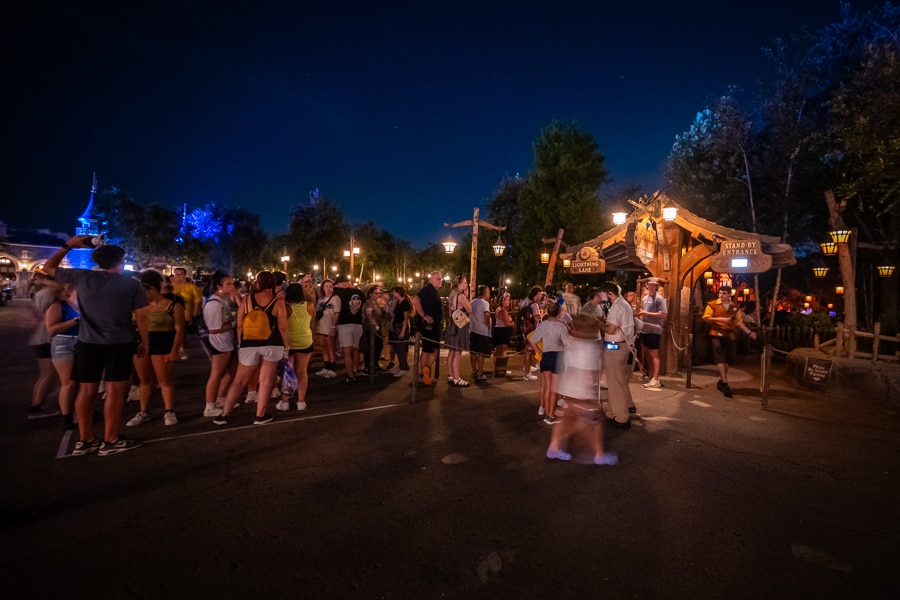
While we’ll never know for sure what prompted the “only” change or what result it’ll have on the ratio of approvals to denials, our view is that it’s fairly consequential in the quantity of DAS issued despite being only a single word.
The motivation for the “only” change might’ve been the Disability Access Service Class Action Lawsuit Filed Against Disney Parks. The complaint relies heavily on the presence of “only” in Disney’s previous DAS policy, and a demand letter from last December that preceded the lawsuit.
I would also add that there all of the previous changes in 2025 came right around the time of that lawsuit. Otherwise, Walt Disney World has been pretty quiet as to the Disability Access Service program. Whenever DAS does make headlines, the company offers a superficial statement about their commitment to providing a great guest experience to all, and their strong track record with accommodating disabled guests. There’s been very little beyond that–everything else has been quiet policy tweaks on the official websites.

Our Commentary
From our perspective, the big ‘story’ remains the non-news and lack of material changes over the last 7+ months. Between DAS now being over a year old and the lack of meaningful changes since its anniversary, it would seem Disney has settled into a comfortable policy position with the program.
The news cycle has largely moved on, which is not to say that there isn’t still outrage or heartbroken guests, but that they’re not garnering as much attention or negative coverage. The latest AP headline about changes to DAS at Walt Disney World and Disneyland might change that, but our guess is that it will not. More likely, it’ll bring awareness of the changes to a new, more casual audience.
As for the shareholder proposal, it’s an interesting angle to get the DAS changes back into the newscycle and reach a new more mainstream audience. But honestly, I can’t see it going anywhere beyond that.

Even assuming, arguendo, that the shareholder proposal is included in proxy materials (as opposed to being excluded)…there’s no way it’s being approved. Anyone who has listened to the annual meetings knows that there are a lot of politically-charged and niche causes presented.
All of them are summarily shot down without much in the way of further discussion. There’s absolutely no reason to believe the fate of this one would be any different. While we strongly believe Disney should do a better job at finding a middle ground, it’s hard to see this as something with which shareholders–especially large institutional ones with the most sway in votes–would concern themselves.
As we’ve covered in earnings call reports and crowds coverage, attendance was down year-over-year (by about 1%), but that was largely attributable to hurricanes ($120 million disclosed losses). Meanwhile, the parks continue to set revenue records and hotel occupancy continues to rise. Right or wrong, that’s what matters to shareholders–this proposal would be DOA even if it weren’t excluded.

With that said, we once again reiterate our position that Disney should find a middle ground and make the process more humanizing. If anything, they should do this precisely because DAS changes don’t garner the same kind of attention, so reform could be accomplished without inducing as much abuse.
The company has an exemplary reputation for guest service and accommodations. The need for DAS reform was absolutely understandable, as there was rampant abuse exacerbated by social media, entitlement, and Disney creating an incentive for DAS scammers by monetizing line-skipping via Lightning Lanes.
There’s no un-ringing that bell and going back to 1990s or 2000s versions of accommodations. The world is a different place. Disney cannot relax its rules too much, or else risk a return to the system being scammed.

However, there have been heartbreaking stories of DAS denials, many of which have gone viral for good reason. These have made clear that a more flexible and humane approach offering greater discretion to Cast Members is optimal.
This strongly suggested that Disney went too far with the DAS overhaul; the pendulum swung from one extreme to another, and there has been a lot of collateral damage among disabled guests who needed DAS and have been denied under the overly-stringent system.
Cranking the DAS dial to its maximum setting hasn’t just eradicated the scammers, it has hurt guests who are actually disabled. It’s time to recalibrate from the extremes to the center.

Ultimately, we do not anticipate any major changes to DAS at Walt Disney World or Disneyland. Nor do we view there being any likelihood of success with the shareholder proposal. There is not going to be another overhaul to Disability Access Service, absent the aforementioned class action lawsuit or other litigation prevailing.
That happening is highly doubtful–Disney has been sued over every single iteration of these accommodations, and I’ve yet to find any record of them losing on any count. I can’t see anything different about this lawsuit; if anything, Disney might be able to better argue that lines and crowds are inherent to the theme park experience.
The company has already endured a lengthy PR hit over these changes, there’s zero chance they’ll voluntarily endure that again with another overhaul. What, if anything, does happen will be a slow trickle of rule relaxations. But with no major changes in the last 5 months, even that is now looking increasingly unlikely.
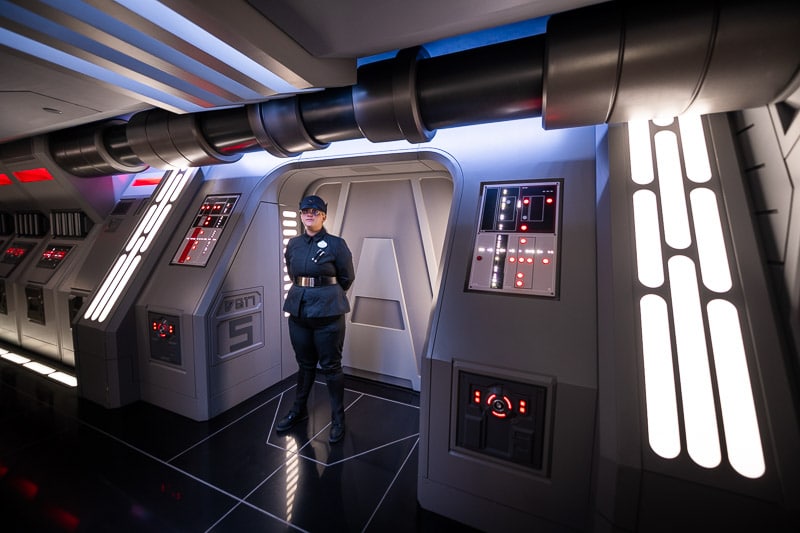
The most obvious change we’d like to see is a “humanizing” of the interview, not just expanded rules and policies for the mechanics of that process. We’ve heard from many readers who have been denied, and there’s a word that has been used repeatedly to describe the process: interrogation.
While we can appreciate how stressful this process is for Cast Members and the verbal abuse they take for disgruntled guests, there’s a better way of handling the process that feels less adversarial. Even if the letter of the DAS policies isn’t going to change, the company still should live up to its reputation by finding a gentler way to handle the process.
Planning a Walt Disney World trip? Learn about hotels on our Walt Disney World Hotels Reviews page. For where to eat, read our Walt Disney World Restaurant Reviews. To save money on tickets or determine which type to buy, read our Tips for Saving Money on Walt Disney World Tickets post. Our What to Pack for Disney Trips post takes a unique look at clever items to take. For what to do and when to do it, our Walt Disney World Ride Guides will help. For comprehensive advice, the best place to start is our Walt Disney World Trip Planning Guide for everything you need to know!
YOUR THOUGHTS
Thoughts on the shareholder proposal for an independent review of DAS changes at Walt Disney World and Disneyland? Hopeful that further changes will be made that result in increased approvals for those who truly need DAS while keeping abuse low? Agree or disagree with our assessment of the changes or policy as a whole? Please try to stay on topic–we’ve noticed some of these DAS comments sections get heated and personal. Discuss the policy itself, not others’ use (or lack thereof) of it.






I would like to know how many of those denied DAS like me ( CHF, atrial fib, severe asthma) were forced to buying Premier because they couldn’t zig zag with LL if they wanted to go to Disney.
Seems like a rip off of the disabled.
Well said, Tom!
We’ve used DAS for my neurodivergent son (now 14) for years at WDW and Disneyland and we are using again this week in Anaheim. When he was as young as 10 he would tell me how DAS made him feel “seen” and “taken care of” by Disney, which made him (and our family) very loyal to Disney.
Abuse had to be addressed and I don’t have a problem with that. HOWEVER, Disney’s main problem is that so many guests no longer feel “seen” or “taken care of” by Disney. Whether is it disabled guests who used to get DAS and can’t anymore, guests who were used to the free fast passes and now have to wait in VERY long lines (or pay $$$ for Multipass), or guests who don’t feel that Disney is providing reasonable accommodation for legitimate disabilities – that is a HUGE problem.
The trend has been to take away anything good that used to be free and charge for everything possible – and that has consequences. Disney needs to start taking better care of it’s guests because it definitely feels like they are squeezing people as much as possible and counting on them still visiting the parks. Not a great strategy!
Writing this now from Disney World, with our autistic 11yr old. We visit every December, and have been for 7 years. For us, the process to get DAS approved has changed, and we have not had a negative experience with the new process.The number of DAS requests per day per park have a limit now, with that said, we purchase LLMP so that we can be assured that our 11yr old gets to ride/see everything.
This is the first I’ve seen that DAS requests have a limit per day— when did that start and what is the limit?
I agree with Disney’s DAS policy. I’ve witnessed the abuses over several visits: using a wheelchair as a shopping cart until it’s time to get on a ride. Evaluating disabled access on a case by case basis will always have missteps, but letting everyone claim a disability without any oversight is just not right.
Could you have seen me stretching my legs for a bit as the cramps are painful? Often, ECV’s are sold out and a WC is the only alternative. It makes getting around the park time consuming and uncomfortable. I do not use a WC or ECV at home as I can manage to get into a store from the HA parking using a cart for stability. It makes me sad that people are judgmental to anyone they deem not disabled. If we chatted for even five minutes, I promise you would feel differently. Maybe you did witness abuse as there are always cheats out there, however to judge ALL is harsh. I hope you never experience a disability. I did not expect to have multiple issues resulting in disability, but it happened.
Their policy is fine, but there inconsistency is a huge challenge and cause for damage to the brand. With no significant change in the last 12 months they have silently rejected more and more people that they approved 12 months ago. The interview is more invasive and they ask question after question when they seem to already know they plan to reject you. They made my daughter cry, finally stopped interrogating her and then rejected her. I understand they want to limit abuse, but they need to find a better way. No Magic in this process. We are changing plans to buy premier for only 1 day if it’s even available and considering other things in Orlando for the other 5 days we had planned to spend at Disney parks.
It’s an unfortunate fact that almost any system used by the disabled will be abused by the non-disabled. We should remember that only a few years ago Disney “Guides” were selling their “Skip the Lines!” services which simply abused the DAS system for people who were not disabled.
I was at Disneyland years ago and went to Guest Services to compliment a Cast Member. There was a woman in line in front of me with her husband who was clearly a quadriplegic in a wheelchair. The woman was polite, but very upset because they were following the DAS process and all day ended up in line behind many obviously NON-disabled teenagers who simply wanted shorter lines. (Back then, they could simply say, “I got asthma!” and get a DAS pass.) This is why Disney has continued to revamp their DAS process; abuse, abuse, abuse.
For those who are legitimately disabled, I’m so sorry this happens, but it’s a simple fact that scammers have ruined it for you. There’s no going back.
Over the last few years we have had consistently pleasant experiences with Disney cast members on the live chats to get approved for DAS accommodations for our daughter (I assume its straight forward for us because her needs line up exactly with the written policy and its usually pretty apparent on the call!).
With that said- I definitely sympathize with those with different disabilities that need help and are being denied or having a difficult time being approved. I’m not sure what the answer is- but like to at least share our positive experience with the approval process and cast members. The service itself is a lifesaver for us- it allows us to bring joy to our daughter’s life that otherwise would not be possible.
Within the last week I had to deal with one of these “interrogation” style calls with Universal Orlando…40 minutes of arguing and ultimately being denied (even with their extra step of IBCCES registration)! I believe they may also be dealing with abuse of the policy and are attempting to be more strict. Thankfully I called back the next day and had a much better experience with another rep. They also added a digital option similar to DAS recently!
This sounds like the board members are salty because they themselves were abusing DAS lol
Had a long thoughtful comment typed out. Ads forced the page to reload and it disappeared.
I know you need to get paid but this hosting service is terrible.
Totally agree. This site has become a technical nightmare recently with the constant page reloads. Very unstable.
I had a long, but NOT thoughtful comment typed out.
So you dodged the bullet my friend by not having to read MY malarkey when the page reloaded!
Let’s give credit where it’s due – the hosting service, though still sucky, is waaaayyy wayy better than it used to be.
I sometimes now only need to refresh the page once to get completely through an entire article of Tom’s amazing words, and the addition of date bylines to the articles was a 1000% necessary step.
Now if we could just get some form of advertising revenue other than those stupid pop-up windows. A 1990s-style flashing red on the page would be better than those!
I do find this a bit absurd for a shareholder lawsuit. While I don’t doubt that DAS revisions have led to some guests forgoing Disney vacations, overall guest satisfaction / frustration with lines likely has a greater overall impact on attendance.
“…overall guest satisfaction / frustration with lines likely has a greater overall impact on attendance.”
Exactly this.
What I suspect some people ‘miss’ is that the number of guests not using DAS is far higher than those using it. Moreover, those expressing their vacation preferences due to DAS changes are a vocal minority, whereas increased overall guest satisfaction would be silent by comparison. It’s obviously measurable, but people are less inclined their increased likelihood to recommend or revisit (let alone attribute that to DAS changes).
I wonder if this “shareholder lawsuit” is led to individuals personally affected by DAS, as opposed to those actually concerned with profitability.
I’m not trying to judge the merit of the DAS policies. Not taking any position on whether they are too stringent or not.
Just saying it doesn’t seem like an issue for “shareholders.” The DAS revisions were not exactly an attempt to make the parks less profitable.
It’s not by random shareholders, the lawsuit is by DAS defenders, an online group specifically formed to complain that changes were made to the DAS system. They are also people who enjoy Disney enough to sit around complaining about it, which increases the change they also have purchased some shares of Disney stock – because people buy stock of companies they like. So yes, they may be shareholders, but it’s not random or about profits at all.
I used to qualify for DAS and no longer do. Now I buy LLs and MultiPass to make sure I can conserve my energy. Anecdotally, I’ll say that I’m spending much less time in line now than I did before. There’s been a measurable difference in the wait in the LL since DAS participation has been curbed, as well as the standby line. The volume of guests using the DAS was negatively impacting operations and the quality of other guests’ days at the park. I believe that’s indisputable.
I also don’t think it’s controversial to say that DAS was a better service than MultiPass/LightingLanes. They needed it to be the opposite. The requirements for qualifying for DAS shouldn’t have changed, but they should have taken away some of the perks, such as the two additional reservations. I also think they could have lowered the number of guests on the pass and instituted a delay in making your next reservation for even 30 minutes after using one to make it less appealing to scammers.
Of course, the biggest mistake was starting to charge for FastPass/Lighting Lanes in the first place, but that’s a bell they can’t unring. I didn’t apply for DAS until Genie+ came along. I’d mastered using FP+ for my needs, and when that was no longer available, a friend told me about DAS. There were often times when I was using DAS and having a good day, disability-wise, that I felt like I was abusing a system that was far too accommodating for my needs.
It was the service itself that needed revising, not the qualifications of its users. I really believe that.
I think you nailed it. They could/should keep DAS accommodations but make it less appealing than LLMP/Genie. Not “punish” people for needing accommodations, but give accommodations that actually meet the disability. Can’t stand on line for 45 minutes? Then have a 45-minute waiting room. But don’t allow scammers to use DAS to be on 2 lines at once, which is what LLMP/Genie does.
“The requirements for qualifying for DAS shouldn’t have changed, but they should have taken away some of the perks, such as the two additional reservations. I also think they could have lowered the number of guests on the pass and instituted a delay in making your next reservation”
They did exactly as you suggested, quite some time ago: they took away the two advance sections, lowered the number of guests on the pass, and instituted a delay on making the next reservation.
Tom, I can’t reply to your comment below, but I think I’ve answered my own question as to why they don’t want to let the proposal move forward. First, they’ll have to draft a response in their proxy statement as to why shareholders should vote no on the campaign. This opens up its own can of worms – if they make a material misstatement, they could be liable for false/misleading proxy materials. The legal due diligence to prevent such an error probably isn’t cheap either.
Second, letting the proposal come to vote is far more “public” than asking the SEC to issue a no-action letter. Most Disney tourists and media outlets aren’t going to search through EDGAR to see Disney’s request for non-enforcement from the SEC on this proposal (you are the exception that proves the rule, of course). But I could certainly see far more media attention on this issue if it came up during the annual shareholder meeting. Moreover, they’d be “on the record” as well. Disney can’t just point to Wall Street and say that businessmen voted against the proposal: Disney is the one *telling Wall Street* to vote against it!
Finally, allowing the proposal to move forward would draw more attention to the DAS Defenders and activists proposals in general. As it stands, Disney is taking the position that this proposal isn’t even worth voting on – it’s shareholder micromanagement, substantially overlapping with current plans to review DAS access, etc. If Disney actually responded to the proposal in the proxy statement, it almost legitimizes the opposition. Disney, with its history of hostile activist campaigns since the ’80s and especially recently with Trian, likely doesn’t want to give even one inch here lest other shareholder activists get any ideas about taking a mile.
I would liken the situation to their staunch defense of their IP. If they let one daycare center use Mickey Mouse and Donald Duck, they have let everybody use it…
Tom, you have always been fair in these discussions, and I sympathize with those guests that have challenges and whose needs are no longer being met. But overall, it seems the generally public has no clue how bad DAS abuse had become and the negative effects it was having on all guests, disabled and otherwise. Was there a way to reduce the abuse without all the negative side effects? Maybe? But I don’t believe Disney saw others option and just decided to anger a segment of its guests AND take a hit to its reputation if there was an easier solution.
While I’ve so far stayed out of these discussions, I find this approach to be disingenuous. Accommodations should be judged on their merits alone, not as attendance drivers. Changing rules may or may not affect overall attendance (considering offsetting effects), but that should not affect the validity or legitimacy of individual accommodations.
As a general comment, no real-world implementation will ever be perfect or fair. Any approach will have a number of scammers and legitimate users denied at the same time. Shifting rules may shift distributions, but not eliminate either one. A system so lenient as to ensure no legitimate denial will ultimately be self-defeating.
Can an American explain why the French system is not used? Over here, we show our national disability ID card. The Americans can use their America The Beautiful card for this (or a few military ones I can’t remember). There is no interrogation as the card already shows you cannot queue. The CM gives you your pass card and you are able to use it for access to the lines.
In fact, for any Americans who are struggling with Florida, please come to visit us in Paris. The park is much cheaper and there will soon be a new Frozen land. There is accessibility not just for the rides but also an emptier space for autistiques to watch the fireworks and for wheelchair users who must be on the front row to see.
Not only do we not have a national disability ID card, but the terms of our ADA (Americans with Disability Act) prevent a business from putting stringent requirements on the person claiming a disability accommodation to prove it. Employers are allowed to request proof, but businesses with a program of disability accommodations are not. (That is an oversimplification, but not much of one.) So in the US, Disney is not legally allowed to require you to present any kind of proof that you actually have the diagnosis you are claiming to have when you request a DAS accommodation.
This was meant to prevent inequitable treatment where some disabled individuals can access the resources necessary for proof and others can’t. But there is a significant negative element as well because it (obviously) opens the door to scammers.
The America the Beautiful card is a yearly entrance pass to paid National Park Service recreation sites. The NPS offers several versions of the pass, including one for those with permanent disabilities, but it’s not something that the average person would carry if they don’t a) go to a lot of National Parks, or b) live near one of the NPS sites that charges entrance fees. It’s for outdoor parks and forests, not amusement parks.
I’m an avid outdoors person, and I don’t have one because none of the parks or forests near me require entrance fees.
Thank you, Jennifer and Elizabeth, for the explanation. I think here is a cultural choice – European countries do not charge for these cards, they are to make life easier. This is probably from the fact doctors here also do not charge, so there is not a barrier for obtaining one.
When I took my disabled little brother to the Florida park, they did not take his card, but instead asked many questions about his disability. In France this would be seen as… Improper, I think is the word? To do in a public space.
This is genuine curiosity- but does the French system give everyone the same accommodation, or does it vary by diagnosis?
The WDW system is a “one size fits all” pass, which is likely why they are running into this issue in the first place, and if every US citizen who had anything that could be called a disability could walk up, show a card, and get the DAS without question to their actual needs it would be even worse than before. There are multiple diagnoses that are carried by a solid (not overlapping) 10-15% of the population who would qualify.
Another angle to the issue wtih a national disability card (besides not wanting to create a registry of the disabled…) is that in the US, accommodations are for anyone who has any impairment that substantially limits one or more major life activities… but they are generally judged based on need more so than title of diagnosis. Diagnosis matters when you get into legal issues, but the end result is that two people with the same diagnostic code may need and be entitled to very different accommodations. Wouldn’t that make the card system complicated? Or does the French system have variations? At least here in a “one size fits all” scenario, a person with a bad lactose intolerance could realistically claim they are equally justified in requesting assistance as the individual with constant severe physical and mental impairments. A disability card system in the US, if it were free, would likely cover at least half the population unless you want to leave out some people who have severe needs caused by something that is often mild. (think of things like ADHD, that can be either mildly annoying or completely debilitating)
Alouette,
My husband and I visited Disneyland Paris for the first time this past July. We are frequent WDW visitors and used to qualify for DAS until the changes in May 2024. Therefore it didn’t even occur to us to inquire about what services might be available to us in the Paris parks. However, when checking into our hotel (Newport Bay) a cast member noticed us, pulled us aside and brought us over to a help desk where they gave us a disability pass without us even asking for one. Plus they offered us a convenient room on the first floor nearby the lobby and the exit. It was such a lovely gesture and made our trip that much more magical — and made the parks that much easier for us to navigate. It was so sweet of the cast member to do that for us and so appreciated on our end. As I said we never would have asked for it but it made us feel so cared for and so looked after to have it, and we were ever so grateful for that kindness. We absolutely hope to return to DLP soon! We still visit WDW regularly even without DAS, though, and likely always will. But DLP now holds a special place in our heart.
Hi Alouette,
The French system is not used here because we are not a nanny state.
Disney doesn’t really care about the disabled. They are making record revenues off their parks. Disney will only do what they have to do to keep the attorneys and legal authorities off their backs. My husband used the DAS for over a decade before he was denied the DAS the last time he requested one. He can barely walk now, but he refuses to use a wheelchair or an ECV. The end result is that we now go to Disney much less often, and never during the hottest days of the year. The lightning lane passes make no sense for us because we cannot zig-zag across the parks. We have annual passes to Disney’s major competitors, and we visit these parks frequently. These parks have been much more accommodating to my husband. To us this is Disney’s loss because we spend a lot of money on food, drinks, merchandise, etc., each time we visit a park. But then again, Disney doesn’t care as long their overall revenue is up.
It sounds like your experience would be much better if your husband used a wheelchair or ECV. If he refuses to use one, how is that Disney’s fault?
Our son was recently approved again for DAS and we are grateful he was. I have heard many stories from guests who have been denied. Some of those denied will cancel their trips and others will resort to buying MPLL hoping to salvage their long awaited and planned for trip. My biggest issue with what is going on currently with DAS is the inconsistency with approvals/denials. Many people who were approved a month or two ago (under the current DAS guidelines) are now being denied (under the same DAS guidelines). DAS rules haven’t changed and the person’s disability has also not changed. Many guests with disabilities feel that denial/approval of DAS is dependent upon what CM you get when you apply. Perhaps their is some behind the scenes changes we don’t know about?
I hope Disney is listening as a shareholder who did not renew their annual pass and am going to Universal instead. My daughter cannot go to Disney without accomodations. Disney used to accommodate the handicapped, but no longer. Thank you, Universal!
Bit of a trade-off by leaving the shareholder proposal off of the proxy statement. With regard to corporate governance, there’s no question that this is probably shareholder micromanagement of daily business operations. But Disney could probably include the proposal, win the proxy vote and meet all the voting thresholds to ask the SEC to issue a no-action letter for shareholder proposals related to DAS from 2026-2029 due to the resubmission prohibition on substantially similar
shareholder proposals. This would buy them three years of peace and quiet. On the other hand, they’d have to swallow the bad PR re: this year’s shareholder vote against DAS changes, since the outcome would ostensibly be “against” disabled folks and people who feel aggrieved by the changes.
I suppose their capital markets general counsel thought that this is too bitter a medicine to swallow for marginal improvements on the PR front. Moreover, they won’t need three years of peace and quiet if they adjust the process of obtaining DAS to be less interrogative, per your suggestion. Anecdotally, I think a lot of people were probably fed up with the DAS abuse and TikTok influencers encouraging people to skip the line this way. Still, I do feel bad for people who have or care for others with genuine disabilities that prevents them from waiting in line normally – I’m sure the initial changes were jarring immediately following the DAS policy revision.
Excellent analysis, all-around.
More in the weeds with regard to the SEC than my own understanding of the process, but I was nevertheless confused as to why they’d bother pushing to exclude. Whatever the PR hit, it’s going to happen regardless–either right now as Disney pushes to “silence” disabled guests, or at the shareholder meeting. Why not just let ‘big bad Wall Street’ be the villain? I can’t imagine it would even be that big of a hit then, as there will be other proposals that get shot down, too.
The shareholder proposal reminds me of something my grandfather always said – if he was angry at a company, the first thing to do is buy shares in them.
Ultimately this will not be resolved for as long as DAS provides a consequential advantage to guests; while the act only requires operators to provide equal accommodations, it’s impossible for a non-queueing system not to be preferable to queueing.
The obvious solution is to reinvent ticket books, with a modern twist: make every ride dynamically priced (“pay-on-entry”) such as to ensure that the queue does not exceed 30 minutes at any time. This would be really easy to implement. So at any moment in time, a ride with a 25 min queue would be free, a ride with a 35 min queue would charge a nominal fee, and a ride with a 90 min queue would charge a substantial fee.
Fastpass lines could be kept, and offered as a premium resort perk or ticket add-on; but crucially, it would only be for those who have already paid for the 30 minute standby entry for the specified ride. These could also be offered to DAS guests, since the advantage and thus operational impact would be relatively slight (still need to pay for ride entry; small reduction vs 30 minute standby).
The whole DAS DEBACLE is extremely disheartening. I can tell you that there is a definite decline in park attendance and annual pass renewals. Five members of my immediate family have not renewed their annual passes. This is NOT due to hurricanes! I have first hand knowledge that the “lightening lane” is not conducive to being used by the majority of the disabled community. Timing is the major issue. It is a very cumbersome process and doesn’t lend itself to a fluid and enjoyable experience. A disabled person has only so much stamina. Right now Universal is in the process of improving their disabled passes and my family is thrilled. Sorry (not sorry) Disney!
We’ve heard from a lot of disabled guests who have shared similar sentiment–that they didn’t renew APs, are done with Disney, etc. So that has absolutely happened.
The question is whether it has been offset by guest satisfaction and other gains from everyone else. Meaning, has the DAS crackdown measurably benefited everyone else? Or increased revenue by virtue of the former DAS guests now buying in greater numbers than the cancellations? Those are unknowns.