
Are Disney Tickets Too Expensive?
Like clockwork, Disney quietly made its annual ticket price increase overnight for Walt Disney World and Disneyland following another year of growing attendance in the parks. Also like clockwork, the fan community responded, with some fans defending the increases in light of the value offered and the parks’ popularity, but the majority deriding Disney’s greed and arrogance in light of the massive construction projects currently impacting the guest experience at many of its parks.
I don’t think anybody is a fan of paying more money for things, but this post attempts to set aside that natural inclination against price increases to evaluate the arguments for and against increasing Walt Disney World and Disneyland ticket prices. In so doing, we offer alternatives to address problems with the current pricing structure.
The crux of the two polarized sides of the debate consist of core arguments that “Disney is a business with a sole objective of maximizing shareholder wealth” and “Walt Disney created the parks as a place all families could go to spend time together, not with the goal of making money.” Both of these statements are at odds with one another, and both are ostensibly true at least to a degree. The difficulty thus becomes in reconciling these arguments and finding some sort of nuanced middle ground.
Let’s start with the position that Disney is a business operating to earn a profit. True enough. There’s really no debating this, but it also certainly doesn’t justify any decision The Walt Disney Company makes from the perspective of pricing. Where this argument falls flat is when it’s extended to assert that the sole responsibility of a company is to maximize shareholder wealth, a claim that I’ve frequently seen made by those defending the price increases in the past. That was more or less the standard of law espoused by the case of Dodge v. Ford. In 1919. The “business judgment rule” has since been ameliorated by a line of subsequent decisions (even in 1919, that was a reductionist view of the law, but I digress…), almost all of which give a corporation’s officers and directors considerable discretion in determining how to manage a company and its corporate funds. This has even included upholding decisions made by officers to donate such funds to charity.
It’s this same business judgment rule that allows other publicly-traded companies to pay higher wages than their competitors, offer superior benefits to employees, cut customer prices in the face of rising costs, and even raise the wages of executives to levels millions of dollars higher than their competitors (e.g., Disney’s Bob Iger). There are a variety of reasons for companies to make decisions that ostensibly seem at odds with the objective of maximizing shareholder wealth, which is why the business judgment rule protects most decisions companies make. These reasons can range from strategical (paying an employee higher wages than competitors can reduce turnover, increase employee satisfaction, etc.) to attempting to increase business goodwill to undercutting competition, and beyond.
In other words, anyone who thinks The Walt Disney Company must raise ticket prices if attendance is up is flat out wrong.
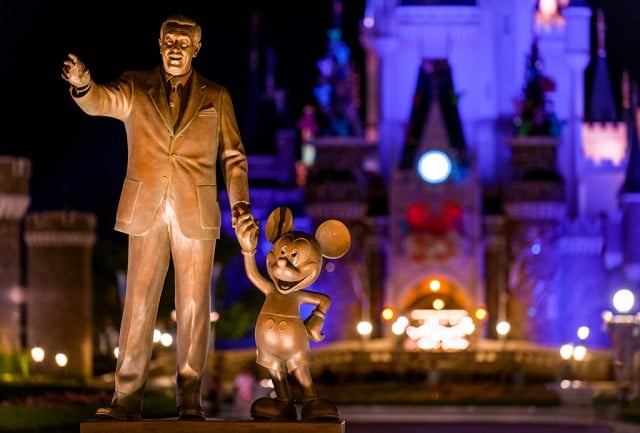
At the other end of the spectrum, there are those who argue Walt Disney built Disneyland (and intended to build Walt Disney World) as a sort of egalitarian place where all families could spend time together. We can quibble over some of the details, but there are Walt Disney quotes out there establishing this, so this argument can’t be completely rebuffed. Rather, in this situation, I think it’s important to think of Walt Disney, the actual human being. Time has painted a very rosy picture of Walt Disney that doesn’t exactly mesh with reality.
Walt Disney is the polar opposite of a lot of corporate leaders these days, and I think many of us want to view him with a certain reverence that glosses over the fact that he was leading a business and often doing very savvy things in marketing and operating that business. Thanks to a lot of his decades-old quotes and clips of his television appearances, coupled with the spectacular, family-friendly products he was able to create, Walt Disney has been elevated to a pedestal of infallibility and beneficence.
I am a huge fan of Walt Disney and greatly admire what he accomplished and inspired others to accomplish. I also believe that he was a master marketer and promoter. I believe that Walt Disney went into Disneyland wanting to create a place where families could spend time together. I believe that profit wasn’t the only motivation. I also believe that profit was one motivation, and regardless of Disneyland being a labor of love for Walt, it would have never been built if he didn’t think it would be profitable. Always the master marketer with an unimpeachable reputation, of course Walt Disney was going to pitch his park as being built out of passion while differentiating it from his competitors.
We don’t take any contemporary CEO’s talking points about their product at face value, yet we give complete deference to Walt quotes about his products. I think part of this is because Walt Disney actually was genuine, and at least part of his pitch was how he actually felt about Disneyland and what he wanted it to be.
However, the simple fact is that even in Walt Disney’s era when Disneyland cost much less to visit, it was never a place all families could visit. Even then, some people could not afford to go. That’s the inherent nature of any product. No matter what park tickets cost, so long as they had some cost, there would always be someone who wouldn’t be able to afford going. That, plus the cost of travel would be an insurmountable barrier for a large portion of the population.
In other words, I think there’s more than meets the eye with this whole debate, in academic terms, and neither “side” is entirely right. There’s far more nuance to the issue of Disney and pricing than is evident from these two positions, and the underlying issues giving rise to the controversy, are worth discussing.
Disney seems uniquely situated when it raises its ticket prices in the amount of attention garnered not just from fans, but also from the media and society as a whole. I think there’s a reason for this, and it’s not just that price increases by Disney are a harbinger of things to come elsewhere in the market. Disney theme parks occupy an interesting place in our society as privately-owned and operated locations that have become so engrained in our culture that visiting them is almost an indelible part of the American experience. Many adults visit each year not because they are enamored with Disney–for some, quite the contrary is true–but because they view a visit to the Disney theme parks as a rite of passage for their kids.
You may think, ‘so what?’ as the fact that Disneyland and Walt Disney World have been woven into our cultural fabric doesn’t change the fact that they are a business. Unlike the National Parks, which are more appropriately viewed as our birthright as Americans, Disney theme parks are not managed by the government, and we don’t have any “public right” to them. I am not arguing that we as a people do just because they are culturally significant–I think that would set a dangerous precedent.
However, Disney has marketed its theme parks very aggressively as a place where families make memories, and that “rite of passage” status so many people recognize Walt Disney World and Disneyland as having is a direct result of Disney’s excellent marketing efforts. Arguably, Disney has positioned itself as accountable to the public through these marketing efforts, and the status it has attained for itself as a rite of passage through said marketing (in a way, Disney has somewhat of a monopoly on “rite of passage” theme parks that allows it to dictate pricing). This is something of which its leaders should be aware and respectful. This is not just because those leaders have become enriched by the marketing efforts that established Disney’s position as a “rite of passage” location, but because the founder of the company (whose efforts have also enriched his successors) explicitly said he wanted it that way and more or less behaved consistently with his statements.
Still, Disney is a business, and expecting its leaders to develop a sudden sense of altruism is…well, let’s just say not pragmatic. This current leadership, on the rare occasions when it has announced or addressed price increases, has commonly touted the exceptional guest experience and improvements thereto. Had such a statement been made this year, they would probably give Seven Dwarfs Mine Train and the upcoming Disneyland 60th Anniversary as examples. Nevermind all of those closed attractions in Disney’s Hollywood Studios, the stagnation of Epcot, the sea of construction walls in Animal Kingdom, and the current closed status of numerous headliners throughout Disneyland Resort.
I think we all know this statement is merely marketing-speak and no one on either side of the argument really gives it much credence. However, it does speak to the notion that price increases would be justified by an improved slate of attractions or a better guest experience. Many would still have issues with people being priced out of visiting Disney theme parks, but overall, the increases would be more palatable because at least then added cost would be commensurate with added value.
An increased attraction roster is frequently cited as a way to address the crowds that the parks draw. Despite the rising prices, theme park attendance is also on the rise, and without increasing supply, raising prices is one way to reduce demand until arriving at an equilibrium price. If Disney truly is a quasi-monopolistic supplier as I’ve posited, what this equilibrium price would be is anyone’s guess. Instead of finding out, many Disney fans have argued that Disney should add new, high-capacity attractions to relieve the crowding problems.
Theoretically, this would work. If park capacity increased from (hypothetically) 75,000 guests in a park at any given time to 100,000 guests, that is an alternative way to address demand. Setting aside the argument that it’s easier and more efficient to simply raise prices (a really cold and calculated way to view theme parks no matter who you are), I’m not entirely convinced this would work.
If anything, I think the recent large additions at the Magic Kingdom (New Fantasyland) and Disney California Adventure (Cars Land) have created new demand close to or in excess of the capacity they added. If you’re Disney, this is a good problem to have, but it doesn’t solve the crowds problem. There are definitely ways to increase capacity without creating new demand, but I think most would require adding high capacity attractions that aren’t going to be highly publicized or buzzworthy. This would upset fans in a different way, and I can’t really see Disney opting for this route. Alternatively, the parks could add so many really, really awesome things simultaneously that would collectively create so much new capacity that new demand couldn’t possibly be as great. Had Disney added 1-2 high capacity attractions consistently each year over the last decade, this would be the end result today, and we probably wouldn’t even be having this conversation. Don’t hold your breath on that one happening right now, all at once.
As someone who believes ticket prices are too high and that the spirit of what the founder of the company intended should be honored as best as possible in light of a changing world, I don’t think the conversation ends here with Disney having its hands tied and being “forced” to increase prices since attendance is on the rise. Disney still has a few options of which it could avail itself.
The first would be to not raise prices and simply sell out of tickets on more popular days. So many other entertainment options do this, and although it would require re-educating the public so that vacationers didn’t arrive in Orlando or Anaheim only to be heartbroken that they couldn’t enter the parks, it could definitely work. Tokyo Disneyland already employs this strategy, and those parks sell out of tickets numerous days per year. That’s proof-enough that this strategy is possible, but it’s not my preferred way of dealing with demand.
Instead, I’d take another page out of the Tokyo Disney Resort playbook. Currently, a 1-day Tokyo Disneyland or Tokyo DisneySea ticket is around $53 (US), or about half the price of a 1-day Magic Kingdom ticket. This is not because they are inferior parks (to the contrary, I ranked the Tokyo parks #1 and #2 in the world). By contrast, a 2-park Tokyo Disney Resort Annual Pass works out to be around $690 (US), versus $654 for a 4-park Walt Disney World Annual Pass. Due to the way the Tokyo Annual Pass system works, many Annual Passholders there have separate Annual Passes for each of the parks, for a total cost of $908.
I’m sure a lot of you are not going to like this proposal because of the way it would impact you personally–and it would impact me, too–but I think imposing restrictions on Annual Passes is the best way to address crowds in the immediate future. I’m not suggesting pricing all but the rich out of Annual Passes, but restricting the number of times an Annual Pass can be used each year, adding parking fees, and getting more aggressive with blockout dates would be among the things I’d like to see considered for Annual Passes.
This is my proposal rather than the simpler plan of selling out tickets because I would then use all the increased revenue and decreased demand to offset a decrease in the price of single day tickets. I’d like to see a 1-day ticket in the $75 range, as I feel this is an amount that is realistic for many families (even if it requires a lot of saving), in line with the value of the entertainment offered, and in keeping with the spirit of what Walt Disney expressed as his vision for Disneyland.
Obviously, value is in the eye of the beholder, and some people are going to think $75 is still ludicrously expensive while others will think it is an incredible bargain. That’s my personal “gut” number, based on what I think is a good value, plus the other variables identified. Annual Passholders definitely wouldn’t like this, but anyone who legitimately believes that Walt argument they’ve been advocating should. I think this would have the unintended consequence of also causing many Annual Passholders to appreciate their visits to the parks much more, rather than treating them as a place to hang out. (I’m not casting any stones here–I’m guilty of this, myself.)
I know it couldn’t get to $75 and still keep revenue for The Walt Disney Company where it is simply by Annual Passholder revenue increases, so this price shift would be accompanied by a revenue decrease in park ticket sales for Disney. Before you decry that “Disney is a business!” think of the goodwill Disney would receive. It would be all over the news, with the same kind of “are pigs flying?” reaction as was seen to the recent wage increases announced by Wal-Mart. (Wait…wage increases at Wal-Mart…isn’t it a business?!) The comments section of virtually every story anywhere posted about Disney would no longer revolve around how it’s ‘too expensive’ or ‘crassly commercial’. The ancillary benefits like this would be innumerable and immeasurable, and guest spending on high-margin items once people were in the parks would probably increase since people wouldn’t have to overextend themselves so much just to get into the parks.
At least, that’s what I theorize, and the best way I can balance all of the competing interests in a practical way to deal with this “issue.
I am well aware that all of this is entirely academic. Disney employs analysts and economists far more intelligent (and with better information) than me–I’m just some dude who rants on the internet. Disney is going to raise prices as it sees fit, only stopping if attendance decreases or there is such a negative backlash about pricing that the brand is being tarnished. I don’t think any of the words I’ve written here really have any chance of impacting change. I just find it to be an interesting topic, and rather than grousing about it on Twitter without a fully-formed argument, I thought I’d share some of my “deep thoughts” regarding pricing. Hopefully it’s an interesting conversation piece, and you’ll share some of your thoughts in the comments…
I suppose the silver lining in all of this, if there is such a thing, is that some Disney ticket sellers still have limited quantities of Walt Disney World tickets available at the “old” prices…so if you missed the boat and didn’t buy before the increase, check out our Tips for Saving Money on Walt Disney World Tickets for info on how to buy at the old prices (actually, at a discount on them) for the next few days.
Looking for Disney trip planning tips? Make sure to read our Walt Disney World Trip Planning Guide and Disneyland Trip Planning Guide.
For updates on Walt Disney World, the latest news, discount information, and tips, sign up for our free monthly newsletter!
Your Thoughts…
Everyone has an opinion about Disney price increases, so what’s yours? Even in light of the increase, do you think Disney them parks are still a good value for the money? Have you been priced out of visiting? What’s your tipping point? Will you renew your Annual Pass? I’d love to hear some of your thoughts, but let’s keep try for critical thinking and reasoned analysis, rather than just ALL CAPS ranting. 😉

For a person who is lucky enough to get to Disneyland maybe every 6 years for Three magic filled days… my husband asked if I wanted to go to any of the other parks here in Southern California. My answer was absolutely not what he was expecting. None of them are even worth it. I use to work at one of them. The Power of Disney is that no matter what ride any adult can ride them, even if disabled or Extra large. You can’t find that at the others. I don’t fit into some rollercoaster restraints due to my chest size., that’s not amusing.
What is everybody talking about quality?????? Have you guys actually been to Disney World in Celebration/Kissimmee FL??? The bathrooms in the theme park are still the same bathrooms from the 80’s…the food from their cafeteria style restaurants are that of a high school or hospital…the rides are still old and outdated….So what quality is everybody speaking of???? They just rip people off and sell dreams to your kids in which they brainwash…And they don’t even lower admission for Florida residents…it’s like a 2% difference in price….all you suckers are just selling your kids false hopes and dreams because the nature of Disney is strictly to make profit and not care about people….That’s their motto now….
However, back in the early 90’s when i first visited the theme parks, it rained all weekend and ruined our vacation (since we are from out of state – also, Florida is known for rain). My parents wrote a letter to Disney stating how our visit to Disney was ruined and she even provided the exact dates we were there and the tickets we had. Disney was nice enough to give my family 5 new tickets that never expire!! Now that was what you called above and beyond customer service! Nowadays they could care less. As long as you bought them, there are no refunds, exchanges, etc. It’s all a money making business….
Quality my a$$!!!
I just went to Disney this past February. When I booked everything I told the cast member about my last trip 3 years ago and how it was a disaster because we missed our flight and had a death in the family. I wasn’t asking for anything and was given a free ticket for my whole family and 6 fast passes each that didn’t need to be scheduled. It was wonderful. Now that’s customer service
Disney is raising prices because then can. A business is there to make money. All of it. Only a drop in attendance will stop (slow down?) price increases. Simple.
I reward price increases with less attendance. I know Disney does not care. Large attendance numbers show not many others do either.
Parks are getting so crowded, I wonder if many will eventually just give the idea of going? This has forever cancelled a planned trip to DL. With DCA ‘fixed’ and the high crowds, it is not for us.
If Disney is not careful, this business may collapse under its own weight.
Like Yogi Berra said, “nobody goes there anymore. it’s too crowded!”
Great article! It’s been interesting reading this from the perspective of someone who’s used to DLP ticket pricing. At DLP, the cheapest annual pass (the large family discount pass), which we have, is $117. The cheapest annual pass available to everyone is $146. That’s cheaper than even a normal 2 day ticket, which is $158. The annual passes get more expensive for fewer blockout days. The one-day tickets are priced much the same way: $51 for a weekday outside of school vacations, $62 for weekends/school vacations, $74 for the busiest times of the year (Christmas, etc.). Then again, we all know that DLP is struggling financially. It’s an interesting situation because the school days are REALLY quiet, whereas the weekends and school vacations are REALLY busy.
I think your annual pass idea is interesting, but I’m not sure if it would work as well at WDW as at DLR. It’s something to think about though.
The prices are getting to high at least for the amount of construction. Once Animal kingdom expands and Hollywood Studios then upgrade Epcot, ok but to raise prices now. We are skipping the nect couple years till star wars land comes about and will hit up universal
For a week at the Disney parks, my family of five must pay $1,762 just for the park tickets. We don’t feel the need to visit Hollywood Studios or Animal Kingdom anymore (and the addition of Avatar to AK won’t change that). I still have fond feelings for Epcot, even though it needs more attractions (Soarin’ is great, but needs more) and a couple of new countries. Magic Kingdom is the only park we will visit on our upcoming trip. To save money, we will visit it for only one day, and that is a direct result of price increases of such tickets over time. We will spend the other six days enjoying our resort, Riverside, wondering how few years it will be until rates at Riverside match what I once paid at the Polynesian 15 years ago. We may also visit (i.e. not stay at, just visit for a couple of hours) Wilderness Lodge (where my wife and I were married) and Fort Wilderness (campfire program) during our stay.
Future price increases at Disney resorts make the Disney Vacation Club seem more appealing, as you lock in a good portion of resort costs when you buy DVC.
I love Walt Disney World, even though I know it does not love me back and that’s its main purpose is to empty my wallet. It is a beautiful place that provides lots of fun for my family.
Doesn’t that assume DVC is a good value in the first place? (Not a good assumption, by the way.)
If anything, I’d be more leery of buying into DVC than ever, as you’re locking yourself into visiting a place where there is a track record over the last decade of costs increasing WELL above the rate of inflation.
On the sold out busy days there were about 18000 APs attending out of 80000. So, on busy days, it’s not the APs who are causing crowding. (Only Premium APs coul dget in, and those passes are somewhat rare and expensive)
Now sure, I have heard that on a nice weekday at DL, with low crowds predicted, the AP attendance is over 50%. That’s the low end SoCal only pass- which is backed out on all weekends and holidays- not to mention several weeks. But that’s GOOD for everyone- good for Disney, good for the locals (they get a great deal) and good for everyone else as that means Disney can afford to keep the park open, even on “slow” days.
Thus, APs are not the cause of crowding. On te days there’s a lot of AP in the park, it’s supposedly a slow day (that’s due to black-out dates…) on the days when the park is packed, AP’s stay away, for the most part.
Now it’s true- on Friday nites the APs do cause crowding. And also on the first day the passes are unblocked.
But in general, overall, APs are not the cause of crowding.
This is a really good point, and something I completely overlooked when formulating my original plan. Now I need to give this more thought and try to arrive at a better plan…
Disneyland tickets are outrageous. My family growing up was very poor and had 2 kids, but we went twice before I was 12. Now growing up in the middle class with 1 child we had to put off her first trip until she was 12. I kept looking in to it when we had a bit of money. Driving to save on airfare, check, good deal on hotel, check, Park admission for 3 $1000!?!?! Scrub mission.
It broke down to my mom and me splitting the cost and leaving my husband at home to save on park admission. It was $1000 just to get the 3 of us in with a city pass. A painful number to choke down, but one I did because I wanted to bring her at least once and I had gotten a promotion at work.
I think they could make it more accessible by offering discount days during the quiet season. We went in September just to avoid the crowds, but did not get a discount for doing so except at our off site hotel through Costco.
I agree with the point you’re making, but I don’t see where that $1,000 number is coming from. The CityPass covers more destinations than Disneyland, so allocating all of those costs to DLR isn’t really fair.
For me the biggest issue of attending isn’t the costs, it’s the crowds. I’m not likely to be priced out of attending but I wish they would do something major to either increase overall capacity or artificially limit attendance. This could also help return a sense of spontaneity which has been lacking of late with the rise of FP+ and ADRs. Our two recent trips have been timed to be relatively low crowd times (mid-late May) but as our kids get older pulling them from school for a trip becomes less likely, so we’ll have to visit during busier times. I’m hoping that the parks undergo a significant expansion to alleviate some of the effects of the crowds. I really would like to get away from the “planned to the last minute” feeling that you get these days.
I think an interesting experiment would be to introduce some form of crowd control via variable ticket pricing. Set a fixed number of tickets per day, and have a variable scale of cost based on when you purchase. For instance, if you cap attendance at a number that would not feel overly crowded, say 50,000/day (I have no idea what the actual numbers are, just throwing out something), you could so something like this:
Tickets 1-30,000 = $75
Tickets 30,001-40,000 = $100
Tickets 40K — 50K = $150
This would give people a choice of cost to some extent while still allowing for crowd control. Of course, it would probably be a nightmare to manage and it doesn’t account for park hopping, etc. Actually, it’s probably a horrible idea but one that I’d never seen explored so I’d be curious to know if it’s been examined previously.
On a related note — Can I ask where you get your stats regarding 1 day tickets being the most common and that “once in a lifetime visitors are the largest demographic of Walt Disney World guests”? I’m not poking holes, I’m genuinely curious because I’d love to read more stats like this. Domestic vs foreign travelers, number of visitors/day by park, etc.
Thanks,
-Brett.
I like the general idea you have here, but I’d probably just go for flex pricing that prices days that are projected to be busier at a slightly higher rate, just because I think the logistics of that would be easier and you wouldn’t have the same type of sour grapes among guests (or maybe have an ‘advance purchase’ price versus ‘day of’ price?). Doesn’t have to be much, I’m talking a total range of maybe $10-15 from the cheapest days of the year to most expensive. All of these pricing strategies are currently used with hard ticket events like the Christmas and Halloween Parties, so they shouldn’t be too difficult to implement.
As for your question, it’s what I’ve been told by someone who, without question, would know. Unfortunately, I can’t go into more specifics than that.
The price increase really doesn’t bother me, we would go anyway.
What I think Disney really, really needs to do is manage the crowds better both at the gate and in the parks.
They have a pretty good idea of what the crowds will be on any given day just by the historical data and the number of multi-day ticket sales and they should limit the crowds so it’s not miserable for everyone by having basically standing room only.
My wife and I would never consider going on holidays, weekends or special events just because they won’t control the crowds.
Playing with the AP holders or even the FastPass access does nothing if the park is basically overwhelmed. No matter what ‘gimmicks’ they do they cannot get more people on the rides if the lines are at capacity! All they end up doing is making things miserable for everyone.
If you go to any of the parks and see line delays of 120+ minutes then whoever is managing park attendance is failing at their job.
I think a sliding scale for admission on high occupancy days might also be an idea they could look at. If someone wants to go to the parks on the 4th of July then fine, double the ticket cost.
I have been a fairly regular reader of your blog since it helped me plan a first Disney trip this past November. This issue of pricing is an interesting one. We live in Atlanta, which is a doable drive to WDW, and the distance played a big part in our deciding on Disney as our destination. We were looking at 2 options at the time: Disney World or fly out to Portland, OR to visit some family. After pricing everything out, we realized that Disney was the cheaper option. Part of this was due to the fact that our daughters were 5 and 2 at the time. The 2 year old was free at WDW, but her flight to Portland would not have been. If a flight to Orlando was a factor, I don’t think we would have chosen WDW. But that was BEFORE we experienced it. I would have never considered myself a theme park enthusiast, and was actually a bit snobby about the idea of paying so exorbitantly for time spent in a completely artificial environment. When I started planning the trip, I assumed it was a one time experience to bring joy to my 2 girls. I kind of wanted to get it over with. I have a completely different perspective now. It turns out that the escapism into an alternate reality is exactly what will cause our family to return. Our vacation was so perfect and magical and memorable that I expect we will take many more trips (in addition to plenty of explorations in the real world) hoping to recreate it. I think Disney offers a submersion into another wonderful world, and if other guests’ first experience with it is pure magic like ours was, then it is no wonder that families will continue to return despite any increase in price. It has so much to do with nostalgia. All of that to say, I don’t think the price increase will affect repeat visitors trying to recapture that joy in their kids and in themselves. But for first time visitors, especially those who would have to fly to Orlando, I could see it being a deterrent. I mean if I’m choosing between New York and WDW and prices on flights and hotel are comparable, then why would I spend an extra $800+ on park tickets?
Another aspect of ticket prices that contributes to park crowding: guests feel compelled to wring every minute out of it. We were just at WDW for five days, and there was ONE day where we slept in a bit, went to the character breakfast at our hotel, didn’t get to the park until noonish, and left right after Fantasmic when we could have park-hopped and gotten another hour or two in. The other four days, we were there at rope drop or close to it, and stayed until the very end. Given the price of tickets and everything else, this was probably our family’s only WDW trip, at least for a while, so we had to make the most of it. Perhaps if things were cheaper, guests would be more inclined to take it a little easier.
As for the Six Flags and Hersheypark counter-examples, those are companies that like to squeeze costs in the name of short-term profit, but fail to understand the long-term implications of having a shoddy park. Six Flags in particular was so terrible at that (owned in large part by the notorious Dan Snyder of Washington DC football team fame) that the company went into bankruptcy. Disney’s attitude has always been “built it big, keep it super-nice, and people will keep coming back,” which I’ve always appreciated.
I love Disneyland and will never stop attending never, sweet and simple increase as it may I will pay. long live the best place in the worl
If I were operating a business, you would be my favorite type of consumer.
My family falls into that “1 day” category. We spend a few days on the gulf coast of Florida, then drive to Orlando for 4-5 days at WDW. The afternoon we get to the hotel we spend at the pool, the next day we go to MK, the next is either EPCOT or a water park, and the final day or two we are once again at the pool. This is a great way to spend a short time at WDW (and not break the bank) yet make some great memories.
Disney will continue to charge more and we will continue to pay, not because it is a good value, but because of the nostalgia and memories created there. And then our kids will continue to go and continue to pay more because of the memories we helped them create. It is a vicious cycle. Disney is a drug and I am looking forward to getting my fix in May… higher prices and all.
The problem with Disney is the fact that they really haven’t expanded. Just being there in January the place was extremely crowded for the off season and having so many attractions down for rehabs didn’t help. The reduction in park hours during this time of year seemed unjustified with the level of attendance. You also couldn’t get a DVC room at this time. If you look at the so-called Fantasyland “Expansion,” one really needs to ask the question of whether or not they really expanded? They added Little Mermaid, but 20,000 leagues used to be an attraction. They put in Belle, but the Skyway used to be an attraction. They added the brief Seven Dwarfs Mine Train, but Snow White’s Scary Adventures used to be an attraction. To me, it doesn’t seem as though they have really expanded much of anything which is a big problem. Plus, the attractions that were open were having too many technical difficulties and thus really not opened. I’ll save my comments for the disappearing magic(AKA A More Expensive Cheaper Version) for another discussion. I make all these comments as a very concerned Disney fanatic not as a Disney Hater.
Overall, even accounting for the old, removed attractions, New Fantasyland was a net gain in capacity. Little Mermaid is a people eater whereas 20k Leagues had terrible capacity, which is where the main difference lies.
I do agree with your general sentiment. Capacity should be added to the parks, and quickly. This is one reason why I think AVATAR Land will be critical. Not only will Animal Kingdom get whatever capacity that land has, but the park will be open later, and presumably that will draw more people to it, thus taking advantage of existing capacity that has been underutilized…which should take some of the burden off of the other parks, too. The other parks really need to do a better job taking so much of the crowd burden off of the Magic Kingdom.
I work at Disneyland and it breaks my heart when the prices are raised. Interacting with guests and hearing their stories really make you feel for them – for most people taking their family is a once in a lifetime opportunity, especially for lower income families. I think we all realize that it’s a business that needs to make money, but with overly expensive food, drinks, hotels, etc it becomes a hardship to come to a place that’s supposed to be magical and fun. I’m not ragging on it, I love the place to death and it’s my dream job, but I’ve seen too many cases of heartbreak over insufficient funds 🙁 $75 is a good place, it’s reasonable for the park and it allows for easier spending in the park without having to sweat it as badly. I think the price we’re at is ridiculous as most of the rides (Disneyland/DCA) are under refurb. Hopefully this company will figure out a better capacity strategy, especially with the 60th coming up.
Really interesting and balanced post. BTW, long time lurker who loves your blog — it was so helpful in planning my first ever WDW trip last November!
Anyway, I can only speak about Disneyland from a local’s perspective, but I can’t complain about the price hike for DLR/DCA, especially since it’s a milestone year and the 50th anniversary was all kinds of awesome. I understand the frustration people have if they feel priced out because I’ve loved DLR since my first visit as a toddler, and I was an AP for a while. But there were also years when I was priced out. DLR is a luxury and if it takes a while to save up or make a trade off, then so be it.
Considering DLR is a locals’ park, I imagine the threshold to be priced out is pretty high for many, since Disney offers that monthly payment option which makes it feasible for more people than a one-time payment would. They got rid of the cheaper SoCal pass and more people bought a Deluxe/Premium than ever. Personally, as much as I love DLR, I’ll never be willing to owe a balance just to go.
I like the idea of dumping the monthly payment option for annual passholders in DLR and getting rid or the SoCal passes. As a SoCal passholder it would obviously hurt my pocket but with a chance for a thinned out crowd it would be worth it. Just go to DL on a Friday morning to afternoon and it’s very pleasant. After 5 or 6 all hell breaks loose when everyone is off work/school. There is just too many locals in the area.
I think it’s only a matter of time before we see a return to ticketed attractions. We are already some of the way toward this – all it needs is for attractions to become FastPass only, and then to charge for those fastpasses (or additional fastpasses, or some combination of that).
As alien as that sounds, I think it would be no bad thing. The entry price could be brought down to a price commensurate with the surroundings (say, $50/day). It would eliminate the problem of some people getting unfairly differing amounts of value from their tickets. It would make Disney a place that’s affordable to visit. It would even out crowds dramatically (a $10 Fastpass for Soarin’ when Reflections of France would be free might help to focus the minds of people who mindlessly had for The Land pavilion… Empty theatres are no use to anyone). And cynically, it would probably make Disney more money (small sums of money seem like less of a big deal when you’re on vacation).
As unattractive as paying per attraction may seem, as long as the average cost didn’t increase I think it’s hard to argue against. It’s certainly more appealing than debates on numbers plucked out of the air about what is reasonable for the package of entertainment on offer. I daresay you and Sarah would be net winners from such a scheme, such is your good taste in underrated attractions (why have the cost of moderating the Soarin’, RnRC and Toy Story Mania lines built into your ticket price?)
Just my – probably controversial – 2c 🙂
That’s an interesting perspective, and I wonder how it would be received now. I’m not necessarily against it, but I think people really love the feel of an “all inclusive” experience, even if they end up paying more for it. (See also, Disney Dining Plan.)
Either way, interesting food for thought!
Consider another reason to be included in making the pitch for a ticket price increase this year without substantial expanded entertainment opportunities at the parks – the near future expanded entertainment opportunities. Avatar, Star Wars, Cars Land, Pixar and additions to Soarin’/Toy Story Mania will cost billions (with a B). Companies that expand their product line either borrow money, issue additional stock or corporate bonds, cut dividends to shareholders or reduce expenses. None of those are desirable and Disney is doing none of these in great measure. Raising a one day park ticket by a few dollars will not cover the entire cost of expansion but by increasing revenue now, it will reduce the need for new debt service in the future which will in turn keep future costs down, maximum shareholder return, keep profits up and possibly keep future ticket prices from rising even more. It’s not the only reason for a ticket price increase but I bet it’s part of it as well as the many other reasons you mentioned in your excellent article. People shouldn’t put blinders on when analyzing a mega-corporation’s decision…there are MANY factors to consider and I’m sure we haven’t discussed them all.
Absolutely. Of course, a lack of greater future increases for those once in a lifetime visitors who only get to “enjoy” construction walls for those new things is little solace, but I think you’re right that it’s at least part of the motivation.
Tom,
We are not annual visitors by any means, but we are about to go on our seventh trip to WDW. Every time we have gone there has been construction, as well as attractions closed for refurbishing. I have photos from our first trip in 1992 of the not-yet-open Splash Mountain. I have photos of our most recent trip in 2011 of the construction walls for the Fantasyland expansion. On our last trip to Disneyland in 2005 we got to see construction walls with Cars characters painted on them, but Cars Land was still a ways off.
My point is that no matter when the one-time visitor goes to a Disney park, there will be attractions (and restaurants, and shows) that will not be available, either because they are closed or because they are not complete. Disney parks will never (I hope) be “done,” and a reality check might be in order for those who expect everything to be up and running on their (not Disney’s) schedule.
It is true that there is a lot of construction and other change right now, but would this be better spread over an additional decade if it kept prices a bit lower in the interim? Not in my opinion.
(BTW, love the blog, and I am eager to try my new Sigma 30mm 1.4 on the dark rides!)
As a repeat visitor, I totally agree with you that there is always going to be construction, refurbishments, etc–that’s a big part of what keeps people like us coming back. I also agree that I’d rather see them play “catch-up” all at once, and I personally don’t mind seeing all of these walls because I’m playing the “long game” with Disney. I’m not a one-time visitor, so the future matters a lot to me.
With that said, I think you make the implication that spreading construction is the only way to keep prices lower right now. If Disney “needs” a way to effectively pay for theme park CapEx occurring now, it could just as easily cease buying back stock, cut corporate bloat and executive compensation, or play it more conservative with its budget for tentpole films–just to name a few possibilities.
Justifying higher prices now with construction currently taking place is one of those things that looks good on paper, but not in practice. It’s something Disney certainly doesn’t *need* to do (and the substantial CapEx investment in P&R during the Eisner era without substantial accompanying ticket increases) is evidence of this.
Tom while I am a.big fan of your blog I must say I was shocked my your proposed solution to park guest numbers.
AP holders are a core group of park antendence as a source of consistent income allowing a fairly consistent revenue stream allowing strategic planning.
In addition AP holders,like DVC owners, are all in. They are your repeat customers and your families that are likely to create legacy customers in the next generation. Any effort to devalue the AP is a shortsighted move on the part of a company attempting g to grow a loyal brand following across generations.
Frankly if park pricing for the experiential vacation that is WDW is beyond a guest then let them save for it. Not everyone gets the best car, the nicest smartphone, the 5 bedroom on the cul de sac. Everyone has equal opportunity to go the WDW based on how they save and prioritize but that doesn’t equal.equal outcome and frankly I am more then OK with that.
I don’t want to go to the parks with people who.don’t value it and treat it with respect. If I want that I will go to the county fair or 6 flags. Part of what should, and used to, make a WDW vacation special was the quality of the guest around you. People earned there way there and therefore tended to behave well. I say that much like any other product price it where you feel you will attract the right customer and in the right numbers.
Here’s hoping Disney doesn’t take your suggest but keep posting. Love your blog!
Really? I’m not so sure that accurately describes the AP holder group as a whole. I think many APs are visiting the parks as a matter of convenience in terms of entertainment options located nearby them. Certainly, there are ones in CA that are really hardcore, but I don’t think this describes the bulk of APs.
It seems like you’re describing out of state AP holders, and those are a very small demographic in terms of APs as a whole. Since most of these out of state APs are DVC owners or likely stay on site when the vacation, what would it matter if they are charged for parking?
None of what I’m proposing is set in stone. I’d certainly be open to carving out a ‘loyalty program’ or special DVC/D23 AP to reward loyal guests. Not that any of this means anything, anyway! 😉