Disney World and Disneyland Are Quietly Improving Ride Reliability and Capacity
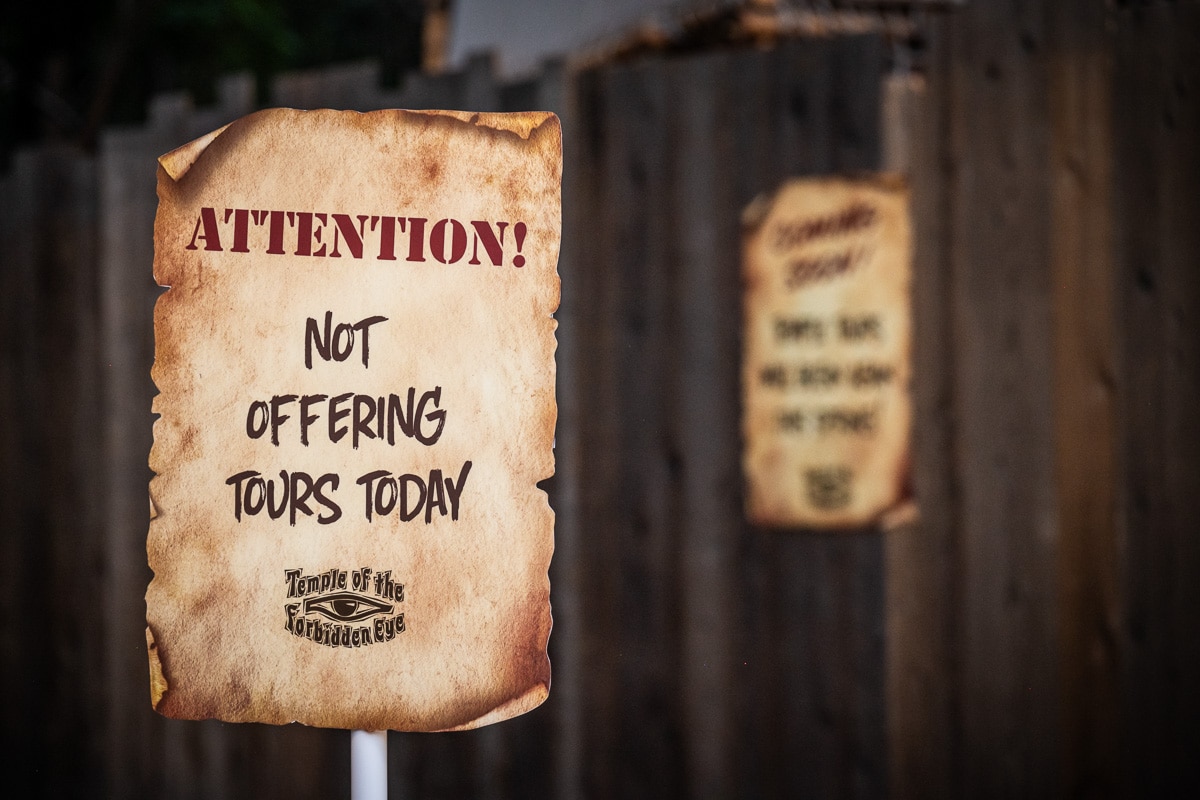
Walt Disney World and Disneyland have been quietly on a mission to improve attraction efficiency, increasing hourly throughput while improving attraction maintenance and decreasing unexpected ride downtime. This is a big win for the guest experience, and we wanted to share new details about the effort and why it’s as important (if not more) than sexy projects like park expansion.
As we’ve covered in Biggest Guest Complaints About Walt Disney World, leading concerns about the parks include ride reliability & availability, as well as wait times. Over the last several months, we’ve been hearing from the company about internal initiatives at Walt Disney World and Disneyland aimed at addressing these.
Essentially, the goal is improving efficiency at attractions so guests can experience more attractions per day. We have a few new updates on this campaign, from both Walt Disney World and Disneyland…
We attended a media event earlier this year with leadership from Disneyland, who shared plans for the future, along with changes they’ve made to improve the guest experience. Natalie Katzka, Director of Attractions Engineering Services at Disneyland Resort, was one of the presenters. She shared several changes her team has made, the fruits of which have already been felt in higher guest satisfaction scores.
Disney is focusing on attraction reliability and increased uptime at attractions. According to Katzka, Disneyland had 1.5 million more rides or ‘guests carried’ during the last fiscal year due to increased attraction availability and efficiency improvements.

“We know that being able to enjoy more attractions in a day plays a big role in how guests feel about their visit. Work behind the scenes to care for our attractions is one of the most important ways we can invest in making the guest experience the best it can be,” said Katzka.
She explained that her team categorizes maintenance into one of three buckets: Overnight Safety & Regulatory, Scheduled Refurbishments, and Unplanned Downtime. We discuss all three types of maintenance with regularity, most notably in updates to our 2026 Disneyland Ride Refurbishment Calendar.
Overnights are what gets the least attention here, and these involve regulatory safety checks and inspections, along with whatever preventative maintenance can be squeezed in. It’s often the case that Disneyland’s maintenance teams can identify issues before they result in unplanned downtime; the challenge is in accomplishing these fixes during overnights.

Replacing a single Matterhorn pacer, a tire drive that controls the speed and performance of roller coaster trains or attraction vehicles, can take 6 hours overnight with 2 technicians. There are dozens of pacers on the attraction, and only so much time each overnight.
Disneyland maintenance teams are now working on maximizing the carrying capacity on other attractions. They’ve tested a new approach to flow through the load and unload stations at Space Mountain, and that’s expected to be implemented on a permanent basis to increase throughput.
We’ve discussed this elsewhere, but every attraction has theoretical hourly ride capacity (THRC), which is how many guests could be cycled through assuming 100% efficiency. There’s also operational hourly ride capacity (OHRC), which is the “real world” number a ride can expect to achieve thanks to humans being human. The goal is to get the OHRC as close to the THRC number as humanly possible. The latest attraction to be targeted is Indiana Jones Adventure, where they’ve identified issues with dispatch intervals.

After closing six weeks ago, Indiana Jones Adventure reopened from refurbishment in late October 2026. This project featured the guest-facing changes you’d expect, from the addition of spiders and other creatures in tunnels, reapplied blacklight paint, and broken effects repaired.
The Audio Animatronics also have more fluidity and restored range of motion, thanks to the Indiana Jones figures having been disassembled and rebuilt. My personal favorite fix isn’t in the ride itself, but the queue: the bamboo pole guests can pull that triggers a ‘trap’ via spikes in the roof is once again working in the queue. (This gets repaired with every refurbishment, and usually breaks again in weeks or months, leading me to inevitably look like a fool one day when I pull it and nothing happens.)
However, it’s the invisible behind-the-scenes engineering modifications over the last year that have boosted not only the attraction’s reliability, but also allowed its capacity to increase by about 125 people per hour that are most worth celebrating. This allows for over 1,000 additional guests per day to experience Indiana Jones Adventure, shared Nicholas DiBernardo, an area manager for Attractions Engineering Services during an interview with veteran theme park reporter Todd Martens of the Los Angeles Times.

An annual refurbishment of Indiana Jones Adventure is required because it’s one of the resort’s most complex, with many moving show elements. According to DiBernardo, “Indiana Jones typically has a refurbishment every year just because of the size of the attraction and the amount of work that goes into keeping this attraction up. It all depends on the needs for improving show quality or maintenance reliability.”
The LAT interview revealed that two major changes were made to Indiana Jones Adventure this year. The most recent occurred during Fall 2026, and that was changing the mechanisms that move the doors leading to Mara. The doors were previously controlled by hydraulic actuators, and now they’re fully electric. DiBernardo shared that this makes them easier to maintain, there’s no longer a risk of a hydraulic spill, and they should properly move with significantly more dependability.
DiBernardo says this change will ensure Indiana Jones Adventure runs more efficiently. “In the past, when the old actuators would fail, the doors would have to remain open, ruining the guest’s show experience,” he explains. More significantly from a throughput perspective, it slowed down the ride, as fewer cars could be dispatched so riders weren’t seeing the vehicle in front of them. In other words, it was both bad show and poor efficiency–violating two of the Keys.

Beyond that, DiBernardo shared that Indiana Jones Adventure’s #1 downtime driver is dropped items. “Guests will be on the attraction, and they’ll have a large water bottle or a backpack. All the vehicles have a pouch for them to store everything, but if they don’t do that, there’s many twists and turns throughout the ride, and those articles can fly out. We’ll have to stop the ride. Not only are we working on ways we can improve maintenance reliability, we’re also working with our operations to help notify guests to store their items.”
In an attempt to address that, each Indiana Jones Adventure ride vehicle has now been outfitted with new, bigger pouches that should make item storage easier. In theory, that should mean fewer stoppages on a daily basis, improving throughput.
I’m not surprised that guests dropped items is the biggest caused of unplanned downtime on Indiana Jones Adventure. I’ve observed this multiple times, and was even evac’d from Indiana Jones Adventure once due to this happening. But I also don’t think small pouches were the problem, or larger ones are the answer.
This comes down to Cast Members needing to be more forceful in instructing guests to stow all loose articles; I’m surprised it’s not already an attraction where this is actively enforced. Of course, Cast Members have a lot to juggle and getting the vehicles dispatched quickly is also a big component of the hourly throughput equation.

As part of another initiative, capacity was increased by improving the loading and unloading process, thanks to the vehicles parking more accurately. This adjustment is a mix of hardware and software changes, and was made over the course of the past year.
Vehicles did not always ‘park’ in their precise loading and unloading position. Before the fix to ensure the vehicles were hitting their targets, operators would have to send vehicles through the attraction without guests in order to reset them. That was fixed back in May, and also improved the ride’s hourly capacity.
This sounds similar to changes made at Space Mountain that were explained to us earlier this year. This is good not just from a capacity perspective, but also as a symbolic victory. It’s nice to see that Disney cares enough to invest in these improvements in the first place, as opposed to shrugging at the notion of higher wait times as being an acceptable problem to have as they’ll help incentivize Lightning Lane sales. To that end, here are other recent capacity improvements made at Disneyland…
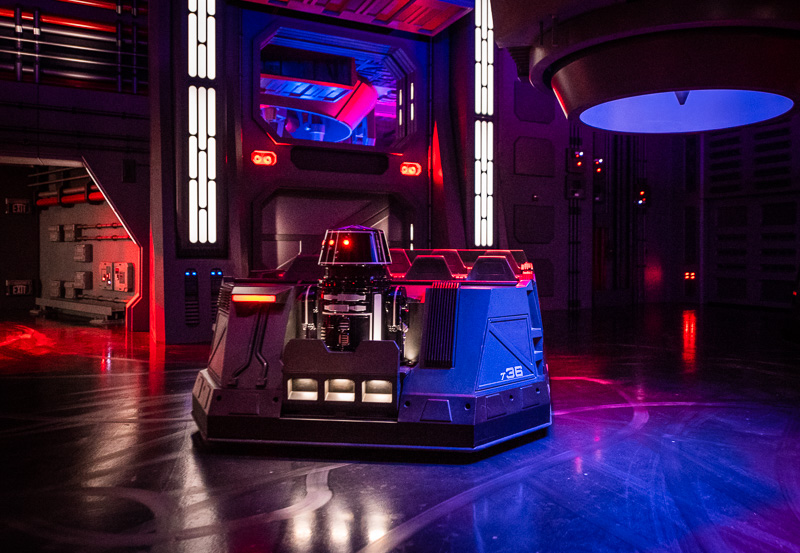
Flooring changes made to Star Wars: Rise of the Resistance were cited as another example of Disneyland’s ongoing effort to address ride faults and improve long-term reliability.
The team had flagged the flooring as a problem that was increasing ride faulting, and was just waiting for the opportunity to get in there and fix it. Even though that’s an invisible change that guests will not notice, it’ll have a positive impact on the guest experience.
Disneyland revealed that Star Wars: Rise of the Resistance already had a multiple percentage point increase in year over year uptime, and that was before the recent refurbishment addressed issues. The attraction’s reliability has improved by leaps and bounds since it opened in 2020.

By restructuring installation schedules and processes for seasonal overlays at Haunted Mansion and “it’s a small world,” the resort added nine additional operating days during the most recent holiday season; 5 at Haunted Mansion and 4 at “it’s a small world.”
Katzka shared that those additional days translated into 209,000 more guest carries combined across the two attractions; 135,000 at Haunted Mansion and 74,000 at “it’s a small world.” These are big wins at two high-capacity attractions, and during high-demand timeframes.
By reactivating the water tower in New Orleans Square, the Disneyland Railroad was able to reduce time spent in-station, which made it possible to operate a fourth train during peak season. Over a ten-day test, that change allowed the railroad to carry an additional 29,000 guests.
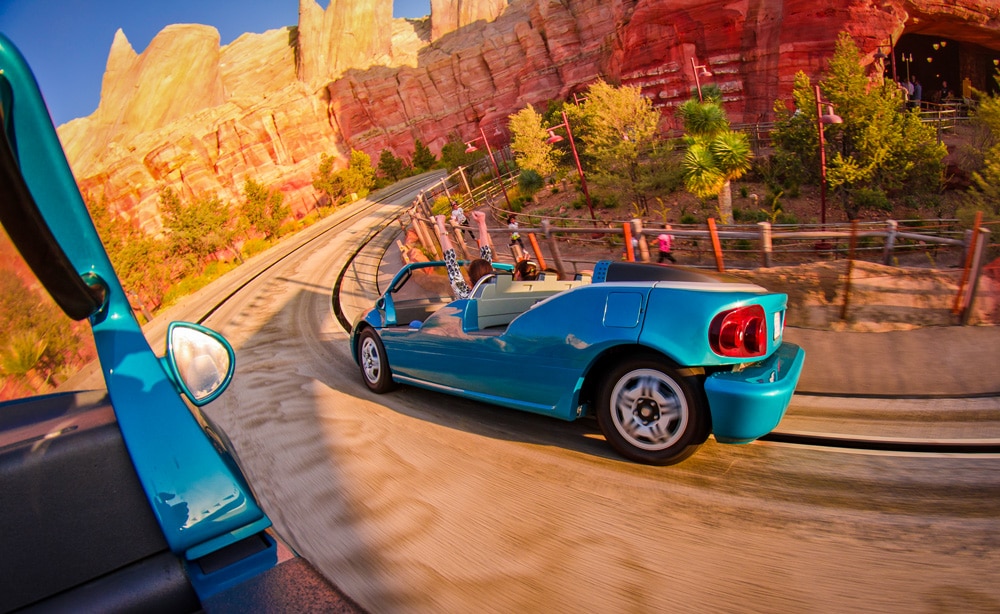
Recognizing that parts availability and supply chain disruptions is the new normal, Disney has implemented a new parts management system at Radiator Springs Racers. The attraction now uses a bifurcated approach, with auto ordering of parts based on need, with plenty of lead time to account for delays now built-in.
As a direct result of the new parts inventory management system, Radiator Springs Racers was able to operate with the maximum number of ride vehicles on the track most of the time during last year’s holiday season.
This meant more guests carried per day. This, in turn, should minimize wait times to the greatest extent possible. After hearing more about the recent woes with Slinky Dog Dash, I can’t help but wonder whether there’s something Walt Disney World could learn from this approach.
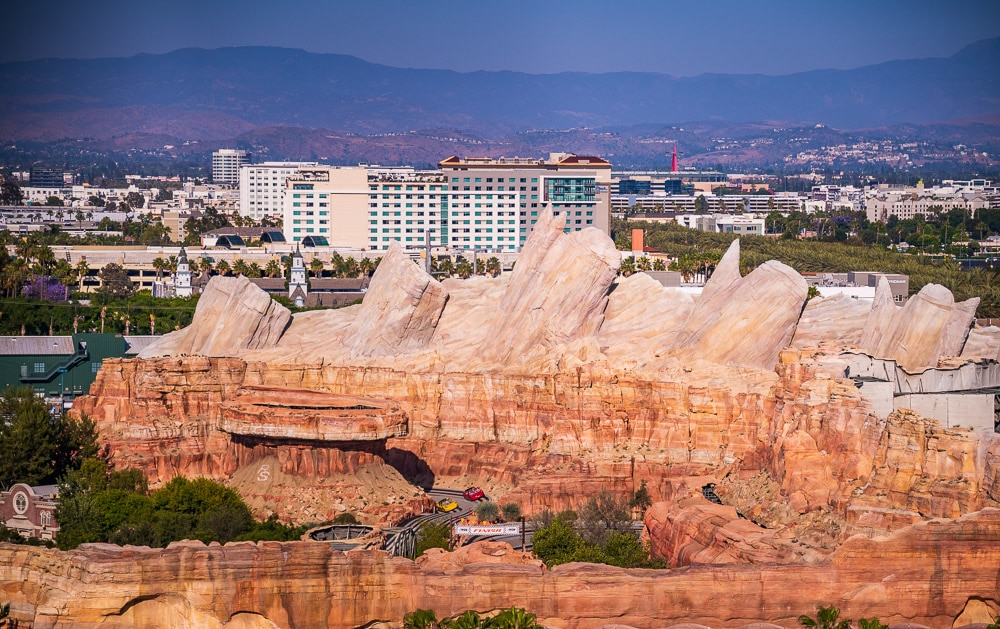
As noted above, ‘humans being human’ is one of the reasons why OHRC is lower than THRC. Things like loading and unloading slowly, standing up mid-ride and inexplicably trying to exit. You know, the usual.
According to Disney, 13% of all downtime now is actually caused by guest behavior, up from the historical norm of around 10%. In an effort to combat this, Disneyland has been installing additional signage at some attractions to help guests load faster and safer, and making tweaks to policies.
Examples here include Incredicoaster and Mickey and Minnie’s Runaway Railway, where loose phones and water bottles had caused multiple incidents. Trying to combat guests behaving badly and/or stupidly with signage sounds like a losing battle to me.
Again, my perspective is that it comes down to being more forceful with enforcement. But that also puts Cast Members in a no-win position, and accused of being rude to guests. (My hot take is that 95% of the time when a Cast Member is, ahem, assertive, a guest has done something to desire it.)
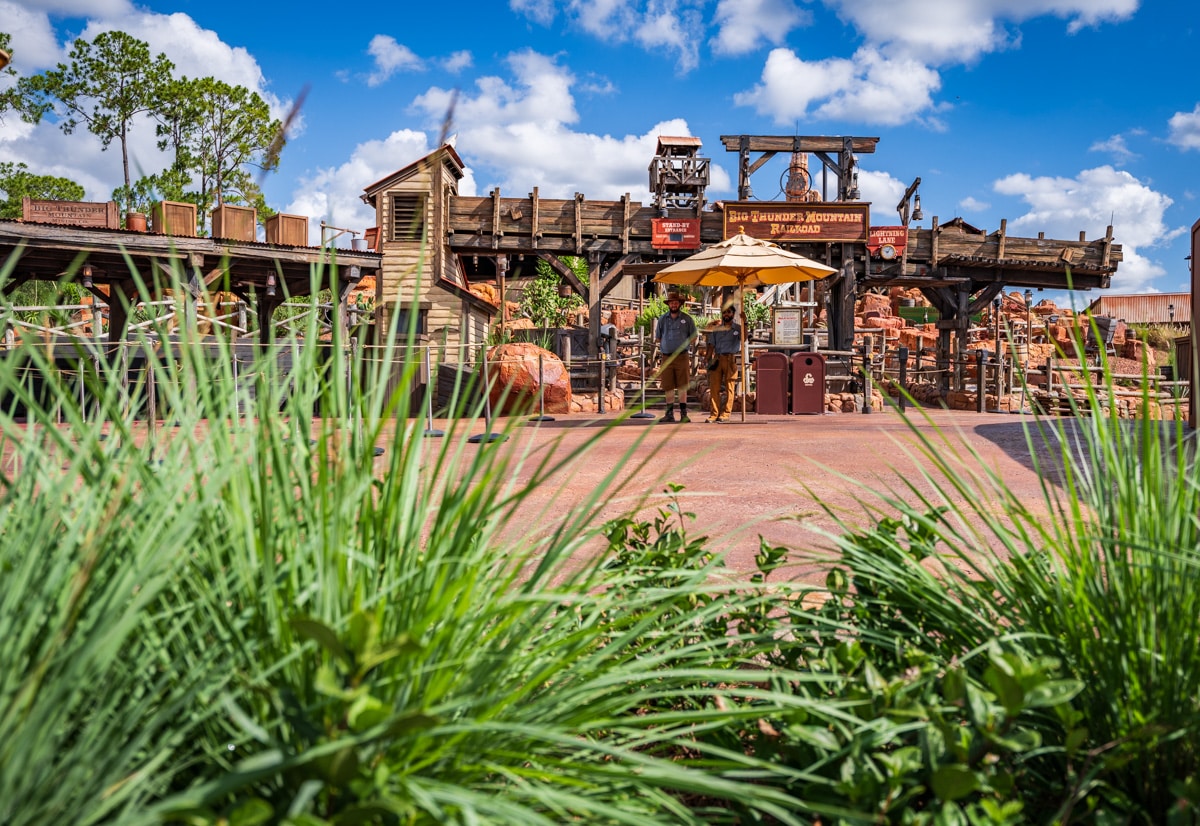
Walt Disney World has not trumpeted its own strides at improved operational efficiency, but we know they are likewise happening. We also attended a presentation at the start of summer by Imagineering, Facility Asset Management, and Park Operations to discuss a number of their recent initiatives to Improve Guest Satisfaction by 15-20% with Walt Disney World Ride & Resort Refurbishments.
They also pointed to Big Thunder as a big success story, albeit without any specific data points. They were particularly pleased with the engineering team’s ability to increase the iconic ride’s reliability, while also making it a more comfortable experience that more guests can enjoy by virtue of the lowered height requirement.
Big Thunder was also presented as an illustrative example of the collaborative relationship between FAM and Imagineering, explaining that the partnership enabled them to successfully accomplish projects like this. They highlighted how various stakeholders are working together to plan and execute projects as efficiently as possible, with more efficient refurbishments and tighter turnaround times.
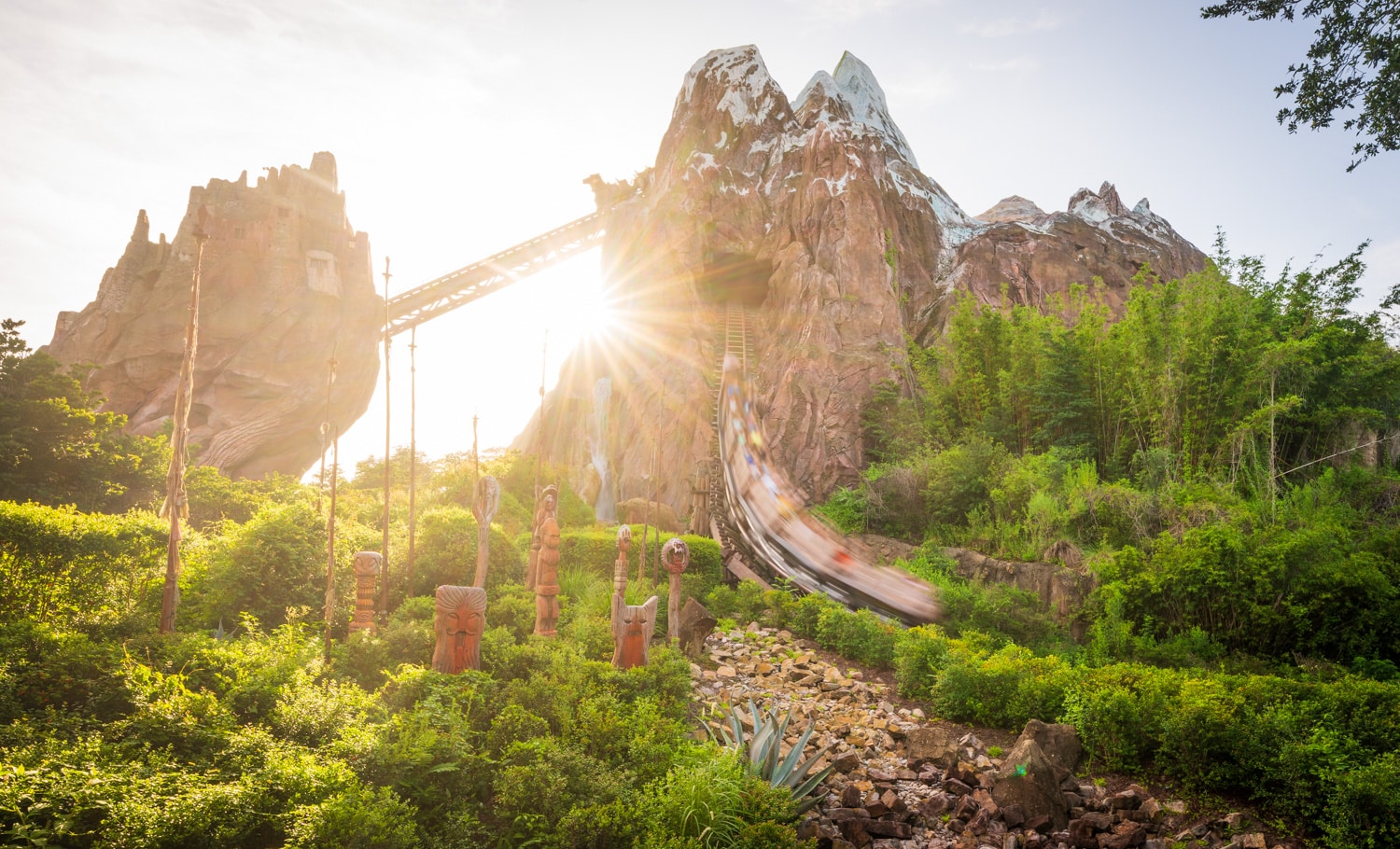
Then there have been the tests for improved hourly capacity. The most notable of these has been the End of Single Rider at Expedition Everest. That followed an extensive and successful testing of a new loading process that resulted in lower average wait times. As a byproduct of the improved efficiency, the Single Rider line no longer offered much (if any) benefit.
This was accomplished by a new sorting process. Guests in the standby line are now being split into odd and even numbered groups. Even-numbered groups are directed to the left, odd-numbered to the right. This results in fewer empty seats since, at the risk of stating the obvious, two odd numbered groups paired produce an even number.
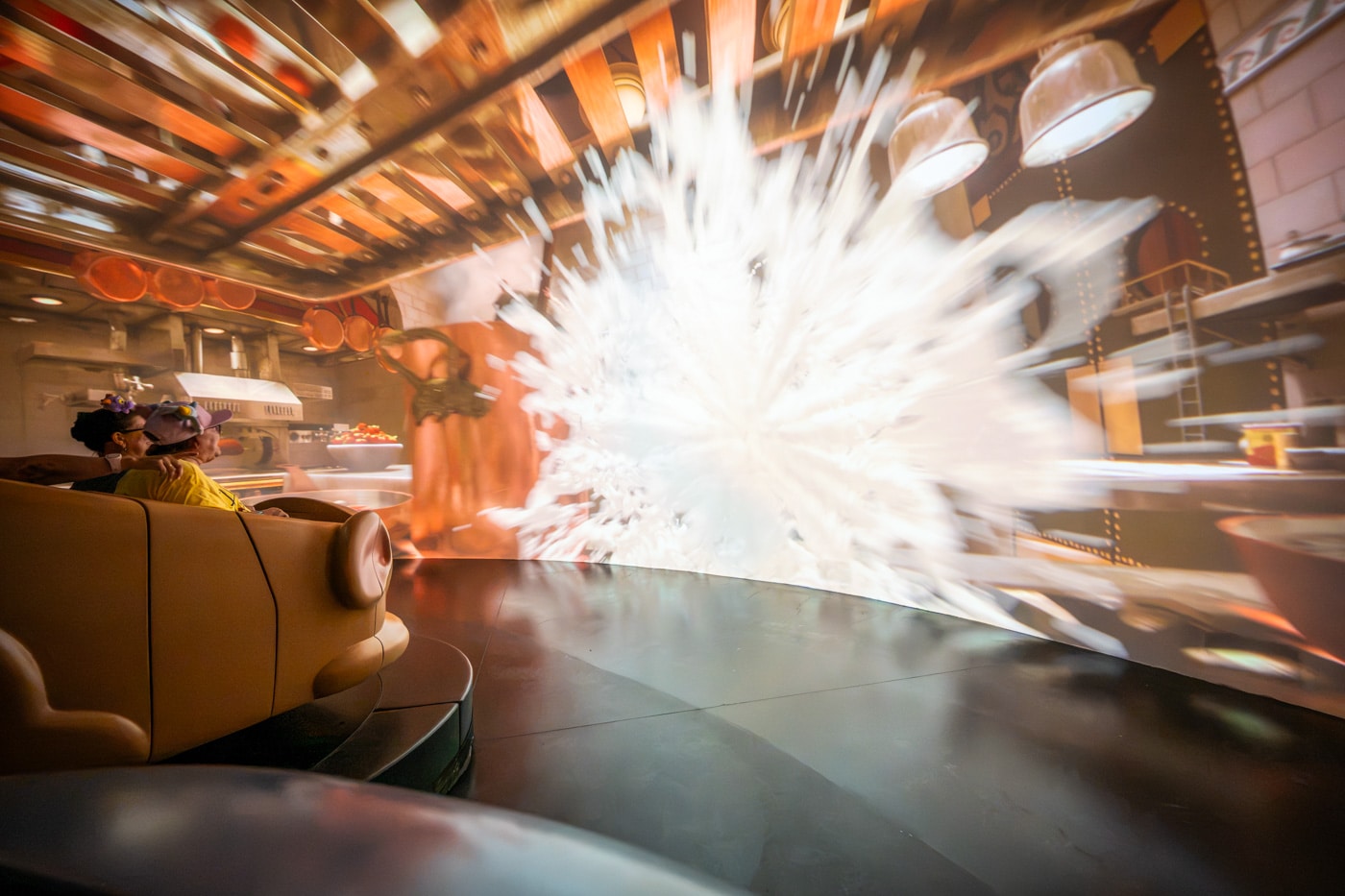
This is the most visible example because it resulted in a permanent policy change, but it’s been far from the only instance of something like this. Remy’s Ratatouille Adventure and Star Wars: Rise of the Resistance had dedicated Single Rider lines added, and other attractions have tested Single Rider closer to load.
Speaking of load, several attractions have toyed with their processes for getting guests in their ride vehicles more efficiently with colors or numbers, including flat rides like Alien Swirling Saucers. It doesn’t seem like any of these have gone anywhere.
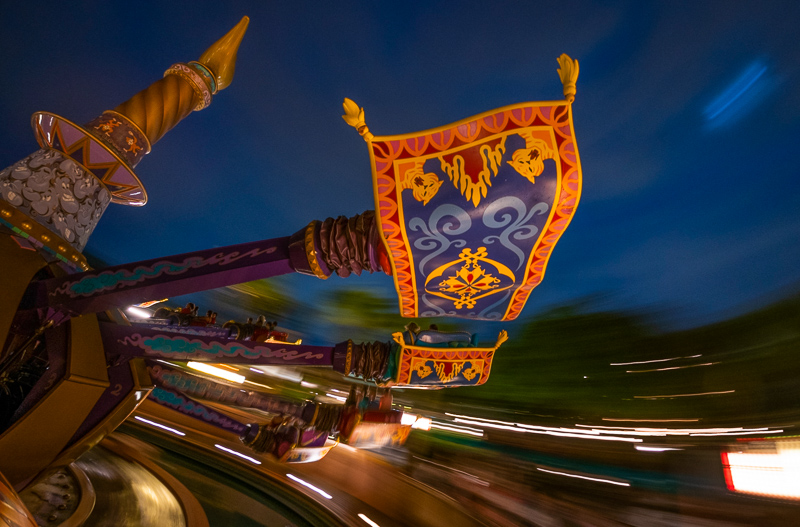
Some attractions have attempted to squeeze in more guests per ride vehicle, whether by putting more guests in each row on attractions without dedicated seats, or by filling rows that had previously dispatched empty. (The latter is currently being done on the Magic Carpets of Aladdin.) Again, many of these tests have not yielded favorable results. Guests want lower wait times, but they do not want to be squeezed in like sardines or even sit next to other guests in some circumstances.
Beyond that, it’s difficult to ascertain what’s part of a concerted initiative at Walt Disney World and what’s simply a routine refurbishment or mundane maintenance. It sure seems like something is up with Tiana’s Bayou Adventure going down for a refurbishment before the typical winter timeframe, but Walt Disney World hasn’t offered any comment on that.
As with Disneyland, we fully believe that things are getting better at Walt Disney World when it comes to ride reliability and unplanned downtime. The parks are not back to 2019 normal, which is probably still years away if it’s ever reached, but breakdowns aren’t as bad and Walt Disney World has been doing a good job at catching up on deferred maintenance and refurbishments.

One of my ‘unpopular opinions’ has long been that Disney should be doing more ride refurbishments, not fewer. Ostensibly, many fans agree with this sentiment. Unfortunately, that changes fast in practice when multiple rides close for refurbishment simultaneously during their dates.
There’s a pervasive sense among fans that nothing should be closed during their trip, and the saying “vacation ruined” has attained near-meme status among some fans. Fans demand stellar maintenance but also no ride refurbishments during their trip. Those perspectives are impossible to reconcile.
In our view, it’s better to have several scheduled ride refurbishments as opposed to a bunch of random downtime due to deferred maintenance. I’d rather know in advance that something is going to be closed, as opposed to encountering multiple unexpected breakdowns that throw off my day. At least one of those things is predictable and can be accounted for.

Domestic Disney fans often point to Tokyo Disney Resort as the gold standard for maintenance, and they’re right. OLC is old school Disney, and those parks are still held to 1990s standards.
The way that Tokyo Disney Resort accomplishes this is with an aggressive refurbishment calendar. They are not afraid to take a half-dozen high-profile attractions offline across the two parks at any given time. That’s how superlative show standards are achieved.
In our view, this is the right way to do things, and we’d love to see both Disneyland and Walt Disney World not be afraid to do likewise. Unfortunately, it’s tricky at parks like Animal Kingdom that only have a handful of rides, which is likely why the Disco Yeti hasn’t been moving for almost two decades.
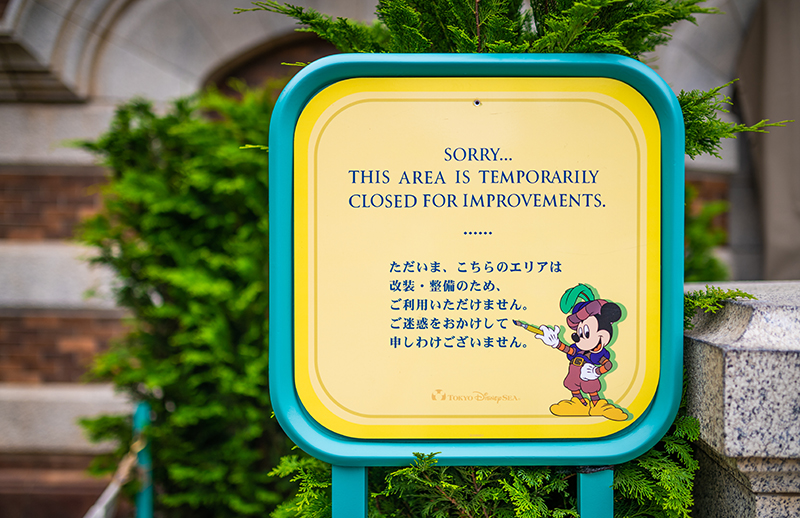
Another thing Tokyo Disney Resort does the right way is announcing ride closures 6+ months in advance in a single batch. Walt Disney World and Disneyland have gotten better about this with longer lead times for major closures, but there’s still room for improvement.
There are still too many last minute refurbishments announced by Walt Disney World or Disneyland that are almost impossible to plan around since guests have already locked in their travel dates. Not to mention dining reservations, Lightning Lanes, and so forth.
Announcing as many ride refurbishments as possible 6 months out is the best of both worlds. If there is a must-do attraction that’ll have “vacation ruined” status if missed, guests can plan accordingly.
Ultimately, it’s great to see both Walt Disney World and Disneyland seemingly turning a corner on ride reliability and hourly throughput. Although less discussed here, it’s also great that this is happening in tandem with fixing long-broken effects. Efficiency and show are two of the Keys, and there’s a clear focus on both–as opposed to one coming at the expense of the other, as is often the case.
We’d also reiterate that these are steps in the right direction, but only a start. Ride reliability and downtime had gotten noticeably worse post-reopening due to supply chain disruptions, layoffs and lost institutional knowledge, deferred maintenance, and more.
A year over year improvement is great news; it means progress is being made. But Disney still isn’t at ~2019 standards, and you’re likely to encounter downtime and delays. That’s just the nature of the beast, especially with increasingly complex attractions. Things have already improved, and we’re past the 2021-2023 low point.
All of this may not seem particularly “newsworthy,” but in our view, these invisible improvements are every bit as important as fixing broken effects or plussing attractions with “new magic” or whatever. It’s why we’re big fans of the Big Thunder Mountain Railroad refurbishment at Walt Disney World, which is the symbolic victory of the year despite it “only” involving a retracking and TLC to show scenes.
Likewise, this is why we’re really optimistic about what was just done to Indiana Jones at Disneyland. And why we’re looking forward to what’s to come at Expedition Everest, Tiana’s Bayou Adventure, Spaceship Earth, and what’s rumored for Space Mountain.
These refurbishments are not as sexy as a brand-new attraction or tangible aspects of the guest experience, but they’re more consequential than many of the ‘visible’ changes. Anyone who has endured excessive breakdowns, long or slow moving lines, or ride vehicles dispatched with empty seats should know that this is actually of paramount importance.
Planning a Walt Disney World trip? Learn about hotels on our Walt Disney World Hotels Reviews page. For where to eat, read our Walt Disney World Restaurant Reviews. To save money on tickets or determine which type to buy, read our Tips for Saving Money on Walt Disney World Tickets post. Our What to Pack for Disney Trips post takes a unique look at clever items to take. For what to do and when to do it, our Walt Disney World Ride Guides will help. For comprehensive advice, the best place to start is our Walt Disney World Trip Planning Guide for everything you need to know!
Your Thoughts
What do you think of Disney’s ride reliability & uptime improvements? Would you like to see even more maintenance and improvements? Do you agree or disagree with our assessment? Any questions we can help you answer? Hearing your feedback–even when you disagree with us–is both interesting to us and helpful to other readers, so please share your thoughts below in the comments!