
Disney World Attendance Rises Slightly as Universal Orlando Deepens Drop

Last year’s attendance statistics have been released by the TEA, reflecting a rise for Walt Disney World (albeit a very modest one) and a deepening decline for Universal Orlando ahead of Epic Universe. This looks at the winners & losers as the recovery to 2019 levels continues, with commentary about changes at WDW, UOR, Disneyland, and the international theme parks.
For starters, the 2024 Global Attractions Attendance Report is a collaboration of the Themed Entertainment Association (TEA) and the economics practice at AECOM. Top worldwide theme parks, amusement parks, water parks, museums, and theme park operators are named, ranked by attendance, and industry trends are identified.
The Global Attractions Attendance Report is considered the gold standard within the theme park industry, and TEA is highly credible. While I cannot speak to Universal’s view on TEA, I can confirm with complete certainty that the Walt Disney Company views the Global Attractions Attendance Report as credible and accurate. Suffice to say, the numbers for all Disney parks except those in Tokyo should be right on the money. (Tokyo’s numbers are also accurate, albeit for a different reason: OLC reports them directly in public filings.)
Nevertheless, the TEA attendance report does come with asterisks. Unlike Tokyo Disney Resort, Universal Orlando and Walt Disney World do not release attendance statistics as part of their earnings or annual reporting. There’s a whole ‘methodology’ section starting on page 78 of the report, which states:
“Our researchers derive the figures used to create the TEA Global Experience Index through a variety of sources, including statistics furnished directly by the operators, historical numbers, financial reports, local tourism organizations, national and international attraction associations, mobile location analytics and professional estimates where necessary.”
The report goes on to explain why most theme park operators voluntarily provide statistics to TEA, and addresses skepticism about inflating or otherwise manipulating statistics. There has long been fan cynicism about both Universal Orlando and Walt Disney World doing precisely this over the years.

However, we doubt that’s happening here for numerous reasons (also explained on pages 78-79). The report points out that misreporting or over-reporting creates problems for the operators in both the long and short term. “In the near term, if attendance is up but revenues or profitability are not, it raises questions. In the longer term, eventually, they’ll hit a point where the numbers are too far off to be credible.” TEA makes the case in the value of accurate statistics for the health of the industry, and we believe this to be a persuasive and compelling one.
This is completely accurate. Anyone who listens to Disney earnings calls knows that the key metric with which the company is outright obsessed is per capita or guesting spending. That matters much more to Wall Street than attendance, hence Disney’s past infamous statement about an “unfavorable attendance mix.” You know what decreases per capita spending? Lying about higher attendance!
The revenue is what it is. So if Walt Disney World were to claim higher attendance than the parks are actually seeing, it would decrease per caps. This means that, if anything, Disney and Universal are actually incentivized to underreport–not overreport–attendance. Disney’s dream scenario is achieving record-setting revenue with a few thousand guests per day and everyone making it rain on VIP Tours and Lightning Lane Premier Pass.

It’s the fan perspective that is fixated on crowd levels and attendance. Those numbers matter to the companies for the sake of the long-term health of the businesses, guest satisfaction, and other metrics. But they have other metrics that matter more, and their focus on those adds credibility to this report, as opposed to calling it into question.
For that and a number of other reasons, we believe that numbers for both Walt Disney World and Universal Orlando are accurate. They were correct two years ago when the results were better for Universal, and right the last two years when more favorable for Disney. They’ll be accurate again next year when Universal Orlando shows overall gains thanks to Epic Universe. If you only believe the results when they tell you what you want to hear, that says more about you than the report.
With that preface out of the way, here’s a look at the Top 25 Theme Parks Worldwide:


Here’s the TEA analysis of the data:
The global attractions landscape saw a return to stable growth in 2024, as travel and tourism patterns leveled out to roughly pre-pandemic numbers. The combined attendance of the top 25 theme parks globally grew 2.4% in 2024 to almost 246 million. In general, the leading parks in the mature markets of the U.S., Japan, and western Europe saw flat to modest changes in attendance, while the leading internationally branded parks in China saw notable continued growth and registered record years.
The world’s top water parks collectively saw less than 1% increase in attendance, though individual results varied widely by region, largely impacted by local market conditions such as weather and tourism.
On the museum front, China continued its rapid rise as a dominant force on the global charts. 14 of the top 20 museums are now located in China. China’s national prioritization of and investment in cultural institutions like museums, combined with low-cost admissions and large population centers has helped fuel this major shift in the market.
For reference, here’s a look back at least year’s TEA stats:

Turning to analysis, we want to start by directing your attention to the declines for Disneyland Paris and the Walt Disney Studios Park. Here’s the TEA analysis:
Disneyland Park in France again led the European rankings, though both Disneyland Park and second-gate Walt Disney Studios Park saw a 1.8% decline in attendance. The parks were impacted by the Paris 2024 Summer Olympics, which raised hotel rates and shifted visitor attention during the peak summer months.
This matches statements from Disney’s earnings calls, which attributed the decline to the Olympics. There were also countless media reports of a similar dynamic throughout Paris, as the Olympics sucked up all of the oxygen in the city.
We’d also note that the Disneyland Paris 30th Anniversary celebration ended in September 2023, so a tough comparison to that probably contributed to the decline (albeit only slightly, since that event started in Spring 2022). Then there’s also the fact that the second gate has been a construction zone for a while now. We’d expect 2025-2026 attendance to increase at both.
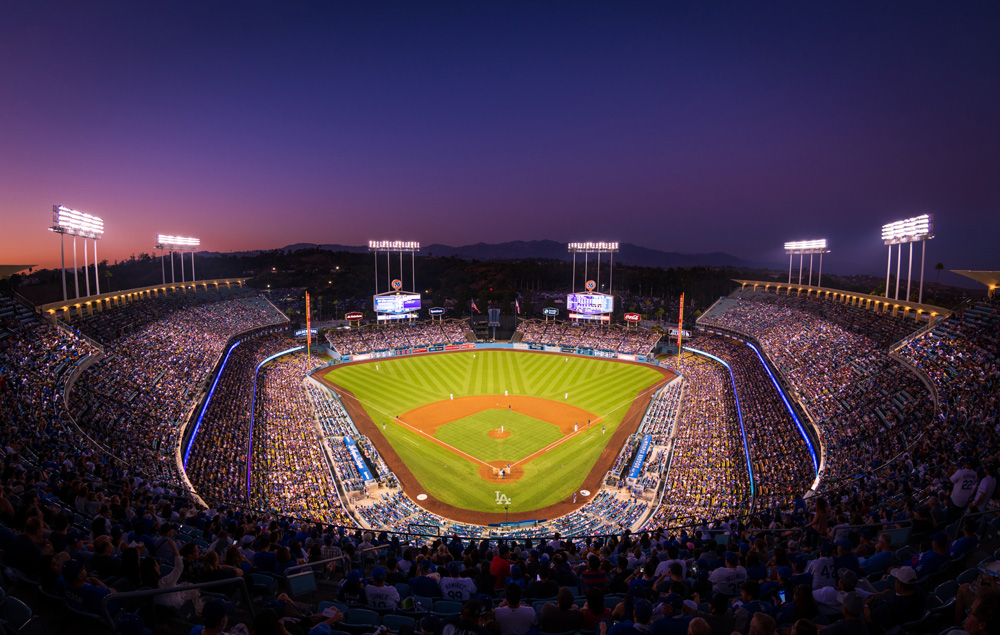
However, the reason we’re drawing attention to this is because we’ve heard from countless Disney fans wondering what Disneyland is going to finish “in time for” the 2028 Los Angeles Olympics. The prevailing assumption is that Disney will want as much as possible to open by then, capitalizing on that boost in business.
This would suggest the opposite is true–and that the Olympics are a drag on tourism as opposed to a driver of it. And in fact, that is more or less the consensus view. What we’ve observed with Paris and other host cities/countries is that the Olympics act as marketing for future visits, a catalyst for a tourism boom in the years that follow–not during the events.
Accordingly, the better question is what Disneyland will have finished in 2029-2030, when the free publicity from the Olympics starts paying dividends for California. (You could argue that the 2028 Los Angeles Olympics will be different because Disneyland is an American institution that is more closely associated with the U.S. than Disneyland Paris–the cultural chernobyl–is with France. And thus, Disneyland will be a higher priority for more international tourists coming to California. But I still don’t think Disney is going to fast-track anything for the LA Olympics.)

Frankly, I’m not fully sure I agree with TEA’s analysis that separates mature markets in Asia from China and asserts that the former is flat while the latter is growing.
To the contrary, it would be my contention that regional percentage changes are largely driven by the environment in the last few years. The largest jumps in year-over-year figures once again came out of parks in Asia, which had the most restrictive operating environments prior to 2023.
Where the respective parks were in the cycle of pent-up demand matters a lot–were they still riding the wave, or had it receded? From everything I’ve seen–and this extends to travel & tourism trends more broadly–Japan and China are both still riding that wave, especially when it comes to international visitation (an ever-increasing slice of the pie).

Japan has been smashing through annual inbound traveler numbers. Here’s a headline from just last week: Japan tops 31 mil. visitors in Jan.-Sept., surpasses 30 mil. at record pace. I’ve lost count of how many reports along these lines I’ve seen. There are newly headlines like this every single month, due to Japan continuing to break its monthly records…all of which were just set last year.
There’s only one outlier there, and it’s Universal Studios Japan, the #3 theme park in the world. Don’t get me wrong, I love USJ, but that park should not be the #3 most-attended park in the world based on capacity. The likely reasons it didn’t increase year-over-year was because it was already bursting at the seams, made a strong comeback post-COVID thanks to Annual Pass sales (which still are not available at TDR), and Super Nintendo World is now a few years old (and Mine-Cart Madness didn’t debut until late last year).
The fact that USJ has held steady in circumstances somewhat similar to Universal Studios Hollywood is a small miracle. I would bet on growth again in 2025 with Donkey Kong Country now being open for a full year.

The flip side of this is that the rest of the world’s theme parks are mostly underperforming is because they reopened and recovered earlier, and are now seeing their waves of revenge travel receding.
That creates unfavorable comparisons, which has made overperformance in the last couple of years difficult, even with Walt Disney World and other operators pulling various “levers” to entice guests to return. Nevertheless, initiatives like better discounting, return of Annual Passes, special events, and the opening of new attractions are all examples of ways some of the parks have managed to eek out gains.
To that point, let’s narrow those numbers to North America, here’s the Top 20:

Magic Kingdom remained top dog of theme parks—not just #1 at Walt Disney World, but in the entire world.
However, it’s still down as compared to 2019, when the park reached a staggering 20.96 million guests. That remains the high water mark for attendance, and it probably won’t be reached again until Cars land opens in 2029.
At the other end of the spectrum, Animal Kingdom continues to underperform as the #4 park at Walt Disney World with 8.8 million guests. That’s down considerably from the 13.9 million guests it hit in 2019. It still astounds us that Disney waited so long to expand post-Pandora, and that the only thing announced thus far is Tropical Americas. That’ll give DAK a boost, but it’s no Pandora. I’d expect even worse results for Animal Kingdom in 2025-2026, but then again, I expected those to be evident in the 2024 attendance figures.

EPCOT is once again in the #2 spot of Walt Disney World parks, having passed Disney’s Hollywood Studios in 2023 when it had a sizable 19.8% attendance increase to be the #1 growing domestic Disney park. That is once again the case for 2024, albeit with only 1.3% growth.
Every other domestic Disney park saw gains of less than 1%. This comports with what Disney CEO Bob Iger and CFO Hugh Johnston have said on multiple earnings calls over the last year-plus, when they have repeatedly suggested that attendance has been mostly flat. Growth of 0.3 to 1.3% growth pretty much epitomizes “mostly flat.”
Overall, the domestic Disney parks maintained their market-leading position despite increased competition, with U.S. theme parks contributing 76.5 million in total attendance in 2024, a 0.6% increase over 2023. On the financial side, the growth driver came from a 5% increase in per-capita ticket revenue. Thanks, Lightning Lane Premier Pass!

As noted above, attendance is down pretty much across the board as compared to the 2019 report. EPCOT and Disney’s Hollywood Studios are the two parks that come the closest, but it does not seem like either will surpass those high water marks anytime soon.
That’s especially likely without any major additions until 2028 for Disney’s Hollywood Studios and ??? for EPCOT. Honestly, though, maybe EPCOT can get away with the singles and doubles approach. Test Track 3.0 has exceeded my expectations in terms of popularity, and it’s possible that Soarin’ Across America and the enhancements coming to Frozen Ever After and Remy’s Ratatouille Adventure could offer similar boosts in 2026. Then, who knows, maybe reimaginings of Spaceship Earth and/or Journey Into Imagination in 2027-2028?!?! (Dare to dream.)
Walt Disney World seems to be okay with not hitting the 2019 high water mark for attendance. At least, for the most part. As we noted above, per guest spending is the company’s key metric and they’ve achieved enviable results there. But they’ve also offered more discounts over the last 18 months. Some of those, like Free Dining, actually do increase per guest spending. Others, like the ticket deals, do not.

Our position for a while has been that Disney Doesn’t Want Lower Crowds. The title of the post should give away our conclusion, but there’s really more nuance to it than that.
In reality, the company wants to have its cake and eat it too: the intersection of higher guest spending and higher attendance. Meaning that if per guest spending stats could be maximized at the same time as Magic Kingdom breaking the 20 million barrier, Disney would absolutely take both. That isn’t quite possible, so they aim to thread the needle and balance those desires.
Disney also needs to maintain a certain level of guest satisfaction. If what I’ve heard is accurate, that took a fairly noticeable hit on some of the heaviest attendance days in 2019 (and not just during peak weeks), which is one reason why Walt Disney World has eased back on the attendance accelerator and is now looking to increase park capacity–especially in Magic Kingdom. But that’s another topic for another day.

Then there’s Universal Orlando, which had another rough year in 2024. This was entirely expected in the lead-up to Epic Universe.
Nevertheless, Universal’s North American parks all lost attendance with Universal Studios Florida dropping more than 2.5%, Islands of Adventure down 5.5%, and Universal Studios Hollywood declining nearly 10%. The last of these has seen a steep decline as it lapped Super Nintendo World, which is the primary explanation for that decline. That, and nothing new in 2024. (The Fast & Furious: Hollywood Drift roller coaster debuts in early 2026, so that’ll likely be the next year for growth at USH.)
On the financial side, Universal theme parks experienced an approximate 4% decline in revenue from 2023. This decrease was primarily attributable to lower park attendance and the adverse impact of foreign currency fluctuations.

The decline for Universal Orlando in 2024 comes after an even bigger decrease in 2023. That year, Islands of Adventure was down 9.3% to 10 million guests while Universal Studios Florida also fell 9.3% to 9.75 million guests.
The best explanation for two consecutive years of deep drops at Universal Orlando is, quite simply, that it bounce back bigger and bolder than Walt Disney World in 2021-2022. With faster gains then, it’s not a huge surprise that there’s been a pullback and steeper drop since. And last year (but not 2023), it’s also fair to attribute some of the decrease to fans postponing visits until Epic Universe opened.
For its part, Comcast attributed their (documented) slowdown on pent-up demand for other travel options including cruises and international tourism, the strength of the dollar, and normalization post-pent-up demand. Universal executives also conceded their lower attendance to a lull in new attraction offerings: “We haven’t launched a major new attraction in Orlando since VelociCoaster in 2021, in anticipation of Epic Universe,” explained Jason Armstrong, Comcast’s CFO during one earnings call.

This is precisely why Universal has been talking about aggressive expansion plans at all three of its Orlando theme parks. We already know that Rip Ride Rockit is being replaced, and Universal has wasted no time getting started on demolition of that. There are rumors that Springfield is next on the chopping block, to be replaced by a Pokémon-themed area (although I’m skeptical). There’s probably more to come at Universal Studios Florida in 2026.
More appears poised to happen at Islands of Adventure, as well. Last month, Universal Orlando filed construction permits to demolish a 5-acre portion of the Lost Continent island in that park, confirming that the area is slated for replacement as rumors swirl about Zelda, Wicked, and other future prospects for that land.
Universal needs to move fast on these expansion plans–and it appears there are. Still, it’s unlikely there’s anything major debuting at Universal Orlando in 2026. Their growth strategy will be increased capacity at Epic Universe fueling overall attendance gains.

For whatever it’s worth, we predicted that Universal Orlando would be down again in 2024. That was based on a mix of earnings calls, wait times data, and past precedent. We also suggested that Comcast is probably perfectly fine with this, as it creates a juicy comparison that’ll be easy to blow out of the water once Epic Universe opens.
It’ll be interesting to see how attendance fares at Universal Studios Florida and Islands of Adventure once Epic Universe opens. Historically, new gates have come at the short term expense of existing ones–but Universal has used a bold strategy that largely bundled Epic Universe access into multi-day packages that “force” guests to visit the legacy parks.
Honestly, I don’t know what to expect with Universal Orlando attendance in 2025. Across the board, total visits will obviously be up. That’s what happens when going from 2 parks to 3 parks. They didn’t drop $7 billion for stagnation’s sake. The real question, though, is just how high Epic Universe attendance will be and whether it’ll come at the expense of the legacy gates, or if that bold strategy paid off and prevented cannibalization.

Without question, Epic Universe will be the lowest-attended Universal or Disney theme park in 2025. That’ll be true simply by virtue of it not operating a full year. It’ll be very difficult for it to exceed the 5.7 million guests it’d need to surpass the Walt Disney Studios Park.
Honestly, I’d be very surprised if Epic Universe eclipses 5 million guests in 2025. A more realistic number is probably around 4.5 million guests, which would come pretty close to tracking with leaked ticket sales data before that was cut off (while also assuming growth for October through December). That’s a robust inaugural year number. Anything below 4 million would be a disappointment.
I don’t have any bold predictions for Islands of Adventure or Universal Studios Florida. Comcast hasn’t said much about those parks in their earnings calls. The bundled ticket strategy has maintained a floor under them. There still aren’t APs for Epic Universe, which keeps locals visiting the legacy gates. But on the other hand, there was absolutely nothing new. I’d bet on very modest decreases–roughly 1% to 3% for both parks.
The worse numbers for Islands of Adventure and Universal Studios Florida will probably come in 2026 thanks to ticketing rules being relaxed for Epic Universe. Next year is when cannibalization will be felt in full force, especially if there’s nothing new to entice guests to visit USF and IoA.
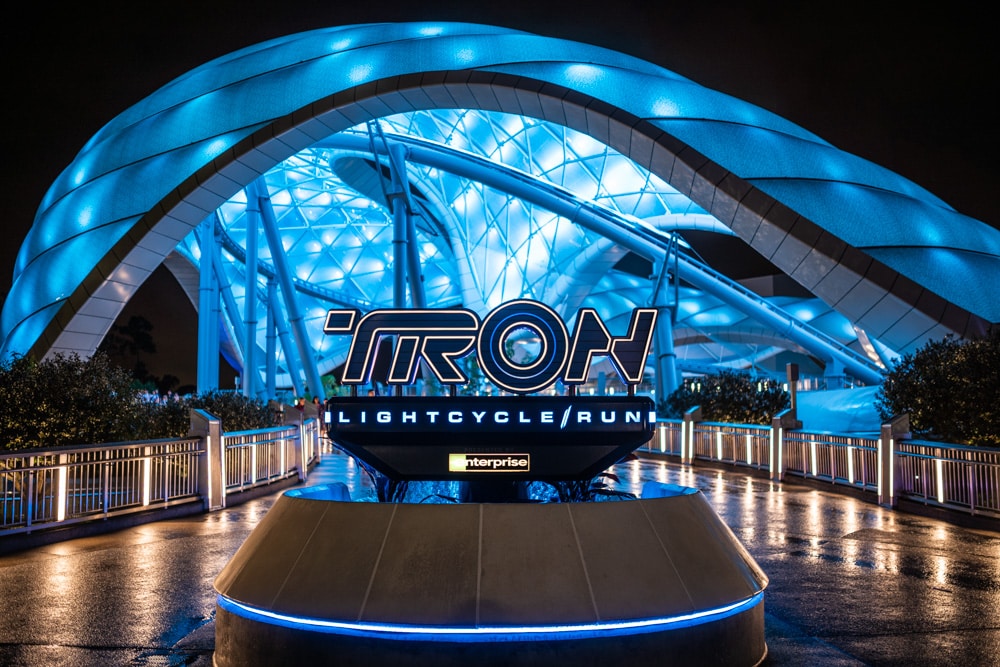
In short, success for theme parks is pretty simple: if you build it, they will come.
Time and time again, the TEA numbers have borne this out. Animal Kingdom saw a similar explosion post-Pandora, while Star Wars: Galaxy’s Edge and Toy Story Land were big for Disney’s Hollywood Studios. Last year’s numbers for EPCOT tell a similar story, with the park finally benefitting from Cosmic Rewind and the additions that came before it. Meanwhile, Magic Kingdom saw a modest boost from TRON Lightcycle Run.
Equally as important, the TEA report shows the opposite: when parks go too long between opening new attractions, their attendance suffers. If you want one “narrative” to take away from these attendance statistics, that should be it! For one thing, it’s true. For another, it’s the narrative that benefits us all and puts us all on the same “side” rather than the endless Universal vs. Disney discourse that makes us all sound like weird cultists.

Most importantly, it’s the perspective that encourages theme parks to invest more money into expansion and opening new attractions. We’re now seeing this play out in both California and Central Florida as Universal and Disney invest billions upon billions of dollars to attract new visitors. Regardless of which side “wins” or “loses” in the short term, both win in the longer term. Most importantly, fans all win!
Planning a Walt Disney World trip? Learn about hotels on our Walt Disney World Hotels Reviews page. For where to eat, read our Walt Disney World Restaurant Reviews. To save money on tickets or determine which type to buy, read our Tips for Saving Money on Walt Disney World Tickets post. Our What to Pack for Disney Trips post takes a unique look at clever items to take. For what to do and when to do it, our Walt Disney World Ride Guides will help. For comprehensive advice, the best place to start is our Walt Disney World Trip Planning Guide for everything you need to know!
Your Thoughts
What do you think of the TEA Global Attractions Attendance Report? Thoughts on the results for Universal Orlando or Walt Disney World? Any color commentary of your own to add? Do you agree or disagree with our assessments and forward-looking predictions? Any questions we can help you answer? Hearing your feedback—even when you disagree with us—is both interesting to us and helpful to other readers, so please share your thoughts below in the comments!





I think it’s reasonable to assume that the introduction of the 3-Park Pass in 2024 drew WDW guests to Animal Kingdom that would not have gone there otherwise, even if we’re talking small numbers. Not only is that the only justification I can think of for crowds not declining, bringing it back (and not the 4-Park Pass) this year means that it must have worked, if only on the margins.
That Universal Hollywood decline is crazy, particularly given Disneyland’s relative success; I don’t think that can solely be due to the lack of new attractions. I’m totally guessing here, but maybe Comcast cut the budget for advertising or discounts to help manage the Epic (and Fios) debt load?
I can’t find any reason why this year’s report is two months late. I hope it’s not permanent, but without knowing the cause, no one can say.
I like seeing the numbers for both parks, and I know that this outlet focuses on Disney, but the title feels really bias to Disney parks.( This is also just my opinion, and I could be wrong, but I’ve just been noticing that.)
Great job on the article though!
Here’s the article for the 2022 stats, which were very positive for Universal: https://www.disneytouristblog.com/attendance-increases-disney-world-loses-marketshare-universal-orlando/
The last two years have been rough for Universal. If anything, I think we’ve been a bit deferential to Universal. The USH numbers are especially brutal, as they’ve pretty much given up all of their Super Nintendo World gains.
Not sure if this is the perfect article for this comment, but here goes! I completely agree with your take… Animal Kingdom needs so much more than just another “replacement” or “reimagining” of an existing area. What it really deserves is a true expansion, something on the scale of Pandora, or even what’s been proposed for Villains Land.
The challenge, of course, is space. Animal Kingdom is already the largest park in terms of total acreage, so finding room to expand isn’t easy. Based on a rough bit of mapping, it seems that new lands typically need at least 13 acres, which doesn’t leave a lot of options within the current footprint. The best solution might be to borrow a page from the Villains Land concept and build “Beyond Everest” in the wooded area across Savanna Circle.
Like many fans, I’ve spent plenty of time thinking about what could come next for DAK, and one idea I keep returning to is a cold-climate land. With Africa, Asia, and the Tropical Americas all focusing on warmer regions of the world, a new Arctic/Antarctic environment would be a refreshing way to introduce entirely new biospheres and even new water-based experiences (something in the spirit of Tokyo DisneySea, perhaps?).
Imagine encounters with polar bears, walruses, and penguins… and, naturally, it would provide a perfect opportunity to incorporate one of Disney’s most beloved IPs in a fresh way: Frozen. The films feature water as a central visual and symbolic element. That unforgettable scene in Frozen 2 where Elsa confronts the dark sea and the Nokk could easily inspire an immersive, thrilling ride concept. The film’s theme that “water has memory” could also lend itself beautifully to storytelling that explores nature, history, and conservation. These are all themes that fit right at home in Animal Kingdom.
That’s a great idea–it would be a perfect fit for Animal Kingdom!
Realistically, what I think is more likely is new attractions in existing lands. While I’d love to see blockbuster expansion, I’m not sure massively growing the footprint of the park is in its best interests. But we could get a Lion King dark ride with an entrance in Harambe, another Pandora attraction, etc.
All of that would serve the interest of upping the ride roster (very much needed) while also not expanding the size of the park to an unwieldy degree. It also could be accomplished alongside existing plans, rather than having to be the next “big” project after Villains Land.
I just came here to see if anyone was blaming Six Flags.
You must be so disappointed. You’re ignomarrously obsessed with “Disney is empty” narratives.
When the crowds are low, we report that. When the crowds are high, we report that.
Our last post on crowds at WDW: https://www.disneytouristblog.com/worst-crowds-disney-world-october-2025-fall-break/
I don’t think you “get” this site. Tom reports only the facts, often followed by insightful commentary. Not sure what you think you’re seeing that you don’t like, but I’ve been reading here for years and your statement is entirely false.
Just spent a week going to the parks and I found Disney to be a horrible experience. Universal was a lot more fun. Would be nice if you could eat at the parks without having to take a 2nd mortgage.
That’s pretty vague… I was in Orlando for about the past 10 days and we had a great time at Disney. By rope dropping, picking good days for each park, and single rider lines, we were able to avoid buying Lightning Lanes and still didn’t have to wait more than 30m a ride. EPIC Universe, and our favorite Harry Potter rides at the other parks were super crowded with waits ranging from 1.5 to 3 hours, so we decided to skip Universal on this trip. EPIC in particular seems to not have found its groove yet, but we have high hopes it will live up to the promise of the preview days.
But I have no idea what you mean about the food. There is a variety of food at different price points, and the prices are mostly the same as you’d pay in chain restaurants. I say mostly because there are a couple of high end options, but those are the exceptions.
Compared to what I’m seeing from restaurants in the ‘real world’, I’ll gladly pay Disney dining prices.
I agree. Epic food was horrendous but thr Universal park it was atleast edible. For thr amount of money they charge for food you expect it to be decent. Their restaurants cost more than most restaurants to build. So to say it’s theme park food is inexcusable. Also the day park should be doen eith HHN going on. Universal Studios have two events basically a day. I’m pretty sure HHN will bring in over 2 billion for their 2 month event.
my only comment is why are they listing the attendance as “8,800 in thousands” instead of 8.8 million. There is SO much empty blue space. it would just make more sense to see the accurate number without having to do the math in your head.
Anyway, interesting article! Personally I just think they should add some sort of daytime food festival to Animal kingdom. I mean, people LOVE that stuff. that is such low hanging fruit too.
Will you guys ever leave the Disney / universal bubble and try out Europa and/or eftling? They seem closer to theme park magic than anything remaining in the US (even though I love Dollywood and silver dollar city, they lean more thrill based)
Those parks are definitely on my bucket list! I was a little surprised to see then just above in DLP in attendance. I was under the impression they were a bit smaller as parks.
I live in Germany and assume you mean Europa Park Germany and Efteling in the Netherlands. While I haven’t been to Europa Park my wife and I have been to Efteling based on a review that we read about the magic and how it compared to Disney World. I would not waste your time or money on visiting Efteling. It was one of the worst parks that we have ever been to. When in Germany Phantasialand is another park to try especially in winter with Wintertraum. We will be going to Europa Park next year so that we can see what all the fuss is about.
All three of the parks mentioned are on our ‘list’ of places to visit eventually, but when we travel internationally, we primarily do not do so for theme parks. The Disney and Universal parks that we’ve visited are all easily accessible from major cities we’d otherwise visit. (The only exception being Orlando, which has become a destination unto itself for theme parks–and is in the US.)
The highly-regarded European parks seem much more regional in their locations. We couldn’t even find a way to easily fit them into our itinerary when we visited Switzerland and Germany a few years back. Hopefully when our daughter is a bit older, though!
The big question for the 2025 numbers will, of course, be whether EPIC Universe drove an overall increase in Universal’s Florida park attendance, and by how much, but we won’t know until next year.
On a side note, the new site design has a weird side effect: it throws up a full-screen video after a couple of minutes, right when I’m typing a reply! This happens about every 10 seconds, bringing the video right back up when I close it. This is happening only in Safari on macOS Tahoe. Chrome on the same OS is unaffected. No idea if there’s anything you can do about it, but it IS super annoying to have my entire computer blocked.
Epic Universe definitely will drive an overall increase for this year. The floor, which we can extrapolate from known ticket sales before the data leak was plugged, is around 3.88 million. There’s absolutely no way USF and IoA lost that many guests.
Thanks for the heads up about the video ad–and sorry about that. I had no idea that was happening. I can’t directly address it, but I can indirectly by contacting the ad network and having them resolve that.
I’m subscribe to all of your emails and I love them
I love when you report these annual #’s from TEA. Your perspective is always so interesting and much appreciated.
One thing I’m seeing that is encouraging is the nice increase in attendance for Shanghai Disneyland. Does this have anything to do with intermittant closures still occurring in 2023, or is it “true” growth? Zootopia opened in late 2023, if I’m not mistaken, so perhaps that helped as well.
If that’s the case, Disney has to be relieved that the China market is still going strong, and hopefully will continue to lead to more expansion and investment (i.e. Spiderman land/coaster, etc.)
I didn’t discuss that one in the otherwise lengthy commentary because, honestly, I’m not sure!
I could’ve sworn that Disney mentioned seeing spending softness or weakening in the Chinese consumer on one or two earnings calls last year…but maybe that was this year? So my gut is that the growth is based on easier comparisons in 2023 (Japan reopened slowly relative to the US and Europe, but China reopened even slower), but I’m not 100% sure.
Planning on digging through the earnings calls transcripts later today or tonight to figure out when those comments were made.