Disney World Raises Rates on Annual Passes for 2026 & 2027, Top Tier Up by $120

Walt Disney World has raised prices for Annual Passes by as much as $120 as of October 6, 2026, continuing the company’s tradition of increases at the start of the new fiscal year. This post offers details and our commentary about all of these changes, the amount of cost jumps for each tier, motivations, and more.
This is the first notable price increase of the year on admission at Walt Disney World. They normally happen in early February or mid-October, so it’s not particularly surprising that one happened. In fact, we covered this two weeks ago in Walt Disney World & Disneyland Price Increases Are Coming: What to Expect & How to Prepare.
That article specifically predicted the following: “In all likelihood, both Walt Disney World and Disneyland will raise rates on or around October 8, 2025.” As it turns out, this was off by one day. For those wondering what my sources (Madame Leota) are saying about next year’s increase, pencil in October 5-6, 2027 on your calendar as the most likely date for the next price increase.
In any case, this is the first price increase on park admission since last October, which has been the trend for the last few years. It’s not always the case that prices “only” go up once per year. During the height of inflation and the Chapek era, Walt Disney World actually did two major price increases in 2022.
It may be hard to believe, but 2022 was actually the last huge across-the-board price increase at Walt Disney World. Everything since has been much more pedestrian, and closer to in line with inflation. Certain prices have gone up more and new revenue streams have been added (Lightning Lane Premier Pass), but not to the degree that everything did in 2021-2022. Revenge travel was a rough run!

Regrettably, Walt Disney World Annual Passes are one of the products that have been hit harder with the October 2026 round of price increases. This isn’t completely shocking in light of the 2027 ticket prices reaching a new record of $219 back with Walt Disney World’s annual product launch in April. Given that the company typically attempts to keep the cost differential roughly equivalent between regular tickets and Annual Passes, we’ve expected APs to follow suit with higher prices.
At the same time, Disneyland rolled out its yearly price increases on admission, and all Magic Key Annual Passes and multi-day tickets are unchanged. If there isn’t a single AP seeing its price hiked at locals-centric Disneyland, you might think that the more touristy Walt Disney World where APs aren’t as much of a “problem” would follow suit. Well, you’d be wrong!
Here’s a look at before and after prices on Walt Disney World Annual Passes…
Here are the new prices for each tier of Walt Disney World Annual Pass from now through October 2027:
- Incredi-Pass: $1,749 – previously $1,629
- Sorcerer Pass: $1,139 – previously $1,099
- Pirate Pass: $909 – previously $869
- Pixie Pass: $499 – previously $489
Here’s a look back at last year’s price increases, which occurred around the same time in October:
- Incredi-Pass: $1,629 – previously $1,549
- Sorcerer Pass: $1,099 – previously $1,079
- Pirate Pass: $869 – previously $829
- Pixie Pass: $489 – previously $469

Just “for fun” here’s how new Walt Disney World AP prices compare to when they were re-introduced with the new tiers back in 2021:
- Incredi-Pass: $1,299
- Sorcerer Pass: $899
- Pirate Pass: $699
- Pixie Pass: $399
For further “amusement,” here are prices for the old Annual Passes as of early 2020:
- Disney Platinum Plus Annual Pass: $1295 / $999
- Disney Platinum Annual Pass: $1195 / $899
- Disney Gold Annual Pass: $719
- Disney Silver Annual Pass: $539
- Disney Weekday Select Annual Pass: $369
- EPCOT After 4 Annual Pass: $319
The two prices for the first two tiers are for the general public versus Florida residents. Additionally, PhotoPass downloads and water parks became $99 add-ons with the change, so the before/after prices on the top tiers are really more extreme than they appear, especially for Floridians.
Depending upon the tier, it’s really not so much “fun and amusement” as “horrify and shock the conscience,” but hey, it is still spook season!

What’s most interesting to me is that the Pixie Dust Pass increased by only $10. Unlike the other tiers, this option for Floridians didn’t have sales paused, so there are a ton of them in circulation. That’s resulted in some quirky crowd dynamics, such as the weekends when that AP is blocked out being among the slowest days of the week at Walt Disney World.
That trend has been undone to some degree by Florida resident ticket deals no longer blocking out Saturdays and Sundays, but it’s evident at times of year when there’s no Floridian promo. Those ticket deals might also explain why the Pixie Dust Pass seldom sees significant price increases. Perhaps Disney doesn’t want too significant of a pricing premium on the AP, because they’d actually prefer to have a high number of Florida residents who are Annual Passholders.
Not only do APs offer recurring revenue on food & beverage and merchandise sales, but they also contribute to ‘healthy’ crowding that keeps a floor under wait times and can incentivize tourists to buy Lightning Lanes, etc. Counterintuitive as it may seem, there’s probably an incentive for Disney to have an affordable Annual Pass for Floridians, as opposed to pushing all locals towards the multi-day ticket deals.

The case could be made that trying to ‘nudge’ Pixie Dust Passholders to higher tiers via higher pricing would make sense. On the other hand, the gap between the Pixie and Pirate tiers is already so significant that perhaps Walt Disney World (correctly) realizes that no such nudging is possible.
That for a good portion of Pixie Annual Passholders, breaking the $500 barrier would cause them to cancel and downgrade to discounted multi-day tickets, or not visit at all. Disney probably doesn’t want to lose too many of those guests to Universal, especially at a time like right now that’s between development cycles and economic uncertainty is on the rise.
Accordingly, it makes sense to not overdo the increases on the lower tier APs. That’s probably why they offer disproportionately better value for money than the higher tiers, and never go up much in price. Of course, never say never. The fruits of the ongoing expansion projects start coming online in Summer 2027, so let’s check back and see what the 2028 price increases look like!

It’s somewhat surprising that the Incredi-Pass jumped by $120, especially after going up by $80 last year, but it’s not a complete shock. This has clearly been positioned as a premium product aimed at a segment of the Walt Disney World fan community that is either price insensitive or gets enough mileage out of the top tier pass to not be overly concerned about its cost.
My theory since the relaunch of Annual Passes in 2021 has been that Walt Disney World does not really want out of state APs. This might be painful to read, as we receive comments all the time about how Walt Disney World should appreciate non-Floridian APs even more and offer better deals to out of staters.
The logic is somewhat sound, albeit misguided. These readers reason that they are “better” for Walt Disney World because they book hotel rooms, do all of their meals on-site, buy souvenirs, and so forth. Basically, they do all of the right things to keep those coveted (in Disney’s eyes) guest spending metrics high. In theory, these aren’t just Walt Disney World’s whales–they’re the sustainable whales. Even better than one and done first-timers!

That’s one way to look at it. Another is that these whales would spend even more if they instead purchased multi-day tickets when they visited Walt Disney World. That AP price increases need to be commensurate with multi-day admission, otherwise it’ll incentivize more out of state tourists to “downgrade” from regular tickets to Annual Passes.
Alternatively, this type of big spending guest would pay more per trip if they decreased their frequency of visits. From Disney’s perspective, this is all upside. They get even higher per capita numbers from the guest profile I’ve described and someone else takes the place of the fan decreasing the frequency of their visits.
Have you ever heard the saying, pigs get fat and hogs get slaughtered? That’s how I’d describe this POV, which is also to say I do not agree with it. Yes, in theory this works. Assuming the whales don’t get just fed up, travel elsewhere, and realize maybe they’d prefer doing that all the time. This would be the equivalent of Philip Morris jacking up the prices of cigarettes to the point that people stopped smoking. Addicts are great for business…until they stop being addicts.
The other gaping hole in this logic is that it assumes Walt Disney World is operating without any surplus capacity. That is very much not the case anymore, and hasn’t been true since 2022. Except for a few weeks per year, there’s plenty of extra bandwidth to accommodate APs in addition to that fictional family from Denver. The bottom line is that it’s better to have two families of whales than one family of super-whales plus empty space.

Perhaps the most reasonable possibility is that Walt Disney World thinks they still have plenty of pricing power over higher spending Annual Passholders. That they’ve increased prices with impunity on the top tiers of APs, and yet, the number of these APs in circulation continues to hold steady.
That anyone willing to pay $1,549 for unlimited access to Walt Disney World in 2025 would be willing to pay $1,629 for the same in 2026, and $1,749 in 2027. Maybe they’re right. At the same time, it’s also a rather bold bet to make in one fell swoop, which is precisely why WDW opts against the market-clearing rates we’ve previously discussed for the October 31st date of Mickey’s Not So Scary Halloween Party, for example.
Of course, Walt Disney World can always offset the higher purchase price with incentives and discounts should demand decrease. As covered elsewhere, Walt Disney World opted against repeating last summer’s gift card incentive for AP purchases prior to the end of the recent fiscal year. Perhaps instead, that’s released towards the start of the new fiscal year, shortly after these price increases hit. Either way, I wouldn’t expect it to offset the ‘damage’ at the highest end of the spectrum by virtue of the Incredi-Pass jumping to $1,749. It seems unlikely that Disney will offer a $120+ gift card for renewals or new purchases of that later this year.
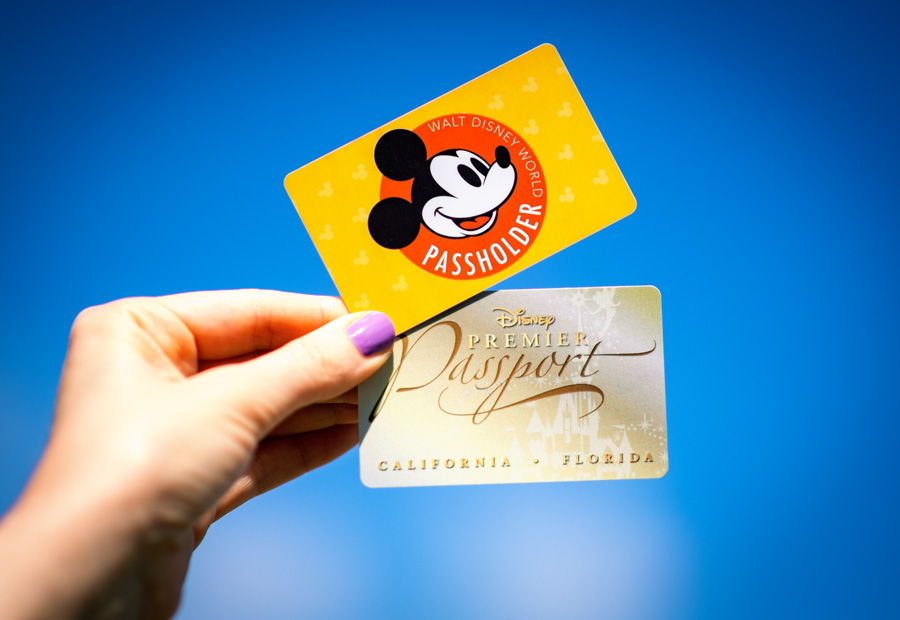
The Incredi-Pass being priced at $1,749 also makes me curious about what the coast-to-coast Premier Annual Pass would cost if it ever made a return for the general public to purchase (it’s still available for Club 33, Golden Oak, and perhaps others). This oddly comes up often during the shareholder’s meetings, but my guess is that a standalone Premier Pass, divorced of an affiliation membership, would cost $5,000 to $6,000 in 2027.
Although he discussed it in the context of Disneyland, this is more or less what former CEO Bob Chapek suggested in his new memoir. That price increases didn’t really thin the herd of Annual Passholders. It would seem that trend is no longer holding steady in California, but it could be the case with the top tier of Walt Disney World AP.
I would not be the least bit surprised if this Annual Pass is held primarily by out of state fans who visit fairly frequently, diehard fans who almost view it as a status symbol or those who are price insensitive and just want the freedom to be able to visit whenever they want, and do not care about the cost.
This is precisely why I wouldn’t be surprised if there’s eventually a more mass-market membership program that’s positioned below Club 33 and differentiated from Disney Vacation Club (in that it lacks the timeshare component), but offers fans some sort of status, admission, and loyalty perks. Treating it as a membership as opposed to an Annual Pass would sidestep the negative headlines about a $6k AP, but this is probably another topic for another post.

Finally, we’ll once again make our pitch given that the top tier of AP just increased by $120: It’s Time to Retire Park Reservations at Walt Disney World.
Many Walt Disney World fans have the perception that theme park reservations are being used to cap capacity, reduce staffing levels, or as an important source of data for resource allocation. None of those things are particularly true. In any case, this data is also available via other channels, like Lightning Lanes, resort and restaurant reservations, historical data, etc. Between all of that and the park reservation loopholes and exceptions, they offer very little in the way of valuable data.
Park reservations were one of Josh D’Amaro’s projects when he was at Disneyland, which is part of what makes this improbable even if it’s highly logical. Reservations still make sense for Annual Passholders at Disneyland. But Walt Disney World is different.
At minimum, Walt Disney World should flip the script and make it so reservations are required on APs for the few weeks per year when crowds pose a problem, and let everything else be open access. Good to Go Days should be the default for 45+ weeks per year; there’s zero danger of any park hitting capacity on over 320 days of the year.

Requiring reservations for WDW Annual Passholders is doing more harm than good. They’ve mostly become a formality, and yet, there are former APs and prospective purchasers who are holding out due to the reservation rule. Either on principle or because they don’t realize reservations are now a non-factor at Walt Disney World.
Pulling that lever would generate positive goodwill and could give AP sales a nice little boost, with little to no actual downside. During the busiest weeks of the year, blockouts do the heavy lifting, anyway. They worked for decades through 2019, and would again in 2027.
This one would be a win-win for the company and fans, while also signaling that Walt Disney World is continuing to simplify and streamline the guest experience and remove needless friction. Even for regular tourists who only daydream of having an AP, that would be a good message to send!
Planning a Walt Disney World trip? Learn about hotels on our Walt Disney World Hotels Reviews page. For where to eat, read our Walt Disney World Restaurant Reviews. To save money on tickets or determine which type to buy, read our Tips for Saving Money on Walt Disney World Tickets post. Our What to Pack for Disney Trips post takes a unique look at clever items to take. For what to do and when to do it, our Walt Disney World Ride Guides will help. For comprehensive advice, the best place to start is our Walt Disney World Trip Planning Guide for everything you need to know!
YOUR THOUGHTS
Thoughts on the price increases to Annual Passes at Walt Disney World? Surprised to see the Incredi-Pass jump by $120 to $1,749? Expect to see aggressive discounts offsetting these increases? Thoughts on Walt Disney World squandering Good to Go Days? Agree or disagree with our assessment? Any questions we can help you answer? Hearing your feedback–even when you disagree with us–is both interesting to us and helpful to other readers, so please share your thoughts below in the comments!