
It’s Time to Retire Park Reservations at Disney World
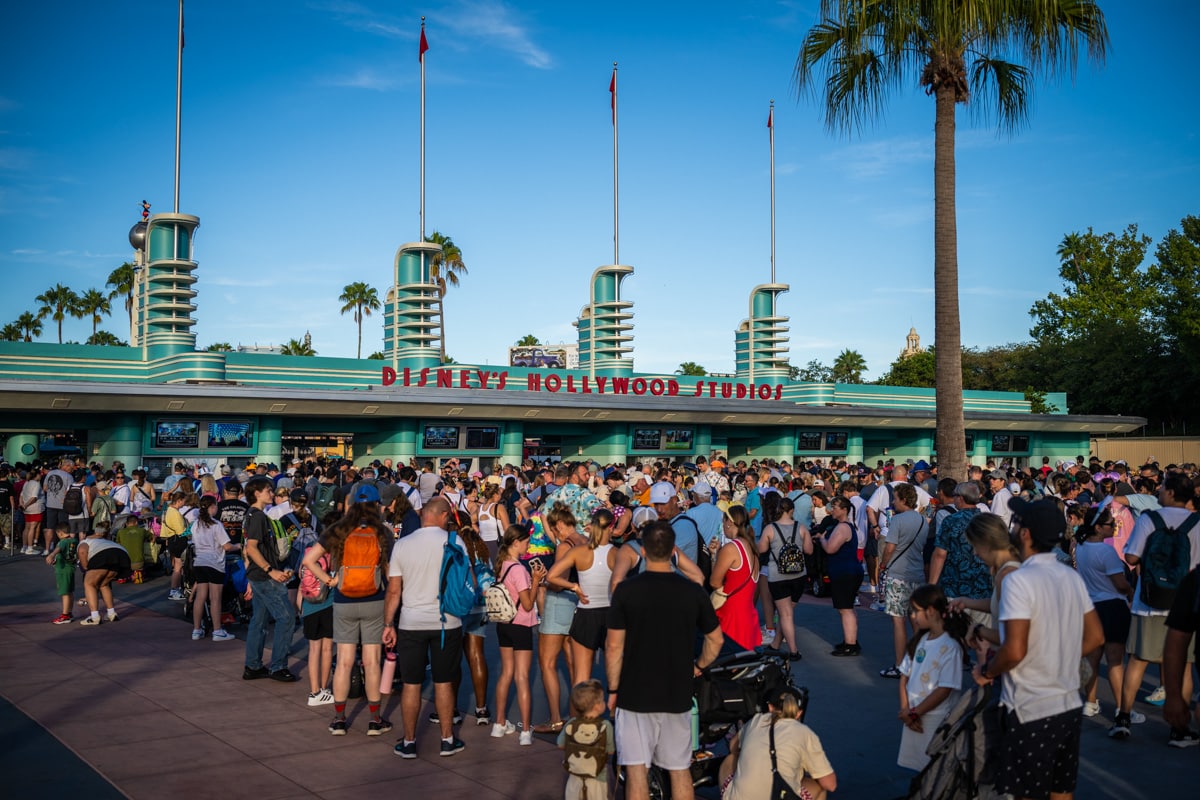
Over the last few years, Walt Disney World has rolled back many of the guest unfriendly changes and removed needless friction from visiting. Among things that realistically could be undone without drawing the ire of investors, one of the most glaring exceptions to that is park reservations for Annual Passholders and other ticket types. This article argues that now is the time for WDW to eliminate Park Pass, or at least settle on a ‘happy medium’ solution.
Beginning with brief history of park reservations, one of the big misconceptions is that they’re a product of the post-reopening era. The spotlight has been on Bob Chapek a lot lately thanks to his memoir and media tour firmly embracing the “all publicity is good publicity” mantra, as he defends the wrong decisions, doubling down on his penchant for price increases and cost-cutting.
One subject that has come up a lot while relitigating the Chapek era is park reservations. In the interest of fairness and balance, we’ll say this: Chapek is not to blame for park reservations. Certainly, as Parks Chair and then CEO he had some say in the matter. But we firmly believe that they would’ve happened regardless of him. The fact that reservations have yet to be undone in the years since he was fired further reinforces this. There’s also the fact that park reservations actually soft launched pre-COVID.
Back in May 2019, current Disney CEO Josh D’Amaro was the head of Disneyland when the Disney Flex Pass debuted. That AP offered both open admission and reservation-only days. Disney billed the Flex Passport as a way to deliver a world-class guest experience, while better distributing attendance throughout the year.
The Flex Pass offered a combination of what it called “good-to-go” days, plus the ability to make reservations on other days for more access, along with a limited number of blockouts during peak weeks. Disney Flex Passholders were able to make up to two reservations at a time up to 30 days in advance.
This AP was released in the lead-up to Star Wars: Galaxy’s Edge, as Disney feared crushing crowds and chaos. D’Amaro was reportedly in support of the Flex Pass and reservation system for Cast Members at Disneyland.
During several post-reopening interviews, D’Amaro has essentially confirmed his support of park reservations, indicating that the parks are “choreographing” the guest experience and leveraging technology in a way that Disney has wanted to for a long time.
He pointed to the Disney Park Pass reservation system, as well as Mobile Order, contactless payment, and various virtual queues. D’Amaro has noted that these technologies are leading to better Cast Member and guest experiences, and said that most are probably here to stay.
We’d stop well short of calling D’Amaro the architect of park reservations or their primary advocate, but it also doesn’t seem that he was (or is) averse to them. At minimum, he defended the system and has implicitly endorsed it by virtue of being Parks Chairman (and now CEO) for the last 4 years in a Chapek-less environment.
Frankly, given the Flex Pass, overall increases in attendance in early 2020, and population explosion in Central Florida, some degree of park reservation system was an inevitability for Walt Disney World Annual Passholders and Cast Members.
Even if the closure never happened, it’s highly likely that Cast Members and at least some tiers of Annual Passes would be required to make park reservations in 2026. It likely wouldn’t look like the current system and it certainly wouldn’t be as restrictive, but it wouldn’t be the free-for-all of 2019, either.
If we’re going down the alternate history path, the most likely outcome is exactly what happened at Disneyland. The Flex Pass would’ve been introduced, replacing one (or more) of the lowest tiers of Annual Passes. Over time, perhaps a second variation of the Flex Pass would’ve been added. Out at Disneyland, Flex Passes would’ve spawned like rabbits, gradually replacing the whole AP system. These are safe bets given that the current system has settled into something that looks strikingly similar to the Flex Pass.

The Flex Pass was followed up by the Disney Park Pass system in Summer 2020, requiring all guests to make theme park reservations via the Disneyworld.com website. This being a Disney IT project, it was a bit, ahem, temperamental at first. (Look no further than the 281 comments on our post about the launch of Park Pass.)
Park Pass once served a legitimate purpose when the parks reopened and attendance was capped at ~20% to 35% of normal levels for that first year. Following that, there was pent-up demand, and Park Pass continued to be useful as Walt Disney World scaling up capacity couldn’t keep up with the influx of “revenge travel” crowds. That pretty much ceased being the case by early 2023, and Walt Disney World acted accordingly.
They eliminated reservations for full-priced, 1-day tickets in late 2022. Following that, theme park reservations were no longer required for regular date-based multi-day tickets as of early 2024. This means that park reservations are only required for undated tickets, which typically means those sold via special offer at a discount. Most single and multi-day tickets are now dated and do not require reservations.

On the Annual Passholder side, Disney relaxed reservation rules to allow visits to the theme parks after 2 pm without needing a park reservation, except on Saturdays and Sundays at Magic Kingdom. Then in early 2024, Walt Disney World also introduced “good-to-go” days, when Annual Passholders and Cast Members could visit theme parks without needing a park reservation.
That is pretty much where things have stood since. There have not been any material changes to Annual Passholder park reservations, “good-to-go” days, or anything. Just a few price increases, which should qualify as “material” given their degree!
All of this background brings us to our argument, which is that the reservation system has outlived its usefulness and should be retired. Not only is it no longer needed, but it is actively detrimental to Disney’s bottom line and the guest experience. If Walt Disney World is reticent to end reservations entirely, significant reform is nevertheless needed.

As we’ve pointed out repeatedly, Walt Disney World is operating with surplus capacity. Most recently, we covered this in Disney’s CFO Claims the Parks Are Full. Walt Disney World Attendance, Wait Times & Deals Suggest Otherwise.
What the CFO claimed was actually true in 2021-2022 and maybe up until 2023, but it’s not the case anymore. As a reminder, attendance is down by 5 million visitors annually at Animal Kingdom, Magic Kingdom is still ~3 million under its all-time high, and both EPCOT and Disney’s Hollywood Studios are still hovering below 2019 despite adding blockbuster new lands and attractions since then.
In fairness, 2019 and into early 2020 were too busy. Those crowd levels were unsustainable, and Walt Disney World is correct that they were a negative to the guest experience. I doubt there’s any appetite to get attendance back to 2019 levels, but I also am skeptical that they’re averse to pushing it higher.
Comparatively, 2026 is comfortable to uncrowded; there’s plenty of extra bandwidth to accommodate APs in addition to that fictional family from Denver most dates. That’s true except for like 4 weeks of the entire year, and each and every one of those already has attendance managed by blockout dates.
It is true that there are still some dates when Walt Disney World runs out of park reservations for Annual Passholders. One literally just happened last weekend! However, not only are those few and far between, but they’re caused not by Walt Disney World coming anywhere near a capacity closure, but rather, by a desire to manage attendance. (That day last weekend ended up being a 5/10 crowd level; firmly in moderate territory.)
The goal of redistributing crowds is a good one, but the current system is ineffective at truly managing attendance. If they’re willing to jump through a couple of hoops, any motivated Annual Passholder could simply pluck one of the perpetually-available reservations for Animal Kingdom and then just Park Hop over to Magic Kingdom.
To that point, the strongest (theoretical) argument in favor of clinging to park reservations for Annual Passholders is that the data provided is necessary for staffing decisions. But that’s specious, at best. For one thing, the 2 pm rule and aforementioned ability to Park Hop undermine how reliable the data really is.
On top of that, Disney has other sources of said data (resort reservations, Lightning Lane bookings, Advance Dining Reservations, etc) that are more reliable for forecasting attendance. They have voluminous historical data and access to countless external signals.
Even so, they don’t utilize what they already have nearly as much as some fans might want to believe. Despite its aspirations and public posturing, Disney is not a tech company.

Earlier this year, we attended a roundtable with current Parks Chairman Thomas Mazloum. One of the throughlines of his remarks was simplicity. Mazloum hit on a desire to simplify the guest experience, removing as much friction as possible.
Given that desire and everything above, it’s difficult to see what purpose park reservations are serving at this point that could not be accomplished through other means. Walt Disney World isn’t coming anywhere near capacity the vast majority of the year, and on when they are, blockout dates are the tool to control AP attendance.
The operative question should be whether the benefit outweighs the burden, and my perspective is that park reservations fail that at Walt Disney World.

One middle-ground solution is actually putting “good-to-go” days to good use. This strikes me as an acceptable compromise, especially as Walt Disney World gears up for the rollout of its next major attractions in the years to come.
There (hopefully) won’t be another black swan event like COVID that allows for an operational reset, and Walt Disney World might be averse to retiring park reservations entirely only a few years before Villains Land debuts since it’s a ‘bell that can’t be unrung.’ That’s understandable. And if so, the answer is actually doing something with “good-to-go” days.
This was a great idea when it originally launched, but has been a massive disappointment. Instead of evolving with the times, the “good-to-go” days system hasn’t changed at all since launch. It feels like a complete afterthought, and it’s disappointing that Walt Disney World leadership has seemingly forgotten that this tool exists.
The default for 45+ weeks per year (and that’s a conservative estimate) should be Walt Disney World’s four parks not requiring reservations. Right now, I could point to 320+ days on the calendar that pose zero danger of the parks hitting capacity. Even if the threshold were to be 8/10 crowds, most of the calendar that is not already blocked out could be “good-to-go” days.
To put this into perspective, Walt Disney World has not had a single day with resort-wide crowd levels above 5/10 since May 3, 2026. This is not cause for concern. It happens every single year between Spring Break and Fall Break.
At the start of the year, Disney could have comfortably made every single weekday and most weekends “good-to-go” days between one week after Easter and early October.

Requiring reservations for Annual Passes almost across the board is now doing more harm than good. They’re actively counterproductive. Walt Disney World is leaving money on the table by continuing this friction of park reservations. It’s deterring some guests from purchasing APs in the first place at a time when, again, Walt Disney World has plenty of surplus bandwidth.
Reservations have mostly become a tedious formality, but the thing is, people do not like tedious formalities! There are former and prospective Annual Passholders who are holding out on purchasing due to the reservation requirements. Either on principle or because they don’t realize reservations are now a non-factor at Walt Disney World.
We can say this with certainty because, every time we post about AP prices or discounts, we hear from readers who indicate that they’re ex-Annual Passholders who won’t purchase new passes until reservations are gone.
Pulling that lever would generate positive goodwill and could give AP sales a nice little boost, with little to no actual downside. It’s not going to offset higher prices, but it would certainly help move the needle. During the busiest weeks of the year, blockouts do the heavy lifting, anyway. They worked for decades through 2019, and would again in 2026.
The parks are already experiencing a slowdown, and Walt Disney World has no major new attractions or expansions up its sleeves until late 2027. And that’s at Animal Kingdom, the lowest-demand park of the four. Perhaps Disney’s CFO is right and the parks are going to meaningfully grow attendance with the opening of Monstropolis, Piston Peak, and Villains Land, and it’s better to not remove park reservations now only to re-add them two years down the road.
I’m still skeptical because, again, the dynamic is different at Walt Disney World than Disneyland. Blockouts do the heavy lifting in Florida, with discounting and Annual Pass pricing being the other tools in the kit that control crowds. The best time to make this change was two years ago. The next best time was last year. The next-next best time is right now. Here’s hoping it actually happens at some point.

At the absolute minimum, “good-to-go” days should become significantly more common. Flip the script and make it so this is the default, and reservations are only required on Annual Passes (and other undated tickets) for the few weeks per year when crowds actually pose a problem.
Let blockouts once again do the heavy lifting, and have all other dates be open access. If Walt Disney World is serious about reducing friction, this is one of several obvious next steps that doesn’t cost them a penny in lost revenue. To the contrary, it is probably revenue-positive!
Planning a Walt Disney World trip? Learn about hotels on our Walt Disney World Hotels Reviews page. For where to eat, read our Walt Disney World Restaurant Reviews. To save money on tickets or determine which type to buy, read our Tips for Saving Money on Walt Disney World Tickets post. Our What to Pack for Disney Trips post takes a unique look at clever items to take. For what to do and when to do it, our Walt Disney World Ride Guides will help. For comprehensive advice, the best place to start is our Walt Disney World Trip Planning Guide for everything you need to know!
YOUR THOUGHTS
Thoughts on retiring park reservations at Walt Disney World? What about Walt Disney World squandering “good-to-go” days? Agree or disagree with our assessment? Any questions we can help you answer? Hearing your feedback–even when you disagree with us–is both interesting to us and helpful to other readers, so please share your thoughts below in the comments!




Don’t even get me started on this ridiculous subject! I have had to stand by the scanner and make a reservation on my phone standing there with a CM waiting too many times. What is the point? I clicked a button on the app and walked into the park. It is totally irrelevant! And if the day ever would bring a “no reservations available” for one park, I just have to walk into another one and walk right back out to go to the original choice. Is this not the dumbest thing ever?
This is a very timely post for me, because before yesterday.. I would’ve said, we are out of state APs that don’t have strong opinions about park reservations.
That changed yesterday.. big-time. I planned a last-minute trip for next weekend, and forgot to make park reservations. Therefore, when I went to make my LL selections across several days, I started panicking because I only saw times after 2:00. Eventually, I realized that it was because I hadn’t made park reservations.
By the time I made the reservations and went back to adjust my LL selections, several attractions that I wanted were now pushed into late time-frames (that were not at all what I wanted with small children).
It was just a completely unnecessary and frustrating mess. We aren’t renewing our APs anyway due to the exorbitant costs of going to WDW with a family of 5, but it sure left a sour taste in my mouth for our last trip.