
Dynamic Pricing Planned for Disney World & Disneyland

Walt Disney World and Disneyland plan to roll out a new dynamic ticket pricing system where costs for the same visit date vary based on demand, according to the company’s Chief Financial Officer. This shares details about what the CFO said during today’s Wells Fargo conference, how surge prices would work, and when it might debut at WDW and DLR.
If this topic sounds familiar, it’s because we’ve covered it a few times. Around this time last year, dynamic pricing actually debuted at Disneyland Paris. That system provides a wider variety of prices, and is a model similar to those used by airlines, rideshare, hotels, or other travel industry offerings–but with a clearly identified price range.
The dynamic pricing system introduced last year at Disneyland Paris offers better visibility of date-based ticket prices, thanks to an expanded 18 month window for pre-purchasing park tickets, as compared to 12 months previously. The price shown during the online purchase remains locked-in for 60 minutes, so no seeing one price in your cart and having that rate jump at the order confirmation screen.
There’s also a wider range and increased variety of ticket prices to encourage visitors to book in advance to maximize their ability to secure lower prices (not just higher ones!). Guests also have flexibility with ticket purchases, with the option to change dates or cancel tickets and receive a full refund up to three days before their visit.
As we’ve seen with Walt Disney World’s move to date-based prices, the other consequence of such a change would almost assuredly be that it would make price increases more ‘opaque.’ Outside of new record highs, as we just saw with last month’s Walt Disney World ticket price increases, it’s already difficult to determine when prices have increased.

Following rumors earlier this spring ahead of the annual product launch, Disney CFO Hugh Johnston has confirmed that the company is planning to roll out dynamic pricing at Walt Disney World and Disneyland. He indicated that Disney has already made significant investments in infrastructure, and intends to debut such a system domestically at some point in the years to come.
Johnston made these comments while speaking at the 2025 Wells Fargo Technology, Media, and Telecom Summit on Wednesday, November 19, 2025. Johnston is one of Disney’s senior executives, and is instrumental in setting and guiding the company’s business strategies.
He joined the Walt Disney Company two years ago from Pepsi, and was immediately rumored to be considered an acquisition as CEO successor. That speculation has since died down, but Johnston is widely considered–at least among Wall Street–to be a talented executive.
Just last week, the Walt Disney Company extended Johnston’s contract to January 31, 2029. As part of the agreement, Disney increased Johnston’s long-term equity incentive to $16.5 million, up from $14 million. That’s just one component of his pay package, which totaled $24.4 million last year; his base salary and bonuses remain unchanged.
Point being, Johnston’s comments about dynamic pricing coming to Walt Disney World and Disneyland are to be taken seriously, and are not simply idle chatter. He’s one of the key leaders who will decide when and how such a system is leveraged.

During the Wells Fargo conference, Johnston discussed how Disney’s Parks & Resorts approach pricing across tickets, food & beverage, merchandise, line-skipping, and other upcharges. He indicated that Walt Disney World and Disneyland are increasing focused on yield management, especially in years without marketable new additions.
Yield management is something we’ve discussed for a while, as it was infamously taken to new extremes under the Chapek regime. More recently, the best example of this has probably been Lightning Lane Premier Pass, which provided Disney with a new revenue stream (essentially) out of thin air. Johnston explained that this was part of a broader initiative to drive incremental revenue growth across the company.
This is where Johnston brought up the prospect of dynamic or surge pricing: “We’ve actually invested in creating dynamic pricing. We’re doing it at Disneyland Paris right now, and have been for about a year. It’s off to a very good start. But we’re really going to make sure we optimize it before we bring it into the domestic parks. That’s probably something you won’t see this year, but you may see in the subsequent years.”

Our assumption is that when Johnston is referring to “this year” he does not mean the 2025 calendar year, which only has a little over one month remaining. He’s likely referring to the Walt Disney Company’s current fiscal year, which runs through September 2026.
Back when rumors heated up about dynamic pricing launching last fiscal year at Walt Disney World and Disneyland, what we heard at the time was that the system was actually “years” away from debuting domestically. That was back ahead of the annual product launch for 2026.
Of course, it’s possible Disney will fast-track the initiative in order to achieve growth when there otherwise might not be any. It’s now been a full year since Walt Disney World and Disneyland launched Lightning Lane Premier Pass, and there hasn’t really been anything comparable since then to ‘manufacture’ new revenue.
About the closest thing is optimizing occupancy at the hotels, which has been pretty successful. It’s also been a win-win for the company and consumers during certain seasons, since it has actually meant low prices as part of an effort to fill more rooms!

Turning back to the Wells Fargo Q&A, when asked whether airline-style pricing was the best way to think about Disney’s model, Johnston tried to distance Disney from the comparison.
“I like to not think about it that way to be honest with you. But, yeah, similar. We already do it in the hotels to some degree so this is basically just bringing it to the theme parks. But done in a way that obviously doesn’t create guest experience issues or consumer negative feedback. Frankly, so far in Paris, we haven’t seen any.”
Presumably, Johnston carefully navigated around that comparison because airlines have gotten into hot water recently as a result of moving beyond traditional dynamic pricing to using AI to adjust fares based on a customer’s specific data, such as browsing history and past behavior. This is known as individualized pricing or inter-temporal price discrimination.

Disneyland Paris was actually investigated for price discrimination about a decade ago, with accusations that it charged different prices for the same packages based on country of origin in violation of EU rules. Meaning there were higher or lower prices on the French, German, UK, Italian, etc. versions of the DLP site. (This was an open secret, and for years, we recommended comparison shopping across versions of the site as a result.)
Disney’s argument at that time was that it was promotions that differed across the various regions, but base prices were identical. Not only that, but promotions were bookable regardless of country of origin. The company has since clarified its pricing policies in the EU to avoid any issues.
Regardless, dynamic pricing on park tickets wouldn’t be anything like any of that. It wouldn’t involve price discrimination or individualized consumer profiles, but rather, utilize demand and bookings forecasts. Johnston compared it to the strategy Walt Disney World already uses for hotels, even though that’s not actually dynamic in the strictest sense of the term, because resort promotions already use this type of forecasting for special offers. (I’d argue that ticket deals do, too. But they’re not quite the same.)

Our Commentary
If Walt Disney World and Disneyland roll out the system that’s currently in use at Disneyland Paris, that strikes me as fine from a consumer perspective. To be clear, I’d prefer the current system, but it’s not worth the outrage to me.
The combination of a lower price floor, unchanged cost ceiling, and flexible cancellation policy makes this pretty uncontroversial for me. Just book as early as possible to secure the best available price, cancel and rebook if something better comes along later.
That strikes me as a fair-enough approach and one that would have minimal impact on people who read a website like DTB. (Ironically enough, we’re still the demo that’s likely to have the strongest negative reaction to this news.)

Dynamic pricing only works at increasing costs if there’s sufficient demand for them to go up. As someone who books airfare under a month before traveling about 75% of the time, I can say with complete confidence that this is not always the case!
FOMO-driven Disney fans who always book early may find this hard to believe, but there are often last minute travel deals. Based on my firsthand experiences, I’m generally amenable to dynamic or surge pricing. If you have any amount of flexibility or book travel early for peak season dates, dynamic pricing could be your friend in some scenarios.
Of course, that doesn’t mean I eagerly await the rollout of such pricing schemes for all Disney destinations. This company has a unique penchant for ensuring the House of the Mouse always wins. And they obviously would not be making a significant infrastructure investment in dynamic pricing unless they thought the ROI were there.

That’s really the bottom line here. That Disney wouldn’t be investing in dynamic pricing infrastructure unless they thought it would make them more money. And it’ll make them more money by virtue of the average price that consumers pay increasing. So no matter what they might say to spin this as a positive, it’ll be a net negative for a majority of guests.
It’s hard to argue otherwise. With that said, it’s my personal belief that people who read websites like this one are more likely to be “power users.” For people like us, there will likely be new ways to hack or exploit the dynamic pricing to our advantage.
So the House of Mouse always wins, but so too do the Disney diehards who know how to game the system. Just like we have with line-skipping, extra hours, Free Dining and other special offers, and a whole host of other things. At least, that’s what I’m telling myself!

My strong suspicion is that Walt Disney World and Disneyland would eventually use dynamic pricing as a tool to increase revenue around peak weeks. Think Thanksgiving, Christmas, New Year’s Eve, Presidents Day, Easter, etc.
It would make the most sense during timeframes when demand is already high, and they could capture more revenue by raising prices at the last minute. I would be surprised if they tried it around more borderline dates, as the approach could backfire and result in lost revenue at times when there’s plenty of excess bandwidth.
Then again, it’s hard to imagine this system being viable in the first place unless they raised prices on dates that aren’t at risk of selling out or filling above ~80% capacity. Walt Disney World tickets are unlike airfare or hotels in that the parks are rarely filling to capacity.

Honestly, I’m slightly surprised that they wouldn’t first go all-in on this approach with the resort hotels. As we covered recently in the aptly-titled Why Walt Disney World Resort Hotels Still Sell Out Despite Lower Crowds, there’s a lot less spare capacity on the hotel side than there is the parks side.
While it’s true that Walt Disney World does use promotions on the front end to hit occupancy targets, they do not use dynamic pricing once room inventory is running out closer to travel dates. Their system is totally dissimilar from Universal Orlando, for example, which does use traditional dynamic pricing for its resorts.
Not to give Walt Disney World any ideas, but I would think the smarter approach would be implementing this for hotels before the theme parks. But I’m sure we’ll see it for both, eventually.

Again, none of Johnston’s comments should be remotely surprising to any Walt Disney World or Disneyland fans who pay attention. When we first covered the Disneyland Paris news last year, our primary focus was on the domestic parks.
As we pointed out then, the company often uses Disneyland Paris as a ‘test market’ for new yield management initiatives. For example, the original announcement of Disney Premier Access was a precursor to Lightning Lanes at Walt Disney World.
Following that, another version of Premier Access debuted at Disneyland Paris shortly thereafter, and that’s more or less Lightning Lane Premier Pass at Walt Disney World and Disneyland. These are just two recent examples. Disneyland Paris has been used over the years as a testing ground for product offerings that would eventually debut domestically.
Accordingly, it makes sense that Disney has rolled out dynamic pricing at Disneyland Paris as a precursor to potentially doing the same at Walt Disney World and Disneyland. They likely want to gauge the guest response to this initiative, see its impact on revenue, attendance patterns, whether crowds can be redistributed, and more.
We are slightly surprised that the plan is, apparently, for ~3 years of testing before deploying a similar system stateside, though. That means a different CEO will be at the helm, and the plan could change. (Although it’s our belief Josh D’Amaro will be Iger’s successor, which would ensure continuity with a plan like this.)
This also shouldn’t be shocking news because Disney has been down this road before. Back in 2018, there were strong rumors that the U.S. parks were working on adopting a dynamic pricing model similar to airlines, in which prices fluctuate depending on when tickets are purchased.
Instead what ended up happening was the introduction of the date-based pricing scheme that is essentially what exists today. That was first reported in 2018 as part of a fascinating Wall Street Journal article. Per WSJ, internal projections at Disney demonstrated that even following 5 years of price increases at roughly double the rate of inflation, Walt Disney World and Disneyland could still charge significantly higher prices without driving away too many guests.
Interestingly, the key consideration in management’s decision-making was not whether guests would pay higher prices, but how further spikes would be perceived. “The company, however, is wary of appearing to gouge customers, according to theme-park executives and analysts, and going against founder Walt Disney’s vision of affordable family entertainment.”
That article also discussed the tiered ticket price increase, and discusses up-charge events and how those are being introduced as parallel revenue streams. It also shares some of the fan outrage over recent price hikes. All familiar territory for anyone who has read the comments section of this blog or any online forum.

It’s probably a good thing that the company is investing in infrastructure and plans to test and adjust the system at Disneyland Paris for a few years before deploying it at Walt Disney World and Disneyland.
As we saw from the abysmal rollout of the original Genie+ system, which was such a hated product (even beyond the basic move from free FastPass to paid line-skipping) that Disney eventually reworked the system and changed its name.
That happened in large part because an unrealistic deadline was set, and Genie wasn’t ready for primetime until a full year after it launched. (Ironically, Genie+ was actually fairly user-friendly by the time it was killed. But the ‘brand’ was irredeemably tained.)

My opinion of Disney IT has actually improved fairly considerably since 2018, but I still question whether it’s good enough for a truly dynamic system. Disney still misses the mark with its internal attendance projections all the time. They’re much better than 2018, but I still question whether they’re good enough for this.
It’s not just a Disney problem, either. We’ve pointed out previously that Universal Orlando’s hotels typically increase in price over time without regard for actual occupancy, before getting last minute deals to fill unsold inventory.
That fairly predictable pattern doesn’t strike us as the fine-tuned type of dynamic pricing used by the airlines, hotels, or rideshare companies. (More recently, we’ve noticed Universal prices ping-ponging around all over the place. Not exactly a strong endorsement for dynamic pricing!)

Ultimately, what’s most interesting about revisiting airline-style dynamic pricing for Walt Disney World and Disneyland tickets is that the animating idea was proven true even if the company elected against pulling the trigger on this specific idea.
The salient point of the article when reading it 6 years later, is that Disney wasn’t lying when they said their internal projections showed they could significantly raise prices without driving away many customers–and exercised restraint only out of fear for the fan backlash and perception.
This was proven true by the pandemic. The closure gave the company a “clean break” and a chance to change a lot of things, while also massively increasing prices in the process. It was basically “Chapek Off the Chain” and a lot happened all at once, as opposed to the more gradual and incrementally higher prices of the Iger years.
(A good example of this restraint is when it comes to Mickey’s Not So Scary Halloween Party and Mickey’s Very Merry Christmas Party. After multiple consecutive years of all dates selling out, it’s obvious Disney is charging below-market prices.)

At this point, Johnston’s comments make clear that it’s a matter of ‘when, not if’ for dynamic pricing on park tickets at Walt Disney World and Disneyland. If Johnston is correct when he says that it’s not happening this (fiscal) year, the earliest possible launch date would likely be mid-October 2026 when price increases typically occur.
My gut says that’s still too early. Although it may not feel like it, Walt Disney World has drastically decelerated the rate of price increases. They’re still going up, but the annual percentages have gone from 7-10% to 3-5%. Plenty of price increases are now closer to in-line with inflation than they’ve been in a while.
There’s also the matter that Walt Disney World is Worried About Its High Prices, which revealed that company has internal concerns about alienating the middle class. If there truly are growing fears within Disney about how price increases and unpopular decisions are angering fans and losing guest goodwill, the next couple of years are not a good time for this.
Especially with no noteworthy new additions on the horizon in the near-term and Disney’s closest competitor aggressively expanding. It also doesn’t help that, as no new attractions debut, there are construction walls around large swaths of the parks.
Disney is between a rock and a hard place. They “need” to find ways to grow revenue. But they also need to contend with the above concerns about guest metrics. You don’t combat perceptions that Walt Disney World is too expensive by introducing dynamic pricing. No matter how the company tries to spin it, dynamic pricing will be perceived unfavorably among fans as more of the same nickel & diming and higher prices.

Accordingly, my best guess is that the absolute earliest we’ll see dynamic pricing rolled out at Walt Disney World is in October 2026 when prices typically increase. I’d probably bet against that, though, unless Disney really gets desperate.
An even more likely possibility is February 2027 when the annual product launch (for 2028) occurs. Introducing dynamic pricing in 2028 makes sense, as that’s when the next wave of new lands and attractions starts coming online.
Sure, Tropical Americas will (hopefully) debut before then, but it’s almost certainly coming in late 2027…and it’s at Animal Kingdom. Not exactly the park that drives pricing!
Honestly, the biggest surprise to me about Johnston’s comments is not that dynamic pricing is coming to Walt Disney World and Disneyland. That was heavily foreshadowed by the implementation at Disneyland Paris. Anyone paying attention had to anticipate that being the test market, like normal.
The bigger surprise is Johnston seemingly confirming that dynamic pricing won’t come this (fiscal) year, but rather, in “subsequent years.” With Walt Disney World and Disneyland having no new attractions or major marketable additions until late 2027, they will probably want to create revenue out of thin air in the next couple of years. If that’s not via dynamic pricing, what will it be?
My hope is that they actually get clever and do at least a little thinking outside the box. As with the occupancy increase, it’s possible for this to be a win-win, especially if it results in optional substantive offerings, like new parties in Magic Kingdom, return of missing experiences, and other unique upcharge offerings (see Big Little Things Walt Disney World Needs to Bring Back). There’s still a lot of this nature that hasn’t returned and could check this box.
Planning a Walt Disney World trip? Learn about hotels on our Walt Disney World Hotels Reviews page. For where to eat, read our Walt Disney World Restaurant Reviews. To save money on tickets or determine which type to buy, read our Tips for Saving Money on Walt Disney World Tickets post. Our What to Pack for Disney Trips post takes a unique look at clever items to take. For what to do and when to do it, our Walt Disney World Ride Guides will help. For comprehensive advice, the best place to start is our Walt Disney World Trip Planning Guide for everything you need to know!
Your Thoughts
What do you think about the prospect of dynamic pricing at Walt Disney World and Disneyland? When it comes to price increases, do you just assume that “Disney will find a way”? Do you agree or disagree with our take? Any questions? Hearing your feedback is interesting to us (even when you disagree!), so please share your thoughts below in the comments!


How will dynamic pricing affect DVC when it inevitably comes to the hotels? I don’t think they can make the points charts dynamic … can they? Will it then make DVC a better deal or a worse deal, or maybe just a deal that’s more difficult to figure out if it’s a better or worse deal for any one individual?
How consumer friendly are the Disneyland Paris policies? They may be reasonable, but I can’t imagine they repeatedly let people “refinance” their tickets for free.
For instance, Southwest Airlines had no fee as of last spring for rebooking when tickets become cheaper, but instead of getting a cash refund I got credit that may or may not expire.
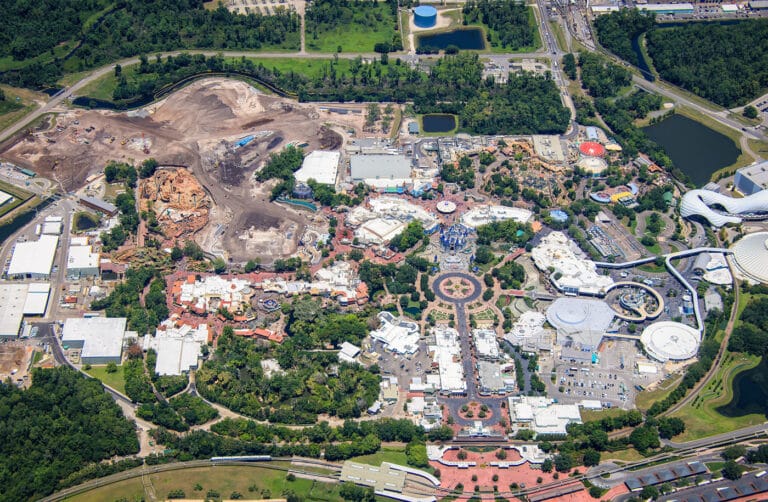
I just wanted to say, the vertical photo with Spaceship Earth and the lucite thing and the monorail – beautiful!
I’m actually curious what that looks like when it’s implemented, based on what they came up with in the past. (Seems most of the creative power at Disney these days is in pricing and monetizing.) I can think of various concerns, but Disney will probably find a way to make it work in the end. And with ‘ make it work’, I’m referring to how you summed it up already: Disney won’t invest a bunch of money unless they’ll make a bunch more afterwards. (loose paraphrasing)
I find it telling that Johnston didn’t want to be lumped in with airline dynamic pricing. It seems there will be some guardrails around Disney’s version. I’m thinking it’ll mimic current patterns to a large degree, with some upside on high demand situations. I doubt they’ll give up highly publicized discount initiatives (which a dynamic model would do quietly, essentially). Nor do I think they’ll want to condition customers to hold out for better deals on a large scale. To me the most interesting aspect is what happens when demand is below expectations.
“To me the most interesting aspect is what happens when demand is below expectations.”
I’m also curious about this, but I’m skeptical that the lowest off-season dates can really be made more attractive with dynamic pricing.
To be entirely honest, the more I think about this, the more it strikes me as a solution in search of a problem. Disney has fine-tuned its approach over years with special offers, and that works pretty well at establishing quasi-dynamic pricing.
It’s almost as if Disney still wants to be perceived as a tech company by Wall Street (probably not a coincidence this was revealed at the Wells Fargo conference), and the result is pointless endeavors like this.
I was unclear whether or not I should be annoyed by this, but after further consideration, it doesn’t seem too bad. The resorts might as well have dynamic pricing now given how things jump around with room discounts and new groups of rooms being released periodically. As long as they modify the refund policy on tickets so that it’s easy to rebook I guess it’s not really an issue.
Aside from optics and wanting to avoid other Genie+, I do wonder if the later release date means that Disney is taking a “wait and see” approach with the economy. The first signs of consumer spending pullbacks are just appearing, and credit card debt is at an alarming high – on the other hand, a recession has been predicted since pre-Covid, and thus far it’s been just that – endless predictions while the markets continue to grow. So I wonder if they’re waiting to see how that plays out. Or, alternately, with the sudden explosion of AI, wonder if they are taking their time in integrating that. While humans haven’t been particularly successful in predicting demand, that strikes me as the kind of high-data-volume task that AI would excel at.
“I do wonder if the later release date means that Disney is taking a “wait and see” approach with the economy.”
This is a great point. They might also want to distance themselves from recent headlines about pricing out the middle class, etc. (Although I doubt those will ever end.)
Just remember that AI is trained by human output, so it’s a “garbage in, garbage out” kind of deal. And one that can be exacerbated by a bad system.
For a good example, I’ll refer you to the free Genie itinerary builder. Disney launching that for dynamic pricing could have catastrophic consequences.
I think it’s funny how fast he sidestepped the airlines comparison.
I thought WDW already used dynamic ticket pricing! Last week I priced out the 3 day non MK ticket and a 2 day ticket compared to a 5 day for a spring break week for 4 adults. The 3 day and 2 day was significantly cheaper than the 5 day. However, it was $300 more for the combo last night! I know I picked the same days and tickets last week!
Will this somehow mean the end of the authorized discount ticket resellers?
I don’t know Tom’s advertising restrictions/contracts, so I won’t write their names – but I bet most folks reading this know all about the few, legitimate resellers with slightly less prices than buying directly from Disney.
Presuming those discount resellers are not linked up with Disney IT, then how does dynamic pricing work for them? Or does it simply NOT work and they all go away?
I have never seen a use of dynamic pricing that did not result in dramatically higher prices — airlines, hotels, and especially concert tickets. The same will be true of the Disney parks. It will absolutely limit how much I can take my family and enjoy it. We used to go as a family of four each year. Then we started to go every two years as it became more expensive. Our last trip was in 2023, so we should be going this year, but we’re not. Maybe 2026? I don’t know. Certainly not if dynamic pricing is in effect. (Yes, I have school-age children, so flexibility is not really an option.)
It’s really a shame because we all loved it.
Dynamic pricing is going to hit parents of school ages kids hardest, because they don’t have flexible travel dates, have to plan months in advance, and don’t generally have lots of free time to monitor prices to look for when they should rebook. Not a great look for affordability for American families, many of whom may not have hundreds to thousands of dollars available to lock in their ticket prices months in advance.
The obvious difference between what Disney is doing with dynamic pricing and the examples noted in other adjacent industries is that supply and demand is a key factor elsewhere. There are a limited number of seats on planes and at ballparks (especially the “good” seats). There are only a certain number of rooms at a hotel, and a finite number of Uber and Lyft drivers on the streets in your area.
So because Disney parks very rarely reach capacity, it seems like this is just an real-world experiment in calibrating what the market will bear, price-wise It could lead to better deals for savvy folks who have the time and willingness to check prices regularly and cancel and re-book when it seems advantageous. But lots of others will hate it.
Personally just from a logical perspective I feel like it makes INFINITELY more sense to use dynamic pricing for hard-ticketed events like the Halloween and Christmas parties, which DO usually completely sell out (and thus Disney is leaving money on the table…if they sell out early, they’re technically underpriced and hypothetically would gain value on a secondary marketplace like StubHub). But the idea that those parties might suddenly skyrocket in price would probably be a PR nightmare given how much those prices have already increased in recent years.
I think the idea you put forward about theme park capacity is missing a lot of context. Yes, a theme park may not hit capacity in that it doesn’t close its gates, but every location within that park still has a fixed hourly capacity, and the more people in the park, the longer the lines for everything, the faster Lightning Lanes book out, and the harder it is to find spots for shows. Just like there are a fixed number of seats on a plane, there are a fixed number of seats on a ride vehicle, and a fixed number of times that ride runs that vehicle a day (and that number can only go down due to vehicles needing to be pulled, seats needing to be blocked for various reasons, or attraction downtimes).
You’re still putting people through a system with a limit to the number of people it can service.
Fred, all those things are true about park operations but have very little to do with dynamic pricing as a concept. Dynamic pricing is based on market conditions. Even at this moment, Disney charges the most money for dates that it assumes will be most popular. And those are also the dates when the park is the most crowded, longest lines, etc. So you pay more for a lessened amount of enjoyment.
Now obviously there are both theoretical
and operational capacities at play (if they announced a $20 ticket special for this Saturday, hordes would show up). But in general, Disney isn’t solely using pricing (dynamic or otherwise) as a lever to dissuade guests from coming to the park and straining the system. (Nor is the opposite true…if it were, Animal Kingdom tickets would be priced far lower at this moment).
I see a lot of comments in the comments section that sound like the WSJ quote, suggesting affordability was a chief concern for Walt Disney. Tom (or anyone reading this), can you cite this/support this? Is this a myth? I’m well aware of his stories about wanting to create a place where parents and children could do things together but I’ve yet to find quotes about him caring if they could *afford* to do things together. (This sounds anti-Walt. It’s not. Love the guy. It’s just anti-not-sourcing things and wanting desperately to finally see the support for this idea.)
I really don’t want to dig into that whole can of worms, so all I will say is this:
1) Walt Disney was both a great man who wanted to create a better America.
2) Walt Disney was a master marketer, and knew exactly the right things to say.
To each their own, but I try to think of Walt’s quotes as a loose guiding philosophy or north star, as opposed to a strict set of edicts.
I mean, there appears to be a consensus reason why Walt wanted Disneyland to have an entrance fee as well as ride tickets, but without a direct quote all I’ll note is there is the question of affordability for *whom.*
So, the next time I go to WDW, no matter what I end up paying, I’ll always be wondering if I could have gotten a better price if only I had bought my ticket and made my reservation at a different time? Ugh.
And, if I price different dates on Tuesday, but can’t settle on a date until Wednesday, I might not get the same price? Ugh.
I wonder just HOW dynamic this will be. Like, will it be advantageous to buy my tickets in the middle of the night, when everyone else in North America is asleep?
Given the favorable cancellation policies, I would think the smart move would always just be booking early and rebooking later if better rates come along.
It’s impossible to say “how dynamic” it’ll be. Knowing Disney IT, I’d say anything is possible–including random fluctuations that are divorced from logic or actual demand!
On a personal level I don’t really have a problem with it. As a travel advisor I think it will probably just provide me more frustration though lol. We already tell clients we can’t guarantee pricing and availability, but some still hem and haw for weeks and then hotel pricing changes or is no longer available and they are upset, or quibble when I tell them it’s now $50-100 more for their package. Adding ticket pricing being dynamic just increases this. I’d like to think it might incentivize making the decision sooner for people, but the hotel dynamic pricing has not had that experience unfortunately!
“As a travel advisor I think it will probably just provide me more frustration though lol.”
Oh 100%. It’ll make your life more difficult, for sure.
Doesn’t it already work that way with Universal…or pretty much any non-Disney destination, though?
“The company, however, is wary of appearing to gouge customers, according to theme-park executives and analysts, and going against founder Walt Disney’s vision of affordable family entertainment.”
LOL – As someone who hasn’t been able to visit since my kids aged out of free tickets, I thought that we already crossed this bridge a long, long time ago…
Well, the quote is from 2018, haha!
Ballparks use “dynamic pricing”.
I’m not saying it’s anything to fear BUT it’s NOT about making WDW more affordable to the masses.
The system is all about wringing out every penny possible up to the last moment.
For example, Pitttsburgh is a celller dweller every year so when they come to your town their tickets are priced low to entice the fans to show up.
No one expected them to hit gold by bringing up a payer who’s the next Ohtani and a couple of young arms who are dominating talks about the Cy Young award.
They’re suddenty winning games at a .600 clip and are the hottest ticket in baseball.
People are selling $25 tickets for the Pirates on seat geek for $100.
Are the Mets going to continue selling those $25 seats for $25?
Would you?
It’s no secret that Carolyn and I love WDW.
Every year we take all our money on an annual pilgrimage and lay it at the feet of the mouse.
Up till now He’s been happy to have me hand over my wallet and let him take out what he wants.
With dynamic pricing, now He will ask me to also stand on my head, bounce up and down and collect all the loose change that falls out.
Touch grass, now.
Thank you John.