
Ex-Disney CEO Bob Chapek Paid $100,000 Per Month to Bring Magic Touch to Vail Ski Resorts in Proxy Fight
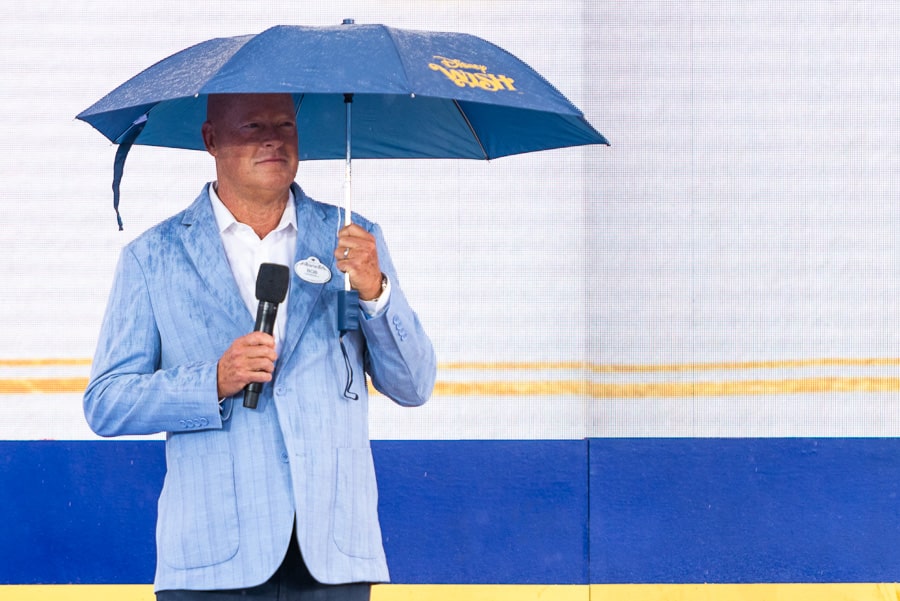
Somehow, Bob Chapek returned. In the midst of the former Disney CEO’s book tour, the ex-executive has found the time to serve as one of the four nominees activist investor Oasis Management proposed for the Vail Ski Resorts board. Here’s the latest on the Umbrella Man’s new gig, along with our commentary about how he might do for skiing what he did for Walt Disney World and Disneyland.
The most amusing part of all this is the timing. This comes amidst Bob Chapek’s media blitz for Behind the Castle Walls: My Thirty Years at the Happiest Place on Earth, his new memoir. His appearances and interviews were an unmitigated disaster, to put it mildly. It’s as if he doesn’t have advisors or a communications team, and is just trusting his own instincts (which are not good) for these appearances.
Chapek has defended the wrong decisions, doubled-down on his penchant for price increases and cost-cutting, and continued to express his open disdain for Disney fans. Everything he has said thus far reinforces his own past admissions that he has low EQ or emotional intelligence, and is oddly proud of it. Beyond a shadow of a doubt, Bob Chapek has proven that he did not and still does not “get” what made Disney…Disney.
Chapek has made perplexing decision after perplexing decision, with my favorite still being his interview with something called “Valuetainment for Gen-Z.” An appearance on CNBC was awkward and defensive, and the throughline of all of these interviews has been zero accountability for what went wrong. Another high note was the most Chapek quote of all-time in an interview with Bloomberg: “I love private equity.”
Chapek wrote this book to tell his side of the story in order to rehabilitate his image, reframe his legacy at Disney, and make himself hireable again. He accomplished exactly zero of that with his first public appearances in nearly 4 years. Or so we thought!
As it turns out, activist investor Oasis Management was watching CNBC or reading Bloomberg and thought, “this man looks perfect for turning around a struggling ski resort empire!” They’ve bought what Bob Chapek is selling, and have included him as part of their slate for an upcoming proxy fight.

Amusing as it would be if Oasis saw his media blitz or read Behind the Castle Walls and decided to “buy low” on Bob Chapek, his relationship with the activist investor actually predates the book tour. (We assume you’re familiar with proxy fights based on the unsuccessful one waged against Disney a couple years ago. Same idea here.)
According to a new proxy filing with the SEC, Oasis agreed to pay Bob Chapek $100,000 per month under an agreement beginning July 28, 2026. That also includes a $500,000 forgivable loan for Vail stock purchases should he be elected to the board. At minimum, Chapek’s turn with Oasis and (potentially) Vail should prove more lucrative than being an author!
In return, Chapek agreed to run for election as an independent director and to advise Oasis on how the board should handle strategy, operations, and governance. Chapek has no prior Vail stock and agreed not to acquire any voting securities in the company for the duration of the agreement.
The other three nominees that Oasis has put forward as part of its alternative slate each received a $50,000 fee. Those individuals are M. Ashton Hudson, a partner at Value Acquisition Fund; Bryce Roberts, co-founder of O’Reilly AlphaTech Ventures; and Picabo Street, famed Olympic skier who won gold in the super-G. Each is due a second $50,000 fee tied to the proxy filing. All three agreed to invest the after-tax proceeds in Vail stock.

Oasis and the other participants in its solicitation hold 9.6% of Vail’s stock. Oasis says the board has failed to provide oversight and accountability, citing negative total shareholder returns over the past five years. It says each nominee is independent of both Vail and Oasis and that the four would be a minority of the nine-member board if elected.
Vail Resorts has also filed its own preliminary proxy statement. The company recommends that shareholders vote only for its nine nominees to the board. Vail questioned whether Chapek could represent all shareholders independently given his paid relationship with Oasis.
The company also stated that when Chapek interviewed with CEO Rob Katz in August, Chapek claimed that he wanted to stay out of any proxy fight and did not mention his then-existing relationship with Oasis. Chapek later disclosed the agreement to Vail in a director questionnaire that Oasis submitted.

On a positive note, Vail has even fiercer criticism for the other three candidates. The company argues that they have conflicts of interest that are beyond the scope of this post, and also that they are unqualified to serve on the board of a company like Vail.
By contrast, Vail says the only one of Oasis’s four candidates who might be qualified for a board seat is Bob Chapek, though it still recommended that shareholders vote against him. Those are words you don’t see every day: Bob Chapek might be qualified for something!
Vail reported fiscal 2026 net income of $147.5 million during its most recent earnings call in late September, down nearly 50% from $280 million a year earlier. Skier visits were down 13.4%. The company also revealed that Epic Pass sales for the upcoming season are down 12%, and the company has issued forward guidance that visitation will be “modestly lower” than it had originally predicted going into last season.

Vail Resorts shares have plummeted by about 60% over the last five years, while the S&P 500 is up 76% over that same period. The stock is down 10% over the last year, while the S&P is up roughly 15%.
Vail leadership has drawn criticism from Wall Street for repeatedly blaming its woes on weather. Vail Resorts owns 42 ski areas across the United States and Canada, including Breckenridge, Keystone, Vail, Beaver Creek, Alpine Valley, Mt. Brighton, Park City, Whistler, and Crested Butte. The company offers access to its portfolio of properties via the multi-resort Epic Pass.
Oasis has yet to lay out the specific proposals for how it would turn around Vail, but has said it would review everything from pricing strategies to marketing to food and beverage offerings to the pricing of lift tickets, season passes, and lessons for kids and new skiers. It would also likely pressure CEO Rob Katz to give serious consideration to selling some of those 42 separate ski resorts.

Our Commentary
I didn’t initially plan on writing this post when reading about Bob Chapek’s involvement with Vail in the Wall Street Journal. But then one thing led to another, and I had spent over an hour going down a rabbit hole about the company’s struggles that led to this proxy fight in the first place. I figured that I might as well put that new knowledge to use with a quick post.
Before you start thinking that Bob Chapek lives rent-free in my head the same way Bob Iger does in his head, let me kick off the commentary with something unexpected: Bob Chapek could be an asset to the board of Vail Resorts. Seriously.
Ski resorts and Las Vegas are two travel segment subjects about which I read regularly despite minimal personal interest because there are parallels with Walt Disney World and Disneyland. Both are currently struggling in a way that Disney is not, and serve as somewhat of cautionary tales for what theme parks need to avoid.

Everything I’ve read suggests that Vail Resorts is floundering, and potentially in secular decline. The ire of many skiing enthusiasts is Epic Pass, which shifts the majority of lift revenue away from day tickets and towards other pre-sold season pass products.
This was a smash success initially, as revenue streams partially decoupled from weather and snow conditions allowed Vail Resorts to make significant capital investments, including the acquisition of several dozen ski resorts and hundreds of millions of dollars in lift upgrades.
Higher single-day lift ticket prices, which doubled at some Vail Resorts between 2010 and 2019, were designed to drive more skiers towards the Epic Pass. That in turn gave Vail Resorts more upfront revenue, and increased stability even as weather became less predictable. After more than 10 years of growth, Epic Pass sales have declined for the last two years, a trend that is all but certain to continue in 2026.

The criticism of Vail should sound familiar to Disney fans. The company is accused of pricing out the middle class, pushing the Epic Pass that is overpriced and offers illusory value for the average skier, nickel and diming guests, offering poor service, and value for money.
Every aspect of a visit is expensive, but much of it is also of substandard quality. The cost of skiing has risen tremendously, while the experience has worsened. Many skiers argue against visiting one of the Vail Resorts and instead traveling abroad to Europe or Japan.
Like I said, there are some parallels between Vail and Walt Disney World! Given that, it might seem odd to suggest that Chapek can help fix this. After all, he was the cause of many problems along these lines at Disney!

However, one somewhat unique wrinkle to the Vail debate is that the company has failed to attract enough younger and casual skiers to convert into lifelong fans. Vail has a core consumer base that is extremely loyal, but new customers are not arriving and casual skiers are not coming back after reaching their breaking point.
Because of the prohibitive pricing for day tickets, Vail is viewed as a rip-off by many. The Epic Pass can offer tremendous value to diehards, but the focus on that is coming at the expense of growing the sport of skiing and the long-term health of Vail Resorts.
As with the first batch of criticisms, much of this could also be leveled at Disney under the Chapek regime. And to be sure, we have serious concerns about the long-tail consequences of pricing out the middle class at Walt Disney World, and what that does to the next generation of fans.
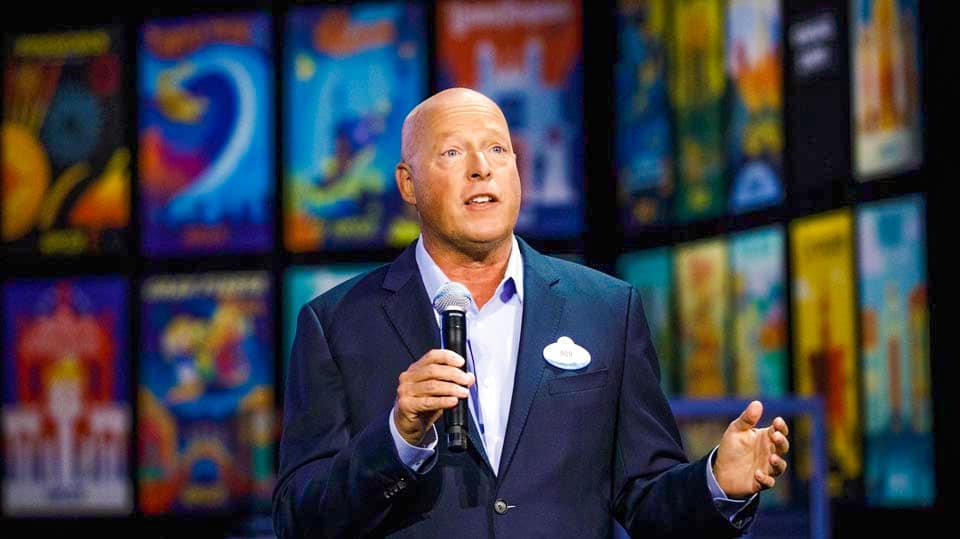
The critical distinction, at least from my perspective, is that Chapek understands the need for balance among Annual Passholders and regular guests. That’s precisely the source of fan consternation at his lines about an “unfavorable attendance mix” or preserving the guest experience for that mythical “family from Denver.”
One of the key points of Chapek’s book is that Disney Annual Passholders got a great deal even after massive price hikes; he supposedly didn’t want to tip the scales too far in their favor, to the detriment of casual tourists. Of course, Chapek didn’t stop at raising prices on Annual Passholders while holding regular park tickets flat to cut tourists a break. Prices soared, across the board, under Chapek.
However, the argument could be made that he was letting the market decide (an argument that he did, in fact, make), and that Disney increased prices in part to preserve the guest experience. It’s fair to point out that the company addressed complaints about overcrowding in the parks, and both Disneyland and Walt Disney World held 1-day off-season prices flat under Chapek. That if the market were left to decide with Vail, it would reach very different conclusions.

Ultimately, it would be easy to just write this off with a joke about Chapek making Lightning Lanes for lifts, adding upcharges upon upcharges, reservations–and embracing the rest of his worst impulses that we saw firsthand during his reign at Disney. Who knows, maybe he’ll build the Galactic Skicruiser resort, a $6,000 per person role-playing experience that features everyone’s least-favorite era of Olympic skiers, culminating in a lightsaber battle between Bode Miller and Lindsey Vonn.
It’s possible Chapek is a one-trick pony, and only knows price increases and cost-cutting. I’m skeptical of that, and believe he has far more situational awareness than we might like to give him credit. To be sure, Chapek did not “get” a company like Disney and is awful at communicating, but he’s a sharp operator. Bob Chapek clearly has considerable business acumen and, for better or worse, was largely playing the hand he was dealt at Disney. He was overly aggressive in countless ways and willing to burn through fan goodwill, but it largely worked out (at least in the short term).
The circumstances are clearly dramatically different at Vail Resorts. Chapek would be dealt quite the different hand, and would have to make decisions accordingly. In his own weird way, I actually think Chapek is reasonably well-suited for coming up with a viable pricing model for Vail. Just don’t have him on television to talk about it.
Need Disney trip planning tips and comprehensive advice? Make sure to read Disney Parks Vacation Planning Guides, where you can find comprehensive guides to Walt Disney World, Disneyland, and beyond! For Disney updates, discount information, free downloads of our eBooks and wallpapers, and much more, sign up for our FREE email newsletter!
YOUR THOUGHTS
What are your thoughts on Chapek potentially joining the board of Vail Resorts? Think he could do a better job of turning around Vail’s portfolio of ski resorts by focusing on that “family from Denver” as opposed to ski bums who visit daily and the rich who are not price sensitive? What about anything else covered here? Agree or disagree with our take on Chapek doing things differently at Vail? Hearing your perspective–even when you disagree with us–is both interesting to us and helpful to other readers, so please share your thoughts below in the comments!






As unpopular as Chapek is, I don’t think he screwed up enough to be unemployable. (That probably says more about the CEO class than it says about Chapek.) At least his application can still get past the screening bots.
I wonder to what extent Epic Pass sales have been affected by the drop in Canadian tourists visiting the United States in the last 2 years. I don’t know enough about the economics of skiing.