
Hidden Hotel Resort Fees Finally End!
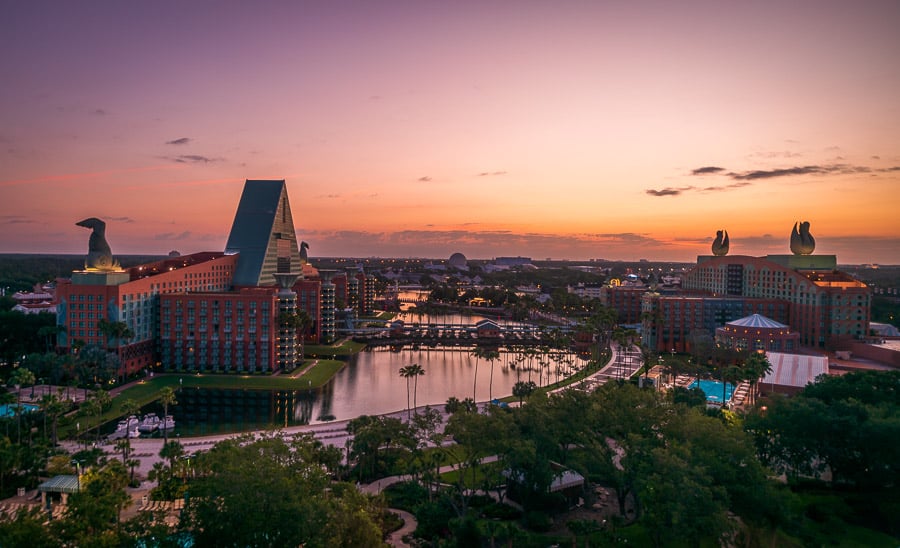
Resort fees are a scourge at hotels in Orlando and Anaheim near Walt Disney World and Disneyland. These surcharges range from $5/night to over $40, and have been hidden so consumers don’t see them when comparison shopping. This post covers why they’re anti-competitive, how “junk fees” are finally being addressed, and more. (Updated May 17, 2025.)
There are currently over 100 hotels in Orlando and approximately 50 in Orange County, California that charge resort fees. To their credit, Walt Disney World and Disneyland do not charge resort fees. And they probably won’t anytime soon. While there were fears they’d follow the trend a few years ago, Walt Disney World eliminated parking fees for hotel guests.
The purpose of this post is to educate consumers about resort fees and other nickel & diming practices of the travel industry, and other advice on offering said pushback. Fortunately, there are ways to “fight back” against resort fees, and that’s what we’ll help you do here. The other good news is that consumers have more leverage than ever to do battle against these anti-consumer practices, and that there’s a new FTC rule to combat “junk fees” in the hospitality and other industries…
May 17, 2025 Update: Let’s start with the latest development, which is that the Federal Trade Commission Junk Fees Rule has now taken effect. This bans bait-and-switch pricing and other tactics used to hide total prices and bury junk fees in the live-event ticketing and short-term lodging industries. These hidden and bogus fees can harm consumers and undercut honest businesses that show actual prices upfront.
The Junk Fees Rule ensures that pricing information is presented in a timely, transparent, and truthful way to consumers of live-event tickets and short-term lodging, two industries whose pricing practices the FTC has studied. Consumers searching for hotels or vacation rentals or seats at a live event will no longer be surprised by a pile of “resort,” “convenience,” or “service” fees inflating the advertised price. By requiring up-front disclosure of total price including fees, the rule will make comparison shopping easier, resulting in savings for consumers and leveling the competitive playing field.
The FTC estimates that the Junk Fees Rule will save consumers up to 53 million hours per year of wasted time spent searching for the total price for live-event tickets and short-term lodging. This time savings is equivalent to more than $11 billion over the next decade.

To accomplish this, the Junk Fees Rule requires that businesses clearly and conspicuously disclose the true total price inclusive of all mandatory fees whenever they offer, display, or advertise any price of live-event tickets or short-term lodging. Businesses cannot misrepresent any fee or charge in any offer, display, or ad for live-event tickets or short-term lodging.
In addition, the rule requires businesses to display the total price more prominently than most other pricing information. This means that the most prominent price in an ad needs to be the all-in total price—truthful itemization and breakdowns are fine but should not overshadow what consumers want to know: the real total.
Finally, the rule requires businesses that exclude allowable fees up front to clearly and conspicuously disclose the nature, purpose, identity, and amount of those fees before consumers consent to pay. For instance, businesses that exclude shipping or taxes from the advertised price must clearly and conspicuously disclose those fees before the consumer enters their payment information.

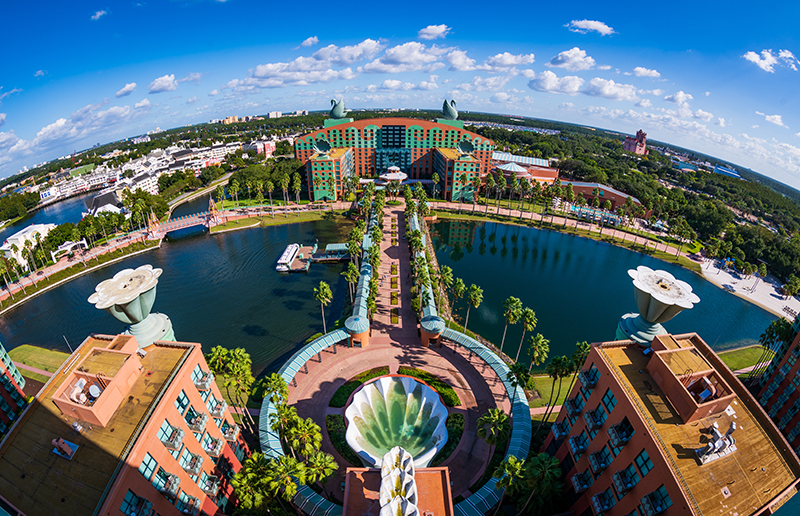
With the Junk Fees Rule now in effect, hotels around Walt Disney World, Disneyland, and other tourist destinations are required to comply with the policy as of May 2025. Above is a look at the Walt Disney World Swan Resort displaying the all-in pricing with the resort fee already in the total. There’s now even a button to display the after tax total!
For our part, we’ve been “fighting back” against resort fees for about a decade. We occasionally have the chance to meet with hotel managers and operators to discuss their properties. If they charge a resort fee, I always ask why. The explanations typically range from ‘to show consumers we offer more amenities’ or ‘so our pricing is fair as compared to other hotels that don’t have these services.’ I’m not satisfied with these B.S. answers, so I push further. The underlying rationale seems to be because everyone else is doing it.
That attitude is why I believe this post–a departure from the typical tone and substance of our content here–is appropriate and significant. Tourists heading to Walt Disney World and Disneyland are being fleeced by third party hoteliers, including several that are on-site in the Disney Springs, Bonnet Creek, and Crescent Lake Resort Areas. More importantly, there’s something we can do about it.

Those in the hotel industry like to explain away resort fees by comparing them to baggage and other fees charged by the airline industry. While most consumers also don’t like the nickel and diming that has become standard M.O. among the airlines, that’s immaterial, because resort fees are different.
We’re far from fans of baggage fees that the airlines charge, but they are nonetheless not the same as resort fees. The critical distinction is that to avoid baggage fees, you can travel light. Along these lines, parking fees also aren’t quite the same, as you can also avoid that fee by not driving. (Both easier said than done, but that’s slightly beside the point.) There is literally no way to avoid resort fees. Everyone must pay them.

There’s no way to opt-out if you sign a pledge to not use the pool, read a newspaper, or make a cup of coffee. Since the fee is non-optional, literally every guest is paying it, just as every guest is paying the base rate. So there’s no logical argument that can be made to separate the two.
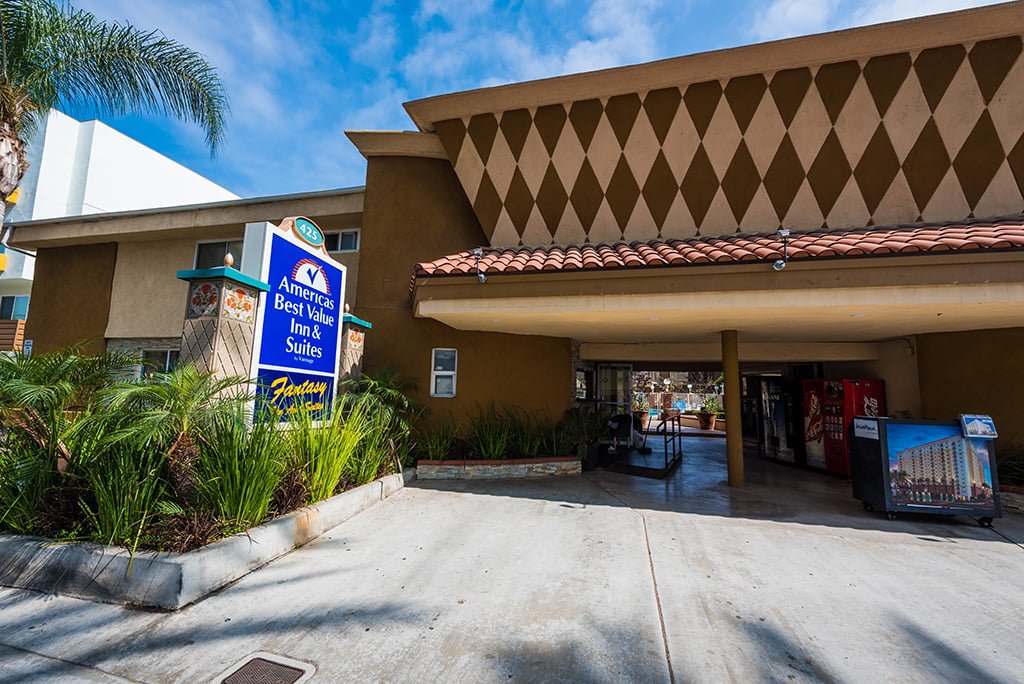
Resort fees aren’t being charged because hotels have elected to go above and beyond in offering a particularly robust slate of resort amenities like a complimentary Porsche to use while at the hotel or an in-room Smurf providing personalized concierge recommendations. (One of those is an actual amenity at a real hotel…sadly, it’s not the latter.) To the contrary, resort fees often have little to do with the amenities offered, and such fees are charged just as often at motels as they are actual resorts. (This motel even charges one. Yeah.)
The real reason hotels charge resort fees is because they make it more difficult for potential guests to ascertain the actual nightly rate. This is particularly true in the era of online booking engines like Expedia and its ilk. Booking engines typically do not show resort fees on the search results page, and only thereafter display them as an asterisk item that there is a fee that isn’t collected by the booking site.
Many travelers never see this fine print, and only learn of the added fee when they arrive at the hotel, by which time it’s typically too late to do anything about it besides grumble a bit, and pay it. Other travelers who see the fees before arrival do so after they’ve already clicked through to start the booking process, making them statistically more like to “convert.” This increased conversion rate metric in turn helps the hotel justify charging a resort fee. In short, hiding the fees is an effective way for hotels to increase bookings.
Per the FTC, fewer than 6% of all hotels in the United States charge resort fees (the percentage is exponentially higher in Florida), fees and surcharges are an incredibly lucrative revenue stream for hotels. According to Consumer Reports, the hotel industry collects roughly $3 billion in resort fee revenue per year. This is a pretty substantial number, and even shocking when considering that the amount has nearly tripled from $1.2 billion in 2004.
Resort fees are effective because they enable hotels to keep their advertised prices low to lure travel planners into the booking process with these cheaper base rates. Only later in the process do guests learn that what they will ultimately pay per night is significantly higher than the advertised rate thanks to the hidden fees.
This practice isn’t just irritating for bargain-hunting tourists. The FTC has called it a “deceptive and unfair trade practice,” and is finally starting to get serious about regulating resort fees. This doesn’t actually mean anything will happen. The FTC is a fairly toothless agency that is big on talk and light on action. The FTC sent a Warning Letter to 22 hoteliers, rebuffing them for the way their resort fees displayed. Nothing changed.

More recently, the District of Columbia attorney general filed a lawsuit against Marriott, accusing the hotel giant of deceptive fee practices. The suit accuses Marriott of employing “an unlawful trade practice called ‘drip pricing’ in advertising its hotel rooms, whereby Marriott initially hides a portion of a hotel room’s daily rate from consumers.” This is commonly labeled as a resort fee. Per the suit, Marriott has “reaped hundreds of millions of dollars over the past decade from this deceptive drip pricing.”
This lawsuit has garnered serious public attention, and was borne out of an ongoing investigation conducted by the attorneys general of all 50 states and the District of Columbia into the industry-wide practice of charging mandatory resort fees. While the lawsuit does not seek to outlaw resort fees, it challenges how they’re displayed. Moreover, the public outcry following this suit means a legislative solution is likely–and that’s where the practice of charging non-optional resort fees could be deemed illegal and, ultimately, killed.

We live in an age of slactivism, where hashtag warriors fight the big issues of our day with angry tweets and modified profile pictures. However, this is one situation where the internet can actually empower people to impact change.
Every time I encounter a resort fee in a hotel I review, I belabor the point that these are consumer-unfriendly and hotel chains have been warned about them in the past by the FTC. This is to the point where it’s probably become tiresome for regular readers, but it’s my way of “fighting back” in a small way. Now, I’d encourage you to fight back in a way that actually could lead to positive change. Here’s how…

In terms of marketing, nothing matters more to hotels than their TripAdvisor ranking. Being in the top 10 or on the first page on TripAdvisor for a specific city is huge, and each higher numerical rung is statistically significant in terms of consumer interest, occupancy rate, and competitive equilibrium pricing. There are even TripAdvisor “Reputation Management” Specialists (and software) who consult hotel brands on how to shape their reputation on TripAdvisor.
The simple way to fight back is to review hotels on TripAdvisor, deduct a star (or however much you feel appropriate) for a hotel at which you stayed charging a resort fee, and indicate as much in your review. I would caution against leaving a 1-star review to “balance the scales,” but I don’t think it’s unfair to rate a hotel that was otherwise 4-stars in your mind as 3-stars on TripAdvisor due to the resort fee. For me, it’s certainly star-worthy.

This will not only impact the overall score of the hotel, giving its managers pause about the negative side of their bonus revenue stream, but will bring resort fees to the attention of other potential guests. Someone reading TripAdvisor who may not have been aware of a resort fee will have reason to delve a little deeper, instead of being surprised by a significant additional charge upon check-in.
All it takes is 3 negative reviews for the average TripAdvisor user to rule out using a particular hotel, so it is possible for anyone to fight back against resort fees. Your voices can matter–use them to send the message to hoteliers.
There’s even more you can do. We regularly receive surveys from hoteliers with whom we book and do not book reservations, often in an attempt to lure back customers. When responding, we always bring up resort fees and other practices we view as nickel & diming.
We would strongly encourage you to do the same, using this as an opportunity to voice your displeasure about how the travel industry has attempted to fleece guests in the name of wringing out additional profits. In large part, this has worked for the last decade, as business has been booming and demand was at all-time highs. With an economic downturn or potential recession on the horizon, it’s going to be a very different environment–one where consumers have much more strength. Hotels, airlines, and theme parks will need to do more to compete for the business of guests. We’d strongly encourage you to use your voice to shape their policies going forward. Enough is enough.
If you’re planning on visiting Disneyland or Walt Disney World, we have a comprehensive Disneyland Vacation Planning Guide as well as a thorough Walt Disney World Planning Guide. For Disney updates, discount information, a free download of our Money-Saving Tips for Walt Disney World eBook, and much more, sign up for our free monthly newsletter!
Your Thoughts
What do you think of resort fees? Happy that the FTC has finally enacted a rule to end this anti-competitive practice? Do these tacked-on charges bother you as a consumer, or is this much ado about nothing? Have you stayed in a hotel that charges a resort fee? What did you think of it? Any other thoughts or questions? We love hearing from readers, so please share any other thoughts or questions you have in the comments below!






When this legislation went through, I naively assumed that resort fees would disappear since their reason for existing was gone. Unfortunately that is to ignore the numerous secondary reasons resort fees exist and I don’t see them going anywhere in the near future.
First if you use Marriott points to stay at a hotel they still collect the full resort fee, even if you stay at a quiet time when their cash payment for a redemption would be minimal. Second, although booking.com collects commission on resort fees, Expedia does not. Third, Marriott hotels don’t issue reward points on the resort fee portion of the rate. Finally, many jurisdictions only collect the higher level of taxes based on the room rate rather than the resort fee.
I thus wonder if the logical outcome is for resort fees to continue increase even more (as a percentage of the total nightly cost of a stay). After all, hotels no longer have to worry about customers balking at the fee on the final page and losing business, and they might as well push the above arbitrages as far as they can get away with until corporate and legislators catch up.
Hotels charge a parking fee on top of the resort fee. Then you have taxes on each fee. Marriott Village charges a resort fee and $25 per night parking fee.
I once had to pay extra to use the swimming pool in Kyoto. The nice thing was, as it was at an extra fee, we are blissfully alone in the facilities.
The current dumpster fire administration likes junk, and they definitely own hotels. In today’s upside-down world, don’t count on this rule sticking around. It inhibits the “freedom” of consumers to be confused. This rule is a leftover of Lina Khan, who isn’t even at the FTC anymore.
That’s weird that I just now got this pre-November comment email…
Thank you for referencing Linda Khan and her excellent work with the FTC from 2021-2025. These efforts on junk fees were set into motion during those years.
The study on drip reporting was done in conjunction with the Consumer Federal Protection Bureau (CFPB), a critical advocacy agency for everyday citizens, which the current administration ordered to *stop working*, essentially halting the agency. Such a slap in the face to the American people.
If there’s a call for people to ‘fight back’ as consumers, and to advocate against bs, it’s important to know which administrations work on behalf of you (and which are looking to break systems of public protection in an effort to grift), and to vote accordingly, without partisan blinders.
I wish more people got this and understood “the FTC” in 2023 when this proposal was submitted, is an entirely different functional body, and many such advocacy agencies have been kneecapped by our current admin.
As for Linda Kahn, as a New Yorker, I feel like we’ve won the jackpot to have her join the new mayoral team here. I’m sorry the rest of the country lost such an impressive fighter, but boy am I glad to have her.
This is very strange to me, as someone who works in the hotel industry. Many hotels will simply remove the resort fee and crank up the daily rate. Or raise the price of parking, food, other amenities, etc. What they will NOT do is remove the fees and make less profit.
I realize for the most part this is all optics and I get that goes a long way, but ultimately this is meaningless to what the guest is going to pay to stay.
Hey Tom, just a quick tidbit. We booked Swan around February/March, and the “Show all taxes and fees” button was in place at that time. Actually remember thinking “wow, I don’t have to go all the way to checkout, that’s nice”. I can’t remember if the $50 resort fee disclosure was showing up before or after checking the box. That could be a change.
It’s possible they had already begun enacting changes in preparation for the law change a few months back. Still dislike the fee and think it’s just…dumb to have. With the law change, there seems to be little point to them. Hopefully they’ll start to disappear altogether over time.
That button has been in place for those Swan and Dolphin websites since before the pandemic. (Definitely 8 years ago, and probably 10-15 years ago.) The difference is that there was never any “base price + fees” option, just a “base price” and a “base price + fees + taxes = total price” option. While certainly useful, you still had to click through a lot on every other site to get *their* comparable “total price” options and actually use it.
This will be exceptionally useful for planning Disneyland trips.
While I share Tom’s viewpoint that deceptive prices are bad business and deceitful, and applaud the move to make the fees more transparent is all good, I can’t get all that worked up with respect to the Swolphin tacking on $50 to their room rate when rack rates for their neighbors (Boardwalk/Beach/Yacht Club) are at least 2x and sometimes even 3x more expensive than the Swan or Dolphin even inclusive of the fees!
Rack rates? Seriously, who would EVER consider paying the rack rate for any room, anywhere, any time? Those numbers are a joke and not realistic for anything.
Thanks for letting us know about the work being done on this, Tom. I’ve been hit by all of these scenarios.
In Anaheim I stayed at a hotel squeezed between two other hotels and they charged a resort fee. Where was the resort. They didn’t even have enough parking spaces for half of the clientele. They had to give us a pass to park across the street in a store parking lot.
As for finding a hotel I have NEVER found companies like Priceline-hotel.com-etc that ended up less than going straight to the hotel site. Each time I’ve checked into one of these companies you dig into application and find a $40 fee or something making it more then a regular room.
Paying extra for seats on a flight should be included. I just started flying again, and found the paying for a flight isn’t the end. You actually paying extra for a seat. Am I supposed to stand all the way to my destination?
As far as baggage fees are concerned-I wish they were in this fight. I know, Tom, you said they are different because you can travel light, but no luggage? If I’m getting on a plane then I’m certainly going over night and need close. If they want to charge for a second bag, ok, but not for the first. Every flight I go on they even ask people to check their carry on because they don’t have room. I’ve noticed people packing as much as they can and even have each kid with a carry on luggage to get checked in at the gate where it’s checked for free. I can’t fault people for finding way to get around fees.