
Disney World Cracks Down on Third Party Tour Guides Abusing DAS
Walt Disney World has seen an increase in abuse of its Disability Access Service, and is starting to crack down on improper DAS use as a result. This post covers how they’re accomplishing that, along with rumors about Lightning Lane utilization and our commentary about what’s happening. (Updated December 14, 2023.)
This revelation actually comes thanks to two high-profile articles about Walt Disney World suddenly trespassing third-party tour guides from the parks. Walt Disney World has reportedly been banning these unaffiliated tour guides who secure dining and resort reservations, design itineraries, and help their clients navigate the parks–often by acting as an in-person escort.
These guides have reportedly been pulled out of line by Walt Disney World managers, issued trespass notices by Orange County police, and indefinitely banned from all of Walt Disney World property. These trespass notices are not unprecedented–they’re issued whenever guests engage in fisticuffs, have a really bad adult meltdown, or sneak around backstage. A few years ago, there was a dude who went on a tirade about masks and compared himself to the hero in A Bug’s Life, misquoted the movie, and got trespassed. (Note: he was trespassed for the tirade, not misquoting A Bug’s Life. Although that should be a bannable offense.)
The more recent of these stories was published in the Washington Post in mid-December 2023. According to their reporting, dozens of third-party tour guides have been trespassed from Walt Disney World. This has left operators looking for new jobs, moving out of Florida and adjusting their business models to focus on non-Disney tour operations.
In an emailed statement, Walt Disney World indicated that that they are taking additional steps to enforce their rules that prohibit commercial activities, such as tours provided by third-party operators, because of a “significant increase in these rule violations.” Disney indicated that some operators have sold unauthorized services, including in-park offerings like Genie+ line-skipping services and access to the Disability Access Service.
“When this activity happens, it impacts the experience of other guests following the rules — including our guests with disabilities — and impedes our theme park operations,” a Walt Disney World spokesperson wrote. “Just like Starbucks would not permit a third party to come into their stores to sell coffee to their customers, Disney does not permit unauthorized commercial activities in its theme parks.”
This was all consistent with earlier reporting by Insider, which first reported on the third-party tour guide ban. The reason for this is pretty simple and straightforward. Walt Disney World’s official park rules website has a lengthy list of prohibited activities. Among them is that “unauthorized solicitations of any kind, whether commercial, religious, educational, or otherwise, or conducting any unauthorized commercial activities, including solicitations of money or other contributions or donations.”
Conducting a tour on Walt Disney World property is very clearly an unauthorized commercial activity. This isn’t the first time that Disney has trespassed tour guides. Way back in the nascent days of the internet, they did the same with high-profile park history and inside secrets tours that indirectly competed with things like Keys to the Kingdom.
About a decade ago, Disney also cracked down on disabled tour guides who advertised the ability for their guests/customers to bypass lines in the California and Florida parks. The company started by revoking Guest Assistance Cards of the guides, but that story exploded into nationwide headlines and resulted in the overhaul of GAC and creation of DAS.
We’ve been hearing for months that this type of crackdown was on the horizon. However, we heard that it would occur with web services that circumvent Walt Disney World’s policies and systems for various reservations. Disney managed to briefly cause some of those to go offline over the summer, but to my knowledge, they all returned. I’ve been under the impression that more would be done.
What caught our attention–and the part of this story that is relevant to Walt Disney World vacation planners–is the company’s statement that “there has been an uptick in abuses of the Disability Access Service and other services, which impede park operations.”
According to Insider, several third-party tour guides and business owners agreed that not everyone in their industry behaves ethically. One experienced third-party tour guide said there are several companies that are “widely known” to abuse Disney’s rules. “For instance, these companies might tell guides to tell guest services they have Irritable Bowel Syndrome to get a disability pass for themselves,” the business owner told Insider.
Other tour guides indicated that they had witnessed unethical behavior in the industry, with some even leaving certain companies because “their owner was involved in some of those unethical practices, and I didn’t want to be associated with that any longer.”
In our view, this is the most interesting aspect of the Insider story and the one that has the most material impact on the guest experience for everyone at Walt Disney World. We’ve heard rumblings about this issue prior to now, have observed it ourselves, and think the current crackdown might portend more sweeping changes to DAS at Walt Disney World. In our view, this is likely the start of a policy tightening on DAS, line-skipping policies, and other third party activity that’s far from over.
You might notice a lack of DAS coverage on this website, aside from our Guide to Disability Access Service at Walt Disney World, which covers our experience using it with my dad and was last updated when the Lightning Lane-era changes rolled out. The lack of DAS resources here are not an oversight; it’s deliberate.
This blog offers commentary about any and everything, while also soliciting reader feedback via an active comments section. That’s a powder keg for something like DAS, which is one of the most controversial and charged issues at Walt Disney World. Unlike topics like oversized strollers, price increases, parking fees, refillable mug ethics, etc., this has real stakes. DAS users are real people with real feelings, and often, are all to used to judgmental stares in real life. Compounding that with metaphorical ones online is rough, and I don’t want this platform to be a party to that.
With that in mind, I’ll start out with a simple statement. Two things can be true at the same time. First, that reasonable disability accommodations are very necessary for many Walt Disney World guests to have an enjoyable experience, including those with invisible disabilities. Second, DAS abuse is widespread and needs addressing. The first point does not invalidate the second, and the second point does not grant random guests the authority to be arbiters of who “needs” DAS.

Since the controversy several years ago about the Guest Assistance Card, there’s a lot more scrutiny concerning guests using and abusing DAS, along with a belief among some other guests that they are being ‘disadvantaged’ by the system. This manifests itself in visible and audible disdain towards other guests using DAS. I’ve witnessed it repeatedly in-person and in reading online discussions.
I would implore you to err on the side of courtesy. There are myriad invisible disabilities from which other guests could suffer, and the rude words or judgmental gaze of guests ‘scanning’ a person using DAS to ‘make sure’ they really have a disability are awful. I can only imagine how it’d make me feel if I were on the receiving end of that. Anyone using DAS out of necessity would trade places with you in a second and stand in long lines if it meant not being disabled.
I also can’t imagine being on the giving end of that. Okay, you’ve made yourself judge, jury, and executioner…now what? There is absolutely zero upside. Not only is the weight of your eyes or words unfairly falling on someone with an invisible disability at least half the time when you do this, but you’re upsetting yourself with something that’s entirely outside of your control and that you cannot change. Life is too short for that, and it’s far better to be happy at Walt Disney World and focus on your own family.
Look, my apologies for the preachy soapbox with very obvious ‘advice’ that 99.5% of you absolutely did not need to hear. But you know that saying about one bad apple? I’ll err on the side of a long lecture if it might cause even half of that .5% to rethink their behavior. Sorry not sorry, I guess.

To the second point that DAS abuse is widespread and needs addressing, we’ve been hearing ‘rumors’ of this for a while. Not really so much rumors–more unsubstantiated reports from those within the company. The Lightning Lane percentages from those were downright shocking to me. This is the first time I’ve actually seen Walt Disney World publicly admit that there’s an issue and that it needs addressing.
Intuitively, it makes complete sense. Those of you who visited during the phased reopening after FastPass+ had been suspended but before Genie+ rolled out likely saw usage of the FastPass queues. We certainly did! It started out occurring fairly infrequently, and increased (not so coincidentally) as crowds and wait times went up.
There were plausible explanations aside from DAS use. Club 33 members, Golden Oak residents, and other VIPs all had some degree of access to the FastPass lines. However, there were maybe 200 guests fitting the above profile in any park at any given time. They represented a small fraction of all FastPass users–probably a low single-digit number on most days.
As noted above, use of the FastPass lines started slow and got progressively busier during the phased reopening. This makes sense, as there’s a greater incentive to use a line-skipping service when there’s a longer line. If a posted wait time is 15 minutes, even those with the ability or privilege to skip might simply opt for standby. If that same attraction has a 60 minute posted wait time, it’s a very different story.
It doesn’t require a vivid imagination to game out how much worse that might become if a paid line-skipping service is introduced, replacing what was once free and causing standby lines to come to a crawl at times as guests are pulled (very) disproportionately from the Lightning Lane.
Not only would there be more of an incentive to (properly) use the Lightning Lane, but there’d be more of an incentive to abuse it. This occurred even when there was a free FastPass+ option; DAS was a way to skip the lines more often and not be so constrained by “only” having 3 selections.
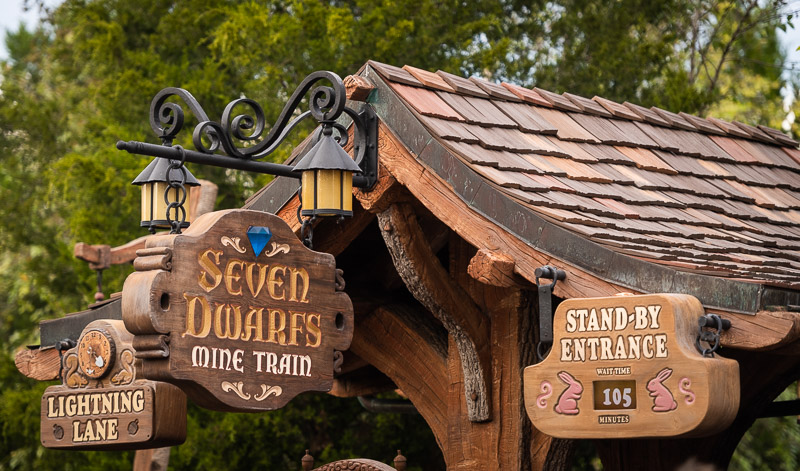
None of this is speculative. During a DAS lawsuit a few years ago, Disney revealed in testimony and discovery that users of its disability passes experience several more attractions over the course of a day on average as compared to non-users.
The company argued that any expansion of the current system would cause wait times to explode, with Seven Dwarfs Mine Train (for example) increasing by 39 minutes from an average wait time of 69 minutes to 108 minutes. Disney has now prevailed in several such lawsuits.
Now, regular line-skipping costs money but there’s an alternative that’s still free. Again, it doesn’t require much imagination to envision a scenario where some guests justifying abusing the system to themselves. “I’m just taking what Walt Disney World used to offer for free and still should.” “Everyone does it, I’m just leveling the playing field.” “I spend a lot of money and have always been loyal to Disney, it’s the least they can do.” And so on, and so on.
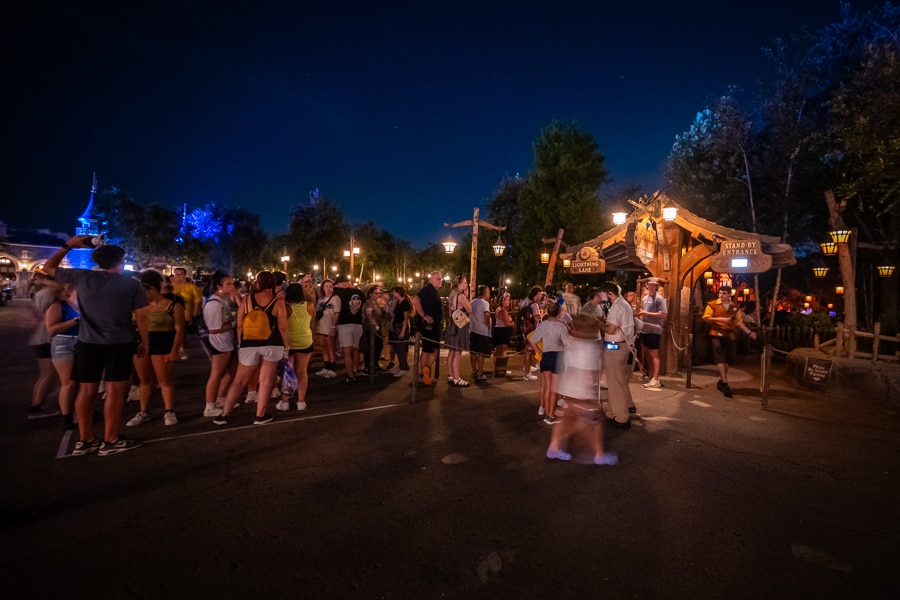
In fact, you can still see this play out in the parks. If you attend Extended Evening Hours, Mickey’s Not So Scary Halloween Party, Mickey’s Very Merry Christmas Party, or other events outside standard operating hours when Genie+ is not offered, you’ll still see people using the Lightning Lanes. In some cases, you will see a lot of people.
Totally anecdotal, but I’ve noticed it more this year–in particular at the busier Extended Evening Hours that I’ve attended. There were a couple of ExEH nights at Magic Kingdom where I saw the overflow Lightning Lane queues in use at Peter Pan’s Flight, Space Mountain, and Seven Dwarfs Mine Train. Again, it’s probably not a coincidence that usage increases as posted wait times increase.
To be abundantly clear, I’m not suggesting that all of even a majority of these people are abusing DAS. I truly have no clue.

What I have heard, though, is that usage of DAS has increased dramatically in the last few years. It’s possible that this is coincidental, and it’s happening because the percentage of disabled guests visiting Walt Disney World has increased. If the comparison were to 2020-2021, I’d believe that. A unique form of pent-up demand would make sense, especially among more vulnerable populations.
But my understanding is that DAS usage is up significantly as compared to 2019. Other explanations are conceivable, but I think they strain credulity. You can likely draw a straight line between Genie+ (and then higher prices for Genie+) and a rise in use for DAS as the free “alternative” to it.
Now that we’ve established that DAS abuse is almost certainly occurring (again, along with plenty of completely proper use!) what’s Walt Disney World to do about it? Well, this crackdown on third-party tour groups is one step. It’s only a first step, and a small one at that. These tour groups are incredibly small scale, and it’s hard to conceive of them accounting for more than a low single-digit percentage of all abuse.
Most of it is likely happening among individuals–and that’s more difficult to police without running afoul of the Americans with Disabilities Act. Ironically enough, changing DAS is also its own powder keg, and a potential lightning rod for controversy. There are a lot of people with a vested interest in DAS, including both the legit users and the abusers.

You might be inclined to think that legitimate users would want to see DAS crackdowns occur. Many of them probably do. But it’s not quite so simple. For one thing, any change brings with it uncertainty until it has been implemented, and many of the families who need DAS most also (very understandably!) crave consistency and stability.
Better the devil you know than the devil you don’t. Which is to say that change can be intimidating and unsettling; many rightful DAS users might prefer keeping the stable but imperfect product rather than rolling the dice on a replacement. I can certainly empathize with that perspective.
Compounding matters is the small but vocal minority of abusers who would complain in bad faith and muddy the waters of any discourse around DAS changes. Knowing that their loophole would be closed, some of these individuals would have a strong incentive to voice outrage, even if it’s baseless and insincere.
Bad faith outrage around DAS might sound shocking…if you haven’t lived through the last several years of social media, in which case, it would be more surprising if this didn’t happen. Either way, it complicates matters and makes an explosive issue even more fraught for Walt Disney World.
Walt Disney World knows this, which is likely why there has been minimal movement on DAS abuse, aside from indirect acts like banning third-party tour guides. This won’t be enough, though. Something’s gotta give–just like it was too big to ignore back when the change was made from GAC to DAS, the same will soon be true. Perhaps they’re starting with low-hanging fruit like tour guides and waiting for an individual system until the new system that allows for the advance booking of Lightning Lanes in Spring 2024.
I’m somewhat surprised that Walt Disney World hasn’t used the protective veil of a theme park association to make industry wide changes. Sort of like how the California Attractions and Parks Association was the face of pushing for reopening a few years ago, which allowed Disneyland to mostly avoid controversy. (Well, to the extent they wanted. Disney still issued some sharp statements, but some of those were very justified.)
Frankly, I don’t know why Disney doesn’t use TEA or some organization like that for creating uniform standards and protocol for any potentially sticky issue. It’d be suitable for everything from security checkpoints to smoking rules, and would give Disney plausible deniability as to their involvement in the crafting of such rules. When it comes to ADA accommodations, standardization could also streamline things for those guests with actual disabilities by outsourcing the process. It wouldn’t just be about sidestepping controversy–it could truly make visiting easier for those with disabilities. Win-win!
Planning a Walt Disney World trip? Learn about hotels on our Walt Disney World Hotels Reviews page. For where to eat, read our Walt Disney World Restaurant Reviews. To save money on tickets or determine which type to buy, read our Tips for Saving Money on Walt Disney World Tickets post. Our What to Pack for Disney Trips post takes a unique look at clever items to take. For what to do and when to do it, our Walt Disney World Ride Guides will help. For comprehensive advice, the best place to start is our Walt Disney World Trip Planning Guide for everything you need to know!
YOUR THOUGHTS
Thoughts on Walt Disney World cracking down on DAS abuse? If you’ve used Disability Access Service at Walt Disney World, what do you think of the experience? Have you noticed high Lightning Lane usage at times when Genie+ was not being offered? Please feel free to share your personal anecdotes about DAS and other thoughts in the comments below! Just be sure to err on the side of kindness and empathy and don’t engage in personal attacks, antagonism, or trolling. Comments that cross any lines will be deleted.




I really appreciate the way Universal goes about disability access pass and wish Disney would do the same. Through a third-party secure site, you fill out the form including medical documentation signed by your doctor. Cuts down on abuse and also less judgment from a cast member to figure out who needs it or who is fibbing.
I am so grateful for the DAS pass because there was truly no way we could have experienced Disney for the first time as a family without one. My son’s sensory, social and developmental delays were so limiting that we could not have made it through the park without it. However, he didn’t have a diagnosis like autism at the time that I could have used to “prove” we needed the assistance. It’s worth noting that many childhood behavioral disorders, such as severe ADHD, often aren’t diagnosed until a child is older. The inclusivity of the DAS pass was so important to our family, but that’s precisely what makes it so rampant for abuse. I do think the pre-trip DAS pass interview could be used more effectively to screen participants. Mostly, I can’t imagine faking a diagnosis to skip the line. I am so overjoyed that my son is responding so well to his therapy that we may not need a DAS pass when we return in a few years. I would stand in line forever if it meant my son was 100% healthy.
I would like to thank you for this line in your story:
“Anyone using DAS out of necessity would trade places with you in a second and stand in long lines if it meant not being disabled.”
As a person with those invisible disabilities (PTSD and severe anxiety) I can handle the crowds in the park because I can navigate the crowds on my own terms. Where I struggle is when I’m “trapped” in the line. I would gladly give up my ability to use the DAS lines if I could give away my PTSD and my anxiety. Actually, I take that back I wouldn’t do that. People think they would want these disorders in order to skip the queue while on vacation. They don’t consider that the vacation is the thing people with these disabilities need to recover from the other 360+ days of the year and struggling with ordinary, everyday, life activities.
I’m speaking from Disneyland not World but back in the Free Fast Pass / Max Pass and No reservation era (with lower crowds) my wife didn’t use DAS. She always qualified but she was embarrassed and since we were local and were good and using FP/MP we could still have good short trips on days where she felt up to it.
Now that we have to book days in advance (so they might not always be great days for her) and the Genie + system is really expensive when we only stay 1-4 hours she now uses DAS. Im a great planner but even I can’t plan a calm day now for her.
All this to say I’m sure a lot of the increase is abuse but I also think some of the increase is people who didn’t feel like it was a requirement before due to lower crowds, free fast pass, no reservations, might now need it to have a half decent trip.
Yes–this is definitely part of it for sure, I think. The free fast-pass allowed people to navigate in a way that we didn’t need to necessarily worry about being trapped in so many (or any) long lines. I used DAS for the first time on my last trip because that was no longer an option.
I wish I knew the solution. I use a DAS pass and couple it with Genie+ when the parks are busy, though I try to go when the crowds are smaller. I have to use a mobility scooter, and not only are some of the guests rude, so are some of the staff. I can walk 15-20 feet without an oxygen tank, then my oxygen levels drop rapidly. i also suffer with Rheumatoid arthritis, resulting in weak joints that give out without warning. one time I called to renew my DAS pass and I was denied! Just because my doctor and the state say I am disabled, Disney does not have to follow! this I am sure due to the abusers and the sticky process of figuring out who needs it and who doesn’t. The abusers don’t know or don’t care about the negative impact they create.
Before entering any park, we now always go to guest services to check out a wheelchair for the day. This is due to the fact that my dear wife simply cannot walk long distancing at one time nor is she able to stand for any length of time in the stand-by line at an attraction. But, it does NOT exempt us from entering the stand-by queue and waiting in line with other fellow travelers. She is able to sit in the chair and stroll along with the crowd. My wife can transfer into a ride vehicle just fine; it’s (again) the long-distance walking and the standing she cannot endure. It’s comical to see how quickly the glares from others turn to smiles when they realize we are not abusing the ‘wheelchair privilege’ by entering a shorter queue; rather, that we intend to stand-by (or stroll along) with everyone else and enjoy the company.
The ’abuse’ that is more intolerable (my opinion and one I cannot imagine what Disney could possibly do about it) happens when one or two people hold a place in line for a larger group who are off somewhere else in the park until just at the right moment when they magically appear (that darned Tinker Bell!) and feel they have the right to insert themselves ahead of you in the queue because their family member ‘reserved their spot for them’. You know who you are! But, I can choose to be angry because my place (and my wife’s place) in line just moved from 10th to 30th and added 20 minutes to our wait time, or I can smile and be thankful my wife has a chair to sit in and I have one to lean on.
I am one who has an invisible disability or debilitating pain by the time I get in the gate. I’m going on my 6th year of it after surgery and PT for most of those years. Something I’ve noticed since using DAS lately (sometimes local AP) is while waiting for my wait time to be over (posted wait time minus 10 mins) then getting in line is that then I have waited up to an additional 30 mins on some popular rides because of the Genie+ users in that lane. Not sure if anyone else has noticed this issue but happens a lot on the bigger rides. (I say Genie users because of the conversations amongst the families around me in line.) My point is while I’m using DAS, I’m also waiting longer than the posted times on some rides while no one knows the issues i have. I also have stood in line and know the wait times are inflated especially in the last hour and to sell Genie. I agree there are probably abusers and have thoughts of people making money while telling others “just go say….”
As a parent of a daughter with ASD, I am so thankful for DAS. My daughter, like many of her friends with ASD, is Disney obsessed. It was such a help with our trip. I am disappointed to hear it is being abused by those who don’t really need it.
This is such a tough issue. How do you make sure the people who need it still have access while getting rid of the people who don’t need it?? Invisible disabilities are very much a thing. While not strictly invisible, a friend of mine has a prosthetic leg. When she wears pants, you really can’t tell there’s much wrong with her other than a slight limp. We got a ton of dirty looks for parking in a handicap parking spot and using the handicap lane at an amusement park because, again you can’t really tell that she has a prosthetic. But as the day wore on that slight limp became more severe and at the end of the day she barely made it to our close to the exit handicap parking spot. I am as upset about the paid fast pass system is anybody but abusing the DAS system will only result in changes that make it harder to do so. I guess we’ll see what Disney does…
“How do you make sure the people who need it still have access while getting rid of the people who don’t need it?”
I think Walt Disney World actually already knows the answer to this question, and has a fix that would improve things for both legitimate DAS users and regular guests who don’t abuse DAS.
The real questions might actually be: How does Walt Disney World introduce a new system in such a way that there isn’t backlash or new lawsuits?
We used DAS for our daughter on one trip several years ago and actually felt conflicted about using it because even though her disability was real (she qualified our family or a disabled parking tag, etc.) she wasn’t a “special needs” child, and we did have some ability to traverse the parks on a diminished level without a DAS pass. But there were also risks (including sun exposure and add’l flare-ups of her condition) that made us pursue DAS despite our apprehension that we might be perceived as abusers.
A few takeaways:
1. It actually felt too easy to get the pass. No questions were asked. I’d much rather have had to show some documentation or (better yet) get pre-qualified with the knowledge that it would cut down on (some) abuse, as well as give “abled” guests more peace of mind that they aren’t being gamed by the system.
2. Under FastPass+, the system was very streamlined, and we got zero side-eye glances because when entering ride queues during our return window we didn’t appear any different than any other family using the FP line.
3. Thankfully my daughter’s condition has been brought under better control through life-changing medication — she’s doing great! On subsequent trips, while we’ve had every “right” to keep using DAS, we’ve chosen not to out of respect for the park and fellow guests (especially those reliant on DAS).
I couldn’t agree more with #1. My son has severe ADHD and anxiety. Waiting in lines can be debilitating for him (and our family). That said, we at first avoided DAS not thinking that he qualified. Then, on a trip in 2019, we explored it. It was shocking to me how little information they require (if any at all). I make it a point to explain the disability and impact on our son to the CM who is checking us in for DAS online, and how truly helpful it is for us. I know I don’t have to, but it makes me feel better knowing that I’ve told someone at WDW why my son needs it and how helpful it is. It certainly makes ignoring the judgmental folks in line. I’d be all for some sort of heightened proof requirement!
Timely article for me. I’ve never pursued DAS services because I’d always been able to make choices that worked for me based on posted wait times. I’m a near-local AP holder for decades. Fast passes helped. I’m finding posted wait times to be more and more inaccurate, but the worst experiences for me have been for virtual queue rides that are now having wait times of an hour or longer—with absolutely no way to know when you arrive for your slot. TRON was a double whammy early Oct (a very low crowd day) as half of the hour+ wait was being trapped in the room with the video blaring (I always carry earplugs which seemed to be of no help) and no way for me to leave until reaching the lockers. The people around me were not loud, just that damn video! I had ridden TRON during pass holder preview and no issues— in and out in about 30 minutes. I don’t think there were many/any LL riders then. I have no issues with LL. Barring a breakdown, I wish Disney would have better metrics for determining accurate wait times and post them in virtual queue lines, too.
I think some of the increase DAS usage probably stems from the same reason we’re seeing a nationwide shortage of ADHD meds — lockdown caused a huge number of adults and children to realize they needed a diagnosis of things like ADHD, autism, sensory processing disorders. When structures and scaffolding that had been (precariously, for some) holding them together suddenly collapsed, so too did coping ability and mental health. So now we have many more people getting the help they need, which is GREAT!!… but that also means the structures such as medication availability and therapeutical services are buckling under the weight.
So, given a lot more diagnosis of invisible mental health disabilities, greater awareness of support structures (mom #1 with adhd kid tells mom #2 with autistic kid how much DAS helped them, and onwards and upwards) AND the inability to use any sort of free line skipping service all contributed to more DAS users. And with more total users, more people catch wind of it and abuse it.
Personally, my daughter cannot do more than one or two >30m lines in a day without needing to leave. If there was a way to reserve spots in say 2 of the longest lines for free, we wouldn’t need DAS — we could rope drop and hit a bunch of rides while they are 10-30 minutes, and then “fast pass” or whatever a popular ride or two. But as it stands, my daughter could never go on some of her favorite rides without either DAS or buying an ILL… whereas a family without a disability could elect to do one or two long wait lines and not pay any extra.
I don’t know what the answer is (other than dismantling capitalism hahaha!), but I thought maybe these points would add some insight!
This! As a parent of a child who was diagnosed during this time, our family was told by other parents of children with these conditions about DAS and we were able to utilize it. In the past, since we can move around the parks without any problems, we used FastPass+ to effectively manage our wait times and have a good experience along with all the regular guests. But with Genie+, it’s much more difficult to do that so we had to go with the DAS alternative. I was shocked at how easy the process was if you wanted to “fake” a disability and we were ready to provide our letter from a physician and diagnosis report as I saw how easily you could lie about things and wanted the Cast member to know we weren’t one of those people. I do understand that they can’t legally ask for this, but surely some attorney with the company can develop a work around!
So it seems like a combination of Genie+ driving more of those who do actually qualify to a great DAS program while also providing financial motivation to those who know how to cheat the system.
Thank you so much for this comment! I have ADHD and my daughters have both ADHD and ASD (plus I actually do have IBS-D – we are a bunch, I tell you!) I felt a bit self-conscious using DAS a year ago when we went until it saved us from a nasty and unsanitary incident TWICE during our trip. Our wait times were not lower than the stand-by lines, but we were able to go to travel at our own pace to the next attraction and either sit in a restaurant or on a bench nearby and (for me) stay close to the restroom before our time (believe me, I know where every one in all 4 parks is…). There was loads of down-time, it was not just a chain of jumping in lightning lanes all day. Signing up for another after we exited an attraction was still at least an hour later. My younger daughter has way less practice self-managing thanks to being 3 when COVID started – her symptoms really manifested during and right after lock-down. I think that those of us with less-apparent (I won’t say entirely invisible for us) disabilities, the change in routine (particularly me with food!) exacerbates symptoms to the point that we don’t want to be ejected in the park because my 7 yr-old has a melt-down, my 13-yr old has a panic attack because she can’t see the door or I have a “code brown” right in the middle of the stand-by line…
We truly feel blessed that we can enjoy a whole family day at the parks now with our 30 yo daughter with invisible (most of time) disabilities. Autism/anxiety/Dysautonomia (heat regulation) and sensory issues all her life have cut short experiences in the past. We still do not do “everything” that other families experience (taking advantage of lots of rest and snack times; avoiding huge crowds by going off season: hiding out in restrooms during fireworks, calming behaviors, and more). What DAS does for us is level the playing field. We still experience lines, lots of people, tantrums/shutting down but are all able to find more energy to experience the magic through the course of a day. We are willing to adhere to more stringent rules for the privilege. When Grandma came in her wheelchair, we did not use a DAS for her COPD. The wheelchair took care of her enjoyment. I don’t have an answer, but am thankful for DAS
Well written, and very interesting article. So important to always remember, “Two things can be true at the same time”. It sometimes feels like accepting and acknowledging this very simple idea is missing from our discourse.
Great article! I only recently heard about the 3rd party tour guides abusing DAS. I still didn’t understand how, so thank you for explaining! I am apart of several Disney Facebook groups & DAS comes up…A LOT! to the point that it appears quite obvious who abuses it & actually help others do the same! it’s repulsive! DAS does need to be stricter & I feel that those who really need it should be able to get it much easier with Dr’s notes, not just “interviews” without divulging diagnoses. Abusing DAS is not fair for anyone, especially those who really need it. I noticed so many people going through the FastPass lines during Covid & I now understand why. I hate that so many people ruin things for everyone else.
I have been using DAS and before that GAC, at WDW for several years. It’s the only way that I am able to actually enjoy the Parks. Several of my disabilities are invisible and I have had a lot of the experiences you mentioned Tom. It is really quite scary any time that Disney make changes to the disability provision, because it can literally mean the difference between being able to go on rides and/or watch shows and staying home. The DAS allows me to get away from my every day restrictions and actually make memories, like anybody else. It’s one of the reasons that we only vacation at Disney properties.
I do agree that something probably needs doing, but I’m also aware that due to the ADA it’s going to be difficult. I know that Disneyland Paris has a similar system, which works very well, but relies on asking for evidence of eligibility, which I understand can’t be done in America but can be done under European law. Short of actually employing medical professionals, which is something I’d heard rumours Disney was considering, I’m not sure how they make changes?
It’s awful that so many people abusing stuff like this might make it more difficult for those like you who legitimately need it.
I will say that any one that truly needs DAS, would likely give up any disability in a heart beat that they have in exchange hange for being able to use a normal queue. My wife was run over by a car and unable to tolerate sitting in a wheelchair for any reasonable length of time due to her injuries. I would have given anything to be able to use a normal line again. Thankfully, after much PT and 14 surgeries she is able to tolerate a line again, and we no longer use DAS. The couple times we went and used it though, I woulda given anything I had to be able to visit the parks normally.
For those that need DAS, it truly is a life saver, and it’s unfortunate that some abuse it, as anyone that truly needs it, it’s one of the small silver linings of living with a disability, and makes a park day tolerable.
Your first line is a great one, and sentiment so many people have shared in the past about DAS.
I’m going to ‘borrow’ that for the body text of the post…
As a parent of a special needs child, I can tell you the move from the fast passes to Genie+ was the sole reason for the increase in usage. When you could plan your day and use the fast pass like the current lightning lane the system was perfect. When you or someone you are with cannot wait in regular lines its impossible to enjoy the parks without it. So right away you are seeing a huge demand increase. Then, yes, people are abusing it instead of paying for the Genie+. It’s a broken system and just like Genie+, works sometimes and not the others.
Thanks Tom for balanced an informative article about this potentially controversial subject. My wife is one of those who has an invisible disability (well, unless you happen to see the port sticking out of her chest that’s connected to her heart valve). We appreciate the DAS service and Disney’s efforts to improve upon it.
I understand that many people are abusing the DAS system, but with an older family member who suffers from several disabilities, the availability of the DAS is the only thing that makes it plausible for us to visit the parks. We don’t need it at Universal because we have Express Pass After 4:00 with our Premier annual passes. Disney does not offer an equivalent service to passholders. We are only able to do a few things each time we visit any theme parks, and most of the time we are relaxing with food or a drink. This is a win for Disney since we are spending money in their parks each time we go.