
Disney World Cracks Down on Third Party Tour Guides Abusing DAS
Walt Disney World has seen an increase in abuse of its Disability Access Service, and is starting to crack down on improper DAS use as a result. This post covers how they’re accomplishing that, along with rumors about Lightning Lane utilization and our commentary about what’s happening. (Updated December 14, 2023.)
This revelation actually comes thanks to two high-profile articles about Walt Disney World suddenly trespassing third-party tour guides from the parks. Walt Disney World has reportedly been banning these unaffiliated tour guides who secure dining and resort reservations, design itineraries, and help their clients navigate the parks–often by acting as an in-person escort.
These guides have reportedly been pulled out of line by Walt Disney World managers, issued trespass notices by Orange County police, and indefinitely banned from all of Walt Disney World property. These trespass notices are not unprecedented–they’re issued whenever guests engage in fisticuffs, have a really bad adult meltdown, or sneak around backstage. A few years ago, there was a dude who went on a tirade about masks and compared himself to the hero in A Bug’s Life, misquoted the movie, and got trespassed. (Note: he was trespassed for the tirade, not misquoting A Bug’s Life. Although that should be a bannable offense.)
The more recent of these stories was published in the Washington Post in mid-December 2023. According to their reporting, dozens of third-party tour guides have been trespassed from Walt Disney World. This has left operators looking for new jobs, moving out of Florida and adjusting their business models to focus on non-Disney tour operations.
In an emailed statement, Walt Disney World indicated that that they are taking additional steps to enforce their rules that prohibit commercial activities, such as tours provided by third-party operators, because of a “significant increase in these rule violations.” Disney indicated that some operators have sold unauthorized services, including in-park offerings like Genie+ line-skipping services and access to the Disability Access Service.
“When this activity happens, it impacts the experience of other guests following the rules — including our guests with disabilities — and impedes our theme park operations,” a Walt Disney World spokesperson wrote. “Just like Starbucks would not permit a third party to come into their stores to sell coffee to their customers, Disney does not permit unauthorized commercial activities in its theme parks.”
This was all consistent with earlier reporting by Insider, which first reported on the third-party tour guide ban. The reason for this is pretty simple and straightforward. Walt Disney World’s official park rules website has a lengthy list of prohibited activities. Among them is that “unauthorized solicitations of any kind, whether commercial, religious, educational, or otherwise, or conducting any unauthorized commercial activities, including solicitations of money or other contributions or donations.”
Conducting a tour on Walt Disney World property is very clearly an unauthorized commercial activity. This isn’t the first time that Disney has trespassed tour guides. Way back in the nascent days of the internet, they did the same with high-profile park history and inside secrets tours that indirectly competed with things like Keys to the Kingdom.
About a decade ago, Disney also cracked down on disabled tour guides who advertised the ability for their guests/customers to bypass lines in the California and Florida parks. The company started by revoking Guest Assistance Cards of the guides, but that story exploded into nationwide headlines and resulted in the overhaul of GAC and creation of DAS.
We’ve been hearing for months that this type of crackdown was on the horizon. However, we heard that it would occur with web services that circumvent Walt Disney World’s policies and systems for various reservations. Disney managed to briefly cause some of those to go offline over the summer, but to my knowledge, they all returned. I’ve been under the impression that more would be done.
What caught our attention–and the part of this story that is relevant to Walt Disney World vacation planners–is the company’s statement that “there has been an uptick in abuses of the Disability Access Service and other services, which impede park operations.”
According to Insider, several third-party tour guides and business owners agreed that not everyone in their industry behaves ethically. One experienced third-party tour guide said there are several companies that are “widely known” to abuse Disney’s rules. “For instance, these companies might tell guides to tell guest services they have Irritable Bowel Syndrome to get a disability pass for themselves,” the business owner told Insider.
Other tour guides indicated that they had witnessed unethical behavior in the industry, with some even leaving certain companies because “their owner was involved in some of those unethical practices, and I didn’t want to be associated with that any longer.”
In our view, this is the most interesting aspect of the Insider story and the one that has the most material impact on the guest experience for everyone at Walt Disney World. We’ve heard rumblings about this issue prior to now, have observed it ourselves, and think the current crackdown might portend more sweeping changes to DAS at Walt Disney World. In our view, this is likely the start of a policy tightening on DAS, line-skipping policies, and other third party activity that’s far from over.
You might notice a lack of DAS coverage on this website, aside from our Guide to Disability Access Service at Walt Disney World, which covers our experience using it with my dad and was last updated when the Lightning Lane-era changes rolled out. The lack of DAS resources here are not an oversight; it’s deliberate.
This blog offers commentary about any and everything, while also soliciting reader feedback via an active comments section. That’s a powder keg for something like DAS, which is one of the most controversial and charged issues at Walt Disney World. Unlike topics like oversized strollers, price increases, parking fees, refillable mug ethics, etc., this has real stakes. DAS users are real people with real feelings, and often, are all to used to judgmental stares in real life. Compounding that with metaphorical ones online is rough, and I don’t want this platform to be a party to that.
With that in mind, I’ll start out with a simple statement. Two things can be true at the same time. First, that reasonable disability accommodations are very necessary for many Walt Disney World guests to have an enjoyable experience, including those with invisible disabilities. Second, DAS abuse is widespread and needs addressing. The first point does not invalidate the second, and the second point does not grant random guests the authority to be arbiters of who “needs” DAS.

Since the controversy several years ago about the Guest Assistance Card, there’s a lot more scrutiny concerning guests using and abusing DAS, along with a belief among some other guests that they are being ‘disadvantaged’ by the system. This manifests itself in visible and audible disdain towards other guests using DAS. I’ve witnessed it repeatedly in-person and in reading online discussions.
I would implore you to err on the side of courtesy. There are myriad invisible disabilities from which other guests could suffer, and the rude words or judgmental gaze of guests ‘scanning’ a person using DAS to ‘make sure’ they really have a disability are awful. I can only imagine how it’d make me feel if I were on the receiving end of that. Anyone using DAS out of necessity would trade places with you in a second and stand in long lines if it meant not being disabled.
I also can’t imagine being on the giving end of that. Okay, you’ve made yourself judge, jury, and executioner…now what? There is absolutely zero upside. Not only is the weight of your eyes or words unfairly falling on someone with an invisible disability at least half the time when you do this, but you’re upsetting yourself with something that’s entirely outside of your control and that you cannot change. Life is too short for that, and it’s far better to be happy at Walt Disney World and focus on your own family.
Look, my apologies for the preachy soapbox with very obvious ‘advice’ that 99.5% of you absolutely did not need to hear. But you know that saying about one bad apple? I’ll err on the side of a long lecture if it might cause even half of that .5% to rethink their behavior. Sorry not sorry, I guess.
To the second point that DAS abuse is widespread and needs addressing, we’ve been hearing ‘rumors’ of this for a while. Not really so much rumors–more unsubstantiated reports from those within the company. The Lightning Lane percentages from those were downright shocking to me. This is the first time I’ve actually seen Walt Disney World publicly admit that there’s an issue and that it needs addressing.
Intuitively, it makes complete sense. Those of you who visited during the phased reopening after FastPass+ had been suspended but before Genie+ rolled out likely saw usage of the FastPass queues. We certainly did! It started out occurring fairly infrequently, and increased (not so coincidentally) as crowds and wait times went up.
There were plausible explanations aside from DAS use. Club 33 members, Golden Oak residents, and other VIPs all had some degree of access to the FastPass lines. However, there were maybe 200 guests fitting the above profile in any park at any given time. They represented a small fraction of all FastPass users–probably a low single-digit number on most days.
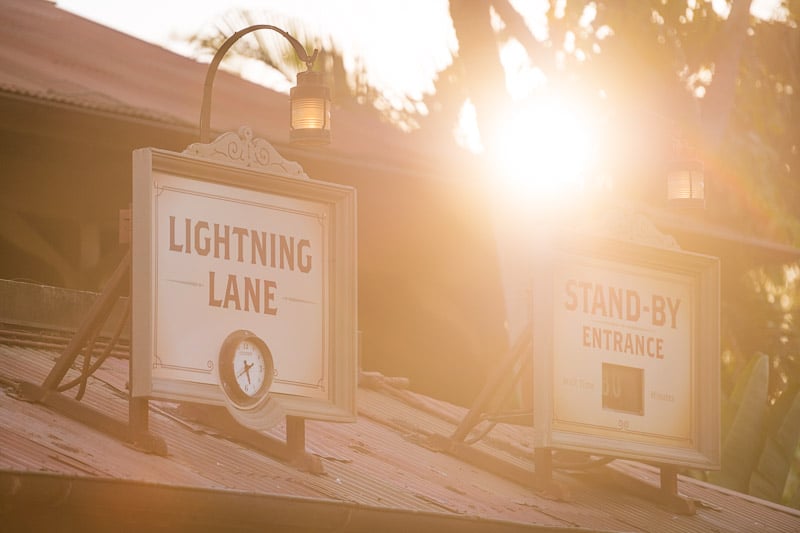
As noted above, use of the FastPass lines started slow and got progressively busier during the phased reopening. This makes sense, as there’s a greater incentive to use a line-skipping service when there’s a longer line. If a posted wait time is 15 minutes, even those with the ability or privilege to skip might simply opt for standby. If that same attraction has a 60 minute posted wait time, it’s a very different story.
It doesn’t require a vivid imagination to game out how much worse that might become if a paid line-skipping service is introduced, replacing what was once free and causing standby lines to come to a crawl at times as guests are pulled (very) disproportionately from the Lightning Lane.
Not only would there be more of an incentive to (properly) use the Lightning Lane, but there’d be more of an incentive to abuse it. This occurred even when there was a free FastPass+ option; DAS was a way to skip the lines more often and not be so constrained by “only” having 3 selections.
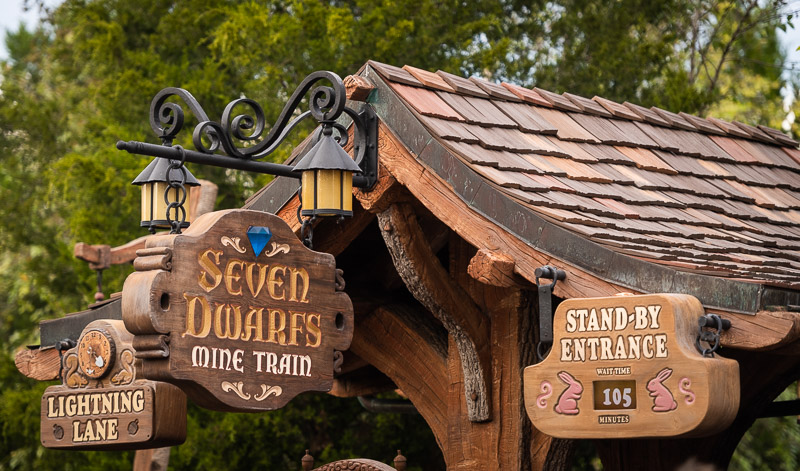
None of this is speculative. During a DAS lawsuit a few years ago, Disney revealed in testimony and discovery that users of its disability passes experience several more attractions over the course of a day on average as compared to non-users.
The company argued that any expansion of the current system would cause wait times to explode, with Seven Dwarfs Mine Train (for example) increasing by 39 minutes from an average wait time of 69 minutes to 108 minutes. Disney has now prevailed in several such lawsuits.
Now, regular line-skipping costs money but there’s an alternative that’s still free. Again, it doesn’t require much imagination to envision a scenario where some guests justifying abusing the system to themselves. “I’m just taking what Walt Disney World used to offer for free and still should.” “Everyone does it, I’m just leveling the playing field.” “I spend a lot of money and have always been loyal to Disney, it’s the least they can do.” And so on, and so on.
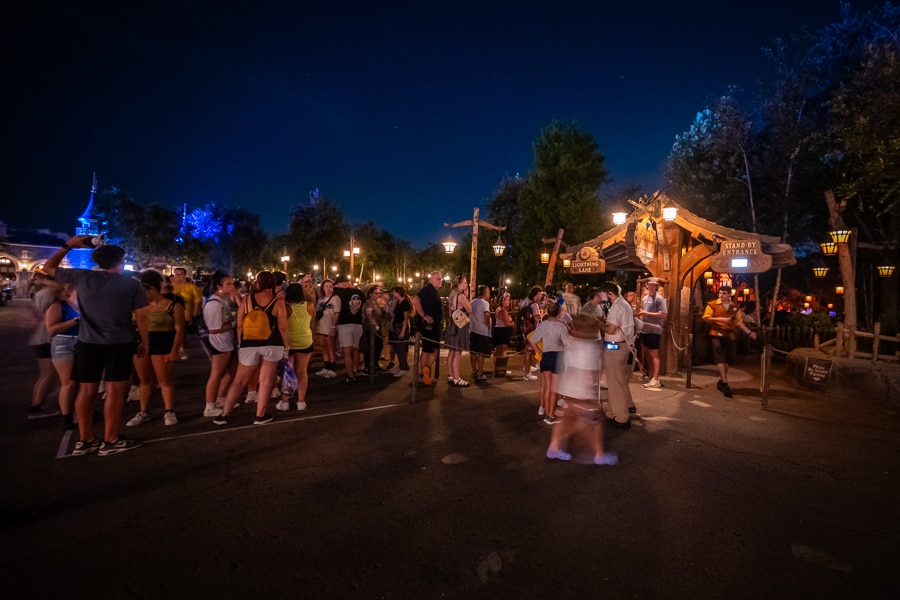
In fact, you can still see this play out in the parks. If you attend Extended Evening Hours, Mickey’s Not So Scary Halloween Party, Mickey’s Very Merry Christmas Party, or other events outside standard operating hours when Genie+ is not offered, you’ll still see people using the Lightning Lanes. In some cases, you will see a lot of people.
Totally anecdotal, but I’ve noticed it more this year–in particular at the busier Extended Evening Hours that I’ve attended. There were a couple of ExEH nights at Magic Kingdom where I saw the overflow Lightning Lane queues in use at Peter Pan’s Flight, Space Mountain, and Seven Dwarfs Mine Train. Again, it’s probably not a coincidence that usage increases as posted wait times increase.
To be abundantly clear, I’m not suggesting that all of even a majority of these people are abusing DAS. I truly have no clue.

What I have heard, though, is that usage of DAS has increased dramatically in the last few years. It’s possible that this is coincidental, and it’s happening because the percentage of disabled guests visiting Walt Disney World has increased. If the comparison were to 2020-2021, I’d believe that. A unique form of pent-up demand would make sense, especially among more vulnerable populations.
But my understanding is that DAS usage is up significantly as compared to 2019. Other explanations are conceivable, but I think they strain credulity. You can likely draw a straight line between Genie+ (and then higher prices for Genie+) and a rise in use for DAS as the free “alternative” to it.
Now that we’ve established that DAS abuse is almost certainly occurring (again, along with plenty of completely proper use!) what’s Walt Disney World to do about it? Well, this crackdown on third-party tour groups is one step. It’s only a first step, and a small one at that. These tour groups are incredibly small scale, and it’s hard to conceive of them accounting for more than a low single-digit percentage of all abuse.
Most of it is likely happening among individuals–and that’s more difficult to police without running afoul of the Americans with Disabilities Act. Ironically enough, changing DAS is also its own powder keg, and a potential lightning rod for controversy. There are a lot of people with a vested interest in DAS, including both the legit users and the abusers.

You might be inclined to think that legitimate users would want to see DAS crackdowns occur. Many of them probably do. But it’s not quite so simple. For one thing, any change brings with it uncertainty until it has been implemented, and many of the families who need DAS most also (very understandably!) crave consistency and stability.
Better the devil you know than the devil you don’t. Which is to say that change can be intimidating and unsettling; many rightful DAS users might prefer keeping the stable but imperfect product rather than rolling the dice on a replacement. I can certainly empathize with that perspective.
Compounding matters is the small but vocal minority of abusers who would complain in bad faith and muddy the waters of any discourse around DAS changes. Knowing that their loophole would be closed, some of these individuals would have a strong incentive to voice outrage, even if it’s baseless and insincere.
Bad faith outrage around DAS might sound shocking…if you haven’t lived through the last several years of social media, in which case, it would be more surprising if this didn’t happen. Either way, it complicates matters and makes an explosive issue even more fraught for Walt Disney World.
Walt Disney World knows this, which is likely why there has been minimal movement on DAS abuse, aside from indirect acts like banning third-party tour guides. This won’t be enough, though. Something’s gotta give–just like it was too big to ignore back when the change was made from GAC to DAS, the same will soon be true. Perhaps they’re starting with low-hanging fruit like tour guides and waiting for an individual system until the new system that allows for the advance booking of Lightning Lanes in Spring 2024.
I’m somewhat surprised that Walt Disney World hasn’t used the protective veil of a theme park association to make industry wide changes. Sort of like how the California Attractions and Parks Association was the face of pushing for reopening a few years ago, which allowed Disneyland to mostly avoid controversy. (Well, to the extent they wanted. Disney still issued some sharp statements, but some of those were very justified.)
Frankly, I don’t know why Disney doesn’t use TEA or some organization like that for creating uniform standards and protocol for any potentially sticky issue. It’d be suitable for everything from security checkpoints to smoking rules, and would give Disney plausible deniability as to their involvement in the crafting of such rules. When it comes to ADA accommodations, standardization could also streamline things for those guests with actual disabilities by outsourcing the process. It wouldn’t just be about sidestepping controversy–it could truly make visiting easier for those with disabilities. Win-win!
Planning a Walt Disney World trip? Learn about hotels on our Walt Disney World Hotels Reviews page. For where to eat, read our Walt Disney World Restaurant Reviews. To save money on tickets or determine which type to buy, read our Tips for Saving Money on Walt Disney World Tickets post. Our What to Pack for Disney Trips post takes a unique look at clever items to take. For what to do and when to do it, our Walt Disney World Ride Guides will help. For comprehensive advice, the best place to start is our Walt Disney World Trip Planning Guide for everything you need to know!
YOUR THOUGHTS
Thoughts on Walt Disney World cracking down on DAS abuse? If you’ve used Disability Access Service at Walt Disney World, what do you think of the experience? Have you noticed high Lightning Lane usage at times when Genie+ was not being offered? Please feel free to share your personal anecdotes about DAS and other thoughts in the comments below! Just be sure to err on the side of kindness and empathy and don’t engage in personal attacks, antagonism, or trolling. Comments that cross any lines will be deleted.




What people don’t realize is that there are a lot more disabled people than they realize! As someone involved in disability support groups, your neighbor, your best friend, your best enemy–they all could be quietly/invisibly/silently getting along with their lives. That doesn’t mean that when they’re on vacation they don’t need a little extra help! I’ve had actual cast members make comments about my use of DAS while I’m in line before (probably because I’m young?), and it’s quite disconcerting as someone with ASD. Like, I’m not wearing my (wired, so they don’t fly off, don’t worry) earbuds in an amusement park because I don’t enjoy being there lol. And it doesn’t mean I can’t hear you talking about me. I don’t take it personally because I know people aren’t really up-to-date on understanding what it’s like to live with a disability, but it’s still not very nice of them.
What’s really hurtful are the people who say “well just don’t go to amusement parks then. If you can’t stand in the queue you obviously can’t go on the ride” as if we’re faking. It’s as if they don’t understand that stimulation can be time-dependent. Now, when Disney comes up with a roller coaster that’s 20 minutes long without stopping I’ll gladly step out (and I basically don’t ride RotR for this reason).
This is getting long and I apologize, but one last thought: I wonder how much people would appreciate if Disney just switched to the Universal system with the third party verification? They actually give their disabled guests the option to go down to the track itself and wait there, rather than in the press of the LL, which seems like a good mid-way. I certainly would appreciate it, as someone who often actually doesn’t even bother trying my DAS with some rides because I know I’ll get overstimulated even in the LL. It would also offer an opportunity to “weed out” people with the medical verification requirement. Just a thought.
Lastly, thanks for the nuanced take on the topic. Like you said, both can be true. While I do think DAS abuse is less rampant than people think, due to there just being a lot of disabled people, I do acknowledge it happening and that it must suck for guests who *aren’t* doing that to think about when they see those of us who don’t “look disabled” entering the LL.
It can be very frustrating being judged. I can and do walk, but when at Disneyland or Disneyworld I am unable to stand for long amounts of time so I rent a wheelchair. I am not even using DAS but getting a paid fast pass and using it on rides like Big Thunder Mountain where you can’t push a wheelchair through the line. I use the exit with my fast pass and I still get judgement that I’m not disabled and bypassing the system when I’m not.
Thanks for mentioning invisible disabilities and to not judge other people!
When we went to Disney in July of 2022, we had an online FaceTime interview with someone to discuss our sons needs and get the DAS pass approved before our trip. We were only allowed to have one DAS ride scheduled at a time and it was discreet. He just had to go first to get his ticket scanned when it was time for our ride. It was like them scanning for anybody to use the lighting lane so nobody knew he was on a DAS. We were told that it would be linked permanently to his account for anytime he visits though so I wonder how they will handle that for people with DAS. Of course it could be based on diagnosis, as there are some challenges that won’t change for people. I will also note that a friend of mine was told by former cast members that if they wanted to cut lines, they just need to go and ask for an access card because they are getting stressed out by the crowds and lines. That’s the kind of abuse that needs to be curbed.
I don’t know how much this has impacted the increase in DAS usage post pandemic, but I can offer atleast 1 plausible reason for the uptick. We never used (or even knew what) DAS was before the pandemic but some of the pandemic era restrictions are what caused us to learn about DAS and need to use it. We have several diabetics in our family. During the pandemic when you were not allowed to eat or drink in line we went to guest services and asked if it was possible to get an exception for the members of our family that were diabetic. We were told we could not get an exception but that we qualified for DAS. If you are a diabetic, standing in a 2 hour line without being able to eat or drink is a real problem. Before the pandemic we never really had too big of an issue because we could always snack in line and if they needed to use the restroom more frequently we just politely explained, got out of line and got back into the line with limited issues (a few eye rolls but nothing crazy). When eating in line became forbidden and we had to figure something else out, thats when we learned about DAS. Being completely honest, now that we know about DAS and we qualify for it, we aren’t going to go back to not using it just because we are allowed to eat in line now. If this is our family’s situation, I can’t imagine we are the only ones with this scenario. So there could be very plausible reasons (outside of abuse) for the uptick of DAS usage that was brought on with pandemic era restrictions.
But don’t you think that’s abusing the system? You’re able to wait in the lines, but, instead, you’re using a disability pass that you no longer need.
No I don’t. According to the Disney CM we should have been using DAS all along and not jumping through hoops (like packing snacks for lines and getting in and out of lines for bathroom breaks) to accomadate my family member’s disability. Disney is a form of entertainment, once the experience becomes more work than pleasure it no longer becomes something we will spend our money on and Disney knows that, its why DAS exists. Its not a charity, its to keep customers going to Disney and spending their money on this product.
@Tom – very well put that both can be true. I hope Disney can find some way to keep a balance with the DAS, as I don’t think there is an easy solution. As someone with a disability myself there are times when the DAS is the only way to be able experience an attraction. I may need to use it for Little Mermaid even when the standby line is 5 minutes, but I can wait in a much longer standby line for It’s a Small World. Why? Because being in the dark in an enclosed queue with no visible exit and people pushing me along from behind can quickly cause a panic attack… but standing in the open queue for Small World is not a problem at all. You can’t tell by looking at me that I’m one dark tightly enclosed space away from a screaming, hyperventilating mess which will ruin not only my park experience… but likely yours as well.
I try very hard to be a good citizen and use the DAS only when it is necessary and not abuse it just because I sometimes need it. It makes me sad there are apparently people who seem fine with taking advantage of what gives others a chance to just have a normal experience.
As we don’t utilize DAS, I don’t really have a dog in this race but I love your logical summary of an emotion provoking scenario affecting queued guests. DTB excels at taking a complex topic (aren’t most things Disney complex these days?) and distilling it down to the factual core. I always finish your articles with a greater understanding of XYZ topic. Will be interesting to see how DAS evolves.
“Two things can be true at the same time. First, that reasonable disability accommodations are very necessary for many Walt Disney World guests to have an enjoyable experience, including those with invisible disabilities. Second, DAS abuse is widespread and needs addressing. The first point does not invalidate the second, and the second point does not grant random guests the authority to be arbiters of who “needs” DAS.”
I think while some may abuse it others who needed it before and didn’t use it no longer have that option. My middle child has high anxiety- he can’t stand in line- closed in around large groups of people for an extended amount of time . We’ve tried- we tried all the tricks- we always had to get out of line. In the past if the line was long we either got a FP or we didn’t ride it. We didn’t ride dozens of rides because he couldn’t handle waiting in the line, but we just knew next trip we would get a FP and he would get to ride it then. With that no longer being an option our next trip we will get a DAS pass- which was recommended by his therapist and pediatrician in the past but we had a method that worked and didn’t feel it necessary, but now it is. I’m sure we aren’t the only family that is in that situation.
Disney needs to look into what Universal is doing in Florida and California. No longer do their cast have to question the person in front of them at Guest Relations as to why they need an Attraction Assistance Pass. Universal is now using a service called IBCCES Accessibility Card. The person who needs the pass first fills out a form with IBCCES before their planned trip, a doctors letter is required to download as part of the application process. Once filled out and submitted it takes a couple weeks or so to get your approval email that you have been assigned a card which also has to have your photo on it. I live in Florida, am a US passholder and used my Accessibility Card yesterday for the first time. Once up to guest services they had to see my virtual card on my phone, my case reference number was recorded and she issued me the paper Attraction Assistance Pass. I asked her how it was going with this new system. She replied some people still get angry because they didn’t do their homework before they came and she can’t issue any passes without a case reference number. This method was stress free for me as well as the guest relations person.
This would be an absolute game-changer. I’d LOVE to see this happen at WDW.
That sounds like a great solution! I hope Disney adopts a system like this. I personally would much rather a system where you need a doctor’s note than one where people can just lie and claim they have an issue in order to get free LL.
I’ll share my own experience to provide another perspective.
Universal uses the IAC Accessibility Card to determine eligibility for their Attraction Assistance Pass. It requires documentation to be provided ahead of your visit, and your card will either be activated or not based upon the information provided. There is no interview phase. Once you have an active card, you’re supposed to present it at guest services to receive your pass.
I followed all the procedures and received my active card on my phone. I assumed this was all that was required. When I got to guest services at the park, the attendant looked at my card and asked for my diagnosis before saying, “Wheelchairs can be rented over there . Next in line!”
I tried to tell her I didn’t need a wheelchair and show her my card again, but she insisted it was only for guests with “significant” disability. I asked to speak with a manager.
I calmly explained the situation. I have a chronic pain condition that is aggravated by being still for any length of time. Sitting, standing, either will cause pain. To best manage my pain, I need to be able to freely walk, stretch, stand, sit or do whatever my body needs at the time. My disability is invisible to those who don’t know me.
I explained this and showed my card. I offered to pull up my medical records on my phone. The manager relented enough to “allow” me access to the pass “this time only”. I was cautioned that I likely would not qualify in the future and was warned that I “could get banned for trying something like this again.”
I was absolutely mortified. I felt like I’d done something horribly wrong. Clearly, I assumed, my disability was not “significant” enough to warrant consideration. My sister convinced me to use the pass anyway and blow it off. We had a great day at the park.
The following day we returned to Disney where I had pre-registered for DAS. Feeling uncomfortable about my experience the previous day, I decided not to use my DAS. I rented an ECV in attempt to make my day a little easier.
A few hours into the day, my normally invisible disability had become quite visible. I tried to stay in the ECV and ride through the lines, but the pain in my hips and back was severe. A kind Disney cast member pulled me over to ask if I was ok. By that point I was pale and shaking, grimacing from holding in my pain. The cast member directed me to guest services and explained to me about DAS. When I told her I’d already signed up but was hesitant to use it and shared my experience the previous day, she pulled us out of line and straight to the front of the Lightening Lane. She said it was absurd we’d been treated that way and reassured me that I should absolutely use my DAS for the remainder of our stay.
Her kind and validating comments and actions made all the difference, but my point is this:
Standardization is not the answer, because everyone is different. People with the same diagnosis may experience a theme park in completely different ways.
The Universal employees were trained to look at my diagnosis and to discount it rather than to listen to my experience. By doing an interview where the applicant can explain and express their experience, Disney gets it right. They ask a simple question: How would having the DAS help to make your experience at Disney World better?
To add a requirement for documentation would be valid. But to standardize the process at the expense of listening and empathizing would be a grave mistake.
I’m so sorry to hear of your bad experience at Universal Studios. My experience went so smooth, no questions asked. I hope your next visit is better
I really appreciated you sharing your perspective. It sounds like there needs to be a happy medium between Universal’s process and the current system with Disney
I actually know a family who abuses DAS. Interestingly enough, their son has ADHD and they require the pass for when they take him to Disney. However, even when they go without him on adult trips, they find a way to secure DAS. I’ve actually pointed out to them that their abuse of the system could jeopardize their son (and countless others) having access to DAS, and in an extreme scenario, if they were caught, get them banned from the parks. Their response/justification is: having visited with DAS, they can’t enjoy the parks without it; they pay so much money, they deserve it; they visit so many times, they deserve it, blah blah blah. At the end of the day, I think it comes down to crazy genie pricing, people having to pay for things that used to be free, AND the shorter park hours…you just can’t get as much done as you used to. Some people have learned to adjust expectations in this new Disney era, some just don’t go to Disney anymore, others find ways to cheat the system so their Disney experience feels more like the good ‘ol’ days. I think the other dynamic is that DAS is largely invisible. Most people visiting the parks wouldn’t even notice if the person in front of them in the lightening lane line was using DAS. Really only the cast members know when it’s being used. It makes the “crime” easier to commit. Would these same DAS abusers park in a handicapped spot at their local grocery store? I’m guessing not…not only due to the fine, but also due to fact that others would witness it. I’m rambling. But that’s my thoughts. Bottom line, I wholly believe it’s being abused, as I know people that abuse it, and these same people weren’t even using DAS prior to covid.
I wonder how they are able to use it without the Guest for whom the DAS was issued? The DAS Guest has to scan in first, and they check the photo. Genuinely curious how they’re pulling that off, because they were vigilant on our last trip that the DAS Guest had to ride and had to scan first.
Our personal experience: Fastpass+ meant we didn’t need DAS. With good planning, 3 rides plus rope dropping was absolutely sufficient to meet the need of the (officially diagnosed & documented) ASD member of our group not to wait in long lines. So we are a party who has started using DAS since no fastpass, but not because we’re abusing it. Disney’s old system was just much more disability friendly, whether they realised it or not.
Yes! Exactly this!
We have used DAS every-time we have been to Disney with our kids. It truly makes it a better experience. We have three kids. Our youngest has Down Syndrome, our middle child has autism, our oldest is seemingly “normal” for a teenager. I found going through Universal’s process to be a bit more judgement filled. That being said i am all for restricting who gets access to it. If tour guides are using it as a way to circumvent lines that is shameful. It wouldn’t hurt for Disney to ask a few more questions or allow for some sort of more thorough prescreening. Maybe the Universal system is the way to go. We want to Busch Gardens Williamsburg a few years ago. There my wife waited in line for 2 hours to talk to a surly Teenager to be grilled about whether or not my daughter has a disability. Frankly the process of applying for Medicaid for her is painful enough…..going to a theme park shouldn’t be that hard. Crack down it, but be polite and respectful.
applying for anything is painful enough for anyone disabled or families. I shouldn’t have to prove documenttatiom from a Dr to prove my son is autistic to enjoy a theme park resort. that feels a bit intrusive and not disability friendly and inclusive especially if the medical diagnosis code doesn’t match up with one that the system at the place recognizes. the das is a lifesaver IMHO and makes trips more enjoyable and functional for families and the disabled
I have an adult son with a cognitive disability that makes it very difficult for him to wait on long lines. We have been going to Disney World, with him, since he was 6 years old. Without the DAS pass we could never go to Disney World with him. In fact we try to plan our vacation to Disney when crowds tend to be less. We look forward to our trips with him as there are very few places we can go. Disney also has places within their parks where we can go if he becomes over stimulated and needs to relax. Cast members have been very accommodating and understanding as well.
This was one of your sharpest and still most eloquent articles I have read. Such a tricky subject especially in a world where we have to tip toe around sensitive subjects to avoid being judged ourselves. Thanks to the incredible ability for Disney to keep everything “magical” during our stay, this can backfire as long as there are guests who believe Disney is “ruining” it for them when guests arent blindly trusted to follow the rules. Taking away the magic some might say. We need to continue raising our children to grow into well adjusted adults who can engange in difficult conversations like these, because these situations were put in place for those who need them, and they should stay that way.
My twenty-two year old son has Autism. He loves being at Disney World and Disneyland. But without DAS or some equivalent, this is no longer viable for him. Genie+ is not the same, as time windows do not work for us. Fitting into rigid time windows is almost impossible for someone on the Autism Disorder Spectrum. Return times, meaning any time after that time, are what work for us. With return times, he can enjoy at up to six rides per day. Standing in line for long periods – if possible that day – is deeply problematic, as it exhausts him. Translation, this would knock him down to two or maybe three rides per day. Our approach is to get a return time, and then wonder around the quieter areas, take a nap on a bench (or ground, which he has done many times), grab a snack, or leave the park completely. Disneyland seems to have more in park quiet spots. We try to visit once every few years. If Disney wants to implement a “show us proof”, that is totally fine. We have file cabinets of medical records (most of them now digitized), along with a State issued disability placard and disability ID card. All we ask is to not eliminate the DAS option, as it will mean no more Disney for my son.
“All we ask is to not eliminate the DAS option, as it will mean no more Disney for my son.”
There is zero chance of Disney eliminating DAS. They might end up calling it something different and the procedures for gaining access to it might change, but it will exist for two reasons.
1) ADA requires it as a reasonable accommodation/modification (that’s precisely why there have been lawsuits over DAS/GAC in the past).
2) It’s good for both business and PR. Disney has a great reputation as being an accommodating and safe place for those with disabilities; they will not jeopardize that.
YES! Return times over windows of time make a drastic difference between the two systems.
Our family uses DAS for invisible disabilities. They can’t ask for documentation because of laws but I wonder if there is a system where they could require it in a secure portal from a dr? I’d have no issue signing off on that.
We are in the same boat and I was thinking that. We have IEP/504 for school. I would think that’s an easy way to prove for kids.
Good lord, I have IBS, severe Rheumatoid Arthritis and myotonic muscular dystrophy. I have not looked into accommodations of any kind. I admit it’s getting increasingly difficult to navigate the parks for very long – standing still for too long kills me (it’s best if I keep moving) and my muscles can get incredibly weak and shaky with no notice (I get help from my husband getting in and out of rides sometimes), but I feel there are others that need these benefits so much more than me. I’m still navigating okay, though I do wish I could have a portable seat in long lines. The thought that people are taking advantage of this is just gross.
You should definitely apply for DAS. There are also options for conditions that are not DAS eligible, such as a wheelchair for portable seating. But for other conditions you fight, it may be worth it for you to look in to. Just an FYI, Universal no longer accommodates IBS with their new system, which is wild because that has been the one condition that has had the most negative impact on our group as far as standing in long lines. Even with the accommodations, you may not be able to do what you would if not disabled but it really has been so very helpful and why we can continue to experience theme parks.
I’ve been a loyal Disney fan for years and an AP since 2016. I never knew about DAS until 2020 when I almost passed out in line due to my disability. From looking at me, I wouldn’t be assumed to be disabled, but I have multiple “invisible” chronic illnesses that have only gotten worse over the last few years. Before knowing about DAS, I wasn’t able to do a full park day and in the longer lines, I ran the risk of passing out or needing to leave the line because it was becoming unsafe for me to stay in the queue. I honestly cried when a cast member told me about DAS after my incident because I had suffered for years and didn’t know there was an option for me to wait outside of the normal queue.
With that said, I am happy Disney is doing something about DAS abuse. There has to be a way to require a doctors note or something that does not violate HIPAA. Even something general saying the guest would benefit from DAS due to a health condition that they are being treated for (no different than a work note). I just hope when the dust settles they would allow Passholders to have DAS for the length of their pass. My illnesses will never go away and in order to spend any length of time at Disney I’ll have to use the DAS program. Sometimes waiting in line to renew my DAS pass is just as long as a ride queue and I won’t even begin on the nightmare that is the online DAS option. I spent 3 hours one day waiting to renew only to have the video chat drop when it was my turn.
It’s just so disappointing that people are abusing a system for a vulnerable demographic. If anything this is just further proof that Disney needs to do something about their Genie+ service.
Thank you so much for your thoughtful and compassionate exploration of this issue.
I recently sat for my first DAS interview, and truthfully I was a bit shocked that the rep did not require any medical documentation. I agree, an application process requiring medical documentation would eliminate most abuse of this system.
Require documentation that’s the easy fix. And I’m OK with providing documentation..
like people with legit service animals, i don’t anyone who legitimately needs these options would have issue with providing documentation
I totally agree to having provide documentation.
I have a UK Nimbus access card which is issued once you provide details of your disability and needs.
It clearly shows icons to show things like needing a carer, can’t wait in lines, needs quick access to toilets and more.
Once I showed this to the cast member I had no problem getting a DAS pass
@Amanda W, it’s actually illegal to ask for documentation for a service dog, or to ask someone what their disability is. Under the ADA, businesses are only allowed to ask 1. is that a service animal and 2. what tasks has it been trained to provide? Legally, a service animal is a piece of medical equipment.