
Disney World Cracks Down on Third Party Tour Guides Abusing DAS
Walt Disney World has seen an increase in abuse of its Disability Access Service, and is starting to crack down on improper DAS use as a result. This post covers how they’re accomplishing that, along with rumors about Lightning Lane utilization and our commentary about what’s happening. (Updated December 14, 2023.)
This revelation actually comes thanks to two high-profile articles about Walt Disney World suddenly trespassing third-party tour guides from the parks. Walt Disney World has reportedly been banning these unaffiliated tour guides who secure dining and resort reservations, design itineraries, and help their clients navigate the parks–often by acting as an in-person escort.
These guides have reportedly been pulled out of line by Walt Disney World managers, issued trespass notices by Orange County police, and indefinitely banned from all of Walt Disney World property. These trespass notices are not unprecedented–they’re issued whenever guests engage in fisticuffs, have a really bad adult meltdown, or sneak around backstage. A few years ago, there was a dude who went on a tirade about masks and compared himself to the hero in A Bug’s Life, misquoted the movie, and got trespassed. (Note: he was trespassed for the tirade, not misquoting A Bug’s Life. Although that should be a bannable offense.)
The more recent of these stories was published in the Washington Post in mid-December 2023. According to their reporting, dozens of third-party tour guides have been trespassed from Walt Disney World. This has left operators looking for new jobs, moving out of Florida and adjusting their business models to focus on non-Disney tour operations.
In an emailed statement, Walt Disney World indicated that that they are taking additional steps to enforce their rules that prohibit commercial activities, such as tours provided by third-party operators, because of a “significant increase in these rule violations.” Disney indicated that some operators have sold unauthorized services, including in-park offerings like Genie+ line-skipping services and access to the Disability Access Service.
“When this activity happens, it impacts the experience of other guests following the rules — including our guests with disabilities — and impedes our theme park operations,” a Walt Disney World spokesperson wrote. “Just like Starbucks would not permit a third party to come into their stores to sell coffee to their customers, Disney does not permit unauthorized commercial activities in its theme parks.”
This was all consistent with earlier reporting by Insider, which first reported on the third-party tour guide ban. The reason for this is pretty simple and straightforward. Walt Disney World’s official park rules website has a lengthy list of prohibited activities. Among them is that “unauthorized solicitations of any kind, whether commercial, religious, educational, or otherwise, or conducting any unauthorized commercial activities, including solicitations of money or other contributions or donations.”
Conducting a tour on Walt Disney World property is very clearly an unauthorized commercial activity. This isn’t the first time that Disney has trespassed tour guides. Way back in the nascent days of the internet, they did the same with high-profile park history and inside secrets tours that indirectly competed with things like Keys to the Kingdom.
About a decade ago, Disney also cracked down on disabled tour guides who advertised the ability for their guests/customers to bypass lines in the California and Florida parks. The company started by revoking Guest Assistance Cards of the guides, but that story exploded into nationwide headlines and resulted in the overhaul of GAC and creation of DAS.
We’ve been hearing for months that this type of crackdown was on the horizon. However, we heard that it would occur with web services that circumvent Walt Disney World’s policies and systems for various reservations. Disney managed to briefly cause some of those to go offline over the summer, but to my knowledge, they all returned. I’ve been under the impression that more would be done.
What caught our attention–and the part of this story that is relevant to Walt Disney World vacation planners–is the company’s statement that “there has been an uptick in abuses of the Disability Access Service and other services, which impede park operations.”
According to Insider, several third-party tour guides and business owners agreed that not everyone in their industry behaves ethically. One experienced third-party tour guide said there are several companies that are “widely known” to abuse Disney’s rules. “For instance, these companies might tell guides to tell guest services they have Irritable Bowel Syndrome to get a disability pass for themselves,” the business owner told Insider.
Other tour guides indicated that they had witnessed unethical behavior in the industry, with some even leaving certain companies because “their owner was involved in some of those unethical practices, and I didn’t want to be associated with that any longer.”
In our view, this is the most interesting aspect of the Insider story and the one that has the most material impact on the guest experience for everyone at Walt Disney World. We’ve heard rumblings about this issue prior to now, have observed it ourselves, and think the current crackdown might portend more sweeping changes to DAS at Walt Disney World. In our view, this is likely the start of a policy tightening on DAS, line-skipping policies, and other third party activity that’s far from over.
You might notice a lack of DAS coverage on this website, aside from our Guide to Disability Access Service at Walt Disney World, which covers our experience using it with my dad and was last updated when the Lightning Lane-era changes rolled out. The lack of DAS resources here are not an oversight; it’s deliberate.
This blog offers commentary about any and everything, while also soliciting reader feedback via an active comments section. That’s a powder keg for something like DAS, which is one of the most controversial and charged issues at Walt Disney World. Unlike topics like oversized strollers, price increases, parking fees, refillable mug ethics, etc., this has real stakes. DAS users are real people with real feelings, and often, are all to used to judgmental stares in real life. Compounding that with metaphorical ones online is rough, and I don’t want this platform to be a party to that.
With that in mind, I’ll start out with a simple statement. Two things can be true at the same time. First, that reasonable disability accommodations are very necessary for many Walt Disney World guests to have an enjoyable experience, including those with invisible disabilities. Second, DAS abuse is widespread and needs addressing. The first point does not invalidate the second, and the second point does not grant random guests the authority to be arbiters of who “needs” DAS.

Since the controversy several years ago about the Guest Assistance Card, there’s a lot more scrutiny concerning guests using and abusing DAS, along with a belief among some other guests that they are being ‘disadvantaged’ by the system. This manifests itself in visible and audible disdain towards other guests using DAS. I’ve witnessed it repeatedly in-person and in reading online discussions.
I would implore you to err on the side of courtesy. There are myriad invisible disabilities from which other guests could suffer, and the rude words or judgmental gaze of guests ‘scanning’ a person using DAS to ‘make sure’ they really have a disability are awful. I can only imagine how it’d make me feel if I were on the receiving end of that. Anyone using DAS out of necessity would trade places with you in a second and stand in long lines if it meant not being disabled.
I also can’t imagine being on the giving end of that. Okay, you’ve made yourself judge, jury, and executioner…now what? There is absolutely zero upside. Not only is the weight of your eyes or words unfairly falling on someone with an invisible disability at least half the time when you do this, but you’re upsetting yourself with something that’s entirely outside of your control and that you cannot change. Life is too short for that, and it’s far better to be happy at Walt Disney World and focus on your own family.
Look, my apologies for the preachy soapbox with very obvious ‘advice’ that 99.5% of you absolutely did not need to hear. But you know that saying about one bad apple? I’ll err on the side of a long lecture if it might cause even half of that .5% to rethink their behavior. Sorry not sorry, I guess.

To the second point that DAS abuse is widespread and needs addressing, we’ve been hearing ‘rumors’ of this for a while. Not really so much rumors–more unsubstantiated reports from those within the company. The Lightning Lane percentages from those were downright shocking to me. This is the first time I’ve actually seen Walt Disney World publicly admit that there’s an issue and that it needs addressing.
Intuitively, it makes complete sense. Those of you who visited during the phased reopening after FastPass+ had been suspended but before Genie+ rolled out likely saw usage of the FastPass queues. We certainly did! It started out occurring fairly infrequently, and increased (not so coincidentally) as crowds and wait times went up.
There were plausible explanations aside from DAS use. Club 33 members, Golden Oak residents, and other VIPs all had some degree of access to the FastPass lines. However, there were maybe 200 guests fitting the above profile in any park at any given time. They represented a small fraction of all FastPass users–probably a low single-digit number on most days.
As noted above, use of the FastPass lines started slow and got progressively busier during the phased reopening. This makes sense, as there’s a greater incentive to use a line-skipping service when there’s a longer line. If a posted wait time is 15 minutes, even those with the ability or privilege to skip might simply opt for standby. If that same attraction has a 60 minute posted wait time, it’s a very different story.
It doesn’t require a vivid imagination to game out how much worse that might become if a paid line-skipping service is introduced, replacing what was once free and causing standby lines to come to a crawl at times as guests are pulled (very) disproportionately from the Lightning Lane.
Not only would there be more of an incentive to (properly) use the Lightning Lane, but there’d be more of an incentive to abuse it. This occurred even when there was a free FastPass+ option; DAS was a way to skip the lines more often and not be so constrained by “only” having 3 selections.
None of this is speculative. During a DAS lawsuit a few years ago, Disney revealed in testimony and discovery that users of its disability passes experience several more attractions over the course of a day on average as compared to non-users.
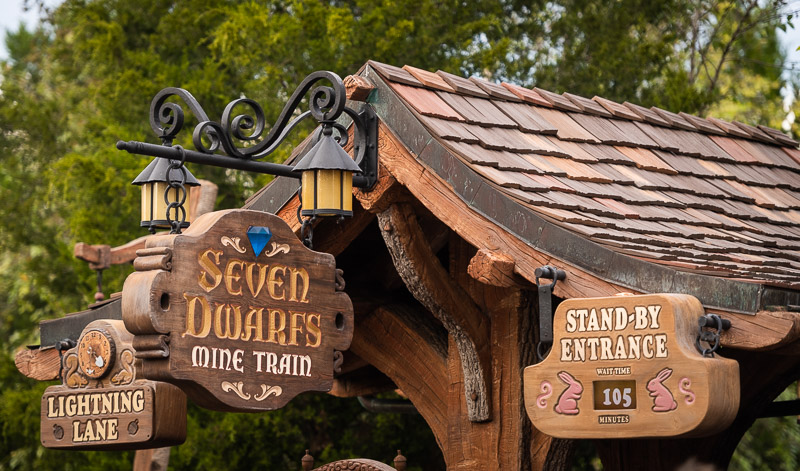
The company argued that any expansion of the current system would cause wait times to explode, with Seven Dwarfs Mine Train (for example) increasing by 39 minutes from an average wait time of 69 minutes to 108 minutes. Disney has now prevailed in several such lawsuits.
Now, regular line-skipping costs money but there’s an alternative that’s still free. Again, it doesn’t require much imagination to envision a scenario where some guests justifying abusing the system to themselves. “I’m just taking what Walt Disney World used to offer for free and still should.” “Everyone does it, I’m just leveling the playing field.” “I spend a lot of money and have always been loyal to Disney, it’s the least they can do.” And so on, and so on.
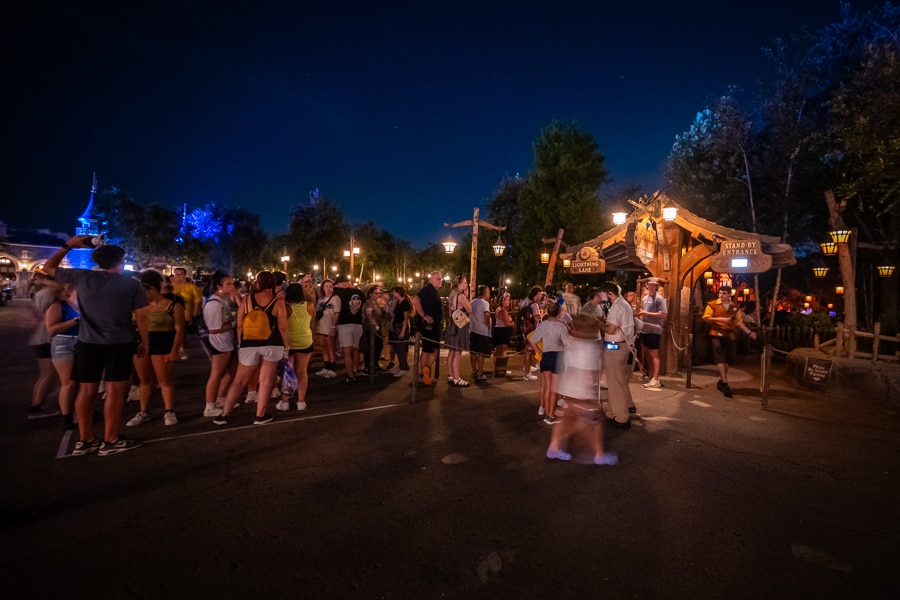
In fact, you can still see this play out in the parks. If you attend Extended Evening Hours, Mickey’s Not So Scary Halloween Party, Mickey’s Very Merry Christmas Party, or other events outside standard operating hours when Genie+ is not offered, you’ll still see people using the Lightning Lanes. In some cases, you will see a lot of people.
Totally anecdotal, but I’ve noticed it more this year–in particular at the busier Extended Evening Hours that I’ve attended. There were a couple of ExEH nights at Magic Kingdom where I saw the overflow Lightning Lane queues in use at Peter Pan’s Flight, Space Mountain, and Seven Dwarfs Mine Train. Again, it’s probably not a coincidence that usage increases as posted wait times increase.
To be abundantly clear, I’m not suggesting that all of even a majority of these people are abusing DAS. I truly have no clue.

What I have heard, though, is that usage of DAS has increased dramatically in the last few years. It’s possible that this is coincidental, and it’s happening because the percentage of disabled guests visiting Walt Disney World has increased. If the comparison were to 2020-2021, I’d believe that. A unique form of pent-up demand would make sense, especially among more vulnerable populations.
But my understanding is that DAS usage is up significantly as compared to 2019. Other explanations are conceivable, but I think they strain credulity. You can likely draw a straight line between Genie+ (and then higher prices for Genie+) and a rise in use for DAS as the free “alternative” to it.
Now that we’ve established that DAS abuse is almost certainly occurring (again, along with plenty of completely proper use!) what’s Walt Disney World to do about it? Well, this crackdown on third-party tour groups is one step. It’s only a first step, and a small one at that. These tour groups are incredibly small scale, and it’s hard to conceive of them accounting for more than a low single-digit percentage of all abuse.
Most of it is likely happening among individuals–and that’s more difficult to police without running afoul of the Americans with Disabilities Act. Ironically enough, changing DAS is also its own powder keg, and a potential lightning rod for controversy. There are a lot of people with a vested interest in DAS, including both the legit users and the abusers.

You might be inclined to think that legitimate users would want to see DAS crackdowns occur. Many of them probably do. But it’s not quite so simple. For one thing, any change brings with it uncertainty until it has been implemented, and many of the families who need DAS most also (very understandably!) crave consistency and stability.
Better the devil you know than the devil you don’t. Which is to say that change can be intimidating and unsettling; many rightful DAS users might prefer keeping the stable but imperfect product rather than rolling the dice on a replacement. I can certainly empathize with that perspective.
Compounding matters is the small but vocal minority of abusers who would complain in bad faith and muddy the waters of any discourse around DAS changes. Knowing that their loophole would be closed, some of these individuals would have a strong incentive to voice outrage, even if it’s baseless and insincere.
Bad faith outrage around DAS might sound shocking…if you haven’t lived through the last several years of social media, in which case, it would be more surprising if this didn’t happen. Either way, it complicates matters and makes an explosive issue even more fraught for Walt Disney World.
Walt Disney World knows this, which is likely why there has been minimal movement on DAS abuse, aside from indirect acts like banning third-party tour guides. This won’t be enough, though. Something’s gotta give–just like it was too big to ignore back when the change was made from GAC to DAS, the same will soon be true. Perhaps they’re starting with low-hanging fruit like tour guides and waiting for an individual system until the new system that allows for the advance booking of Lightning Lanes in Spring 2024.
I’m somewhat surprised that Walt Disney World hasn’t used the protective veil of a theme park association to make industry wide changes. Sort of like how the California Attractions and Parks Association was the face of pushing for reopening a few years ago, which allowed Disneyland to mostly avoid controversy. (Well, to the extent they wanted. Disney still issued some sharp statements, but some of those were very justified.)
Frankly, I don’t know why Disney doesn’t use TEA or some organization like that for creating uniform standards and protocol for any potentially sticky issue. It’d be suitable for everything from security checkpoints to smoking rules, and would give Disney plausible deniability as to their involvement in the crafting of such rules. When it comes to ADA accommodations, standardization could also streamline things for those guests with actual disabilities by outsourcing the process. It wouldn’t just be about sidestepping controversy–it could truly make visiting easier for those with disabilities. Win-win!
Planning a Walt Disney World trip? Learn about hotels on our Walt Disney World Hotels Reviews page. For where to eat, read our Walt Disney World Restaurant Reviews. To save money on tickets or determine which type to buy, read our Tips for Saving Money on Walt Disney World Tickets post. Our What to Pack for Disney Trips post takes a unique look at clever items to take. For what to do and when to do it, our Walt Disney World Ride Guides will help. For comprehensive advice, the best place to start is our Walt Disney World Trip Planning Guide for everything you need to know!
YOUR THOUGHTS
Thoughts on Walt Disney World cracking down on DAS abuse? If you’ve used Disability Access Service at Walt Disney World, what do you think of the experience? Have you noticed high Lightning Lane usage at times when Genie+ was not being offered? Please feel free to share your personal anecdotes about DAS and other thoughts in the comments below! Just be sure to err on the side of kindness and empathy and don’t engage in personal attacks, antagonism, or trolling. Comments that cross any lines will be deleted.




I have an autistic daughter who loves all things Disney more than anyone else I’ve ever met. We’ve taken her to Disney many times over the last 6 years and used the DAS pass each time. I can definitely tell that over the last year or two the Lightning Lane has gotten longer. It was my assumption that this was due to the ability now to buy your way into that line, but maybe I’m wrong. Either way, we’ll continue to use it as long as we can. We’d be happy to bring documentation of her condition – we did our first time because we didn’t know better. But I also completely understand why some people wouldn’t want to and how Disney is unlikely to have anyone in place with credentials to know one diagnosis from another.
And I really appreciate your statement about changing places with others who don’t need DAS. My daughter does not require as much support as many of her peers, yet I promise that it wouldn’t take a second for us to trade her disabilities for as long of lines as you could dream of.
Don’t forget about the popcorn-holes, those frothing at the mouth about getting free refills of a bucket they bought for eternity to save 99 cents…
This was inevitable. As ethical behavior has receded in our society, along with (not so) common sense, abuse of any and every angle has risen dramatically. While I personally am prone to sometimes be what could be considered in some circles as a person of distasteful demeanor and I sometimes revel in it, I don’t make comments regarding those using DAS for the exact reasons you mentioned. Sometimes it’s just not obvious what another person is going through. I’ve been to the parks with others who have conditions or injuries which are not readily visible and believe me, they’d much rather wait in line and not need to use any kind of assistance. Those who abuse these systems will eventually get their due. Karma can be a real…issue… I never lie about being pulled over when I am running late, or an illness like IBS because you’re just asking for it to really happen to you!
One of the worst things Disney has ever done is to allow mobility scooters in the parks. The rampant abuse of these has caused more congestion and real injuries to other people. Most of that is certainly by those who rent them with no familiarity with the realities of driving one or common courtesy. Rentals should require both insurance for any who get injured by them and also require some kind of training certification. While I feel for most users of these devices and see frustration at rude crowds, I have witnessed far too many cases of belligerent path-rage, where they obviously think they have right-of-way over everyone else and even deliberately run into other folks. But if they were to ban them now, imagine the lawsuits!
Back in law school, my Civil Procedure professor emphasized that no procedure could ever achieve perfect results — instead, you made policy choices about tolerance for false positives and false negatives.
Make it too hard to get DAS — there will always be some deserving people who can’t get it.
Make it too easy — there will be a lot of people getting it, who shouldn’t.
Throw in the ADA, where my knowledge is limited, I don’t know how much Disney would even have the power to clamp down. (Not sure if they can require medical confirmation of disability).
I am so confused. You kept flip flopping from DAS to tour guides.
The title said one thing and the Article read 2 different ways.
So what was the point of all this?
People who have the DAS pass advertise their services as a tour guide and take guests around the park. They use the DAS pass to get them on the rides bypassing the lines.
That was my point. One does not necessarily have to do with the other.
I just hope that Disney does not go the way of the Universal parks. They have implemented a system where those who have conditions that make it difficult or impossible to wait in lines must get a letter from their doctor stating their diagnosis and specific accommodations needed in order to get a pass to skip the wait. Many people do not have medical supervision for their condition, and now no longer qualify for a pass. The third party administrator also does not fall under HIPAA regulation, so there are privacy concerns as well. The application process takes at least two weeks to get approved, or not, and requires waiting in the usually long park guest services line to get the pass when visiting.
“must get a letter from their doctor stating their diagnosis and specific accommodations needed in order to get a pass”
This is a key point. Don’t know about US healthcare but in the UK as an example it is very unlikely you would get such a bespoke letter. Perhaps a general one that says, “you have condition X”. (If you are diagnosed.) Your doctor will not write chapter and verse on what accommodations you need at a theme park as that is not their job, just as it is not Disney’s to over-reach on complex medical needs. As an aside, how is it that Universal have been able to introduce their new system? I thought Disney was as it was because you could not interrogate someone (medically) over a disability…surely capturing this info via a third party does just that?
I have multiple sclerosis and I get fatigued very quickly and use a power wheelchair to get around the parks. Many of the lines cannot accommodate the wheelchair and I can’t stand for more than 10 or 15 minutes without experiencing weakness in my legs. I also experience sensory overload, sensitivity to temperature and need to be able to get to a restroom quickly at times. My party and I still wait the wait times of the rides, we simply wait outside the line. Without the DAS program, I would be unable to have an enjoyable experience at the Disneyland parks. I have received dirty looks from other guests, but I simply ignore them and don’t let them ruin mine or my family’s day. Abusers of the program do need to be stopped, but not if it keeps legitimate users of the program from accessing the service.
I have used the das for my kids all who are autistic and one who has cerebral palsy. we went during Christmas 2019 and 2022. both times it was a life saver for us as a family. in 2022 much more because my one son is an eloper and having the ability to take him in his wagon as a wheelchair to the attractions was a major life saver in so many ways. (you don’t want to know the comments I got about that from guests). It was also nice having it for the days that he or one of the kids was extra tired and needed to sleep in that we didn’t have to rush to anything and could do things at his pace. the process for getting a das was not hard but it was time consuming. I spent a long time waiting on hold to register him and his brother. I didn’t bother with one because he was going to be with one of the two boys who needed the pass even tho he is autistic as well. he just needs less amount of supports.
if Disney wanted to try to cut down on the abusers of the das one way they could is by changing the process and requiring registering in the parks or when you go through security to the parks or ticket and transportation center vs online. online was nice don’t get me wrong but if it was something that took an hour or 2 of waiting to register for the abusers might shy away and the ones who really need it would be willing to stand in that line. perhaps they could have a separate window for das registrants vs general customer service in the park entrance.
I know words of mouth has been spreading about das as well especially in the circles that I’m in got disabled children.
Firstly, I would agree with other comments on DAS being an only practical alternative to the old Fast Pass system (for genuine users, of course). For some mental/ cognitive disabilities, families being able to plan with a degree of certainty can be very valuable, not to mention helpful. Genie+ is simply nowhere near as useful as that, cost aside.
Secondly, I was quite alarmed by the number of comments along the lines of, “I’d be happy to provide documentation”. This is wildly problematic in my opinion. Most obviously, a cast member (or equivalent) will have no medical qualification to assess any information, not to mention data protection issues. From the UK, I cannot comment on American healthcare with certainty. I can, however, confidently observe that it can take YEARS here to get an affirmative diagnosis for some conditions. (Thinking anything in mental health sphere.) And even at that, I would not presume that they will issue a magic ‘certificate’ that would be useful internationally.
Thirdly, I am even more distressed to hear Universal have already introduced such a system. We were in Orlando in October 2022 and the DAS and AAP were god sends for our child/ family. Arguably the Universal system was actually BETTER as it was more flexible and you didn’t need to mess about with the app and reservations and the stress that brings. To think that it we went in 2024, over two years on waiting lists later etc, we would be unlikely to qualify for the new system seems regressive to say the least.
I think what many online/ on site forget about DAS/AAP is it is not a queue skip per se, if it is an hour long line, you still need to wait an hour (or so). The only net benefit is you do not need to wait rigidly in a line, exactly what the DAS was designed for! It is to help those manage who cannot deal with lines for physical/mental reasons, not waiting.
Bit gut wrenching to think not having diagnosis/ paperwork could potentially disbar you from such a useful service. But I suppose this is the flip side to Disney in particular having such a low qualifying bar to obtain DAS as things stand. Being unable to request medical details practically encourages abuse of the protocol. Let’s be blunt. Any individual can obtain DAS if they can look a cast member in the eye and claim ANY relevant medical condition.
Sorry for the long message Tom but I feel the comment about the undiagnosed potentially being left behind in particular was pertinent here, especially considering likely makeup of genuine DAS users/ potential users.
“Anyone using DAS out of necessity would trade places with you in a second and stand in long lines if it meant not being disabled.” I would gladly trade my PTSD issues after 10 years of war in the Army with anyone. Actually I wouldn’t, that’s not the kind of man my mother raised. As a Veteran, I chose to take on the difficulties of war so that YOU (generically speaking) wouldn’t have to. This was my little sacrifice to the freedoms that you, me and all our families get to enjoy. My family feels as I do, and we would do it all over again if we had to.
Dearest SML, there is hope and help! Visit 22Zero.org to find out more. Free to all of our heroes.
Please don’t delete this, Tom. I’m not trying to spam, just help.
I just finished reading all the comments (121 at the moment) and it broke my heart to hear about the different illness’ my fellow DTB fans suffer from and worst of all the horrible reactions you have endured from more fortunate folks.
My wife is a teacher at BOCES and works with mentally, emotionally and physically challenged young children mostly from ages 5 to 12. I have met many of these children and through the years in a previous job have done a bunch of benefits to raise funds for these various illnesses.
We have long known about DAS and never give a second thought to people passing us for those reasons.
I’m writing because I want to assure you of two things.
First, for every person giving you evil looks and making cruel remarks there are way more people waiting in line who support your use of DAS. Don’t stop using it or feel ashamed because of a few knuckleheads.
And second, although it’s never easy to brush off insults, I hope it may help to keep in mind that those nasty hurtful reactions directed your way are not really about you. Those aforementioned knuckle draggers are really mad at Disney, whether they realize it or not. You’re just the easy target who has the misfortune to be in their sights. Yes, they may be thoughtless, nasty, angry people in general but this line business, which is the source of their real anger, is a serious problem created by Disney in its nearsightedness. Disney can fix this problem. Not overnight, but it’s within their power to make it so the lines keep moving and the wait is reasonable. Then no one will think twice about people using DAS.
I knew this comment section was gonna be hopping lol. My personal opinion is the “straight up abuse” is a MUCH MUCH smaller percentage than what people think and whats really causing an uptick in DAS usage is actually the increased awareness around disabilities and entitlements to accomadations. Lets park Disney and theme parks to the side for a second, and talk about schools. Less than a decade ago the number of IEPs and 504 plans were a handful at best. Kids had to have severe learning disabilities in order for any accomadations to be made. Even how we handled allergies were totally different. Now take any classroom in America in 2023, atleast half those students have IEPs and 504 plans. Is that abuse? Or is it increased awareness around disabilities and feeling entitled to accomadations? Whatever it is, take it and directly coorelate it to what is happening in Disney. The truth is that the percentage of people who identify as 100% ablebodied is just much much smaller than what it used to be as we learn more about various conditions and how the effect us both physically and mentally. People with conditions that were unknown or undiagnosed in a past just had to suffer and deal with it, now they know better and they expect more. Right, wrong or indifferent thats just the reality of our world today. Disney would have a very big uphill battle to fight if they want to decrease the usage of their DAS program in today’s world.
“My personal opinion is the ‘straight up abuse’ is a MUCH MUCH smaller percentage than what people think and whats really causing an uptick in DAS usage is actually the increased awareness around disabilities and entitlements to accomadations.”
I think you’re completely correct that awareness of, and accommodations for, disabilities are improving by leaps and bounds. Rather than just staying in the shadows or suffering through their disability, more people are able to partake in things or receive help. That’s pretty much undeniable.
But the impression I’ve been given from those within the company is that they know abuse is rampant. I don’t know what kind of audits they’re doing and I’m always skeptical of internal data (Disney doesn’t have a great track record), but I’ve heard enough to believe it’s probably a reasonable assessment.
Perceptions can be a tricky thing, informed by our own biases and bubbles. If you only read the comments section on this blog, you might be inclined to believe DAS use is totally above board. (Very thankful that we have ethical readers…or at least ethical commenters!) Head over to Facebook groups, and your perception might be very, very different!
Two years ago due to my walking issues, I tried to go this route and until they found out I had asthma, they indicated that I should be just fine in walking and why did I not rent a cart. The issue with this is that they do not have a substantial amount of carts. I am coming back in December and will try this route again. Wish me luck
It is my understanding that if you use DAS on a ride, you can continue to ride other rides while your place is being ‘held’ in the initial ride. Why can they just say that if you have a place being ‘held’ on a ride, you cannot ride any other ride?? You can shop/eat/sit to wait for your time to ride. Make it a requirement to have a magic band….maybe even provide one for the DAS pass holder. IDK Just my opinion!!
And just how would they stop people waiting for their DAS return time from riding other rides, or watching shows, or eating in restaurants? Going on a ride with a short wait time is just as much of a valid way of using up the wait time as sitting or shopping or walking around.
So similar story to many on here I’m sure. But we had a disney world trip planned for May- and my son had a grand mal seizure and was diagnosed with childhood epilepsy in April before the trip. We had a lot of anxiety toward the trip but still wanted to give our kids the experience. I found out about DAS and it was truly a game changer and helped me feel so comfortable taking my family and not risking a seizure due to over exhaustion/exertion.
The cast members were so incredible. We even had a sort of weird family situation as a family of 6 with a kid with disability and smaller kids not able to ride by themselves and Disney was incredible about accommodating our larger party so that the family could ride together! There were many planning moments that induced eye rolls (it was during the rocky reopening season) BUT the magic of how they cared for our family was REAL.
As a two-time youngish cancer survivor, I’m split on this: Yes, DAS would certainly make my visit more pleasant and less painful but it’s a largely invisible disability unless I chose to wear some pretty (probably un-Disney-like) revealing clothing. On the other hand, I know so many more who went through the same treatments who have had a lot worse long-time effects to deal with so I have a sort of survivors guilt about it all. Ugh! I’m not sure what to do about it, but I will say that last year’s trip to Disneyland was pretty unpleasant due not being able to withstand the stand-by line waits and only having 3 Lightning Lane opportunities.
I have Ulcerative Colitis and *most* days I do fine. But there are some days where I have flare ups and it literally saps my strength. I can manage these symptoms with a good diet and sticking to my pills, but when I’m at Disney I want to eat ALL the food lol.
So I use the DAS pass because Disney offers it, I qualify, and it makes sure that I can have the best experience no matter what happens. The last time I was there was over the summer with my gf. Pretty much almost every night, around 6 or so I would start cramping up and just ready to go lie down. I’m glad I utilized the pass because I was able to get stuff done before I hit that wall.
I don’t show any signs of my illness. I’m a regular looking guy (I guess?). I would occasionally feel like people looked at me differently (mainly cast members), but that was probably my imagination.
Even still, I told my gf not to talk about the pass while in the parks and felt the need to have “code words”. Even when I know it exists for my exact health concerns, it still felt wrong using it. Had to remind myself so many times that it’s offered, I qualified, and it’s OK. :\
I’m a youngish 3-time cancer survivor, one of which is colon cancer, and I’ll leave it at that. My last trip to WDW I applied for and was approved for a DAS pass. My son is little and an only child (see above why), and he really wants the three of us to do everything together. Our previous trip to WDW, I did not have DAS, and I had to leave several lines. My son did not want to stay in the line just with his dad, so we missed out on several rides. I still had to run out of a few LL queues using DAS, but it was much less disruptive, and it was easier to get back in line and recover from those disappointments since we had the DAS.
To echo many others’ comments, I have invisible illnesses (Crohn’s + IBS + anxiety disorder) that make DAS necessary. Prior to Covid, we used FastPass+ and didn’t require DAS. We visited a few times without DAS and I missed out on attractions because I had to leave the line. This year I finally used it, and my trip was so much more enjoyable, knowing that I wouldn’t have to decide between participating or sitting out in fear of a problem. It made everyone feel more comfortable knowing the fear of having an in-line problem was basically mitigated. Had FastPass+ remained intact, we would have continued using that system, as I’m sure many who now apply for DAS would have done, too. I strongly feel that the uptick is a direct result of removing FP+: people feel unreasonably entitled to special treatment at Disney, and they are willing to cheat the system to receive their perceived fair share of the Magic they feel they deserve.
I wonder if laws need to be updated to allow companies to ask for some sort of evidence of disability. There are too many bad people out there manipulating disability systems, like people who lie and say that their pets are service animals because companies can’t legally ask for any sort of proof. That allows people who abuse the system to bring their pets wherever they go and claim it’s a service animal.
Similarly, anyone can claim to have a disability like claustrophobia or IBS and say they can’t stand in lines. If Disney can’t ask people for proof, then people are going to abuse that.
I have IBS-D, but I have not applied for DAS before. My last trip to WDW, I had a few issues and actually had to walk off of Test Track right at the loading area to go use the bathroom! But usually I can manage my issues through diet and using Imodium when needed. As a person who COULD qualify for DAS, it really makes me angry that others who don’t qualify are lying to get the pass and manipulate the system. If my issues ever get to the point where I can’t manage them and I decided to apply for DAS, I would have no issue whatsoever with Disney asking me for proof. I could simply ask my GI doctor to print out my diagnosis or sign a thing saying I’ve been diagnosed with it.
I know Disney still can’t require proof from guests until the law changes, but that’s why the laws should be updated to deal with rampant abuse of disability systems. There are too many selfish people who abuse the system to get what they can wherever they can.
Tom thank you for a thoughtful and insightful post on DAS. As someone who has been going to Disney World since 1971 and in the past year has needed to use DAS it was a definite shift in mindset but the DAS is so beneficial. I am one of those people who’s disability is not clearly obvious but impactful. I have been very luck so far in that I have not had any pushback or nasty looks from other guests. Hopefully that continues but if not I have plenty of pithy retorts and can show them why I have a DAS (although I am sure no one want to see the reason).
The rest of the industry is adopting the International Board of Credentialing and Continuing Education Standards verification program. I expect Disney to join them soon.
I really hope they do.
This is a fascinating story to me as I was part of the team that helped develop the DAS when Disney moved away from the Guest Assistance Card ten years ago. Three days of meetings at WDW attended by Cast at multiple levels and included a team flown in from Disneyland. While there were a good 40 people involved, the meetings were dominated by the parks General Managers and there were some concerns from those of us on the lower levels about the final results. I’ve been gone from Disney for a while so never saw the full implementation. I’ll be interested to see if they make some major changes again. As you stated, it is definitely a challenging situation.
‘Decision-making dominated by people disconnected from on-the-ground operations and overriding lower level concerns’ is a really common theme to half-baked policies/changes/etc. at Walt Disney World and Disneyland.
I’ve heard sentiment similar to yours so many times over the years that it’s not even funny. I’m just surprised it was only 3 days of meetings. Now that part does not seem like the Disney way!