
Michael Eisner on Disney World’s “Wild” Overpricing, Chapek “Marriage Made in Hell” & Iger Rejection

Fans have been waiting 21 long years for Michael Eisner to air his grievances about Disney. Decades after leaving under, ahem, inauspicious circumstances, the former CEO finally sat down for a wide-ranging interview. This shares the highlights and offers our post-mortem on the Eisner era.
The interview covered everything from Bob Iger initially being rejected by the board, problematic pricing at Walt Disney World & Disneyland, the Chapek mistake, Harvey Weinstein being his biggest regret, and much more. We’re going to cover the highlights here, so buckle up, because Eisner doesn’t hold back and shares colorful commentary.
Let’s start with brief background. For those who weren’t fans back then or have not heeded our many recommendations to read DisneyWar, Michael Eisner was once a fan darling, serving as CEO of The Walt Disney Company in 1984 and saving Disney from corporate raiders. Along with Frank Wells as President, Eisner was responsible for tremendous growth of the company for about the first decade of his tenure.
Then Frank Wells died in a helicopter accident in 1994. It would be extreme to say it was all downhill from there, as the second half of the 1990s did yield plenty of success for Disney. But it was much more hit or miss, and Eisner was no longer infallible. Regardless of how we slice it, the second half of Michael Eisner’s reign as CEO was worse than the first half. On that, we should all be able to agree.
This culminated in the SaveDisney campaign that began in 2003. Shareholders and fans launched a campaign of concerns about the company under Eisner, launching SaveDisney.con and undertaking a media blitz. The face of the Save Disney initiative was Roy E. Disney, the nephew of Walt Disney, who literally had a face that resembled his uncle.
Roy had previously backed Eisner as CEO, but pointed to the untimely death of Frank Wells as a pivotal moment for Eisner, and the beginning of his unraveling as a leader. After that, Roy felt that the company had lost its focus, creative energy, and heritage.

Among other things, the SaveDisney campaign pointed to Eisner’s failure to manage ABC programming and mismanaged relationships with Pixar and more. It zeroed in on Eisner’s lack of leadership, which had resulted in creative brain drain with the loss of talented employees, as well as his refusal to establish a clear succession plan. (Gee, sound familiar?)
SaveDisney also focused on weak investments in the theme parks business, pointing to building Disney’s California Adventure, Hong Kong Disneyland, and Walt Disney Studios Park in Paris “on the cheap.” In addition to that, the consumer perception that the company is constantly looking for the “quick buck” rather than the long-term value, resulting in brand damage and loss of trust. (Gee, sound familiar?)
All of this is well-documented in DisneyWar and beyond. Although reappraisal of the Eisner Era has happened to some extent in recent years, it’s largely a matter of recontextualizing the agreed-upon narrative and judging that timeframe against the Iger Era that followed. Aside from stray tweets, this interview has been the first opportunity we’ve had to hear from Eisner in a long time, telling his side of the story and offering thoughts on how things are going at the Walt Disney Company today.
What follows is Eisner on a wide variety of topics, with quotes lightly edited for clarity.

On the State of Disney Today
“The company’s in great shape. I think Bob Iger has been an excellent CEO. I’m happy that he was a person that I recommended. That I got it through the board. He was not the board’s first choice in the beginning. He ended up being the unanimous choice. He came out of ABC. He was a president under me for a decade. He understands the company.
“Most of the time, succession doesn’t go well. Most of the time, the devil you know is better than the devil you don’t know. So going to the outside is dangerous. If you have people the inside that are capable, that’s a better way to go. But Bob, his predecessor [Frank Wells] died.”
“Bob became the number two in the company after a mistake…which we’ve all made. Bob was great. He was he did all the stuff that Frank did and more. He understood it and he spent a decade with me and our design people and the parks and he knew it. It was so obvious. So I think he did a good job.”
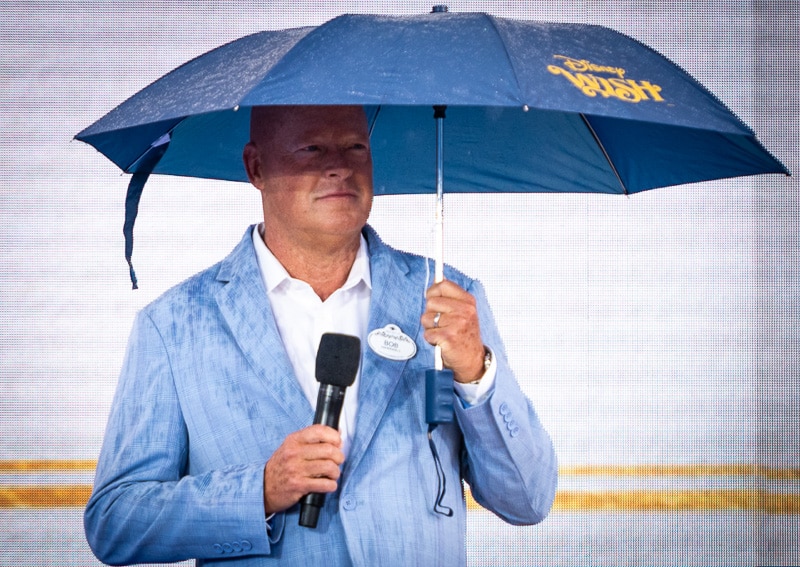
On the Blunder that Was Bob Chapek
“That was a marriage made hell. Bob Iger and Bob Chapek was a mistake. Bob Iger really wasn’t ready to leave completely, and Chapek was going to prove that he was the boss by doing stupid things. Not necessary things. Separating the distribution from the creative and the movie business, and other things like that. Bob Iger recognized it, couldn’t help himself, in noting it.”
“Chapek was a mistake. I hired him. Well, I don’t know if I hired him, but I certainly approved him to run home video. He did a great job at home video. He did a good job with the with the parks, but he was the wrong choice for CEO. That’s all.”

On Co-CEOs at Disney
Note: This interview was filmed before Disney announced its leadership change. Josh D’Amaro has since been elected CEO, effective on March 18, 2026. Alongside him, Dana Walden has been named President and Chief Creative Officer. In this historic new role for Disney, Walden will report directly to D’Amaro.
Upon this transition, longtime Disney CEO Robert A. Iger will continue to serve as Senior Advisor and a member of the Disney Board from March 18th until his retirement from the company on December 31, 2026. Although presented by Disney as historic, it’s very similar to the successful partnership Michael Eisner had with Frank Wells. It is not a co-CEO partnership.
“It is ridiculous [to have co-CEOs]. That is not to run the bakery. It doesn’t work. [Netflix] is a completely different company. It’s a technology company and an entertainment company, and it has been basically co-CEOs with Reed Hastings being the founder and the guru and Ted Sarandos. It’s not applicable and I still think it’s a bad idea.
“It would be a really big mistake for Disney. Pick the person you think should be the CEO, and hopefully the second person look me to be number two. When Frank Wells and I were having that conversation, first our shareholders wanted co-CEOs and then they wanted Frank. Then I said no, and then Frank said, ‘Michael should be the CEO. Disney should be run from a creative point of view. I’ll be happy to be number two.’ And it was great.”
Note that since this interview was recorded, Eisner congratulated Josh D’Amaro on being named CEO and offered him some advice in navigating the job. Most notably, he said, keep close the words of Walt Disney: “We love to entertain kings and queens, but the vital thing to remember is this—every guest receives the VIP treatment.” That’s a line he echoed again later in this interview when lamenting the problematic pricing at Walt Disney World and Disneyland.
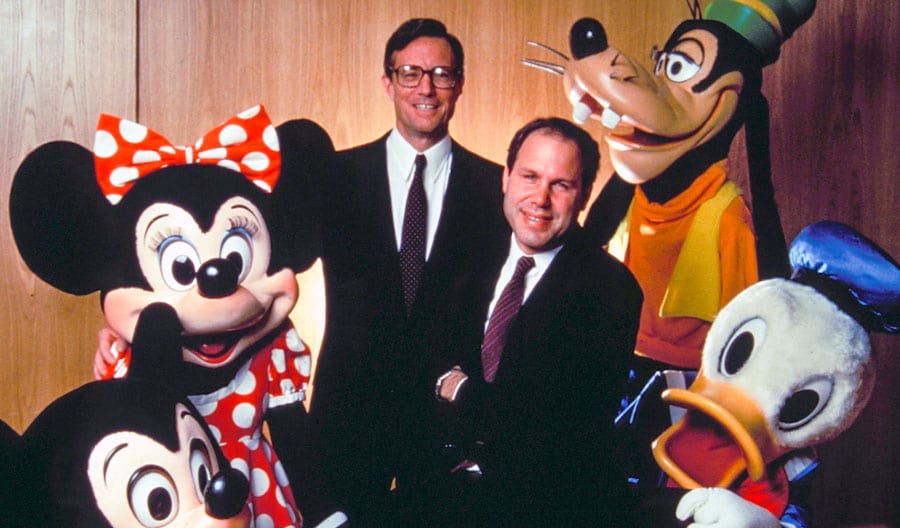
On Eisner’s Favorite Character
After discussing Michael Graves as the Steven Spielberg of architecture and explaining that they used the Seven Dwarfs on the Disney HQ building because they saved Disney, Eisner was asked about his favorite character:
“I like them all. Are you kidding me? You’re not going to get me. You’re not going to get me there.”
On Returning to the Disney HQ
When asked about the last time he had been back inside the building: “Inside in the offices, on the day I left. Not that I haven’t been invited. I’ve been invited. Once you sell your house, you move on.”
This video otherwise is heavy in its discussion of Michael Graves and other ‘starchitects’ who Eisner famously courted and worked with. I find all of this to be incredibly fascinating and one of the underrated lasting legacies of the Eisner era, but most fans probably won’t care, so I’m not going to fixate on it.

On Eisner’s Downfall at Disney
Looking back on that last period of Eisner’s tenure: “Well, there was change going on. I was stubborn. I did not want to buy Pixar for a price that I thought was crazy. It wasn’t as depressing as the media made it. We were still doing very well. We were still a great company. I had decided that we couldn’t lose any more money with Roy Disney making movies. So, I stopped that. Probably a bad political decision, but the right decision.”
“I tried and succeeded in getting rid of Harvey Weinstein. [Which was unpopular with the board at that time?] No, they went wild about Harvey and he was losing money. The only thing that was unpopular was that Harvey and Steve and Roy become adversaries to the CEO. One had the name of Disney. I didn’t. One was Steve Jobs, an American one of a kind. And the other was a despicable man who was loved by the media for a long time because of the movies he made.”
“I made the judgment call, probably right, but not politically smart that I was not going to put up with it. So that was unpleasant. But I was ready. 21 years at Disney having every weekend, with 20 scripts by my bed that I hadn’t read, and thousands of emails. Building a park in Shanghai and having just built a park in Hong Kong, doing Animal Kingdom, doing a second park in in Paris, etc.”
“I was ready to move here [his home, which is also a subject of the interview]. I was ready to move to the one street in Los Angeles that felt like New York. I was ready to not have 20 unread scripts. I was ready to actually own myself. I think change is good in in management because it also creates opportunity to go in new directions. You can’t just stay in the old directions.”

On Disney Parks Pricing Problems
“I’m not wild about the fact that it is so expensive now to go to Disneyland or Walt Disney World. I’m not wild about the fact that it’s harder than ever to have everybody be a VIP at a Disney Park, because they’re selling certain things.
“There are things that I would do differently, but I don’t think I would run Disney as well as Bob Iger has run it.”
Eisner isn’t the only one to think this. There were reports that Bob Iger was “alarmed” by Walt Disney World and Disneyland price increases during the COVID era. “He’s killing the soul of the company,” said Iger about Chapek on more than one occasion.
Reading between the lines, it sounds like what Eisner is taking issue not just with price increases, but also nickel & diming and upcharges that have created different classes of guests. We’ve discussed how this is at odds with the old “every guest is a VIP” mantra from the Eisner era (and earlier), most recently in Top 10 Guest Complaints About Walt Disney World.
Note that although Eisner has not returned to Disney HQ, he has been back at the parks many times. There are photos of him over the years visiting, including within the last 5 or so years.

On ‘Personality’ Problems
When looking back at his fallout with Michael Ovitz and Jeffrey Katzenberg and whether they could reconnect: “Michael Ovitz was the wrong person for that job, from day one. It just was a mistake. He was a great agent. He had aspirations and it was just an elephant in a china shop from day one.”
“Jeffrey was a different situation. Frank had made a deal that he never told me about. I had made a deal that I thought was different, and I was stubborn. I said, ‘Jeffrey, you have to live with this deal.’ Frank’s conversations with Jeffrey were very different than my conversations with Jeffrey, and I did not quite know that.”
“The life of a movie was like a decade. So when you made a deal with an executive that got a continuing interest, you ended it at a decade. Well, that all changed with streaming, international, and all the rest of it. I thought that was still the deal. I was advised not to let the lawsuit happen and to settle. I was stubborn. Michael Ovitz excellent as an agent and Jeffrey excellent as corporate executive. They both served their companies and me great.”
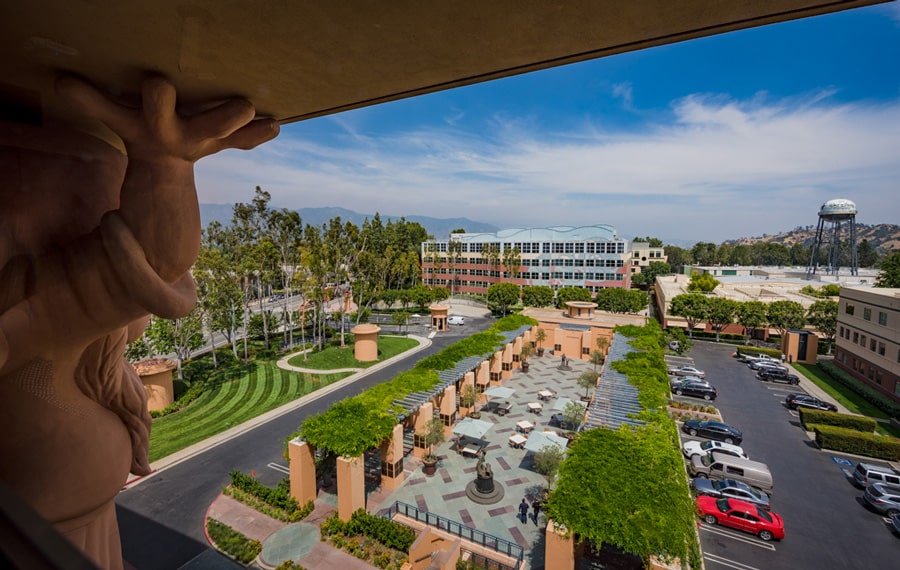
On His Hardest Moment at Disney
“Every week there was a hard moment. I can’t think of any one single hardest moment. Every weekend getting the movie grosses, opening of a theme park, our CFO left two weeks before our annual meeting. All those kinds of things.”
“But the the hardest moment was dealing with uh Harvey Weinstein. He lied about everything. How do you deal with somebody who never tells the truth? I never thought about what I learned, but I would not have made a deal, just because I got a good cheap deal, for 70 million to buy Miramax, if I thought that I’m bringing a wolf into the hen house.”
This is just a little ground covered in the wide-ranging interview. Other topics include the Jimmy Kimmel controversy, challenges with ageism in Hollywood, architecture, future of movie theaters, and more. I highly recommend watching it all on: here’s a link to the In Depth with Graham Bensinger channel on YouTube, where you can find the interview.

Our Commentary
The interview is fascinating for a variety of reasons, the least of which is how much he hates Harvey Weinstein as contrasted with everyone else, including those with whom he’s had a public falling out. Of course, it’s now “safe” to hate Harvey Weinstein in Hollywood, whereas many others still wield power.
But Eisner was fairly diplomatic even to Bob Chapek after the initial “marriage made in hell” comment, and Chapek has vanished from public view. I also think it’s telling that, generally speaking, Eisner views the way that both Bobs have handled the theme parks positively.
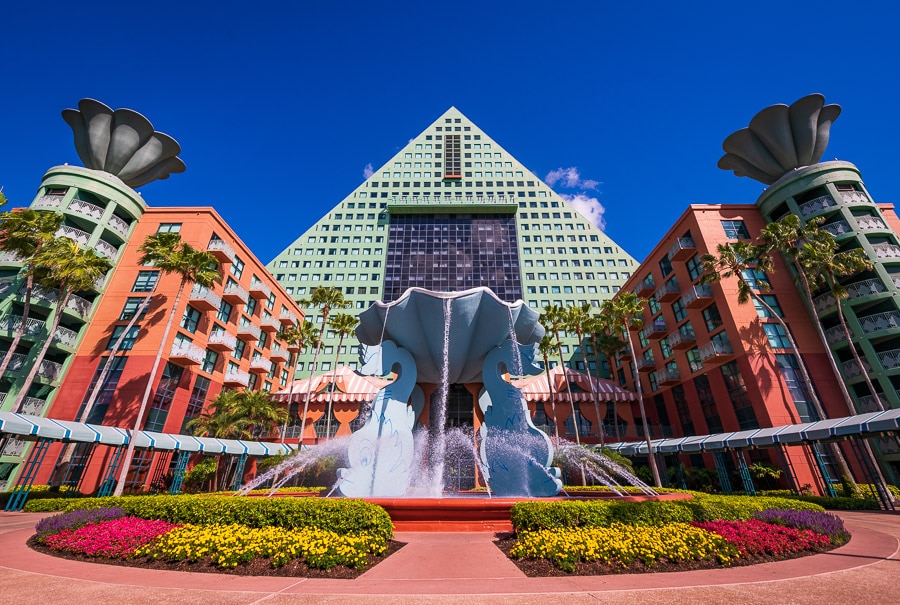
Sure, there’s the headline quote about not being wild about pricing, but he immediately followed that up with a comment about Bob Iger running things better than he did. He also praised Chapek’s leadership of the parks. Part of this undoubtedly comes down to exposure.
Eisner sees the financial success of the parks division (and likely the mainstream media headlines about pricing out the middle class), but has limited experience actually in the parks. When he does visit Walt Disney World or Disneyland, it’s less frequently and his family.
Guests visiting once every 5 years or so are typically much less critical of the experience than all of us. Heck, even I am usually less attuned to issues when visiting with Sarah and our daughter versus solo research trips. So it isn’t really a huge surprise that Eisner largely views both Bobs favorably from the perspective of the parks. They’ve added blockbuster new lands and attractions, and have delivered financial results, albeit with runaway pricing.

Beyond that, the interview generally strikes me as candid and thoughtful.
Eisner is still sharp as ever, but he also comes across as softer and more reflective. Someone who realizes his time has come and gone, and largely ready to move on but still willing to do an appraisal of his days at Disney. He had a couple of opportunities in the interview to highlight successes, but instead dove into the later struggles.
It’s also clear that Eisner hasn’t lost touch. Instead of constantly second-guessing today’s decisions or judging them through the lens of his heyday during the 1990s, he’s cognizant of the changing business and media landscape. On several occasions, he contemplates how he would have done things differently–or similarly–if having to navigate today’s climate.

I think this is meaningful. Fans often don’t do this, and instead judge present decisions by past standards, or assume leaders from the past would do things differently today. Eisner could’ve just as easily taken a “back in my day” posture, but opted against it.
There’s no turning back time or the many ways the world has changed, for better or worse. It’s a fool’s errand to view everything through the rose colored glasses of a different era; one that no longer exists.
I’ve long wondered whether Eisner could’ve had a successful ‘second act’ had he simply taken a year off to recharge and recalibrate. This interview did nothing to put that thought to rest; it only heightened it. Whether he spiraled or something after Frank Wells’ passing or just got burnt out, Eisner wasn’t the same at the end of his tenure as at the beginning.

Eisner now seems changed, and for the better. He may be at peace with moving on (although his remark that he and Barry Diller explored purchasing Paramount suggests otherwise), but he does not strike me as someone that time has passed by.
My personal ‘nutshell’ appraisal of the Eisner Era is that the Walt Disney Company as we know it wouldn’t exist but for Eisner. What he did during his first decade was transformative, and much of today’s successes are still riding on that foundation laid by Eisner and Wells, and the goodwill generated.
This is especially true at Walt Disney World, which grew tremendously and had its best and most consequential years during the Eisner era. Everything that followed, and there was plenty of bad, is fully forgivable given the good.

A final thing that I found fascinating is how this underscores the ‘degree of differences’ in leadership. One of the common refrains right now among fans who are critical of the D’Amaro decision is that there’s no difference between him and the Bobs.
Well, I’m old enough to remember when the same was said about Eisner and Iger. There were serious concerns at the time about Iger being Eisner’s protege, strategically handpicked to stop the SaveDisney campaign but continue as ‘shadow CEO’ or whatever. That there would be no meaningful differences between the two.
Those critics couldn’t have been more wrong. Whatever Iger’s eventual legacy ends up being, and the argument could easily be made that he did follow in Eisner’s footsteps in tainting the first half of his legacy by sticking around too long for a second half, his first decade or so largely involved repairing relationships and fixing the problems of the late Eisner era.
Personally, I’m not expecting as dramatic of a departure between Iger’s Disney vs. D’Amaro’s Disney, but the point nevertheless stands that new leadership can make a big impact. Look no further than Disney’s last CEO, Bob Chapek, for further proof of that. Here’s hoping that Disney’s darkest days are behind it.
Need Disney trip planning tips and comprehensive advice? Make sure to read Disney Parks Vacation Planning Guides, where you can find comprehensive guides to Walt Disney World, Disneyland, and beyond! For Disney updates, discount information, free downloads of our eBooks and wallpapers, and much more, sign up for our FREE email newsletter!
OUR THOUGHTS
Thoughts on anything Michael Eisner discussed during the interview? Agree with him about Walt Disney World and Disneyland’s wild overpricing? What’s your opinion of the Eisner Era? Do you agree or disagree with our assessment? Any questions we can help you answer? Hearing your feedback–even when you disagree with us–is both interesting to us and helpful to other readers, so please share your thoughts below in the comments!



“This video otherwise is heavy in its discussion of Michael Graves and other ‘starchitects’ who Eisner famously courted and worked with. I find all of this to be incredibly fascinating and one of the underrated lasting legacies of the Eisner era, but most fans probably won’t care, so I’m not going to fixate on it.”
I care, Tom, I care. Scott from Podcast: the Ride and I both dearly treasure the Michael Graves Causeway between the Swan and Dolphin.
(I know, I know, you said most fans, and I am a sample size of one, so I will happily listen to the podcast when it’s publicly available for free.)
Eisner did what he had to to make things move forward for Disney. At times risky and some failings. I saw the interview and you see that Eisner knew when he was at the end. DO I think he burned out, yes. He would need a couple of years if he were to come back back then. People forgot where Eisner and Iger started. They both worked their way up. Mistakes are made. NO ONE IS PERFECT. But Eisner’s motto “every guest is a VIP” is still lost to Disney currently. They need to reel it back and find that. Too much about the money and not enough about making all the guest feel special. THAT is where the magic lies. I pray D’Amaro and Dana pay attention. Yes, Iger reversed some not much but you have to take the small reverse moves. But they need to make more adjustments. Each CEO is judged and the Disney fans are watching. We want the happiness brought back.
What’s interesting is the lens that we saw the parks through that Pressler/Eisner lead era, and the struggles they had. DCA was a flop (correctly so), parks we’re falling apart (and killing people!), it was bad – really bad. It’s hard for me to view this through rose colored glasses of the late Eisner era. Also important to remember that FastPass was really designed to get you to shop, eat, and spend more money while out of lines – it was a revenue making move – even if it was free. Eisner’s early leads and decisions were also not great, but I think ultimately became what he wanted long after he was gone.
The Living Seas was to be more SeaWorld than EPCOT, now SeaWorld is a local’s park. Animal Kingdom was direct competition with Busch Gardens Tampa, which kind of worked and went from a destination to a local’s park. Pleasure Island was designed to compete with Church Street Station (now both basically dead). Even Studios coming out the gate before Uni made the situation way more complex and complicated, paving the way to the success that WDW has seen today. DCA was to be a more adults focused park on drinking and food (and here we finally are). For many of these park’s goals, Eisner was right – just wildly ahead of his time.
Disney+ and the unchecked spending and drain on the company that was required to not match Netflix without ESPN and Hulu – ultimately was the boondoggle that will define the later Iger era, I think (in the way that a post-9/11, was for Eisner).
Will D’Amaro get his Pirates Trilogy? Will he get his DCA redo? His Pixar? His Marvel decade? Will the relationship with Epic Games and his more forward thinking unlock this? Time will tell.
Typo: search for SaveDisney.con
I mean, you might be on to something, restricting nefarious websites trying to con people to a specific top level domain.
The Walt Disney Company hits its stride ONLY when it has the one-two punch of Business & Creative at the top.
-Walt & Roy
-Michael & Frank
-Bob and John
The times when it’s just been one person without that counter-balance, it has struggled and lost its way.
Here’s to hoping Josh and Dana can capture that same magic.
I loved Eisner. Every guest receives the VIP treatment. That’s how I felt at WDW in the nineties. More importantly, our middle class family could afford it. Our famiLy of four spent 6 days in the parks and 3 days on a Disney cruise one year and didn’t have to take out a loan to do it.
DisneyWar may be my favorite book I’ve ever read. The way that it was able to show both Eisner’s creative traits while also showing how at times could act like an absolute lunatic was fascinating. His inability to build and maintain certain relationships is what ultimately did him in, but it’s undeniable what he did for Disney at a time when it was drowning. His willingness to take big risks on projects is something that is really missed during this era. Not sure if you ever watch Defunctland but in the Hong Kong Disneyland episode he gives a synopsis at the end of why Eisner really got it more than anyone, despite his erratic behavior.
In the early 2000s I interviewed a candidate for a senior IT Position. He was previously very high up in the IT department at The Walt Disney Company. After the interview, we chatted a bit about his experience at Disney. Most interesting was when this candidate told me Michael Eisner would quite often wake up in the middle of the night with an idea. He would then call in his senior staff to meet at his house to discuss his idea; at 2 AM! The guy I was interviewing was one of the people who had to go to Eisner’s house at 2 AM; again and again.
Yeah, this guy said he loved working for the Walt Disney Company, but those calls at 2 AM got old really fast.
Great summary!! Eisner is a tough CEO to grade but you do a great job attempting to give a fair appraisal of his performance. I personally believe that his relationship with Jobs was his biggest weakness. They didn’t like each other and Eisner’s ego got in the way of realizing Pixar had dramatically better story tellers at that time than Disney Studios. Cleaning up the relationship with Jobs and buying Pixar was the catalyst of today’s Disney. Eisner would have never made that move. I also don’t think he would have ever bought Marvel or Star Wars. TBH, I think all three of those acquisitions were major risky and I give Iger a ton of credit for having the guts to do it. As with Pixar, he had to do something big and un-Eisner-like to show the Board that he wasn’t an Eisner clone. Roy didn’t handle the situation the best way but he was right about Eisner and the Company today is better because Eisner was there but also better because he left when he did, even though he didn’t want to. IMHO.
Totally agree. It boggles my mind when people say Pixar, Marvel or Star Wars were bad or overpriced acquisitions. They very obviously were not. What Disney has done with one of those in the years since is much more debatable, but the acquisitions themselves were brilliant.
Fox is the one that’s much more debatable. In light of recent acquisitions, mergers, streaming, etc., maybe Iger was right even on that one. (I don’t think so, personally. Still think the only true winners of the streaming era have been Netflix and Sony. Imagine how much parks’ investment we could’ve gotten if Disney followed the Sony playbook!)
Except for Walt, Eisner was the GOAT. You can tell going through the parks what was peak-Eisner-era. Yes, he got cheap in the end with DCA, etc. The turning point was probably 9/11 and the financial hit caused by that. But think about the classics that led up to it: the Renaissance movies, home video, awesome architecture with AKL, Wilderness Lodge, Yacht/Beach, Grand Californian, Animal Kingdom park itself, the two water parks, innovation and quality with Disney Cruise Line and Disney on Broadway. Eisner-era stuff remains the best to this day.
I think that EuroDisney and to a lesser extent Animal Kingdom cast a long shadow that led to DCA, WDSP and HKDL being lackluster at launch. Two of those would’ve been in development and budgeted before 9/11 (and in fact, DCA opened before it), but it would explain the stagnation and underinvestment that followed.
Easy to Monday morning QB so much, but you’re absolutely right about peak 90s Eisner stuff being readily identifiable.
Thanks for sharing, Tom! It’s heartwarming that Eisner is still sharp and able to participate in a lengthy and demanding interview process such as this. He always seemed to have plenty of energy and that counts for a lot. As long as people bring good level of effort that they sustain consistently, and make good decisions most of the time, they can accomplish amazing things, as Eisner did with Disney.
I’m not sure I would say he’s changed, rather the game theory has changed. Now that he’s old and no longer in the arena, his best chance at preserving his own career legacy is via The Walt Disney Company. Therefore he has an incentive to not piss off his successors and to play nice.
If that were the case, Eisner would’ve started doing interviews long ago, and would’ve engaged in more revisionist history here. He would’ve been more actively engaged in image rehabilitation. He wouldn’t have tweeted about Kimmel, or if he did, he would’ve doubled-down on politics even more. He wouldn’t have conceded that maybe he would’ve made the same settlements that ABC and CBS did.
There are a ton of people who have used Disney to cement their legacy. Eisner does not strike me as one of them. He comes across as a bullheaded dude who speaks his mind and acts on instinct, letting the chips fall where they may. Which tracks with his Disney history, and was one of the things that was his eventual undoing.
Iger is as much as a disaster as Eisner. Both had a parallel story of staying beyond their ability to fix their mistakes. Iger should never have returned. He didn’t fix his mistakes. The Disney Board of Directors remains the mess that they were in the past as in current times. They are a rubber stamp for the CEO and President.
To each their own, but that’s a gross oversimplification IMO.
I agree with the parallel story part, but think you gloss over the first 10 years of each’s tenure, periods when they were among the most successful CEOs of all time.
That’s especially true when it comes to Walt Disney World and Eisner. I probably wouldn’t be a fan today if it weren’t for those first 10 years of the Eisner Era. He did a lot of damage, no denying that, but he was also hugely transformative.
People can have complicated legacies; most do. Painting things as all good or all bad are just different sides of the same coin.
I agree with you. Iger did not bring back a lot of the perks such as the buses from the airport.., and this goes on. He also seems to be OK with the stratifying of the customers by offering paid upgrades. Although I gotta say I’m willing to pay a little more money
not to stand in line for 45 minutes in the heat and humidity of Florida.
In the end, Iger is just another bean with not a lot of vision. AndI think that’s the problem with Disney in general. It’s now all profit centers and bean counters trying to get to the VP level.
Tom: I wasn’t trying to write an essay and my statement was very specific and limiting to their staying beyond their ability to fix the problems that THEY brought into Disney. Whatever good they did has since dissipated for example: Star Wars, Marvel, and Disney Princesses. The only division that survived despite Iger is theme parks. Eisner’s failure is ironically not acquiring Pixar. Iger over paid and then destroyed what he acquired.