
Why Disney Picked United Arab Emirates for Its Next Castle Park.

Disney has offered more details about Disneyland Abu Dhabi, the company’s first-ever theme park & resort complex in the Middle East, on Yas Island in the capital city of the United Arab Emirates. This post offers the explanation from CEO Bob Iger and Parks Chairman Josh D’Amaro about why the UAE was chosen for the next castle park, along with our color commentary.
Shortly after the original announcement, Iger and D’Amaro have gone on a media blitz with appearances on CNBC, Good Morning America, CNN–and perhaps elsewhere I haven’t seen. In addition to that, the Walt Disney Company hosted its second quarter 2025 fiscal year earnings call and shared more details, while also answering analyst and Wall Street investor questions.
All of this paints a very clear picture of why the United Arab Emirates, as opposed to other locations, for the seventh Disney theme park & resort complex in the world. So if you’re wondering why Disneyland Abu Dhabi is coming before parks in Australia, Vietnam, Indonesia, Brazil, Texas or [insert country/state of your choosing–I’ll go with Michigan], this should offer explanation.
In response to an analyst inquiry, Iger shared that the choice of the United Arab Emirates and Disneyland Abu Dhabi was the result of evaluating regional demand and long-term business opportunity.
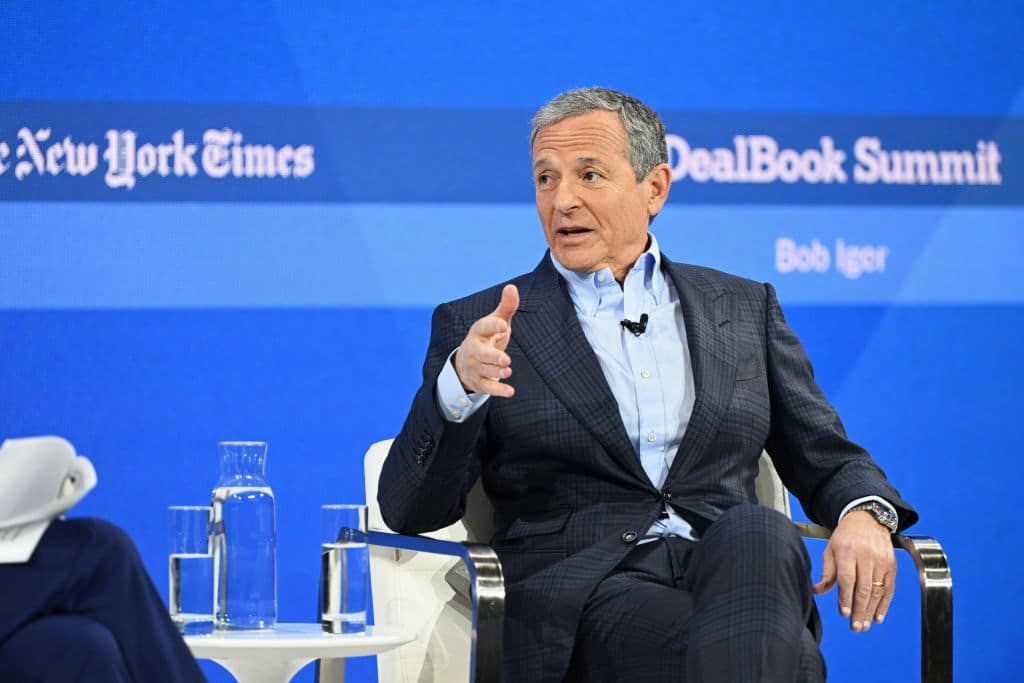
Bob Iger gave a long and detailed answer, which I’ll simply share in full:

“On the Abu Dhabi question, which is a good question, Stephen, because we did study the region very carefully and we know that we had many opportunities. Obviously, building a theme park in a location is a huge endorsement of that location speaks volumes in terms of the ability of that location to sustain the Disney theme park.
I should start really with an overview of the Middle East. It was very obvious to us that there were many people — basically hundreds of millions in the world that are income qualified where a trip to one of our six locations was pretty lengthy in nature and expensive. And so, we felt the best way obviously to reach those people is to basically bring our product to them.
Interestingly enough, as an aside, when we decided to build a cruise ship and put it in Singapore, which will not launch until the end of the year, we put it on sale just a few months ago and the first quarter sold out in a matter of days as a for instance. So there’s clearly a desire to engage consumers with Disney in a wide region that is actually distance enough from our other locations so that we don’t really view this as in any way cannibalistic to the places we already operate.
Then when you look at Abu Dhabi and the United Arab Emirates, I mentioned these statistics earlier today. We talk about it being at crossroads of the world, 500 million income qualified people live within 4 hours, 120 million people will come through Dubai and Abu Dhabi this year alone. Abu Dhabi estimates that 39 million tourists will visit Abu Dhabi by 2030, that says a lot.”

“Then as we started to really dig deeper into Abu Dhabi specifically and engage with our partners, obviously, capital was not an issue. But in addition to that, they’ve demonstrated a number of things that were really important to us. One, a real appreciation of quality and innovation and appreciation of the arts and creativity and a huge commitment to new technology. And we were impressed with all of that.
We also looked at what they’ve already built between the Louvre that’s already built, the Guggenheim which is going up and incredible other experiences, the architecture here as well. And everywhere we look, we basically were convinced that this was a perfect place for us.
And then in Miral, our partners, we immediately bonded with them in many respects, spoke the same language and basically, we both have a real appreciation of our history and our legacy, but moving forward and being forward thinking and innovating is also part of our basically our DNA.
And so, it was very, very clear to us that of all of the places that we could choose from, there didn’t seem to be any place that was better than this. And one of the reasons why I came together so quickly is because of how convinced we became, particularly after engaging with our partners that this was the right choice.”
Our Commentary
It probably goes without saying at this point, but Iger is a smooth operator and is obviously going to give a diplomatic answer. As a third party, I can cut to the chase and offer the more straightforward explanation: money.
As we wrote previously in Disney Parks in New Countries “Inevitable” when assessing this rumor and our decision not to dismiss it out of hand: “The difference with the UAE is that there’s a very realistic scenario involving one of the country’s sovereign wealth funds. They could have backed up a money truck to Disney and CEO Bob Iger might view this as one last big legacy project. Stranger things have happened.”
To put a finer point on it, here’s a dramatic reenactment of the original meeting between Disney and Miral:
The UAE has been focusing heavily on diversifying its economy from oil as part of a long-term strategy to reinvest its oil fortunes for the inevitable decline of the fossil fuel industry and its reserves. Kind of like how Philip Morris has invested heavily in other industries in preparation for a smoke-free future.
Or perhaps more aptly, how Disney was willing to operate Disney+ at a loss for several years. Remember all those quarters that they reported hundreds of millions of dollars to over one billion dollars in losses on the streaming side? All the while domestic theme parks overperformed thanks to pent-up demand, but still had projects cut or slow-rolled?!
Disney used the revenue generated by its theme parks and slowly-dying but cash-positive legacy businesses to build what they thought/think is the future of media. Jury is still out on the wisdom of that approach, but the salient point is that Disney lost billions of dollars on streaming for years in a gamble on its future.
It’s a somewhat similar story with Abu Dhabi’s Tourism Strategy 2030. The long-term plan is massive growth for the travel & leisure sector. That comes with an extreme willingness to spend money–and lose tons of it!–right now in the hopes that in the 2030s and beyond, they will see a massive boom.
They’re willing to invest tens of billions of dollars, with no real immediate ROI, as a gamble on the future. And Disneyland Abu Dhabi will be the marquee or flagship offering to that plan. If Yas Island were a mall, Disneyland Abu Dhabi would be the subsidized anchor tenant that gets well-heeled international tourists to book trips.

Despite theme parks & resorts being a growth engine, Disney is much more conservative with its own investments in the Experiences division (e.g. the ones made without other people’s money). There are no big swings or bold bets to speak of in the 10-year “turbocharged” plan.
As opposed to building brand-new theme parks in the United States, Disney is investing in new lands in the existing gates. And honestly, calling those new lands is a bit of a stretch–they are largely redevelopments of existing parcels of “underutilized” capacity to increase efficiency.
That’s why we’re seeing growth via cruise ships as the primary expansion avenue for new international locales. That model is more nimble and dynamic, and less risky than building physical infrastructure on foreign land. If the economy or political climate sours at one of the home ports of a Disney Cruise Line ships, relocation is pretty simple and fast.

So what’s different here that caused Disney to make such a bold and unexpected move with Disneyland Abu Dhabi?
It is not a big swing. At all. They’re spending other people’s money. Disneyland Abu Dhabi will operate under a licensing model. Miral will fully fund, develop and build the resort, and run its operations once the park opens. Disney provides use of its intellectual property while being paid royalties on that and everything else. Imagineering will lead creative design and lend its operational oversight and expertise to provide a world-class experience, while ensuring the complex meets brand standards.
Iger further elaborated during the Q&A: “We own our IP and license it to them is essentially the arrangement. We’re responsible for design and development and we will be involved significantly in oversight of their operations basically to ensure that the Disney experience going — meaning the Disney theme park experience is up to the level that we offer in the other six locations that we operate.
By the way, we’re not concerned about that at all. [Miral] has already demonstrated a commitment to quality in that regard. But this is essentially a license arrangement, but with considerable involvement of us. So although, they will operate it, we will have employees embedded in the organization with them to help them operate a Disney theme park basically at the quality level that everybody is used to.”

Disney’s new 10-Q filing confirms this: “During the third quarter, the Company and Miral LLC, a limited liability company organized under the laws of the United Arab Emirates (Miral), agreed to create a Disney-branded theme park and resort in Abu Dhabi, United Arab Emirates, to be built and operated by Miral.”
“The Company will license its IP for the operation of the theme park and resort and provide certain development and management services to the project. The Company will earn royalties based on the project’s revenues and it will also earn service fees. The Company will not provide capital for the project. The development of this project is subject to finalizing additional agreements among the parties.”
That filing still doesn’t provide complete details about the relationship specifics, noting that not everything has been finalized. Nevertheless, it’s our understanding that Disneyland Abu Dhabi will follow the Tokyo Disney Resort model, where Oriental Land Company (OLC) owns and operates the parks. During a couple of different interviews, this is the comparison that Iger and D’Amaro have made, while noting that each relationship looks a little different.

In other words, Disney is not providing any capital for the creation of Disneyland Abu Dhabi. Zero, zip, zilch, nada, nothing. This does not impact the development of any existing projects at Walt Disney World, Disneyland, or Disney Cruise Line that have been previously announced as part of the $60 billion ‘turbocharged’ investment over the next decade.
In fact, Iger reiterated twice during the earnings call that the company still has plans to invest more than $30 billion in its existing theme parks in Florida and California “to enhance those offerings, create jobs and support the U.S. economy.” Iger called this a “vote of confidence” in both Walt Disney World and Disneyland.
During interviews, both Iger and D’Amaro have suggested that the royalties generated by Disneyland Abu Dhabi could actually help directly fund expansion in Florida and California. “We saw where our potential park might go, and had some serious conversations about what this could mean to our ‘turbocharging’,” D’Amaro said.
Iger added: “What this deal gives us the ability to do is continue to invest the way we said we’re going to invest, particularly in the U.S., which will be job-creative, while also expanding our reach to part of the world that we’ve really only reached superficially. It’s a long trip to reach all of those other locations, and this will essentially put a Disney theme park in the backyard, so to speak, of a whole new consumer base. This deal made sense to us because of available capital, and continue to invest the way we talked about.”

From a guest-facing perspective, the Tokyo parks are pure Disney magic–arguably the purest form. The parks are paid for by a third party with deeper pockets (or at least more competent decision-making and resource allocation) and Imagineering is the exclusive contractor for design work.
Meanwhile, Disney oversees everything to make sure the parks are up to the company’s standards. The result is that the Tokyo parks are arguably the best managed in the world, with the highest standards and quality. It’s a win-win approach with much more accountability.
Disney earns royalties on all revenue generated at Tokyo Disney Resort. The precise agreement and amount of the royalties are not publicly disclosed in earnings reports by OLC or Disney, but were revealed to be 10% of ticket sales and 5% of in-park purchases in the 1980s. (It’s unclear whether there was a renegotiation for the second gate.)
The best case scenario is that Disneyland Abu Dhabi is more of the same–another Tokyo DisneySea. Even if it doesn’t approach that level of themed design, attraction quality, or operational attention-to-detail (and my guess is that it won’t–Japan is a different beast), it’s still a nice payday for Disney.

Whatever deal OLC might’ve gotten in the 1980s is probably not the same as the one Miral would get today.
The biggest difference is that Japan in the 1980s is not the same as United Arab Emirates in the 2020s. Disney is also a different company; a bigger one, with the resources to tackle more projects and without the need for cash flow to nearly the same extent. All of this is to say that I strongly suspect the UAE and Miral made Disney and Bob Iger an offer they couldn’t refuse (not in the mafia sense), with a sweetheart deal that made the company willing to overlook…well, let’s just say “a lot.”
So if you’re still wondering why Disney chose to build Disneyland Abu Dhabi over Disneyland Jakarta (or wherever), it comes down to money and risk. A ton of the former and none of the latter–at least, not in the financial sense. If one of the governments or sovereign wealth funds in another location where it might make sense to build a Disney park offered a similar deal, I would hazard a guess that Disney would likewise take it.
But in the absence of such a deal? Not a chance. It is simply too risky, and runs counter to the approach that Disney has clearly identified for its Parks & Resorts expansion plans. Even a business model more on par with Shanghai or Hong Kong, where Disney partners with a state sponsor (approximately) 50/50 on investments and income, would not be nearly as desirable at this moment in time.

Ultimately, the financial arrangement with Miral to build Disneyland Abu Dhabi should be viewed as a positive one for investments and expansion at Walt Disney World and Disneyland. This very clearly does not reallocate monetary resources from Florida and California to the international parks.
To the contrary, it could easily be argued that the cash flow from royalties (plus whatever upfront lump-sum payment, if any) can be used to help fund the domestic gates. It’s basically the exact opposite of the streaming services model! It’s entirely possible that the Miral partnership will be history ‘rhyming’ with what happened in the 1980s.
Back then, the partnership with OLC to create Tokyo Disneyland gave Disney a revenue stream to endure the early, rocky years of EPCOT Center, fund future expansion, and ultimately propelled the company into becoming the behemoth it is today. Looking back today, it’s easy to say Disney should’ve built Tokyo Disneyland on their own, but the contemporaneous circumstances and risks were very different.
Will we look back on Disneyland Abu Dhabi in 40 years and say it’s obvious that Disney should’ve bet big and spent the money to build it themselves? Possibly, but I doubt it–and it’s not like that’s an actual option in the here and now. The cost-free approach to a park in the Middle East is definitely the safest path forward for myriad reasons.

This is not to say there won’t be other, non-monetary costs of Disneyland Abu Dhabi. There are reputational risks, of course. There’s also the possibility that this doesn’t come to fruition, despite Miral having a superlative track record thus far with Yas Island–far better than graveyard of abandoned Middle East theme park plans.
The biggest cost might actually be in terms of talent. Imagineering has been rapidly staffing up in Florida and California just to handle the domestic projects already on their plates. Now within the span of a week, OLC has announced intentions for major expansion to Tokyo Disney Resort and now there’s the big reveal of Disneyland Abu Dhabi. Could Imagineering’s top talents be spread too thin? That’s a distinct possibility–and a topic we’ll try to tackle soon.
Need Disney trip planning tips and comprehensive advice? Make sure to read Disney Parks Vacation Planning Guides, where you can find comprehensive guides to Walt Disney World, Disneyland, and beyond! For Disney updates, discount information, free downloads of our eBooks and wallpapers, and much more, sign up for our FREE email newsletter!
Your Thoughts
What do you think of Disney’s decision to create Disneyland Abu Dhabi? Was this the correct financial decision for Disney, or do you still think they should’ve invested their own money to build a new park in Michigan? Should it cement Disney as a theme parks business, first and foremost, as opposed to a media company? Do you think we’ll see a new castle park in our lifetimes after Disneyland Abu Dhabi? Where is your dream location for a Disney theme park–either close to home or your favorite travel destination?



And yet Cast Members in Anaheim are still waiting for Anaheim’s Measure L pay back to be paid out. They have been waiting for 5 to 6 years as Disney kept delaying the court case set forth by Grace v Disney et al. The presented appeal after appeal delaying back pay and demoralizing Cast Members. Even as I write this Cast Members will not find out when disbursement will take place until May 20th. It seems by various sources that disbursement may not take place until 2026.
I think the reaction to this announcement has been fascinating. So many people seem to be lumping all Middle Eastern countries in together as if they were one homogenous blob. The UAE is already a very large tourist destination – and a large theme park destination – for visitors from all over the world, as well as the local population (most of whom don’t originate from the UAE). The UAE is hands down the most progressive country in the middle east, and it is moving in the right direction. It’s not perfect, sure, but developments like these are a positive step for both the UAE and other countries in the region and it’s right to recognize that. Meanwhile many other countries – including the USA – are going in a backwards direction, removing protections for minorities, women’s rights etc. I think we should all be conscious of our own countries’ flaws before jumping to criticize others.
I highly recommend visiting the UAE. Firstly, because you’ll have a good time, and secondly, because it will challenge many people’s preconceptions of the country.
Simon – so glad you had fun visiting a place built by modern slave labor. I guess you’re right – the fact that slavery existed in the U.S. until 1865 is absolutely the moral equivalent of what happens in the UAE today.
In fact, your comments that the U.S. is going backwards on women’s rights really resonantes with me – soon American women will have to abide by the current rules for women in the UAE: The UAE created “created a different set of rights, discriminating against women based on their religion, nationality, and where they reside. Women students attending some state universities face restrictions, including needing parental or male guardian permission for off-campus activities such as joining field trips or leaving campus accommodations.”
Nobody disputes that the UAE relies completly upon migrant workers. Here’s the same 2024 World Report by Human Rights Watch:
The UAE’s kafala (sponsorship) system ties migrant workers’ visas to their employers, preventing them from changing or leaving employers without permission. Employers can falsely charge workers for “absconding” even when escaping abuse, which puts them at risk of fines, arrest, detention, and deportation, all without any due process guarantees. Many low-paid migrant workers were acutely vulnerable to situations that amount to forced labor, including passport confiscation, wage theft, and illegal recruitment fees. Trade unions are not permitted, which prevents workers from collectively bargaining. The UAE still does not have a non-discriminatory minimum wage.
Well, I can’t wait to get my husband’s written permission and dash off to a country that still has slavery. So impressed with Disney’s progressive company policies!
Will Disney change their mind and build an 8th mini theme park in Singapore or Malaysia soon, with room for expansion depending on numbers?
Will women have to have their head and faces covered?
No. Women don’t have to wear head coverings. But women (and men) should dress somewhat modestly (i.e. don’t walk around in a bikini if you’re not on a beach) to be respectful of the local culture. Not all middle eastern states are the same; the UAE is one of the most multi-cultural countries in the world.
Bob Iger is the worst. It is all about money of course. This is one of the most undeserving regions for a Disney park. Gosh he just sucks.
Care to identify all (or any) of the reasons why you deem the region undeserving?
Disney has a lot of explaining to do. Florida’s Parental Rights in Education Bill has nothing on Abu Dhabi’s actual anti-gay laws based on religion. For all of Democrat threats to send Disney World to a Liberal blue state, Disney was rewarded a Middle East authoritarian country. Disney was founded in an American democracy that celebrates the beauty and accomplishments of America. Disney hasn’t honored its past since it built it’s last park in Communist Shanghai China. What’s sad is the continued deterioration of the USA parks. For every spectacular Fantasy Springs addition in Tokyo DisneySeas, the California Adventure gets a Stark Flightlab that’s merely a ride vehicle and no show scenes unlike Universal Epic’s Monsters Unchained ride.
because a bunch of rich sheiks backed several dump trucks full of cash to Bob Iger’s front door
Agree!
Tom, I know you’re not planning on returning to Shanghai anytime soon (and honestly, if my life circumstances even allowed me to, I probably wouldn’t either for the same reasons.) Assuming human rights issues are the same when this resort opens as they are today (acknowledging that they very well might not be), do you see yourself visiting Abu Dhabi Disneyland?
I’ll take a secular authoritarian country that raised millions of peasants out of poverty over an authoritarian theocracy that caters to rich douchebags every single day
That’s difficult to answer since we’re probably ~8 years away from an opening, but as of right now, probably.
For me, the big question is one of trajectory. Among countries in the Middle East, the UAE is the most progressive and is making strides with civil liberties and individual rights. There are still human rights violations, to be sure, but change does not happen overnight–especially in that corner of the world. I’m also cautiously optimistic with what I’ve learned of Miral and its leadership–but of course, they’d put their best foot forward right now.
As I mentioned in another comment, I strongly believe in Western values and that America’s greatest export is our culture. In these and other circumstances, cultural change does not occur when dictated from above–that’s a dangerous recipe for social unrest and upheaval. It requires generational attitude shifts, and often that occurs slowly and passively via exposure to outside media and brands. Obviously, censorship is common in the Middle East–but I’m not talking about things with overt messaging. (Silly as this all might sound, and a bit beside the point, but I’ve long felt that smuggling movies into North Korea, for example, was the most effective way to plant the seeds of revolution there. People underestimate the power of pop culture and the arts as conduits for change.)
We’ll see where things stand in ~8 years, though. Will further progress be made, or will there be regression (as can easily be argued has happened in China over the last decade). I certainly understand the outcry, and why others could be disappointed in this decision, view it as hypocrisy on Disney’s part, etc. I’m not condoning the decision or the rationale behind it–just my thought process. As always, YMMV.
Thanks, Tom, for the thoughtful response (I love the North Korea thought. It gets my revolutionary bug dancing.) I realized after that my comment might have sounded like me pushing you to put out a statement or to take a stance and I’m glad that you were thoughtful enough to ignore any accidentally pushy tone I may have had. Just genuinely curious.
“Among countries in the Middle East, the UAE is the most progressive”
In Israel you can be openly gay and women have equal rights.
It’s not hyperbolic to state that large, recent infrastructure projects in the UAE have been built using modern slavery. To me this is all a little unpleasant but at the same time I agree that for most consumers the UAE countries have been successful in whitewashing their reputations.
I would hope that Disney has built safeguards into its contract providing assurances that slave labor will not be used during the construction of this project. Perhaps that’s wishful thinking on my part, but that would be such reputational risk and explosive story that it would seem highly prudent.
Kind of crazy that we’re even having this conversation in 2025, though.
I’m sorry to say, Tom, but as someone who worked for a global company and spent 18-months covering the Middle East, I think @Geek’s assessment is dead on. The question of whether Disney should have built with their own money is irrelevant. Large projects like this move for certain local players in the UAE, and those arm’s length licensing agreements are what give global brands plausible deniability when human rights violations are raised. (Only the tiniest percentage of them are, because the government happily obfuscates and normalizes what is, without a doubt, slavery in the construction industry and many other blue collar and domestic fields.). Seeing how my organization accepted international acclaim as a leader in employee satisfaction while it turned a blind eye to physical and economic labor abuses in the UAE fundamentally changed my understanding of this globalized world we benefit from. It makes me sad to see a brand that brings me so much joy join the cash grab offered by the region, but it’s hardly surprising. The opportunity offers pure profit to the government, the developer/operators, and Disney.
That interview reminded me of the British chat show which once irreverently asked the question: “But what first, Debbie, attracted you to the millionaire, Paul Daniels?”
That said, I’m not sure someone else paying makes this a no-brainer. Disney exposes itself to the risks of:
– Incidents during construction
– Incidents/controversies during operation
– The risk of the park falling into disrepair and becoming abandoned
I wonder if the third risk might be a bit underpriced. Having spent a lot of time in the Middle East, abandoned grand infrastructure projects are their speciality. See: The World archipelago, Dubai ($15b in 2005, abandoned and sinking into the ocean); Doha which is full of abandoned skyscrapers with dusty windows.
You’re probably right about that risk being underpriced. I would imagine the thinking, in waiting this long and using an established name with a track record, is that the likelihood of that happening is significantly lower.
Still, Miral has only been around 15 years. They did endure COVID, but there haven’t been any “organic” economic crises since their origins, and I do wonder what another 2008 might do to the business and its funding. I guess if it happens soon enough, we might find out without the risk of the park falling into disrepair or abandonment–because it won’t yet be built.
Makes me wonder what kind of kill clause Disney has built into the deal…
Two thoughts. 1)I also don’t see how it can be a castle park unless the castle is the actual entrance. 2) The existing Yas island parks have excellent designs and some really good attractions, especially Sea World. But their operations are, frankly, pretty awful. Not even Six Flags level good.
So excited for this. Can’t want to see what it is, and better yet, can’t wait to visit. Every Disney park has been a joy to this point (have been to all 12) and no doubt this one will be too!
I don’t think we can evaluate this project without considering the geopolitical realities we find ourselves in. It’s not business as usual, the US is a hot potato and corporations are not only looking for stability in revenue streams, but players than hold stronger cards than they do with dealing this administration. UAE has made some very big moves along those lines, and is likely viewed as a US ally at a time when traditional alliances are under attack. This announcement reads to me as “Disney has opened an account in UAE,” the same as reports that many more Americans with means are opening Swiss bank accounts to deal with US financial instability. I don’t think this administration views Disney on friendly terms, and Disney is preparing for the inevitable comply / resist vengeance moment. I think Disney is trying to find Door #3. Seeking powerful protection against a regime that values protection rackets. Which is why the announcement is so unexpected, concept art is so generic, and details so thin. It’s not something that happens if the last few months weren’t what they’ve been, IMO. What, if anything, actually gets built is of lesser importance than the immediacy of needing to outrun others trying to outrun a rampaging bear. This evaluation explains why the deal makes sense for both parties to be partners, but ignores why it was necessary to find a dance partner in the first place.
Hope, sovereign wealth funds exist to invest large sums of capital with the expectation of at least a market rate of return on that capital. As Tom outlined, this could be a nice low risk licensing agreement for Disney. Those 2 facts make the project plausible strictly in terms of finance.
It just feels so sad that as a gay man who is a huge Disney parks fan, I will likely be unable to visit the newest Disney resort without completely masking a part of my identity, and certainly not openly with a partner. Hopefully that changes, as if the UAE truly wants to open itself to the world, it will need to eventually start actually opening up to the people in the world that don’t fit all their strict rules. Maybe more investment by culturally liberal companies will turn the cultural needle, but I’m not holding my breath.
“Maybe more investment by culturally liberal companies will turn the cultural needle, but I’m not holding my breath.”
This is another thing that I *hope* will be true, but I’m also not holding my breath.
A while back, Bob Chapek wrote this (in part) in a letter explaining why Disney hadn’t issued a statement in response to Florida legislation (he later reversed course, but that’s not really the point here):
“I believe the best way for our company to bring about lasting change is through the inspiring content we produce, the welcoming culture we create, and the diverse community organizations we support.
There’s a reason content is at the top of this list. For nearly a century, our company’s stories have opened minds, inspired dreams, shown the world both as it is and how we wish it could be, and now more than ever before, represent the incredible diversity of our society. We are telling important stories, raising voices, and I believe, changing hearts and minds.
Encanto, Black Panther, Pose, Reservation Dogs, Coco, Soul, Modern Family, Shang-Chi, Summer of Soul, Love, Victor. These and all of our diverse stories are our corporate statements—and they are more powerful than any tweet or lobbying effort. I firmly believe that our ability to tell such stories—and have them received with open eyes, ears, and hearts—would be diminished if our company were to become a political football in any debate.”
Again, I would like to think this is true. That America’s greatest export is our culture, which acts as a conduit for spreading the values of liberal democracy, and principles such as individual rights. This isn’t to endorse Disney’s decision to build this park or give them a free pass as a “net positive,” as I think the decision was motivated wholly by business interests and not being a positive force in the world. I would just hope there is a silver lining in this, and that it’s helping to facilitate the UAE continuing to open itself to the world, and striving to improve material conditions and culture.
Regardless of all that wishful thinking on my end, I can completely understand why so many fans, such as yourself, would feel uncomfortable visiting given the current reality.
Bob Chapek’s quote is nonsense. He’s basically saying Mickey Mouse decides morals; people should follow the Gospel of Mickey rather than the Gospels of Jesus. Anyone who thinks the humans of this world are wiser than God, especially when it comes to morality, is a fool.
One fact that’s been underreported today is that while Abu Dhabi lags behind Dubai in name recognition, flashiness, and “cultural cache,” this park is absolutely serving both cities/regions. They’re basically right next door to one another — as I’m writing this, one could drive from the center of Dubai to Yas Island in about 60 minutes. Which is about 10 minutes quicker than driving from the Bronx Zoo to Coney Island in NYC. Or, maybe more on point, from Dubai to Disneyland Abu Dhabi (DAD!) is about the same travel time as Universal Studios Hollywood to Disneyland.
However, I’m not sure I agree with the representation of this as a “castle park”. I think there will need to be SOME sort of castle-looking thing (per the vague concept art). But the idea this this park would follow a hub-and-spokes design with a castle as the centerpiece, and adding the same types of classic rides/experiences/ambience that have been duplicated in HK, Paris, TDL, Shanghai, DL, and MK, doesn’t really seem feasible for a park that’s going to be around 80% indoors and almost certainly space-constrained.
Maybe I’m defining “castle park” inaccurately, but starting with MK, then TDL, Euro Disney, etc. I understand the idea of a “castle park” as trying to recreate the template of the original Disneyland. Physical castle or not, I just don’t see that happening in Abu Dhabi. But I could be wrong!
I don’t see why they couldn’t replicate the castle in the center, hub and spoke design indoors. Yes, it would certainly be a *tall* building (although maybe not that tall if they go with something the size of California’s Sleeping Beauty Castle), but I don’t see why they couldn’t do it. More important, I think the castle is so tied to everyone’s expectations of visiting “Disneyland” that if they can’t really opt out of it at this point. It’s part of the Disney IP, if you will, and regardless of what parks fans feel the general public has made it overwhelming clear they expect a good amount of IP when visiting any park with Disney in the name.
I think it’s probably fair to define “castle park” in two different ways:
1) Any and all parks with castles
2) Any parks with the hub-and-spoke design (perhaps with or without a castle?)
My guess is that this will be #1 and try its best to approximate #2 with a largely indoor design.
I think structurally it will be a monumental challenge to create an indoor space wide and tall enough to feel expansive. The concept art almost hints at a giant glass dome, but I don’t think they’re gonna be able to go all “Truman Show” on this one, especially with the climate and oppressive sunshine.
Most likely, if this is built there will be a photogenic castle at the center of a large show building surrounding it, that’s also connected (via walkways, rides, people movers, etc.) to other show buildings. Maybe Shanghai’s castle (enormous, with two attractions inside) would be a model for this concept, which will need to be even larger in scale. One of the show buildings would probably be modeled on Mermaid Lagoon at DisneySea (haven’t been, but seen videos) with multiple attractions hosted within. Some of the larger Epcot pavilions, or even Las Vegas structures like the original Luxor (with a dark ride and other attractions) and Circus Circus Adventuredome could provide inspiration.
But to me, simply the presence of a castle doesn’t make it a “castle park”. Just like calling something “Sea World Abu Dhabi” doesn’t mean it’s anything resembling a traditional Sea World park — it’s just a huge indoor aquarium with theme park elements.
This park might well be wonderful, it’s hard to imagine a world where it’s listed alongside the existing castle parks without a giant asterisk. It’ll be a new take on what a Disney park can be, and that’s going to have to be enough.
Tom, do you think this will eventually be good news for some of the big expansion/replacement projects that have been announced for the domestic parks? Miral will want the best of the best as far as what Imagineering will be able to create, so they will pay big $$ to ensure their attractions are among the finest in the world… and that “brain share” will spill over to some of the new attractions we’ll be getting in the next 5 years? Maybe it’s the cart before the horse, and the attractions we’ll be getting are so far into development right now that the technology/ride experience has already been locked in… but maybe something like Villians Land or Avatar in DCA (still early in development) could be influenced?
I’m very excited and think it’s a smart play by Disney. The partners in that region will require something very impressive. Disney spent a lot of time wasting money for years. I’m glad they are focusing on different things now like building the best new theme park they can.
I hope some of the things they learn over there will translate back to America. People want to be entertained!
Easy peasy revenue stream with little risk. It is a no-brainer. And knowing the teams over there, they are going to likely hit this out of the park and have the best Disney park the world over. Perhaps it will light a fire under the asses of the domestic parks to get back to greatness. One can only imagine the prices that will be charged given the income in that area of the world.
This is depressing. It feels to me like Disney is finally, truly selling out on a global cultural scale; there’s something about this that just seems soulless in a way that no other theme park announcement from Disney ever has. As a lifelong US parks visitor, there’s nothing about this that excites me at all. Maybe I’m unnecessarily jaded?
@ Shrunken
You do not need to be jaded. This is business and has nothing really to do with the US parks. They need to continue to improve the US parks and get back the value/excitement they once had. That is the only thing you should be jaded about. The parks over-seas are not meant for North Americans to run to. They are to serve the region they are in.
I like the anchor tenant comparison. I’ve wanted to visit Ferrari World and Sea World Abu Dhabi but not enough to plan a trip there over other places. But out a Disneyland out there and now I’m definitely going someday.
I visited both earlier this year. Sea World is incredible. It’s a different type of park than the US ones – being almost entirely indoors (only the Manta coaster goes outside) but the theming is incredible and shows just what they can do if they have the imagination, ambition and cash to do so. Ferrari World was fun (even though I wouldn’t be able to tell one end of a Ferrari from another). The parks suffer from low attendance most of the time, but as Tom points out, they don’t have to make money for a while yet, it’s all about investing for the future. Operations are also a bit hit and miss, but hopefully that’s something that Disney can train them on and enforce. It’s a fun place to visit. I preferred Abu Dhabi to Dubai, as it was less ostentatious (but both are worth visiting). There is also a surprising amount of culture there as well, including numerous museums on Emerati history and culture, as well as museums such as the Louvre and (coming soon) the Guggenheim. I recommend tacking on a stay at a hotel in the dessert as well if the budget can stretch to it.