
Why Universal Ending Frequent Fear Express Pass at Halloween Horror Nights is Good, Actually.
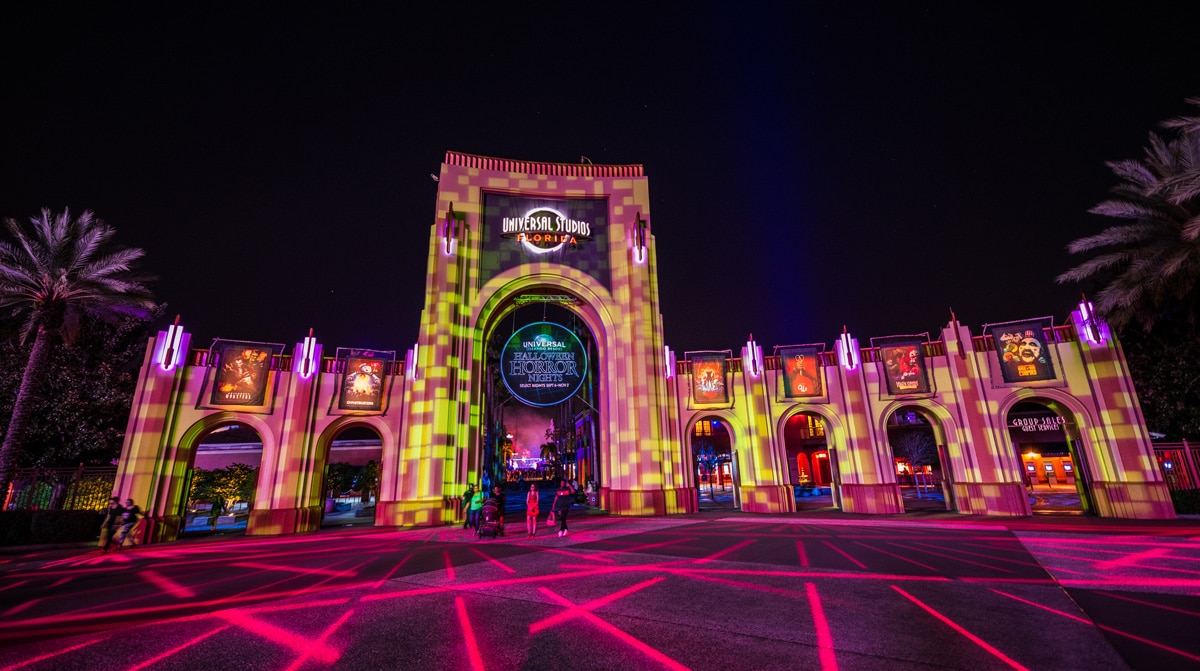
Universal Orlando Resort has ended Frequent Fear with Express Pass, the add-on that let passholders purchase line-skipping for the length of their multi-night seasonal Halloween Horror Nights tickets. This has been a highly controversial change, garnering a ton of backlash among the HHN faithful. While it’s undeniably bad for them, this post details the discontinuation and offers our commentary about why it’s a net positive for tourists.
Here’s the full statement Universal Orlando offered: “As we continue to evaluate our offerings in an effort to provide the best Halloween Horror Nights experience for all Guests, we have discontinued all Fear with Express Pass products. Other Fear pass options will go on sale soon.”
The change means that guests purchasing Rush of Fear, Frequent Fear, Frequent Fear Plus, or Ultimate Frequent Fear, which is essentially HHN’s version of a Seasonal or Annual Pass (colloquially/collectively known as Frequent Fear Passes), will no longer be able to add Express Pass for the duration of their HHN AP, as they did in previous years.
Most critically from our perspective, this does not impact standard nightly Halloween Horror Nights Express Passes. Guests attending HHN with a single-night ticket can still purchase a separate 1-night Express Pass, subject to availability. Standard Express Pass starts at $199 per night (although the cost for most nights starts at $220 and quickly eclipses $250), and includes one time line-skipping at all 10 haunted houses and participating attractions.
Halloween Horror Nights 35 runs select nights from August 28 through November 1, 2026 at Universal Studios Florida. Single-night tickets, Express Passes, and other experiences are currently on sale, while multi-night Frequent Fear Passes are expected to become available at a later date. Pricing has not yet been released for the multi-night Frequent Fear Passes, but it wouldn’t surprise us in the least if this is paired with a significant increase.

Our Commentary
Whereas I’m a Disney diehard, I’m much more of a casual fan when it comes to Halloween Horror Nights. I’m deep in the world of theme park news, so I’m cognizant of things like HHN speculation maps, but I don’t typically share my opinions.
Part of that is because I’ve learned that the HHN discourse is dominated by a vocal minority, whose views are unrepresentative of the park-going public. My opinions are more mainstream, and unlikely to be shared by the HHN diehards. As much as I enjoy arguing with people on the internet, it seems kind of pointless to constantly shout the fan community equivalent of, “Why are you booing me? I’m right.”
One unpopular opinion I have about Halloween Horror Nights is that the regular guest experience has been bad for the last several years now. Actually, that may not be unpopular at all. The fact that the power-users purchased the Express Pass add-on and are angry that they’ll be unable to do so in 2026 would seem to be a tacit admission of this.
The real unpopular opinion is that Universal needs to take drastic measures to reduce overcrowding and improve the standard guest experience, which will necessarily come at the expense of the aforementioned power users.
My recommended solution would be more drastic than Universal’s approach. On top of eliminating multi-night Express Pass, Frequent Fear passes should go up in price substantially, have more blockout dates, or lower tiers eliminated entirely.
Admittedly, my last year as a Frequent Fear Passholder was in 2022, and I’ve only attended HHN for single nights in the years since. Even in that final year of having Frequent Fear (and never a version with Express Pass), the ratios were absurd. It was common to see a more than 80:20 split in favor of Express Pass. My anecdotal observation in the years since is that it’s somehow only gotten worse. That is simply untenable.
As we’ve said countless times, queueing is a zero-sum game that creates winners and losers. What this means is that capacity is fixed and finite. Adding or removing Express Pass does not change the underlying capacity, only the allocation of that bandwidth. Moreover, if someone receives an advantage, that means someone else is disadvantaged. There is no magical system where everyone gets low wait times. A shorter line for one person means a longer line for someone else.
As with almost every other line-skipping system ever, Express Pass benefits the power-users that include frequent, experienced, and more knowledgeable guests. There are probably exceedingly few instances of that being more true than with Frequent Fear Express Pass, where a small minority of repeat guests were disproportionately utilizing line-skipping capacity, to the detriment of single-night guests.
What this means is that, in the past, a small number of Frequent Fear Express Passholders were inflating wait times for everyone else by virtue of their high line-skipping rates. This would impact both single-night Express Passholders and guests in the standby line.

If I were to share that opinion on HHN social media, I would be excoriated. But one thing I’ve discovered over the years in watching the HHN discourse as a quasi-outsider is that it’s distorted and skewed towards their biases and away from their blind spots. (It’s actually helped recalibrate my own perspective on Disney a bit!) Quite simply, it’s an echo chamber.
A prime example is the extent to which HHN has become an operational nightmare and poor experience from the standpoint of the causal guest not just being unrepresented, but not represented at all. They’ve experienced HHN exclusively via Express Pass, so they’re insulated from just how bad the regular guest experience has gotten. And bluntly, it’s awful.
Although on second thought, perhaps they do realize how bad the regular guest experience is, given the level of outrage over having to join the washed masses in the standby lines.
Hagrid’s Express Pass Removal Redux
We basically had a version of this conversation a month ago, when discussing Hagrid’s being removed from Express Pass.
Even before then, we’ve ranted about Express Pass wreaking havoc on wait times and the regular guest experience, especially at this trio of attractions with triple-digit averages. I’ve argued that Mine-Cart Madness should not have Express Pass due to its ongoing woes. That ride should’ve never gotten Express Pass, quite frankly.
This is less controversial with Mine-Cart Madness since no one has Annual Passes for Epic Universe and line-skipping is not included with hotel stays. The end result is that the power users simply do not exist, and their experience more closely aligns with that of the median guest.
The reality is that the majority of park-goers do not have Express Pass, and reducing its availability everywhere would be a guest-friendly change for them. This is because, quite simply, the most guest-friendly approach is standby-only. It’s the only approach that puts everyone on equal footing. (It’s also the one that’ll never happen because it doesn’t yield a revenue stream.)
I’ve long contended that both Disney and Universal need to do as much as possible to balance the interests of guests and preserve the experience for casual visitors who do not have access to line-skipping. As with ending Express Pass on Hagrid’s, that’s what Universal is doing here.
I’m sure it was a difficult decision and won’t just garner complaints among diehard Halloween Horror Nights fans, but also result in lost revenue. I’ve already seen countless screenshots of people cancelling hotel reservations and saying they’re out on HHN for 2026.

There is no question in my mind that Universal Orlando is going to lose revenue on this move in the short-term. The diehards are 100% correct when they say this is going to hurt Universal. That undoubtedly made this an even tougher move, but nevertheless the right one.
There’s a lot of cynicism about decisions that hurt the bottom line. Some fans are skeptical that Disney or Universal would ever do anything that cost them money, and assume there’s always an ulterior motive. This is not a bad baseline, especially given all of the guest-unfriendly moves both have made.
However, guest satisfaction metrics are also incredibly important! Things like intent to return or recommend, as well as overall satisfaction are critical. There are situations when both theme park operators will absolutely prioritize these metrics over spending! Hard as it might be to believe, they do factor in the long-term health of the parks and guest experience over just the sugar rush of quarterly revenue. Not always, but it does happen!

More Express Now Sales at HHN?
As with Hagrid’s, the cynical take here is that Universal will simply shift Frequent Fear Express Pass to standalone sales. They’ll sell more single-night Express Pass or add Express Now to offset the lost revenue. And I don’t doubt for a second that will happen to some degree.
It will not, however, even approach the utilization that Frequent Fear Express Passes had. This is obviously theoretical, but there’s an easy test for this. Will everyone who previously had Frequent Fear Express Pass now purchase Express Now at $25 per house as many times as they used line-skipping last year? Of course not! They will correctly point out that that would be prohibitively expensive to replicate their past behavior.
That’s the whole ballgame. It’s how you know there will be far fewer people in the Express Pass line. Because utilization will absolutely, unequivocally decrease–and dramatically so–with that limitation placed on it. I do not purport to be an expert on HHN, so I’ll refrain from predicting just how much smoother standby will flow, but based on what we’ve already seen with lower standby waits at Hagrid’s, I’m guessing it’ll have a measurable impact!

What We’ve Observed at Disney
Closer to our wheelhouse, we’ve seen a similar dynamic play out over the last couple of years at Walt Disney World. We discussed this phenomenon at length in Here’s Why Standby Lines & Lightning Lanes Are Moving Faster at Walt Disney World.
My strong belief is that the key is a lower utilization rate of the Lightning Lanes. This means that fewer guests are skipping the line, and are instead in the regular line (or doing something else entirely). This is why the standby lines are moving more fluidly and why wait times are lower–because fewer guests are in the Lightning Lanes and processing that backlog isn’t causing standby to come to a standstill.
Previously, standard operating procedure called for a roughly 80:20 ratio of Lightning Lane to standby guests at the attraction’s merge point. Meaning that for every one person admitted into the load area (or wherever merge occurs) through the regular queue, 4 people are pulled from the Lightning Lane line. This was the baseline–the ratio only gets less favorable for the standby line.

My experience in the standby lines over the course of the last 18 months has definitely not been that 4 people are being pulled from the Lightning Lane for every one guest from the standby line. Anecdotally, the ratio is now fairly close to 1:1. That’s one party from standby for every party from the Lightning Lane.
The underlying explanation for this is not Lightning Lane Multi-Pass or Single Pass having lower demand or sales than their predecessors. We’ve observed higher demand and more limited inventory for Lightning Lanes. Several attractions sell out several days in advance and have limited same-day availability, including some that never were difficult with the Genie+ system.
I’ve noticed this with regularity when field testing Lightning Lane Multi-Pass. The average guest (not you) is likely obtaining fewer worthwhile Lightning Lanes per day on an average day than they did under Genie. We’ve also heard this from readers, many of whom are high-knowledge guests who have done “worse” with Lightning Lane Multi-Pass.
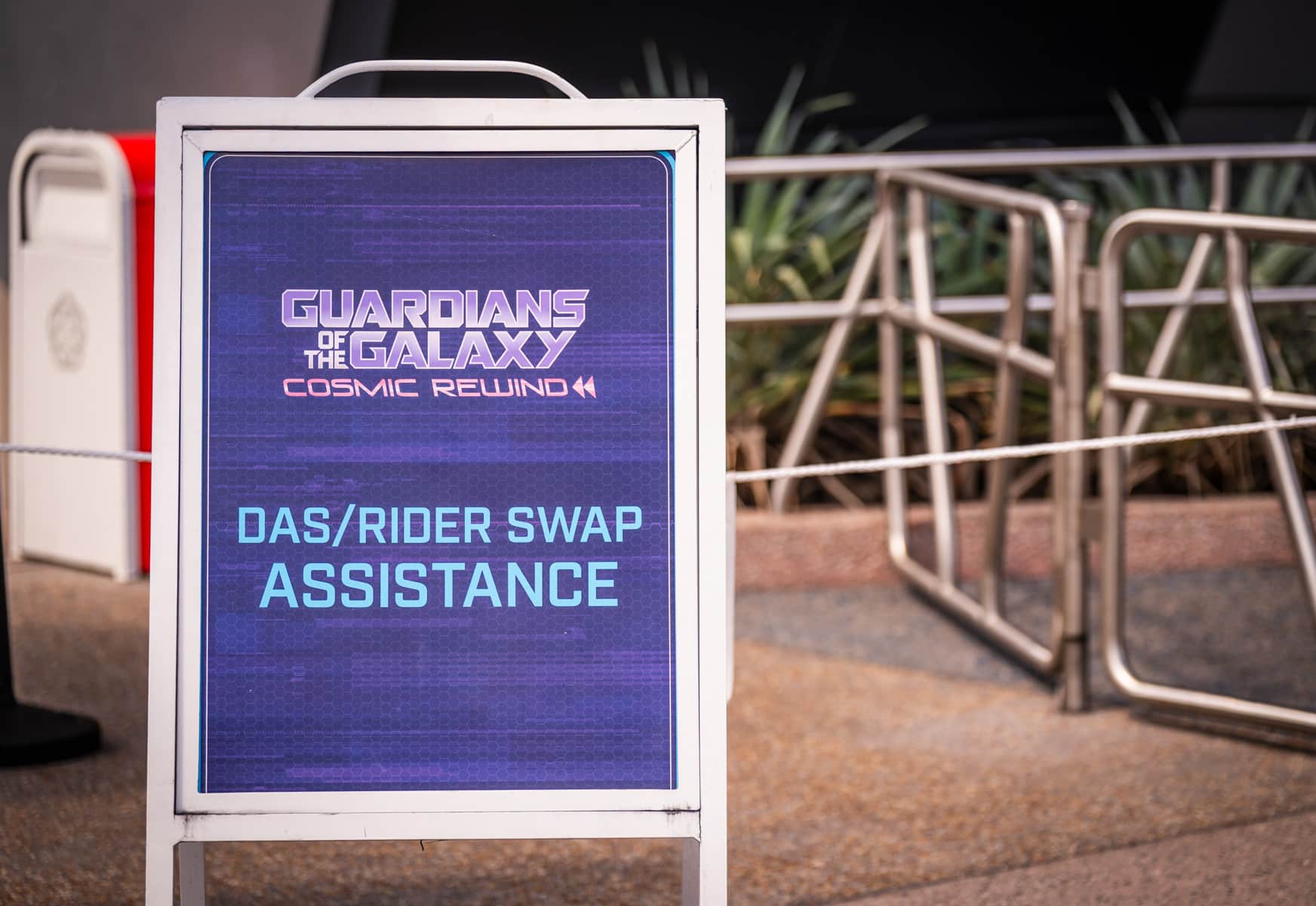
This isn’t occurring in isolation. It’s also happening alongside the overhaul of Disability Access Service to reduce abuse and misuse. This is what’s having the biggest impact on both wait times and decreased utilization of Lightning Lanes. Prior to those changes, DAS usage had exploded and outpaced paid sales of Lightning Lanes.
Disney has been sued over accommodations for disabled guests in the past, and these stats have come out during discovery and testimony. That trial revealed that DAS users experienced, on average, 45% more attractions than those without DAS. And that was under the old system that was harder to use and had less abuse.
Of course, the DAS overhaul is its own can of worms and none of this is a judgment about those changes. It is simply to point out that fewer Disability Access Service accommodations are being granted (which everyone can agree is true), and that means lower Lightning Lane utilization.

This is fascinating, because the DAS crackdown could theoretically yield the opposite: more Lightning Lane inventory. That was the cynical read on the rationale for Disney making the DAS changes. And yet, that has not been our experience. It’s as if two big dials are being adjusted at once, and both in the same direction.
That raises the question: if less inventory is being utilized by both DAS and paid Lightning Lanes, where is it going? The biggest winner is guests in the standby lines. This is precisely why regular wait times are shorter (and also, not longer for guests in Lightning Lanes). It’s our understanding that this was purposeful, as Walt Disney World wanted to better balance competing guest interests and improve satisfaction among the majority of park-goers.
Fans are understandably skeptical of this explanation, assuming there are always (ulterior) profit motives. And while Lightning Lane Premier Pass is a thing, this is mostly a story of guest satisfaction scores. We strongly suspect Universal Orlando is being motivated by the same when discontinuing Frequent Fear Express Pass.
Ultimately, we’ll come back to the underlying truth that capacity is finite and queueing is a zero-sum game that creates winners and losers. In this case, the losers are the power-users who were previously utilizing a disproportionate amount of bandwidth, and the winners are everyone else. It is unsurprising that those power-users would be upset to lose their advantaged status, but by definition, they are a small minority of all guests.
This change will be a net positive for everyone else. It’s potentially a significant improvement depending upon how well (or poorly) standalone Express Pass is able to sell at full price and just how low the balking point is for the regulars. Universal will almost certainly feel pain and suffer lost revenue this year, but the long-term health of the event and the likelihood of tourists to become repeat visitors should more than make up for it in the years to come. At least, that’s the bet Universal is making…otherwise they wouldn’t be ending the revenue stream!
Need trip planning tips and comprehensive advice for your visit to Central Florida? Make sure to read our Universal Orlando Planning Guide for everything about Islands of Adventure and Universal Studios Florida. Also check out our Walt Disney World Vacation Planning Guide for everything about those parks, resorts, restaurants, and so much more.
YOUR THOUGHTS
What do you think about Universal ending Express Pass for Frequent Fear? Should seasonal pass prices likewise be raised as a crowd control measure? Agree or disagree with my assessment? Any questions? We love hearing from readers, so please share any other thoughts or questions you have in the comments below!



I enjoyed reading this perspective. It’s easy to focus only on how a change affects frequent visitors, but you made a compelling case for looking at the overall guest experience. The discussion about balancing wait times and making the event more enjoyable for the majority gave me a different way to think about the decision.
I’m kind of shocked that they’re not rebranding to a new name with a highly expensive price tag that limits users but still yields a revenue stream.
(I’m impressed as a fan, *and* a believer in satisfaction leading to profits in the long run, but I’m shocked since Wall Street often doesn’t see a long run past six months.)
Tom thanks, I always love this sort of coverage. But as I’m way less plugged into the universal scene than you are I feel I’m missing out on some context here. Are there (Orlando locals?) who buy HHN annual passes and attend a dozen+ nights and use express on each house each time? And this happens at scale? I’m not opposed to the change here – like you I would like to see standby re-prioritized, and as I’ve said in other comments DAS bad actors were the worst of all. But I’m mostly surprised this rose to the level of a problem at HHN given I just don’t intuit that level of repeatability at the event. Also why doesn’t UO just add capacity by making many additional houses, and raise baseline prices to match?
This was a really interesting article. I would love to hear your thoughts on the issue of line-cutting at both WDW and UOR. That is, individuals who skirt by regular guests waiting in line under the adage that they’re “joining the rest of their group up ahead” or something else absurd. It’s a rampant abuse of the system and also detracts from the regular guest’s experience. I have yet to see a cast- or team member intervene when it’s happening. If one is waiting in line, does that give them license to hold a virtual spot for 3 or 4 others to jump in front of everyone else? I don’t think so but would like to hear an informed opinion.
They’re an entry on this list: https://www.disneytouristblog.com/worst-guests-disney-world/
Honestly, though, I don’t think the impact on wait times is all that measurable. It’s one of the things that you notice when it happens because you’re visibly seeing it, and it’s frustrating. But I’d be surprised if line-cutting is adding more than 60 seconds to the average wait time.
The actual line-skipping services offered by the parks themselves have a much bigger impact on standby waits. By orders of magnitude.
As an out of state HHN fan, I am so relieved. We are only able to attend two nights a year during a short trip from Texas that requires flights and hotel stays. After the first year, we have always bought Express (once did and RIP -it wasn’t for us). The Express lines were insane in 2024 but a little improved in 2025. We also maximize time by doing stay and scream. But we are getting older and can’t tolerate 1.5 hour long lines as well as we used to so we pay the extra money to squeeze in as many scares as our bodies can handle for the night. This will hopefully allow us to move through the event a little quicker to allow our feet and legs more rest between nights.
I would assume your perspective is a fairly common one, voices like yours just aren’t as loud in the HHN community.
Express Pass still exists for anyone who wants to pay the extra. While that’s too much of a splurge for me, I don’t begrudge anyone willing to spend the $200+ per night to bypass the lines. Where I think the problem exists–and this is true of Universal writ large–is the power users who essentially get a bulk discount on dozens if not hundreds of line skips. Express Pass included with APs and hotel stays is great for those who have it…and awful for everyone else.