
Buying DVC Directly vs. Resale: Math & Benefits

If you’re debating Disney Vacation Club, you might’ve heard that it’s cheaper to purchase via the resale market than directly via DVC. You might be wondering whether there’s a catch to saving so much money, as there’s no such thing as a free lunch. This unbiased comparison does the math and helps you determine which route is better.
The “unbiased” part of this is important. As always, we’ll be honest with you: we bought DVC via the resale market, but Disney Vacation Club absolutely is not for everyone. That’s the first point that it’s critical to understand. Disney Vacation Club has emotional marketing that tugs at the heartstrings and makes the decision seem like a no-brainer. It really isn’t.
The second is that there’s no one-size fits all answer to this question of DVC resale vs. direct. Both Disney and the big resellers put tremendous energy and marketing budgets into, ahem, persuading people that they are the best route. In fact, there’s a good chance this is the only comparison you’ll find on a website that is not sponsored by a reseller (or directly on a resale website). A reseller sponsoring a post about DVC resales vs. direct is about as unbiased as Philip Morris sponsoring a study about the health benefits of tobacco!
With that out of the way, let’s dig into the considerations. First and foremost, this is NOT simply a math problem. Disney Vacation Club resellers oversimplify this decision by comparing their per point costs to those directly from DVC. And in that case, the DVC resale market wins by a wide margin. That’s fairly indisputable.
It’s also incredibly reductionist. For starters, you might have heard about resale restrictions. Anyone who purchases DVC resale contracts for the original 14 resorts at Walt Disney World, Disneyland, and 3 stand-alone locations will only be able to use their points at those 14 existing resorts.
Unlike the last restriction that prevents resale buyers from using their points on certain non-DVC products (which was totally meaningless because Members should rent out their points and pay for those experiences out of pocket since they are such poor uses of DVC points), this restriction does have an impact.

Non-Monetary Value of Resale Restrictions (or Lack Thereof)
In other words, resale buyers who purchase today will not be able to use their points at at Cabins at Fort Wilderness, Disney’s Riviera Resort, and Villas at Disneyland Hotel. (Island Tower at the Poly and Big Pine Key at the Grand Floridian are not subject to these restrictions since they’re part of existing condo associations that predate the 2019 changes.)
On top of that, DVC just confirmed via a filing with Florida that Disney Lakeshore Lodge will also be subject to the resale restrictions. It’s safe to assume that whatever else is built after that will likewise be subject to the resale restrictions.
Back when these resale restrictions were implemented in 2019, they didn’t seem like such a big deal from a usage perspective. All prospective purchasers were forgoing was one resort, while still having access to the 14 legacy resorts.

The DVC resellers will reassure you that the 14 “legacy” Disney Vacation Club resorts are in literally all of the prime locations at Walt Disney World. Disney Vacation Club has been added to every single monorail resort, and has nearly full coverage at the resorts near Magic Kingdom, EPCOT, Hollywood Studios, and Animal Kingdom.
They’ll contend that DVC has exhausted all of the ideal add-on locations and is building resorts on parcels of land that are far from ideal. In other words, any new resort at this point will be located on “the leftovers” and have to use some other hook to lure members away from the legacy resorts.
As of 2026, the resellers are right. We can signs of this in Riviera with the Skyliner and Lakeshore Lodge with its lazy river. The thing is, you’re buying into DVC over the long-term, not as a snapshot in time. At risk of stating the obvious, the status quo and the future are not the same. You need to make some educated guesses about what DVC will be like 25 years down the road, and how valuable or useful your membership will be then!

When Disney Lakeshore Lodge opens in Summer 2027, the number of legacy resorts will have already increased to 4 vs. 14. That still seems pretty favorable to resale, until you realize that 4 resorts at Walt Disney World expire in 2042. That no longer feels like a distant future when flying cars will be whizzing by overhead. It’s only 15 years away!
Regardless of what happens with DVC’s ticking 2042 time bomb, we are very confident those resorts will not be resold or extended without resale restrictions. So if you swing those 4 resorts, it’s suddenly 8 vs. 10. Or potentially an equal number of properties once accounting for the non-Disney locations (it’s more likely those will be sold off and become non-Disney hotels, though).
This assumes that Disney doesn’t build any new DVC resorts between now and 2042, which is utterly improbable. If there’s one thing the last couple of decades has taught us, it’s that the DVC beast has an insatiable hunger and must be fed with new resorts. If you’re contemplating even a 20-year time horizon, it is extremely likely there will be more resorts with resale restrictions than without!
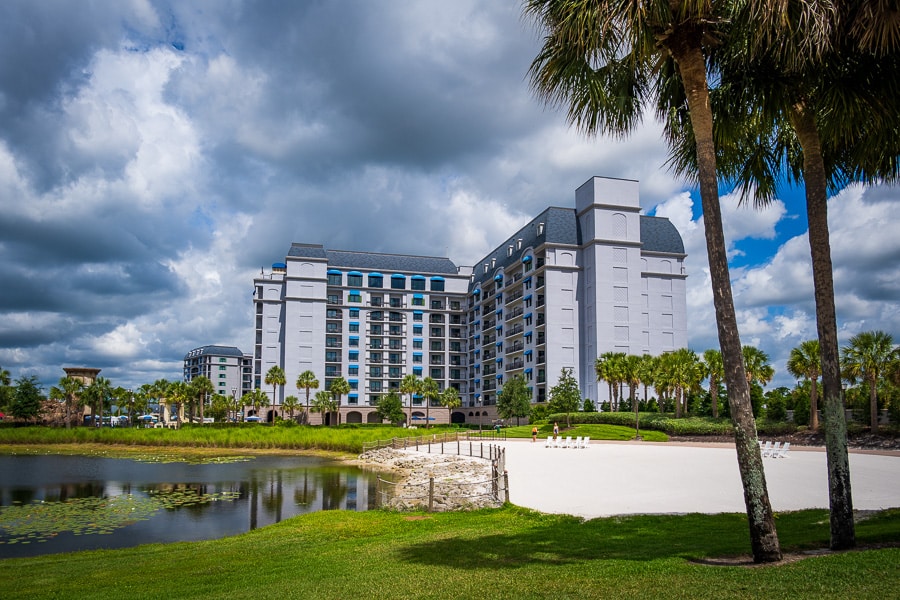
Moreover, buyers who purchase points for those resorts via the DVC resale market will not be able to use their points anywhere else. This is very restrictive, and should alone make buying these newer properties from the resale market a non-starter unless you are 100% sure that’s the only place you ever want to stay.
Even if you’re comfortable with that, you should also consider the possibility that you might someday want–or need–to sell your DVC contract. That resale restriction could significantly impact its value down the road.
This is just the latest restriction in a series made to discourage resale purchases and encourage prospective buyers to purchase directly from Disney Vacation Club. The other big one is more significant from a usage perspective, and muddies the waters on the math of DVC resale vs. direct.

Non-Monetary Value of Membership Extras
Several years ago, Disney Vacation Club implemented another rule change that new DVC Members who do not purchase their ownership interest directly will not have access to “Membership Extras,” such as exclusive Member experiences and discounts.
At that time, Disney’s explanation for the move was that it’d be a “very positive step to ensure that, going forward, our Members who purchase directly from Disney Vacation Club receive a premium advantage — in addition to all the magic that Disney has to offer.” From Disney’s perspective, this move makes sense.
However, let’s call it what it is: a protectionist attempt to reverse the trend of declining direct sales. It was motivated by the desire to offer a “premium advantage” to those who purchase directly from Disney to the same extent that a bear’s love for salmon is motivated by the US crude oil market. Which is to say, in no way whatsoever.
This resale restriction hurts current owners by virtue of decreasing the value of their contracts–the only benefit here is to Disney. It’s another way to push potential customers who are aware of the DVC resale market towards a direct purchase.

In this era of information, it’s much easier to quickly gain perspective with a quick Google search (just look at the comments from readers on our Disney Vacation Club Buying Guide who found it after hearing the sales pitch).
This is something with which timeshare salespeople did not have to contend in the 1990s. There no highly visible Disney Vacation Club resale market allowing for easy price comparisons, nor was there in-depth financial analysis of timeshares online.
It was much easier for potential customers to get caught up in the sales pitch without the counter-balance of the actual monetary implications of the purchase, and blindly buy. (Fortunately, in the 1990s, DVC was an unequivocally good deal!) Free access to this information has undoubtedly made selling timeshares more difficult, even for Disney Vacation Club which offers a premium that avoids many of the pitfalls of traditional timeshares.

As an existing DVC Member, I can’t really complain. Disney’s practices including right of first refusal (ROFR) and price increases safeguard the value of our contract, preventing it from becoming a money pit like other timeshares. Not only that, but new resale members not having access to certain Membership Extras makes them less crowded and competitive.
Moreover, the market value of our contract at Saratoga has actually increased in the years since we made the purchase, despite the restrictions. That’s remarkable given that it’s duration-limited with the end date now ~20 years closer.
The question is whether Disney’s restrictions on Membership Extras or resort usage should make those considering Disney Vacation Club look at a direct purchase instead of one via resale. For the purposes of brevity, we will assume you’re going to make a purchase one way or the other, and will thus overlook the threshold question of whether it’s a smart purchase to begin with. (Again, maybe not!)

Value of Membership Extras If Buying DVC Direct
Let’s turn to Membership Extras, starting with the main one: discounted Annual Passes at Walt Disney World. Here are the Walt Disney World Annual Pass options for 2026:
- Disney Pixie Dust Pass – This is the lowest tier pass for Florida residents costs $489 plus tax.
- Disney Pirate Pass – This is the next tier up for Florida residents only, costing $869 plus tax.
- Disney Sorcerer Pass – Available only to Florida residents or eligible Disney Vacation Club members, costing $1,099 plus tax.
- Disney Incredi-Pass – The top tier with no blockout dates, and is the only tier of AP available for anyone to purchase, including non-Floridians and non-DVC members. It costs $1,629 plus tax.
Disney Vacation Club members being able to purchase the Sorcerer Pass is absolutely huge, which you can only do if you buy direct from DVC. It essentially amounts to a $530 savings per person if you don’t need or want the AP with no blockout dates. For most members, that should be an easy call–the Sorcerer Pass offers much better value for money.
Of course, this assumes you want or need an Annual Pass in the first place, which is a bold assumption and not true for most Disney Vacation Club Members. But if it is the case for you, that $530 per person savings is going to be significant. (It’s worth noting that the Sorcerer Pass is blocked out around the weeks of Thanksgiving, Christmas and New Year’s Eve; otherwise, there are no material differences between the two tiers.)

While this AP discount is far and away the largest Membership Extra that has an ascribable value, there are plenty of other perks. This means no DVC dining discounts, no shopping discounts, no access to Star View Station, Top of the World, McKim’s Mile House, and Journey into Imagination Lounges, and no admission to Member events, like the Moonlight Magic Parties. (Here’s a list of all perks for Walt Disney World.)
It’s unwise to factor dining and shopping discounts into any math for two reasons. First, many DVC Members have access to these same or better discounts via other means (Annual Passes, Disney Visa, etc.) Second, you need to keep in mind that all of these are incidental perks that are subject to change. (Speaking of which, Annual Pass sales were suspended for a few years, so no one was receiving that benefit!)
Disney itself states as much: “You should not purchase…real estate interest in a Disney Vacation Club Resort in reliance upon the continued availability…[of] Membership Extras…These incidental benefits are subject to change or termination without notice…” (This is Disney’s way of trying to rebut any reliance upon the perks as inducement for entering into the contract; if DVC guides make explicit representations as to the perks, such that the perks are selling points, they aren’t quite so easily “disclaimed away.”)

Honestly, this is a “do as I say, not as I do” kinda thing because we get a lot of value out of the incidental benefits.
We use the lounges in Magic Kingdom, EPCOT, and Disneyland every single day we’re in one of those parks. It’s nice to have a reprieve from the crowds and “free” (air quotes) refreshments, a place to charge our devices, etc. We also attend at least one or two Moonlight Magic parties per year, and some of our best Disney memories are from those exclusive events.
I would never claim the dollar value of those things is remotely on par with the premium pricing for DVC directly–the rational side of me knows better. But the emotional side can’t help but think that I’d miss those perks if we didn’t have them, and there’s certainly an emotional component to buying DVC in the first place, or visiting Walt Disney World regularly, for that matter!

DVC Math: Resale vs. Direct Purchases
The subjective vs. objective debate seems like as good of a place as any to pivot and talk dollars and cents. Following the 2026 price increases, here are current per point costs directly from Disney Vacation Club:
- Animal Kingdom Villas: $215 per point
- Aulani, Disney Vacation Club Villas – $243 per point
- Bay Lake Tower – $275 per point
- Beach Club Villas – $275 per point
- BoardWalk Villas – $240 per point
- Boulder Ridge Villas – $215 per point
- Cabins at Disney’s Fort Wilderness Resort – $243 per point
- Copper Creek Villas & Cabins – $255 per point
- Hilton Head Island Resort – $165 per point
- Old Key West Resort $215 per point
- Polynesian Villas & Bungalows – $243 per point
- Saratoga Springs Resort & Spa – $215 per point
- Riviera Resort – $243 per point
- Vero Beach Resort – $150 per point
- Villas at Disney’s Grand Californian Hotel – $330 per point
- Villas at Disney’s Grand Floridian Resort – $265 per point
- Villas at Disneyland Hotel – $248 per point

On average, resale prices are 40% to 60% off direct prices. In dollars, this is often a difference of $80 to $140 per point. Obviously, that’s a fairly significant spread!
There are a few big exceptions to that, such as the Grand Californian (which is also very expensive via resale and only offers around 25% off as a result), as well as the Polynesian and Grand Floridian, both of which are only around 33% off.
At the other end of the spectrum, the resorts located away from theme parks have deeper discounts–but also, higher maintenance fees and lower demand. We would never recommend buying at Hilton Head, Vero Beach or even Aulani unless you’re 100% sure those are exactly what you want, and where you plan to stay at least once every 3 years during the decades to come. Even then, you might be making a mistake–that’s true whether you go resale or direct. But that’s a different subject for a different day.
Whenever we do this math, our favorite example is Saratoga Springs–because that’s where we own. But these numbers are fairly comparable for most of the resorts. Saratoga Springs currently has an average resale price of $99 (versus the direct price of $215), making it 55% off via the DVC resale market!

Many first-time buyers opt to purchase between 150-200 points, which allows them to stay at most resorts for a week or two each year in a Studio or 1-Bedroom Villa. Even though it’s at the lower end of the spectrum, we’ll use the 150 or 200 point level because we view that as a good entry place into Disney Vacation Club.
Given that, a Saratoga Springs 150 point contract directly via Disney would cost $32,250. If you did opt for 200 points, it’d be $43,000. By contrast, the resale cost would be ~$15,000 for 150 points or $20,000 for 200 points.
With those numbers, you’re saving over $17,000 on the initial purchase price by buying resale. That is, of course, assuming the higher per point resale cost and that you “only” need 150 points. The higher you go, the more you save–both on a per point basis and total dollar amount. You can fairly easily save over $20,000 on 200 points by buying via resale. And that’s not just at Saratoga Springs–it’s pretty much across the board!

In order to recoup that savings, you would need to purchase 4 Annual Passes at the current discount levels for ~10 years. Again, this assumes you need APs in the first place. If you do and you’re a family of 4, there’s a decent chance you also need more than 200 points! (Another factor is that Walt Disney World has been offering more and better ticket deals to the general public, undercutting the value proposition of APs in the first place for non-locals.)
This still is not an apples to apples comparison. In the case of buying resale, you’re saving that money on the initial purchase price, rather than over the course of time. If you are financing your purchase (something we do not recommend with Disney Vacation Club), you should always take the upfront savings, and buy via resale. The interest on the difference in the purchase prices will negate any long-term savings. So stop reading–there’s your definitive answer.
If you’re paying cash, the decision is a bit more difficult. One thing we’ve repeatedly stressed on this blog–and by far the most overlooked element of calculating the true value of Disney Vacation Club–is the time value of money, or the principle that money at the present time is worth more than the same amount in the future.

The earning capacity of today’s money makes it worth more than the same amount in the future. Think about it this way: if you had $17,000 in your hand today, you could place that money into a low-risk investment and have significantly more in 10 years, which is the timeline of your AP savings.
Large portions of the initial investment in Disney Vacation Club could be invested in other ways if you were instead paying for your room each year as you vacationed. In the first year you’d earn $850 on that $17,000 assuming a 5% return. That’s simple math without compound interest. In actuality, the return increases with each subsequent year the money is invested (and a 5% return is pretty conservative).
This is one reason why the purported savings claimed with Disney Vacation Club are dubious. Of course, it’s a big assumption that people will invest money instead of purchasing DVC. It’s fair to say that for most people, it’s either buying DVC or spending the money they could use towards the initial purchase price some other way.

So, where does that leave a decision to purchase DVC directly or via resale? If we were in the market for Disney Vacation Club today, this would be a tough decision. I really hate the idea of forfeiting the AP discount and other Membership Extras, as many people will derive value from those.
I’m also concerned that going forward DVC will actually increase perks to help bolster sales and draw a greater distinction between direct and resale purchases. We do love those incidental benefits. Those intangibles add to the emotional value of DVC, which is a relevant consideration with all things Disney.
On the more objective side of the ledger, there are the resale restrictions for reservations. Currently, this only blocks prospective purchasers via resale out of a handful of properties, but that number will continue growing. Disney Vacation Club will undoubtedly announce another addition after Lakeshore Lodge comes online in Summer 2027, and there will be a fairly seismic shift in 2042. That’s worthy of serious consideration given the time horizon of membership.
On the other hand, direct prices are nothing short of excessive and the gap between the two is growing. And since the whole point of Disney Vacation Club is to save money and lock-in lifelong Walt Disney World or Disneyland vacations as inexpensively as possible, a strong argument can be made for buying via the DVC resale market.
If we’re being rational, which is necessary when it comes to any $15,000+ purchase, taking the upfront savings wins out for most people debating DVC resale vs. direct. Just the ability to invest the spread means you’ll probably come out ahead on paper.
But it’s a much closer call than the numbers alone suggest, and surely is not a slam dunk decision in either direction. Over the years to come, the scales are only going to tip further in the direction of purchasing directly as that 4 vs. 14 resorts allocation starts shifting in the other direction, and likely reverses completely by 2050.

One final caveat is that the large upfront numbers make resale look like a slam dunk when doing a surface level analysis, but one thing you should note is that these are a small fraction of your total outlay over time. If you were to amortize the upfront cost over the life of the contract, you’d see that maintenance fees actually are the far greater expense.
This is the first time we’re mentioning maintenance fees since they aren’t really relevant to this comparison since they don’t vary for resale vs. direct, but they are worth taking into consideration. Personally, I think the subjective case for buying direct gets stronger with such an amortized outlook on the upfront cost plus maintenance fees.
In so doing, the all-in cost differential closes, whereas the long-term value of the membership extras and lack of resale restrictions increases. That’s just me, though, but it should nevertheless underscore that there’s nothing simple and straightforward about the math on DVC.
If you’re thinking about joining DVC, be sure to read our Ultimate Guide to Disney Vacation Club. This covers the pros & cons, resale v. direct, how much money you’ll save, and other important things to know before taking the plunge. If you still can’t decide whether membership is right for you, “try before you buy” with the recommendations in How to Save BIG on Deluxe Disney Accommodations Renting DVC Points.
Your Thoughts
If you’re in the market to purchase Disney Vacation Club, what do you plan on doing in light of these new restrictions? Do you agree or disagree with our assessment? If you’re an existing Member, what do you think? Share any questions, tips, or additional thoughts you have in the comments!






At my age I’ll stick with just taking trips to WDW and get the best rate we can at whatever Deluxe Resort – and for us, nothing beats the Dolphin for price and location as Epcot is our favorite park (but we will look into the DVC rental store next time, but often they can’t accommodate 7-8 day stays).
That being said I do have a question: How could you go direct through DVC and still get a home resort memberships on resorts that are no longer listed? As of today (Aug 4, 2026) on the Cabins, Poly Villas and Rivera are listed for WDW – If others are available (Saratoga Springs) they don’t show up as an option online. Thanks
Tom, I would like to know your take on buying the “minimum” direct from Disney points (which I believe is currently 150 points) to obtain Membership extras as well as adding on resale points at one or more of the 14 legacy resorts. In doing so, one can experience the benefits of both direct purchase AND resale savings at a lower initial cost.
Tom, this was a fabulous article. We bought our DVC points direct from Disney, twice!…. and my husband is a financial advisor. He calculated some of the “invisible”benefits, like all the ones you mentioned, and we are still happy with our choice. (We like the membership extras), and trying all the different resorts.
However, I have two sisters who are seriously considering buying DVC points resale, and I have encouraged them to do so, because the upfront point cost is so high! But now, I will share your thoughts/article with them. I just want them to be informed.
Great article! We have owned DVC since 1996. It was way cheaper back then but so was our house. Actually our recent purchase of Polynesian Tower was less than $200 per point…look at those resales in the $180 or so per point (plus $500 fee, plus much higher closing and no benefits). Member fees make a huge difference as well. It does pay to dig down and compare every cost with this purchase.
We have stayed 7-14 nights a year (sometimes lots more since we gift) in all size villas at almost all the resorts. I am confident we would have paid LOTS more if we booked through WDW. My point is don’t assume either direct or resale is the best buy. Do the math AND compare resorts. Buy where you want to stay (more important now than ever).
As a local tto Florida, the savings on an AP are a moot point as we get Florida resident discounts. That and the ease of going to our DVC resort on a spur of the moment , makes resale the way to go for us.. Btw I just added 200+ Saratoga Pts at 94$ per point. Great site, very thorough, thanks for taking the time to do this…
So if you buy via the DVC Resale store, and can also add points later on? Or do you do that direct with Disney ? It’s confusing
How does this affect legacy DVC members – who purchased in the 2000’s and have the “blue card”? Those contracts still get all the perks, so that isn’t factored in to adding another contract resale. Would you buy resale if you already had the perks on a previous contract?
This may be too long and Boring … feel free to disregard
Firstly let me share our position, we bought resale, Saratoga Springs, 316 points and the actual price when I took into account prepaid dues, banked points was c$99… since then we have paid 2 lots of dues… and stayed for a total of 32 nights at OKW, Animal Kingdom (Savanna) in 2 bed villas, we have just booked GF/BLT (Contemporary ) for a further 10 nights this Sept/Oct.. we are from the UK.
if I do simple maths that was an initial saving ($210 direct v $99) of $35,076… ok we all pay the same Dues, so ignore that… we have averaged 18 months apart on trips…. But if I cast forward and add next years dues. I have actually paid (for accommodation) $38,464 for 42 nights. So $916pn. Interestingly I did each time look at the cost of the2 bed villas we booked on the Disney web site .. at the time of booking … and each time the cost was c.$17000…. so like for like I am kinda even…. crucially if I sold the contract today for lets say $70 … I would recoup $22120… so the cost of my 42 nights would be c $16344.. or $389.. all this is a “back of a fag packet” maths … but you get the drift… ?
For the 18 month user of more than 200 pointsthe benefits are clear and financially obvious, at least to me..
Let me just add one point about the 2042… yes that will be a thing … probably… but my contract… ends in 2054(I think) which is 12 years… and if my poor unfortunate family has to suffer of 6-8 trips to Saratoga (remember OKW has extended contracts).. I’m sure they will cope…
However for jokes what would the maths look like by 2042.. assuming that the maintenance increases by 4% annually ….and I have averaged 16 nights every 18 months..
My cost per night would be about $465…. if I then sold my contract for $0…..but assuming the same value of inflation what would the direct value of DVC points be? $390? so what price for a restricted 12 years? 20%/10%. … if 20% then $77….. no. 10%. $39.. ok so I could possibly recoup $12000…. so my cost is now $400 per night for a 2 bed villa for 16 nights every 18 months….
Take from this what you will … or indeed nothing
forgot to add…. love the “welcome home” bit… and even though I need to spend more than the usual $3000 to see any real value .. feel a bit like a second class citizen as such have consider shelling out $32000 for the required 150 points direct to get those benefits… then I tell myself not to be stupid … will no doubt again think it might be a good idea, and so I loop around again
As you correctly point out, we are getting closer to the point where the resale restrictions are a “big deal”— even in legacy resorts.
In the end, this will affect the demand and pricing of resale. It does make resale less desirable, the gap between resale and direct will grow.
And then the question of, “are you willing to be locked into 1 resort/limited resorts?”— It’s a question of your price. If the price gap is significant enough, if the resale points are 40% cheaper.. or 50% cheaper.. or maybe 65% cheaper… are you willing to accept a single resort versus “all resort” flexibility.
Those who have been around a long time think of direct and resale as the same product with some limitations. Today, they are truly just different products.
“Those who have been around a long time think of direct and resale as the same product with some limitations. Today, they are truly just different products.”
Bingo. And I feel a lot of the analysis out there isn’t just biased or conflicted, but it’s also outdated. It’s not 2016 anymore; 2042 looms large.
Curious about why Aulani is considered a pointless purchase. Just checked out of Aulani this morning and am seriously considering DVC membership for the first time ever. (We’ve stayed at most of the WDW deluxes and many DVCs, but have done well with point rentals and/or Disney Visa discounts.) Our family can only travel during peak weeks, and our two Aulani stays have been brutally expensive. We think it’s Disney’s best resort by far, and it does seem like we’d save money through owning points as long as we’re committed to making the long trip from NY to Oahu every 1-2 years. It doesn’t seem like the Aulani direct owner benefits would justify the $235 per point vs the $100 listings we’re seeing for resale, but what am I missing about this being a bad purchase? Thanks!
Kelly,
I agree that there is value there! We bought a 50pt Aulani subsidized dues contract on the resale market, ahead of a trip. Our contract cost the same as our hotel bill would have been for one stay. We used 3 years worth of points for an 8 night stay right before Christmas. The dues can be brutal compared to other home resorts, but if you want Aulani booking advantage for peak weeks/lowest point accommodations, it’s totally worth it. We are now selling the contract as we have other travel interests (our son has grown and isn’t a Disney kid anymore) but it was 100% worth it for us. We used the points in off years for WDW trips.
Cheers!
Kelly, I think one point worth considering is the fungibility of DVC points. If you buy points at another resort that’s cheaper (when considering up front costs, maintenance, etc.), you can still use them at Aulani. The biggest reason to purchase points at a specific DVC resort that’s more expensive is to make sure you can book there before the 7-month window opens up to the greater DVC public and they clear out availability. I believe Aulani isn’t that hard to book as long as you book a few months out. (For reference, I booked it last year about a month or two out without issues. That could have been time of year, luck, etc.) Given that, he likely thinks it makes more sense to buy something cheaper and just use those points at Aulani. You then also have a home resort elsewhere if you need it at some point in the future for a more difficult-to-book time.