
Is Disney World’s Dining Plan Worth It in 2026?

One of the biggest decisions when planning for Walt Disney World is whether to buy the Disney Dining Plan. It’s incredibly polarizing–some WDW fans love it and others hate it. This cuts through that to weigh the pros & cons and value for money to help you determine whether the Disney Dining Plan is worth it for your family.
Let’s start with basics about the Disney Dining Plan, which is a prepaid meal plan offered at Walt Disney World so guests can budget their dining costs in advance and (potentially) save money. It provides guests with credits that can be redeemed for snacks, and counter service or table service meals. Two tiers of the DDP are offered for 2026: the Quick-Service Disney Dining Plan and standard Disney Dining Plan.
As is the case virtually every year, there are 2026 Disney Dining Plan Price Increases. However, there’s no need to re-crunch the numbers for adults if you’ve already done so in the last year or two. That’s because the increases are minor, around the rate of inflation. More importantly, menu prices have increased by similar amounts, meaning the value proposition of the DDP is not changed for adults in 2026. However, the big difference this year is that there’s also been a massive price decrease for the 2026 Disney Dining Plan…
The biggest change with the 2026 Disney Dining Plan is that Kids Eat FREE All Year in 2026 at Walt Disney World! Throughout all of 2026, guests staying at one of Walt Disney World’s more than 25 on-site Disney-owned resort hotels will get a FREE Disney Dining Plan for their kids (ages 3 to 9 at the time of travel) when purchasing a Disney Dining Plan as part of their package for the other members of their party (ages 10 and up at the time of travel).
The Free Disney Dining Plan included in this special offer depends on the Disney Dining Plan the adults in the party purchase. The Disney Dining Plan is included for kids ages 3-9 when purchasing a regular Disney Dining Plan for guests ages 10 and older in the party. The Quick-Service Disney Dining Plan is included for kids ages 3-9 when purchasing a Quick-Service Disney Dining Plan for Guests ages 10 and older in the party.
The Kids Free Dining Plan at Walt Disney World deal can be combined with other select special offers, meaning you may still be eligible to take advantage of other deals released for 2026. This is huge. Already, we’ve seen all 2026 room-only discounts eligible to stack with the Kids Free Dining Plan offer, from bouncebacks to general public discounts. Even DVC point rental is eligible for the Kids Free Dining Plan!

It was already the case that the DDP was more attractive for families with multiple children ages 3-9. The Kids Eat Free in 2026 promo makes that even more true, and reduces the number of children necessary for the math to pencil out–it now typically makes sense even for an only child.
Of course, there are exceptions to this. If you have a party of a half-dozen adults and only one kid ages 3-9, the Kids Eat Free promo won’t (alone) be outcome-determinative for you. Or if your 3 year old is an incredibly light eater who has zero interest in character meals. Paying out of pocket might be the sensible route. In other words, there are guests at the margins for whom the 2026 DDP won’t make sense, even with their kids eating free.
However, it now makes sense for the vast majority of young families. If you’re carnivorous parents with two kids in that ‘sweet spot’ age who have interest in doing even a few character meals, you really don’t need to read further. The 2026 Disney Dining Plan absolutely makes sense for you. What follows will basically offer a rubric for value-maximization, as opposed to answering the titular question for you.
Everyone else who is more borderline should continue reading for a rough idea of whether the 2026 Disney Dining Plan is right for them. Because honestly, if you don’t have kids in that 3-9 age range, the answer is probably “no.”

We’ve used the Disney Dining Plan numerous times–both “free” and paid–usually multiple times per year. Our tips and opinions are based on regular first-hand experiences with the Dining Plan since 2007. Equally as important, we have not used the Disney Dining Plan many more times than we have used it.
In reading about Walt Disney World, you’ll quickly learn that there are diehard Dining Plan fans, and others who hate it with the fiery passion of one thousand suns. Both groups have their biases, and often make sweeping generalizations about the Disney Dining Plan based on how well it works–or doesn’t–for them, failing to recognize not everyone dines like they do. In reality, the DDP has pros & cons, can be great for some families and awful for others.
The Disney Dining Plan is not one-size-fits-all, and this post reflects that. So if you were hoping for a simple “yes” or “no” to the titular question, we’re sorry to disappoint. Whether the Disney Dining Plan is worth it depends upon your specific circumstances.
In any case, here are the arguments in favor of buying the Disney Dining Plan, followed by those for skipping it. More accurately, this is which types of guests and in what circumstances it makes the most sense to purchase or pass over the DDP…
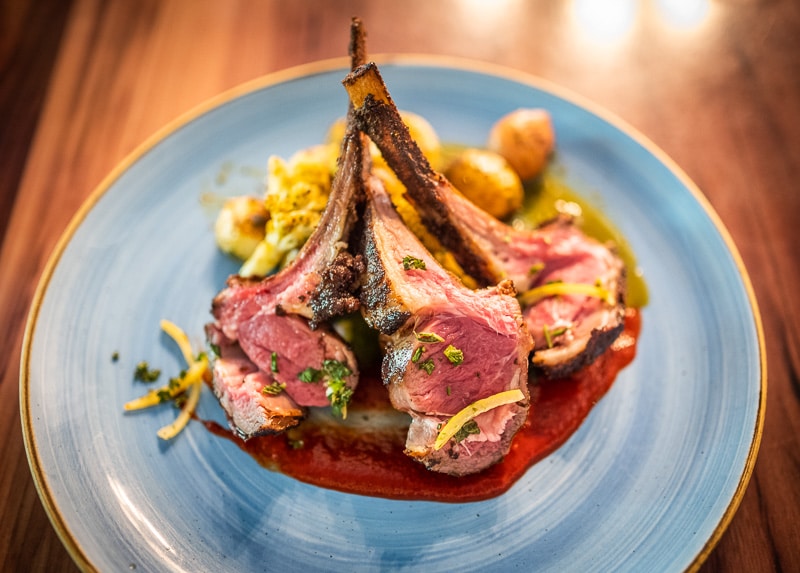
Who SHOULD Buy the Disney Dining Plan
Spreadsheet Savants – For some Walt Disney World fans, planning is half the fun. You map out your vacation plans with tactical precision, making comprehensive itineraries, using spreadsheets (ugh!), and so forth. The Disney Dining Plan adds another layer to that, and figuring out ways to leverage it is “fun.”
Although I poke fun at the spreadsheet savants out there, we are not all that different. I also like to make meticulous meal plans for Walt Disney World, and get a tremendous sense of satisfaction in outsmarting the system. I love putting together our posts for maximizing value on the Disney Dining Plan, and we use those resources ourselves to squeeze as much bang for our buck as possible out of the DDP.
A lot of Walt Disney World fans do the same, and this is both a fun and rewarding experience for them. With that said, this should be one of those things that immediately clicks as being “for you” if you’re a first timer. If you just read the preceding paragraphs with puzzlement, it probably is not.

The Careful and/or Carefree – Many fans argue that the Disney Dining Plan is about convenience. We beg to differ. This is one of dozens of articles about using the Disney Dining Plan on this blog. We have exactly zero articles about the pros & cons of paying cash as you go. In terms of what’s simpler, paying out of pocket is far more straightforward and intuitive. It’s what you do at every real world restaurant–no explanation necessary.
What people presumably mean when they use words like “convenient” is that the Disney Dining Plan is predictable. Since it’s prepaid, you know the costs of your meals in advance of your trip and are not caught by surprise at just how expensive everything is upon arrival at Walt Disney World. For many planners, this is important.
Being careful with their spending ahead of time also allows many planners to enjoy a more carefree vacation. While we contest that the DDP is convenient or particularly helpful with budgeting, DDP helping the cautious be more carefree is undeniable. Many people on vacation get sticker shock, and are unable to fully enjoy themselves or order freely after seeing menu prices. The Disney Dining Plan allows these worry-warts to not obsess over prices, and instead relax and order what they want. (As someone who is frugal-to-a-fault, I very much empathize with this perspective!)

Herds of Kids – The value proposition is better for parties that have fewer adults and more children under age 9. (It’s much worse if you have kids ages 10 and up since there’s no junior pricing.)
Of course, that assumes your kids would order and eat as much food as is offered by the DDP, and wouldn’t split meals or eat less frequently. Otherwise, the better value is illusory. But objectively speaking, those parties with more children (ages 3-9) than adults in their party are more likely to come out ahead.
Single parents or families of 3+ children will be the biggest winners with the Disney Dining Plan going forward. Even as the “losers” in this change, we don’t really mind. Fewer families with children had been purchasing the DDP previously (as compared to couples), and families of 5-6 are notoriously “losers” when it comes to accommodations at Walt Disney World. It’s time for them to rack up a rare W.

Character Lovers – Several character dining experiences make our list of the Top 10 Disney Dining Plan Table Service Credit Values. If that were expanded to a top 20 list, many more character meals would make the cut. As a category, this is the most common type of restaurant for good-to-great value on the Disney Dining Plan. It’s not true that every single character dining experience offers above-average value (a few breakfasts do not and none of the 2-credit meals do), but it’s a pretty solid rule of thumb.
It has thus always been the case that the Disney Dining Plan was a good option for those wanting to do character meals. This is truer than ever for families with children due to the aforementioned price gap between adult and kids pricing of the DDP.
Unlike other restaurants, where kids might simply order and eat less when paying out of pocket, the fee is a flat rate for character dining experiences. So the value here is undeniable. Consequently, the cost for a single character meal can exceed the price for an entire day of the DDP for a kid.
Those aforementioned single parents or families of 5-6 with children ages 3-9 who plan on doing a lot of character meals are far and away the biggest winners with the Disney Dining Plan. (Do enough character meals with those demos and the “skip” counterpoints below don’t even apply!)
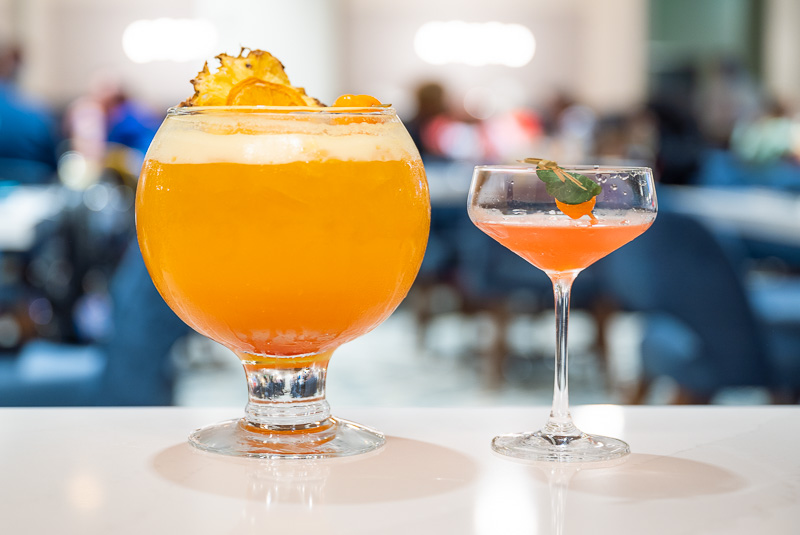
Dedicated Drinkers – The biggest change to the Disney Dining Plan pre-closure was the addition of alcoholic beverages, including beer, wine, and specialty cocktails at both table and counter service restaurants. The significance of this cannot be overstated, and it created winners and losers.
Anyone who orders alcohol–especially wine or cocktails–at most meals comes out ahead. Non-beer alcohol routinely runs $14 to $20 per drink at Walt Disney World, even at counter service restaurants. That’s a tremendous amount of value to guzzle down every day while using the Disney Dining Plan!
The biggest losers are families with kids who are age 10 or older. They get charged adult prices, while not even being able to imbibe. This means that these families (as well as non-drinkers) are essentially subsidizing the cost of alcohol for everyone else. This really bothers us–and a lot of other families–and seems contrary to Disney’s purported family values.
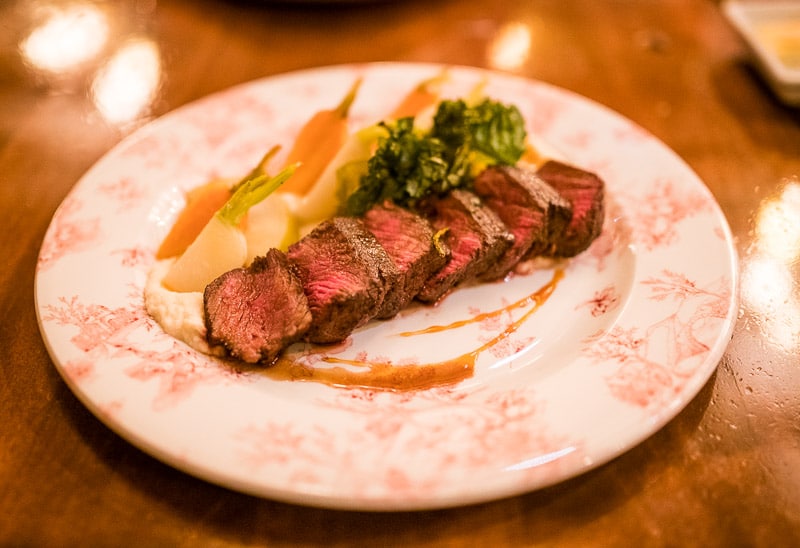
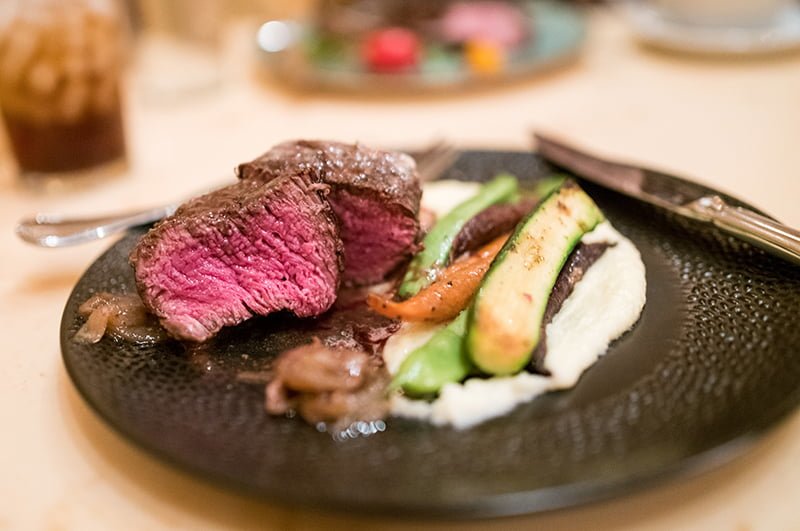
Consummate Carnivores – “Save with Steak” might as well be the motto of the Disney Dining Plan. Heck, they might as well change it from DDP to DCC–Disney Carnivore’s Club. This is all to say that if your family is full of meat-eaters who will naturally gravitate towards the most expensive items on the menu, the Disney Dining Plan can work out in your favor.
In the past, the most expensive entree at most single-credit table service restaurants (and almost 100% of the ones worth doing) was a New York Strip Steak. During the heyday of the Disney Dining Plan, there were some trips where I ate my weight in NY Strip Steak.
Each restaurant had its own unique preparation and accompaniments, and it was fun to try them all. New York Strip Steak is still common but less ubiquitous, with other beef-based entrees sometimes being the most expensive (if you were paying out of pocket) entree option.
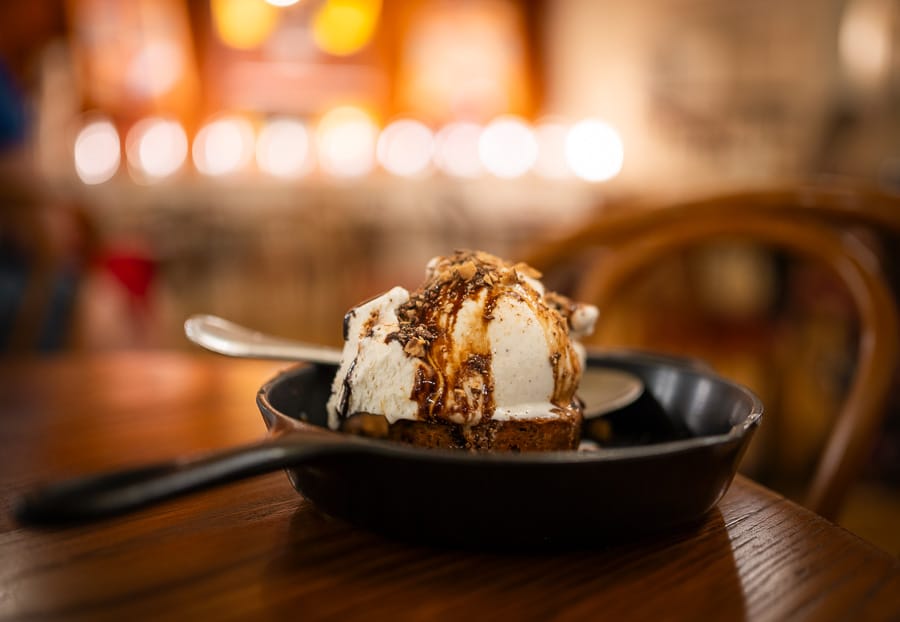
Insatiable Appetites – Historically, the Disney Dining Plan has provided more food than many guests would eat if ordering naturally and snacking only when hungry. A number of cutbacks over the years have changed this dynamic, and the removal of one snack on the Disney Dining Plan will further solve this “problem.” Nevertheless, those with big appetites are still rewarded by the Disney Dining Plan.
Suffice to say, if your kids are human garbage disposals and the adults in your party love steak, the Disney Dining Plan can offer some savings. As soon as anyone in your party starts ordering chicken or pasta, those savings disappear to the point that you might start losing money on the Disney Dining Plan. That’s when alcohol becomes “necessary” to bridge the gap.

Festival Fans – Disney Dining Plan snack credits are most valuable during EPCOT festival season…which is now most of the year. Some of the best snacks at the EPCOT festivals can cost as much as $10 and can be purchased using snack credits.
We highly recommend stockpiling snack credits and using them during your Epcot days, as not only are these festival snacks a great use of credits, but the EPCOT festivals are a ton of fun, too. This is yet another way to bridge the gap on value, as using snack credits on $8 to $10 items during EPCOT festivals is far more efficient than using them on a cheap coffee or bottle of water.
Split Stay Strategists – We love Split Stays at Walt Disney World, and this is far and away how we most frequently have used the Disney Dining Plan overselves over the years. For one thing, we think the DDP provides way too much food and can take too much time. There’s no way we could maintain the “pace” of the Disney Dining Plan for a full week or longer. No matter how well we planned, our “productivity” with the plan would drop by day 5.
Only doing the Disney Dining Plan for one portion of the trip allows us to do an attractions-oriented half of the trip, and a food-oriented half. We almost always do the food half of the trip second, when we’re ready to slow down, relax, and focus more on eating. This also allows you to maximize savings by booking ADRs for the best DDP restaurants during the second half of your trip, while focusing on your favorite ‘good value’ restaurants during the first half.
Why and Who Should SKIP the Disney Dining Plan!
Signature Status – Some dining experiences at Walt Disney World require 2 table service credits instead of just one. These are premium offerings, such as Signature Restaurants, Dinner Shows, Pizza Delivery, Room Service Meal, and a few character meals.
In terms of value for money (or credit), there is not a single 2-credit premium experience that’s worth it from an objective perspective on the regular Disney Dining Plan. None of them–not one–offers per-credit value that amounts to an above-average redemption of a single table service credit.
In order for these premium options to be worth it, they’d have to offer double the value of a worthwhile 1-credit restaurant. While most Signature Dining Experiences are considerably more expensive than their regular table service counterparts, they are not twice the cost. As such, you will almost certainly come out ahead by paying out of pocket if you’re doing a lot of Signature Restaurants.
Vexed Vegetarian – There is literally no scenario in which it makes financial sense for a vegetarian or vegan to purchase the Disney Dining Plan. Plant-based items are almost always the cheapest options on the menu at Walt Disney World restaurants. Individual vegetarian adults will never come out ahead on the DDP unless they exclusively do character meals for whatever reason.
This is such a truism that we don’t feel the need to give examples or crunch the numbers. It is self-evident upon a cursory review of menus. This is unquestionably true if everyone in your party is vegetarian or vegan, and probably true even if only 25% of the adults in your party will only eat plant-based entrees.

Total Teetotalers – Globally, half of all adults do not drink alcohol at all and a little over one-third of American adults never imbibe. That’s a lot of people. The number is undoubtedly higher among Disney Dining Plan users, as anyone over the age of 9 is considered a “Disney Adult” and charged accordingly.
By contrast, only those who are 21 years of age and older are considered to be adults in the eyes of U.S. alcohol laws. Now, we’re big believers in the “Disney Bubble,” but Walt Disney World policy does not supercede the law. Those 10 year old “adults” cannot order a La Fin du Monde with lunch at Le Cellier.
The end result is that a lot of people are charged the adult price for the Disney Dining Plan who literally cannot drink, and many others are charged that rate who will not drink. These guests are effectively subsidizing the lower-priced alcohol on the DDP for drinkers.
Those who can’t or won’t drink alcohol do have the option of ordering specialty beverages such as milkshakes, smoothies, and mocktails (where available). However, the cost disparity is pretty significant. On average, non-drinkers are looking at getting around $15 less in value per day than drinkers. The spread is even greater for non-drinkers who simply order soda or water. That number is enough to be make-or-break on whether the DDP is “worth it” for many guests.
AP/DVC/CM – If you are eligible for an ‘affiliation’ discount as a result of being an Annual Passholder, Disney Vacation Club Member, or Cast Member (or Tables in Wonderland, if that ever returns), it’s going to be difficult to do better than that unless you overlap on the favored demos above.
In general, it’s also just easier to take 10-20% off everything at table service restaurants as opposed to having to figure out how to hack your meals to save money.
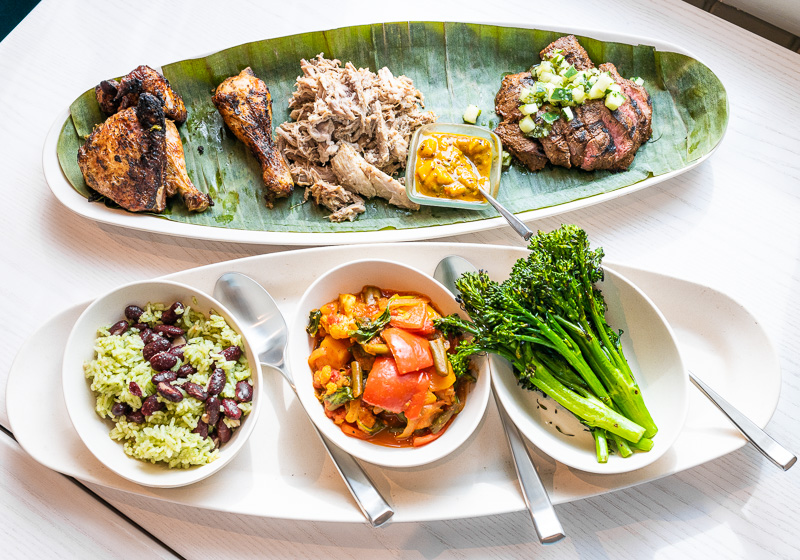
Doing Disney on a Dime – The Disney Dining Plan is not the cheapest way to eat at Walt Disney World. Not even close. At best, it’s a potential discount on a premium almost-inclusive meal package–it’s not the best bottom-dollar option for trying to do Disney on a Dime. (It’s like buying a BMW with a dealer incentive versus paying sticker price for a Kia. Yes, you “save money” on the former and not the latter, but the Kia still costs a heckuva lot less!)
Those who consult our Top 10 Best Value Table Service Restaurants at Walt Disney World will find that there are a lot of sit-down restaurants that are great options when paying out of pocket. Pair that with a cost-effective counter service meal and a snack, and your per-day meal cost could end up being less than half of what you’d pay for the Disney Dining Plan.
As discussed in our Tips for Buying Groceries at Walt Disney World post, you can cut costs further (without sacrificing vacation quality) by having breakfast in your room and packing snacks for the parks. The list of ways to reduce food costs at Walt Disney World goes on and on, but at no point is “buy the Disney Dining Plan” on it. It’s a luxury product that, like the BMW, can be discounted–but it’s never going to be as cheap as eating at Walt Disney World, Kia style.
Go With the Flow…Folks – This is kind of an extension to the previous point as well as an “answer” to contentions that the Disney Dining Plan is convenient. If you want the best of both worlds, price out how much it would cost to add the Disney Dining Plan to your vacation, and purchase discounted Disney gift cards in that amount.
Use those gift cards to pay for all of your food, ordering whatever you want and doing your best to never look at menu prices. (Easier said than done, I know!) If you’re not one of the favored demos above, there’s a very strong chance you’ll have enough money leftover on the gift cards at the end of your vacation to pay for some nice souvenirs.
Ultimately, whether you should buy or skip the Disney Dining Plan is circumstantial. Although its many fans and many haters will try to tell you otherwise, the Disney Dining Plan is not universally good or bad. Think of it more like a tool, which can be useful or destructive depending upon the job. (Despite the similar names, a hammer and a jackhammer will produce radically different results on the same project!)
If your family is full of carnivores…the Disney Dining Plan might be for you. If you’re taking your twin boys to Walt Disney World to celebrate their 21st birthdays…the Disney Dining Plan might work out in your favor. If you’re a single parent of princess-loving triplets wanting to do as many character meals as possible…the Disney Dining Plan will definitely save you money.
By contrast, if your entire family is vegetarians, light eaters, or teetotalers…it’s unlikely that the Disney Dining Plan will work to your advantage. Even if you’re just average eaters, there’s a good chance that the Disney Dining Plan will end up costing you more money in the end.
When it comes to the Disney Dining Plan, the house doesn’t always win, but it does come pretty close. That’s not to say you can’t come out ahead on the Disney Dining Plan, because you absolutely can. Heck, you can even save more than 20% if you play your cards right! But if you’re expecting to save money no matter how you use the DDP, think again.
Planning a Walt Disney World trip? Learn about hotels on our Walt Disney World Hotels Reviews page. For where to eat, read our Walt Disney World Restaurant Reviews. To save money on tickets or determine which type to buy, read our Tips for Saving Money on Walt Disney World Tickets post. Our What to Pack for Disney Trips post takes a unique look at clever items to take. For what to do and when to do it, our Walt Disney World Ride Guides will help. For comprehensive advice, the best place to start is our Walt Disney World Trip Planning Guide for everything you need to know!
YOUR THOUGHTS
What is your experience with the strengths and weaknesses of the Disney Dining Plan? Are you one of the favored or disfavored demos with the DDP? Thinking about buying the Disney Dining Plan? Wish other tiers were available, or options without alcohol or meat? Do you agree or disagree with our assessment? Any questions? Hearing your feedback–even when you disagree with us–is both interesting to us and helpful to other readers, so please share your thoughts below in the comments!






I laughed at the “rare W” comment for those families with 3+ kids – so true! We’ve never done the DDP before, but our kids will be 9, 7, and 5 this trip which is a wonderful sweet spot for the Kids Eat Free promo. And combined with an attractive promo on the FW cabins, we’re so happy that us larger families were able to get a W in 2026!
I hope Disney families with “Herds of Kids” are not also “Dedicated Drinkers”. That sounds like the premise of an HBO I wouldn’t want to watch (but someone else would…), somewhere midway between “Shameless” and “White Lotus”.
LOL. Thank you, Scott, for that laugh, and I agree. My kids (and hot weather) are a large part of why I don’t understand how anyone consumes 2 drinks per day at Disney World. Maybe the free kids dining plan is to help make up for the fact that most of their parents (hopefully) aren’t consuming much alcohol?
I am going to test out using Disney gift cards on my next trip to see what the difference is. Knowing the full cost of what the dining plan would be, I plan to put a smaller amount on gift cards and if I end up spending it all then I will just pay oop for the rest and add it up afterwards to see what difference there was. I have used the dining plan in the past and it was mostly for the convenience of having the meals pre-paid. I’m also not someone who eats 3 meals a day and I could even see advantages to eating a lighter meal off the kids menu at least a few times during the trip, which would really devalue the dining plan. I definitely think it can work for some families, but not all. I also think for my specific eating habits and budget, it would be more beneficial to try the gift card method because I have a hunch that I’m going to end up saving money on food.
My husband and I recently returned from a 7 night stay at POR. We paid for our food and spent $859.55. If we would’ve purchased the DDP, it would’ve cost us $1319.44. We saved $460 by NOT purchasing the DDP.
For reference, we ate at House of Blues, Chef Art Smith’s, Ohana, Cape May, Yak & Yeti, Roundup Rodeo BBQ, Kona breakfast, Steakhouse 71 breakfast, and six quick service restaurants. We shared the main course (meat) at House of Blues, Chef Art Smith’s, and Yak & Yeti, but we added extra sides and salads, so it ended costing about the same as if I’d ordered my own meal. My husband had a soft drink with every meal, and I drank water. I used my Disney Visa rewards for snacks, but we still would’ve been money ahead had we paid for the snacks too.
The DDP is NOT beneficial for us.
Some people say they like the convenience, which I don’t understand. You have to scan your magic band and sign a receipt for the DDP, the same as if you were paying with a credit card. The bonus of using the Disney Visa for meals is the 10% discount at a few restaurants and earning rewards that we save for our next Disney vacation.
I’ve already spent an arm and a leg to go to Disney World, and I don’t want to give a penny more than necessary!
A sincere “Thank You” for mentioning what I have always felt is the single greatest reason that guests purchase the Dining Plan or Deluxe Dining Plan options: the convenience and stress reduction aspects. It’s never been about whether or not we are are saving a few dollars or not. For 35+ years now, I’ve worked really hard so that my family could afford to vacation at WDW once (and occasionally twice) per year…first with our kids, and now with our grandkids. In some cases, it would have been years or even decades later before our grandkids could have enjoyed such a trip, and I can’t imagine anyone arguing against the fact that there is a special kind of Disney magic that happens for a child while they are still young enough to believe in it. Shackling that experience with the ball-and-chain of *reality* – “No, that’s too expensive. Pick something else” – is not our idea of a relaxing and fun vacation. Do we, like nearly everyone else who purchases a Dining Plan, end up with unused meal credits at the end of our trip? Sure. It’s not money wasted though, because it gives us a perfect chance to teach a life lesson: At your last full service “sit down” meal, look around and pick out a person or family who is obviously at WDW on a shoestring budget and experiencing the very stress YOU avoided by purchasing the DDP. Quietly get the attention of their server…and “sprinkle a bit of pixie dust” yourself. Don’t make a spectacle of it, the people who’s meal you just paid for don’t even need to know who did it. Just quietly explain to your kids or grandkids later why you did it. We’ve always found that the experience to be worth a LOT more than the three snack credits we’d have gotten in exchange.
This is the best comment ever! ✨
Wow.
Tom, you seem like a pretty humble guy but let’s be candid – you are a world-class photographer.
I write that to credential what comes next: the photo of the baby and Sarah with Mirabel is the best you have ever done. 100% magical.
Sooo happy you are getting to have the experience of character interactions with your kid. Nothing like it.
I think it’s worth noting somewhere that Quick Service credits are no longer allowed to be converted into three snack credits, according to this official Q&A from January 2024: https://plandisney.disney.go.com/question/able-exchange-quick-serve-dining-credit-three-snacks-able-560945/
That official change makes the Disney Dining Plan weaker for us, I thought people should know.
The Deluxe Dining Plan is only “worth it” if you commit yourself to getting a table service ADR for EVERY DAY of your trip. The Standard Dining Plan is better, since you probably WILL eat 2 counter service meals every day. I just wish they still came with 2 snacks per day. Actually, if they came out with a version that was ONLY snacks, I’d probably buy that, too…
Hi , I was wondering if 2 adulta and 2 kids and one under would worth it?
Do i love the dining plan? YES? But most of the time we do not purchase it. For example…planning on going in 2025, I already know what resturants we want to eat… with that being said all of our table service resturants are character dining.I know where we are going to eat on our quick serves and i estimated snacks around $6 and this is on a 5 night vacay. I crunched the numbers and we would save about $400 not going with the dining plan. With that being said I will buy gift cards to cover our meals so in my mind its all paid for 🙂
Happy Planning
We do the dining plan more for the convenience of not having to worry about prices and know it’s already paid for!
100%
Thanks for this post. When all three of our girls were little we used the then Deluxe Dining plan often for week long trips. We did a lot of character meals but I doubt we ever really came out ahead since three table service meals and two snacks was more than we would ever eat. We always went home with unused credits. But it was nice to plan ahead and think of our trip as “all inclusive” took the pressure off everyone when looking at menu prices and we were able to just enjoy.
We haven’t used it now for many years as we typically do a grocery order and don’t pre-plan meals in the park going more with the days as dictated by the happiness factor of the gals.
I see value both ways and with its return we will very likely give it a shot again on some future trips just for something different.
Gen X? Why does everyone forget that we exist?
This analysis was spot on for my family (and fair and balanced and useful as people figure out what category to put themselves into). Yes, we came out with that “rare W” for families of 5+ members when the kids were younger, but now paying for “adults” who don’t eat that much and can’t drink alcohol means we’re a No on the plan for now.
I will say, though, our last trip was 2 kids as “adults” and 2 as children, and the specialty drinks were really fun and memorable for them. I never let them get any kind of special drinks at restaurants anywhere because of the outrageous costs x4, plus tax and tip. So being able to get floats, smoothies, or milkshakes twice a day on vacation was exciting for them and never would have happened if we weren’t on the DDP.
An overlooked benefit to DPP is that it allows a budgeter to “hide” the cost of food. When the cost-conscious partner complains about a $50 steak, the budgeter can say, “Relax honey, it’s all pre-paid; order whatever you want” 😉
I am waiting for the free DDP in September and the week in November
Tom covers just about everything important, and describes when a characteristic is good or bad for a particular guest. Literally the only consideration not covered above might be the fact that buying the DDP means you’re buying a package, which has strengths and weakness related to how much money down and cancellation penalties. That being said, unlike Free Dining, buying the Disney Dining Plan doesn’t force you to give up what can now again be valuable room discounts.
This seems a lot like pre paying for the last tank of gas in the rental car.
I totally disagree on the convenience topic. We, too, use the dining plan a couple times a year vs the many times we don’t in same year. At least one of those times, we don’t think of cost…we just don’t wanna think about it…that’s the totally inclusive vibe. One of those times, usually when we have someone else (or a few) with us. We agree that Character dining or even the little more special places make it worth it. The split stay, for us, is typical as well BUT we do it the complete opposite. We get the dining plan in the beginning and stretch it an extra day as you can use the DDP on the day you “check out” so the extra leftovers get used and we score a W on that saving $$. I don’t eat red meat and depending on my mood it’s a savings but other times we break even. Breaking even is a W to us as we don’t look at it as a money saver…more as a convenience all the way around. I about killed my husband our 1st trip together because only in past 10 years (outta 47 years going to Disney) did I really give thought to sitting down and eating. it was always a grab and go. He decided for us that we were going to do at least one TS per day, lol. He’s now a happy Disney husband.
Thanks for the thorough breakdown of the DDP! With 3 kids aged 3-9, I’ll have to take a look at numbers. A savings that I found weirdly satisfying on our recent trip was using my Disney Visa at Kona Cafe to-go for 10% off each dinner for our stay at the Polynesian. I knew ahead of time it was an offer for sit-down service, but figured it wouldn’t work on to-go orders.
Ps – where is the gargoyle photo at the top of the article from?
If you right-click on the photo, you can search with Google and see that it is from Be Our Guest 🙂
The Disney Dining Plan is almost more economical if and only if you research and get the restaurants you want/prefer. Some sit down services cost much more than others and if you cannot find a reservation you loose out on value. If you have a DVC or pass holder discount, also seems less worth it.