
Disney Responds to Rising Costs Criticism

As we discussed earlier this week in Walt Disney World is Worried About Its High Prices, concerns about Disney pricing out the middle class are no longer just a controversial topic among fans. Now alarms are also being sounded inside the company, as executives fear price increases are alienating fans and souring sentiment.
This was first reported by the Wall Street Journal, which spoke with current and past employees of the Walt Disney Company who were involved with discussions about pricing and corporate strategies for the theme parks. According to WSJ, “some inside Disney worry that the company has become addicted to price hikes and has reached the limits of what middle-class Americans can afford.”
People within the company who are familiar with pricing say that “internal discussions over whether Disney parks may be losing their grip on the hearts and wallets of families with young kids have become more frequent.” And then there’s this: “Starting in late 2023, the company’s own internal surveys of Walt Disney World and Disneyland guests found that the number of them planning return trips had ticked sharply down.”
That’s just the tip of the iceberg. The full piece delves into the average vacation costs and contains much more color commentary from inside the company about pricing. The WSJ article also strikes us as strikingly similar to a previous WSJ piece from November 2022 that was published shortly after the Chapek ouster.
In that, Bob Iger made it clear that he had been “alarmed” by price increases at Walt Disney World and Disneyland, and was concerned that Chapek was “killing the soul” of Disney. That article opened the floodgates for other pieces from the New York Times, CNBC, Hollywood Reporter, and other outlets I’m probably forgetting.
Even more notably, a little over a month later Walt Disney World made 3 big changes to restore value and improve flexibility, including the return of free overnight parking at the hotels. Mere months after that, the company announced 5 major improvements to make your visit easier. More recently, there was the switch from Genie+ to Lightning Lane Multi-Pass along with other queueing changes aimed at better balancing the interests of all guests. Otherwise, not a whole lot has happened to improve the guest experience in the last 365+ days.
Suffice to say, we’re expecting two things as fallout from the WSJ article. The first is similar reporting from the NYT, CNBC, THR, etc. Many of the journalists at those outlets are well-connected, and they’ve undoubtedly already reached out to their sources for fresh angles on this story.
The second is a response from Disney, much in the same vein as they responded in early 2023–with action. Well, the second thing happened before the first, at least on a superficial level. On its corporate website, the Walt Disney Company indirectly responded to concerns and criticism about costs with the following:

“To all who come to this happy place, welcome. Disneyland is your land,” Walt Disney said when he dedicated Disney’s first theme park in 1955. It’s been the company’s motto ever since, and the reason why Disney has remained the leader in family travel for seven decades and counting.
“The number-one thing we hear from the millions of guests who visit our parks each year is how much a Disney vacation means to them, and we intentionally offer a wide variety of ticket, hotel, and dining options to welcome as many families as possible, whatever their budget,” Josh D’Amaro, Chairman of Disney Experiences, said.
“We also know that, in inflationary times, it’s especially important to give families ways to save on their visits. We haven’t increased the lowest-priced ticket to Disneyland since 2019, and we recently introduced a kids’ ticket for as little as $50, just to name a couple of examples.”
Ever since opening day at Disneyland nearly 70 years ago, generations of families have been making memories with Disney that last a lifetime. And through the decades, Disney has always created new ways for guests to save on their vacations.
“We know our parks create life-long memories for families and we’ve worked hard to make a Disney vacation accessible to guests of all income levels,” Hugh Johnston, Chief Financial Officer, The Walt Disney Company, said. “With strong guest satisfaction scores and intent-to-visit ratings, our parks remain the most popular offering in the industry.”
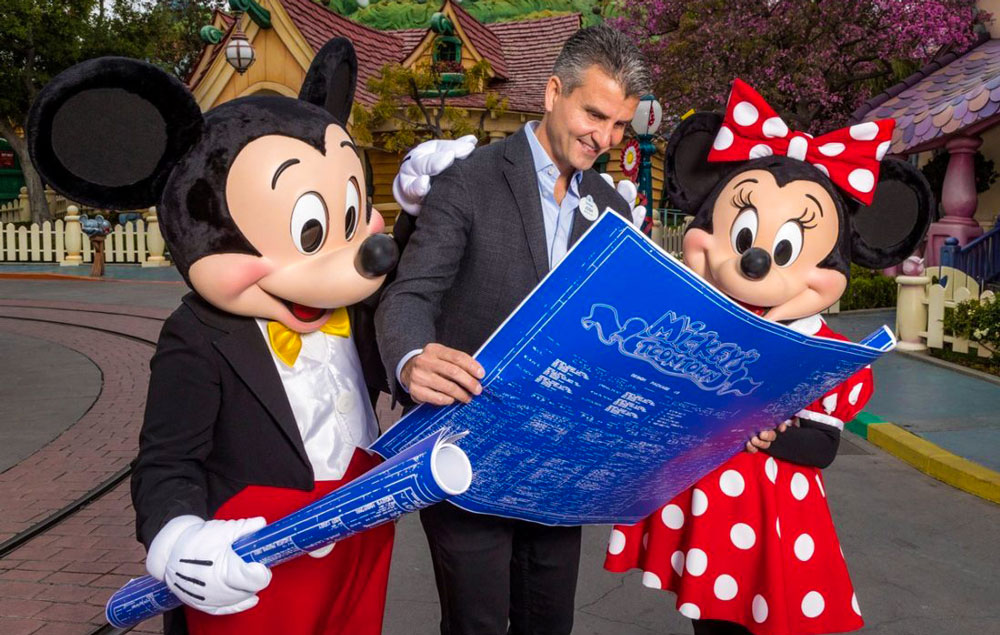
The company went on to explain that it understands the “financial pressures that families face across every part of their spending, including how they travel” and that they listen to guests and “use that feedback to introduce new offers and promotional deals, which provide significant savings.”
Disney went on to list the many special offers currently available at both Walt Disney World and Disneyland, including the usual suspects, such as Florida and California resident discounts on tickets, free water park day at WDW, and various room discounts on both coasts. They also mentioned the popular Free Dining Plan Deal at Walt Disney World and the Kids’ Ticket Deal at Disneyland.
Of those, the only one that’s persuasive as being a good value for the average family is the $50 child’s tickets. That’s the only admission deal for the general public, and still presents the problem of how non-Californian adults are supposed to visit on a budget. It’s not like the kids can go unattended, which is precisely why Disney offers this deal–it’s a promotional hook to get families to visit and spend more on everyone else.
All of the other discounts for the general public require large financial outlays. No one is staying on-site at Disneyland to save money. Both Free Dining and the up to $200 off rooms promos lock guests into pricier packages, so that’s not a good example if you want to underscore bottom dollar prices to visit Disney.

Ironically, the best deal of all to feature would’ve been the room-only discounts at Walt Disney World, highlighting how inexpensive Value Resorts can be and what they offer versus comparable off-site accommodations. Disney could’ve boasted about how, after currently-available general public discounts offering up to 30%, you can “stay in the magic” for rates starting at only $125 per night this spring and summer (at All Star Sports).
That’s precisely what I discuss in my analysis of these discounts when encouraging those on a tight budget to consider the Value Resorts because their inclusive offerings can make them less costly in the long run. You’re going to be hard-pressed to do better than the rates Walt Disney World is offering at Value Resorts. For instance, ~$125 per night for the All Stars–with the new rooms, Early Entry, transportation, and free parking–is inexpensive enough that we don’t even recommend readers consider staying off-site to save money (peak season when rates explode is a different story).
If I were Disney, I probably also would’ve used that press release to tease the return of the 4-Day, 4-Park Magic Ticket at Walt Disney World. That’s an exceptional general public admission deal, and it’s almost assuredly returning within the next month or so. (Last year, it was announced on March 12 and valid for use from April 2 through September 22.)

Following that last point in the press release, Disney continues by explaining that offers like a child’s ticket for as low as $50 at Disneyland “can make that first trip to Disney possible for many young families. And the memories they make are one-of-a-kind.”
Disney went on to cite a recent survey of 3,531 U.S. adults by Morning Consult, commissioned by the Walt Disney Company, revealed that a strong majority of families with children under five:
- Said nothing compares to a Disney vacation…
- Said that a visit to a Disney park gives memories that last a lifetime and can’t be replaced…
- …And those that had visited Disneyland or Walt Disney World felt the vacation was worth the expense
The “commissioned by the Walt Disney Company” part is probably all you needed to read. Even so, we’re not particularly concerned with surveys–just as we weren’t in the previous article. Word questions the right way and you can use them to make whatever point you set out to “prove.” Disney is masterful at this, and many of its surveys are less fact-finding missions and more supporting a preordained conclusion.

My reaction to the press release is mostly confusion. I’m surprised that Disney opted to “refute” the article, even if indirectly. I’m even more surprised that they did so in such a superficial manner, not by making any meaningful changes but by pointing to things that already exist. I suspect they’re going to have to do that as well, at some point soon.
If the status quo were a compelling argument, Americans wouldn’t have concerns and criticism about costs and Disney pricing out the middle class. People would simply be taking advantage of the existing special offers, attendance and occupancy would be booming, there would be no concerns about guest goodwill or brand damage, etc.
The very existence of this press release is proof of the problem, not the other way around, and it will allay zero concerns about high costs and Disney. Since it’s on the corporate website, I can only assume the intended audience is Wall Street. Will concerned analysts and investors find this a persuasive rebuttal? I assume not. In general, Disney’s responses–both here and to WSJ–have felt a bit Bluthian.

This response reminds me a lot of the infamous “Nahtazu” campaign–if you have to make a concerted effort to explain why Animal Kingdom was not like a zoo…it was too much like a zoo. Here, if Disney needs to explain how the parks are accessible to guests of all income levels…they actually are not.
There’s a fancy phrase that I like, res ipsa loquitur, which means “the thing speaks for itself.” It’s normally used in other contexts, but I’ve taken to it when debating Disney. I like the saying because fans have a tendency to get too in the weeds with all things Disney; we can forget that the regular park going public doesn’t put as much thought or have as extensive knowledge as we do, ability to work the system, etc.
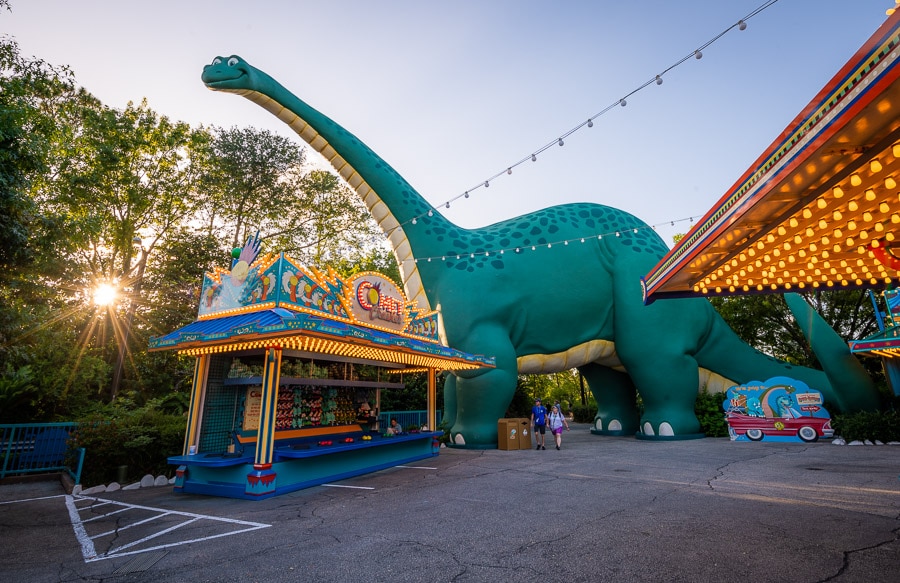
My favorite example is using it to argue that Dino-Rama sucks (because it does), despite fan claims to the contrary about backstory and other assorted nonsense. The thing, a rundown roadside carnival, speaks for itself. Or at least, it did before it met its demise. Which is why it met its demise. (Rest in pieces, Dino-Rama.)
Anyway, same applies here with Disney Parks’ pricing. I would take that a step further and argue against their specific example of young families. The whole reason Disneyland is offering that $50 kids ticket deal, or that Walt Disney World lowered the price of the Disney Dining Plans for children last year, or any number of other offers targeted at kids, is because fewer families with small children can afford to visit the parks.
This isn’t just me theorizing. One of the reasons Disney has been building more bars & lounges, adding adult-centric attractions & entertainment, and otherwise chasing the convention-goer and childless millennial demographics is because they’re making up an ever-increasing slice of the pie for Walt Disney World and Disneyland.
We first heard this explanation back in 2017 or 2018, and if I recall correctly, one of those years was the first time ever that guests without children surpassed those with. Although I haven’t heard much since, I highly doubt the trend has reversed itself. It makes sense, at least for the short-term. Twenty and thirty-something DINKs have more disposable income than their cohorts with children.

It should go without saying, but there are negative long-term consequences of this approach.
One of the key points we buried towards the end of the very lengthy ‘Disney is Worried About Its High Prices’ article is that “intent to recommend” metric is very important–on par with guest satisfaction and intent to revisit. We have heard from more and more fans who, even though they’re still going to Walt Disney World for emotional or sentimental reasons, have stopped recommending it to friends. This was reinforced in the reader comments to the high prices post, where several people said this describes them perfectly. Some admitted to hiding their trips from friends or being embarrassed about them.
It used to be the case that current Disney fans were excellent, unpaid brand ambassadors for the company–introducing Walt Disney World to others, making new fans in the process. What we’ve heard is that–due to higher prices, greater complexity of visiting, less value for money, and more–fewer readers of this site are recommending Disney Parks to others. This is really significant, and under-discussed. People trust the word of one person in their own social circles more than that of one-thousand social media influencers.

As a retired Childless Disney Millennial and current Disney Dad, I’d take this a step further and say there are a couple of unique ways this ‘intent to recommend’ angle applies to families.
The first is that, as a general matter, I would hazard a guess that childless adults are less of brand advocates for Disney in their real life social circles. When we were in that position, we weren’t proactively extolling the virtues of the Disney Parks to our normie friends. People knew us as Disney Adults, but it just didn’t come up. Separately, in our Disney friend circle, it came up constantly. But no one in that group needed a sales pitch in the first place. They were in just as deep as us.
Now that we have a daughter, we’re in parents groups and that sort of thing. We have a new social circle that is, unsurprisingly, families with children our daughter’s age. In these groups, Disney and other family-friendly activities come up constantly, with people soliciting advice and feedback from one another about things to do and products to purchase. (This constitutes a surprising amount of conversations!) I can only speak to our own anecdotal experiences, but I’d imagine that an enthusiastic recommendation of Disneyland or Walt Disney World in these groups would go much further than in a social circle without kids.

While I suppose that angle is arguable and anecdotal, there’s also the more obvious and undeniable one. Parents take their kids to Disney, those kids form emotional bonds, grow up visiting, and take their own kids to Disney. Rinse and repeat. This is ‘intent to recommend’ in its most organic and unadulterated form. Countless multi-generational ‘Disney Families’ exist due to this dynamic, including both of us–and probably many of you!
Pricing out families with small children is the surest way to break the cycle, resulting in future generations that have no emotional connection to Walt Disney World or Disneyland. There are hugely negative long-term ramifications to pricing out families, and it seems like there’s some degree of concern about this internally.
However, it’s not a problem that will play out in the short-term. So Wall Street, with its quarterly myopia, may not care. And given the average life cycle of corporate leadership, current Disney management may be long gone before those particular chickens come home to roost. Accordingly, there may not be much of an incentive for anyone to reverse this.

For what it’s worth, all of this is not to cast aspersions on Disney Adults or suggest the company should turn its back on them in favor of families. Absolutely not. DINKs are incredibly lucrative and U.S. demographics trends alone suggest they will be increasingly instrumental in the future. If anything, Disney should be doing even more to cater to these adults with disposable income. But at the same time, the company needs to figure out how to maintain accessibility for families, as they are Disney’s bread & butter, and will ensure generational nostalgia continues to drive future visits.
Bringing things full circle, all of this is also why it’s worse for Disney to lose fans on an emotional level than a financial one. Many people from both cohorts–the Childless Disney Millennials and the Disney Families–are there because we grew up hooked on Disney, forming that sentimentality and nostalgia as kids. If costs were all that mattered, the damage would be easy to undo. Disney could turn its big pricing dial down, or pull that giant discount lever and entice people to return in greater numbers. But when you lose fans emotionally, the likelihood of that damage being undone is far lower–and it can become generational.
Planning a Walt Disney World trip? Learn about hotels on our Walt Disney World Hotels Reviews page. For where to eat, read our Walt Disney World Restaurant Reviews. To save money on tickets or determine which type to buy, read our Tips for Saving Money on Walt Disney World Tickets post. Our What to Pack for Disney Trips post takes a unique look at clever items to take. For what to do and when to do it, our Walt Disney World Ride Guides will help. For comprehensive advice, the best place to start is our Walt Disney World Trip Planning Guide for everything you need to know!
YOUR THOUGHTS
What do you think of Disney’s (indirect) response to the criticism of price increases pricing out the middle class? What would you like to see done to improve the guest experience and satisfaction at Walt Disney World? Think that runaway price increases are the big concern, or is the value proposition an equally or more significant matter? Do you agree or disagree with our assessment? Any questions we can help you answer? Hearing your feedback–even when you disagree with us–is both interesting to us and helpful to other readers, so please share your thoughts below in the comments!





“As we discussed earlier this week,.”
I just love this intro,..
Hey, it beats starting with “per my previous email…” 😉
Not quite as classic as Trump revisiting PA and opening with, “As I was saying.”
But still a very good start to your blog.
Disney is a victim of its own success. The entire experience of visiting Disney World between 2009-2020 was so good and so affordable that the parks and resorts exploded in popularity. Now they have had to raise prices in order to balance supply and demand. They have actually absorbed a lot of inflationary costs that could easily have been passed down to guests. I can still fly from Detroit to MCO for $39 on Spirit, take an uber to all star sports for $130ish per night, and spend long days enjoying the theme parks for less than the ticket price for decent seats at a hockey or football game. Decent quick service meals can be enjoyed for $12-$15. In fact, the cost of one ticket to a Detroit Lions game in the nosebleeds will get you three full days at Disney Parks.
WDW and Disneyland have not necessarily become unaffordable for the middle class and upper-middle class; inflation of Disney vacations has significantly outpaced most other vacation options for the target demographic, while also becoming more stressful. Families who chose Disney year-after-year because it was comparably affordable and “easy” have now pushed it into a rotation, visiting once every 3-6 years. Disney was much more enticing when dining reservations were for the most part easy to secure, parking was included everywhere for on-site guests (plus preferred parking for AAA members), DME was included, you did not need to be glued to your phone with extra batteries in tow, etc. I do not know how much of Disney’s guests are international visitors, but Disney knows. There is potential for international visits to drop off a cliff in the near future if it is not already. Some local annual pass holders in Florida are dropping Disney for Universal, at least temporarily. WDW and Disneyland will need to drop prices, heavily discount, and/or bring back perks to on-site guests in order to lure back visitors from the U.S.
As one of those commenters for whom the “would recommend” thing from the other post resonated the most, I will also say that the “hiding the trip” thing resonates a bit too. I will post/tell people about some of the trips, but not all of them. I’m not denying my WDW love, but I’m not generally loud and proud about it either (and I have some small to mid-sized public forums where I could be). And that’s not entirely about costs and perceived value, but it’s somewhat about those things. Mid 90s to early 2000s WDW was an AWESOME experience, and 2005-2019 WDW was often a great one. As I said on the other post: I still love being there. But I also think, while I’m there, about what it might look and feel like to someone who’d never been there before. Increasingly, I think that too much of it (not all, but a noticeable amount) feels chaotic, unfinished, run-down, aggravating, and like motions are being gone through. Maintenance, finishes, timely updates, and a general joie de vivre are all diminished (in the parks; the resorts seem better) from where they were less than 10 years ago, and that seems fixable? And yet it never gets fixed.
I am a DVC member and became one because of a wonderful trip with my kids back in 2006. What has changed since then?? Ticket prices have skyrocketed, even special event tickets have double/tripled in price since then. No more Magical Express to get to/from the airport, no luggage handling service (both HUGE when travelling to Disney with kids), no packages sent directly to your room. That commercial you promote back from around 2016 really shows how much has been lost and how little Disney now cares about families with children. Although my children are now grown, the last time we were in a park together was 2018, and that was 1 day at Christmastime to see the decorations. Now we go for “resort trips” to enjoy our DVC membership. Disney’s “nickel and diming” guests has turned off so many people that they will eventually pay a price unless they bring back some of those special perks that drew families to begin with. You gotta show value for people spending their hard-earned $$!! Especially when there are so many other vacation options that are cheaper…
Take a look at how much your DVC fees have increased year over year and yet it can be easily argued the value of the maintaining has been lackluster.
The last couple of articles have captured our family experience pretty perfectly. Trips to Disneyworld were my favorite as a kid because it was the only vacation where my dad didn’t work. After splurging on our once in a lifetime trip, we returned on a bounce back and kept going through 2020. After the price hikes and seeing what we used to pay we couldn’t rationalize it anymore. We used to tell people it can be expensive, but you can have the best time and not spend a ton of money if you don’t want to. Our kids are getting older, and the next time we do a Florida theme park trip it will be for Epic Universe, with maybe a visit to WDW. We made awesome memories, and I get super nostalgic around the holidays each year…but I don’t know when/if we’d do a full Disney vacation in the future. This is still the best travel blog out there, and love reading!
It’s cheaper for us to buy an annual pass (which is still super expensive) to do the 2 RunDisney races we do then to buy them each time we come. That’s for the WDW. For the DL races it cost my husband and I 1000 for 2 3 day park hopper tickets, which is absolutely ridiculous. We looked at add a single day to go with friends that were there and they wanted 250 each! I love Disney but I’m slowly getting to the point where it’s not fun because the cost is not worth it. On Black Friday I purchased year passes for my kids to SeaWorld for $99 each which made it way cheaper than single day tickets for our trip for my sons graduation and my husband and I got year passes to all 11 parks for 300 since we travel for work and can pop in during our down time. I completely understand the parks are completely different but at least I can go there affordably
I guess quickly thrown together press releases like this give at least a TINY bit of support to why Disney usually spends TOO long crafting anything; their fast work is usually terrible. As already mentioned, nothing in that release really refutes Disney parks are too expensive, they’re simply trying to spin the “value for money” angle. I get that they cannot lower prices overnight and are obviously trying to get ahead of the bad press (at perhaps the worst possible time for them, with Epic Universe looming large) but more hollow company line puffery clearly isn’t working. I think the mix of price perception and actual sticker shock has taken its toll already. Disney’s problem is twofold; they’re pushing away the longtime fans through their brand-damage campaign, but they’re also preventing a lot of first timers from coming through pricing AND all of the crazy Byzantine-level planning (and upcharge) needed to plan a vacation. Without some continued improvement on Disney’s part to attract both the longtime fans and the first timers this issue isn’t going to go away, but I wonder how much longer Disney can pretend these aren’t real problems in the first place.
We went to DW last February and it was the last time. We’re not middle class and it was too expensive. Used military 5 day park-hopper passes, stayed at the Shades of Green (Still an outstanding hotel) and even with all of that the bang for the buck just wasn’t there anymore. With the exception of Pandora, the rest of the parks were looking and feeling a little run down, epically bad food (We just started eating in the SoG) and the daily ride breakdowns were the norm. It took us 3 different trips to ride RotR, basically, a bunch of lost time going between the parks to get it in. We’re planning on Universal in Feb ’26. We’ll see if this is our new ‘go to’ for a trip to Florida. Bottom line: I’m lucky enough to get some serious discounts (Thanks Disney for doing that) and it’s still just too much for too little.
Agree with you. I’ve been reading of more frequent reliability issues and is one reason we don’t want to shell out.
This is how my family did it growing up, right down to staying at Shades of Green and my dad being a CW4 (I assume that’s what your username refers to–he was a Huey and then Blackhawk instructor pilot). I have many fond memories of SoG. Back in the day, I thought the dinosaur nuggets served at the restaurant were the greatest cuisine known to man, and the adjacent arcade was my introduction to Daytona USA.
“If I were Disney, I probably also would’ve used that press release to tease the return of the 4-Day, 4-Park Magic Ticket at Walt Disney World. That’s an exceptional general public admission deal, and it’s almost assuredly returning within the next month or so. ”
Spot on. As I think you have mentioned elsewhere, the vast majority of visitors to Disney World stay Off Site. Therefore, targeting discounts almost exclusively at room and board (hotel and dining plan) excludes the vast majority of visitors.
To address the issues of unaffordability to the greatest number of people, Disney will need to offer Ticket discounts.
I’d even theorize that the guests who stay Off Site are more price sensitive than those who stay On Site. Therefore, they are the people that the discounts need to reach. (Some free advice to Disney)
Anecdotally, our family is fortunate to own DVC, so we still take vacations to the House of Mouse. But, we skipped Disney parks entirely last year and are on track to skip them again this year. Last year, we bought annual passes to Universal instead of Disney because they presented a better value. We will be using the same passes again this year. With any luck, we will be able to experience Epic Universe.
As a side note, I have read several accounts online of people who describe a lot of downtime for rides and attractions in the recent past. To be honest, this is part of why I’m balking at purchasing tickets. Disney tickets are very expensive, and I don’t want to spend a lot of money for a poor experience when we already have Universal admission.
In a vacuum, the accountants might not think much of our family’s absence from the Disney parks, but that also means the loss of ancillary revenue (We would have spent money on meals and snacks). That revenue went to Universal last year and will likely be true this year.
There are a number of ways that Disney could ease the pain. For starters, bring back non-expiring multi-day tickets. Allow the purchase of annual passes with better terms (such as what Universal does by allowing a down payment followed by monthly payments). Bring down the price of annual passes. Allow out of state residents to buy lower tiered annual passes. This generates the Lock-In Effect that we are experiencing with the Universal passes. We already have them, so why spend money on admission (and meals) at other parks. (Some more free advice to Disney).
I could even offer up suggestions as to how they could ease the pain for visitors and possibly generate more revenue and operating income (Win Win). But I’m not providing those answers for free to Disney.
I genuinely hope they implement creative solutions for the affordability issue. I say this both as a person who enjoys the parks and as a shareholder.
Scoop, these are great suggestions. Please continue with the ones you don’t want to provide to Disney for free since it’s unlikely they would listen anyway,..
The solution is simple: Revert to the Disney of approximately 6 or 7 years ago and the problems will be solved. Disney will still be profitable, it never wasn’t, people will return, and I’d venture to say even Wall Street will be happy.
Will they even consider this? Not a chance, because to do so they’d have to admit that they screwed up. . . . . and that won’t happen.
Disney will not admit to failure as they would now have to explain the over compensation of the executives, starting with Bobby. Every company has to come to realize that sometimes they got it wrong. Reshape and come back better. For example, Sony and Microsoft had to do it with their gaming console divisions, PlayStation 3 and Xbox One, respectively.
Sure you’re not thinking of the Wii U? PS3 is one of the best-selling consoles of all-time.
(Not that this is really important to the point–just curious.)
I still think paid fast passes ($725m revenue from 10/21 to 6/24) has the biggest impact to negative feelings. It used to be that middle-class families were treated the same as rich. Young families spend so much, but then have to keep spending every morning, or feel like a second-class person watching others walk past them. It also prevented the DAS issues and treated them fairly/equally without all the heart-ache.
Stop charging for Lighting Lanes (MP and SP). Disney looses $250m a year, but can raise prices somewhere else. They could even charge parking again, so it’s on the check-out PDF you read for 30 seconds. At least Mom doesn’t have to click $80 every morning to get on attraction she’s already paid thousands of dollars to ride.
Yes, paying for Lightning Lane especially adds up for families. It is less of a heavy lift for one or two adults, but when you have to shell out for the family, the costs really start to aggregate.
I totally agree with you Matt. Lightening Lane passes have to go or revert back to Fast passes. We are taking our son and his family (4 total + my husband and I) to WDW at the end of this week and the LL multi passes plus single passes (just to experience a ride that isn’t on the multi pass list) cost me over $2100! That is above and beyond the price of the entry to the parks. We won’t be returning for quite a few years and we are DVC members. What used to cost a family of 4 for a week has doubled or even tripled in the last 5 years and that doesn’t even include accommodations. How do families afford it?
YESS! Our kids becoming adults at 9 STINKS and explodes the cost of everything; tickets, character meals, experiences — but yet, the kids can’t get their own MDE profile until 13? Pick a lane. Our kids got phones at 11 and 12. If they’re “adults” with all the trimmings and costs associated, make them adults in MDE so they can mobile order their own food and score virtual queues and modify Lightning Lanes. They know better than us how to use the technology anyway!
And they do need to remember their littlest fans. Right now they’re sort of stampeded in the parks. And I don’t know if it’s just my optics, but where’s the draw for little boys? There’s princesses galore and BBB and merch for the girls, but I don’t see a ton of boy focus. The army men at HS are adorable and wonderful, but they’re not around as much as before, and Woody/Buzz are stiff meet and greets. Star Wars has aged out of the tween boy demographic from the 70s and 80s. We loved Luca, but aside from Coco, those are the only two new boy main characters in years? We need some pirates or heroes that are boys, too. I am a mom to a boy AND a girl, and while my daughter has gotten all the wonderful girl-powered, supportive girl movies (Inside Out 2, Encanto, etc.,) I want equal focus for my son to get behind.
The scattered definitions of ‘Disney Adults’ by age is something that’s just only starting to come onto my radar, and I can already tell is going to drive me bonkers in the years to come. Oof.
As for the girls vs. boys draw, I feel like Disneyland strikes this balance better. It’s too bad that the Pirates of the Caribbean franchise has stalled. I get why it happened, but I’m shocked they haven’t tried to reboot it or figure out a way to make it work. Honestly kinda surprised Disney hasn’t taken the same approach as they did with Michael Jackson and Captain EO there. Pirates were HUGE for a few years in the mid-to-late aughts. (I would still very happily take WDW building the Shanghai Pirates ride somewhere in DHS!)
I feel validated by everything you just said! I have 2 little boys and I struggle to find even tshirts that work for them amongst all the glitter and gowns at WDW. It can be very disheartening for them.
Once again Disney appears to be ignoring the writing on the wall. I guess the bottom line will demonstrate the reality. If they are really wanting to cater more to adults, then they need to bring something like Pleasure Island back into the fold. Disney Springs is a glorified shopping mall that is quite boring. As Ap mentioned above, Disney considers 10-year olds adults. What a joke! Pricing for inclusive meals and separate ticketed events are now out of reach for a family of 4 +.
I can never stand when Disney makes public sweeping statements about what the people say they want. Sounds like someone else we know all too well. It is more like, they are trying to use nostalgia to keep the business churning the dream. We all get caught up in it.
The Edison was Pleasure Island caliber when it first opened. Not Adventurers Club-level, but very good.
Unfortunately, it’s also been diluted over time–and it’s been a few years since I was last there, so I wouldn’t be surprised if that’s gotten worse since. I suspect rising labor costs (among other things) will prevent anything that ambitious from ever happening again.
This reminds of the United Healthcare response to the press about how horrible they are. Instead of working to change their ways, they have threatened to sue anyone who denigrates them. Pretending a problem doesn’t exist will not make it go away. Corporations in America have become all about the shareholders with little to no interest in the customers who are actually keeping them in business. This doesn’t seem like a sustainable model. There is a reason the Gilded Age didn’t last.
@Leslie. Correct! I would have much more respect for Disney if they came and said, we hear you and we are trying to find new ways and options for families and adults to save more or get more value out of their Disney vacations. In the coming months we will……Denial, ignorance and all around cockiness just represents rich, snobby, a-holes.
Well said. My wife and I said that the shareholders priority began when the Magical Express disappeared. It was about money, not about the kids that sang songs along the way to our resorts. Since then everything was either being cut or prices were being raised. This year we’re going to Wisconsin.
Removing the park reservation requirement for the lowest cost annual passes would help. That hurts the most on an equality scale.
Removing the park reservation requirement for the lowest cost annual passes would help. That hurts the most emotionally on an equality scale.
Thank you, Tom, as always! I fit into the category of growing up going to Disney and then in turn taking my kids to Disney. Rinse and repeat as you say. I was a Disney nut! My husband and I honeymooned at Walk Disney World. I told everyone I knew about how great Walt Disney World was, how magical it was. I even helped friends plan their vacations. Our dog is named Minnie for goodness gracious! Then COVID happened and then I kept seeing bad decision after bad decision from leadership. Price hike after price hike. Another way to nickel and dime us while taking away everything we loved. Magical Express, anyone?! I went from loving everything about Disney to pure disgust and warning others to not waste their time. It is heart breaking to be honest. Every decision was like a slap in the face and we came to the point as a family where we decided we had had enough. Now Universal gets our money, our time and our vacation. It is even worse seeing these comments from leadership that are so out of touch. It is sad. That is what Disney has become to me…sad. You are so right, emotions play such an important role.
This discussion has been going on for years. Why are we not discussing the ultimate shot across the bow to Disney – staying (and eating some meals) off-property instead of in their resort hotels? With park shuttles, and Uber, and Lyft, I’m shaving a lot of money off my visits. This even works for families with young children – the most common justification I hear for staying in a Disney resort. I get that travel agents get bigger commissions from Disney than from Hilton and Marriott properties. But it’s not too hard to shave hundreds of dollars from any visit to Walt Disney World or Disneyland.
That also shaves hours off your park visit, and Uber/Lyft or rental cars aren’t free. How much money are you really saving in the end–especially given the time cost?
I’m not a travel agent, so I couldn’t care less about commission. I’d sooner recommend grocery delivery and eating a big breakfast in the hotel room before leaving for the parks in the morning (in fact, I do) than going off-site for meals.
The child pricing angle also ignores that a child at Disney ends at 9. I was willing to pay full price for myself if I could take both my kids at the $50/day price, but since my oldest is 10, he is an “adult” So for a lot of families who have a range of ages, this deal isn’t that great.
Agreed – they need to consider kids to be kids for much longer!
Tom – while it is a reality to budget for that ticket prices go up once your child is 9 at least they don’t count them as an extra adult in the hotel room until they are 18. I don’t think it’s totally unfair to think a child 9+ is getting more out of Disney than a younger, probably shorter child who can’t really ride everything that an adult can. I don’t like the pricing for those aged 10-21 on the Dining Plan, but no one has to do DDP, especially if they feel it isn’t worth it for this reason.
What they could do if they really want to offer ticket deals to families is to offer buy one get one half off if you have a 9-17 year old (for every 18+ ticket you can get a 1/2 price ticket for a 9-17 y.o.).
I am pretty sure other theme parks, such as six flags, charge anyone 3+ full price (?). I think Cedar Point gives a discounted admission based on height. Universal charges 10+ adult price as well.