
Universal Studios Saudi Arabia Theme Park Planned

Comcast is reportedly in the early planning stages of Universal Studios Saudi Arabia, a new marquee theme park that would be built in the Middle East. This covers details of the potential project, when and how it might come to fruition, and our commentary about Universal following Disney’s lead and doing a deal to gain a gate in Saudi Arabia.
This potential project is unconfirmed at this point, but also unsurprising. Universal Destinations & Experiences CEO Mark Woodbury has repeatedly reiterated plans for aggressive expansion in Orlando, Hollywood and beyond, as we covered a few months ago in Universal Orlando Plans Expansion at All 3 Parks & Endorses “Rising Tides” Theory. Since then, several projects have started or been permitted, despite nothing being announced (not uncommon with Universal).
Then there are all of the projects that have been announced. This news comes on the heels of other key developments for Universal Destinations & Experiences, including the opening of Epic Universe at Universal Orlando Resort and Universal Horror Unleashed Las Vegas, along with the 2026 launch of Universal Kids Resort in Frisco, Texas, and plans for another Universal Horror Unleashed in Chicago. Then there’s the biggest project of all: Universal Studios Great Britain, Universal’s first theme park and resort in Europe, which just got the greenlight and is slated to open in 2031.
As for Universal Studios Saudi Arabia (not the confirmed name–there isn’t one since this hasn’t been officially announced!), a new report in the Wall Street Journal indicates that Universal Destinations & Experiences is considering a new theme park in the country.
The report indicates that the Saudi Arabia theme park complex is currently in the “early planning stages” with initial concept work underway. Universal Studios Saudi Arabia will likely be funded by a Saudi government-backed entity as part of a licensing deal with Comcast, which is par for the course with theme park projects in the Middle East.

Comcast CEO Brian Roberts visited Saudi Arabia last month as he has been exploring a possible bid for Warner Bros. Discovery, according to sources with knowledge of the matter. Roberts reportedly met with representatives from the country’s deep-pocketed Public Investment Fund (PIF), per Puck News.
At the time, Roberts and Woodbury were said to be considering whether to build a new Universal theme park in Qiddiya, which is a PIF tourism and entertainment “giga project” that harnesses the power of play. The Qiddiya City development is located in Riyadh, Saudi Arabia.

This would not be the first attempt at building a Universal Studios theme park in the Middle East. Back in 2007, the company announced Universal Studios Dubailand, with a groundbreaking in 2008 and construction of the iconic studios gateway. The project was scheduled to open in 2010 before being abandoned. Every so often, photos of the gateway in a sea of nothingness go viral.
This time would probably be different. Not only do we view this potential project as one that is almost assuredly going to be announced, but it’ll probably be built this time. It’s a savvy move on Universal’s part, and one that follows in the footsteps of what Disney revealed earlier this year.
As you’re likely aware, Disneyland Abu Dhabi, Disney’s 7th Theme Park Resort & First in Middle East, was announced back in the spring. That park is slated to be built on Yas Island, which sounds strikingly similar to the Qiddiya complex. It’s also in the early stages of development, and is probably a mid-2030s project.

Disneyland Abu Dhabi will be fully developed, built, and operated by the Miral Group. Imagineers are providing creative design, and the Walt Disney Company is offering operational oversight. Disney’s agreement is a licensing deal, with the company itself not spending any money.
Comcast will almost certainly take the same course, which is savvy in the short term. It means Universal Studios Saudi Arabia will provide cash flow to help fund the company’s many other simultaneous theme park projects, as opposed to being another investment by Comcast itself.
This is also the preferred approach in the near-term, as existing theme parks in the Middle East by the big names haven’t been immediately financially successful. There’s definitely potential given the growing market of income-qualified guests, but these park operators would still likely take a wait and see approach for the next couple of decades before spending their own money in the region.

Tokyo Disney Resort, which is wholly owned and operated by Oriental Land Company, is the best operational example of the model that both Universal Destinations and Disney Experiences would follow in the Middle East.
Imagineering is the exclusive contractor for design work, with the firm being paid for the lands, attractions, hotels, and all other Disney creative at Tokyo Disney Resort. Disney also earns royalties on all revenue generated at Tokyo Disney Resort, believed to be 10% of ticket sales and 5% of in-park purchases.
While this seems like a great deal for Disney–a free revenue stream without downside risk–Michael Eisner actually came to view the licensure model as a mistake and went a different direction (arguably the wrong one) with the park in Paris. Of course, there are key differences between the Walt Disney Company and Japan in the 1980s, and the respective companies and the Middle East in the 2030s.

There was tremendous upside at the time. The partnership with OLC gave Disney a revenue stream to endure the early years of EPCOT Center, fund future expansion, and ultimately propelled the company into becoming the behemoth it is today. So looking back today, it’s easy to say Disney should’ve built Tokyo Disneyland on their own, but the contemporaneous circumstances and risks were very different.
Looking at the landscape of the entertainment industry today, along with both Disney’s and Universal’s plans for aggressive expansion, as well as the underlying non-economic motivations for Middle Eastern countries to collect new theme parks (global prestige, reputation, and legitimacy), one might conclude that the licensing model is likewise the best course of action in Saudi Arabia or Abu Dhabi.
It’s hard to imagine either company choosing the Middle East as the location for its next self-funded theme park. This is especially true given that both already have established a presence in China and have gained experience at doing business there. If they’re willing to take the risk and invest in an international market, there are still several smart opportunities there.

As we discussed at greater length in the commentary to Disney’s announcement of Disneyland Abu Dhabi, the timing is also different than had these theme park companies built in the Middle East back when they first had the opportunities to do so in the 2010s. We likened it to sports betting, which was controversial and had underwater approval less than a decade ago but has quickly been legalized, normalized, and become ubiquitous in the years since.
It’s a similar story here, as western companies are racing to secure sweetheart deals and expand their presence in the Middle East. In particular, LIV Golf has softened stances among Americans even towards Saudi Arabia; while incredibly controversial at first, its acceptance over time has probably desensitized people.

Future American entities that bet big on Saudi Arabia won’t be met with nearly the same scrutiny, as the dam already broke. This isn’t the first time sports has had that effect; the same could be said about the 2008 Beijing Summer Olympics and Shanghai Disneyland.
The list of western companies in the Middle East is incredibly long, including Microsoft, Bank of America, Uber, Nvidia, Boeing, General Motors, FedEx, Amazon, Google and Mastercard. There are also countless American chains with prominent presences, including Bloomingdale’s, Bath & Body Works, Payless, Pottery Barn, Williams Sonoma, Applebee’s, Buffalo Wild Wings, Chuck E. Cheese, Starbucks, and McDonald’s. Any luxury retailer or major American restaurant chain you can name probably has outposts in the Middle East.

There was definitely some backlash to Disney’s announcement of Disneyland Abu Dhabi in fan circles, but it was not as fierce or long-lasting as it would’ve been back in 2018. Moreover, Universal and Disney are different brands with different consumer expectations. Between that practical reality and Disney making its version of this announcement first, we’d be surprised if there’s much outrage over Universal Studios Saudi Arabia once Comcast does make it official.
There’s also the fact that Universal Destinations & Experiences typically does not announce projects until they’re much further along in development, so we may not get official confirmation of this for a couple more years. It’s entirely possible that Universal Saudi Arabia is just as far along (if not further!) as Disneyland Abu Dhabi, but Comcast has opted to wait to announce.
Barring another controversy in the coming years, the American public is only likely to become even more accepting of investments in the Middle East. The trajectory seems more or less the same as sports betting. There’s also the practical reality that it doesn’t matter that much. It seems like the general public has largely forgotten Disney’s announcement of Disneyland Abu Dhabi, and it’s not as if Americans are the target demographic in the first place. Globetrotting fans will likely constitute roughly .01% of the attendance at these new theme parks.
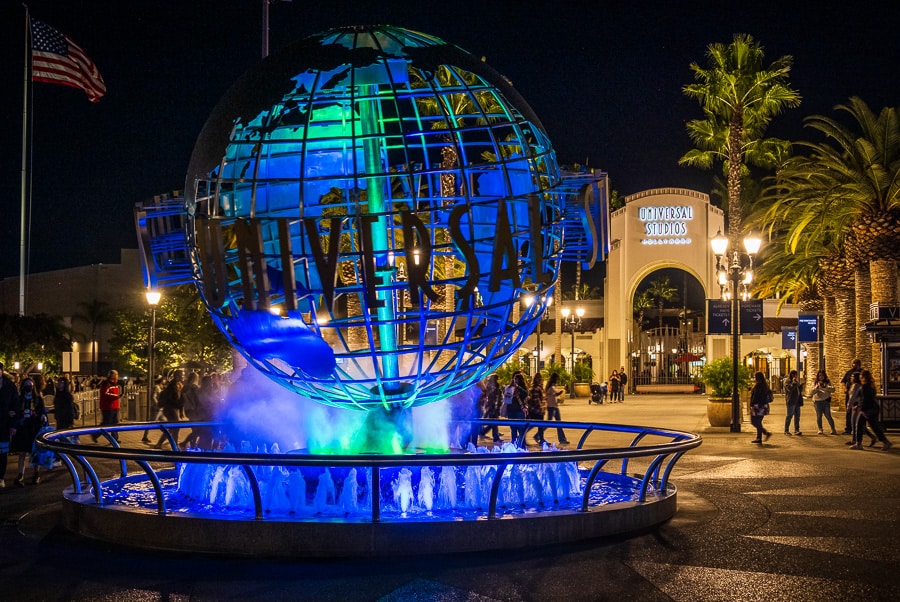
Ultimately, there’s a lot more ground to cover with this Universal Studios Saudi Arabia. Even though we fully believe this is a really-for-real project that will actually be built this time, we’ll wait to further discuss the theme park until Universal Destinations actually announces it.
We wouldn’t be surprised if Comcast doesn’t make this official for another year, waiting for more concrete plans before the big reveal. On the other hand, this isn’t like a replacement for Hollywood Rip Ride Rockit and whatever they’re doing in Lost Continent. Saudi partners will likely dictate the timing of an announcement, and Comcast might likewise be motivated to announce earlier for the boost they’ll get from Wall Street.
The licensing model makes it a safe bet from Comcast’s perspective, and one that’ll help fuel growth and fund projects that are actually financially viable for Universal. Meanwhile, state partners are motivated less by immediate profits and as much or more by prestige, meaning that Universal Studios Saudi Arabia could end up being the Epic Universe of the Middle East. (Here’s hoping they build more indoor attractions, though!)

Universal Studios Saudi Arabia has the potential to be a “spare no expense” project that is fully fleshed out from opening day. It’s way too soon to make any sweeping statements, but Universal Studios Saudi Arabia could become the best park in the company’s portfolio.
The biggest potential question mark (and impediment to that) might be whether both Universal Creative and Imagineering’s talents are spread too thin given retirements of the old guard and so many simultaneous projects now. But that’s another topic for another day.
Need trip planning tips and comprehensive advice? Make sure to read Theme Park Vacation Planning Guides, where you can find comprehensive guides to Universal Studios, Walt Disney World, Disneyland, and beyond! For news & rumors, review, photo updates, discount information, and much more, sign up for our free newsletter!
Your Thoughts
What do you think of the potentiality of Universal Studios Saudi Arabia? Think Comcast will actually move forward with the project? Is it a safe bet to do this type of licensing deal to help fund financially-viable projects in the United States and Europe? Where is your dream location for a new Universal theme park–either close to home or your favorite travel destination? Any other speculation, commentary, or questions? Hearing from you is half the fun, so please share your take below!




Excellent article as usual. Makes great sense, both economically given the subsidies and in geographical/demographic positioning, for both Disney and Universal. Interesting that, as in Japan, where Tokyo is a better location for tourists than Osaka, Abu Dhabi is a better location than Riyadh, there’s a first mover advantage by Disney; all four should be/have been successful though. For a variety of reasons, including the companies’ desire not to go head to head in a city (e.g., picking London rather than a continental location by Universal) and it’s excellent demographics and tourism connections, that I suspect Singapore would be of most interest to Disney for expansion. South America (essentially Buenos Aires or Rio) or Africa don’t yet have sufficient demographic/ economic attractiveness to be viable.
Argentina is doable. Patagonia more or less has the same climate as central Europe, so if it can work for Paris it can work there. Maybe they can demolish that town that was built by fugitive Nazis.
Sub-Saharan Africa only works as an Animal Kingdom style wildlife preserve. Have as little an ecological footprint as possible.
It’s notable how little outrage this announcement has provoked compared to Disney’s decision to build a park in the UAE for its poor human rights record, which is nonetheless far superior to Saudi Arabia’s. Is it because Comcast/NBC-Universal has never pretended to care about human rights or equality? Once again the double standard is glaring.
Sadly, it’s true. Universal has never claimed to take the moral high ground. Disney takes every opportunity possible to grandstand on the values they promote.
Maybe i wouldn’t be so hostile to Disney in Abu Dhabi if it wasn’t a castle park — a second Epcot might make more sense, since they try to brand themselves as this cosmopolitan crossroads of the world. As much contempt as I have for the UAE, I’d prefer Universal give Dubai another shot. Saudi Arabia is no different that Iran. But we turn a blind eye to their evil government because our oil companies love doing business with them.
It’s part that Disney doesn’t have the same reputation and history as Universal.
It’s also that the fandoms are simply different. There’s overlap, sure, but Disney fans have different expectations (thanks to Disney’s own actions statements).
Probably the biggest thing, though, is that this is not an official announcement. If Universal is really savvy, they’ll slow roll this (like they do so many projects) so that by the time it is made official, it’s already old news.
Most of the American companies that do business in Saudi Arabia don’t also own news divisions. Comcast does. And we’ve seen how deferential these big media companies are to the whims of those in power when their business deals require a government’s approval. It’s worrying…but I don’t think public opinion is going to matter.
It’ll be interesting to see how this plays out. I don’t know which Universal franchises are popular over there, and which might be considered problematic. Nintendo? Jurassic?
A park that has just taken my Least Likely to Visit crown with the mathematically rare “less than 0% chance” rating. Congrats!
BOOOO! BOOOO!
To those morally opposed to this project based on what the Saudis have been doing with sportswashing (LIV) and other recent investments to sanitize their image, they’re trying to be progressive, OK? You want them to go back to what they were doing? Do you want Saudi Arabia to just go back to cutting people up and paying Kevin Hart? Is that what you want? You can’t whine about a country trying to come into the 21st century.
they’re not trying to be “progressive”, they’re trying to find a new way to sucker in rich foreigners. As much as I hate the UAE, my disgust with companies sucking up to the Saudis is even greater. Almost makes me wish Universal would give Dubai another chance