Biggest Disappointments at Disney’s Best Parks
Hype can be dangerous. It can create sky-high expectations that are impossible to meet, leading to inevitable disappointment even when it comes to objectively excellent experiences. Disney Parks are not immune to this, especially given the practical realities of high wait times, crowds, costs, etc. That’s why we try to do our part by praising but also helping set expectations and offering practical planning advice.
This also applies to our two favorite theme parks on the planet, Tokyo Disneyland & DisneySea. These parks are not perfect–far from it. We’ve been singing the praises of Tokyo DisneySea for over a decade, imploring anyone who will listen to recapture the Disney magic by visiting Japan.
Since we do so regularly, we’ve been accused of being biased towards Tokyo Disney Resort. That isn’t true at all. For a while, TDR was in a league of its own thanks to different standards for everything from maintenance to food quality to guest service. We very rarely heard complaints about either. To the contrary, the consensus was that the parks managed to exceed even our high praise and overdeliver on expectations.
Much of this remains true as of Christmas 2026. And although Tokyo Disneyland and DisneySea are still Disney’s two best parks in the world, it’s also fairly undeniable that the parks have suffered notable losses and cutbacks since 2019. We’d argue that no Disney Parks were hit as hard by the COVID closures as Tokyo Disney Resort, and over 6 years later, there are still numerous negatives that were once thought temporary, but now seem permanent.
Saying a lot has changed since we first started effusively praising TDR would be a mild understatement. The ubiquity of smartphones with ever-improving translation apps. The explosion of social media, with hugely-popular influencers “discovering” Tokyo Disney Resort with each passing week.
Many of them see and share TDR through the rose-colored glasses of first timers, and arguably understate the practical realities entailed in visiting Tokyo Disneyland & DisneySea in 2026. Elsewhere, there are social media groups of dedicated American TDR fans that shut down even legitimate criticism; things few fans would tolerate from Walt Disney World or Disneyland are brushed aside.
To be sure, there are definitely many positives that come with visiting Japan in 2026 or 2027. Travel costs have decreased, the yen has gotten weaker, and Japan has become much more accessible. Look no further than Is It Cheaper to Visit Tokyo Disneyland Than Walt Disney World?
This is a point we’ve been making for over a decade, but it’s gone viral and mainstream recently. More recently, we’ve even discussed why Why 2027 Is a Golden Window to Visit Tokyo Disney for Lower Crowds & Prices.
Increased accessibility is a great thing! We absolutely love that more Americans are visiting Japan, and that the country is shattering its 2019 visitor records. That’s a great thing, but it also means massive crowds, especially in tourist-centric places like Kyoto (our favorite city in the world).
This is actually less of an issue at Tokyo Disney Resort, with is more of a domestic destination, but the parks are having their own problems that have been exacerbated by post-COVID cutbacks, the opening of Fantasy Springs, and myriad other factors.
We touched on some of this in Why Disney’s #1 Park is Getting 1-Star Reviews. As that title suggests, Tokyo DisneySea is receiving more and more 1-star reviews, largely from overwhelmed first-timers who visit unprepared for just how busy it is.
Here, we’re going to explain additional issues that can lead to disappointment at Tokyo Disney Resort, along with ways that you can plan around these problems to the greatest extent possible. Because although this is a negative post, the reality is that we still love TDR and return regularly.
In fact, we just wrapped up a little over three weeks in Japan, including a lengthy stretch at Tokyo Disney Resort for Halloween, Tokyo DisneySea’s 25th Anniversary, and pre-Christmas festivities. This was our best of six extended trips to Japan that we’ve taken in the post-reopening era, and there are many ways that TDR has improved in the last year. (Beyond the scope of this post, but Kyoto was the least busy that we’ve seen it since 2019, and that was a breath of fresh air.)
We covered one specific example a week ago in One of Our Biggest Disney Parks Pet Peeves is Finally Getting Fixed. There are several other instances of incremental improvements, from better seasonal decorations packages to expanded Single Rider (absolute game-changer) and more that we’ll cover in future posts.
That’s the positive. But there are also several lingering frustrations. We just want you to have a great experience, avoiding pitfalls, so you likewise fall in love with Japan and your once-in-a-lifetime visit to TDR becomes more than that. Because it’s easy to get caught up in the hype cycle and not prepare properly. With that out of the way, let’s dig in!
Entertainment Cutbacks
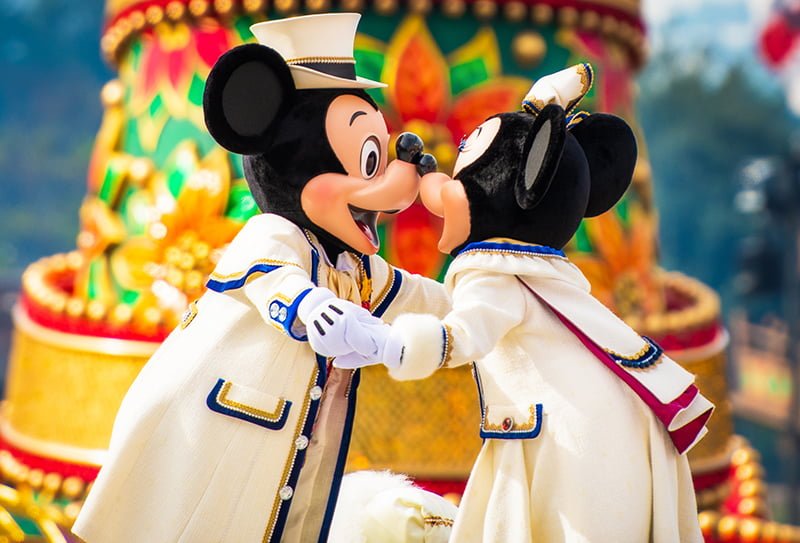
When we first started visiting Tokyo Disney Resort almost 15 years ago, our friends who lived in Japan were already lamenting the lack of entertainment and reminiscing about the ‘good ole days’ of Tokyo Disney Resort. This struck us as absolutely asinine, viewing the parks through the rose-colored glasses of nostalgia, or complaining just to complain. Some habits of Disney fans are universal!
Fast-forward to today, and we feel the way that they must’ve felt. If you visited Tokyo Disney Resort between the 30th and 35th Anniversary–or really any time before the closure in 2019–you know just how much is still missing today, and how the parks are shadows of their former selves in terms of entertainment.
If your first-ever visit Tokyo Disney Resort is today, you’ll likely think we’re all curmudgeons who complain too much. After all, the entertainment slate is head and shoulders above Walt Disney World or Disneyland–how could it possibly be any better?! If you’ve never had filet mignon, Hamburger Helper tastes great!
The fact is that Theatre Orleans and the Mermaid Lagoon Theater still sit empty, seasonal events are dramatically scaled-back in entertainment, and the replacement of Big Band Beat has been slow-rolled in order to spread out return visits and reduce costs. (The slow-rolling of everything new, an unfortunate byproduct of no Annual Passes, could be its own entry.)
Reduced Hours & Line Cutting
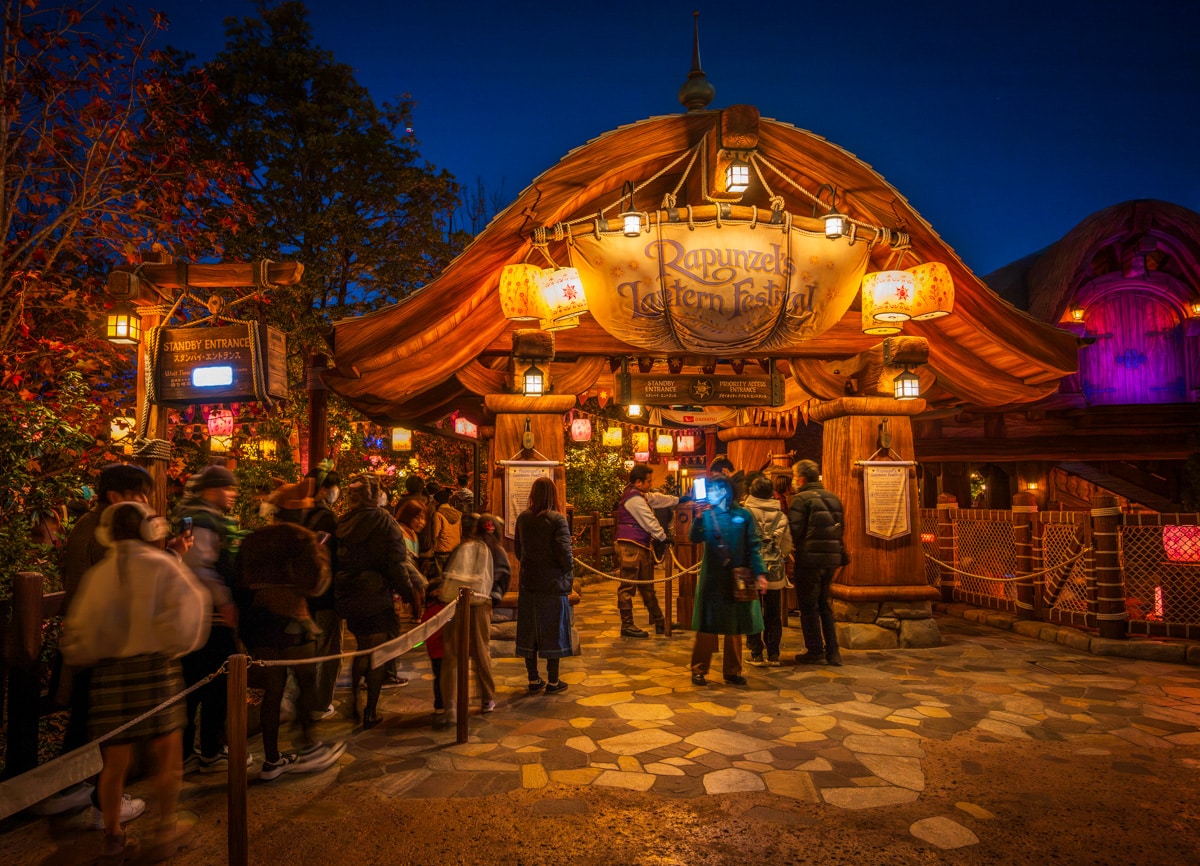
Prior to 2020, it was common for the parks to open at 8 am on busy days (or 9 am on normal days) and close at 10 pm. On top of that, you could typically hop in line for attractions right up until park closing.
Now, hours are pretty much 9 am to 9 pm across the board, and standby lines are routinely cut over an hour before park closing on headliner attractions. Only paid Premier Access guests are allowed to enter later. As a general rule, TDR now cuts standby when the wait time plus the current time more or less corresponds with park closing. It’s not precise, but we’ve seen lines cut ~2 hours before park closing on peak dates by following that formula.
The line-cutting is understandable to an extent, as Tokyo Disney Resort has opened a ton of high-profile headliners in the last few years and they post triple-digit wait times late into the day. Most Cast Members rely on the trains to get home from work, so there’s only so late that queues can stay open, but past precedent is fairly conclusive that time is far later than 8 pm. I’m sure that lines were cut in the past on busier dates, but it’s something we never experienced until post-COVID. (It didn’t even happen during our visits in 2019 shortly after Soaring Fantastic Flight opened.)
However, it’s also fair to point out that this is a problem of Tokyo Disney Resort’s own creation by virtue of the later opening time, earlier closing time, and monetization of line-skipping. Losing 2 operating hours per (busy) day is a big blow, especially given the average wait times at these parks.
Lotteries & Virtual Queues
One of the most common complaints we heard from Walt Disney World fans for years was about virtual queues. Neither WDW nor Disneyland currently uses virtual queues for any attraction, and probably won’t until at least 2028.
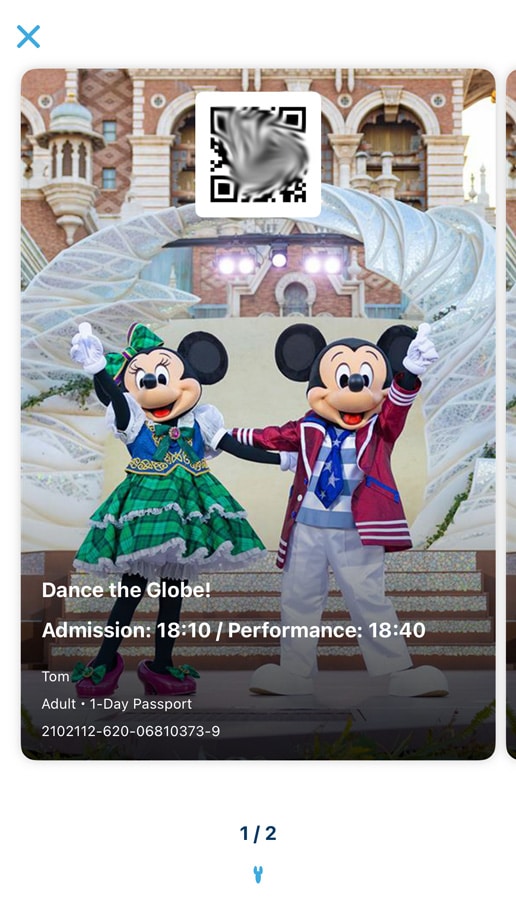
By contrast, there are 5 stage shows plus character meet & greets that use Entry Request, which is Tokyo’s twist on the virtual queue. Except there’s no skill involved here, as this is a regular ole lottery and it’s really easy to lose. We rarely win!
Adding insult to injury, some experiences with Entry Request also have Premier Access, meaning there’s no option to simply wait in line. You either get lucky with the lotto, pay-to-play, or miss out. There’s something about this that rubs us the wrong way, just as we disliked virtual queues on Lightning Lane Single Pass attractions in the domestic parks.
As a result of this dynamic, we have not seen D-Groovationz4 Live: Happy! Funky! Groovy! Tour or Dreams Take Flight, despite three trips since the latter debuted and over a dozen attempts. (Now that’s really bad luck.) We’ve been more fortunate with Dance the Globe, already catching it a couple times.
In addition to that, there’s the separate Standby Pass, which is used for entering stores during peak times (this is more rare). This can be somewhat like playing the Lightning Lane refresh game–in the sense that availability is distributed first thing in the morning, but then there are refills throughout the day.

Long Lines for Food
It’s always been the case that popular snacks drew long lines at Tokyo Disney Resort. Even when we first started visiting, one of the (true) tall tales about the park was that its exotic popcorn flavors often had 30-minute lines. I still can’t quite fathom why popcorn popularity is one of the things that ‘broke through’ even pre-social media…or why the lines or so long in the first place.
In any case, the long lines now aren’t just for snack stands, they’re also for counter service restaurants. It’s common to encounter a 20 to 45 minute wait to order during the lunch or dinner rushes at the most popular options. What’s really frustrating here is that this lack of dining capacity is exacerbated by shuttered snack stands.
The good news is that mobile order now exists at many counter service restaurants at Tokyo Disney Resort. However, slots do fill up early on busier days, so we’d highly recommend placing your mobile orders for lunch and dinner while in your first standby line of the day. Don’t wait until closer to lunch, as return times will often already be several hours into the future.
Once you have your food, be prepared to spend time searching for a table. On busier days, guests will save spots before having food and loiter around after eating. While it’s easy to be annoyed at others, this is a failure of management to have adequate dining capacity for crowds, or to give guests alternatives so they have been options besides occupying tables.
Crowds to Enter the Parks
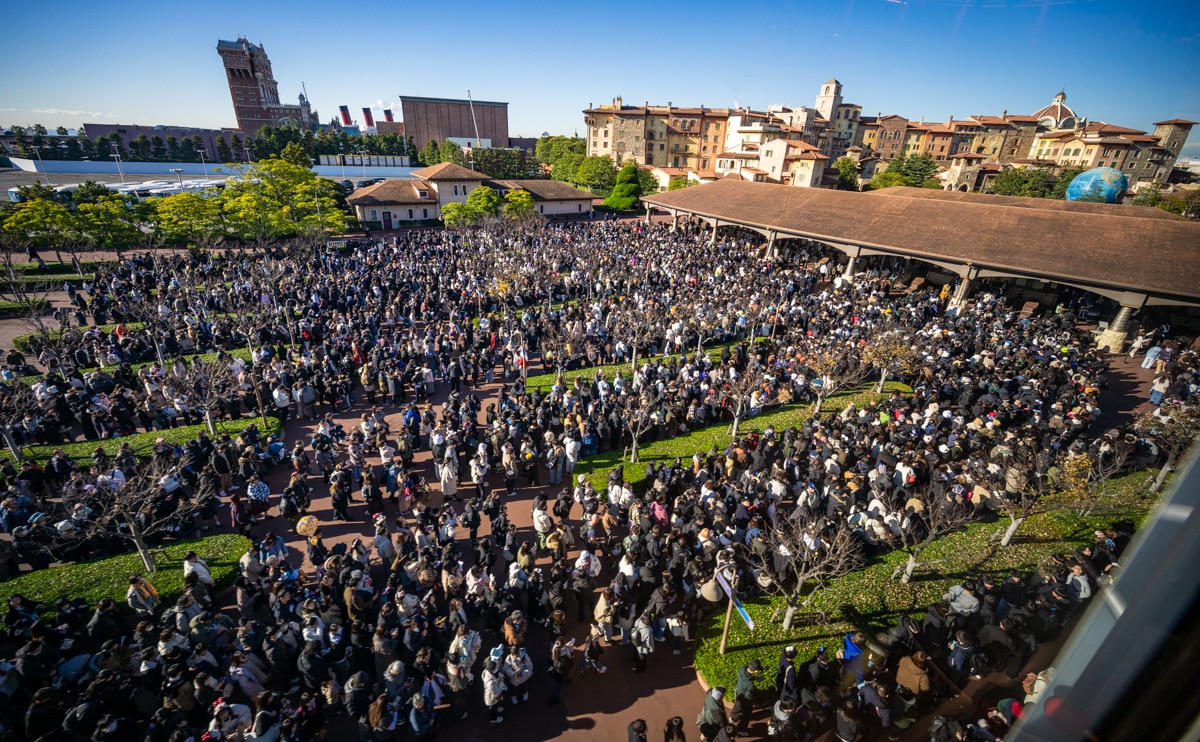
You’ve probably seen photos from the monorail showing massive lines waiting to enter the parks. The bad news is that the already early-arriving crowd now arrives even earlier and camps out waiting to enter both parks, but especially Tokyo DisneySea due to Fantasy Springs.
The first bit of good news is that you don’t need to totally forgo sleep on your vacation to Japan. Just because Japanese guests arrive at 5 a.m. (or whenever) doesn’t mean that you need to follow suit. You can safely arrive after 7 a.m. The other good news is that the parks sometimes open earlier than the published opening time of 9 a.m. The time varies from day to day and is driven by demand.
The other bad news is that entering the park is a crapshoot. Some days, the process is smooth and arriving 90 minutes before park opening can be hugely advantageous and involve minimal friction. Other days, the entrances are understaffed and security takes forever even an hour after park opening. Security is always the sticking point–the turnstiles are efficient, especially at Tokyo Disneyland.
High Wait Times
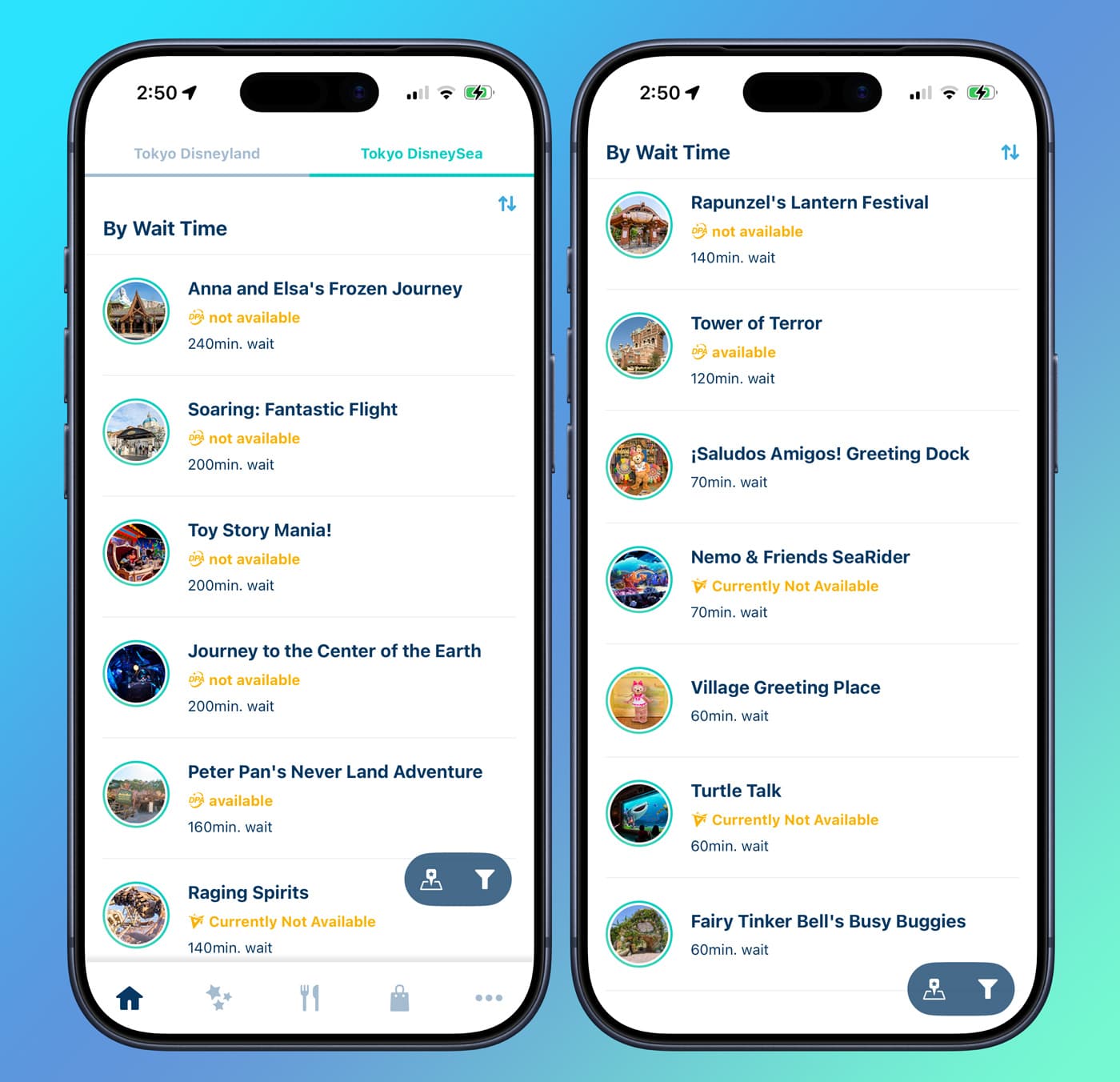
You will find several headliner attractions in each park that have wait times over an hour on a regular basis, with triple-digit wait times being par for the course with the most popular attractions.
It’s especially bad at Tokyo DisneySea. You’ll often see around 8 attractions with 100+ minute waits and about half of those will have 200+ minute waits. Another half-dozen rides will break the 60 minute barrier. There’s no reprieve even on the kiddie rides in Mermaid Lagoon or transportation attractions, most of which are frequently 30+ minutes. See Here’s What Disney’s Busiest Park is Like on Its Worst 10/10 Crowds Days for just how bad this can get.
The perception of crowds is arguably exacerbated by the aforementioned rope drop lines. If you arrive “on time” for park opening, you’ll likely be experiencing both the longest wait times (they peak for most headliners within the first two official hours of the morning) and the worst congestion (because everyone is still entering and the parks haven’t yet absorbed everyone). That makes for a negative first impression and can start the day off on a sour note.

There’s also seasonality to crowds, arguably more so than Walt Disney World or Disneyland, especially in the absence of Annual Passes. If you visit during Golden Week or around another public holiday, you will encounter some of the worst wait times of your entire life. We’re talking consistent 120 to 240 minute waits for a half-dozen attractions in each park, and very few rides with wait times under an hour. On the other hand, a summer visit can be blissfully uncrowded.
It seems that experienced American Disney fans struggle with Tokyo Disney Resort crowds in two regards. The first is not being prepared, showing up late (officially on-time), and running into lines everywhere they look. The second is being prepared and expecting similar outcomes to Walt Disney World or Disneyland, and getting frustrated that many other guests are also well-prepared. Consequently, you’ll find that the early rising, staying late, or other savvy strategies that are fruitful at the U.S. parks don’t work nearly as well in Japan. All of this can be incredibly discouraging.
TDR fans are the most zealous Disney fans on the planet (making Disneyland diehards look tame by comparison), and the Japanese seemingly have a far greater tolerance for waiting in lines than Americans. But to that point, you should find crowds at the parks are consistent with those throughout Japan. I honestly don’t know whether that’s a good or bad thing.

Increased Upcharges
It seems like Oriental Land Company picked up the Walt Disney World playbook of upcharge offerings, and once that happens, there’s no putting the genie back in the bottle. TDR does not have Genie or Lightning Lanes, but there is Premier Access, which is a la carte line-skipping at popular rides.
This is far from the only thing. There’s now Premier Access for entertainment, including parades and nighttime spectaculars, and it’s going to be even more expensive in 2027 for new attractions like the Wreck-It Ralph Sugar Rush: Sweet Rescue ride. There are also paywalled shows (like Duffy and Friends’ Wonderful Friendship), the best early entry is only for the most expensive hotels (sound familiar?), and more I’m probably forgetting.
Foreign fans are fairly forgiving of all of this, despite being critical of similar practices at the domestic parks. We can only assume this is due to the favorable (for now) exchange rate and the reality that with limited vacation time and infrequent visits, buying your way out of lines/crowds is preferable to wasting time. (Now you know how average, non-diehard tourists view the domestic parks, and being able to buy their way out of inconvenience.)
Regardless of the rationale, this is a complaint about Walt Disney World and Disneyland that’s also happening at Tokyo Disney Resort…and getting progressively worse. It doesn’t help that Premier Access can sell out fast on busier days, adding another reason to arrive early.
Camping Out for Parades
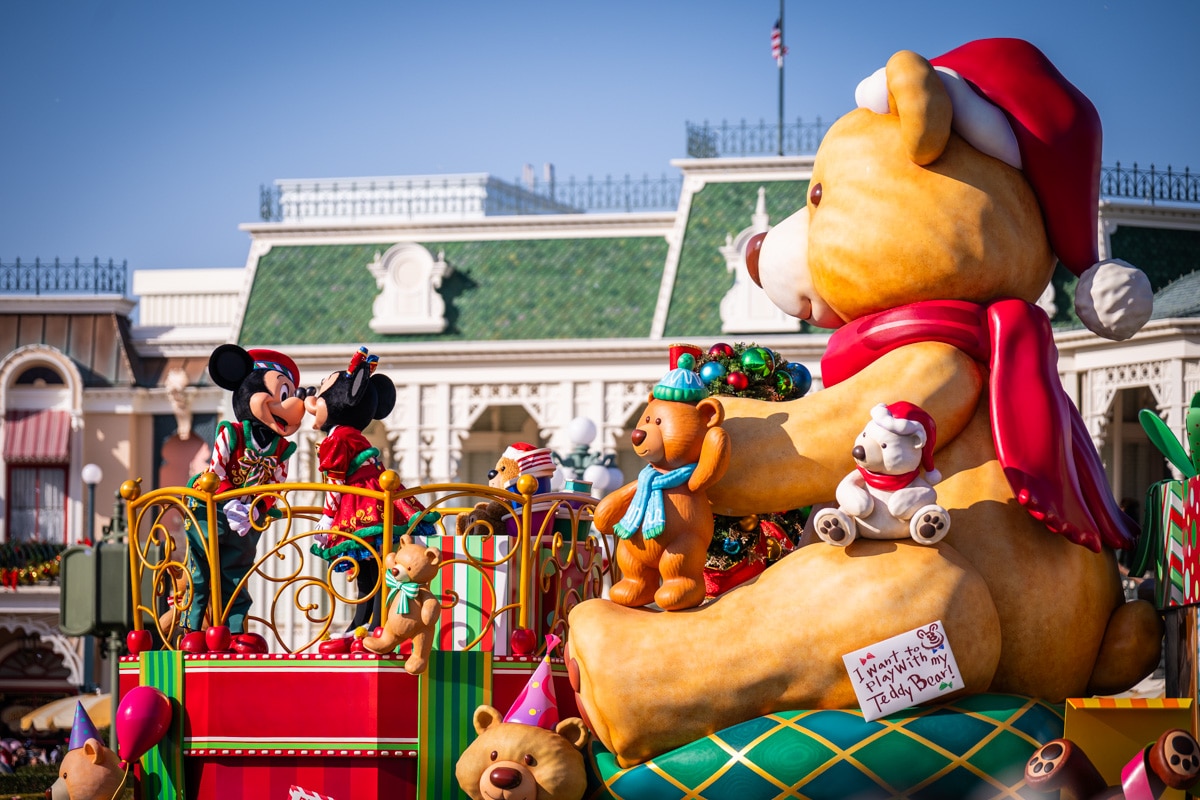
There are some days when diehard Tokyo Disney fans will rope drop Tokyo Disneyland…to camp out for parades. Images of this have gained traction on social media, and are intended to illustrate how “broken” things are right now.
It’s true that this happens, and it is perceived as a problem. Frankly, I think this one is somewhat overblown. It mostly happens at the start or end of seasons, when parades are new, returning, or concluding and fans are most excited to see them.
It’s also true that even on a normal day, parade crowds are massive and early arriving. You could camp out for over an hour and still not get a prime, front row location. However, Cast Members are strict about guests actually sitting down in the seating areas, which makes the viewing experience better for all.
We regularly arrive ~15 minutes before showtime and either get the back section of the sitting area or front of the standing area. We have zero complaints whatsoever about this. Still something to have on your radar if you really want a front row spot. Either adjust your expectations about when to arrive, or be satisfied with a seat a bit further back (trust us, the latter is the way to go).

Merchandise and Meet & Greet Mayhem
We’d caution you against perusing photos of Tokyo Disney Resort merchandise and coming up with a list of must-buy items during your visit. This is a recipe for disappointment.
It’s increasingly common for items to sell out entirely on the day they go on sale, especially seasonal goods. But don’t worry, you can still shop the selections via eBay pirates or personal shoppers…for only a “modest” markup (triple or so the base price!). We’ve come to terms with this, but were nevertheless surprised when reusable bags were sold out during our two most recent trips.
Character meet & greets are obviously a different ballgame, but similarly an area for disappointment. We’ve only had a few downright bad meet & greet experiences, and all of them have been with dedicated character meet & greets at Tokyo Disney Resort. Honestly, these made me understand why Japanese fans come to the U.S. parks and focus on characters.
There are silver linings, though. This note of ‘character caution’ only applies to meet & greet venues (spots that post wait times). Roaming characters are fantastic, albeit chaotic. The interactions are typically wonderful, and we do these exclusively now. Our daughter loves them.
Similarly, merchandise at Tokyo Disney Resort can be fantastic so long as you’re not dead-set on specific items. Just go in without any prior knowledge or expectations, peruse shops, and you’ll likely come home with plenty. We usually shop in mid-afternoon when the fewest people are entering or leaving the parks to avoid the worst of the crowds.

Weak Wi-Fi
When traveling to Japan, it’s a necessity that you carry a pocket Wi-Fi, e-Sim, or have an international data plan. Public Wi-Fi does exist, but it’s spotty. This extends to Tokyo Disney Resort, where there’s only Wi-Fi around the front entrances of the parks, and it’s pretty unreliable.
The reason this is an issue is because the “race” to purchase Premier Access upon entering the park is a mad dash, with everyone (quite literally) stopping in their tracks upon entering the parks to make these ride reservations. It’s a similar story when trying to make same-day Priority Seating reservations during the morning drop, and place or execute a Mobile Order.
We don’t normally have connectivity issues in Japan, but have frequently had problems in this exact situation when milliseconds matter, especially for Anna & Elsa’s Frozen Journey and other headliners. It seems due to the concentration of people in one specific spot (we’ve used both T-Mobile International Pass and pocket Wi-Fi and encountered similar issues).
There have been so many times when we’ve had return windows vanish out from under us because our internet connections have been too weak (this has also happened with mobile order). The Wi-Fi actually being usable might solve this.

Overpriced Vacation Packages
Back in the day, we were vehemently anti-Vacation Packages for years. Readers occasionally asked about them, and our advice was always that they’re a waste of money and offer nothing you can’t do yourself for cheaper. This remains the “objectively correct” perspective, as you’re paying a premium for convenience. Think of the Vacation Package as Tokyo’s version of the Disney Dining Plan.
The opening of Fantasy Springs has changed the game. With the debut of this new port of call, we felt “forced” to purchase the Vacation Package. Those are air quotes around forced because, obviously, doing a theme park is not a matter of life and death. But if we wanted to be able to guarantee ourselves the ability to ride the new Peter Pan, Frozen, and Tangled attractions…and that was the only option initially.
We bought the Vacation Package and would absolutely do it again. As of 2026, the big reason to buy a regular Vacation Package is to lock-in Premier Access selections prior to your trip, which allows you to be less stressed at rope drop, wondering whether you’re going to be able to get your preferred selections or if they’ll already be sold out by the time you enter.
At this point, we highly recommend that readers purchase the Vacation Package. It lowers the stakes considerably, removing a lot of stress and making the parks much more manageable, even on busier days.

BONUS: Ride Refurbishments
This is not a problem from our perspective, but we’re including it because other Disney diehards might feel differently. Especially since we’ve noticed that many Walt Disney World fans will complain when two headliners are closed for refurbishment simultaneously. Not two in one park, two period–across all 4 parks.
Paradoxically, Walt Disney World fans also complain that maintenance standards aren’t up to snuff, that attractions have broken effects, or are unreliable and suffer unscheduled breakdowns. It seems like everyone wants regular and routine refurbishments…just during someone else’s vacation!
Obviously, you cannot have it both ways. I can assure you that no matter when you choose to visit Tokyo Disney Resort, you will encounter multiple refurbishments in each park. There have been trips when 4 of our favorite rides have all been down at the same time–it isn’t even uncommon.
Suffice to say, TDR is aggressive about maintenance. We view this as an asset, but we’re repeat visitors. The good news is that the schedule is announced many months in advance, so you should be able to plan your trip around it.

BONUS: No Annual Passes (or Multi-Day Tickets)
If you follow Tokyo Disney Resort regulars on social media (or even this blog, since we’ve complained about it), you’ll notice that the ongoing suspension of Annual Passes is a sore subject.
More noteworthy to you is the ongoing lack of multi-day tickets. It really surprises me that this is still the case, and TDR hasn’t brought back the 2-day to 4-day tickets that used to be offered. Park Hopping is also limited, only available for select dates and via tickets that are nearly double the price of regular 1-park, 1-day tickets.
While I’d love all of this to be restored, it honestly doesn’t bother me a ton because single day tickets are “cheap” thanks to the favorable exchange rate, and the current system offers more flexibility for breaks in between visits. Granted, we usually do long stays at TDR and are fine skipping the parks on dates that tickets sell out. This makes us the atypical tourists, most of whom have less time and flexibility.
As for Annual Passes, I’m only addressing this because it’s such a common complaint with locals. It’s a bad thing for them (and us), but almost certainly a good thing for you. The lack of APs keeps crowds down, means weekends aren’t a total madhouse, and just generally makes the parks more pleasant.
It’d be a similar story at Disneyland–a lot of Californians would complain loudly about it, but ditching Annual Passes would be positive for tourists. Enjoy it while it lasts, because Tokyo Disney Resort won’t be AP-free forever.
Finally, we want to emphasize that none of this is intended to scare you away from visiting Tokyo Disney Resort. To the contrary, we strongly encourage visiting. We just had a fantastic trip ourselves, and are already planning a return visit. Again, we wouldn’t be doing this if we felt TDR was no longer worth it. These are still the two best parks in the world.
At the same time, it isn’t doing anyone any favors to pretend that Tokyo Disney Resort is perfect or above reproach. That’s the dominant discourse, and the extent to which some fans and entire social media communities shut down dissent is concerning.
It is possible to have negative experiences, and it’s also possible to mitigate the likelihood of that happening by being properly prepared and knowing the pain points. Glossing over that is doing fellow tourists a disservice. So here’s hoping that this helps you properly prepare, as opposed to scaring you away from visiting. These parks are incredible places, and we recommend them enthusiastically.
Planning a trip to Tokyo Disney Resort? For comprehensive advice, the best place to start is our Tokyo Disneyland & DisneySea Trip Planning Guide! For more specifics, our TDR Hotel Rankings & Reviews page covers accommodations. Our Restaurant Reviews detail where to dine & snack. To save money on tickets or determine which type to buy, read our Tips for Saving Money post. Our What to Pack for Disney post takes a unique look at clever items to take. Venturing elsewhere in Japan? Consult our Ultimate Guide to Kyoto, Japan and City Guide to Tokyo, Japan.
YOUR THOUGHTS
If you’ve been to Tokyo Disney Resort in both the post-reopening era and pre-closure, what are your biggest complaints or changes that have impacted you most adversely? xxx? Have you experienced triple-digit wait times for most headliners and lengthy lines even for popcorn or waffles? Agree or disagree with our complaints? Other thoughts on avoiding crowds at Tokyo Disneyland? Share your thoughts or questions in the comments below!