
Is Walt Disney World Too Expensive for Middle Class Americans?

Fans have complained that “Disney World is pricing out the middle class,” criticized the company for “catering only to the wealthy” and no longer wanting to fulfill Walt’s dream as a place where ordinary American parents and children can have fun together. While we’ve understood the frustration, we’ve also pushed back on these notions. However, there are a couple of new developments suggesting that maybe Disney is aiming for the affluent.
First is a bombshell new report from the Wall Street Journal that the top 10% of Americans account for 50% of all consumer spending in the United States. Households making about $250,000 a year or more are splurging on everything from luxury goods to extravagant vacations.
Those consumers now account for 49.7% of all spending, a record going back to 1989, according to a analysis by Moody’s Analytics (based on U.S. Federal Reserve data through the third-quarter of last year, the most recent data available). Three decades ago, the top 10% accounted for about 36% of consumer spending.
Over approximately the last year, the highest earners have increased their spending by 12%. Over the same period, spending by working-class and middle-class households dropped. As this spread widens, spending by the top 10% now accounts for nearly one-third of United States gross domestic product.
Consumer spending among affluent Americans has been boosted by big gains in stocks, real estate, and other assets. This makes sense. The top 10% owns 87% of the stocks in the U.S., as well as 84% of private businesses, 44% of real estate, and 67% of overall wealth. Since 1989, every single one of these numbers is up significantly.
The result of these increases is that the wealthiest Americans have increased their consumer spending well above inflation, whereas other cohorts have not. The bottom 80% of earners spent 25% more than they did four years earlier, barely outpacing price increases of 21% over that period. The top 10% spent a whopping 58% more.
Given all of the aforementioned numbers, a stock market selloff or decline in home values that rattles the confidence of the top 10% and causes them to cut back would have a significant effect on the economy. Consumer sentiment is starting to slide overall, including for the wealthiest third of consumers.
Consumer confidence can be a self-fulfilling prophecy, and one that has wide-ranging consequences. One of which could be a stock market correction, which could have profound impacts on Walt Disney World and beyond. That’s especially true given the overreliance on the top 10% continuing to spend, but that’s beyond the scope of this post.
The bottom line is that economic growth is unusually reliant on rich Americans continuing to spend. And by extension, Walt Disney World’s financial growth is likewise increasingly reliant on the top 10% of Americans, or affluent international tourists and other comparable cohorts.
The other development comes from another Wall Street Journal report, which we’ve already covered at length in Walt Disney World is Worried About Its High Prices and its progeny of posts. That really was a fantastic piece, and included many details that we’re still fully digesting. That included this little beauty:
Walt Disney World pushed back against WSJ’s estimated costs of a typical four-day visit, saying they were exaggerated and didn’t take into account the range of value options available. According to Walt Disney World, “a four-day trip for a family of four in the fall could cost as little as $3,026 before food and transportation costs…and guests don’t need Lighting Lane passes to have a great time.”
That $3,026 is before food and transportation, excludes Lightning Lanes, and requires visiting in August or September (they didn’t say the last part, but we know those are the cheapest times to visit Walt Disney World in the fall).
According to U.S. Bureau of Labor Statistics, the average price of round-trip airfare was $243 last August and $250 last September. For the entire third quarter, the U.S. Bureau of Transportation Statistics has a higher statistic, $365.64. It appears that different methodology is used, but both are nationwide averages.
Meaning that you’ll be paying more if you’re flying out of Cold Bay Airport in Alaska ($1,176 on average), but less out of Chicago-O’Hare or Dallas-Love Field. Anecdotal, but I flew out of Los Angeles (LAX) and John Wayne (SNA) during those two months last year, paying under $200 for the former and just over $250 for the latter. But I also use airfare deal trackers and have flight flexibility.
Regardless, we’re going to play this conservatively and stick with the lower $243 number. The silver lining here is that airfare is actually down since 2019. This airfare adds another $972 to the total. From MCO, ground transportation will also be necessary, and we’ll use Mears Connect for that, adding another $116 to the total.
After transportation, this brings Walt Disney World’s own number to $4,114.

Now let’s do food.
Our own price analysis, How Much Does It Cost to Go On a Walt Disney World Vacation in 2025?, does account for dining. We have four tiers, mirroring Walt Disney World’s own Value, Moderate, and Deluxe Resort hierarchy–along with the addition of a frugal class for guests staying off-site and trying to do Disney as inexpensively as possible. Based on the overlap of our and Disney’s numbers, it appears their numbers are based on our value tier.
Our food costs from that tier are $700, which is about how much it’d cost to pay out of pocket or purchase the lower-tier of the Disney Dining Plan. This brings the ballpark Walt Disney World vacation total cost to $4,814.

Above is a graph from the WSJ showing vacation starting budgets by U.S. household income quintile, along with typical costs for a 2-day Walt Disney World trip. Note that the numbers above were for 4-days, hence the discrepancies. Again, this doesn’t account for airfare, but does include food.
This data analysis was done by TouringPlans, but what I found more illuminating was their deeper dive into how much of a Walt Disney World vacation each quintile of American households can afford in 2025. Notably, this is based on the US Bureau of Labor Statistics Consumer Expenditure Survey (CES), so the same government agency that produced our more conservative airfare number above.
BLS CES data reveal the following full-year travel budgets for each quintile: lowest 20% ($612), next 20% ($1,118), middle 20% ($1,187), second-highest 20% ($3,076), and top 20% ($7,516). That’s not the single starting budget for a specific trip, but what each quintile actually spent on travel in 2023 (the last year for which data is available).
This means that the cheapest Walt Disney World vacation exceeds what every single quintile except the top 20% spends on travel, on average. (Even the top 20% spends less than our own cost-analysis of deluxe-tier Walt Disney World vacation.) At the risk of stating the obvious, these numbers are concerning! They reinforce the notion that Disney is pricing out the middle class, and increasing dependent on the top 20%–or top 10%.
However, the numbers are not conclusive of that. There’s an undeniable nexus between income quintiles and travel spending, but it’s not definitive.
It’s a fool’s errand to conduct an analysis of Disney pricing out the middle class–or any of the quintiles of consumers–based solely on spending and income data. There are over 125 million households in the United States, and Disney only needs to capture a small percentage of them each year. And that’s assuming no one visits from overseas, which is obviously inaccurate.
What various tiers of average American households spend per year on travel is only part of the equation. All it takes is the outliers to skew things completely. Nevermind credit card debt, saving up for expensive vacations, multi-generation trips funded by grandparents (more likely to be in that top 20% than their millennial children), etc.
Our own analysis has shown significant increases since 2019, with the bulk of these concentrated in 2021-2022 due to a mixture of massive price increases, reduced discounting, and the loss of perks that used to be built into the price of packages or admission.
As we’ve pointed out previously, Walt Disney World did not raise ticket prices between December 2022 and last year. That was unprecedented. Between that and better deals, the effective prices most people paid for Walt Disney World vacation packages actually decreased last year vs. 2021-2022 (or parts of 2023).
Ticket prices are up in 2025. Menu prices have also continued to go up, but what we’ve seen at counter service restaurants is an increase below the rate of inflation and their real world counterparts. Walt Disney World quick-service is often less expensive than meals at Panera, Chipotle, or other fast-casual restaurants as of 2025. That’s actually the rare positive change versus 2019.

All things considered, there’s a reasonable possibility that you’ll pay less in 2025 for the cheapest Walt Disney World vacation than the same trip would’ve cost in 2022. (To be clear, it’s still a massive increase over 2019.) This is doubly true if you can manage to take advantage of discounts.
In each of the last two years, Walt Disney World has offered a 4-Day, 4-Park Magic Ticket that encompass travel dates throughout the off-season months of August and September (as well as April through July, but those are more expensive months to visit, so not really relevant for our purposes). With no new rides opening this year and competition from Epic Universe down the street, there’s every reason to believe this deal will be back by April 21, 2025 at the absolute latest (potentially as soon as next month if there are blockouts for Easter).
There’s also every reason to believe that Walt Disney World will soon offer another room-only discount for these months. Last year’s deal brought the All Stars down to as low as $118/night during the off-season and Pop Century to $160/night. Given that hotel rack rates barely budged for 2025 and demand has decreased, it’s safe to expect those prices again.
These deals alone could reduce vacation costs in August and September 2025 by over $2,000. (Our estimate is up to $2,600 in savings during the off-season with a 4-night weeknight stay via room-only discounts and the 4-park ticket deal. Most of the savings come from the latter–that ticket deal has been insanely good for those who can take advantage.)
This cuts the cost of the previous baseline $4,814 Walt Disney World vacation roughly in half. Even assuming families cannot take advantage of the absolute cheapest days because they (unsurprisingly) fall right after school goes back into session, we’re still looking at an early to mid-August cost of under $3,000 after those (assumed) discounts.
This is why I expressed surprise at the company’s odd highlighting of discounts to underscore its affordability in Disney Responds to Rising Costs Criticism. As discussed there, Disney’s statement felt a bit Bluthian. Savvy consumers and longtime fans (or newbies with an experienced travel agent) could almost certainly do a 4-day trip to Walt Disney World for less than $4,814.

This is not to paint Walt Disney World’s costs or affordability to the middle class in a more favorable light. If anything, this should further reinforce what the data reflects: Walt Disney World is increasingly out of reach for at least half of U.S. households, even assuming the cheapest rate seasons and most favorable discounts.
Where we disagree with the is the notion that Walt Disney World is now catering only to the wealthy–or even the top 20% of American households. It is probably fair to say that the top 20% is overrepresented at Walt Disney World as compared to most domestic destinations, but that’s not the same as “only” or even “mostly.”
It’s also undeniable that many middle class Americans have already started to trade down from premium to cheaper vacations–beaches, state and National Parks, and even certain cities. Or destinations within driving distance. There’s no shortage of data that suggests this is happening, including consumer spending in other areas or Orlando International Airport’s own passenger numbers (travel to MCO has only slowed slightly, but Universal and Disney attendance is down to a disproportionate degree).

While Walt Disney World is fairly viewed as a premium product, it’s more difficult to argue that it’s a luxury product. And there is a big difference. Although there are between 25 million and 50 million households that can afford Walt Disney World vacations based on the BLS data, that also assumes that every single one of them wants to visit Walt Disney World for more than just one-off rite of passage vacations. Bluntly, there are not enough wealthy Americans in this subset to fill the parks and resorts on a daily basis.
The top 10% has more means to fund lavish Walt Disney World trips, but that also means the same is true of extravagant European holidays, cruises, etc. They have more options, in general, and there’s more competition for their dollars and time. Money alone does not necessarily increase their interest in Disney as a destination.
As we’ve pointed out on countless occasions, the rich are not booking motel-style rooms with exterior hallways at the Value Resorts, let alone the many nearby off-site budget hotels that Disney relies upon to fill the parks. The core demographic of the All Stars is probably the middle 20%, and the off-site budget motels are likely below that.
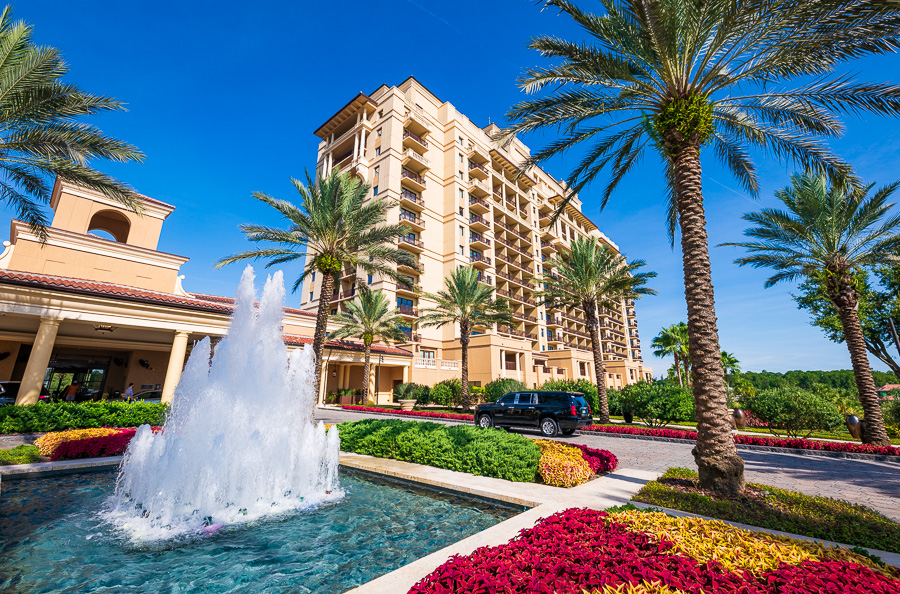
Even on the high end, Deluxe Resorts don’t offer the caliber of service, amenities, or general quality the wealthy expect of real world destinations. This is why Disney “outsources” luxury to Four Seasons on the hotel side. There are low-volume niche experiences at Walt Disney World aimed at the wealthy, but they’re relatively insignificant in the grand scheme of things.
Walt Disney World is a middle class vacation destination–that’s its bread and butter. Park attendance and occupancy are still reliant on the middle class, and that demographic being willing and able to spend the ever-increasing amount that a Walt Disney World vacation costs, whether that means saving, splurging, going into debt, etc. Disney is trying to squeeze the middle class, not exclude them.
The latest report from the Wall Street Journal about the top 10% account for half of consumer spending is concerning. As is the Walt Disney World vacation budget versus actual cost disparity. But this does not alter my fundamental view that Walt Disney World is inherently an aspirational or premium product that appeals to the middle class, and not a luxury product aimed at the wealthy.
If anything, these new reports are slightly more worrying for me than that alternative. In light of the above numbers, it’s difficult to square how Walt Disney World’s core customer continues to afford its product. Something’s gotta give.

Nevertheless, we actually would expect Walt Disney World to aim more upmarket going forward.
This is not a particularly bold prediction, as it’s already happening. The hospitality industry in general is chasing higher-spending customers, with airlines reducing their inventory of economy seats and replacing them with fewer premium cabins and hotels replacing standard rooms with suites.
Walt Disney World has been less aggressive in doing this, often instead converting hotel rooms to Disney Vacation Club villas. Similar animating idea, different means to that end. Without having any supporting data, it’s probably safe to assume that new DVC buyers are largely from the top 20%. There’s a reason that Disney Lakeside Lodge is full steam ahead on construction despite several other properties in active sales, and direct DVC sales continue to show strong growth.

There’s also a huge unsatisfied market for more concierge lounges at Walt Disney World. In the last few years we’ve noticed that Club Level rooms are often excluded from discounts, or have no availability. This is quite the change from 5+ years ago, when it was common to luck into free Club Level upgrades due to low occupancy. We wouldn’t be the least bit surprised to see Walt Disney World continue to add to its resort inventory aimed at the top 10% (or top 5%).
This is also hardly a bold prediction; it’s exactly what Disneyland Resort is doing. Disney just announced the expansion of two of its Club Level lounges, along with a brand-new lounge and premium suites to launch in 2025 and 2026. Now there will be 4 concierge levels at Disneyland’s 3 hotels. There’s plenty of untapped demand for more premium accommodations at Walt Disney World, and we’d expect that to be filled in Florida, too. (By contrast, I’d be surprised to see more Value Resorts anytime soon.)
Lightning Lane Premier Pass is another example of this already happening. This is due, at least in part, to Walt Disney World hitting a wall on pricing for its mass market (e.g. middle class) line-skipping services. If anything, Disney offering increased discounts and slowing the rate of price increases since 2022–while adding new premium products–suggests to me that the company realizes the middle class is financially tapped out, but Walt Disney World still very much needs them.

Ultimately, we’d expect more of this approach going forward. Even though the top 20% is not Walt Disney World’s bread and butter, the company will continue targeting that segment with new and differentiated product offerings because, as illustrated above, that’s clearly where the money and growth potential lie.
And each new announcement of such upcharges will continue to be met with a chorus of complaints, inflicting brand and goodwill damage among Walt Disney World’s actual bread and butter. Basically, this upmarket strategy will work…until it doesn’t. There are countless reasons as to why that could happen (some of which are discussed in the opening), but it could pose problems for the company. The potential for these issues increases as consumer perceptions increasingly view Walt Disney World as a destination for the wealthy.
Once that middle class reputational damage is done, it’s hard to undo. This is precisely why we’ve repeatedly emphasized the importance of improving the guest experience and satisfaction (among other metrics), as well as the hugely negative long-term ramifications to pricing out families and alienating longtime fans. The top 10/20% undeniably has more money to spend on fancy one-off rite-of-passage vacations, but it’s still middle class families that are the lifeblood of Walt Disney World.
Planning a Walt Disney World trip? Learn about hotels on our Walt Disney World Hotels Reviews page. For where to eat, read our Walt Disney World Restaurant Reviews. To save money on tickets or determine which type to buy, read our Tips for Saving Money on Walt Disney World Tickets post. Our What to Pack for Disney Trips post takes a unique look at clever items to take. For what to do and when to do it, our Walt Disney World Ride Guides will help. For comprehensive advice, the best place to start is our Walt Disney World Trip Planning Guide for everything you need to know!
YOUR THOUGHTS
What do you think about the top 10% accounting for half of U.S. consumer spending? Can Walt Disney World sustain itself with these big-spenders? Or do you agree with our assessment that Walt Disney World is inherently a middle class destination, and it needs this bread & butter demo? What would you like to see done to improve the guest experience and satisfaction at Walt Disney World? Any questions we can help you answer? Hearing your feedback–even when you disagree with us–is both interesting to us and helpful to other readers, so please share your thoughts below in the comments!



Id love to see what a graph of Disney tickets, hotel, food would look like compared to the median family income over the last 20 years. There would definitely be a considerable widening gap between income and costs for a Disney vacation. Not to mention that Lightning Lanes ( or Fast pass) used to be free. The parks are busier, so the average wait time has increased. So people have to work longer to pay for a product/service that has diminished value.
We just returned for a 5th Disney trip.
Disneyland 06
Disneyworld 07
Disneyland 17
Disneyworld 20
Disneyland 25
We have receipts from all of our trips except the Disneyworld 2020 ( Feb) in which we won the trip thru Disney.com in the Shop Disney sweepstakes.
I was looking last night and the wife and I stayed at Pixar Pier in a theme park view in October of 2006 for 4 nights for a cost of $823 Canadian dollars. Which works out to be $183 US dollars per night.
That same room goes for about $2500 US total or $625 a night now.
Thats a increase of 265%.
We got a 3 day park hopper in 2006, the receipt shows $169.
Today Disneyland 3 day park hopper ( plus lightning lane) is $601.
An increase of 255%
How many middle class incomes have increased by 255% – 265% in 19 years?
Probably close to 0.
So yeah, the middle class is getting squeezed out of a Disney vacation.
Great analysis with one flaw: Most people who are rich, consider themselves middle class. If I’m using the definition of rich as top 20% or even top 10%.
Would a family consisting of a husband elementary school teacher and wife nurse consider themselves rich or middle class? Would a teacher, nurse and their kids be looking for a “luxury” product or might they be okay with a value/moderate resort?
Where I’m located (NYC metro area), such a family would easily have an income in the range of $200,000 to $300,000 — Not just top 20%, likely top 10%.
And as your charting demonstrates, a family that is truly in the middle — has a vacation budget of only $2,000 per year. A budget of $2,000 per year makes almost any vacation with airfare a stretch.
What our culture defines as middle class is really statistically upper class.
And what we view as culturally upper class — it actually just top 0.1% of ultra-rich.
So you distinguish between “premium” and “luxury.” Depending on how you draw the difference, then one could say “luxury” is only for the top 0.1%. Premium is for that top 10 to 20%. And any sort of vacation that requiring flying or cruise is really still top 20-40%.
The Disney vacations that can be afforded by the true middle, are 1 to 2 day tickets while staying at an off-site motel, after having driven to Orlando (or found deeply discounted tickets).
But this mostly isn’t Disney pricing out the middle class (only partially guilty there). It’s simply American income equality and the evolution of discretionary item pricing.
The true middle will find it much harder to afford a baseball game or Broadway show.
So Disney, as the quintessential American vacation experience is being held out as the example. But the reality is nearly all “real vacations” are priced primarily for those families in the top 20% to top 30%. And yes, that includes value resorts.
Tom, that’s some great cost data and analysis!
In addition to that, I appreciated your moving the topic away from whether or not WDW is catering *only* to the wealthy to noting clearly that WDW is catering *more,* and particularly *more publicly* to the upper class than it did before. Last night I was planning for an upcoming trip, and out of sheer curiosity I searched for the official WDW Lightning Lane page and thought I’d take a look at the FAQ. Right under that was a big link to the LLPP page, which features another big link to the VIP Tours page… complete with pricing. Two clicks away from a page a casual guest might check out is information that WDW refused to reveal publicly not too long ago!
#1 reason we’re letting go of our annual passes (DisneyLAND) is nosedive in value. We have a line in our budget for the expense. But with no fastpass, increased parking $, rides CONSTANTLY broken it isn’t the amazing product it used to be. Our breaking point in Land has been the entertainment. The show buildings and stages are deserted. The frozen show, mickey’s stage, even the golden horseshoe, all dead. We hosted friends visiting during the week in January, and WE were EMBARRASSED that there was no fireworks, or even Fantasmic! Not one single parade, let alone 2. The minutes long cavalcade is not a parade. And the tired projections are not a “show”. The one bright spot has been the roving characters. I still think Disney, and Disneyland in particular, does this better than anywhere else. Even Avengers campus is alive with little performances. But thats just not enough. With parking, and security, crowds, no shade, constantly on phone, broken rides, insane guests, undervalued cast memebers, its not as much fun anymore. It’s a trite sentiment, but we don’t feel the magic like we used to, and that’s sad. Taking that budget line somewhere else.
I forgot to add, we stayed Grand Californian for the week in January with friends, and the Magic HALF HOUR was also oddly embarrassing to explain. It used to be an hour, now it takes 15 minutes just to get through to the roped off area…and 2 of the rides we went to were Broken. Soon enough we heard the opening day music. We had to shrug and went with their opinion, just skip the magic HALF hour for next day. The Grand is a beautiful hotel (rooms are clean, but nothing special) , but that on property edge has also tanked.
First, the “low” cost calculated ny Disney is for a time when the heat and humidity in Florida is absolutely oppressive. I doubt it would be so favorable for more temperate times. So, revise the base cost to something realistic.
Second, the “perfect” Disney family contains 4 people, but many middle income families are larger, and more often than not, that requires renting a larger and more expensive unit or two separate units. In 2018, my extended family went to WDW and stayed at the Contemporary Resort, which has some of the largest on-property rooms. My wife and I has one room, while our daughter, her husband, their two small boys and 1-year old had another room. With only a small Pack ‘n’ Play set up for the little one, there was no way to cross the room to reach the balcony (or exit the unit) other than crossing over the beds. Disney’s cost calculations are skewed in favor of the “perfectly-sized” family, once again not being realistic.
Third, if the kids are growing teenage boys and not small fry, the cost of feeding the family could easily double, especially during hotter times, with Cokes costing $5 – talk about a rip-off – and ice cream equally outrageous.
Lastly, many families, including those of middle income, are hoping to send their kids to college some day. With the uncertainty of scholarships or grants, they’re most likely trying to save money for that, to avoid getting loans. Spending $5K (or more realistic $10 – $15 K for a “non-Disney” family vacation) is just not prudent.
I was always fortunate to have a good job, and my wife and I only had one child, so we fell into the Disney family slot, but not every family was blessed that way.
Personally, it is not so much that it is “too expensive,” it’s more that it’s not as good of a value as it once was. WDW has always been expensive, but now with lightning lane and being nickeled and dimed for everything, it’s more stress than a vacation should be to me. If I was local or if I could afford to go a few weekends a year, it would be one thing, but not even knowing if I’ll get to experience the attractions added since my last visit a decade ago unless I’m willing to devote multiple hours to stand in line for one ride . . . that stresses me out more than being at work.
Here’s my reply to an earlier comment along these lines:
Totally agree. Can’t cover everything in this single post, otherwise it’d be triple the length and no one would read it all. But to your point, here’s a succinct version of what we’ve written recently about the value proposition:
“As we’ve mentioned repeatedly, it’s not just price increases. It’s those coupled with corresponding cuts, nickel and diming, and other ways the guest experience has been diminished. Price isn’t the only, or perhaps even primary, concern. It’s the value proposition, which has taken hits in both directions–people are paying more…and getting less. That’s the real issue, at least for many fans.”
I would also add that it’s likely the top 10/20% are more perceptive of and sensitive to this. They have experience with real world luxury hotels, premium vacation offerings, etc. They know that while WDW might be a premium product, it’s certainly not a luxury one.
Absolutely. In the 1990´s (yes, i am that old…), I frequently thought, while watching a parade or a show, that it´s amazing what I get for my money at WDW (or Disneyland). Today, it´s the exact opposite. I could easily afford whatever they are asking for – but I don´t want to! If there is one thing I cannot stand, it´s the feeling of being ripped off – and that is what I associate with Disney these days…
This one hit a nerve apparently 🙂
I came to say that we are fairly recent DVC members, longtime fans, and after some economic difficulties last year, we are doing two trips to WDW this year, using DVC points for hotels, and not visiting the parks. Because of the expense. I know other DVC owners who are doing the same. And I agree with another commenter that the tiers of experiences inside the parks feels gross. They haven’t lost me yet but I’m teetering.
Great point and a lot of this depends on what type of visitor you are. If you are somebody who has “done Disney to death” and I am one of those people – first trip was 1975, went frequently through the 80s and early 90s and have since gone a lot since 2003 (parents joined DVC in 2001 and my wife and I joined in 2006) then Disney is a very different experience and it can even be VERY relaxing. My recommendation – go to WDW, stay at Saratoga Springs or Old Key West, and don’t go anywhere near a theme park. I promise you will love it.
I agree with Dan, but I’d also add Animal Kingdom Lodge and Wilderness Lodge to this list.
Wilderness Lodge is my #1 overall favorite, but I think AKL is *the best* option for a no parks trip. It’s just so unique and has a really strong restaurant lineup.
SSR and OKW are quite nice, but I think longtime DVC fans tend to overrate them as compared to wider audiences.
I’m sure my husband and I will love a resort only trip, I’m not sure how it’s gonna go over with the kids, ages 13 and 5. I’m considering one day at sea world and we’ll do a “free” water park day. We’re staying at AKL and love the pool there and animals. We’ll see. I feel sad that we can’t afford the parks this year but it is what it is.
Suggestions for kids outside the parks welcome! We will not have a car. (Could be a good blog topic Tom!)
Here you go: https://www.disneytouristblog.com/things-near-disney-world-outside-parks-orlando-attractions/
Just to add a different perspective. I’ve been going to Disney World since 1975. In my family we started asking the question, “At what point are people priced out of going here?” in the late 1980s. Obviously people are still going and they have expanded significantly since the late 1980s. People have been talking about Disney’s economic tipping point for a lot longer than most realize, you just hear about it a lot more now because of social media and the internet.
This is a very fair point. I know it’s been an online conversation since I’ve been an adult fan, so going back to 2006. What many fans now consider the “good ole days” was viewed as “dark times” then.
The big difference, I think, is how much was accelerated in 2020-2022. That was a decade’s worth of negative changes over the course of a couple years. Some have been undone, thankfully, but progress has been slower than many fans would like.
Unfortunately, I have lost the enthusiasm I used to have for going to WDW. Sadly, I agree with others who have felt the same. It is not the “magical” place it was even 10 years ago. Staying onsite is not necessary without the Magical Express. The hassles of juggling air fare, rental cars, long lines in the parks, etc. all have convinced me it is time to quit.
I know people from Greenwich, CT who stayed at the Grand Californian, ate at the Napa Rose, visited Disneyland for a few hours with kids and were happily done. They will never return and don’t understand the appeal. I also know grandparents from LA who took their extended families using the private tours and said, “I didn’t see anyone smiling, all the guests looked stressed out”. These people will never return either! But they go on very luxurious vacations all over the world. It’s a matter of perspective. Disney needs to be careful if they imagine the Uber wealthy are going to take the place of the middle class! And of course the company isn’t that naive.
“But what can we do to make the experience better?”
..removes Rivers of America and Splash Mountain is a political lighting rod… that still doesn’t work correctly.
Oh, one last thing.. taking your family to WDW in August is a really bad idea.
I’m middle class, now, with 4 grandchildren. To afford a Disney ” experience” we’ll have to stick to DLR, living on the west coast. Much, much more affordable IMO and, hopefully, I can appreciate it with the family, without debt and being part of the 50% that Tom was referring to.
Great analysis, again, Tom!!
My bc sister & I are going to WDW this fall (probably) We’ve already cut our package tkts from 6 days to 5. Why? Partly prices, mostly because we’re going to the Universal Parks for 2 days instead of 1. Better deal. Here we come Epic Universe!
Disney has destroyed the magic!!!!!
I know a few docs that will not spend the prices that Disney is charging. The wealthiest people get the picture too!!!!
Walt Disney is turning in his grave…. He grew up a poor boy and believed in spreading happiness to all, especially to families.
This was an excellent, thoughtfully done piece.
Here’s the problem–the wealthy, that top 5-10%, have money but they often don’t have TIME. If they are going to go on a family vacation and spend $15-20k (which, let’s be honest, that’s what a FULL Disney vacation would cost for a week staying at a deluxe resort and everything that goes along with that), they (that cohort) expects that vacation to be spectacular.
And the reality is, the Disney “experience” is no longer that. Far from it. If I’m going on vacation, I don’t want an experience where I need to get up by 6:57 am to sign on to an app and literally need a Disney PhD to figure out how to “maximize” my day and “minimize” my wait time. And the fact that the only way to effectively side step that experience is with a VIP tour that can cost upwards of $5-7k is mind boggling to me.
The US Disney parks have become an annoyance to the uber wealthy and the middle, average consumer has been absolutely squeezed. It’s disgraceful. And your take in this piece was absolutely spot on on all counts. Bravo!
@Diana, I’m not sure that the uber wealthy experience the level of annoyance your comment assumes. My family was in WDW last week and, midway through our first park day, my Disney-newbie sister-in-law asked me, “Who are these people in the plaid vests that I keep seeing all over?” I am certain I saw more VIP tour guides in plaid vests escorting families last week than I have in my countless prior WDW trips over 4+ decades.
great
WDW has a problem vs. its best competition – Disneyland. We went as a family of 5 to WDW in 2023 and Disneyland in 2024. I’ve never booked/paid for a Disney trip before.
Similar:
– The grocery order, the ubers to/from airport, souvenirs, in park food prices
– Lightning lanes, genie plus
For Disneyland:
– Easily, $800 savings from the 3 deal ticket deal at $75 per day for adults/$50 per day for kids (even cheaper with a deal website). We paid more for our adult tickets to WDW than we paid for all five of us to go to Disneyland.
– The Residence Inn is better than any hotel at its price point in WDW. Bonus for being able to walk in and out with kids and feed them free breakfast. Also, walkable to a CVS. Marriott points back as a rebate, too.
– For someone coming from Central time, rope drop is much more feasible since the parks open at 10 am on our body clock. Bonus: 8-10 am is really nice weather in Anaheim in summer
– Only two parks; less variety
– LA has more airports and you can get flights on the mainline airlines vs. taking Southwest or the low cost carriers unless you live in a hub. Flight costs/schedules will vary, though, by location
– Disneyland is immersive. Far more characters walking around. My preteen boy was entranced by Mary Poppins riding the carousel.
For Disney World:
– 4 parks. More variety.
– Cheaper flights from much of the country
– More choice of hotels, dining, and shopping
– Better pools/waterparks
I know the nationwide version of So Cal ticket deal isn’t out now, but when it comes back, price out what you can get for $3k or $5k at Disneyland vs. WDW. It was eye opening for us.
Fellow Midwesterner here who can give a solid “Amen” to everything above having done a few trips each to WDW and DLR over the past 10-12 years or so.
My kids love both places but always talk about Disneyland wistfully like it’s their dream destination. WDW is more of a battle so see and do as much as you can without breaking the ban or running out of time/patience.
We were extremely loyal WDW vacationers, traveling from Chicago annually or even twice annually for 13 straight years but our last trip was February, 2021 for reasons of the absolute arrogance displayed–in particular during the Chapek years– by the corporation that they seemingly have yet to rectify. These demonstrations included Disney Channel and Disney movie actors and writers publicly shaming Americans for differing viewpoints, Chapek’s bragging that they can continue to increase prices on their fan base as much as they like as long as demand continues to rise, removing free perks that ALL guests were entitled to regardless of income (magical express, fast pass service, long evening hours), closing parks early for “parties” on plain old routine nights that required guests to pay for yet another ticket for the privilege of staying as long as everyone used to be able to stay until close, and a decrease in guest experience in terms of cleanliness, ride maintenance, and general loss of “well, you can see where your money goes because it’s so meticulously maintained” atmosphere. We are those guests in the top 10%, but stopped going because a) they don’t seem nearly as appreciative of their guests, b) a focus on maximizing profits is felt more now (more behind the scenes prior), and that their current perceived treatment of the middle class simply seems unfair and contrary to Walt’s vision.
I have no desire to saunter past a long line of tired parents patiently waiting with their children by way of my special expensive pass, no desire to get a wrist band for an expensive “party” on a regular night (I’m not talking MNSSHP) in front of others filing out past me at 6 pm after having bought their unfairly shortened regular admission ticket, etc. I realize you can pay for better restaurants (but I liked the old days when most of us were trading 2 dinners for one Hoop Dee Doo Review,) better fireworks seating, and such but these other things used to be available to EVERYONE and now they’re just for those who can pay way, way more.
We CAN afford it, but we no longer WANT to afford it. It feels gross, and I preferred when all us guests, once inside the gates, were enjoying the same experience of being special just because we chose Disney.
Allison, a wonderful summary that I expect is playing out in many more previously deeply loyal fans than Disney, or Tom, can fathom. What Disney has done, through their death by a thousand cuts, is taken a formerly non-stop MAGICAL experience from the time you deplaned until your return to MCO, to a diminished shell of its nostalgic past where you’re lucky for a thimble full of pixie dust once or twice in a long stay. The folks who experienced that old time Magic didn’t just become fans, they FELL IN LOVE with WDW. I know we did. We relished every trip and couldn’t wait for the next one, and never considered vacationing anywhere else. But like any one-way love affair, the thrill is gone and we’re moving on. In turning away those millions of core repeat customer, Disney is eating its seed corn. Their “concern” only goes as far as the next quarterly report, and the decline will blindside them with its rapidity.
Allison and Keith, many of the posts replying to this article have strong points that I’ve nodded along with while reading. You two nailed the issue with WDW IMO. I also remember the days of imagining my next trip while on my current trip, I loved WDW so much. On my most recent trips (the last in July/August 2022) I left feeling had.
“Death by a thousand cuts” precisely. I want to enjoy my vacation time and not work at maximizing benefits by getting up and on the phone when I should be sleeping or enjoying my coffee. Miss the entertainment that created the magic and value in what made Disney truly special.
The overpriced Deluxe/DVC resorts have not added value as prices have increased- Swan guests were using the BW main pool on our last visit and least frequent housekeeping are examples. I don’t remember the last truly magical cast member experience. There are the incessantly loud door knocks for room security checks that may be done elsewhere, but not as noticeably.
We’ve taken our Disney budget and applied it to trips to Iceland, Vegas, California, and Alaska over the past two years and will continue to do so going forward. I am nostalgic for the Disney that was and all the memories my family made then, but I’m not sure if or when we’ll return. The more time passes and we experience other trips the less we miss Disney.
It’s supply and demand with price adjustments being made by Disney, especially now that the Studio’s revenue has drastically declined and Parks revenue is essential to keeping them afloat. And they have a voracious appetite for Parks revenue. This may flip back around later but only if they relearn how to cultivate and employ better script writers in the industry. Keep in mind that Disney buys product from third party production houses, so bad storytelling is Disney’s fault for buying bad movies and for producing bad movies in house.
You mention international guests, but I feel this is a huge part of how Disney has diversified its premium market. Plummeting global flight costs between major city pairs mean the extra cost for this pool of international visitors is minimal – and the shift to DINKs further marginalises the relevance of flight costs. Walt Disney World is heavily marketed in the UK as the “ultimate” destination, with DLP seen by most as the poor relation. When I last researched this, in terms of days spent, UK visitors to WDW far outstrip those to DLP, and attracts a more premium demographic. Ultimately Disney is less reliant on domestic middle class guests than it has been.
The other thing I’d say is that some of this shift away from the middle class, while concerning in terms of long-term risks for Disney, is not within their control. To be sure, Disney have embraced the premium market rapaciously, but the fundamental point remains that the parks, in particular the Magic Kingdom which is the “bottleneck” here, can only accommodate a limited capacity of guests. It’s unclear how Disney could achieve more balanced accessibility without either genuine expansion to the Magic Kingdom (I feel this somewhat explains the Rivers of America destruction, when the typical fan responses are to “just expand elsewhere”!) or some other non-price control on attendance.
Finally, the seemingly-irrelevant topic of trip complexity is also a factor here in people feeling priced-out. In the last 20 years, there have been numerous trends, none of them advantageous to Disney: 1) trip planning has become genuinely more complex, 2) information overload makes Disney planning seem (further) more complex and essential, 3) stay-at-home parents have reduced in favour of dual income households meaning there’s nobody to do this planning (I always feel the Disney Moms Panel is on borrowed time), 4) horror stories about queues and FOMO spread faster, 5) there is more pressure to come back with evidence of having had a great time. All this makes a “proper” Disney vacation feel out of reach. LLPP is arguably terrible PR for Disney – by telling people they have to spend $300p/p to avoid the vacation-ruining queues, many guests will just move on.
I have lots more I could write, but as I am at risk of being longer than the original post I had better stop here 😉
Just a few short years ago (2010-2015ish) in April, the week following Easter, we could book round trip spirit flights from Detroit to MCO for ~$100 each, including luggage. A midsize rental car from Alamo was $120 a week. We’d rent from a timeshare owner for a 2 bedroom condo at Wyndham Bonnet Creek for about $700 a week. 6 day base tickets were $240 each. Dinner at Chef Mickey’s was $34 per adult and $17 for a child.
You could have a great vacation for an entire week for a family of three for about $2,000-$2,500. Smartly using airline points and other discounts could make it about 1/3rd less expensive than that!
Today, just the cost of a checked bag on Spirit is nearly $70 and airlines like Delta are about $600 round trip on average. Rental cars for a week with Alamo or similar are $375. Renting that same bonnet creek timeshare from an owner is probably $1,400 per week. 6 day base tickets are now $700 each! Dinner at Chef Mickey’s is $70 per adult and $44 per child.
So that same trip is closer to $5,000-$6,000. And that’s with staying offsite at the low end of hotel prices. The cost of a Disney World vacation has risen about 42%, in 15 years. Inflation overall has risen about 45%.
This is a long way of saying that a Disney trip has basically kept pace with inflation. Whether or not wages have kept pace is a different story.
Apparently, DTW is one of the most expensive airports to fly out of now, according to the U.S. Dept. of Transportation. Something like $400 on average!