
Disney World Travel Insurance Price Increase

Happy Anniversary, EPCOT Center and Magic Kingdom! On this day in 1971 and 1982, the first two Walt Disney World theme parks opened, plus the original monorail resorts as part of the ‘Vacation Kingdom.’ But even more exciting to the accountants, Disney’s new fiscal year is here!
The new fiscal year means many things. It ending meant the wrapping up of a few promotions in the last week, along with the launch of 4 new special offers yesterday as Disney aimed to juice quarterly bookings. And now, it means that price increase ‘season’ has arrived!
This is something we covered over the weekend in Act Fast to Beat Price Increases at Walt Disney World & Disneyland for 2025-2026, as these higher prices occur year in and out on a consistent and predictable schedule. Nevertheless, today’s price increase on travel insurance isn’t one we warned you about. Honestly, it wasn’t even on my radar. Here are the full details from Disney:
Disney Travel Protection Plan Price Increase
Beginning October 1, 2025, the Travel Protection Plan rates will adjust for Walt Disney World Resort and Disneyland Resort. All current benefits, coverage and policies will remain the same with this update.
The updated rates are $99 per adult at Walt Disney World Resort and $89 per adult at Disneyland Resort. As a reminder, all of these rates are inclusive of children up to age 17.
Prices last increased in February 2023, at which point they went up to $95 per adult at Walt Disney World Resort, $85 per adult at Disneyland Resort and $99 per adult at Aulani, A Disney Resort & Spa. Accordingly, the updated pricing reflects ~$4 increases for WDW and DLR.
It’s not known whether this price increase is being driven by Disney or the third party that underwrites the policy, Arch Insurance Company, and that higher price is being passed along by Disney. The end result is the same, so it doesn’t matter in the grand scheme of things, but we’re curious for the sake of trying to ascertain whether we’re looking at more price increases tomorrow, next Wednesday (October 8, 2025) or sometime in between.

Disney Travel Protection Plan Basics
The Travel Protection Plan helps protect you and your family for unexpected covered losses from the moment that you step out of your front door until the moment you safely arrive back home. The Travel Protection Plan provides coverage if you cancel or interrupt your Walt Disney World, Disneyland or Aulani, a Disney Resort and Spa package for covered reasons described in the plan such as illness or injury.
If you cancel due to a covered reason, the Travel Protection Plan will provide a refund for the prepaid, nonrefundable travel package, including the cost of airfare that is scheduled for travel within 7 days of the travel package.
The Travel Protection Plan also provides coverage for covered losses while traveling, such as trip interruption, trip and baggage delays, baggage protection and medical expense protection (including emergency medical transportation). In addition, the Travel Protection Plan contains non-insurance services for 24-hour worldwide emergency assistance (provided by LiveTravel).

You can purchase a Travel Protection Plan for eligible trips any time prior to final payment. To purchase the Travel Protection Plan when making a new reservation, select “Add Travel Protection” at the time of booking. To add the plan to an existing reservation:
- Go to the bottom of any page of Disneyworld.com and select “My Plans”.
- Select “Change Reservation” next to your package reservation.
- Scroll down to see if your trip is eligible for a Travel Protection Plan—if it is, “Add” will be available; if it is not, “Add” will be unavailable.
- Select “Add” and follow the prompts.
You may also add the Travel Protection Plan to your reservation by calling Walt Disney World Resort at (407) 939-5277. However, due to a high volume of calls, you might experience delays. Guests under 18 years of age must have parent or guardian permission to call.
The Travel Protection Plan is designed for and is available to US residents. Please view your state’s specific terms, conditions and exclusions at www.affinitytravelcert.com/docs/DSP01.

Our Commentary
If you talk to just about any travel agent, they will recommend the Disney Travel Protection Plan. Peruse the topic on social media or forums, and you’ll find the same, with the consensus being that it’s a necessary expense you hope ends up being a waste of money–because that means you didn’t need it.
That’s the straightforward and conservative advice, and it’d make sense for our commentary to simply regurgitate the same. However, I view that as reductionist, even if it is safe advice that’s not necessarily going to steer anyone wrong. It’s kind of like Dave Ramsey–solid foundational advice for the uninitiated, but not so much for those who want to learn more and graduate beyond the basics.

When I got the alert about the Disney Travel Protection Plan price increase, I dug into the DTB Archives, figuring: “surely we’ve covered travel insurance before so I can re-share my more nuanced thoughts on it.”
As it turns out, we have covered it a couple of times. Once in a variety of storm season posts and another with planning around potential COVID closures. In the latter case, my general perspective was that there was less of a reason than usual to buy insurance, as travel service providers would likely loosen cancellation and refund policies “if” the situation deteriorates considerably and travel is interrupted within the United States. (Narrator: it did deteriorate considerably.)

Even after ~15 years, this blog still has blind spots in our coverage. In this case, the reason for this blind spot is because we’ve purchased the Travel Protection Plan for Walt Disney World or Disneyland exactly zero (0) times. Accordingly, I have no firsthand experience buying it, let alone filing claims.
As a general matter, I’m not particularly risk averse. Although this has changed more since having a daughter, my tolerance is still well above the baseline. We have purchased third party travel insurance in the past when going abroad, but that was only for month-plus trips as a safety net. In those cases, we’ve purchased policies directly through an insurer, not an intermediary. I can’t say we’ve even considered buying travel insurance for any past domestic trips–just not something that’s right for us.
This isn’t a matter of recklessness, even if you may think otherwise. There’s a reason why our list of the Best Credit Cards for Travel starts with an emphatic recommendation to not use the Disney Visa: “This is a credit card we have, but not one we use with regularity. We cannot stress enough that the Disney Visa is NOT the best credit card for Walt Disney World or Disneyland, counterintuitive as that might seem.”
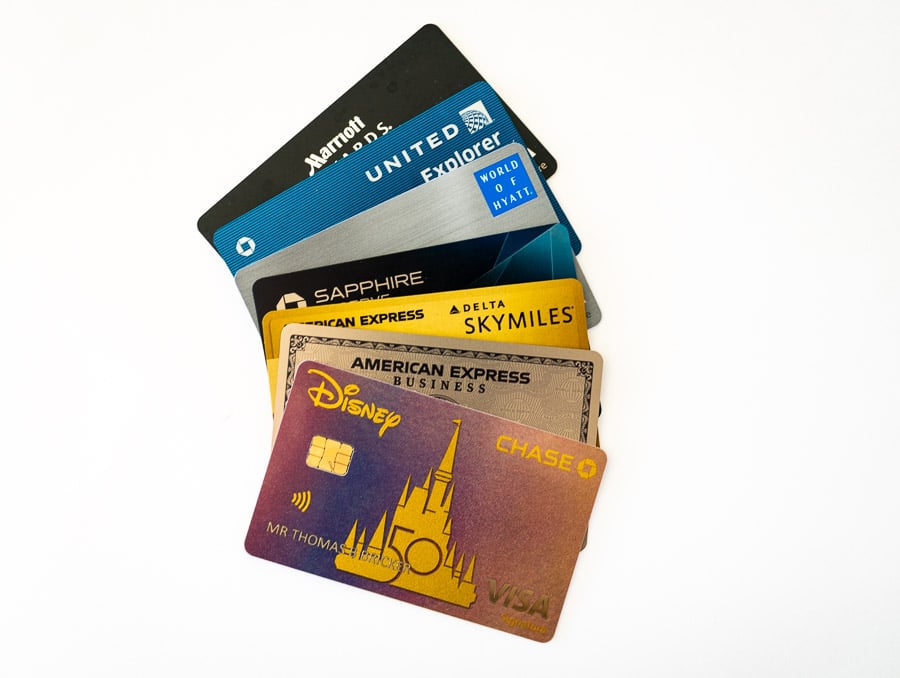
Actually, there are several reasons we don’t really use or recommend using the Disney Visa. One of them is travel insurance, or the lack thereof.
When booking travel, we almost always use Chase Sapphire Reserve or American Express Platinum credit cards, either of which offer their own versions of travel insurance. As a general matter, we also like the customer service offered by both, as they act as consumer advocates (in our experience) in the event of other chargebacks and claims. In those situations, there’s less of an incentive to deny claims and more to proactively resolve issues on their customer’s behalf.
We’ve also submitted post-trip claims to both Chase and Amex over the years, and the process has been smooth. We’ve done the same with a couple of airlines directly, and that has worked out. Honestly, it’s been so long since we’ve had to do any of this that I don’t really remember the specifics.

But I do know that knowing your rights as a traveler and proactively advocating for yourself is of paramount importance. Travel insurance can help, but it’s usually after the fact via a claim. If you have flights that get cancelled or your travel is otherwise interrupted in a way that isn’t of your choosing, it’s crucial that you act as swiftly as possible to avoid being stranded or incurring additional costs in the moment. (A good example of this type of situation would be Southwest’s system-wide meltdown a couple years ago that resulted in many travelers being stuck for several days while SWA dug out of the backlog.)
In this scenario, one recommendation is to read the U.S. Department of Transportation’s Consumer Guide to Air Travel. If you’re traveling within or from another country, do a quick Google search for country name + travel bill of rights (or something like that). Many countries have imposed certain minimum airline requirements for compensation and addressing delays or cancellations.
For most of our own trips, credit card protections and individual health insurance provide sufficient coverage to us. However, this is very much a ‘your mileage may vary’ subject. You may value the peace of mind, not have credit cards that offer travel insurance, or want another layer of protection. All of that is completely valid, and we’re not trying to suggest otherwise!
Need Disney trip planning tips and comprehensive advice? Make sure to read Disney & Universal Vacation Planning Guides, where you can find comprehensive guides to Walt Disney World, Disneyland, Universal Orlando & Hollywood, and beyond! For news & rumors, on-the-ground updates, discount information, free downloads of our eBooks, and much more, sign up for our FREE email newsletter!
YOUR THOUGHTS
Have you experienced any trip cancellations or delays while traveling? Ever bought or used the Disney Travel Protection Plan? Would you recommend it? Use other insurance when traveling? What’s your strategy to reduce the likelihood of disruptions? Any other tips or anecdotal advice/experiences for addressing and overcoming cancellations that might arise? Do you agree or disagree with our advice? Any questions we can help you answer? Hearing your feedback–even when you disagree with us–is both interesting to us and helpful to other readers, so please share your thoughts below in the comments!





This is helpful to hear what other people do. Thanks to you and other commentors!
If you are a traveler multiple times in a 12 month period, you may be better off purchasing a policy from an independent insurance company. Since my wife and I travel monthly, or more, we have a policy from Allianz Global. This covers flights, hotels, rental cars, health, theft, lost luggage and in some cases getting airlifted for a catastrophic injury. Both domestic and international. I have made 2 claims over the past 30+ years and have never had any problems getting paid. Everyone will have to do get a quote and do the math if this is good for them. You will probably get the same, or better coverage for less by eliminating the middle man. Just an alternative thought…….