
Disney’s Promising Pivot to “Lifetime” Fans.

During Disney’s first earnings call under new CEO Josh D’Amaro earlier this month, a phrase came up that’s been stuck in my head ever since. In fact, there were some subtle stylistic differences in the report as well as the Q&A that were overshadowed by the substantive news, but feel like they’re worth revisiting.
Before we get going, check out Disney Park Attendance & Hotel Occupancy Down, But Higher Guest Spending Drives Revenue Record if you want a recap of the earnings call. That covers everything from Walt Disney World lapping the previously-discussed headwinds from the international visitation and Epic Universe induced slowdowns to the supposed non-impact of the Iran War and rising gas prices to declining attendance and occupancy numbers, and more.
With that out of the way, let’s turn to the stylistic changes under D’Amaro. The first change comes in the earnings report, which you can read for yourself here. It opens with some numbers, followed by a 7-page letter to shareholders largely devoid of numbers, followed by the segment by segment results starting on page 10.
This was a deliberate adjustment to the earnings materials made to focus on Disney as a whole rather than its individual segments. You might even say it was done to highlight the Oneness of Disney. As explained at the start of the call, this was done to illustrate to investors how the company’s various business lines operate together, and provide all the information relevant to the financial markets in one place.
As could be expected, the letter contained a lot of fluff. This includes the company’s three pillars under D’Amaro, which can basically be distilled down to creating popular IP, reaching more consumers, and better using technology. I’ll spare you from further elaboration on those, because they’re exactly what you’d expect.
One detail that did catch my attention about the letter to shareholders is that the words “fan” or “guest” are used 17 times, whereas “investor” or “analyst” or “Wall Street” or “shareholder” are used a total of 11 times. Remember, the audience of the letter is the latter.
There’s a lot in the financials that’s obviously aimed at investors as opposed to fans, but the audience for the letter is fans. The overlap can best be summed up by one line, describing investments in the theme parks to “deepen fan affinity and drive attractive economic returns.” This is something we’ll circle back to in a bit.
The other key change came with the Q&A, which shifted away from live questions from analysts to pre-submitted ones. The downside of this is a lack of extemporaneous, off-the-cuff answers like we’d grown accustomed to during the Iger era, which sometimes gave us an unvarnished look into the thinking of the executive team.
Iger was an incredibly adept improvisor, but that wasn’t true of everyone participating in the calls over the years, such as the dearly-departed Bob Chapek or Christine McCarthy, who produced memorable gems like the infamous ‘good for guest waistlines’ and ‘unfavorable attendance mix’ soundbites. We also strongly suspect that Iger’s announcement of the Avatar “experience” at Disneyland a few years back was not scripted.
D’Amaro is a similarly skilled communicator, so I don’t necessarily read anything into the format change being driven by gaffe-mitigation, but perhaps it is. More likely, it’s about being more polished. Because for all of his oratory skills, sometimes Iger did filibuster or pivot to scripted talking points when the actual answer to a question might’ve been “I don’t know off the top of my head.”

In giving more rehearsed responses, one thing Josh D’Amaro said has stuck with me. It wasn’t a big moment during the call, and it’s flown under the radar, but I found it to be promising and meaningful. Here’s his answer:
Lifetime value is something that we’re focused on across the whole enterprise. And you start with our fan base. Disney has the world’s most passionate and loyal fans. It’s something, if you go to our theme parks, you see it all the time. They’re a high-touch, high LTV [lifetime value] business.
Our biggest fans, they come off and they tend to be repeat visitors. Now a large number of our park visitors, they’re also Disney+ subscribers, but there are millions of Disney+ subscribers who aren’t regular park visitors. And so this is where we’re focused.
Our parks, they’re essentially the physical center piece of the company. Similarly, we’re building Disney+ to serve as the immersive interactive digital center piece of the company. And in the long term, what you’ll see is those pieces of the company become increasingly connected.
When we do this well, which we will, the lifetime value equation, it starts to change fundamentally. A fan who watches a Disney film, for example, or visits a park or plays a game and buys our merchandise, it’s not just a subscriber, they’re in a relationship with the company, one that spans years and can generate value across every part of our business. And that’s the model that we’re building toward right now.

This might sound like corporate buzzword soup. And sure, there is undeniably that element to it. With everything said on these calls, you have to cut through the fat to get to the meat. In this case, there’s also both good and bad.
The bad is the subtext, which is that this was indirectly a question about Disney’s supposed super app (see our post about the Super App for Theme Parks, Cruises, Streaming, Movies & More). In case you haven’t or don’t want to read that post, I think a supposed super app is a colossally stupid idea.
It’s a ‘solution in search of a problem’ to appease Wall Street and make the case that Disney is a tech company. It isn’t, making a super app nothing but a money pit. I really hope the idea is abandoned before it gets to that. We’ve seen this movie before, and know how it ends.

The good of that quote is the focus on lifetime value of fans, which has the potential to be one of the most consequential reframings of Disney’s parks strategy in years. It represents a meaningful departure from the direction the company has been heading for most of the last decade.
For those unfamiliar with it, lifetime value (LTV) is a straightforward concept: how much revenue does a single customer generate over the entire course of their relationship with a company? A guest who visits once and pulls out all the stops, dropping $20,000 has a lower LTV than a guest who visits annually for 30 years, but spends “only” $3,000 per trip.
Conversely, that same annual guest is spending less on a per visit basis. For the last several years, Walt Disney World’s business model was that of a once-in-a-lifetime destination. Increasingly, the ideal audience was first-timers who would save up, go once, and spend lavishly.
Under this model, Walt Disney World felt it didn’t need to earn repeat business, because there was a steady stream of rite of passage travelers who had never been before. The prevailing view was that loyal but lower-spending fans were as much a liability as an asset. This was doubly true in a capacity-constrained or pent-up demand environment.
The company became ‘addicted’ to the one-and-done audience as the most important guest, because they have the highest marginal value. This model has worked well for a long time, so well that the company has sought to replicate it at the more locals-centric parks (which is all of the other ones) by turning them into multi-day destination resorts targeting tourists.
Return visitors, diehard fans, Florida and California locals, Annual Passholders, and Disney Vacation Club Members (except those interested in adding on!) were often treated as an afterthought, or worse yet, “unfavorable” attendees. We felt begrudgingly tolerated and having our loyalty taken for granted, as opposed to appreciated. And for good reason, because the company openly admitted as much during past earnings calls. This tonal-180 is a big part of why we view this as a potential pivot as opposed to fluff.
It wasn’t just that one comment on a single past earnings call. Chapek constantly invoked the mythical Marsh family from Colorado or Seattle or wherever when justifying decisions that might be unpopular with fans. He was almost singularly focused on a steady stream of big fish.
One (of many) reasons Chapek never endeared himself to fans was because he had a thinly-veiled hostility for us. I still remember the WSJ tech conference where the mask came off fully and finally; Chapek was gone less than one month later. That Q&A was a big reason why we wrote that Bob Chapek Did Not “Get” Disney.
Iger was never openly hostile towards fans in that same way, but he still used similar-but-softer language and made clear which demographics were desired. There’s a reason the company has chased these one-and-done first-timers, and it can be summarized by Rizzo the Rat (as Mickey Mouse): “Rat, schmat! Besides, they’re tourists. What do they know?”
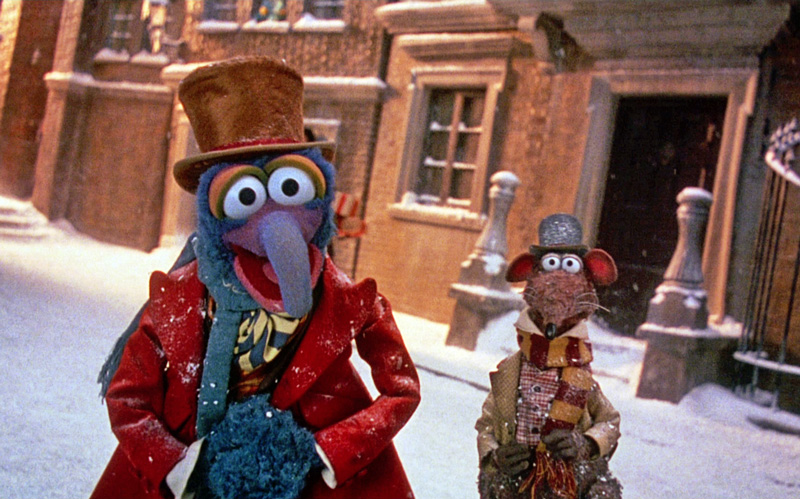
It’s a fun gag, but it also underscores the distinction between infrequent visitors and fans. The former are free-spending, less discerning, and don’t know what they’re missing. The latter don’t pay as much per visit but do spend more over time, but are also more demanding and have knowledge of the past. None of this is meant to be a value judgment, by the way; one reason I love visiting with first-timers is because they’re a good ‘reality check’ and reminder of how much magic there is in the parks.
Regardless, you can draw a straight line from the company’s philosophy to some of the most controversial decisions of the last decade, from the removal of perks and free value-adds to the proliferation of pricey add-ons. First-timers wouldn’t know what they were missing with the cutbacks, and would willingly shell out for the upcharges thanks to the FOMO or FUD factor. All of this made them an ideal guest, on top of their higher per visit spending.
The underlying logic to this was that Disney didn’t need to earn loyalty because there’s an inexhaustible supply of first-timers. This mentality did a lot of damage coming out of COVID, and even before D’Amaro took the helm, the pendulum was already starting to swing back in the other direction. Our hope is that this “lifetime value” framing suggests he’s trying to reorient the parks around the actual value of long-term fans.
The first-timer focus is myopic and short-sighted, and emblematic of Wall Street’s fixation on quarterly results. The “problem” is that there’s not an endless supply of first-timers willing to spend lavishly, at least not to the extent necessary to fill the parks. It’s not either free spending first-timers or loyal fans, but both that Disney needs to thrive.
Coming down from the highs of revenge travel coupled with the restored capacity, Disney has plenty of excess bandwidth. This is reflected in attendance levels, which are still significantly lower today than they were in 2019. The parks appear to be having no trouble courting the coveted first-timers, but they still need to work harder to undo the brand damage of the COVID/Chapek era and win back disillusioned or former fans.
We’ve already seen some of this in action, with aggressive ticket deals for California residents this winter and spring at Disneyland, VIPassholder Summer Days, DVC Welcome Home Days, along with other perks, freebies, and special offers aimed more at locals, fans, and repeat visitors. These are levers that Disney has already pulled, so the proof is in the pudding, to some extent. Most recently, there’s the $100 gift card for Magic Key renewals, which is an unprecedented offer and signals that maybe the tides are finally turning.
Given all of that, I hope this emphasis on “lifetime value” is an actual paradigm shift in how the company views its fans. A realization that pulling the aforementioned “levers” isn’t just about hitting quarterly targets by incentivizing certain audiences as needed, but that fans are the bread & butter of the business.
The optimistic read on D’Amaro’s “lifetime value” framing is that it’s exactly this–a genuine philosophical shift, backed by the CEO’s personal conviction and his two-plus decades of experience that fans are the lifeblood of the parks. He is a theme parks guy, and one that has spent a lot of time on the ground. He’s unlike Bob Iger, who was more of a Wall Street guy, and certainly Bob Chapek, who was an…I don’t even know…guy.
D’Amaro understands, at a granular level, what makes these places special and what the relationship between Disney and its most devoted fans actually looks like. If anyone at that company is positioned to make this pivot in an authentic and meaningful manner, it’s him.
As the company is investing at least $60 billion over the next decade in ways that’ll meaningfully increase capacity–at a time when attendance has been flat to down–it needs lifetime fans to help fuel growth and fill that available space! Taking this reasoning to its obvious and logical conclusion, this can mean only one thing: a reimagining of Journey into Imagination with Figment & Dreamfinder! (I’m kidding…but not really.)
The pessimistic read is that “lifetime value” is a phrase that sounds great in an earnings call context and means almost nothing until it’s operationalized in specific decisions. That it was nothing but corporate buzzword soup.
Bob Chapek talked about a membership program akin to Amazon Prime that could’ve been a loyalty program for lifelong fans. That went nowhere. Bob Iger waxed poetic about “the relentless pursuit of perfection” while cutting costs in ways that were most visible to repeat visitors. Executives are adept at saying the right things, but talk is cheap.
There’s also the broader context here. D’Amaro discussed lifetime value in response to a question about the so-called super app. He somehow managed to hit on a concept that we’d love to see and is long overdue while discussing one of the most half-baked, unserious and superficial ideas.
As we’ve seen time and time again with this type of thing, the super app will almost certainly come at the expense of something substantive. It will likely be an attempt at squeezing a bit more spending out of people, a take without a give, or a “brand withdrawal” as opposed to a deposit, to use the words of another CEO.
Ultimately, the “lifetime value” framing could be a really-for-real shift that shapes parks’ philosophy and investment priorities over the decade to come. Optimistically, it could be the type of thing that yields more seasonal overlays, loyalty programs, special events, ride refurbishments & reimaginings, and a greater emphasis on the little things. In which case, it would represent one of the most meaningful positive shifts in Disney’s parks strategy in a long time.
That’s a big “if.” It could also be something that simply sounded good to say, or the end game of the silly super app, which is actually the antithesis of a renewed emphasis on lifetime value. We’re still getting a read on D’Amaro as CEO, and it’s hard to tell where he really stands on some initiatives that we’d describe as follies (see also, short-form video and user-generated content, and Fortnite), what’s posturing and what’s sincere. D’Amaro earned this job by being the kind of leader who understands why lifetime value matters. Now let’s hope he meant it.
Planning a Walt Disney World trip? Learn about hotels on our Walt Disney World Hotels Reviews page. For where to eat, read our Walt Disney World Restaurant Reviews. To save money on tickets or determine which type to buy, read our Tips for Saving Money on Walt Disney World Tickets post. Our What to Pack for Disney Trips post takes a unique look at clever items to take. For comprehensive advice, the best place to start is our Walt Disney World Trip Planning Guide for everything you need to know!
Your Thoughts
Do you think Disney’s “lifetime value” shift under D’Amaro is sincere, or simply earnings call buzzword soup? What would the company have to actually do to convince you it’s a genuine pivot? Do you agree or disagree with our assessment? Any questions we can help you answer? Hearing your feedback–even when you disagree with us–is both interesting to us and helpful to other readers, so please share your thoughts below in the comments!


I live in northern California. My first visit to Disneyland was in August, 1955. I was just eight, but that day sparked a lifelong love of the place in me that has never diminished. It was a Sunday and I actually got a handshake from Walt Disney after my mother spotted him walking around the corner from Frontierland into Adventureland. It’s a priceless memory. Suffice it to say that I’ve visited Disneyland many times over the last seventy years and spent far more there than any one-time guest and was an annual passholder before the pandemic ended that. This year I will be experiencing WDW for the first time. I expect it will not be the last, and I will spend plenty of money along the way. Let’s hope that Disney under D’Amaro appreciates the value of the long-term, repeat customer and shows it in tangible, meaningful ways. It is foolish for a long-term business to not do so.
IF D’Amaro truly appreciates the lifetime value of guests, then one of the first things that should happen is to get rid of the reservation system – at least for annual pass / Magic Key holders. That is one of the biggest complaints (and a slap in the face) for those of us who have remained loyal, even with the rising cost of the annual pass and diminishing “value” for our money. I have a Magic Key, but do not live in CA (or FL). I make it a point to not only visit, but I bring my $$ and spend it. I would be inclined to do more, if it were easier to visit and felt like we were valued instead of pushed aside for the one-time vacationers.
We have shown our loyalty by purchasing the annual pass . . .
I would like to see some concrete evidence of this respect for and valuing of longtime fans. I am trying to remain optimistic and keep an open mind, but to be honest it is difficult after the Carousel of Progress announcement last week. It feels like the opposite of catering to long term fans!
A big part of the nostalgia for this version of Carousel of Progress among fans is Disney’s refusal to refresh it for 30 years.
We may quibble with the creative choices of the update, but it’s absolutely aimed at us. If Disney were looking at first-timers with that project, they’d be closing CoP permanently, as has almost happened on at least a couple of occasions over the years.
“The first-timer focus is myopic and short-sighted, and emblematic of Wall Street’s fixation on quarterly results.”
It’s fair to point out one positive too that with regulations likely going towards only semi-annual results vs quarterly, it allows public companies like Disney to make more strategic (and fan-friendly) decisions over time vs worrying about defending the decisions to analysts quarter to quarter
I sympathize with having scripted questions, as about 50% of what I say is some version of me awkwardly blurting out “I carried a watermelon!”. Some of us don’t do improv.
This does sound like good news. Disney seems to have been on a steady arc of appreciating fans who make it a “lifestyle brand” more and more, and trying to improve things on the customer side. Yes there are still trade-offs but during the Chapek years it felt very starkly like there was no effort being made to cover up the cuts or to try and “sell” what they were doing. Now there’s some give-and-take where the customer side at least factors into the equation.
one very positive thing I’ve noticed is many more janitors. They seem to be in every restroom! I’ve observed much more cleaning of tables and sweeping/trash pickup. There is definitely a new emphasis on sanitation!
We are already seeing some of the granular effects of this philosophical shift on Park ops in Disneyland. Some older attraction and meet spaces have been re-opened, and DLR has seen some themed updates that involve nostalgia over “quick” space allocations. There appears to be a unique reverence for Walt’s influence in both design and reasoning that is slowly reshaping guest experiences. Sure, there’s still no free coffee refills, but multi-generational visitors are starting to speak up, take notice, and I believe Disney is responding.
I like the new direction, as the “trip of a lifetime” angle makes potential new guests feel bad if they can’t afford the most expensive trips.
But I don’t think that approach is new. After Disneyland first opened, the guests were mostly families, but as the kids got older, they added more thrill rides that teenagers wanted. As the teenagers grew into young adults, they added “Disney Date Nights” to cater to childless couples, and then, when those couples had children, the cycle started over again.
I have been a DVC member for 20 years, and AP holder for most of those, live 60 miles from WDW, my first visit to DL was in 1957, and my first semiannual visit to WDW was in 1981. After COVID the magic has been leaking away from park visits with the business focus elsewhere. The price of tickets, food, and the loss of Fast Pass have driven the cost to spend a day at the parks beyond many families.
Let’s hope that the first time visitor and people like me are in the future planning. As Baby Boomers age new generations need to become lifetime Disney fans.
I think many things have changed post COVID. I am a little younger but we are not as social outside of family – perhaps just because we are older. Disney also lost its way a bit like people sometimes corporations act like people – or reflect those at the top. I think after COVID Disney lost so many long term cast members that transferred the magic to newer staff (and fixed the rides). I hope its coming back – with COP getting a make over – while I prefer to keep it as it was I am glad to see a revamp that keeps the concept of the attraction. It is not going to be a E ticket – but the magic of Disney is not the E-tickets – its the cast members and the simple joys – yes the prices are up but I think we are still receiving value.
In my recent visit, cast members were as happy as they were when I was there the day before they closed for COVID.
Something is working. I can tell the difference. Small sample size and anecdotal I suppose you could argue, but it had been weird or off for a few years of visits, but I did not feel that last weekend. It was good and maybe even great considering the moment in time.
I was someone who thought they should hire outside the Disney bubble for CEO, but I can’t deny that I had a good experience and the new leader might just be the right person for the job.
agreed I noticed the same thing
I’ve been in both camps, having been an annual visitor to WDW and AP (plus infrequent DLR visits), as well as someone who had a singular, high-spending time. My wife and I got married at WDW, we stayed in the Nantucket Suite, that trip cost a lot more than $20,000… But for most trips we spend a few thousand and enjoy ourselves but have a budget. It seems to me that the last two years already have seen a shift more towards appreciating APs and DVC members, but more still can be done as well as other perks or service for those who may not have those statuses.
All that sounds great. Now let’s bring Magical Express back.
MCO wants it back and I’m sure Mears would be on board! https://www.disneytouristblog.com/magical-express-airport-shuttle-return-disney-world-future-mco/
Transportation is the biggest single opportunity for improvement where WDW can both make guests happier (by moving them around consistently faster), and connect back to the legacy of Walt (famously obsessed with trains and other modes of transport). I live near Giant University which generally underperforms in the most important American sport, football. One thing they do NOT underperform on is the logistics of moving fans around, and the guest experience. Many fans are truly lifetime fans that WILL continue coming back no matter what. When I hear about Disney fans suffering grief about their transport and vowing to rent cars next time to save themselves the hassle of trusting Disney, I have a hard time understanding why improving transport isn’t a higher priority for Disney, starting with restoring the Magical Express.
A new deluxe hotel between TTR and Contemporary would also be VERY exciting, but that’s a much longer way off, for various significant reasons.
There was just something about getting those yellow airline tags that put the exclamation point on “We’re going to Disney World!”
There is a potential risk of focusing on long- term fans: the false assumption that sequels to existing IP is all we care about (which D’Amaro seems to have suggested on other occasions). I can’t speak for other long-time fans, but for me at least Disney’s top-notch storytelling has always been the company’s leading quality, whether it’s park/hotel backstories or new movies. Lose that, and it doesn’t matter a flip if the poor storytelling has to do with an existing IP or a brand new one.
Keep it (or regain it, because it’s been conspicuously lacking in recent movies) and it appeals to long- time fans and first-time fans alike.
During the days when annual passholders weren’t appreciated, I only knew about it from reading it on sites like this. I didn’t feel snubbed out at the parks themselves. I think that’s due to ordinary cast members not necessarily reflecting the viewpoints & politics of the big execs. No cast member ever treated me like I was a burden, but someone who it was a privilege for them to serve.
Speaking of cast members, I’d like to give a shout out to one who retired not all that long ago after decades of service. My Mom’s best friend, Debbie, who is also our hairdresser, has a husband, Robert “Ramsey” Adams, who worked as a big chef at Walt Disney World. It is largely due to his influence that WDW menus provide for everyone–vegans, vegetarians, & those with food allergies. Debbie said Robert was acting mostly in interest of his special needs son, but Robert is also a vegan, not by a moral choice, but because he needs to be for health reasons. Some off site restaurants are beginning to follow his lead, but some, like McDonald’s & KFC, couldn’t care less about diners wanting or needing foods that consider their moral choices or their allergies. So if you are a person with special dietary needs visiting Walt Disney World, tip your hat to my friend, Robert “Ramsey” Adams!
“I didn’t feel snubbed out at the parks themselves. I think that’s due to ordinary cast members not necessarily reflecting the viewpoints & politics of the big execs. No cast member ever treated me like I was a burden, but someone who it was a privilege for them to serve.”
You’re absolutely right. There was fatigue, burn-out and other issues impacting morale, and that a lot of that was due to higher-level leadership. A lot of Cast Members were also not happy with the direction things were going, and were not afraid to say so in private. Plenty of others voted with their feet, and left Disney voluntary back in 2021-2022.
I prefer fast food over Disney food. I’m AP btw.
John, I didn’t see a reply button to your comment so I’m replying to my own post to reply to you. Don’t knock my friend; he’s a nice guy. But then I understand it’s hard to understand special needs (or just wants) diets if you don’t have them. I myself intend to never ever become a vegetarian & especially not a vegan. But a few years back, I suddenly developed a bunch of food allergies which meant I could no longer dine at KFC unless I stuck to a side of green beans. That was all that was safe, seriously. By a miraculous God thing, my allergies went away & I can eat there again.
By the way, towards the end of my days as a SeaWorld passholder, I did start eating fast food off site (at Huey Magoo’s on Sand Lake Rd.) rather than eat at the park. If you think Magic Kingdom has lackluster food, you should experience SeaWorld’s! They only have the choice of one full service restaurant. Everything else is just counter service junk.
I hope that you’re right. It sounds like D’Amaro is making a commitment to quality. The problem for lifetime visitors is that we can remember when FastPass was free (even if it meant criss crossing the parks all day), and there were more (or felt like more) resort buses, and there were (ahem) things to do in every park. I’d love for the reinvestment in quality to actually happen because it benefits all visitors, the repeat visitors and the first-timers. But my understanding is that that type of investment doesn’t really benefit stakeholders. So, my expectations will be kept in check.
“…there were more (or felt like more) resort buses…”
Have you had bad experiences with this recently? I feel like bus transportation has been on an upward trajectory for a while–that’s something I wouldn’t have even criticized Chapek over (in part because it was below the Parks Chair’s pay grade). It can still be spotty, but is so much better than it was in ~2006-2016 IMO. One of the few things!
I grew up watching Walt Disney weekly on his television shows. (I guess I’m really showing my age.) My first trip to a Disney park was when I was in college. We didn’t live near Disneyland, the only U.S. park at the time, and my parents could not afford a Disney trip. 50+ years later, I have lived in multiple states and been to a Disney Park (primarily WDW) over hundreds of times. We now reside in the Orlando area. We have APs to Disney, Universal and SeaWorld. We love them all for different reasons and visit the parks at least once a week. Our home is filled with Disney merchandise and movies. My husband and I wear Disney clothing and watches. We don’t spend lavishly each trip, but we do eat in the table service restaurants and/or have drinks at one of the bars almost every time we visit. We are good tippers, and most of the servers and bartenders know us. I would like to think Disney would love to have lifetime fans like us, and that these are the type of fans they would be striving to build. We were really offended by Bob Chapek’s and Christine McCarthy’s comments towards APs during COVID. I hope Disney brings some of the magic back for us. Although we don’t spend and have never spent $20K on a once-in-a lifetime trip, we have spent much more than that on Disney over our lifetime.
“Although we don’t spend and have never spent $20K on a once-in-a lifetime trip, we have spent much more than that on Disney over our lifetime.”
Exactly. I’ve also never spent anywhere near that in a single trip, but over the course of a year, uh…yikes! (I am, of course, an extreme outlier.)
I think this has already gotten better since Iger returned, but there’s definitely still a lot of room for improvement. Hopefully D’Amaro means what he says!
Yes. We recently stayed at Caribbean Beach, and we often had to wait 30-40 minutes for a bus from the resort to Magic Kingdom. Sometimes that’s just how long it was for any MK bus (while we watched 3 Animal Kingdom buses come and go) to show up. Sometimes a bus would stop and be full and the driver would say that another one was coming, and it was usually around 20-30 minutes later before another showed up, and even then it was touch and go if everyone would get on, especially if you had a scooter or a stroller. There were more than a few tense moments among guests. Leaving the parks we usually had to wait at least one bus cycle (this includes leaving the park at noon, 4pm, and 10:30pm). And the buses were absolutely packed. In 8 trips on a bus, there was never an open seat (as a middle aged woman, I would never sit down if there was a parent holding a child or an elderly person still standing, but that was a moot point as there was quite literally never an open seat). I hadn’t stayed on-site since 2019, and at this point, if we ever stay on site again (frankly, a big if for a lot of reasons), I will rent a car and deal with the TTC (its own can of worms).
Agreed. I haven’t really had a complaint about the busses in several years, except that I wish they could figure out a system to load scooters faster.
We were first timers in April of last year (at Disney World, after years of going to Disneyland when I lived there, but not nearly so frequently) and have since then visited 3 times, becoming DVC members with resale contracts at Grand Californian and Grand Floridian, and a direct contract at Polynesian, as well as Sorcerer Pass holders. I guess all that puts us firmly in the lifetime fans camp (at least for now!). Over this same period, by reading this blog, among other information sources, it has become apparent what we’ve missed out on, both with Disney in general, and with changes to DVC.
The good news is that we were delighted with our first visit nonetheless. It was our blow-out, once-in-a-lifetime visit that turned out to be the first of very many (3 more times this year). We don’t go with a blank-check mentality anymore, but we do get value out of DVC and annual passes, and of course we are glad to see some things already improving; I’m looking forward to finding my carry-on in the 40% off for AP-holders Cars Family Suite at AoA when we get there in July, even though we are flying United (great timing!).
I’m encouraged by this reframing, and hope it’s not “vaporware.” Because while we enjoy ourselves at Disney despite what has been taken away while costs have gone up, one notices things that could be better–there are also plenty of testimonies to that fact in the comments at this site–and, if meaningful improvements come, then we’ll get even more value out of our DVC, or annual passes, and our visits.
I would say that going from first-timers to DVC members with multiple contracts puts you firmly in the lifetime fans camp, and clearly that first trip made a good impression (mild understatement). 😉
For all of the complaints, I would say that things are on an upward trajectory and have been since late November 2022. Others may disagree, but I also think there’s a lot of pent-up hostility over what was cut post-COVID. At the same time, I feel like that is true with much in life post-COVID and is hardly unique to Disney. At least the parks & resorts are trending back in the right direction.
Sorry for the double-post, btw, but I couldn’t see my post at all until I edited it and posted again, and then both showed up. Whoops.
Anyway, we certainly *plan* to be lifetime fans now. I have several more contracts planned to purchase over the next 4 years, including Aulani, so hopefully they give us even more reason to follow through. I’ve been following your blog for only a couple a years, roughly, though I have read a fair amount of content that predates my readership, and it does seem like there is some upward trajectory. Even since becoming owners, I’ve seen a couple things, personally. I think if it seemed like the reverse, we might have been a bit more reserved in our approach. I have seen room for improvement in a number of areas, including CM interactions in the parks among a few other things, but nothing that made me think I was imagining the overall quality of our experience.
I do still see plenty of complaints from DVC members on various forums, but I have to wonder if they actually did the math on maintenance fees, which clearly go up every year, or if they really believed they would have certain non-guaranteed perks forever. I mean, don’t get me wrong, I like that they offer some cool things — we went to our first Moonlight Magic in February — but we didn’t buy our direct contract for those things (I do hope we can keep getting huge discounts on Sorcerer Passes!). If there’s anything I can agree with substantially, in terms of DVC complaints, it’s the resale restrictions that were added. I’m curious to see whether resale owners who can only book at RR instead of taking their points elsewhere create more competition for direct RR members who also want to book at the 11-month window. That lack of flexibility seems like it will jam things up and make DVC more like traditional timeshares. Hopefully it doesn’t diminish the resale value of DVC much farther than it already has.
Anyway, that was a (relevant) tangent, but my main point here is that, as of now, we see value in our purchases, and get a lot pleasure out of our visits even as things are (weak spots and all), and if D’Amaro and company manage to improve things across the board, then that will only be more true.
We were first timers in April of last year (at Disney World, after years of going to Disneyland when I lived there, but not nearly so frequently) and have since then visited 3 times, becoming DVC members with resale contracts at Grand Californian and Grand Floridian, and a direct contract at Polynesian, as well as Sorcerer Pass holders. I guess all that puts us firmly in the lifetime fans camp (at least for now!). Over this same period, by reading this blog, among other information sources, it has become apparent what we’ve missed out on, both with Disney in general, and with changes to DVC.
The good news is that we were delighted with our first visit nonetheless. It was our blow-out, once-in-a-lifetime visit that turned out to be the first of very many (3 more times this year). We don’t go with a blank-check mentality anymore, but we do get value out of DVC and annual passes, and of course we are glad to see some things already improving; I’m looking forward to finding my carry-on in the 40% off for AP-holders Cars Family Suite at AoA when we get there in July, even though we are flying United (great timing!).
I’m encouraged by this reframing, and hope it’s not “vaporware.” Because while we enjoy ourselves at Disney despite what has been taken away while costs have gone up, one can notice things that could be better and, if meaningful improvements come, then we’ll get even more value out of our DVC, or annual passes, and our visits.
I somehow doubt that anything will change.
We live 50 minutes from WDW, unappreciated AP’s for decades and well over 30 Disney Cruises.
Quality has gone way down while prices have gone way up.
We still have the three-park ticket, 3-day that cost us $100 when EPCOT opened. Won’t buy much of anything now
We went to an after-hours AK event. NOTHING was open. It was absurd.
This certainly is reason to be cautiously optimistic. I have to say I’m pretty surprised that two plus months into D’amaros tenure we haven’t had any announcements yet that could be considered a goodwill gesture towards fans. I wasn’t exactly expecting Magical Express to return on day one but thought we’d get something similar to Iger’s return and the ending of resort parking fees, etc. Perhaps he doesn’t want to make Iger look bad by making such an announcement too soon?
I’ve also been surprised by that. I assumed it’d be choreographed in such a way to give D’Amaro a couple of quick wins upon return, similar to what Iger had when he came back.
Instead, Iger left D’Amaro with a few messes to clean up (which was disappointing in addition to be surprising).
I think the other thing to remember is the shakeup at Parks & Resorts below D’Amaro, which is still playing out. That, and the reality that everything Disney does has a lot of moving parts, and logistics aren’t quick to figure out.
Hopefully we see positive progress soon on guest experience!