
Universal’s Epic Universe “Actually Positive” for Disney World Attendance in 2025

Fans wondering why Walt Disney World hasn’t done anything meaningful to “answer” Epic Universe in 2025 might have their answer: the company expects Universal Orlando’s third theme park to be “actually positive” and “beneficial” to Walt Disney World’s attendance and bottom line. This discusses the new statement from the CFO and whether these projections are “actually accurate.”
This came as the Walt Disney Company held its fourth quarter earnings call this morning, releasing its quarterly report, full 2024 fiscal year results, and executive commentary. Suffice to say, it was a banner year for Parks & Resorts. The Experiences segment had record revenue and operating income for the full year.
In Q4, Experiences revenue increased $0.1 billion, or 1%, and operating income of $1.7 billion was a decline of $0.1 billion, or 6% compared to the prior-year quarter. Domestic Parks & Experiences operating income increased in Q4, on comparable attendance to the prior-year quarter, driven by higher guest spending, partially offset by higher expenses and costs related to new guest offerings driven by Disney Cruise Line.
This mostly aligns with expectations. During the company’s previous earnings call, Disney CEO Bob Iger warned investors of attendance softness and “demand moderation” into 2025. That was nothing new, as the company has cautioned of a slowdown at Walt Disney World. They’ve previously attributed this to the end of “revenge travel,” lapping the 50th Anniversary, and poor weather.
Specifically, Iger and CFO Hugh Johnston indicated that they expected operating income to decline by mid-single digits versus the prior year. “The portfolio is working well,” Johnston said, while conceding there there was “softness in the domestic parks.” He also added that the lower income consumer is “feeling stress,” while higher income consumers are traveling internationally more.
Poor weather will definitely be at play in the current quarter. Disney warned that operating income will be adversely impacted by approximately $130 million due to Hurricanes Helene and Milton. That’s a lot of Walt Disney World trip cancellations!

More interesting was the forward outlook for 2025. In the Executive Commentary, the company indicated that it expected fiscal 2025 growth for the Experiences segment during the full-year to be 6% to 8% as compared to 2024, with growth weighted in the second half of the year. (Note that this is the second half of the fiscal year, not the calendar year–suggesting they’re expecting May through October to be high-growth.)
No explanation was offered for the increase, but it’s safe to assume at least some of that is attributable to Disney Cruise Line fleet expansion. Disneyland’s 70th Anniversary will also provide a nice boost during that timeframe. Disneyland Paris won’t be weighed down by the Olympics, and could see a bounceback as there’s less of an impact at the second gate.
During the question and answer portion of the earnings call, the CFO elaborated on this further when asked about the impact of Epic Universe opening on May 22, 2025 at Universal Orlando.
Johnston offered the following in response: “We modeled [Epic Universe] into our expectations for the Disney Experiences outlook. The early bookings we have next summer are actually positive, so that’s a positive indicator. We’ve also looked at the history of other attractions and other theme parks opening in Florida, and it’s been beneficial for Walt Disney World.” Johnston explained that the forward-looking guidance captured these indicators of early bookings and past precedent.
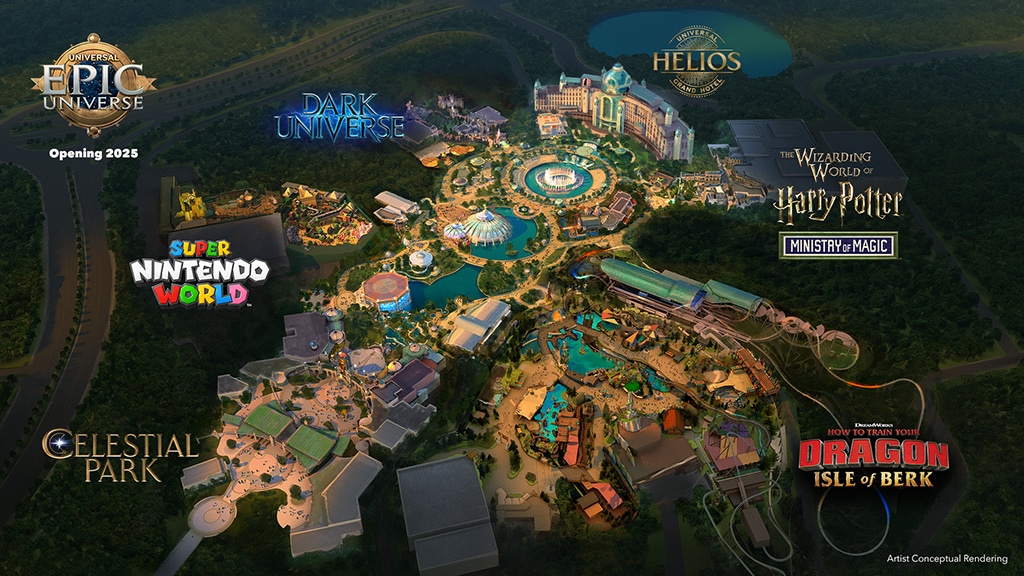
It’s not totally surprising to hear this response. Disney leadership has repeatedly been asked about the impact of Epic Universe by Wall Street. At one point, Iger said this: “As we’ve seen in the past, when Universal has expanded, it brings more visitors to Orlando. That’s fine. We’ve had competition from them for a long time. I’m mindful of what they’re doing, but I’m confident. I like our hand. I’m confident in what we’ve built and I’m confident in what we’ll continue to build. It’s not something that should be distracting to us or anxiety-provoking.”
Around that same time, the company put it bluntly: “Epic [Universe] is Universal playing catch-up on a decade of nonstop development at Walt Disney World.” That echoed what CEO Bob Iger said recently about Epic Universe during the annual shareholder meeting when he indicated that Disney had been aware of Universal’s plans for a new park for “more than a decade.”
Iger pointed to a laundry list of additions at Walt Disney World during this same period as Disney’s “answer” to Epic Universe, including Star Wars: Galaxy’s Edge, Guardians of the Galaxy: Cosmic Rewind, TRON Lightcycle Run, and other additions. “By staggering these major new launches, we’ve been able to commercially and operationally optimize our new offerings over time rather than all at once. Based on the guest feedback we’ve heard about through all of these additions I’ve mentioned, we know they’re extremely popular and serving our guests very well,” added Iger.

Unsurprisingly, fans have not been happy with these previous responses from Disney. Many still believe that Universal’s Epic Universe is going to be very bad for Disney, result in Universal “eating Disney’s lunch” or surpassing Walt Disney World as the dominant player in Central Florida.
Wall Street has shared some of this sentiment, hence Iger and Johnston constantly being asked about this by analysts. One of those, MoffettNathanson, released an analysis earlier this year concluding that Epic Universe could cause Walt Disney World attendance to decline by about 1 million visitors in the two years spanning 2025 and 2026.
Conversely, Epic Universe could boost overall attendance at Universal’s three parks by more than 8 million. Note that this last number includes Epic Universe, meaning that–at least in theory–the new park could cannibalize attendance from both Walt Disney World and Universal Orlando’s existing two gates.
Another thing to note is that Wall Street analysts get things wrong, but at least they have more of an incentive to be objective. Disney’s leadership, on the other hand, might be more inclined to conclude that Epic Universe will be advantageous for Walt Disney World because they’ve done nothing to “answer” it. So if the Experiences division is expected to report positive results as a whole, it behooves them to paint that in a positive light.
With that said, it’s also possible that Disney has done its homework and the forecast actually reflects growth for Walt Disney World. So which is it? Let’s take a look at actual historical precedent based on publicly available info.
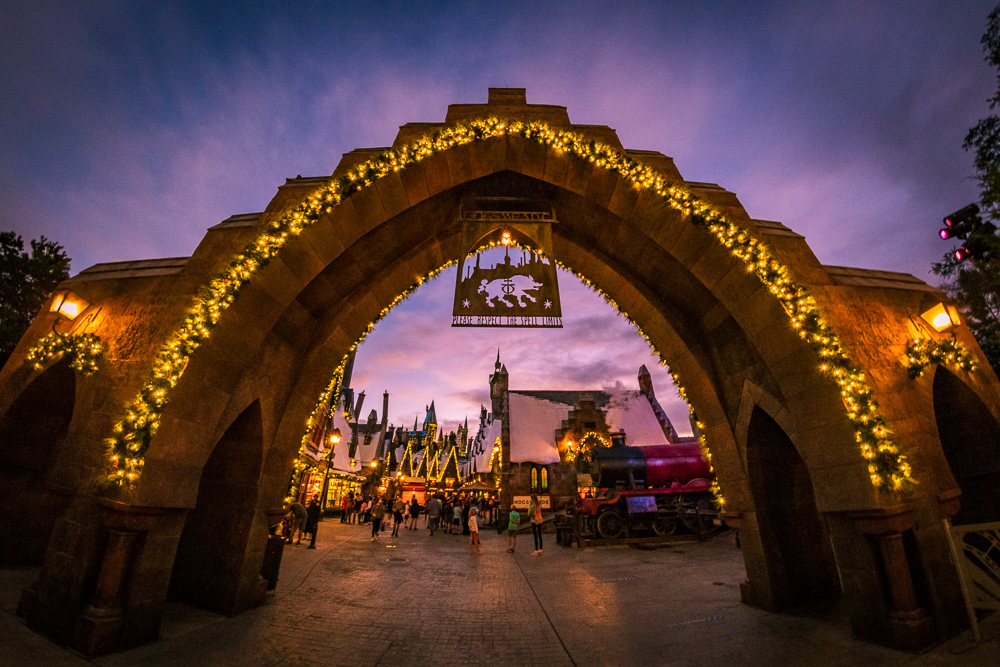
Looking back to the last time Universal Orlando debuted a game-changing addition is instructive. The best analogue to 2025 is when the Wizarding World of Harry Potter (WWoHP) opened at Islands of Adventure in 2010. That was a year that Walt Disney World had nothing major to debut, and WWoHP was viewed as a paradigm-shifting expansion.
In the lead-up to WWoHP, Walt Disney World’s public position was that “a rising tide lifts all boats” — that a stronger Universal was beneficial to Disney because it attracted more people to Central Florida. In actuality, Universal Orlando’s attendance soared by 1.7 million guests the opening year of WWoHP, with Islands of Adventure seeing 30% growth. Three of Walt Disney World’s parks dropped by 1-1.5%, while Animal Kingdom increased by 1%.
The following year (2011), 3 of the 4 parks at Walt Disney World were up by 1% each, while EPCOT was flat. Islands of Adventure once again surged–another 29% increase–but both Universal Orlando parks had lower overall attendance than any Walt Disney World park.
In 2012, Walt Disney World’s parks each increased by ~2.2%. Attendance growth accelerated in the years after, but that’s also when Walt Disney World’s own belated development cycle started bearing fruit. Next year through 2027 really is a similar setup to 2010-2012.

Based purely on the numbers alone, Walt Disney World’s rising tide thesis was correct: Universal had significantly increased its attendance by attracting an entirely new audience to Central Florida, which in turn benefited both.
However, we should also add some historical context here. These years were the post-Great Recession economic recovery, so it’s not as if these attendance increases occurred in a vacuum. Walt Disney World also embarked upon aggressive discounting initiatives and marketing campaigns.
It’s possible this growth can be mostly attributable to the Wizarding World of Harry Potter. But I’m personally skeptical. Imagine if Epic Universe opened during the heart of pent-up demand. Walt Disney World still would’ve overperformed, and it wouldn’t had almost nothing to do with Universal opening a new theme park. If anything, WDW could’ve overperformed despite Epic Universe, and might’ve learned the wrong lesson from that.
Regardless, one thing is undeniable a decade later. Both Universal and Disney have experienced tremendous growth, to the tune of millions of guests per year each. To some extent, the rising tide thesis was correct. There’s no denying it. The market for theme parks in Central Florida has gotten larger.

The Wizarding World of Harry Potter was “only” one land back then, but it was a revolutionary one with a massive built-in audience. Epic Universe is an entirely new park, so the scale and scope is different–bigger.
Disney has probably concluded that the only way to “win” is to not play the game–to fall back on the “rising tide lifts all boats” mantra. It worked once, it could work again. Iger’s comments take this a step further, suggesting that Disney already played the game, but did it over the last decade and as they strategically saw fit. However, it’s also fair to say that the 5-year plan announced for Walt Disney World at the recent D23 Expo suggests that Disney still has an indirect answer for Epic Universe coming strategically over time.
It’s also important for fans to have self awareness. Many of us assume that, because Epic Universe is the new thing to us and will capture our attention in 2025, that’ll be true for everyone else, too. But we are not the only type of guests who visit Central Florida’s theme parks.

For most average guests, the new additions from a single year or two do not exist in a vacuum. They aren’t the only selling points of the theme parks. Most people visiting in 2025 aren’t going solely on the basis of what’s brand-new.
Even for fans who visit semi-frequently, there are a lot of other recent, new-to-them additions. Everything from Hagrid’s and Star Wars: Galaxy’s Edge to Tiana’s Bayou Adventure will still be “new” to some fans in 2025. That’s a wide range of offerings spanning several years, but not everyone visits annually. Most people–even those who would self-describe as enthusiasts or fans–do not.
Then there’s the biggest demo of all: first-timers. For this group, everything at every theme park in Central Florida is necessarily new. When choosing which parks to visit, they aren’t simply picking the brand-new additions, although those probably are granted more weight thanks to marketing. They’re looking at the full menu, and what looks most appealing.
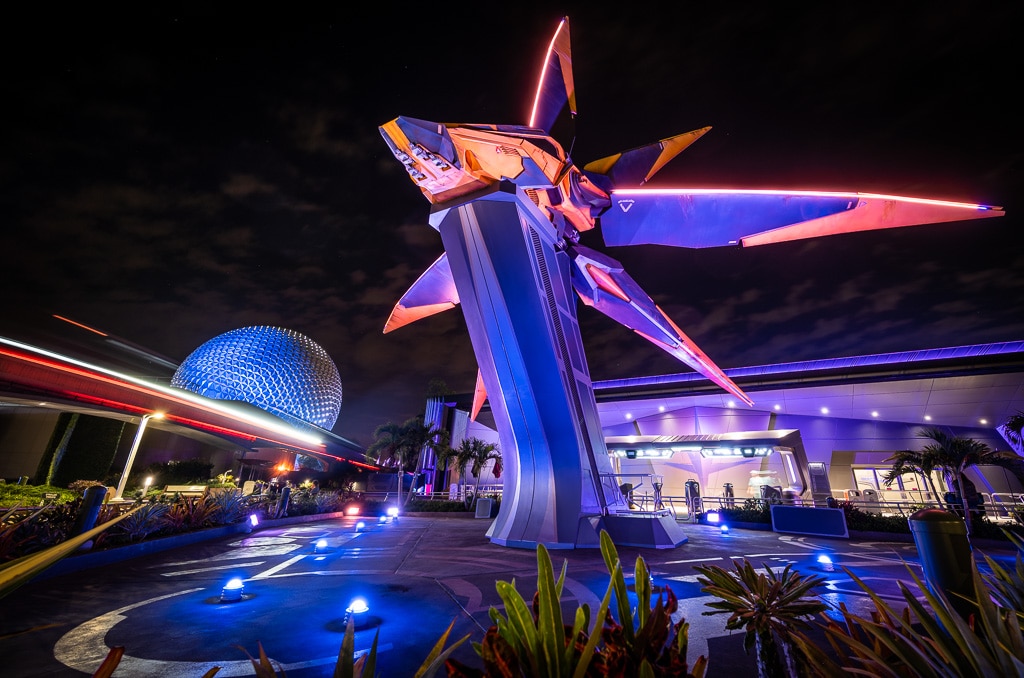
It shouldn’t be contentious to say that Walt Disney World is the more established and time-tested theme park complex. Even after Epic Universe, Walt Disney World still has one more park, a dozen-plus additional resorts, and more recreation.
Regardless of how you feel about recent movies, it also shouldn’t be controversial to contend that the Disney’s stable of characters created and acquired in the last ~100 years is more popular and enduring. Universal has made tremendous strides with popular character intellectual property in the last couple of decades, but they’re still not on level playing fields.
This is where things get more interesting in terms of competition for 2025 and 2026. Both Walt Disney World and Universal Orlando have been aggressively adding in the last decade. Many of Universal’s newest attractions are fantastic–Hagrid’s and VelociCoaster are two of the best roller coasters anywhere. Despite this, Walt Disney World has inarguably spent more money on new attractions and lands in the last decade.
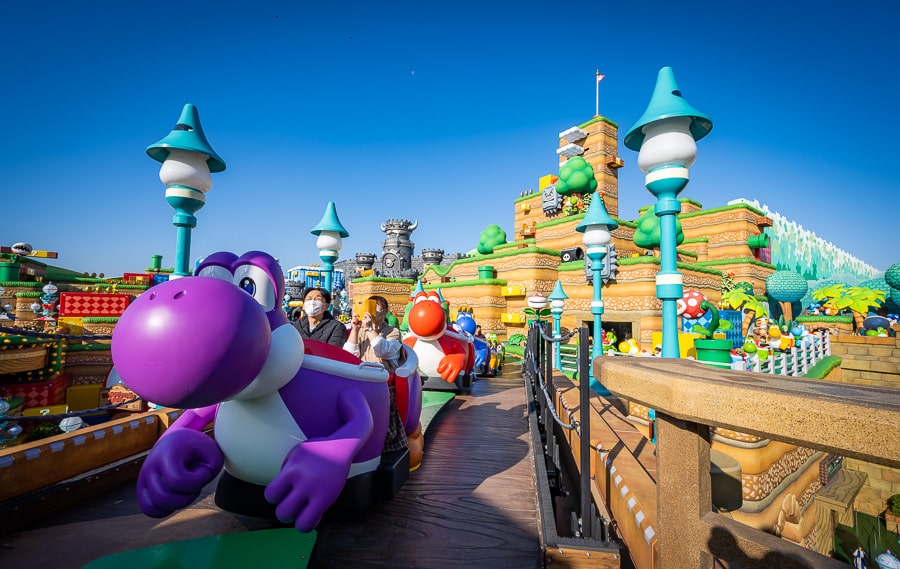
Without question, the bump will disproportionately benefit Universal Orlando. It may be true that a rising tide lifts all boats, but it does not do so equally. Percentage growth for Universal Orlando as a whole will outpace Walt Disney World as a whole in 2025-2026. They will gain marketshare.
If history repeats itself, Disney’s parks could see slight decreases–but the losses will not be commensurate with the growth at Universal. Stated differently, Super Nintendo World and Epic Universe as a whole will grow the audience for Central Florida theme parks, even if theme park diehards (like you!) visiting Universal and skipping Disney leads to a slight drawdown in attendance.
However, I wouldn’t necessarily bet on Walt Disney World seeing a drop in 2025. Epic Universe has all-ages appeal, but I’d hazard a guess that the park’s main draws (Super Nintendo World, How to Train Your Dragon, and Harry Potter) skew towards families. The new third gate is also far more family-friendly than Universal’s two existing gates.

As a whole, it’s undeniable that Walt Disney World does a better job of catering to families than does Universal Orlando. On the basis of new additions, you could reasonably argue that Universal has been chasing Disney’s demographics over the last decade and Disney has been chasing Universal’s. You could also reasonably argue that Disney has done a better job of this–at least, up until Epic Universe.
Nevertheless, the reputation still exists that Universal is the place for teenagers and thrill seekers, and Walt Disney World is more family-friendly. And that there’s a lot of validity to this perception. Accordingly, I would hazard a guess that many of the families planning 2025 trips to see Epic Universe will pair that with visits to Magic Kingdom and Disney’s Hollywood Studios.
Definitely not more than they visit Islands of Adventure and Universal Studios Florida–convenience is huge, as are vacation packages–but possibly enough that at least those two parks and maybe even EPCOT don’t lose attendance at all in 2025. On the other hand, the situation is only going to get worse before it gets better for Animal Kingdom. No denying that one. As we’ve been saying for a while, Tropical Americas should be fast-tracked…2027 is about 4 years too late for that expansion.
It’s also fair to point out that Universal Orlando has had a rough year with attendance down 9.3% and Comcast revealing that revenue at Universal’s theme parks has been down by double digits. Comcast attributed the decrease to a lack of new attractions in Orlando, and indicated that this downtrend was likely to continue until the opening of Epic Universe in 2025.
This is worth mentioning because, if Disney’s theory is that it’ll benefit from the rising tide created by Epic Universe, it also stands to reason that Walt Disney World is currently being adversely impacted by people postponing trips to Central Florida. The two theories go hand in hand, and would be more pronounced with a brand-new theme park than a new land or attraction.
This would also explain why Disney is expecting growth weighted in the second half of the 2025 fiscal year–because the slowdown caused by postponed trips will become more pronounced as the opening of Epic Universe draws nearer. It’s actually fairly easy to envision a scenario where Walt Disney World is up considerably year-over-year in Summer 2025 thanks to Epic Universe, Starlight Night Parade, and a favorable comparison (this summer was pretty slow–and even that could be explained by families ‘saving’ their summer theme park trip for 2025 instead of doing it in 2024).

Ultimately, I wouldn’t bet against the rising tides thesis given the core demographics of Epic Universe and the overlap with Walt Disney World vs. Universal Orlando’s existing gates. But I also wouldn’t bet on it! Universal is being clever and strategic with its approach to launching Epic Universe, and I’d be shocked if that doesn’t put a dent in Walt Disney World’s hotel occupancy numbers, at an absolute minimum.
Regardless of what Bob Iger or Hugh Johnston are saying during earnings calls and interviews, I would have some degree of concern if I were them. Contrary to their claims, there is no comparable historical precedent to 2025. Early bookings are instructive, but they’re still not conclusive–especially given that Universal just launched its Epic Universe vacation packages.
If I were Disney, I’d want to have more counterprogramming than just the Starlight Night Parade and the stage shows at Disney’s Hollywood Studios. Having levers to pull that aren’t just discounts would be savvy, as there are still unknowns and there’s no way the forecasting can have a high degree of confidence. This is precisely why we wrote How Will Disney “Compete” with Epic Universe in 2025? and listed about a dozen cards they could play.
One thing we do have confidence in is that the fans who claim Universal is “beating” Walt Disney World or vice-versa are wrong. There’s space in the Central Florida market for both to continue growing and thriving, and Orlando has become an international tourist destination thanks to both Disney and Universal. Given the properties featured, Epic Universe will probably expand the audience for theme parks, rather than reallocate the existing pool of guests. Disney’s analysis may not be 100% accurate, but it’s far more correct than the doom and gloom or schadenfreude among fans who would like to see Disney taught a lesson after all of the price increases, cutbacks, and so forth.
Planning a Walt Disney World trip? Learn about hotels on our Walt Disney World Hotels Reviews page. For where to eat, read our Walt Disney World Restaurant Reviews. To save money on tickets or determine which type to buy, read our Tips for Saving Money on Walt Disney World Tickets post. Our What to Pack for Disney Trips post takes a unique look at clever items to take. For what to do and when to do it, our Walt Disney World Ride Guides will help. For comprehensive advice, the best place to start is our Walt Disney World Trip Planning Guide for everything you need to know!
YOUR THOUGHTS
What do you think about the company’s assessment that Epic Universe is “actually positive” or beneficial for Walt Disney World? Will the opening of Epic Universe in 2025 result in significantly lower attendance for WDW? Or do you generally agree with the perspective that a rising tide lifts all boats? Think growing the market for Central Florida theme parks is an ‘everyone-wins’ best case scenario? Do you agree or disagree with our assessment? Any other thoughts or commentary to add? Any questions we can help you answer? Hearing your feedback–even when you disagree with us–is both interesting to us and helpful to other readers, so please share your thoughts below in the comments!






I call BS on Di$ney…. Just attempting to prop up the stock!
That really is a long article to basically say we are not sure what the impact of EPIC Universe will be on WDW. Disney will always have the advantage simply because it is basically a self-contained world. Location means everything with all of the resorts and parks being easy access without having to constantly drive and park. Not a big fan of how Disney does things but if they get their act together, they will be more than fine.
With the building of Tron, Guardians of the Galaxy, and Flight of Passage Walt Disney World is getting out of the family friendly ride arena. My grandson is 7 and he hates all of those rides. Disney has not done any good rides in YEARS. They have gone to rides with a lot of screens and/or spinning vehicles with music bursting your eardrums. I would love for them to create rides that are real like Pirates, Haunted Mansion, It’s a Small World, etc. WDW is a shadow of its former self; it’s going down hill fast. Too much greed and ego at the top.
I really hope some discounts or deals are released for July 2025. I hope this confidence they have doesn’t cause another no discount July (we always seem to pick the wrong years to go!)
Personally, I’m doing Disney instead of Universal in 2025 just to avoid the insane crowds that will descend at Universal.
There was an 8 hour wait for Hagrid’s at opening, and that was just one ride!
That’s a fun thought experiment and largely agreed. I think Disney still has a fundamental competitive edge as the family-destination. First-timers are a significant chunk of guests, who don’t care about an arms-race of new attractions between parks. Significant drops just seem unrealistic with this background.
I’m generally suspicious of all-tides-theories – these typically fall apart when dissecting underlying drivers and outcomes. And, per CFO, demand weakness is due to lower income groups being squeezed and higher ones going elsewhere. That seems like a contradiction to me in terms of a significant enough tide just a few months from now. Epic is likely a big draw for theme park fans. Outside these bubbles, I’m not so sure it’s driving masses of new visitor demographics. Assuming Disney pulls out the full discount playbook, I would guess it ends up being somewhat flat growth for Disney parks. In which case nobody will be satisfied – neither Disney Brass nor Disney Doomsayers.
“And, per CFO, demand weakness is due to lower income groups being squeezed and higher ones going elsewhere.”
I tend to agree with you, but just to play devil’s advocate, I think it’s at least plausible when you consider the cyclical nature of vacationing. Lower income travelers might do a bigger budget trip every few years, with the last occurring in 2022 and the next happening in 2025. Higher income tourists rotated into international travel, but now that borders have been reopened for a while, perhaps they too will rotate back to theme parks.
I’m not suggesting that’s a perfect explanation, but I do think it’s a plausible one. There’s a not-insignificant chunk of once every 2-4 years visitors, and mid-2021 to 2022 burned through a lot of those all at once.
Tom that is exactly us! 2022 Disney (WDW), 2023 DCL, 2024 Europe. Kids are very excited for EPIC Universe and will go end of 2025. There’s definitely a part of me thinking about doing a day or 2 at WDW while we’re down there.
Great points all around. While a lot of what Disney is saying is pure Corporate PR-speak, I tend to believe that THEY believe their own general thesis here. I haven’t seen the market research, but I am convinced that a great number of families will fall into the “I’m excited to check out Epic Universe, but it’s a good excuse to spend some time at WDW” camp.
Some readers of this blog will likely disagree, but I’ve literally never met anyone who thinks of Universal when they want to spend a resort week in Orlando (or anyone who has done that). And it’s not just because there are fewer Universal gates. I’m not saying they shouldn’t spend their vacation time there, just that they won’t. And again, I know some folks reading this will object and say they love long Universal stays, but we need to remember that Brickerheads are an elite class of theme park tourists!
I believe that Disney believes it because they said it during an earnings call, and not just some random puff piece interview. SEC rules prohibit companies from fraudulent, false or misleading statements to investors.
Your second paragraph is undeniably accurate. There’s a reason Universal offers fantastic deals on longer duration stays and tickets–because very few Americans are buying those in the first place.
Love knowing that I fall into the category of a “Brickerhead” that made my day.
I think Disney might be making the right move. even opening a 5th gate tomorrow might not stop Universe and they appear to have already lost a lot of people due to the nickel and timing of the past.
A year of recovery and putting on offers that gets the guests into the park along with better maintainable and customer service with more entertainment way well get more people into the parks long term as people will be more interested in the new stuff instead of burnt out like they are now by the negativity to guests.
on my part I am staying away from Florida and going to both Universal and Tokyo Disney to see Disney Springs and likely my regular Anahein (due to family) and Paris trips.
If World is empty and the deals tap comes on then I will consider rhe early September and post thanksgiving weeks for trips later in the year.
“A year of recovery and putting on offers that gets the guests into the park along with better maintainable and customer service with more entertainment way well get more people into the parks long term as people will be more interested in the new stuff instead of burnt out like they are now by the negativity to guests.”
This is what has me optimistic about the next few years at both Walt Disney World and Disneyland.
I long for a return to the “simpler” times of 2007-2011 when Walt Disney World ran awesome marketing campaigns, offered aggressive discounts, and made significant efforts with entertainment. That’s essentially the playbook for Disney theme parks when they’re not building anything new. They’re good stopgap measures to keep people coming.