
End of an Era as Disney World & Disneyland Sunset FLIK Wait Times Estimate Tool
If you’ve been a Walt Disney World or Disneyland fan for long enough, you already know that every era ends. We’ve seen several of these in the last several years, from the elimination of Disney’s Magical Express and free pre-arrival MagicBands to the retirement of FastPass+ and Extra Magic Hours, and more.
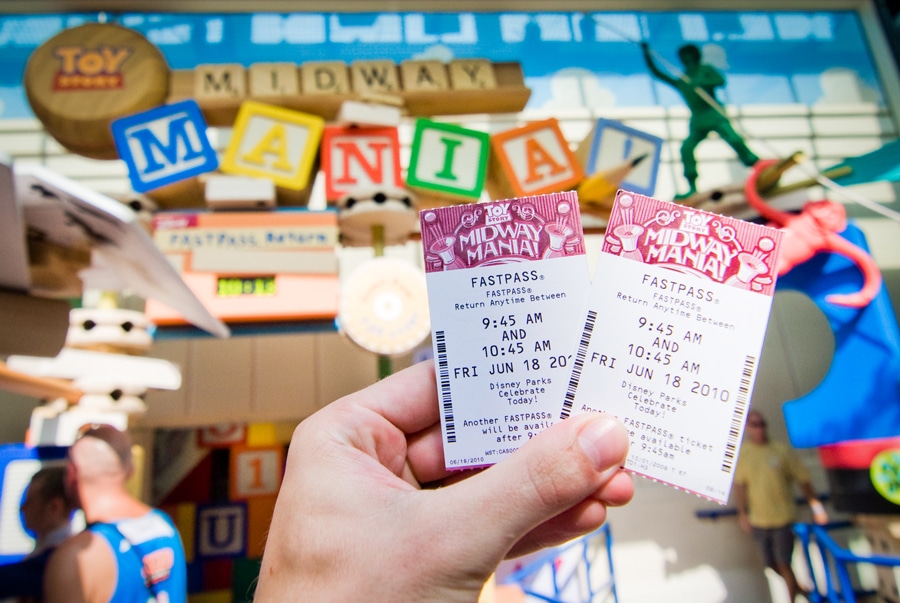
Even before this, there have been countless changes to park programming and the guest experience. Some of us still remember the good ole days of the blue sky Key to the World Cards, Year of a Million Dreams, Summer Nightastic, paper FastPasses, and so on. Back when Toy Story Mania was the hot ticket, and you’d send the fastest person in your party as a runner at rope drop, because each minute of delay could mean another hour on the FastPass return time clock.
Those halcyon days of the aughts were also the heyday of something else at Walt Disney World: the FLIK card. Now after over 25 years of use, another chapter is closing. The final attraction that used FLIK cards has officially been converted to modern touchless technology.
Even if you’ve never heard of FLIK cards by name, you’ve probably seen or at least heard of them if you’ve been visiting Walt Disney World or Disneyland throughout the 2000s. These were the little red cards attached to a lanyard that Cast Members distributed at random when entering an attraction, entrusting guests with the sacred responsibility of ensuring accurate posted wait times.
To be handed a FLIK card was the ultimate honor, an obligation that guests carried out dutifully, knowing full well that thousands of their fellow guests were relying upon them as they strategized on the fly. To say that the weight of Walt Disney World was on their shoulders would not be hyperbole. Okay, maybe a mild exaggeration…or even a major one.
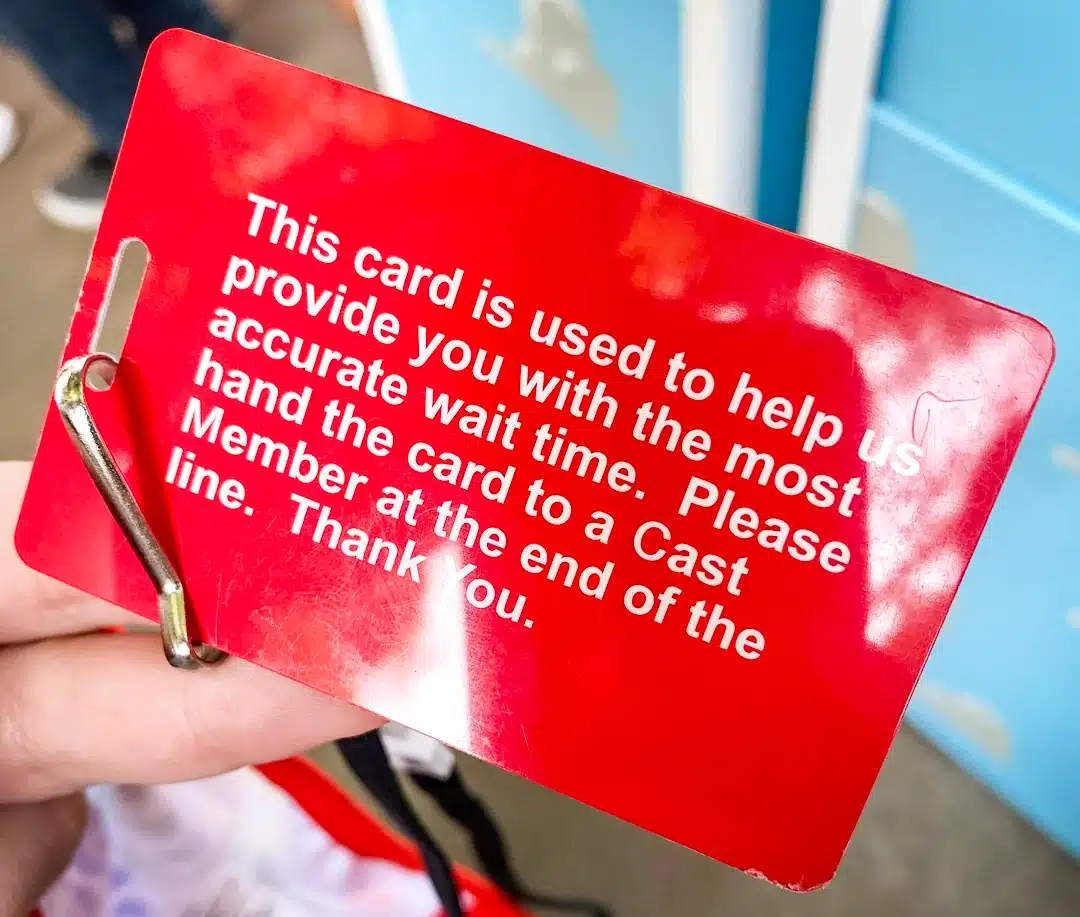
The red card system was known as Fabulous Line Information Keeper, or FLIK for short. It was introduced in 1999 as an early enhancement to the OpSheet system. (Photo above via reddit.)
FLIK was first rolled out at Walt Disney World, and then later at Disneyland. It’s now been officially sunset, with guest experience technology pioneer and co-creator of FastPass Jonathan Reuel revealing on Linkedin that the system has been retired. Here’s what he wrote:
Today marks a truly special milestone—the end of an era! We’ve just completed the conversion of the last FLIK location in a Disney Theme Park. For those who remember the early days, FLIK stands for Fabulous Line Information Keeper, the system that made its debut way back in 1999. It was one of the first OpSheet enhancements I had the privilege to help implement at Walt Disney World, and later, at Disneyland.
It’s amazing to reflect on how many Guests contributed to tracking wait times with FLIK over the years, shaping the guest experience in ways we couldn’t have imagined at the time. I can’t help but wonder—were you ever one of the lucky folks who got handed a FLIK card? If so, you were part of a little slice of Disney history.
Just to set the record straight, I can’t take credit for coming up with the name, but I have to admit, it’s pretty memorable!
Here’s to everyone who was part of this journey, old school and new. Let’s celebrate the progress and the fond memories together.
Disney Parks now use an array of automated technology to measure wait times, from MagicBands to RFID. It was previously our understanding that this long ago displaced FLIK at Walt Disney World, which would make sense given that MagicBands are well over a decade old in Florida.
There was a time when we were handed FLIK cards with regularity, but that hasn’t been the case for a while. I’m pretty sure I’ve been handed a FLIK card once in the last year or two. I don’t recall whether it was at Walt Disney World, Disneyland, or one of the international parks. I do remember thinking at the time that it had been a while since I’d seen one of those little beauties…but apparently I didn’t think enough of it to take a photo. (Then, or ever for that matter.)
In a follow-up comment on the post, Reuel shared that Goofy’s Sky School at Disney California Adventure was the last attraction to use the FLIK system. It’s mildly amusing that Goofy’s Sky School was the last holdout, as that’s one of the few attractions that we avoid at all costs. The only bigger blind spot we have is Beauty and the Beast Sing-Along, and it’d be more surprising if FLIK cards were still used there since that’s a show.
What I’ll most remember FLIK for is the internet culture that accompanied it.
Back in the nascent days of the internet, social media was not yet a thing like it is now. Disney fan communities were on forums and message boards, and the top type of “humblebrag” was photos of FastPasses in front of Toy Story Mania (anyone with the skillz to score a 9:45 am return time has some serious street cred–and speed!). A close second behind that was FLIK cards with clever captions, almost all of which referenced the Little Green Men from Toy Story and said something like “I have been chosen!” What can I say, it was a simpler and purer time.
Since I feel like the statute of limitations on this has expired, I will now admit something: I was awful as a Keeper of the FLIK Card. Yeah yeah, I make this confession right after writing all of that about a sacred and solemn responsibility, etc. That was the case for all of you, not for me, regrettably.

It wasn’t that I was nefariously trying to inflate wait times. I am just absentminded. I would be given a FLIK card, promptly put it in my pocket (I realize they were lanyards for a reason), start taking photos, and then forget about it until sometime between the exact moment I boarded the attraction and several hours later.
Given Cast Members’ unfazed reactions at unload when I apologetically, belatedly returned the FLIK cards, I wasn’t the only one who had this issue. And in my defense, this didn’t happen every single time I was entrusted with a FLIK card. But it occurred enough that, at some point many moons ago, Sarah permanently relieved me of the responsibility.
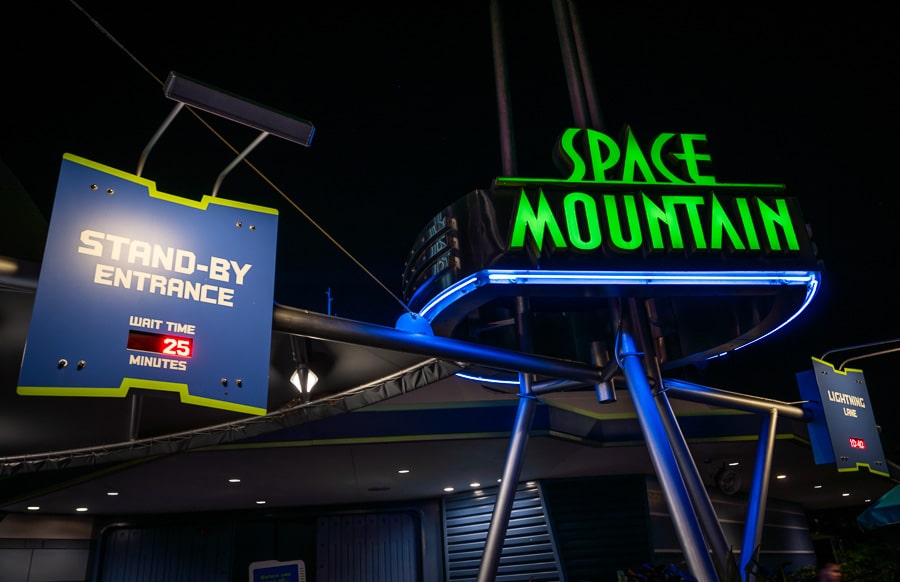
In any case, I apologize to anyone who encountered an arbitrarily inflated posted wait on Space Mountain between ~2006 and ~2016. Alternatively, “you’re welcome” to anyone who had a significantly shorter wait than expected. It really feels good to finally get that off my chest.
Disney’s Posted Wait Times “Problem”
Our position has long been that posted wait times are a useful tool in aggregate as a proxy for crowd levels, but are less helpful for on-the-fly planning purposes. We know some fans enjoy stalking wait times in the My Disney Experience app and pouncing when there’s a drop, but our perspective is that’s largely counter-productive.
Walt Disney World wait times are reactive, which is to say that what’s posted is a measure of what someone waited before you, potentially over an hour ago for headliners. Wait times are not a real-time display of what people are currently waiting, which is one reason why they’re frequently inflated.
On top of that, a drop in the posted time induces more guests to jump into line. Those guests will then wait longer than those who lined up at the tail end of the higher posted wait time that preceded the drop. It’s like the accordion effect played out repeatedly over the course of the day.
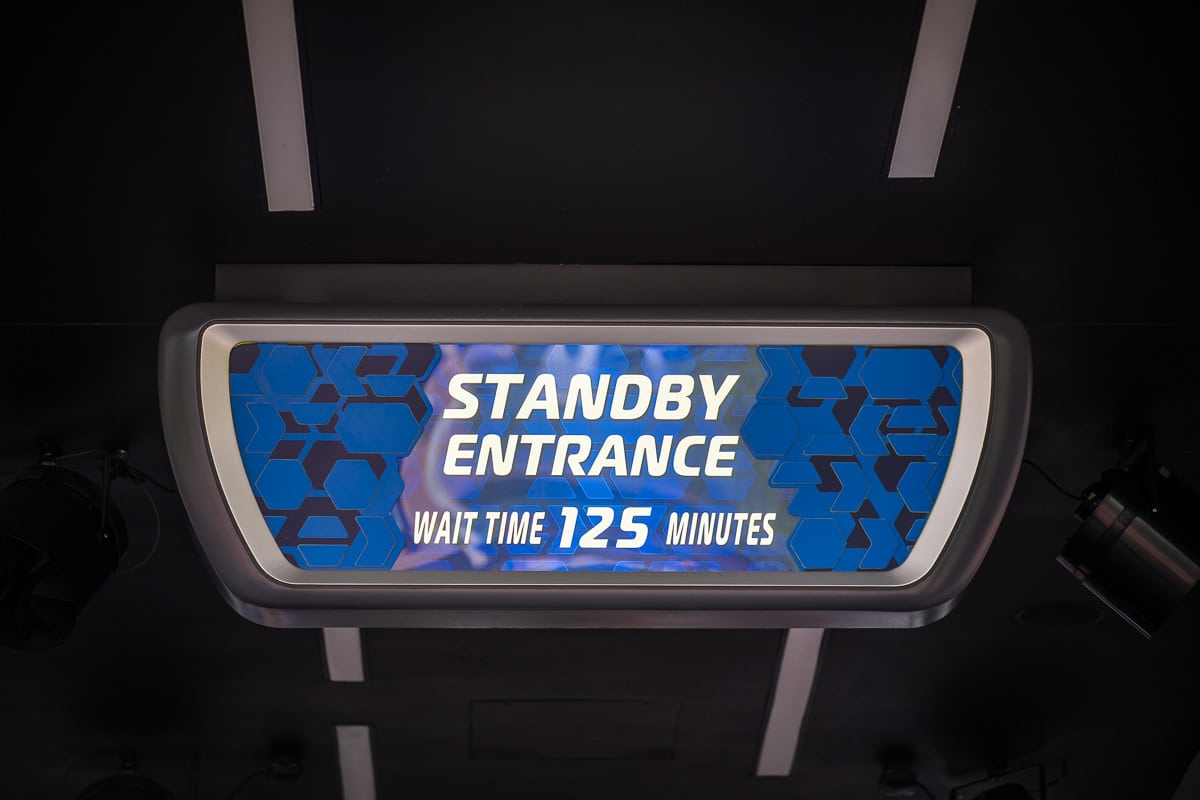
This is precisely why one of our tried and true pieces of advice with headliners like Cosmic Rewind, Remy’s Ratatouille Adventure, Flight of Passage, and Star Wars: Rise of the Resistance is to know when these lulls typically occur and capitalize on them proactively, as opposed to waiting for an actual drop in posted times.
Walt Disney World has been inflating wait times this for as long as I can remember, which is at least the last couple of decades. Anyone who has ever visited the parks and used standby lines to a significant degree for a few days can tell you that posted wait times are higher than actual waits more often than not.
There’s really no debating whether this is happening. The better questions are: why does Walt Disney World inflate posted wait times? and is this practice actually problematic, or good for guests?

There are several reasons why Walt Disney World deliberately inflates wait times. First, it’s good for guest satisfaction–an extension of the ole “underpromise and overdeliver” mantra.
Guests will be happy if they wait less time than is advertised, but unhappy if they wait longer. Since it’s tough to make predictions that are 100% accurate, it’s better to err on the side of inflation.
This kind of consumer manipulation is incredibly common. It’s the same rationale for adopting the “Kohl’s Model” to pricing; if the sticker price is higher, it makes the discounted rate look like even more of a bargain. Illusory discounts work for their psychological appeal. People love it when they think they’re coming out ahead.
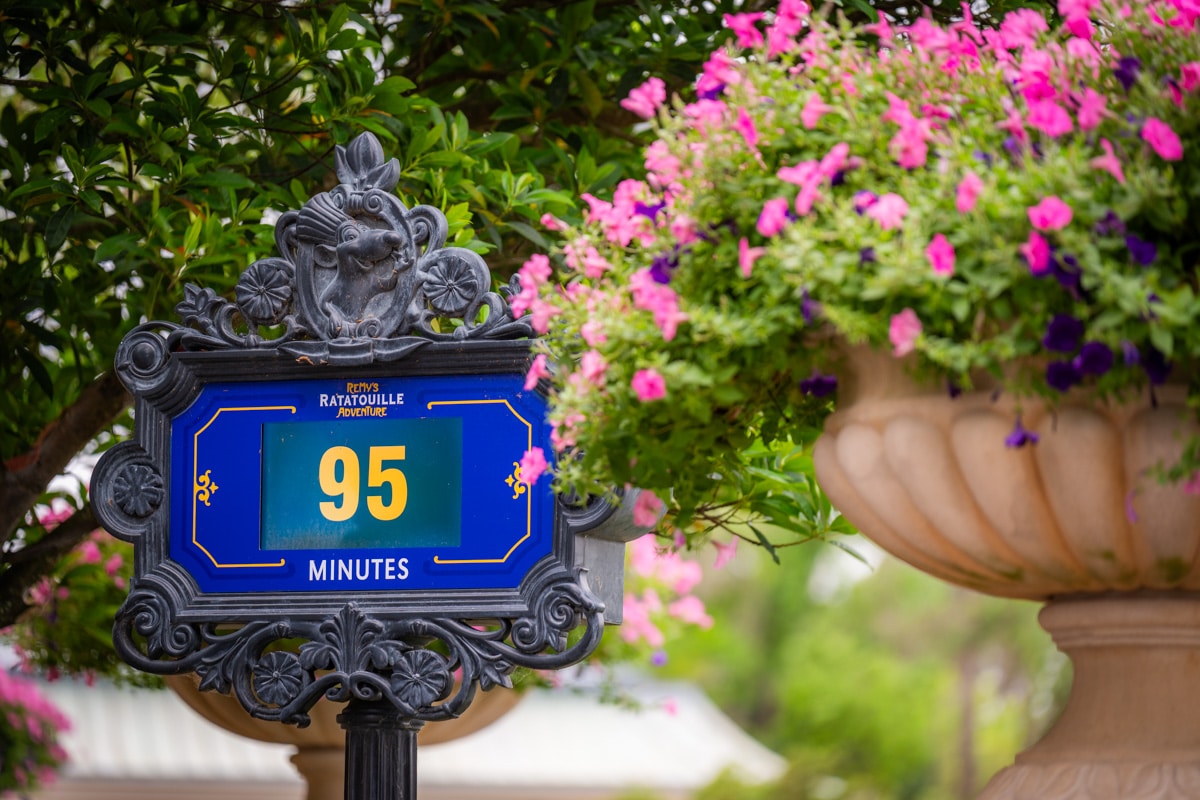
The second reason is a combination of the two points above. Posted wait times are reactive, meaning they’re not capable of being completely accurate. Given that and consumer psychology, it makes sense to overestimate as opposed to underestimate.
You might think that Walt Disney World wouldn’t need to collect real-time numbers via guest flow. That neither FLIK cards nor MagicBands or RFID derived data would be necessary for posted wait times in the first place. That instead, the parks could use actual attendance figures paired with voluminous historical data to forecast future wait times with precision accuracy.
That they could use advanced algorithms in the past or AI now for this type of thing that takes into account everything from the weather to ride refurbishments, breakdowns, seasonality, etc. For reasons beyond me, that’s not how it works. (Routine reminder: Disney is not a tech company.)

Even if Disney could do that, they probably wouldn’t. Wait times themselves are a form of crowd control. Sometimes, we all just need a gentle little nudge to do the right thing. That can come in the form of inflated wait times at popular attractions, which push people towards underutilized ones.
If you give 100 guests the choice between Seven Dwarfs Mine Train and Country Bear Jamboree without any other constraints, 98 of them are going to make the wrong decision and pick the roller coaster. Inflating headliners can effectively help redistribute crowds.
Everyone has a balking point, when a wait time is too high to justify. Inflating headliners’ wait times in turn increases utilization of less popular attractions, making the park more efficient. (Speaking of bygone tricks of this nature, anyone else remember the “Bonus FastPass” from the paper days for attractions like Carousel of Progress or PhilharMagic? Exact same idea.)
This is only a good thing for guests (and arguably for Disney) if the satisfaction derived from the low-wait consolation prize attraction exceeds that of the high-wait headliner. Is the guest who bypassed a 120 minute midday outdoor wait for the brief kiddie coaster in favor of the walk-in air-conditioned bear band stage show going to report a higher or lower satisfaction score? I don’t know the answer, and have always been curious about scenarios like this.

The biggest crowd control use is clearing the parks at the end of the night. This one is good for Disney, but not so much guests. (Except in the know ones–like you!)
Wait times for headliners like TRON Lightcycle Run, Guardians of the Galaxy: Cosmic Rewind, Avatar Flight of Passage, Seven Dwarfs Mine Train, etc. are consistently and predictably overstated in the last hour of the evening, and that’s entirely by design. It’s to discourage guests from jumping in line at the end of the night so the parks can be cleared quicker.
It’s difficult to assess the extent to which this inflation is by design versus being downstream of posted wait times being reaction. Crowds naturally fall at the end of the night, so that posted 60 minute wait really could’ve been 50 or more minutes an hour ago, but by the time it’s reflected on the tip board, it’s already stale data. Regardless, Disney is well aware of this dynamic, and could account for it if they so desired. That they do not demonstrates its operational advantageousness.
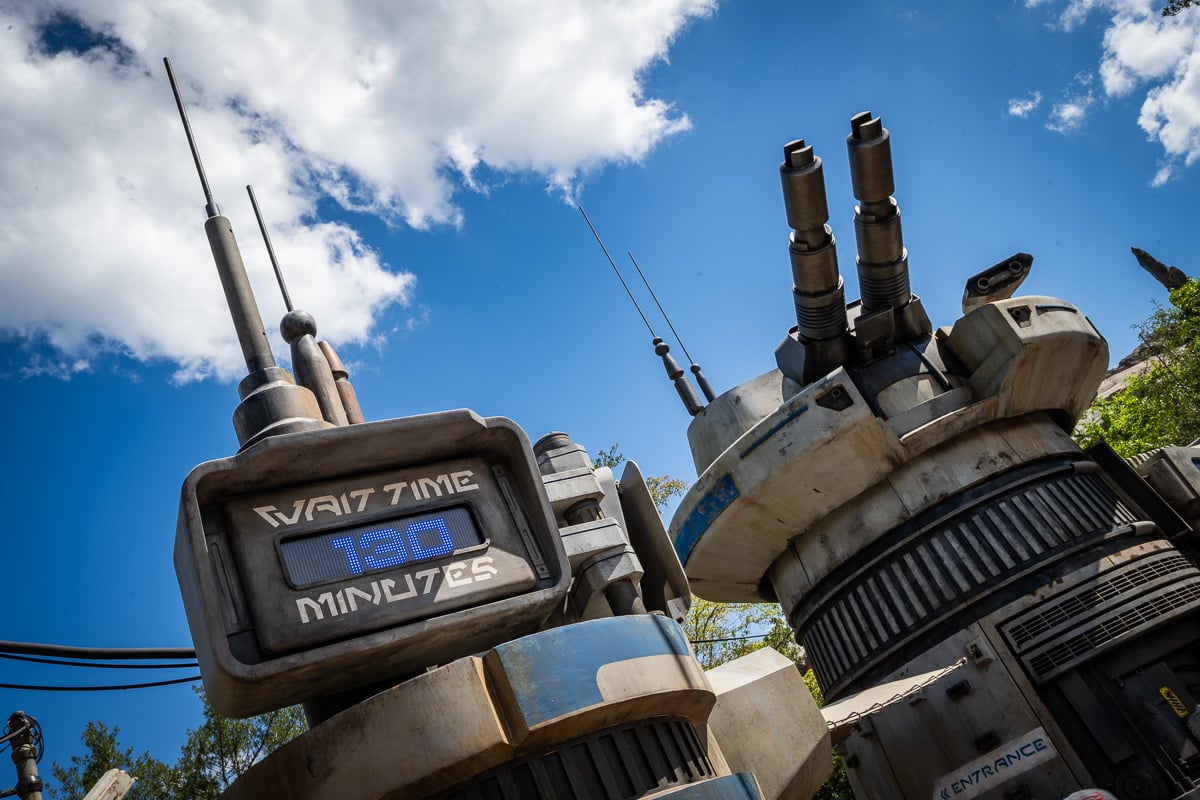
At the other end of the operating day is the morning, which also can be inaccurate. Since the debut of Early Entry and Lightning Lanes, we’re finding that wait times are typically inflated more during the first 60-90 minutes of the day before settling into normal patterns.
The heart of the day, from about 10 am until 6 pm, is when wait times have the lowest amount of inflation. They’re still usually overstated, but not to the extreme degrees as earlier and later in the day. It’s typically pretty slight, maybe 5-10%.
Over the course of the last few years, our experience across all of Walt Disney World has been that actual wait times average about 80% of posted wait times most of the day. That can drop to around 50% at night, and sometimes lower than that.
These are averages. We’ve waited significantly less and occasionally more than posted wait times.
Almost every time there’s been an underestimate, it’s because of a breakdown or efficiency issue. This used to happen a lot with Star Wars: Rise of the Resistance, and now can occur with Cosmic Rewind or Remy’s Ratatouille Adventure (for example) if one side of the load station goes down for whatever reason.
This background info is good knowledge to have that can help you plan and build itineraries. It should also illustrate how inflated posted wait times are actually mutually beneficial for the company and guests. Well, at least they are to anyone who is aware that posted wait times are exaggerated.
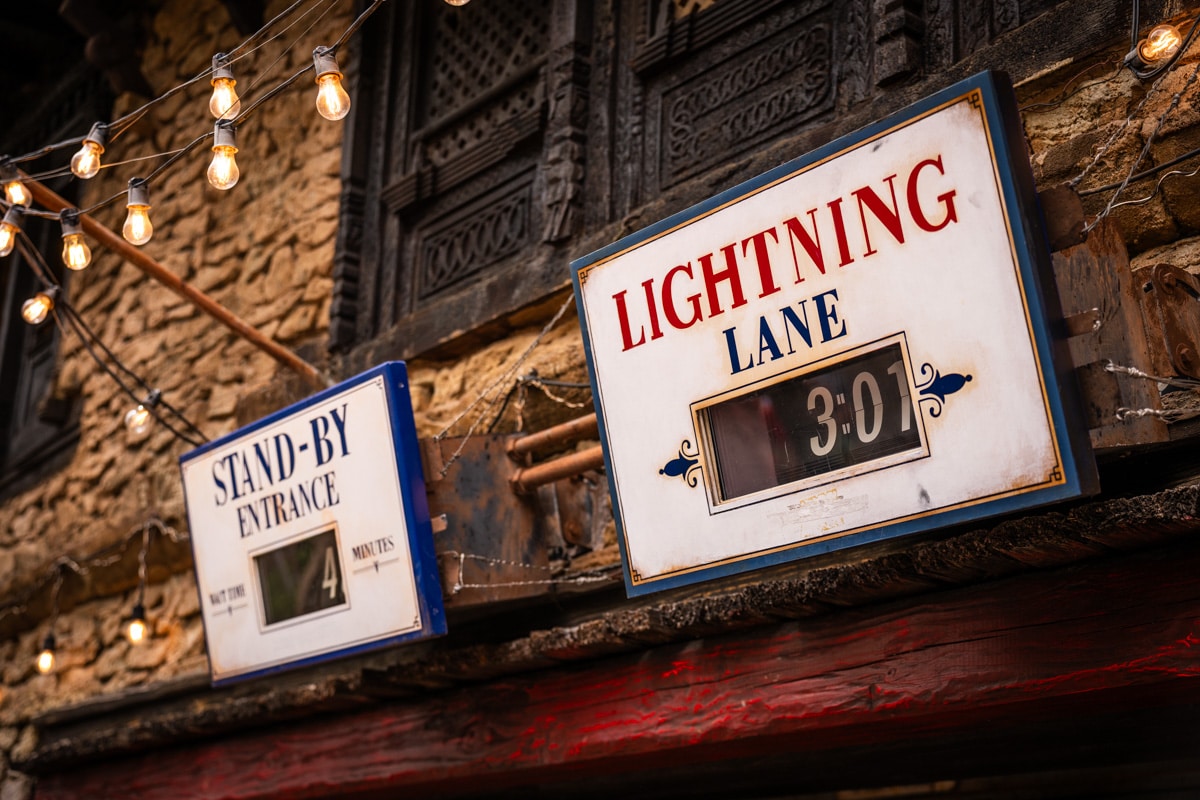
Lightning Lanes have added a new wrinkle to this conversation about posted vs. actual wait times at Walt Disney World. After all, if guests are paying for Lightning Lanes to skip a line, don’t they deserve to know how long that wait actually is?
The perspective among some fans has been that Walt Disney World just started inflating wait times with Lightning Lanes to encourage guests to buy the Single Pass and Multi Pass upcharges. Others have questioned whether Disney had a duty to eliminate inflated wait times or risk claims of fraud, consumer deception, false advertising, etc.
I’m highly skeptical that there’s any connection between selling more Lightning Lanes and inflating wait times. This is doubly true in the era of pre-arrival purchases for line-skipping, but even back when Genie+ was same-day, I don’t think this happened. It’s not that I’m lacking in the requisite cynicism to think Disney might do something like this.
It’s that I am so unbelievably cynical that I don’t think they could pull it off. Walt Disney World is a bloated bureaucracy that epitomizes “one hand doesn’t know what the other is doing.” Any type of scheme that requires the coordination of different divisions over the course of years just isn’t happening, especially when those divisions have antagonistic interests. I’m generally dismissive of conspiracy theories for precisely the same reason; the more people involved, the less plausible. But I digress.
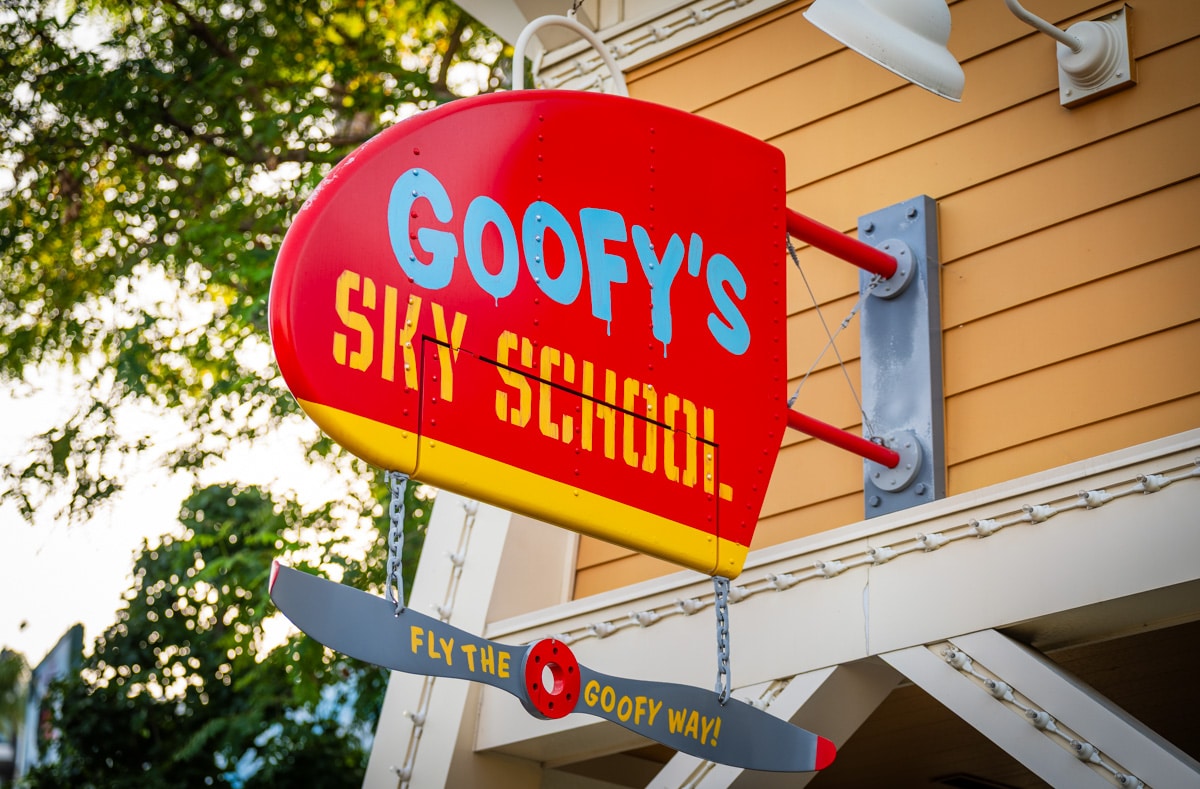
Hopefully this provided a fun trip down memory lane and sparked some sentimentality or nostalgia for the bygone days of FLIK cards for those who remember them. (Which, apparently, could’ve included anyone who rode Goofy’s Sky School as recently as last week!) If not, maybe it was an interesting blast from the past about how things used to be done?
Failing all of that, we at least provided a bit of practical, actionable advice for how you should (and should not) view posted wait times, when they’re most inflated, why, and whatnot.
Planning a Walt Disney World trip? Learn about hotels on our Walt Disney World Hotels Reviews page. For where to eat, read our Walt Disney World Restaurant Reviews. To save money on tickets or determine which type to buy, read our Tips for Saving Money on Walt Disney World Tickets post. Our What to Pack for Disney Trips post takes a unique look at clever items to take. For what to do and when to do it, our Walt Disney World Ride Guides will help. For comprehensive advice, the best place to start is our Walt Disney World Trip Planning Guide for everything you need to know!
YOUR THOUGHTS
Were you ever entrusted with a FLIK card? Did you relish the responsibility? Or now that the statute of limitations has expired, can you likewise admit that you forgot to hand one to Cast Members at the load station a time or two…dozen? What do you think about Walt Disney World’s practice of inflating wait times? What has been your experience with actual vs. posted wait times? Do you agree or disagree with my assessment? Any questions we can help you answer? Please share your thoughts below in the comments!


I got one of those cards on my first trip to Disneyland and was so enamored that I *did* take a picture. It was for Small World, which obviously meant that for the (honestly less than 15 minutes) duration of the line, I was THE WORLD’S official time keeper. I made sure to reverently hold the card in both hands, as was proper (and also so I was constantly reminded of it because I, too, would have totally forgotten I had it once the shock wore off.) It was a weirdly magical thing! Kind of sad for it’s loss…
Tom, first you bashed Primeval Whirl (and all of Chester & Hester’s Din-o-rama) & now you bash Goofy’s Sky School! You just don’t like mouse coasters, do you? But since you’re such an influential blogger (note how WDW “coincidentally” came up with a similar idea to you for Regal Eagle), um, maybe you should tone down the anti-mouse coaster rhetoric, since for those of us who like them, there will be none left to ride, at least at safe places like Disney Parks. I don’t trust the safety of those at county fairs or the Fun Spot parks.
As a hostess, I would always inflate wait times. That way the customers were always happy to be called and I didn’t have to deal with hangry people.
Traveling solo I was handed a card entering World of Motion. I thought that was cool.
“That they could use advanced algorithms in the past or AI now for this type of thing that takes into account everything from the weather to ride refurbishments, breakdowns, seasonality, etc. For reasons beyond me, that’s not how it works. ”
Maybe I wasn’t reading closely enough, but how do they measure ride wait times then? I get that there are other factors involved besides just accurate wait times, but there’s got to be a wait-time estimate in the mix somewhere.
As an AI Engineer, they *probably* aren’t using AI, and the reasons are too long for anyone to read, but suffice it to say it would be complicated and expensive, and not necessarily any more accurate than a simpler solution.
What a great memory! My last FLIK card was on Primeval Whirl. I can still feel the bruised ribs and whiplash like it was yesterday. I wish I could ride it one more time!
I avoided Goofy’s Sky School for a while too. Then my kid fell in love with Goofy’s Sky School. Last time I was at DCA I had to ride it seven times in a row at rope drop. It’s been four months, and I don’t think I’ve recovered.
When I was at Disneyland in March, it only took me 25 minutes to get on RotR after it having a 45 minute posted wait time (the lowest of the day). I wouldn’t be shocked if they inflate LLSP times or at least never let them display below 30min.
Our last trip to Disneyland, I didn’t really look at the posted wait times. I just looked at where the back of the line was.
Our last trip to WDW, I didn’t really look at the posted wait times, because the wait was usually going to be “too long without a Lightning Lane.”
Why do you avoid Goofy’s?
So does this officially close the book an anything related to a Bug’s life in Disney parks? Is it over? If so, it’s a shame. One of the least impressive of the early Pixar era, bust when stacked up against the last decade becomes one of the most formidable. You’ll be missed! Also, love your take on Disney not purposeful inflating wait times to sell lightning lanes simply because they wouldn’t be able to figure it out.
I never knew what those were called! Thanks. When we were handed one when my daughter was little, she really enjoyed it.
I can’t speak to WDW, but as someone who worked in Attractions at Disneyland as recently as 2024, there was absolutely no effort to inflate wait times, and I worked several major attractions. We were strongly encouraged to always be as accurate as possible and had charts for what wait time to post based on how many vehicles were in rotation and which zones of the queue were full, and we gauged our success by whether we were within 5-10 minutes of the actual wait time as measured by FLIK cards. We were always told to be 5-10 minutes over to account for small hiccups that could reduce efficiency, unless the wait time was already under 30 minutes, in which case you should be right around 5 minutes. Minuplating Guests for crowd flow purposes was never even a consideration.
What usually resulted in inaccurate wait times was Cast Members being too busy to call to have it updated, either due to crowds or staffing, or Cast misreading the charts, or various operations issues that weren’t accounted for in the chart estimates. It was rare that we were spot-on, but it was never because we were lying. It was pretty much always because we were overworked, experienced an unknown variable, or just messed up.
This is a great look behind the curtain! Thank you for this!
Great post….thanks!