
Tokyo Disney Debates Ticket Price Decrease.

Oriental Land Co. is debating lowering admission prices at both Tokyo Disneyland and DisneySea. This shares details of the press conference during which OLC made this announcement, along with our commentary about the why of the decrease–so read on before you Walt Disney World and Disneyland fans grab your pitchforks and declare that the “US parks would never!”
OLC company President Wataru Takahashi announced on Friday that the Tokyo Disney Resort owner and operator could lower ticket prices for its theme parks. This is attributed to more Japanese people cutting discretionary spending due to inflation. As a result, OLC “will likely consider” lowering prices or adjusting the price range for Tokyo Disneyland and Tokyo DisneySea.
Prices normally fluctuate in response to projected demand. Tokyo Disney Resort single-day tickets (the only admission type sold) for either of the parks currently cost between 7,900 yen ($55) and 10,900 yen ($75) per adult. Lower prices are available for children, juniors, and guests with disabilities.
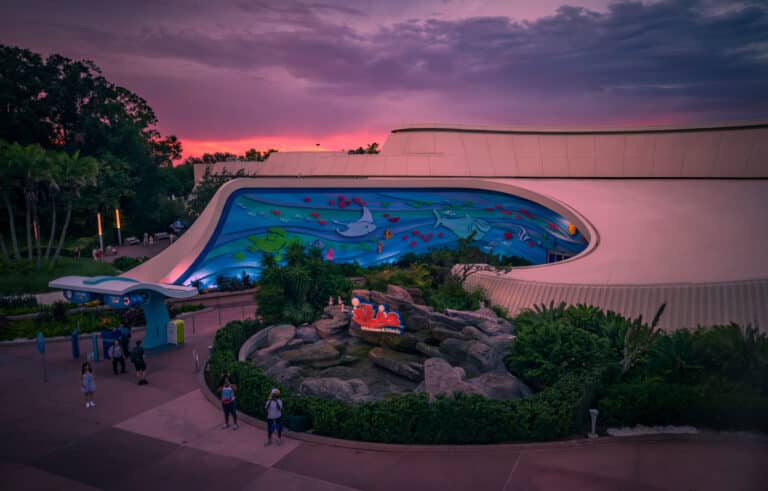
Takahashi’s remark came as Oriental Land considers a large-scale redevelopment of parts of its parks under the company’s long-term business strategy through fiscal 2035. We previously covered the potential Adventureland expansion & redevelopment as well as the Port Discovery expansion & Aquatopia replacement.
Speaking about the company’s cruise ship that is slated to start operating in fiscal 2028, Takahashi, who was appointed president and chief operating officer on April 1, told reporters the company aims to get it “on track.”
He described the cruise ship as “the integration of a theme park and hotel sailing across the ocean,” adding that every passenger will be able to enjoy a show with fewer restrictions like those experienced at theme parks where patrons often must win a seat in a lottery. (Press conference reporting courtesy of Kyodo News.)

Our Commentary
Although unconfirmed by Takahashi, it is our expectation that the price decrease, if it occurs, would mostly happen at the higher end of the spectrum. If anything, we could see the least expensive tickets increasing in price, perhaps bringing the range to 8,500 yen to 9,900 yen.
This stands in contrast to Walt Disney World and Disneyland, which have made every effort to preserve the lower end of their price range for the sake of marketing. Until recently, base price tickets hadn’t increased at Walt Disney World since 2018, with one “little” catch–the lowest rates were (and still are) on a handful of undesirable dates during the off-season at Animal Kingdom. Minor detail.
Although inflation is a persistent issue in advanced economies around the globe, one distinction is that Japanese consumers are incredibly cost-conscious. There’s also the reality that along with inflation, real wages have not increased in Japan as they have in the United States. There are a lot of current and historical explanations as to why this is the case, which are quite fascinating but beyond the scope of this post. To that point, I’d recommend watching this video and googling Japan’s “Lost Decades” (plural).

In any case, one of the big trends we’ve spotted when visiting Tokyo Disney Resort in the last few years is that the most reliable predictor of crowds is ticket prices. But not in the way you might expect!
If you’ve read our Guide for Choosing When to Visit Tokyo Disneyland in 2025, you might already know where this is going. That got a major overhaul this year, removing a section about avoiding weekends at all costs and adding this: “We also strongly suspect price sensitivity was a contributing factor, as we anecdotally experienced heavier congestion and higher wait times on dates when tickets were cheaper last year.”
In other words, attendance and prices are inversely correlated–the best predictor of higher crowds is lower prices. It’s gotten to the point that we have specifically targeted higher-priced days to help avoid crowds, especially Sundays and Mondays. The price difference is often $3 to $7; that’s less than a single Premier Pass, but often more valuable over the course of the day. We would recommend you do the same.

In combing through quarterly financial reports from OLC, it’s not surprising that they’re mulling (one of my “favorite” words to describe the decision-making process in Japan) price decreases. This is because last fiscal year’s attendance fell short of expectations despite the opening of Fantasy Springs.
OLC reported annual attendance of 27.56 million for the 2025 fiscal year, revised down from an initial forecast of 29 million. In other words, they missed the mark by nearly 1.5 million guests. Attendance did increase year-over-year, up from approximately 27.51 million in the last fiscal year. That amounts to a 0.2% increase, which is fairly insignificant considering the $2 billion investment in Fantasy Springs.
For the 2026 fiscal year, OLC is forecasting 28 million visitors to the parks, or modest growth of 1.6%. It’s worth noting that this comes as Japan smashes inbound foreign tourism records on a monthly basis, with 2025 set to be the biggest year–by far–for international tourism, absolutely shattering the prior record, set in 2024. However, the core demographic for TDR is locals–it is more reliant on the local audience than Disneyland in California, and a sharp contrast to Walt Disney World.

OLC attributes these lower results to a few factors. The first is severe heat, which has drastically reduced attendance in the summer. This is especially true among domestic travelers within Japan and repeat visitors. This is such an issue for OLC that they’re exploring weather countermeasures, including the installation of more air-conditioners, shade structures, beverage vending machines, and extended summer programming.
Second, there was a larger-than-expected impact of rainy weather. I don’t doubt this to some extent, as we enjoyed some less busy rainy days, but this seems pretty negligible. Japanese guests are used to rainy weather and come armed with umbrellas. A little precipitation doesn’t clear out the crowd the way it does in California (it’s more like Florida in this one regard).
Third, there was a decrease due to the end of the Tokyo Disneyland 40th Anniversary celebration. With that aforementioned local audience, nostalgia is a powerful pull, as is entertainment–that celebration had both, plus special souvenirs and food. All big draws with Tokyoites.
Finally, there’s a sharper than anticipated decline in travel demand on the back of a slowdown in post-pandemic “revenge spending.” This is hardly surprising, as Walt Disney World and Disneyland have seen this exact scenario play out in the U.S. parks. The only difference is the timeline being delayed due to Japan’s slower and more cautious approach to reopening.

Regardless of the reasons, Tokyo Disney Resort fell short of expectations last year and the fiscal 2026 year isn’t looking much better. Still below the target for last year by 1 million guests.
With that said, not all timeframes have been impacted equally. Last year, there was a lull in the lead-up to Fantasy Springs as locals and tourists alike postponed visits until the new port-of-call opened. This made for a slower few months pre-Fantasy Springs, as compared to the prior year. That wasn’t much of a surprise to OLC, per its quarterly reports.
As noted, last summer was slower than expected due to extreme heat despite the opening of Fantasy Springs. We question whether this is entirely due to the severe weather–Tokyo has had some really hot summers in the last ~5 years, and it stands to reason all would’ve been (more or less) equally impacted. We strongly suspect guests also stayed away in the opening months of Fantasy Springs, fearing colossal crowds.

Instead, we strongly suspect that heavy attendance showed up in the fall during the Halloween and Christmas seasons. We “strongly suspect” this because we experienced some of the worst “feels like” crowds in over a decade of visiting TDR.
About the only time I can recall that was worse was visiting during a sold out weekend over Christmas 2013–back during the 30th Anniversary. (That visit is the one that made us swear off weekends for a long, long time.)
To that point, we had an awful experience attempting to enter Fantasy Springs during the holiday season, which almost soured the day in Tokyo DisneySea for us. You can read Why Disney’s #1 Park is Getting 1-Star Reviews for a full recap, but suffice to say, we are far from alone in having these issues. This came after pretty smooth and seamless experiences with Fantasy Springs during the (slower) summer season.

While I’m not surprised that OLC is talking about reducing ticket costs (or at least, the price range), it’s worth noting that this is just one of many levers they can pull. One thing they’ve already started doing is target international “whales.” (That’s probably you.) Vacation Packages and various upcharges have been a boost for the bottom line, but not enough since foreigners are a very small slice of the pie.
Another simpler option would be bringing back multi-day tickets. I’m honestly shocked that these sales are still suspended, and cannot fathom what the rationale is for not restoring 2-day, 3-day, and 4-day tickets. It’s low-hanging fruit, and such an obvious thing to do. Maybe they’re still mulling it. (To their credit, they are testing Park Hopper tickets, but the pricing is prohibitive–it’s an awful option unless you only have one day.)
The final lever is the nuclear option: bringing back Annual Passes. This is an inevitability at some point, but I really hope TDR builds a reservation system, gets better about blockouts–or does something to fix the overcrowding caused by APs. Once Annual Passports return, Saturdays and Sundays will instantly be the busiest days of the week once again, irrespective of single-day ticket prices.

Finally, before you start salivating over OLC being more “fair” about prices, keep in mind that higher wage-earning Americans are not the target demographic of theme parks in Japan. This is something we explain in Is It Cheaper to Visit Tokyo Disney Resort Than Walt Disney World? (Spoiler: yes, it is.)
It’s worth reiterating and underscoring that median wages and household income are significantly higher in the United States than Japan. As is probably obvious, the target demographic for each destination is domestic tourists, not international ones, so local incomes make a big difference in pricing. Another is the strength of the respective currencies. Honestly, this is the difference-maker right now in a comparison of costs at Tokyo Disney Resort vs. Walt Disney World.
This is really a story of the U.S. dollar versus the Japanese yen. Thus far in 2025, the dollar has retreated from its historic highs due to tariff uncertainty, but the yen is still only around the 144 level against the U.S. dollar (that’s as compared to 154:1 last year). To put this into perspective for those are are unfamiliar with traveling to Japan or foreign currency, a good/normal rule of thumb used to be a 100:1 exchange rate. This is why so many Americans are flocking to Japan in the first place.

Beyond all of that, there’s the reality that spending continues to be resilient among Americans. At the risk of stating the obvious, Walt Disney World and Disneyland aren’t going to lower prices in the face of robust demand. The Key to Disneyland, a gigantic piece of plastic with a pin inside, sold out despite a massive price tag. Mickey’s Not So Scary Halloween Party below past the $200 barrier…and October 31 sold out in record time. You get the idea.
Part of this is increasing real wages and other factors discussed here. But there’s also the reality that there’s divergent psychology between American and Japanese consumers, with the latter being far more frugal–to such an extent that many Japanese businesses have refrained from passing along inflation to consumers for fear of alienating shoppers and losing market share.
All of that is beyond the scope of this post, but the salient point is that this is yet another of many big differences between Walt Disney World and Tokyo Disney Resort. At both destinations, price increases stop and the decreases start when guests collectively say “enough is enough.” Here’s hoping that continues to happen at TDR to the point that free FastPass fully returns. That’s probably wishful thinking, but honestly, it wouldn’t shock me.
Planning a trip to Tokyo Disney Resort? For comprehensive advice, the best place to start is our Tokyo Disneyland & DisneySea Trip Planning Guide! For more specifics, our TDR Hotel Rankings & Reviews page covers accommodations. Our Restaurant Reviews detail where to dine & snack. To save money on tickets or determine which type to buy, read our Tips for Saving Money post. Our What to Pack for Disney post takes a unique look at clever items to take. Venturing elsewhere in Japan? Consult our Ultimate Guide to Kyoto, Japan and City Guide to Tokyo, Japan.
YOUR THOUGHTS
Surprised to hear of a price decrease at one of the Disney Parks? Have you visited Japan in the last couple of years? What was your experience with the strong dollar and weak yen? Even if you visited pre-closure, what did you feel about the value proposition of Tokyo Disney Resort? Pleased with the bang-for-buck you got out of the trip? Any questions we can help you answer? Hearing your feedback–even when you disagree with us–is both interesting to us and helpful to other readers, so please share your thoughts below in the comments!

Lower prices are great—they make more things possible for me.
Hey Tom,
Just wanted to say we visited Japan and Tokyo Disney for the first time in May. A lot of that trip was motivated by reading this blog, so I wanted to thank you. We had a tremendous time and I keep dreaming about Japan. It’s hard being home.
As you mentioned foreign tourists spending extra, we splurged and bought an unlimited VP (1 night, 2 days), but in total had two nights at Miracosta in a Harbor view room and two nights at Ambassador. Watching Believe from our room was amazing. The unlimited VP was amazing. We hit some rides over and over like BatB 3 times.
I think DL is in a sorry state at the moment and so many areas feel a bit 80s mall like and less feeling of the placemaking i’m so used to in Disney parks. Amazing rides tho! DS of course is on another level. I’m glad we had two days there. Sad Frozen was closed tho.
Anyway, thank you for all your great info and for helping motivate us to make the trip. Now I want to go back. Also seeing another David in the comments. Not me lol.
Just returned from visiting Tokyo Disneyland and DisneySea over a 2-day ticket plan last Wednesday and Thursday. Wonderful parks, mind-boggling lines for the top rides/attractions. Can’t really comprehend how they put even more visitors in during the weekends after experiencing the crowd we saw in DisneySea on Thursday. Used your Guidebook, Tom, for our visit. You weren’t kidding about the entry crowds. It took us 90 minutes to get inside DisneySea after lining up 45 minutes before the 9am opening on Thursday. I got up to look out our Disneyland Hotel balcony with the dawn sun on Friday at 5:45am and was amazed to see a small crowd of park visitors already lined up before the monorail station waiting for the ropes to drop just so they could move into the central entryway courtyard before the 9am park opening. Can’t say I’ll ever get back to this Disney Park after flying over from the US east coast for this Japan trip. But it was an amazing operation and experience.
They could simply limit the number of guests directly. IIRC, they’ve done that in the past, and it’s not as if ‘full’ is a new concept for entertainment venues.
TDL just seems greedy.
They still do this–we saw days sell out around Christmas.
For the love of all things magical, please keep ticket prices where they are and let the law of supply and demand do its thing.
OLC still gets to retain strong earnings, and more importantly, guests actually stand a chance of riding more than one attraction at Tokyo Disneyland or DisneySea during peak times in an 8-hour visit.
Overcrowding in their parks irrespective of the Japanese love of queues is out of control.
I don’t necessarily disagree, but the best fix for the current crowd situation is adding capacity. There’s entertainment that’s still missing, and they could add another hour to the operating day.
While increasing capacity may seem like a logical response, it isn’t the most effective solution — unless attendance numbers are the only metric being prioritised.
Take a step back and consider the current guest experience. Queues of 3.5 hours for headline rides and 90 minutes for mid-tier attractions are discouraging. Extended park hours offer little relief when guests begin reserving parade spots eight hours in advance and overall crowding remains high. In truth, the park’s atmosphere — usually its greatest strength — is being undermined by the pressure of too many people.
The much-anticipated Fantasy Springs expansion, while exciting in concept, has brought some operational challenges into sharper focus. Guests are required to queue in exposed areas before being ushered into a tight, cave-like entrance to scan in — an experience that can feel cramped and uncomfortable. Once inside, the lack of a direct exit to the monorail through the gift shop is a missed opportunity for smoother guest flow. Instead, everyone must filter back through the same cave to exit thus creating unnecessary congestion. And despite the fanfare, the expansion’s 140,000 square meter footprint seems modest relative to the demand it’s meant to absorb (appreciating the land locked nature of the park).
Ultimately, the heart of Disney’s success has always been its guest experience. Whether you’re a local visitor or someone like me — who’s travelled from Australia and visited three times in 18 months — it’s that magic and sense of care that keeps people coming back.
OLC’s post-visit surveys suggest they care about guest feedback. If that feedback is being taken seriously, there’s a clear opportunity here: to shift focus from attendance metrics to the quality of the experience itself and in turn profit.
This might actually ensure Tokyo Disney continues to live up to its reputation as one of the best parks in the world.
I don’t disagree with your points about prioritizing guest experience over attendance, but improving capacity via hours and entertainment absolutely does help.
In 2019, OLC reported attendance of 32.56 million–a record that still hasn’t been broken (https://www.olc.co.jp/en/news/news_olc/auto_20190425411136/pdfFile.pdf).
We were TDR Annual Passholders that year and spent a lot of time in the parks. Few if any holidays or weekends, admittedly, but we were there during busy times of the year. Despite several million fewer annual guests (27.56 million last year), TDS never felt as busy then as it has recently. The footprints of both parks have expanded since then, but the people-eating capacity has decreased despite this.
The 2019 surge in attendance was driven by Tokyo Disney Resort’s 35th anniversary, special events, and major additions like Soaring: Fantastic Flight—which, if anything, just proves that Japanese guests are incredibly patient when it comes to queuing – heck it’s a national sport. But every system has a limit, and there is inevitably a tipping point!
As you rightly note in the article: “It’s gotten to the point that we have specifically targeted higher-priced days to help avoid crowds.” So if OLC cuts prices, where does that leave guests like yourselves in the future—who are already strategising to avoid the chaos?
Reducing ticket prices might seem generous, but in reality it risks pushing the parks past a sustainable threshold. Overcrowding diminishes guest satisfaction, strains cast members, and erodes the overall experience.
Instead of slashing prices, why not focus on delivering exceptional value? People are more willing to pay when they feel they’re getting something worthwhile in return. That fosters stronger brand loyalty, healthier revenue per guest, and long-term advocacy.
As the saying goes: “Price is only an issue in the absence of value.”
Really interesting to read about the difference in spending habits. Anecdotally, I wonder if some of it is a question of what the Japanese are willing to spend money on. Because the amount of merch I saw the average TDR guest sporting was unlike anything I’ve seen the US. Popcorn buckets, pins, hats, gloves, you name it, they had.
You sure that’s the average TDR guest and not the common high visibility TDR guest?
Regardless, I more or less agree. I’ve watched documentaries/shows on NHK and elsewhere about frugality, but then there’s also guest behavior at TDR and the countless high-end malls in Tokyo, and people in the city who are incredibly well-dressed. I know much of the former is for tourists and the latter isn’t necessarily across the board, but it still sticks out!
So rather then increase shows and experiences to boost attendance to where they want it to be they are going to cut prices instead to achieve the same outcome. This sounds like a backwards step and scaling back of the park mindset.
That’s a fantastic point. They’re making incremental steps in restoring the park experience, but it has been glacially slow.
Cool. I like lower prices, it let’s me do things I otherwise couldn’t afford.
Umbrella Chapek felt a disturbance in the Force ….