
Disney Falls Further on Fortune’s Most Admired Companies List for 2025

The Walt Disney Company has seen its reputation fall further, with a drop on Fortune’s 2025 list of the World’s Most Admired Companies. This post takes a look at what changed, how Disney performed relative to the competition, along with our commentary about what this does–and does not–mean.
For the 18th year running, Apple takes the #1 spot atop the list of the World’s Most Admired Companies. This is the 27th year of the list, which is created in partnership between Fortune and Korn Ferry. The World’s Most Admired Companies list highlights organizations most respected by their peers, with executives emphasizing financial stability, innovation, respected leadership, and expansion of global businesses.
After Apple, the 2025 top five includes Microsoft, Amazon, Nvidia, and Berkshire Hathaway. Several of these companies have been on the Most Admired list for years, a testament to their reputational stability during volatile times both politically and culturally. Berkshire Hathaway, for example, has been atop its category for every single year of the survey’s 27-year existence.
Otherwise, Fortune calls attention to the tumult and turmoil of the last year for many companies. Last year, it specifically drew attention to Disney’s drop, and the various reasons for that. This year, Fortune discusses how Ralph Lauren took the top spot in apparel for the first time since 2014, dethroning Nike, which had enjoyed 10 straight years at No. 1 but suffered in 2024 from a sharp revenue slump exacerbated by a dearth of new products.
In a food service industry roiled by inflation, McDonald’s staged a huge comeback thanks to Grimace (my explanation, not Fortune’s) and thanks to the $5 Happy Meal (Fortune’s explanation), finishing first. That ended a 12-year reign at No. 1 for coffee giant Starbucks, whose growth has leveled off amid dissatisfaction among customers and employees alike.
These survey results suggest that industry insiders believe both Nike and Starbucks would benefit from a reboot, just as they felt with Disney last year. Obviously, executives do not believe Disney did enough to burnish its business reputation…but it also didn’t inflict much new damage, either.
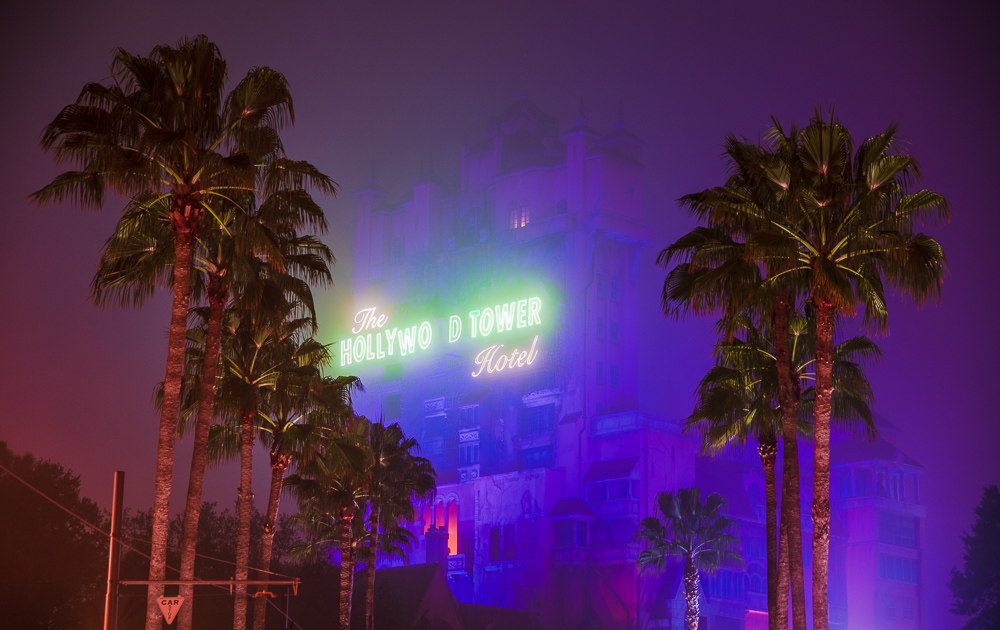
Last year, Disney ranked #12 overall among the companies from across the globe on the All-Star list of Fortune’s Most Admired Companies, which was a fall of 6 places as compared to last year. For the 2025 list, the drop is last extreme–Disney is down one spot, to #13. Honestly, contrasted with the company’s poor performance on all of these lists over the last few years, this might be considered a small victory by some.
Separately, Disney actually improved its position on the most admired media & entertainment companies list for 2025. Last year, it lost the #1 spot to Netflix and fell to #4. Disney had held the top spot for 20 consecutive years prior to last year. For 2025, Disney bounces back to claim the #3 spot among entertainment giants.
The methodology for choosing the top-ranked companies within industries is different than that for choosing All-Stars, which is why Netflix still ranks below Disney on the All-Star list, but is #1 on the media list.
Methodology matters here as the “how” of this list is indicative of what it does (and doesn’t) reflect. Fortune’s annual list of the “World’s Most Admired Companies” (WMAC) is a collaboration with Korn Ferry to survey corporate reputations. The process begins with the 1,000 largest U.S. companies ranked by revenue, along with international companies with revenues of $10 billion or more.
From there, the candidate pool is reduced to the highest-revenue companies in each industry. To determine the best-regarded companies in 52 industries, Korn Ferry asked executives, directors, and analysts to rate enterprises within their own industry on nine criteria, including investment value, quality of management, caliber of products, ability to attract talent, etc.
To select the 50 All-Stars, Korn Ferry asks nearly 4,000 executives and insiders to select the 10 companies they admired most. They select from a list made up of the companies that ranked in the top 25% in last year’s surveys, plus those that finished in the top 20% of their industry. Anyone could vote for any company in any industry. The difference in the voting rolls explains why some results can seem at odds with each other.

Here’s Fortune’s 2025 Top 20 All-Star List:
- Apple
- Microsoft
- Amazon
- Nvidia
- Berkshire Hathaway
- Costco Wholesale
- JPMorgan Chase
- Walmart
- Alphabet
- American Express
- Delta Airlines
- Coca-Cola
- Walt Disney
- Marriott International
- Netflix
- Home Depot
- Salesforce
- Goldman Sachs Group
- Procter & Gamble
- FedEx
Turning to commentary, Fortune’s WMAC list is fascinating. However, I also don’t think it’s as important as the similar Axios Harris Poll that typically comes out later in the spring. At least, not from the perspective of anyone here who, presumably, cares more about the guest experience and less about the corporate employee one. I’m really looking forward to the 2025 Axios-Harris list, and seeing whether less controversy (hopefully!) results in a higher ranking.
It should be apparent in reading the methodology section for the Fortune WMAC list that the critical difference with this Fortune list is that it’s voted on by industry executives, directors, and analysts rather than the general public. Leaders within corporations prioritize different qualities or characteristics than do consumers.
Metrics like investment value, quality of management, ability to attract talent, and social responsibility may not matter to the average American responding to such a survey. There are scenarios where “investment value” could be diametrically opposed to what consumers prize. Analysts might love Lightning Lane Premier Pass and the elimination of Disney’s Magical Express, thinking “that Chapek fella had some good ideas.” Just gonna go out on a limb and assume that would not be the consensus among consumers, though.

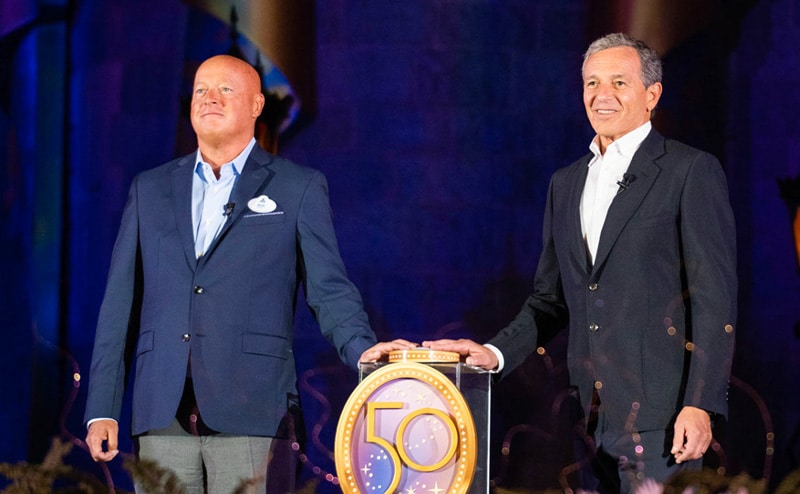
Where there is overlap, it’s primarily with quality of the product and maybe of management, but the latter is arguably a bit too inside baseball for the average American. It matters to people who read sites like this one–around here, Bob Iger and Josh D’Amaro aren’t just household names, there are strong opinions about the dynamic duo.
But I’d bet that around half of Axios Harris poll respondents recognize Bob Iger, and less than 5% know the name Josh D’Amaro. Never underestimate the knowledge gap between super-fans and regular people (can you name the CEOs of every company in the Fortune top 10?!) So really, it’s the products and public-facing experience that matters to you and I.
The discrepancies between Fortune’s industry-specific and All-Star lists even hint at this. Within an industry, there’s more insight into the competition. Zoom out and ask all executives from the list, and there’s still more knowledge relative to the general public, but it’s still a bit of a smell test. They probably know about the proxy fight, performance of the stock, and whatever else they’ve read about Bob Iger in the WSJ (a lot of it has not been good).
Point being, the ongoing layoffs and business restructurings and yet another proxy fights and succession struggles and stock underperformance and constant palace intrigue/ongoing Battle of the Bobs probably took their toll on Disney’s reputation in the business community. But then again, the executives’ kids likely liked Moana 2 and Inside Out 2, and that also counts for something–silly as it might sound.

So how is the Fortune list relevant to you, as a fan of Walt Disney World and Disneyland? Frankly, it’s a lot less meaningful than the Axios Harris poll. (That’s the one I’m anxiously awaiting.) Companies can overperform on this list while offering awful consumer products and services. Or vice-versa.
To be sure, there’s a lot of overlap between this list and the Axios Harris poll. But then there are companies like Berkshire Hathaway, which is beloved in the corporate world but more of an unknown among the general public. It has ranked highly every single year of the Fortune WMAC list; it didn’t make the cut at all–good or bad–on the Axios Harris poll. Other companies like Walmart, Fedex, Goldman Sachs, JPMorgan, American Express, and others rank very differently–or not at all–on the Axios Harris list.
My expectation and hope is that the Walt Disney Company will actually see a healthy rebound on the Axios Harris list. Disgruntled theme park fans may not want to hear this, and point to unpopular decisions like replacing MuppetVision, razing the Rivers of America, poorly-received ride reimaginings, DAS changes, Lightning Lane Premier Pass, and so forth.
But that stuff is unpopular with hardcore fans, not the general public. If it’s on their radar at all (and it mostly isn’t), the perception is probably very different. When I’ve explained to normie friends what’s happening, they’re more focused on the Monsters, Inc. Doors Coaster and Cars Land parts of the news.

Much more importantly, Disney absolutely dominated the box office last year. Inside Out 2, Moana 2, and Deadpool & Wolverine were all huge hits. Other films performed really well and added to Disney’s box office haul, but I’m skeptical those movies (e.g. Alien Romulus) would register with the public as being “Disney,” and that’s what matters for the purpose of the survey.
Streaming is probably the biggest wildcard…and also the biggest blind spot for me. Despite headlines about it shedding subscribers, Disney+ continues to grow in the United States (it’s losing them internationally). I don’t know whether this is just inertia and/or Bluey, or if people generally like Disney+ content. I see a lot of complaints about the Star Wars and Marvel shows on streaming, but I have no clue whether this is actually the public consensus, manufactured outrage, or a bit of both.
Regardless, I’d still expect Disney to improve on the Axios-Harris poll. The last year has been largely controversy-free for the company, at least in terms of coverage you’d see on the nightly news. Disney vs. DeSantis is long-settled, the last proxy fight has been over for a while, and it’s been over a year since the dust-up between Bob Iger and Elon Musk.
There are certainly assorted “controversies” within the fan community, but as far as the broader Disney-consuming public goes, I can’t really think of anything from the last ~365 days. It’s been a mostly positive year for Disney on balance, and given that, I suspect the box office results, strong guest satisfaction scores for the parks, and Disney+ domestic subscriber count will matter above all else in dictating Disney’s position on the Axios-Harris poll. But I suppose we shall see.
Turning back to the Fortune WMAC list, this makes a difference from a guest-facing perspective in Disney’s ability to attract and retain talent, and the downstream effects of that. Disney has long been able to compete with corporate giants offering better compensation because of the name Disney and what that means. Talented professionals wanted to work for Imagineering because of the name cachet and being part of something cool and special.
On a frontline level, one of the reasons the College Program has been so successful is because Disney is a powerful word on a résumé. Recruiters overlook the role and are more interested in the experience with the Walt Disney Company. Ask anyone who has worked for Disney at any level–they’ve almost certainly received more questions about Disney during subsequent job interviews than anything else.
The consequence of Disney not being able to attract top talent would be a future with fewer Lanny Smootses or Joe Rohdes. Not being able to make the same strides in robotics, groundbreaking innovations that earn patents, or advancements in Audio Animatronics. And that’s just in Imagineering, one relatively small silo of Disney.

The Fortune World’s Most Admired Companies list also matters a lot to Disney. If you look through the archives on the Walt Disney Company’s corporate website–the one that focuses on investor relations, careers, and the company’s impact–there used to be annual press releases touting its position on the Fortune WMAC list. The last one of those I could find, not-so-coincidentally, is 2023.
The bottom line is that there’s a direct nexus between Disney’s corporate reputation among leaders in the business world and among fans. It certainly is not as immediate, but there are real world consequences for a company seeing its reputation falter. A drop from #12 to #13 certainly is not a five-alarm fire, but as a fan who wants Disney to attract the best and the brightest, it’s also not great that they’ve fallen from #6 to #13 in the span of two years, and are no longer #1 in the entertainment industry.
Long-term, the consequence of this is that Disney could lose talent to Netflix, Amazon, Marriott, or even Comcast (we’ve already seen this happen with layoffs at Imagineering resulting in an influx of talent to Universal Creative–hopefully the same thing now happens in reverse with Epic Universe finished and WDI needing to staff up).
For many Disney fans, being an Imagineer is the holy grail–but for a lot of actual job candidates, it’s one of many options. There are also other important positions in Burbank, Glendale, Central Florida and beyond that need to be able to attract top talent. They flocked to Disney in the past because it was a beloved American institution, with an unrivaled reputation. Let’s hope that reputation is restored in the years to come, among both the general public and corporate leaders.
Need Disney trip planning tips and comprehensive advice? Make sure to read Disney & Universal Vacation Planning Guides, where you can find comprehensive guides to Walt Disney World, Disneyland, Universal Orlando & Hollywood, and beyond! For news & rumors, on-the-ground updates, discount information, free downloads of our eBooks, and much more, sign up for our FREE email newsletter!
YOUR THOUGHTS
What’s your take on Disney spot on the 2025 Fortune’s World’s Most Admired Companies list? Think the company can bounce back with a less tumultuous year? Think a clear succession plan, better stock performance, and another year removed from controversies will help? Hope Disney gets its groove back soon? Do you agree or disagree with our assessment? Any questions we can help you answer? Hearing your feedback—even when you disagree with us—is both interesting to us and helpful to other readers, so please share your thoughts below in the comments!




It’s good to see Disney has improved on the downward spiral over the past year. I’m optimistic about the future of the parks.
Tom, I know you’re a Disney super fan, but part of what I admire about this blog is your willingness to admit Disney is far from perfect in a lot of ways. So with the guest experience still lacking (the ol’ “paying more for less” thing) amongst a lot of other issues, kind of curious why you’d be rooting for Disney to climb the ranks in the Axios-Harris list (or any other poll)? I’m not super knowledgeable in this department or anything – I’ve just become kind of fascinated with Disney as a business lately – but my thought is that maybe continued tumbling down the ranks in various polls would concern Disney leadership and perhaps motivate some positive change for guests and/or employees? I’m not sure how positive reinforcement for Disney’s current behavior really helps anyone?
PS, my MIL sent me a photo of her 1993 receipt from MGM Studios today, and their family of four got in for a total of $103! My husband looked, and that would be $217 in today’s dollars. It’s costing our family of four nearly $600 for that in May 2025…that made me feel a certain kind of way…
What I find strange is, in spite of all the cash-wringing practices Disney has enacted over the past four years, the stock price is still about half of what it was four years ago. With all rabid fan perspectives put completely aside, from a business perspective, the stock price matters. And cash-wringing isn’t just bad for guests and customers. It can result in huge losses like Disney experienced with their Galactic Star Cruiser debacle. (They still haven’t learned lessons from the initial roll out of California Adventure. When you promise the moon and deliver rocks, the bottom line suffers.)
I’m not a business expert, but it seems pretty obvious to me Disney did too much overseas expansion too quickly. The company is overextended and cannot adequately maintain the infrastructure they have in place while simultaneously designing and building new attractions. It’s just bizarre to hear about billions of dollars in new “investment” while the parks have just so many burned out light bulbs, rides that constantly break down and a Disneyland Tomorrowland which isn’t much more than a ghost town.
Okay, here’s the outlook for one fan who goes just once a year but spends enormously on that trip.
1) Taking the country out of Country Bears and making it all about IP makes me want to throw up.
2) Bulldozing Rivers of America and Tom Sawyer Island for a not (for me) nostalgic attraction is enough for me to never plan a future trip (after my early May trip.)
3) Eliminating Muppets Courtyard is a sacrilege to the memory of Jim Henson – destroying his last project?? That should be a National Historic Landmark?
4 Getting rid of Dinoland instead of putting Tropical Americas elsewhere is an insult to the funny and creative Imagineers who created this very cool homage to 1950’s American road culture.
I’m going in May basically to meet the characters and have my last luscious Via Napoli pizza.
I feel the exact opposite for every single one of your points. Thank you for not going to the parks again, one less person in line
…however, I agree with every one of your points. Well stated!
WMAC seems to apply more to the views of the Wall Street elite and executives in other companies who are on the outside looking in.
I would be more interested in what the day-to-day employees think. A lot of those places are toxic places to work. I have friends who worked at Apple and simply quit due to the burnout and demands. I knew a couple of animators at Disney, who essentially said the same thing — that their talents went pretty much unappreciated.
So I would not put much stock in what Wall Street or management says about “what” is to be admired in a company like Disney. It seems now to be a company of bean counters and profit centers.
They want to squeeze every dollar they can out of the customer or out of the hides of the workers.
CJ: “…dropped from 3rd most powerful person in Hollywood to 9th”
Toby: “[Do they] still make the playoffs, or is the cutoff line…”
CJ: “They take it seriously.”
https://youtu.be/FsM_eeUyOBs?si=wHlNzqBE6s8fFV3I&t=78
Classic. Such sharp writing and dialogue.
It’s been too long since we’ve had a good Aaron Sorkin show. Sports Night is one of my favorite shows to this day–and one of the most underrated of all time.
Even if the people voting on the list are industry executives, directors, and analysts, I wouldn’t be surprised if the rankings reflected residual effects from Florida’s most recent culture war battle.
As for the effects of this list on Imagineering candidates, my sources inside Imagineering don’t care about the list, as they are the biggest Disney fans around. Yes, a lot of people bounce around between Universal and Disney, depending on which one has active projects at any given time. Given the opportunity, however, to work at either Universal or Disney, most would pick Disney.
Where Disney could have a problem is with future generations of Imagineers, but I doubt kids in middle and high school putting in extra hours studying math and science so they can be Imagineers someday care about the list.
“As for the effects of this list on Imagineering candidates, my sources inside Imagineering don’t care about the list, as they are the biggest Disney fans around.”
You only know who you know, though.
Imagineering is definitely NOT just populated by Disney super fans–far from it. That’s more the case in Florida and internationally, but Glendale is a mix. WDI is a big organization itself, and I’d imagine there are some silos where it is more or less “acceptable” to be hardcore fans. (I also only know who I know!)
That makes sense. Glendale pulls from a talent pool with more employment options than Orlando.
I really have no comment about where Disney lies on this list, but looking at the top five, I haven’t yet stopped laughing. Apparently their criteria for “admiration ” isn’t mine!
I could see quibbling with 4 of the top 5, but not Nvidia.
If you’re not familiar with the company, it’s worth reading up on its CEO, Jensen Huang. Dude is basically the personification of the American dream.
I feel similarly about Warren Buffett, but I guess I could see others not admiring Berkshire Hathaway.
Love Disney, but recently sold all my DIS stock. Prices are soaring, but customer experience is not. I feel they should be expanding much bigger and faster with all their cash flow. They also need to stay very far away from politics and woke ideas.
I agree that Disney has made a number of mistakes in recent years, but please explain to me what part of “charging more for less” is “woke”.
The day can’t come soon enough when people stop using that word to describe anything they don’t personally like.
Yes, Disney never used to have politics in their movies.
Except for when they created the three Caballeros to counter nazi propaganda efforts in north america.
Or when they took a stand against animal cruelty with 101 dalmatians or talked about women’s rights in Mary Poppins.
Or income inequality in robin hood, or women’s autonomy and toxic masculinity in beauty and the beast, and women’s autonomy again in aladdin.
Or fascism and environmentalism in the lion king, or racism and environmentalism in pocahontas, or racism, ableism, and religious hypocrisy in hunchback of notre dame.
Or sexism in mulan, or colonialism in a bugs life.
Ratatouille is about how anyone can be good at something it doesn’t matter where they come from from which is the exact discussion at the heart of the DEI conversation, wall-e is about environmentalism, princess and the frog tackles racial bias.
Or all the zillions of gay allegories like frozen, little mermaid, and lilo and stitch where a misunderstood person leaves where they’re from and finds community, love and family by embracing what others condemn about them.
Or racism and political fearmongering in zootopia
Yes, other than all of that, Disney just started talking about “politics” recently.
Aeryn,
I think you forgot Donald Duck fighting the Nazis on the home front.
I also forgot Tarzan! The whole movie is about different forms of masculinity, comparing paternal masculinity, industrious masculinity, toxic masculinity etc Clayton is literally killed by his own toxic masculinity
What’s to admire about a company that continues to fill executive pockets while magic makers (cast members) live in their cars because they cannot afford to live where parks are located.
Without doing a deep dive into the numbers, I would hazard a guess that almost all of the companies topping this list have similar c-suite to average worker pay disparities. We just know about Disney’s because we’re all fans of the company, so we pay attention to this stuff. But it’s hardly unique in that regard. The outliers are the companies with CEOs taking little pay and offering better competition to the frontline (of the companies here, Costco comes to mind).
To your point, though, this is another reason why average Americans may not put much weight in this list. Then again, if that’s the primary criteria, you aren’t going to admire many companies.