
Disney World Adds New Rules for DAS Eligibility Call

Walt Disney World has once again made changes to its Disability Access Service website, this time updating rules and clarifying guidelines for the registration process. This covers details of the new policies, while also recapping other recent revisions and what else might be on the horizon.
As quick background, Disney overhauled DAS at Walt Disney World last May. According to the company, the changes were due in large part to abuse, misuse, and proliferation of the program’s use–with issuances of DAS tripling from 2019 to last year. For more about the specifics of the overhauled DAS, see Disability Access Service (DAS) Changes at Walt Disney World FAQ.
The new system has now been in place for over a year, and there have been direct impacts for disabled guests as well as indirect ones for all guests. To the latter point, we’ve written a lot about the impact of the DAS changes on wait times at Walt Disney World. Most recently, in Is Lightning Lane Multi Pass Still “Worth It” at Disney World? Suffice to say, standby lines are shorter and faster moving, with wait times being lower year-over-year as a result of the DAS crackdown.
We’ve also covered the reports from readers and other guests applying for accommodations at Walt Disney World, many of whom have had incredibly negative, invasive, humiliating, and dehumanizing experiences with the new process. We continue to receive reader comments and messages to this effect on a near-daily basis, which comes as no surprise given there are likewise viral social media posts about DAS, none of which are positive, once every few weeks.
Suffice to say, even over a year later the DAS overhaul remains controversial. It’s also a highly sensitive subject that is very personal since it is, quite literally, make or break for some guests trying to experience Walt Disney World. There have been widespread reports of guests who previously had DAS being denied and advised to use alternative accommodations, some of which are new–or are revised and highlighted more prominently.

The latest change is that Walt Disney World has an expanded section on the official DAS website with rules, polices, guidelines–whatever you want to call them–for the video call to reduce guest confusion and clarify how the process works.
As you might be aware, Walt Disney World requires guests to participate in such a video call to determine DAS eligibility. These new rules on the website are a welcome addition; we’ve received countless messages from readers who are confused about how this works, and Walt Disney World was previously (purposefully?) vague with specifics. It didn’t help that the interview process is now materially different than October 2021 through April 2024, and still differs between Disneyland and Walt Disney World.
Anyway, here’s the new/revised/updated/expanded verbiage:
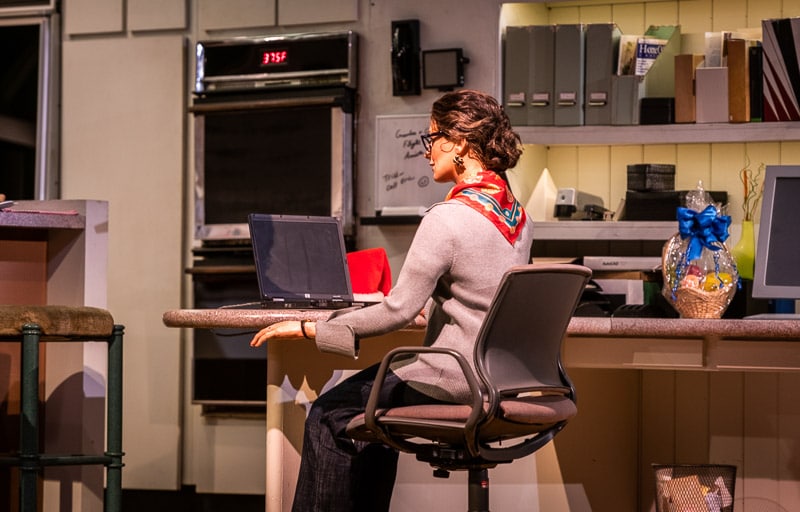
Speak with a Cast Member
When you’re ready to chat with a Cast Member to determine eligibility for DAS, you can engage in a live video chat using the “Request Live Video Chat” button below.
Make sure the device has a working camera and a microphone. You must review and accept the Terms & Conditions before requesting a live video chat.
Important things to note:
- Live video chat is available from 7:00 AM to 8:00 PM Eastern Time.
- The recording of this video chat is strictly prohibited.
- The Guest requesting DAS either for themself or for someone else (e.g. a minor child) must be 18 years of age or older to register
- The Guest for whom DAS is being requested must be present during the video chat.
- If you’re not logged in to the Walt Disney World website, you’ll be prompted to log in.
- If you don’t have an account, you’ll need to create one before continuing.
- If you don’t have valid theme park admission, you’ll need to link valid theme park admission for each member of your party.
- Guests using a mobile device or tablet will need to download the Zoom application to connect to the video chat.
- Video chat is screen reader-friendly for Guests with visual disabilities and available with text chat for Guests with hearing disabilities.
- At this time, live chat is offered in English only.

This is now the fourth change to Disability Access Service in 2025.
Prior to this, both Walt Disney World and Disneyland extended the validity period for Disability Access Service upon a guest being accepted into the program to one year or the length of the ticket (whichever is shorter). Prior to this up to 365 day window, DAS was valid for up to 240 days before re-registration.
The big beneficiary of that change was Annual Passholders, and meant that they would not have to re-register for DAS two-thirds of the way through their AP validity window. That made DAS more convenient for locals and other regulars, while also adding a layer of predictability, and it came right as the first wave of DAS Annual Passholders would’ve been up for renewal.

Another major change was the extension of the DAS registration window to 60 days prior to their park visit, which also occurred on both coasts. Previously, the process could begin no sooner than 30 days prior to your visit. That occurred back in early February.
That extension was aimed at making it easier for guests to plan around DAS and potentially cancel or modify their vacations if they do not receive DAS as an accommodation. Going from 30 to 60 days resulted in a negligible increase in DAS applications, but it doesn’t materially change the equation on approvals. It was all about reducing friction for guests who apply and are denied DAS, as it put the earlier-applicants outside of the penalty-free cancellation period.
With the extension of DAS applications to 60 days, guests are able to make an informed decision about their status and cancel if they’re denied and feel visiting Walt Disney World will not be feasible or desirable without the DAS accommodation. Guests who booked vacation packages who apply for DAS sufficiently early will be able to receive full refunds as a matter of policy.

Disney also revised its policy language to remove “only” from the Disability Access Service eligibility criteria to potentially broaden the qualifying guests.
As we pointed out at the time, that likely involved involvement from an army of attorneys, and even then, its motivations and outcomes are open to interpretation and debate. My best guess is that Disney wants to soften the perceived limitations in the policy among prospective applicants.
To make it appear less harsh or stringent, to encourage guests other than those with developmental disabilities to apply for DAS. It could be a way of unofficially expanding the scope of eligibility without making any substantive changes to the policy or overhauling the program yet again.
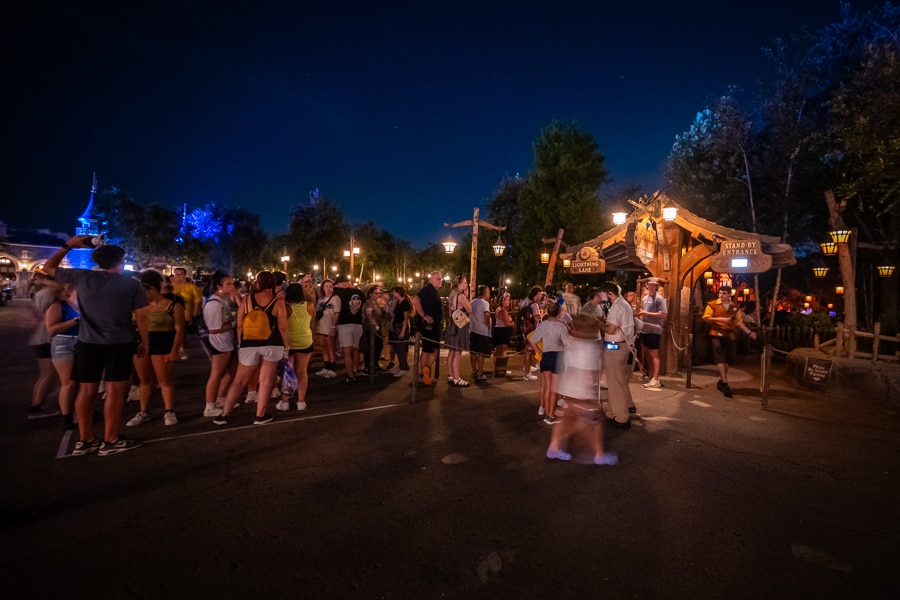
While we’ll never know for sure what prompted the “only” change or what result it’ll have on the ratio of approvals to denials, our view is that it’s fairly consequential in the quantity of DAS issued despite being only a single word.
The motivation for the “only” change might’ve been the Disability Access Service Class Action Lawsuit Filed Against Disney Parks. The complaint relies heavily on the presence of “only” in Disney’s previous DAS policy, and a demand letter from last December that preceded the lawsuit.
I would also add that there all of the previous changes in 2025 came right around the time of that lawsuit. In the ~5 months since the last change occurred, which was right around the one-year anniversary of the DAS overhaul, Walt Disney World has been pretty quiet as to the Disability Access Service program. This is the first change since then, and it’s comparatively inconsequential.

Previously, we expressed optimism that hopefully Walt Disney World was starting to listen and soften its approach to Disability Access Service in a measured manner. That if there were a big dial on DAS policy intensity, Disney cranked it from the minimum to the maximum last year.
The likely goal of ping-ponging from one extreme to the other was eradicating abuse, making it clear that the company was serious about DAS and would only grant it in the most extreme scenarios–and scammers need not even bother.
Now that word has gotten out that DAS is a serious policy and not just a rubber-stamp formality, it appeared that Disney was taking that big DAS dial and reducing the intensity of the process. Back after those changes in the first few months of the year, we predicted that more changes were in the pipeline as the new-look DAS crosses its 1-year anniversary, with the company searching to find more of a middle ground. That wishful thinking now appears to be wrong.

I’m not sure what prompted the latest change about the video calls, but unlike the others, it appears insignificant.
If I had to guess, this expanded policies were driven in equal parts by a desire to reduce guest confusion and also make it clear that recording of the video chat is strictly prohibited. Honestly, I wouldn’t be the least bit surprised if that ‘strictly prohibited’ verbiage was the important part (given all of the viral social media content), but Disney didn’t want to add that alone, drawing attention to it–or the why of it.
I don’t know, and it doesn’t seem worthwhile to fixate on this since, again, it’s a fairly inconsequential change. The bigger news, if anything, is the non-news and lack of changes in the last ~5 months. Between DAS now being over a year old and the lack of meaningful changes since its anniversary, it would seem Disney has settled into a comfortable policy position with the program.
The news cycle has largely moved on, which is not to say that there isn’t still outrage or heartbroken guests, but that they’re not garnering as much attention or negative coverage. Even the DAS advocacy group that was once active in opposing the changes has largely gone dormant; I’ve received 3 press releases from them in the last 7 months, and none since August. At one point, their updates were near-weekly.

Even as the news cycle has largely moved on, we maintain our position that Disney should find this middle ground. If anything, they should do this precisely because DAS changes don’t garner the same kind of attention, so reform could be accomplished without inducing as much abuse.
The company has an exemplary reputation for guest service and accommodations. Or the company did, prior to last year around this time when the new-look DAS rolled out. Part of these changes are absolutely understandable, there was rampant abuse exacerbated by social media, entitlement, and Disney creating an incentive for DAS scammers by monetizing line-skipping via Lightning Lanes.
There’s no un-ringing that bell and going back to 1990s or 2000s versions of accommodations. The world is a different place. Disney cannot relax its rules too much, or else risk a return to the system being scammed.

There have also been heartbreaking stories of DAS denials, many of which have gone viral for good reason. These have made clear that a more flexible and humane approach offering greater discretion to Cast Members is optimal.
This strongly suggested that Disney went too far with the DAS overhaul; the pendulum swung from one extreme to another, and there has been a lot of collateral damage among disabled guests who needed DAS and have been denied under the overly-stringent system.
Cranking the DAS dial to its maximum setting hasn’t just eradicated the scammers, it has hurt guests who are actually disabled. It’s time to recalibrate from the extremes to the center.

Ultimately, we do not anticipate any major changes to DAS at Walt Disney World or Disneyland. There is not going to be another overhaul to Disability Access Service, absent the aforementioned class action lawsuit or other litigation prevailing.
That happening is highly doubtful–Disney has been sued over every single iteration of these accommodations, and I’ve yet to find any record of them losing on any count. The company has already endured a lengthy PR hit over these changes, there’s zero chance they’ll voluntarily endure that again with another overhaul.
What, if anything, does happen will be a slow trickle of rule relaxations. But with no major changes in the last 5 months, even that is now looking increasingly unlikely.
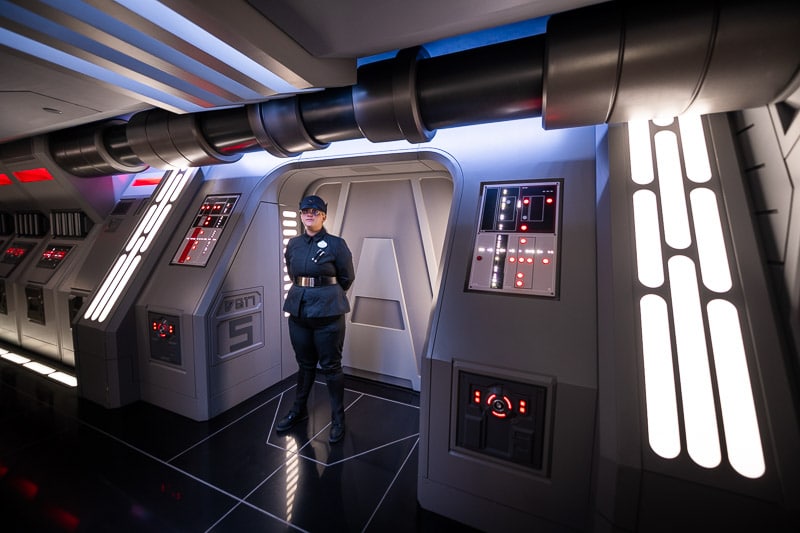
The most obvious change we’d like to see is a “humanizing” of the interview, not just expanded rules and policies for the mechanics of that process. We’ve heard from many readers who have been denied, and there’s a word that has been used repeatedly to describe the process: interrogation. While we can appreciate how stressful this process is for Cast Members and the verbal abuse they take for disgruntled guests, there’s a better way of handling the process that feels less adversarial.
This wouldn’t be an actual public-facing policy change, as it would be almost impossible for the company to convey. Disney probably isn’t going to write in its FAQ that “the interview is now an interview, instead of a scene from Star Wars: Rise of the Resistance.” The Disney Legal team might be reluctant to approve that verbiage.
Given that this would happen without an official policy change, it’s possible that it’s already occurred! I somehow doubt that, though, given recent reader complaints. It also doesn’t seem like strictly prohibiting recording of the video chat is a rule that would’ve just been implemented if those calls were getting better. That’s just a hunch, though.
Planning a Walt Disney World trip? Learn about hotels on our Walt Disney World Hotels Reviews page. For where to eat, read our Walt Disney World Restaurant Reviews. To save money on tickets or determine which type to buy, read our Tips for Saving Money on Walt Disney World Tickets post. Our What to Pack for Disney Trips post takes a unique look at clever items to take. For what to do and when to do it, our Walt Disney World Ride Guides will help. For comprehensive advice, the best place to start is our Walt Disney World Trip Planning Guide for everything you need to know!
YOUR THOUGHTS
Thoughts on the latest change to DAS rules at Walt Disney World? Would you like to see Disney further adjust the big DAS dial, reducing the intensity setting? Hopeful that further changes will be made that result in increased approvals for those who truly need DAS while keeping abuse low? Agree or disagree with our assessment of the changes or policy as a whole? Please try to stay on topic–we’ve noticed some of these DAS comments sections get heated and personal. Discuss the policy itself, not others’ use (or lack thereof) of it.






In reading the comments I see the term “knowing the concept of time”. Could you explain how Disney uses that in the evaluation?
Thanks,
Always enjoy the information that you bring to us on the DAS if a person is refused a DAS pass. Will Disney give a full refund for accommodations and tickets. I know for myself if I am not able to get the DAS pass I am not able to go on a Disney vacation. Is Disney aware that there are people like me everywhere.
This is so disheartening. I’m Autistic, with ADHD and generalized anxiety disorder among other disabilities. We’re going to Disney next month and I’m so anxious about the interview process that it’s making me sick, and I haven’t been able to muster the wherewithal do it yet. If I’m told that I have to advocate for accommodations at every single attraction, I’m more likely to find a shady corner somewhere and spend my day crying from overwhelm and frustration.
Telling people who have a disability that is often characterized by struggles with communication and anxiety and comes with a lifetime of misunderstanding and bullying, that they need to tell a dozen strangers per day what their needs are in order to participate in their vacation is – to put it simply – cruel.
I have been approved for DAS in the past. I have not requested DAS since the recent changes and I am pretty sure that now I will be denied. With multiple eye surgeries, sensitivity to light even with prescription sunglasses, I am sometimes blinded by the FL sun. I once fell at MK and not a single CM came to help me. My husband picked me up and we headed for the exit. I have fallen in public other places and am intolerant to heat from direct sunlight, so standing in line without shade can be overwhelming as after about 10 minutes my feet are numb due to nerve issues so I use an ECV at WDW. I have other issues, most of which are invisible. I have a handicap plate on my car and it is noted that I am disabled on my drivers license. All my doctors would certify the above, but apparently WDW won’t have it. I have been going to WDW for more than 50 years, am an AP holder and truly wonder what has happened to this once stellar company. 2026 could be our last year.
My family visited twice with our kids. The first time we were on the cusp of a ASD diagnosis for our son, but didn’t even know DAS existed. He struggled a lot that trip, but overall we still had a great time.
Skip forward two-ish years and we went again but this time we knew about DAS and had an official diagnosis. Upon going to MK to see about getting a pass, we had documents and info needed… but they just asked and granted. While that made it so stress free, I could see how easily it would be to abuse. Nevertheless having DAS didn’t prevent all issues, but it sure as heck made it much easier to navigate the parks with our son.
We’re a bit worried to get denied when we go in Dec but all we can do is try and explain how we have been with and without and how much easier it made it for him. At least he’s older now and better medicated but I just want to make this as easy for him as possible so he has a good time.
CMs have a hard job and I don’t fault them for their decisions, but it’s unfortunate it came to this and I saw firsthand why.
We have a now ten year old. On the spectrum , capd , language processing, anxiety , adhd. She masks and people pleases 24/7 when our Disney person came on he asked her what she feels like in line. She would never tell a stranger how she truly feels , ever. Meanwhile she wears low gain hearing aids to turn sound down but that only works to a certain point and we can not find noise cancelling headphones that don’t put pressure on them. This last trip because we did not get approved we spent 3k on premier pass and multi pass and individual lightening lanes for a 3 day trip before our Disney cruise. We still had an episode almost everyday. Das works bc it isnt limited to one use. If we get out of line with our premier pass , there aren’t more for that ride. No way out of the lightening when stuck in a long wait. Instead of saying they aren’t educated in an area and asked more questions they gave us a website to access how hard of hearing people could have accommodations. That is the exact opposite of her, she hears certain things tooo loudly . We have never had a male employee or male “medical advisor” . It was so humiliating, after spending 40k at Disney in 2025 we will be finding other ways to spend our money. Makes me so sad.
My autistic son is also an expert masker. People don’t realize he is disabled because he doesn’t want them to know. However, the parks environment is very stressful for him and waiting in line is agony. The solutions they tell the cast members to offer for those on the spectrum are wholly inappropriate. It shows that Disney has no knowledge of autistic individuals’ needs, and that makes me more angry than sad. We will also be spending our money elsewhere unless Disney gets some true training for their teams and makes DAS work for the disabled guests it was created for.
I just want to comment that there will never be a perfect middle ground. For an operation this big, there will always be some scammers who get through, and some legitimate guests who get denied.
The process should be made as dignified and respectful as possible, but there will always be unhappy guests.
If you make the policy too strict, you’ll minimize scammers (likely not eliminate), you’ll minimize people who may not be intentional scammers but don’t truly need it, but you’ll also deny a lot of deserving people.
If you make the policy too loose, you’ll minimize improper denials, but you’ll end up giving DAS to a lot of scammers and people without genuine need.
So the “middle” is really just a moderate number of improper denials (and those people will still get really upset), and a moderate number of scammers and people who don’t need it.
What I think is proper:
The process should be dignified and respectful. It should be transparent and well disclosed. There should indeed be a long window in advance so families can know whether it is granted or denied.
And Disney should always to make their attractions as accessible as possible without the “easy out” of just line-cutting.
This is easily avoidable. Like Universal, Disney could engage medical/behavioral specialists and require documentation that would prove the need for accommodations. You are correct that not all scammers would be stopped, but believe me, most would.
Unless I missed another change, Universal no longer requires that guests obtain the IAC from IBCCES. They now may go this route, but it’s not mandatory. This changed about a year ago: https://www.disneytouristblog.com/universal-orlando-stops-requiring-controversial-disability-access-card/
Both Universal and Disney have to contend not only with scammers, but also laws around reasonable accommodations and medical privacy. It’s a matter of balancing the guest experience for all, assisting disabled guests, minimizing abuse/misuse, and avoiding being on the losing end of the inevitable lawsuits. As Adam noted, it’s impossible to hit the perfect middle ground that makes everyone happy.
I was recently at WDW, my first time there in 10 years, with a friend who qualifies for DAS. As grateful as I was that she had an easy time renewing it and for the undeniable benefit it was to our trip, I couldn’t help but feel guilty hearing about everyone else’s horror stories. She’s been prone to fainting spells since she had covid a few years ago, and after lots of tests her doctors can only figure that it’s an effect of long covid. Her body basically decides it doesn’t want to regulate her temperature anymore. Maybe she had an easy time renewing because she only had 1 other guest with her, maybe because she comes from overseas and Disney wants to keep her coming back.
Even though I felt a little guilty about how DAS drastically improved the quality of our trip, it was kind of put to rest when I noticed that practically all the rides no longer had Single Rider option. On past trips I would go on Single Rider wherever possible and be able to enjoy all my favorite rides in a reasonable timeframe. But when the only option Disney offers is standby or paid, time-specific Lightning Lane… get what you can, I guess.
i had annual passes for years and the park was one of the few places I could almost feel normal on my ecv. Now I feel I have had my last trip. The regulations have gotten so complicated. My MS has progressed but it’s not considered neurodivergent so even with very limited mobility I may not qualify. it makes me sad to think I msy never have the chance to go again.
I have qualified for DAS since I was a kid due to all the medical issues I have. They definitely need to find a way to be more accommodating to all guests with disabilities. I have a trip next month and did the new way with the call and was told word for word “The DAS pass is ONLY intended for guests that do not have any concept of time. Clearly you do so you do not qualify.” That was from their “medical personnel” and I was told I couldn’t reapply.
I WISH I had recorded that. Disney is going to ultimately begin to lose guests if they cannot accommodate guest with Disabilities. We haven’t been in a few years but having to go through this new process and being told it’s basically not for disabled guests after changing the wording, they’re doing something wrong.
In the long long run, I don’t think Disney’s line system is sustainable in its current form. At some point the expectation that people stand in an hour long line without access to seating, restrooms, shade, sensory reprieve, etc, will simply become socially unacceptable, I feel fairly certain of that. The population is aging and becoming more neurodiverse, I really think the writing is on the wall there.
In the medium term, I’m sorry for the people who have to miss out. I think there could be a happy medium not just in who qualifies, but in what is offered. All rides are not the same, for many people, just 2-3 LLs to cover specific rides with difficult lines would make a big difference.
We’ve continued to have pleasant experiences with cast members to accommodate our daughter, who is autistic, and think highly of the DAS service. Recent changes to extend the duration of eligibility have been very helpful. In our experience, Disney parks are more accommodating than the rest of the world.
So sad to hear of problems with the DAS system. My grown daughter was refused DAS accommodations shortly after the overhaul, even though she had qualified for many years. She was hurt and mortified by the person on her video chat. We did go a couple times and asked for accommodations. Sometimes she was approved and sometimes not. Having to beg for an accommodation at each attraction humiliated my daughter and five of six family members let their AP’s lapse. I am the only Passholder left and frankly I almost didn’t renew. I haven’t been in a park since February. My whole family now goes to Universal and are passholders there. They love the resorts and have been their five times since Disney made the change. My daughter has her IBCCES card and has been welcomed and treated with respect and dignity at Universal. They have stayed at The Helios twice and love Epic Universe. She doesn’t have to grovel for crumbs at Universal. Sadly, I don’t see her returning to Disney because of the treatment she received.
Our son with profound autism as always been approved for das. We were approved last year after the changes and again two weeks ago for our upcoming trip. When we applied two weeks ago it felt like they were looking for any reason to deny das for our son even though it is 100% apparent even on zoom he qualifies under their own description of who das was designed for. I have been hearing of many more denials recently from people who were approved just a couple of months ago which does not make sense. How does someone with a disability get approved one month and denied the next when needs are the same? I think there are more internal changes that have not been made public than the changes about “how to apply”. I have no problem with the new verbiage about the person needing the pass be present for the zoom call.
I’m curious as to why the name of the in-app scheduling service for people with certain types of disabilities also wasn’t changed to clarify this confusion. Disability Access Services should refer to the overall department that manages accommodations and ADA park protocol. Using an app to get return times upon entering any given park is not always necessary for folks who previously qualified. I’ve aired my grievences about the content and process of the interview in other places including guest services. A combination of the meet up option described as well as being given LLs and sometimes just a wave forward has been reasonable in my opinion. It doesn’t mean Disney doesn’t think I am disabled or won’t provide an accommodation at all. My experience during several trips since the change has been that return times are being issued at the discretion of each attraction. For those unable to advocate on their behalf, you may use a note on a card to communicate your needs. Yes this is stressful and would I rather use the app, sure…. but the tightening also benefits both disabled people and paid LL guests as the LL wait times have decreased significantly.
I live with a 71 year old who loves and enjoys the parks, who previously qualified for DAS – but doesn’t anymore. What we found on a recent WDW trip, was that we got plenty of accommodation for him outside the expectation of DAS. Very long lines where excessive standing/sitting wouldn’t have been possible, they gave us both a couple of LLs. On a day when we did buy LLs (but crowds didn’t show up), they went ahead and refunded them. For super high-demand long lines that we did wait in line (like Tron) – they let me do the line alone, and then did basically a “single rider swap” (where I was party A and B) so he could experience it in the back car. At Guardians, they gave us a push wheelchair to use for the ~60 minute queue, and that was perfect for him.
We didn’t need the blanket DAS, and yes, sometimes it was annoying to talk about it – but on a case-by-case basis, we ended up better than in the “hard no” DAS period. Attraction CMs, Guest Experience Team, and Guest Relations were super helpful – just had to be upfront about the simple accommodations he needed.
Thanks for sharing this experience!
Do you think you would’ve navigated this as successfully were you not a plugged-in and experienced park-goer? That’s one of the things I struggle with when it comes to case-by-case accommodations. In theory, it makes perfect sense–but I also think there’s a good chance it’s easier for those with experience, and who know how to communicate with CMs well and advocate for themselves. I also think there’s something to be said for consistency and predictability–especially in a situation like this.
It’s tough. There’s no perfect solution, and I won’t pretend that some of the ‘improvements’ that I’d like to see with DAS wouldn’t entail downside risk with abuse, etc.
I specifically tried NOT to seem too informed, because I feel that spoils anything they might offer or do, and didn’t want to seem biased or like I was asking for anything. I just tried to be direct about the accommodation he needed “the posted 70 minute line is too long for him to stand, but I (or someone in the party) is willing to wait – what are our options?”. I agree that navigating the various CMs was the real advantage here. Would start with guest experience, then move to greeter positions. Obviously, I’m savvy of what they offered, but also grateful that he could still do those experiences, even if I had to wait in a queue (which was worth it, Guardians his new favorite at WDW).
I have to keep wondering how much different the discussion around this topic would be if experiences like yours were what we were highlighting, rather than focusing on this being a tragedy for all and aiding the narrative that it’s “DAS or nothing”. It’s not. not being granted this one specific accommodation is not anyone making a statement of whether or not a person has a disability.
Because truly, there are needs addressed without issuing that specific pass, And there are many successful stories of people who tried the system without stomping their feet and found their needs met appropriately even if they would have preferred the pass. The point is assuring people have needs met.
Yes, there are people who cannot have their needs addressed any other way, but that is far from being everyone with a disability. We also have to accept that the issue is largely about the sheer quantity of people who can claim some type of disability and therefore believe they should all get this same accommodation due to the name. The accommodation itself is generous enough that use beyond a rather low threshold causes more people to need the same accommodation, and it turns into an unfortunate cycle both for those with a disability and those without.
The DAS system is now a total travesty. When individuals with autism, who the program is specifically (supposedly) for and who previously qualified, are denied DAS and given unrealistic alternate accommodations that demonstrate that the Walt Disney Co. has no idea what being autistic is like, you know the company has hit rock bottom. I love the Disney parks. I’ve been going with family and solo all my life. With my autistic son’s recent denial, I won’t be going back any time soon. The fact that you have to buy everything, which could include things like flights, etc. that can’t be refunded, then get an interview, only to be denied, is a total ripoff. The policy is now ableist and I cannot support that.
Our APs are due to renew shortly.
This policy along with all the other negative actions that Disney has taken towards Annual Passholders and other guests make it unlikely we will be returning to WDW.
We live in central Florida and have been invested in Disney so it is not any easy decision.
Between the many many issues with Disney IT, high
prices, and poor customer care it is no wonder that they are not a fan favorite.
I never had problems receiving a DAS in the past. i have been denied 3 times, most recently a few weeks ago. I see no changes. i guess if I have to stand in line they better have an ambulance ready. the list of issues is alot and is unbelievably shocking to be denied. I had to cancel this year due to not being approved.
What a shame for the people that abused this assistance and made it horrible for those who really need it.
THIS! I’ve always qualified and despite having more medical issues and currently going through cancer along with a whole bunch of other issues to be told I’m not disabled because I know the concept of time, is not ok.
Disney has done a poor job of accommodating individuals with disabilities. Last year, my wife was recovering from a stroke and went through the entire process of video calls with a cast member and a doctor. They determined that she had a disability, but their response was astonishing. I had to wait in line like everyone else while my wife sat many feet away, either in the shade or the sun. I needed to be with her in case anything happened or if she showed any symptoms. When I explained this to Disney, they simply stated that it was their policy. How does this approach improve the experience for someone with a disability?
i had the same problem w strokes and an active brain aneurysm. on meds that are friendly to stand long or eeven sit long due to CVI. Imay not ever go back again.
I’m curious, and I think it would be helpful to others, when you explained this “to Disney” are you talking about during the video call–or did you go to the CM at the attraction or Guest Services umbrella and say my wife has a serious disability and requires my 24-hr care. She cannot be left alone, can you offer us a return time so she can remain safe? Like Tom said, I understand it is extra pressure, but there is always a supervisor with more power than the person at the DAS interview or an entrance CM–and there has been increased awareness and training at least on the part of upper level CMs that there are truly disabled people who are not autistic–who still are in need of accommodations aside from the meet up accommodation you describe. Even the CM who is witnessing the medical evaluation (its own privacy nightmare) that you get transferred back to after the medical denial has a supervisor**who cannot change the evaluation outcome** but who often has more knowledge and experience with how things actually function inside the parks. Tom is correct that nothing about the video calls have gotten easier (I have gotten denied three times, all after two levels of medical evaluators) but travel with someone who is on SSDI who was approved even after the changes, got renewed once without question, but recently almost got denied). As of his approval last week, we were told DAS is not currently good for a year but would expire at the end of his annual pass renewal date.